White Actors in Asian Roles — Not Just Ghost in the Shell

White Actors in Asian Roles — Not Just Ghost in the Shell

Posted on April 9, 2017 at 12:39 pm

Copyright DreamWorks 2017

The casting of Scarlett Johansson in “Ghost in the Shell” is just the most recent “whitewashing” that has created controversy and played at least a contributing factor to the poor results at the box office. Audiences have understandably objected to having white actors play Asian characters. It might be different if it ever worked the other way, if actors of color were cast in roles written for white actors. But with so few explicitly Asian characters in movies and so few Asian actors being cast in lead roles, it is especially troubling. To make matters much worse (SPOILER ALERT) the cybernetic characters played by Johansson and white actor Michael Carmen Pitt are both supposed to be Japanese humans who now have white-featured robot “shells” or bodies.

This is just one of many examples in current and past productions. Asian characters have been played by white actors for decades, including Katharine Hepburn, John Wayne, Marlon Brando, Alec Guinness, Peter Sellers, Warner Oland, Peter Lorre, and Mickey Rooney. More recently, Cameron Crowe was sharply criticized for casting Emma Stone in “Aloha” as a woman with some native Hawaiian heritage.

In the LA Times, Jen Yamato and Justin Chang wrote about this issue:

Chang: We seem to have fallen into a dispiritingly familiar pattern where Hollywood-goes-East blockbusters are concerned, and it usually starts with the announcement of some fresh casting outrage: Tilda Swinton enlisting as a Celtic version of a Tibetan mystic in Marvel’s “Doctor Strange,” or Matt Damon being called in for white-hero duty on “The Great Wall” (a China-U.S. co-production, incidentally).

From there, the woker-than-thou factions of the press and public react with unsurprising anger. The marketing campaign becomes a passive-aggressive exercise in damage control. The movie is released, and the casting is duly dubbed either the worst thing ever or a complete non-issue. And neither reaction, I think, really gets at the more complicated truth of the matter….I liked Johansson in “Ghost in the Shell,” just as I liked Swinton in “Doctor Strange.” And I was perfectly fine with Damon in “The Great Wall,” in which he’s not really a white savior at all, and is in fact amusingly upstaged by director Zhang Yimou’s make-China-great-again production design.

As she demonstrated in “Lucy” and the masterful “Under the Skin,” Johansson can be a mesmerizing screen presence, with the kind of otherworldly aura that naturally lends itself to science fiction. All of which is to say: It’s possible to admire a performance while still acknowledging the ways in which it’s — to use a word I loathe, but sometimes there’s no alternative — problematic.

Yamato: It’s one thing for a film or television show (see Marvel’s “Iron Fist” and Netflix’s upcoming Americanized “Death Note”) to be problematic. It’s more insulting for filmmakers — and the stars whose white faces are plastered on posters and billboards in front of exotic Asian scenery — to ignore the damage their failures have wrought. That is both irresponsible and cowardly….But whether you call it yellowface, white saviorhood, race-bending, erasure — it’s all whitewashing if a story rooted in Asian origins or an Asian setting defaults to a white normative reality. The filmmakers behind these properties, nearly all white men, are forcing white preference and white privilege into the spotlight and blaming it on a system that necessitates bankable white stars. The more these movies bomb while others like “Get Out” flourish, the more these excuses get exponentially more tedious.

And in the Hollywood Reporter, four Japanese actresses gave their thoughts. They spoke about some cultural dissonance or outright mistakes they think would have been handled correctly if the filmmakers were Japanese. Some of their comments:

Keiko Agena: It was harder to watch than I thought it was gonna be. To get emotionally invested, you have to really care that she needs to find out who she is. But when she finally meets her mom, my gut felt so weird in that moment.

Atsuko Okatsuka: ScarJo was probably lost. “OK, hold on. So I’m a Japanese woman. I used to be? Wait, I am. I talk to my boss in English even though he speaks to me in Japanese?”…It’s not even about seeing me on the screen as a performer. It’s a bigger concern. It’s 2017 and I don’t know why these representation issues are still happening. It’s overwhelming. This means so much to our community but is so on the side, still, for a lot of people.

Even if Hollywood does better on this (and on casting trans and disabled actors in roles reflecting their experience and understanding), we still have the problem of the past. An Asian friend recently wrote to a movie theater about their showing of the beloved Audrey Hepburn classic, “Breakfast at Tiffany’s.” Hepburn’s impeccable elegance cannot make up for the outrageously offensive portrayal of her Japanese neighbor, played by Mickey Rooney.

The theater manager’s thoughtful response:

I can say that this is a constant issue of programming a repertory theater. Showing anything from classic Hollywood is generally at the very least problematic, and in many cases, such as “Breakfast at Tiffany’s,” an example of a horrible history of filmmaking. While this is not a plea to justify our decision to book this film, I hope you can understand that we do not condone every element of all of the films that we show and when booking classic film this issue is unavoidable. This film is playing as a part of a ‘music in film’ series; they will be performing a song from this film later in the month. I do hope the rest of our programming, specifically the new indie and modern repertory titles, reflect our commitment to diversity, progressivism, and positive depictions.

After a further exchange, the manager said they would provide some context.

On the evening of the screening, I will be present to introduce the film and to discuss Rooney’s performance in “Breakfast at Tiffany’s” in order to shed light on these issues in classic Hollywood cinema and to let the audience know that both institutions are opposed to such portrayals. We will also be distributing a handout that discusses Rooney’s character and the history of racial stereotypes in Hollywood films.

That is the best we can do for movies of the past — to raise the issue and insist that it be addressed. We can do a lot better with movies of the future, to make sure that the history of racial stereotypes in Hollywood films is coming to an end.


Related Tags:


Race and Diversity Understanding Media and Pop Culture

Christian Films Have to Work as Films as Well as Faith

Posted on April 8, 2017 at 10:57 am

Mark Joseph writes in Relevant Magazine about the problem with self-categorized “faith-based” films. His films include “Max Rose” with Jerry Lewis and the touching “The Vessel.” Both films explore spiritual topics of meaning and intimacy without being explicitly Christian.

The answer to the same problem happening in film is not for filmmakers who have a deep faith to stop telling stories that reflect that faith or to water down the religious content of those stories but instead to strive to tell their stories in a manner that can be understood and followed even by those who don’t share their faith.

They must also resist the efforts of both their enemies in the mainstream and their “friends” who would effectively silence them in terms of having any meaningful impact on the mainstream entertainment culture and are even now attempting to create a Contemporary Christian film industry that will have as much impact as Christian rockers had on the mainstream music world in the ‘60s, ’70s and ’80s, which was almost none

“Secular filmmakers” have never accepted a cultural paradigm that would label their films “secular films” and those of us who loved Seinfeld can only be grateful that its creators didn’t accept the label “Jewish TV Show” and allow it to be broadcast exclusively on a “Jewish television network,” effectively cutting off access for non-Jewish American. In the same way, those who are animated by their Christian faith to make movies must say no to the faith-based marketers, reject attempts to hyphenate them and their work, reject efforts to show their movies in churches on a first-run basis, and only work with those film companies that will treat them as filmmakers who deserve to be given the chance to reach the widest audience possible with their work.

Related Tags:


Spiritual films
Gifted

Gifted

Posted on April 6, 2017 at 5:37 pm

B
Lowest Recommended Age: Middle School
MPAA Rating: Rated PG-13 for thematic elements, language and some suggestive material
Profanity: Some strong language
Alcohol/ Drugs: Alcohol, scenes in bar, smoking
Violence/ Scariness: References to sad death of parent, suicide
Diversity Issues: Diverse characters
Date Released to Theaters: April 7, 2017
Date Released to DVD: July 25, 2017
Mckenna Grace as “Mary Adler” and Chris Evans as “Frank Adler” in the film GIFTED. Photo by Wilson Webb. © 2016 Twentieth Century Fox Film Corporation All Rights Reserved.

What does it mean to be “gifted?” Movies and television don’t do a very good job of portraying what it means to be cognitively advanced, and this one is not close to being realistic, with a first grader who reads up on the problems of the EU and can identify a missing minus sign in an equation several lines long. And she is adorably missing those top front teeth for a really long time when anyone who has ever been the family tooth fairy knows that the new ones come in pretty fast. What we learn from this is that the movie does not want to take any chance that you might need a reminder of how endearing it all is. Everything looks dipped in honey and the script is gooey, too, like a lesser Hallmark movie. But Chris Evans’ sensitive, deeply affecting performance and genuine chemistry with McKenna Grace as his brilliant niece are so honest that it captivates us anyway.

Evans is Frank, who repairs boats and lives with Mary (McKenna Grace) in a tiny apartment in Florida. They have an easy rapport and are completely at home with each other. Mary is also close to their neighbor Roberta (Octavia Spencer). Mary is cognitively advanced, very curious, sometimes impatient, and sometimes anxious due to her reading about the world economy. Frank has been teaching her at home, but she is about to start first grade at a public school because he wants her to be with other children and to be more of a child herself. “Try being a kid,” Frank tells her as she gets on the bus. He does not really think it is possible to “dumb her down into being a normal kid,” or that it would be the right thing to do if it was, but he would like her to have the chance to make friends with children her own age and learn how to play.

It does not take long for Mary’s new teacher, Bonnie (Jenny Slate) to figure out that Mary is truly gifted, after she has to take out her calculator to check Mary’s computations. Frank’s attempts to deflect her attention are unsuccessful, but Bonnie appreciates his commitment to trying to create some kind of normalcy around Mary. She also appreciates Frank. Though they both know it is not a good idea for Mary or for Bonnie’s job, they begin a relationship.

And then Evelyn (a nicely frosty Lindsay Duncan) shows up. She is Frank’s mother and Mary’s grandmother. She brings a laptop for Mary and a message for Frank: she wants Mary to get an education commensurate with her ability. “She’s not normal and treating her as such is negligence on a grand scale,” she says. We will learn more about why that matters so much to Evelyn and why Frank refuses when they take the custody fight to court.

Of course we know whose side we should root for and where it is all going. This movie has a lovable one-eyed cat, for goodness sake. But Evans and Grace have a little bit of magic that shines through.

Parents should know that there are some mature themes in this film including a custody battle, a sad parental death by suicide (off-screen) with some strong language, sexual references and a non-explicit situation, alcohol and cigarettes.

Family discussion: Would you like to be as smart as Mary? Why didn’t Mary’s mother want Evelyn to know what she had done?

If you like this, try: “Searching for Bobby Fischer” and “Little Man Tate” — and “Captain January” with Shirley Temple

Related Tags:


Drama DVD/Blu-Ray Family Issues
Going in Style

Going in Style

Posted on April 6, 2017 at 5:31 pm

B-
Lowest Recommended Age: High School
MPAA Rating: Rated PG-13 for drug content, language and some suggestive material
Profanity: Some strong language
Alcohol/ Drugs: Alcohol
Violence/ Scariness: Mostly comic peril and violence, issues of aging and illness
Diversity Issues: Diverse characters
Date Released to Theaters: April 7, 2017
Date Released to DVD: July 31, 2017

Copyright Warner Brothers 2017
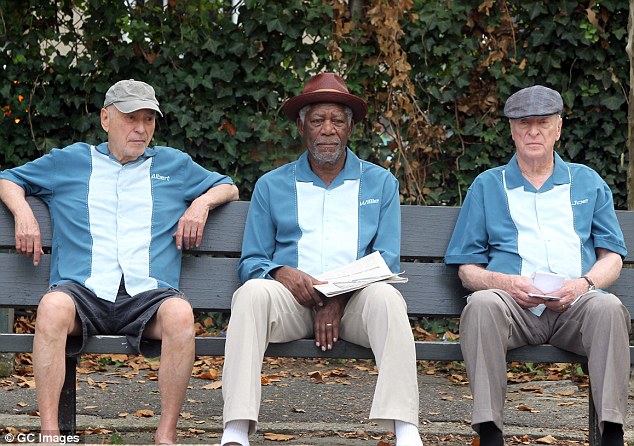
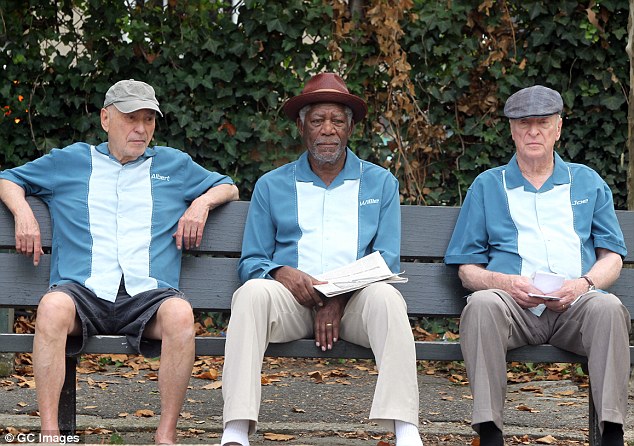
Oscar winners Morgan Freeman, Michael Caine, and Alan Arkin are such a dream team that we almost forget how weak this remake of the 1979 George Burns “Going in Style” is. It is always a pleasure to see these old pros, and in this heist story the real theft is every scene they are in from anyone else in the cast.

As in the original, which co-starred Art Carney and Lee Strasberg, it is the story of three old guys who rob a bank. This time, the script by Theodore Melfi (“St. Vincent,” “Hidden Figures”) leverages the post-financial meltdown Trump era animosity toward banks and big multi-national corporations that consider the pensions they promised their long-term employees as just another stream of revenue to redirect to investment bankers and CEOs. Joe (Caine), Willie (Freeman), and Albert (Alan Arkin) are not just proving that experience and wiliness will triumph over youth and overconfidence; they are a new version of Robin Hood, seeking justice for the little guys.

The men are all retirees from the same manufacturing company, which is moving all of its operations out of the United States and cancelling all pension plans. Joe, whose daughter and granddaughter (Joey King) live with him, has had to stop making the mortgage payments that tripled after his rate went up, and his home is in foreclosure. Willie’s dialysis is not enough any more and he will die if he does not get a new kidney. When Joe’s meeting at the bank about his mortgage is interrupted by a bank robbery, it looks like a way for him to solve his money problems.

The three leads give it their best, and there is simply nothing better than that. Their enjoyment in each other and in the chance to have some fun as the movie’s heroes is palpable. And it is a joy to see the still-lovely and very game Ann-Margret as a grocery store clerk with a crush on Al. “SNL’s” Kenan Thompson and Siobhan Fallon Hogan are bright spots, but the gifted Matt Dillon, Christopher Lloyd, Josh Pais, and Peter Serafinowicz (“Spy”) are vastly under-used in one-dimensional roles. This especially disappointing from director Zach Braff (“Garden State”) and screenwriter Theodore Melfi, who seem to think that their only choice here is to make a thinly imagined, tiresomely formulaic, numbingly predictable story. Topical references notwithstanding, the movie is more outdated than the 1979 original.

Parents should know that this film includes armed robberies, guns, serious illness, marijuana, drinking and drunkenness, some strong language, sexual references and non-explicit situations.

Family discussion: What did each man find the most persuasive reason to rob the bank? What was the most important advice they got?

If you like this, try: the original version with George Burns, Art Carney, and Lee Strasberg, and “Tower Heist”

Related Tags:


Comedy Crime DVD/Blu-Ray Family Issues Remake
Smurfs: The Lost Village

Smurfs: The Lost Village

Posted on April 6, 2017 at 5:21 pm

Copyright Sony 2017

The Smurfs are back where they belong, in a fully-animated feature film that wisely gives up on the idea of trying to put them into the real live action world and even more wisely gives up on the brash and unfunny storylines that relied much too heavily on substituting “smurf” for various words. Better than that, “Smurfs: The Lost Village”creates a truly enchanted and enchanting world for the Smurfs, a candy-colored pastoral setting that is just right for the little blue creatures. And best of all, for the first time this is a Smurf story that engages with the ultimate existential dilemma of the Smurfs: why are all the male Smurfs given names that reflect their most salient attributes (Hefty, Clumsy, Brainy, Nosy, Painter, Table Eater, Therapist) while the lone female Smurf is only defined by her gender and called Smurfette? Does her lack of a more descriptive name mean that there is nothing special about her? And why aren’t there any other female Smurfs, anyway?

These questions will all be answered in a delightfully satisfying and beautifully designed film that will be enjoyed by long-time fans and newcomers. Those steeped in Smurfology know that Smurfette’s gender is not the most important difference that sets her apart from the other Smurfs in her village.

Smurfette (with the sweet, spunky voice of Demi Lovato) was not born a Smurf (if, indeed Smurfs are born). She was created out of clay by the Smurfs’ nemesis, the evil wizard Gargamel (delightfully voiced by Rainn Wilson), who wanted her to infiltrate the Smurfs so she could spy on them and create mistrust and jealousy. But she was turned into a real Smurf by the Smurf’s wise and benign leader, Papa Smurf (Mandy Patinkin). As this story begins, she is living happily in the Smurf community, though wistful at not having a (literally) defining characteristic. If her name does not tell her who she is, how will she and the boy Smurfs know?

As in most Smurf stories, the bad buy here is Gargamel, who as usual has an evil plan that involves capturing the Smurfs and extracting their magic to create a potion that will give him unlimited power. Smurfette discovers that there is another Smurf community, so she, Hefty (Joe Manganiello), Brainy (Danny Pudi), and Clumsy (Jack McBrayer) go on a journey to find it. The adventures along the way and the fun of getting acquainted with the Amazonian warriors of the lost village (including Julia Roberts as their leader) are whimsically imagined and a lot of fun, with bright, lively music and a sweet message of finding your own way and being a part of a community.

Parents should know that this film has some mild fantasy peril and violence, with no one badly injured. There is some mild language and brief potty humor.

Family discussion: If you were a Smurf, what would your name be? Which Smurf is your favorite and why?

If you like this, try: the Smurf cartoons and books and “Trolls”

Related Tags:


3D Animation Based on a television show Comic book/Comic Strip/Graphic Novel Fantasy For the Whole Family Series/Sequel
THE MOVIE MOM® is a registered trademark of Nell Minow. Use of the mark without express consent from Nell Minow constitutes trademark infringement and unfair competition in violation of federal and state laws. All material © Nell Minow 1995-2026, all rights reserved, and no use or republication is permitted without explicit permission. This site hosts Nell Minow’s Movie Mom® archive, with material that originally appeared on Yahoo! Movies, Beliefnet, and other sources. Much of her new material can be found at Rogerebert.com, Huffington Post, and WheretoWatch. Her books include The Movie Mom’s Guide to Family Movies and 101 Must-See Movie Moments, and she can be heard each week on radio stations across the country.

Website Designed by Max LaZebnik