There was something special about the poor, uneducated Henrietta Lacks, something she could never have suspected. From the description of the book, by Rebecca Smoot:
She was a poor Southern tobacco farmer who worked the same land as her slave ancestors, yet her cells—taken without her knowledge—became one of the most important tools in medicine. The first “immortal” human cells grown in culture, they are still alive today, though she has been dead for more than sixty years. If you could pile all HeLa cells ever grown onto a scale, they’d weigh more than 50 million metric tons—as much as a hundred Empire State Buildings. HeLa cells were vital for developing the polio vaccine; uncovered secrets of cancer, viruses, and the atom bomb’s effects; helped lead to important advances like in vitro fertilization, cloning, and gene mapping; and have been bought and sold by the billions.
Yet Henrietta Lacks remains virtually unknown, buried in an unmarked grave.
Her family knew nothing about this and of course was not paid for the use of her cells. Winfrey’s casting as the daughter suggests the focus will be more on the family and the ethical questions than the science, but I hope both will be covered.
The two most dazzling life performances I have ever seen or will ever see were both by Janis Joplin. This week, the PBS American Masters series is her story.
Copyright Sony Pictures Classics 2016 Marnie (Susan Sarandon) is the irresistible force who, just before this movie starts, meets the immovable object: devastating grief in the loss of her husband. She does not have the vocabulary to process this loss. And so she tries to hold onto the person she was before. And she tries to convince everyone around her — and herself — that she’s fine. “The Meddler” begins with a brief monologue about how much she loves living in Los Angeles, where she has moved to be near her only daughter, Lori (Rose Byrne). “It’s like Disneyland!” she says cheerfully.
But she has trouble filling her days and finding a place to use her generous impulses. And so, as the title indicates, she meddles. She calls Lori many times a day, and when Lori does not answer, she comes over — with a bag of bagels. Lori, grieving in her own way for her father and for a breakup with a handsome actor, does not respond, and so Marnie turns her attention to anyone who comes along, from Lori’s friends to the guy at the Apple store genius bar. What she does not feel ready to do yet is to say goodbye to her husband by burying his ashes and putting up a headstone in the family plot back in New Jersey. “It’s been a year,” she tells his brothers. But it has been two. And she is not ready to think about loving someone new, even after she meets a man who is from her home town and seems perfect for her (Michael McKean).
When Lori’s friend Jillian (SNL’s Cecily Strong) mentions that she needs a babysitter, and so Marnie shows up at her house — with bagels. Jillian says that she does not have a mother and she never had the dream wedding she wished for. So Marnie offers to give her a wedding. And when she encourages the Apple genius (Jerrod Carmichael of “The Carmichael Show”) to go back to school, she offers to drive him. She has so much to give, but the loss of her husband has left her with no place to give it and a fear of losing him even more if she changes too much or gets too close to someone else.
Sarandon gives one of her best performances, which means she is truly superb, and Byrne is excellent as well. When Lori’s ex and his new girlfriend find Marnie and Lori having dinner together on Valentine’s Day, there is a beautifully funny and heart-wrenching moment as both mother and daughter try so hard to appear to be doing fine that they do not notice they are undermining each other. In another scene of piercing bittersweetness, a day of emotional upheaval ends in mingled laughter and tears. JK Simmons brings dry wit and humanity to the role of an ex-cop and hen farmer whose quiet understanding gives Marnie her first chance to let go a little, and to acknowledge, after some resistance, that it is something she wants and needs to do, for herself and for Lori.
Writer/director Lorene Scafaria (“Nick and Nora’s Infinite Playlist” and “Seeking a Friend for the End of the World”) has a rare gift for finding the space in between joy and grief, and a rare understanding of the power of small moments to tell a big story. As Marnie watches Lori’s script being filmed, she is moved by the way Lori has used her writing to work through her grief, and as we watch this film, we share that feeling.
Parents should know that this film has some strong language, sexual references, and drug use.
Family discussion: Why does Marnie want to help people she hardly knows? What’s the difference between being supportive and meddling and how does that change in different circumstances?
If you like this, try: “Hello, My Name is Doris” and “Seeking a Friend for the End of the World”
Rated R for violence, language throughout, drug use and sexuality/nudity
Profanity:
Very strong language including n-word
Alcohol/ Drugs:
Drinking, drugs, and drug dealing
Violence/ Scariness:
Extended action violence, many guns, characters injured and killed
Diversity Issues:
A theme of the movie
Date Released to Theaters:
April 29, 2016
Date Released to DVD:
August 1, 2016
Amazon.com ASIN:
B01DYX9Y9M
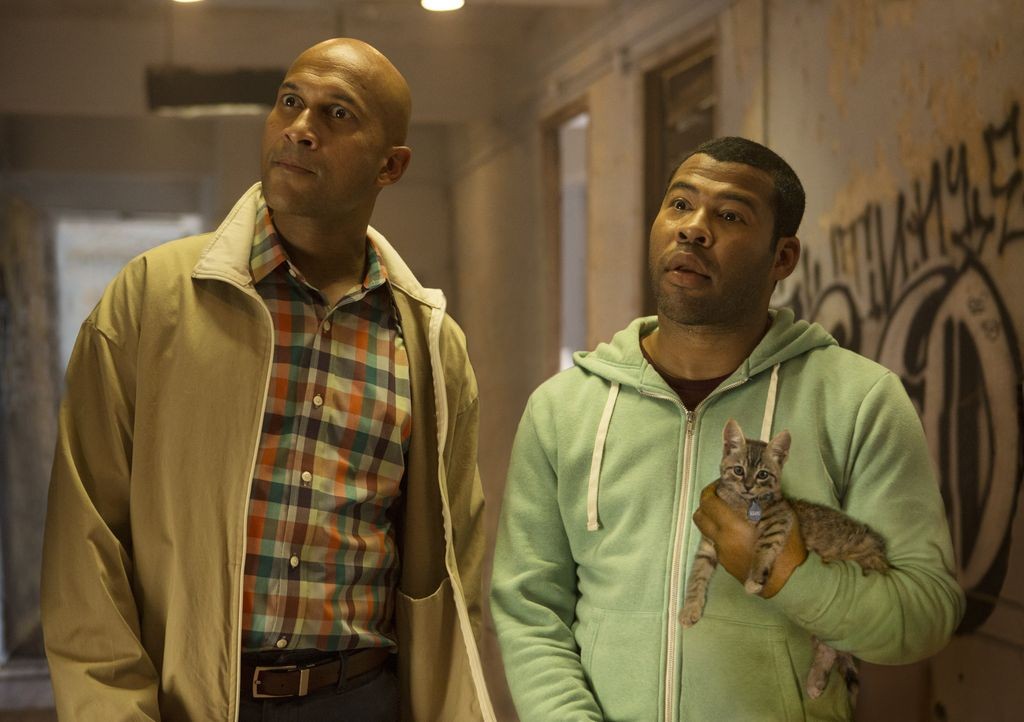
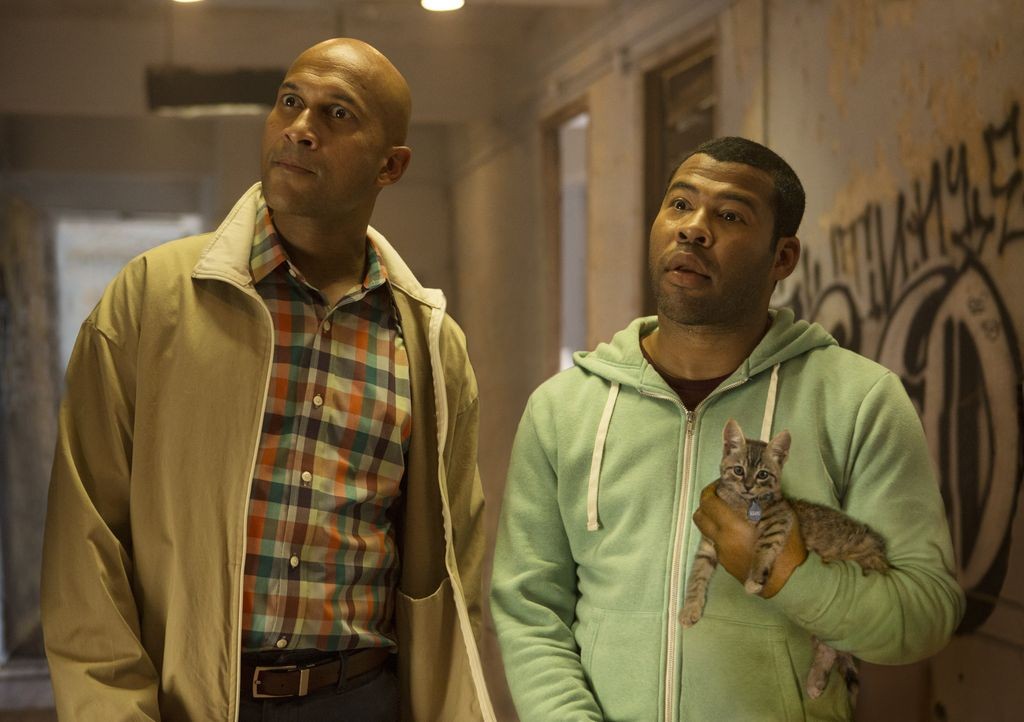
Copyright 2016 Warner BrothersI laughed so much and so hard at this movie that by the time it was over I had become of those Key and Peele show parking valets. I just wanted to stand in front of a hotel in my red vest saying over and over, “How about them Keys and Peeles, though! How ABOUT them Keys and Peeles!”
Keegan-Michael Key and Jordan Peele, with a script co-written by Peele and directed by their series director Peter Atencio, have made one of the smartest and funniest comedies of the year, a film that works at every level from slapstick to sophisticated wit to social commentary and slam-bang action, with even a little romance.
Fans of the series will appreciate references like a trip to see a movie starring “Liam Neesons” but even those who have never heard of their Obama anger translator routine or their legendary East-West Bowl player names will immediately understand their characters and their situation.
Clarence (Key) is a happily married father who drives a minivan and listens to George Michael. His cousin Rell (Peele) is a pot-smoking slacker who is devastated following a break-up. But when he adopts an abandoned kitten his spirits lift, and he names it Keanu. When Keanu is stolen by the 17th Street Blips, a gang made up of gangsters who could not make it in the Bloods or the Crips, Clarence and Rel decide to rescue him. This leads to a strip club called HPV with a two-for-one lap dance special, run by drug dealer known as Cheddar (Wu-Tang Clan’s Method Man). Clarence and Rell, trying to look tough, introduce themselves as Shark Tank and Tectonic. Clarence wonders how tough someone named Cheddar could be, but Rell points out that “You only name yourself something adorable if you can back it up.” When they explain to Cheddar that they are in the market for a “gangster pet,” Cheddar tells them they can have the kitten he has dubbed New Jack (complete with do-rag and gold chain) if they lead his gang on the delivery of an ultra-potent new drug. A series of encounters, escalating in peril, violence, and hilarity. It would be wrong to spoil more, so I will leave it at this: there is a very funny surprise guest star and Clarence’s professional team-building skills come in handy.
Key and Peele, both biracial, have always found comedy/commentary gold in their ability to reflect on race and culture. By casting themselves as highly and somewhat self-consciously assimilated black men who assume the media-created image of violent black drug dealers, they have added some sharp meta-commentary to a classic set up: fish-out-of-water, normal characters drawn into abnormal circumstances. Rell’s own weed dealer, played by SNL alum Will Forte, is a white man who is also taking on a stereotyped black persona, including cornrows. Clarence, who tries to order a white wine spritzer in the strip club and who tells Rell he sounds like John Ritter, swings into what he thinks is gangster mode when Chedder’s hostile n-word-spouting henchmen approach him. The transformation is wildly funny, both the specificity of it, and the way it fits so seamlessly into our own media-created notion of that archtype and the porous aspects of his new persona as the “real” Clarence keeps peeking out. Clarence and Rell are as innocent and helpless as the adorable kitty in the midst of druglord shoot-outs. Key and Peele are pretty adorable, too, in a gangster pet sort of way.
Parents should know that this film includes extended peril and violence, many guns, characters injured and killed, drugs and drug dealing, sexual references and nudity, strip club, and very strong and crude language including the n-word.
Family discussion: Where did Rel and Clarence get their ideas of how to behave with the Blips? How did Clarence’s team building training come in handy?
If you like this, try: the Key and Peele television series, “Date Night,” and “Analyze This”