Fathom Events, in partnership with Delilah Radio, Excel Entertainment and Propel Pictures, invites you to experience the inspirational true story of Chris Williams when Just Let Go comes to cinemas nationwide for special a one-night event on Monday, September 28, 2015.
On a cold February night in 2007, a devoted father of four and a seventeen-year-old drunk driver both received life sentences. In one violent, devastating instant, each faced a drastically different and uncertain future. But as Chris Williams sat in his demolished vehicle, staring at the car that had just caused the death of his wife, his unborn baby, his nine-year-old daughter, and his eleven-year-old son, he committed to do something extraordinary: he would forgive.
Chris Williams’ story is the cinematic tale of how a person can forgive despite the retaliatory tendencies that surface within the dark corners of the human heart, showing the world that hope, love and forgiveness can overcome all when you let it go. In addition to the inspirational presentation of Just Let Go, audiences will be treated to an exclusive introduction from radio personality Delilah.
Rated R for sexual content, language throughout, some violence and drug use
Profanity:
Very strong and crude language
Alcohol/ Drugs:
Drinking, smoking, drugs
Violence/ Scariness:
Police brutality, riots, reference to murders
Diversity Issues:
A theme of the movie
Date Released to Theaters:
September 25, 2015
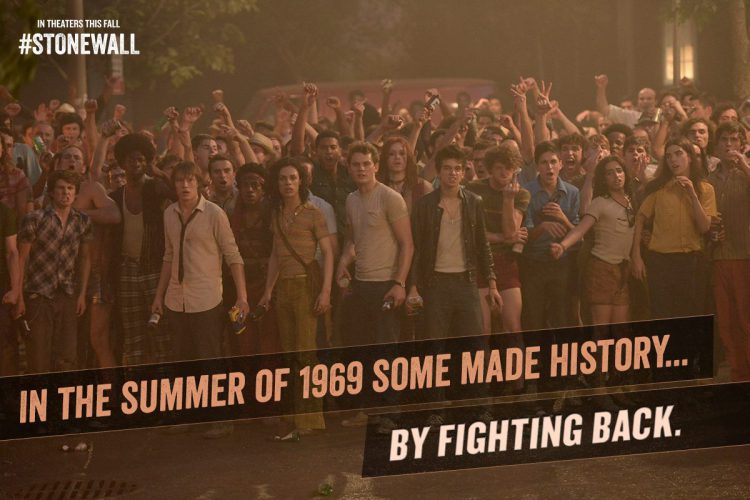
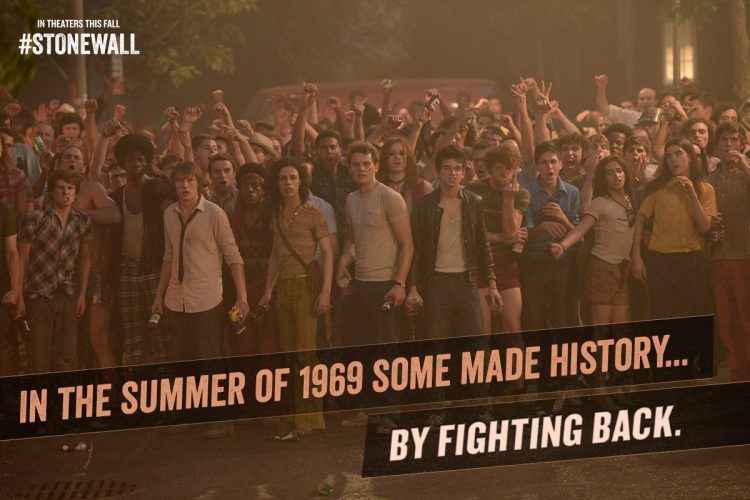
In 1969, when the federal government prohibited the firing of gays and lesbians, when it was illegal for them to congregate in a bar or even to have consensual sex, when police harassment and brutality was not only permitted but expected, a man threw a brick, shattered a window, and began four days of riots that galvanized the fight for GLBTQ equality. The window was in a bar called Stonewall, and its name lives on as the symbol of the moment that ignited a revolution.
The movie “Stonewall,” intended as history and tribute, instead throws a brick through the meaning and the moment, shattering both. This movie is more than bad and worse than disappointing. It is a tragic distortion of a vitally important story that insults the people it tries to honor and insults its audience as well. Director Roland Emmerich (known for movies with a lot of big explosions and stunts) and screenwriter Jon Robin Baitz so vastly underestimate their audience that they apparently believe cannot understand a movie about the GLBTQ community unless we have an all-American-style high school football hero from the heartland to identify with. How do you make a movie about the Stonewall uprising and so completely miss the point?
Copyright 2015 Roadside
Our point of entry is handsome but bland Danny (Jeremy Irvine), a Hoosier who has a crush on the quarterback. He is Goldilocks to the three bears of his family, spread out to represent all points on the gay-friendliness spectrum: a taciturn father (also his football coach), a passive mother, and a devoted and free-thinking younger sister (Joey King). When his assignations with the quarterback are discovered, “faggot” is scrawled on his locker and he is shunned by everyone. He refuses to tell his father that it was a one-time thing and leaves for New York.
And so we shift from tone-deaf cliches about the Midwest to tone-deaf cliches about Christopher Street, with a group of adorably scruffy and flamboyant runaway Lost Boys who spend their time tricking and clubbing. Their leader is an Artful Dodger type known as Ray (Jonny Beauchamp). They sit on the stoop and talk about Judy Garland, alternately enjoying shocking decadence and longing for home. Around the edges of the story are the real-life characters who are far more interesting, or at least who were in real life.
This is a bad movie, purely from the standpoint of drama. It is poorly constructed, with cardboard characters and worst-of-the-year category clangers in dialog, provoking snicker and then outright snorts from the audience. “I’m too angry to love.” “These kids have nothing to lose.” But the monumental failure here is the disrespect for the real-life courageous souls who fought back nearly half a century ago and for the audience, who would relish a film that does them justice.
Parents should know that this film has explicit sexual references and situations, including predatory behavior, abuse, and prostitution, homophobic and bigoted insults, police brutality, and riots. Characters use very strong language, drink and smoke, and use drugs.
Family discussion: How was the gay rights movie like and not like other civil rights movements of the 20th century?
If you like this, try: “Longtime Companion.” “Pride,” and “Milk”
Copyright Warner Brothers 2015 Oh, to live in Nancy Meyers-land, where the 60’s and 70’s really are a golden age, where AARP-eligible Oscar winners go to be universally adored by bright young people, and where every sumptuously spacious but cozy home has the kitchen of your dreams. It’s not a coincidence that more than once in the movie one character compliments another on the decor. Or that you can now buy it all yourself to collect your own accolades, making the movie into an infomercial. It’s soft-focus, feel-good, female empowerment. So of course it’s all to a soundtrack of Pottery Barn-like upscale easy listening songs like “All About That Bass (No Treble).”
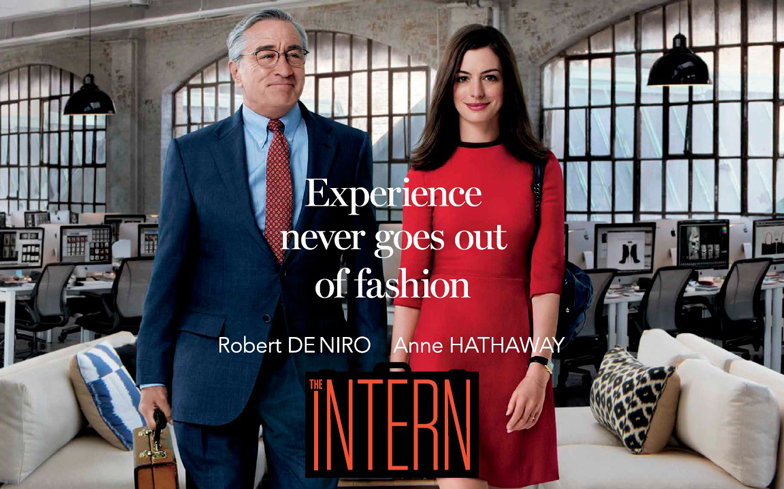
Following in the beautifully shod footsteps of Eli Wallach (“The Holiday”), Diane Keaton (“Something’s Gotta Give”), and Meryl Streep (“It’s Complicated”) comes Robert De Niro, with infinite charm and grace in a role he seldom gets to take: an ordinary guy.
De Niro plays Ben, 70 years old, living in Brooklyn, a widower after a long, happy marriage, retired, and looking for something to do. He has traveled, visited his grandchildren, taken classes. There is a single woman his age (Linda Lavin) who would love to date him. But he wants something more. “The nowhere to be thing hit me like a ton of bricks.”
And then he sees a flier. A local start-up is looking for “senior interns,” for no other reason than to make a cute movie plot, but okay. It’s an online sales company, selling fashion with some special ability to make sure the items fit properly), and he still uses a flip phone, but Ben decides to apply. And he is undaunted that applicants, instead of submitting a resume, are asked to upload a video about themselves. “I want to be challenged,” he explains, “and needed.”
He gets the job and is assigned to the start-up’s visionary but harried CEO, Jules Ostin (Anne Hathaway). Is the name supposed to make us think of Jane Austen? Could be. She has an only-in-movies adorably precocious moppet and a shaggy (in a cute, artisanal, Brooklyn way) devoted stay-at-home-dad of a husband. And, guess what? They live in an exquisitely decorated brownstone with a couple of legos and a backpack sprinkled around for relatability. Plus, she is played by Anne Hathaway, so she is stunningly beautiful in a we’d-totally-be-best-friends-if-she ever-met-me sort of way. She gets to channel her “Devil Wears Prada” co-star Meryl Streep as the boss who can be terrifying, but she knows and we know she’s there to be loveable, not scary. And he is endlessly calm and resourceful, whether cleaning up the office junk pile, crunching data, giving dating advice, or retrieving a disastrously mis-sent email.
In the normal world of movies, Jules would have a lot to teach Ben about being up with the times and there would be all kinds of cute/funny scenes with him learning what a hashtag is while imparting a few Yoda-like gems of wisdom. But this is Nancy Meyers-land, so the lessons all go the other way. And those lessons are not so much “why don’t you do it this way” as “you can do it!” It is undeniably refreshing, especially to those of us closer in age to Ben than Jules, but let’s face it. This is less a movie than it is comfort food and a glossy shelter magazine wishbook, sprinkled with fairy dust and truffle powder.
Meyers is all about you-go-girl empowerment, so her films are delectable visions of soft-focus fantasy, but there are some revealing moments of personal payback, too, as in her treatment of a wandering husband. It crosses the line from pleasant daydream to selfishness, entitlement, and denial. It’s one thing to create a fairy tale. It’s another to promote the idea that women can “have it all” without a lot of other people having a lot less. And maybe next time we could add some people of color to the cast. This is Brooklyn, for goodness’ sake. It’s practically a living version of “It’s a Small World.” How did the cast get so white?
But Ben’s handkerchief rule? That’s the real deal.
Parents should know that this film features adult themes including adultery and male sexual response. There are references to a sad death, drinking, including drinking and medication to deal with anxiety, and characters use some strong language. There is an awkward and unfunny joke about a child possibly having bipolar disorder.
Family discussion: What most surprises seniors and millennials about each other? What would you like to do when you retire? Do you agree with Jules’ decision?
If you like this, try: “It’s Complicated” and “The Holiday”
Vampire Mavis (Selena Gomez) and human Jonathan (Andy Samberg) fell in love in the first “Hotel Translyvania,” and in this sequel they get married and have a baby named Dennis. He has his father’s unruly red curls. But his grandfather Drac (Adam Sandler) wants to make sure he has inherited his mother’s vampire genes as well. “He’s a late fanger,” Drac tries to reassure everyone, especially himself.
“Hotel Transylvania 2” suffers from sequel-itis — not as fresh or imaginative as the original and it feels like it was made because they wanted to do a sequel and not because they had anything special to say. But it is still entertaining.
Even before the movie starts, the Columbia logo statue turns into a vampire bat and we know we’re off to a place where cute monsters rule. The wedding scene is a lot of fun as it re-introduces us to the characters, all played by wonderful comic voice actors including David Spade (Griffin, the invisible man, who keeps insisting that he has an invisible girlfriend), Kevin James as Frankenstein and Fran Drescher as his wife, Eunice, Keegan-Michael Key as Murray the mummy, Steve Buscemi as Wayne the very fecund wolfman, and Molly Shannon as his wife, Wanda. We skip ahead quickly to the arrival of Dennis, and then ahead again as he approaches his 5th birthday, and Drac is still waiting to see if he will become a vampire. (Maybe when he grows up, he could marry similarly mixed-race Renesmee from “Twilight”).
This is even more pressing because if he is human, Mavis wants to move to California, near Jonathan’s parents, so he can be around other humans. Even though Dennis loves monsters, she thinks he will be happier around his own kind of people. So, she and Jonathan fly to California to see whether it is right for them, leaving Dennis with his grandfather.
Big mistake.
Drac promises to keep Dennis at the castle/hotel but instead takes him on a journey to try to get his vampire side to come out. And of course he brings his pals along. They visit a monster summer camp and try to scare some humans, but find that their scare power is significantly diminished. Humans ask for selfies and one of them even compliments Drac on his chocolate cereal. Dennis may be a late-fanger but these cuddly monsters are no-fangers, and when you’re looking for silly fun with a hug at the end, that’s just fine.
Parents should know that this film’s themes include monsters and scariness but it is mostly for humor. There is some comic peril and violence with no one hurt, some potty humor, themes of family/culture difference, conflicts. and prejudice.
Family discussion: What are the biggest cultural or ethnic differences in your family? Which is your favorite monster and why?
If you like this, try: the first “Hotel Transylvania” and “Megamind”
Sad offscreen deaths, discussion of child abuse, some disturbing images of a severed limb
Diversity Issues:
None
Date Released to Theaters:
September 18, 2015
You might not think that a documentary about two men fighting over a severed leg would be funny, touching, and insightful, but it is. You might think that it would be a carnival freak show for the age of YouTube and Twitter, and it sort of is that, too, but mostly in the clips from the various television shows that got involved in this real-life gothic mashup of Southern culture, reality TV, dysfunctional families, substance abuse, money, tragedy, and two men, one plummeting from a life of wealth and privilege and one desperately aspiring for fame and fortune, both seeing the approval of fathers who are no longer here. And they became two men who fought each other for years over something the rest of us cannot imagine anyone would want.
Shannon Whisnant in a small-time operator in North Carolina, always up to some scheme or other. So of course he showed up to bid on items from a storage locker that were confiscated when the payments lapsed. He bought a small, rusty smoker and was surprised to open it and find inside a severed human leg, about mid-calf down, with the foot and toes. The film plays his 911 call. “I got a human foot.” “A what?” “A human left foot.” I love that he thinks that additional detail will somehow make a difference.
The foot belongs to John Wood, or at least it once did. It was amputated following a plane crash and he wanted to keep it. It seemed very reasonable to him once he heard that Whisnant had it that he would get it back. But Whisnant saw it as the golden ticket he always knew was coming to him, his chance for the big time. Oh, he had already appeared on “Jerry Springer,” but he had not achieved that level of fame he just knew in his heart was his destiny. He went on news shows to talk about his find. He started charging admission — $3 adults, $1 kids. He had t-shirts made. I would like to say they were tasteful but they were not. His twitter account is @fottmannc.
Whisnant met with Wood — at the parking lot of the Dollar General — to talk about the ownership of the foot. The details of the conversation are still disputed, but the next steps involved litigation. And more reality television.
The great gift of the film, which is at times hilarious and at times deeply moving, is that it takes this absurd dispute and humanizes the story so profoundly that by the end we are a part of it. It deals with the endearing and the obnoxious sides of American celebrity culture. It is abashing but also reassuring that the multi-year fight is finally resolved — with Solomonic jurisprudential nuance — by television’s Judge Mathis. But is is the almost unbearably intimate conversations with family members and the two men themselves that show us the inherent vulnerability of even those who at first seem cartoonish or grotesque.
Parents should know that this film includes very strong language, discussion of drug and alcohol abuse, discussion of tragic deaths and child abuse, and some grisly subject matter and disturbing images.
Family discussion: Why did both men want the foot? How did their relationships with their fathers affect their views of themselves?