Ricki and the Flash

Ricki and the Flash

Posted on August 6, 2015 at 5:48 pm

Copyright 2015 Walden

“Aren’t you allowed to have two dreams?”

The person asking the question is Ricki (as she is now known), played by Meryl Streep. She has just accused her ex-husband, Pete (Kevin Kline), of not supporting her dream of playing rock music. And he has responded, “I thought we were your dream.” Years ago, Ricki was a suburban housewife named Linda, with a husband and three young children. She left them to be a rocker, and now fronts a cover band called Ricki and the Flash, performing at night for a small group of loyal fans at a bar in Tarzana, California. During the day, she is a cashier for a warehouse store. Neither job pays well; she is about to declare bankruptcy.

But first she has to go home. Her daughter Julie (Streep’s real-life daughter Mamie Gummer) is having a breakdown because her husband is in love with someone else. Pete’s wife is away, caring for her ailing father. So Pete calls Ricki and asks her to come home and help him take care of Julie. She arrives, with her guitar and dressed in 70’s rocker drag, at his gracious gated community and enters Pete’s grand and elegant home, where everything seems effortlessly comfortable. And where Ricki, with her stringy braids and kohl-rimmed eyes and tattoo is very out of place.

Screenwriter Diablo Cody (“Juno”) gives Ricki some unexpected characteristics and of course Streep brings her to life. Linda/Ricki loves to perform and loves the look and shock-the-bourgeois attitude of a rock musician, even at her other job. But she is not the stereotype anarchist/liberal. The tattoo on her back is a proudly waving American flag and she calls out “Support the troops!” from the stage. We learn a little bit more about where that comes from in one of the movie’s highlights, when Pete’s second wife, played with depth, heart, and resolve by Broadway star Audra McDonald, returns home and the two women have a conversation about what is best for Julie. It is couched in the kind of “we don’t have to like each other but we need to get along” terms of two very different women who share the experience of having been married to the same man and, in their own ways, mothering his children.

Streep clearly loves being back with her “Sophie’s Choice” co-star, and she and Kline create a palpable sense of history with each other in some touching moments, especially when they join forces to confront Julie’s ex. And it is a joy to see Steep and Gummer together. Their trust and connection is so solid that it gives them both the freedom to make their relationship complicated and painful, wanting so much from one another, and still wanting to give to one another, too.
Rick Springfield (yes, that Rick Springfield) is excellent as lead guitar of The Flash and sometime boyfriend for Ricki.

The film is awkwardly constructed, and the ending, while sweet, is abrupt and unrealistic. It makes sense for the storyline that Ricki is not a great singer or musician, with a dozen cover songs on the soundtrack, director Jonathan Demme’s commitment to using the live performances without any studio sweetening is questionable. But the musical performances are joyous, tender-hearted and true. And it explores essential questions: How do we love the people who cannot love us back the way we want them to? What do you do when your dreams do not fit together? What will you give up for someone you love?

Parents should know that this movie includes tense and unhappy family confrontations, discussion of a suicide attempt, strong language, drinking, marijuana, and sexual references and situations.

Family discussion: Can you have two dreams? How does Pete feel about Ricki? How can you tell? Why does Ricki hurt Greg?

If you like this, try: “The Rocker” and “Juno” and see Streep and Kline together in “Sophie’s Choice”
Related Tags:


Drama Family Issues
The End of the Tour

The End of the Tour

Posted on August 6, 2015 at 5:20 pm

B+
Lowest Recommended Age: Mature High Schooler
MPAA Rating: Rated R for language including some sexual references
Profanity: Very strong and crude language
Alcohol/ Drugs: Drinking and smoking
Violence/ Scariness: Reference to suicide
Diversity Issues: None
Date Released to Theaters: August 7, 2015
Date Released to DVD: November 9, 2015
Amazon.com ASIN: B0153C71X8
Copyright A4 2015
Copyright A4 2015

Form illuminates content in this imperfect but compelling film based on the real-life audiotapes of a four day interview of author David Foster Wallace in the final days of his book tour for Infinite Jest.

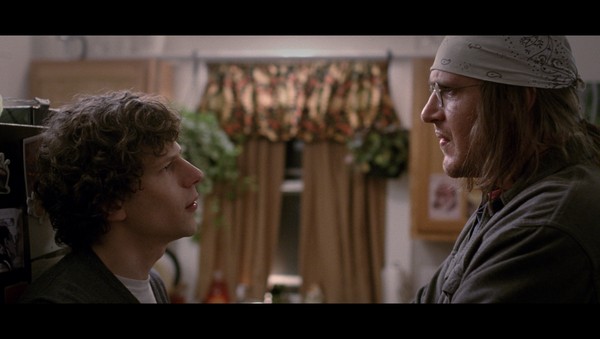
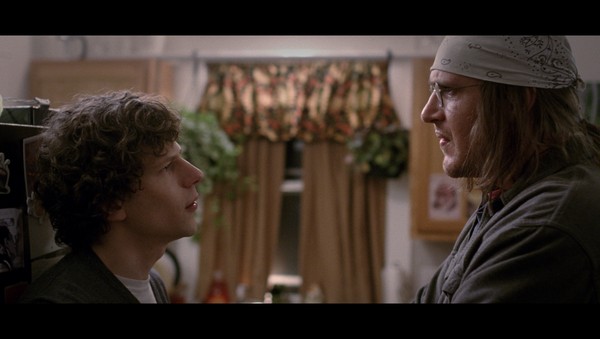
The subject of the interview is David Foster Wallace (Jason Segel), whose writing was densely and intricately layered. The journalist doing the interview is David Lipsky (Jesse Eisenberg), also a recently published novelist, though his book attracted no attention.

Lipsky persuades his editor at Rolling Stone that Wallace, whose book is a critical and commercial hit, would be a good subject for the magazine. And Wallace, now in the final days of his book tour, agrees to let Lipsky come along. Their wide-ranging (in geography and subject matter) conversation over four days reflects a constantly shifting set of expectations, assumptions, and goals for a construct so essentially artificial it hardly makes sense to call it a relationship. And yet, Lipsky literally moves into Wallace’s man cave of a home and for that time there is a simulation of some kind of friendship between them, at times even a sense that they could be friends, which they both seem to find unsettling and appealing. Wallace’s writing had a fractured, self-referential quality, filled with asides and meta-commentary. So it makes sense that the film has some of those qualities as well. If there were such a thing as cinematic footnotes, they’d be here. Instead, the context itself provides the footnotes. Wallace, whose great subject was American consumer culture, ends up in Minnesota’s Mall of America, eating in the food court as the indoor roller coaster zooms by.

Janet Malcolm famously described a journalist as “a kind of confidence man, preying on people’s vanity, ignorance, or loneliness, gaining their trust and betraying them without remorse.” We see some evidence of that in “The End of the Tour” but there are several other layers as well. The two men are about the same age, both writers, one lauded as one of the great novelists of his generation, one who released a book that got no attention at all. So Lipsky wants more from Wallace than a story. He is looking for guidance, validation, understanding. He acknowledges that he wants what Wallace has. At the same time he wants to understand why Wallace does not seem to want it. The two men are both relentless, even obsessive, self-observers. As Lipsky is recognizing the gulf between the kind of superficial details that make up a celebrity profile and what it means to actually know someone, he tries to find some kind of foothold. He wants to prove himself to his editor (in real life, the article was never published). And he wants to prove to himself that he is somehow in the same species as Wallace. There is a Mozart/Salieri element here as Lipsky’s greatest talent may be his ability to appreciate Wallace’s genius.

The commitment to verisimilitude is claustrophobic at times because almost all of the dialogue is taken directly from the tapes.  An opening scene where Lipsky first hears of Wallace’s suicide and digs out the tapes adds nothing to the story.  And yet again this is a case of form following content, as the near-obsessive, even fetishishtic, constricted particularity of the conversation is the kind of thing one of Wallace’s characters might do. The most telling moment in the film is when Wallace admits that he does not mind being profiled in Rolling Stone. He just does not want the profile to make it appear that he wants to be profiled in Rolling Stone. That is exactly the kind of fractured, Schroedinger-ian attraction/repulsion Wallace felt to the themes of his work: the gulf between presentation and reality, between observing and being, between attention and distraction. As Lipsky knew, it is a privilege to be a part of that conversation, even as we must be aware that it is the kind of entertainment — even at this ambitious level — Wallace would both want and not want to see.

Parents should know that this film includes very strong and crude language, sexual references, drinking, and smoking.

Family discussion: Why did Wallace agree to the interview? Why did he get angry with Lipsky?

If you like this, try: the books by David Foster Wallace and “My Dinner with Andre” and listen to the excellent interview with David Lipsky on the podcast, “The Moment

Related Tags:


Based on a book Based on a true story Biography DVD/Blu-Ray Pick of the Week
Shaun the Sheep

Shaun the Sheep

Posted on August 6, 2015 at 5:07 pm

A-
Lowest Recommended Age: All Ages
MPAA Rating: Rated PG for rude humor
Profanity: None
Alcohol/ Drugs: None
Violence/ Scariness: Mild comic peril and mayhem, animal control officer, memory loss
Diversity Issues: None
Date Released to Theaters: August 7, 2015
Date Released to DVD: November 23, 2015
Amazon.com ASIN: B013H99VXC
Copyright 2015 Lionsgate

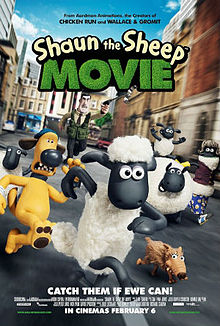
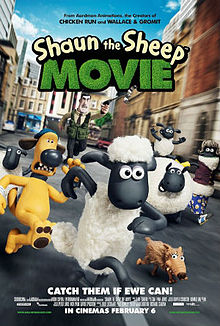
“Shaun the Sheep is another adorably quirky animated film from Aardman, the folks behind “Wallace and Gromit” and “Chicken Run.” it is a wordless pleasure about a flock of sheep who have an adventure when they get bored with their idyllic but monotonous life on the farm and visit the big city. But they miss their farmer. And when they are ready to go home, the farmer is not there. They had accidentally transported him to the big city, where he got amnesia and now cannot remember who he is or where he lives.  Only the sheep can save the day.

Aardman films are made with sculpted figures shifted just one tiny movement at the time, and so lovingly hand-crafted that the audience can glimpse fingerprints on the characters. In a week, an animator may produce two or three seconds of film. And yet their movements are as fluid and intricately choreographed as a Jackie Chan stunt. And their faces are as expressive as any Oscar-winning actor.

That is especially important in this film because it is wordless. It is not silent — there are sound effects and a musical score and several well-chosen songs play on the soundtrack. Occasionally we hear a murmured mumble, a low-key British version of the adults’ muted horn sounds in the Charlie Brown shows. The kids in the audience with me loved it, laughing wildly, especially at a few potty jokes and some slapstick pratfalls. Don’t tell them, but children — and their families — will benefit from having to up their observational skills to stay on top of what is happening.

As Shaun and the flock dress up as humans to search for the increasingly bewildered farmer and evade the increasingly frenzied animal control officer and his electrified pinching grasper, their adventures are funny, exciting, and even poignant. The settings are witty and captivating, with some sly satire popping up to keep things brisk. It’s (forgive me) shear delight.

Parents should know that this film includes some bodily function humor (guy on toilet, sheep manure) and cartoon-style peril, head injury and memory loss.

Family discussion: Why did the sheep miss the farmer? Why was the haircut so popular?

If you like this, try: “The Wallace & Gromit” films, the “Shaun” television series, and “Chicken Run.”

Related Tags:


Animation Based on a television show DVD/Blu-Ray Pick of the Week
Fantastic Four

Fantastic Four

Posted on August 6, 2015 at 4:53 pm

Copyright 20th Century Fox 2015

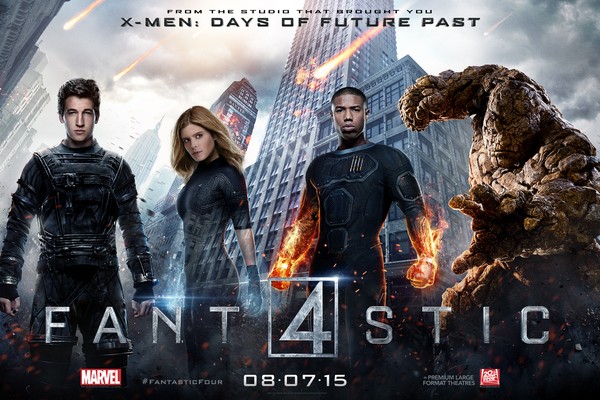
Three things a superhero movie should not be: dreary, dull, and tedious. Three things this movie is: see if you can guess. I am a huge fan of the comic book series Fantastic Four, which I first read as a teenager, ready for something with a little more edge and attitude than my beloved Superman. I have suffered through previous efforts to make their stories work on film, and dared to hope that this one would be better. It is awful in every category. The script is terrible, wasting much too much time on a revamped origin story that goes back to 5th grade(!) and the high school science fair(!) and still does not tell us anything interesting about the characters or how they got their powers. The characters are dull and all seem to be acting in separate bell jars, with no indication that there is another human being in the scene. Even when they are supposed to be friends, siblings, parent and child, or possible romantic partners, they act as though the other person was a tennis ball hanging in front of a green screen.

People who are supposed to be super-smart do things that are super-stupid. Like constantly. One thing scientists understand very well is that empirical data matters. So when things go terribly wrong when you try something, what’s the deal with doing the same thing again without taking any new steps to prevent further disasters? And Reed Richards’ only complaint is that the new pod is not as pretty as the old one and needs ten minutes of corrections to the code?

The dialog is filled with appalling clunkers like, “Do you ever think about what would have happened if you never came to the science fair?” “We cannot change the past. But we can change the future.” It even has locker-room style pep talks like, “He’s too much for each of us, but if we all work together we can beat him!” And many of the comments are just pointless and there are developments that have no logic of character or plot, indicating that the movie was even worse at some point and was cut like someone was slicing the bruises off a banana. The special effects look like they were created on Fiverr. The action scenes are muddy and static. At just over 90 minutes, it still feels endless.

And another boneheaded decision: while the comic book characters are adults, somebody decided to age them down into teenagers for this version so we could add in some adolescent angst, a love triangle that is about at the level of who will ask Sue to the prom, and, I am not making this up (I wish I were), the whole superpower thing happens because those darn kids get drunk one night and take the dimensional traveling machine thing out for a tipsy joyride. Think “Fantastic Four 90210.” We’ll have fun, fun, fun ’til Daddy takes the dimensional traveling pod away!

And what is the number one requirement for a superhero movie? A great villain. No such luck here. The bad guy is just a moody misfit who likes the same girl as the other guy and just might blow up the planet over it. And somehow when he’s abandoned for a period of time in another dimension on what looks like another planet with no life forms of any kind, somehow he manages to eat enough to stay alive AND come away with a really cool new cape and hood, sewn for him I guess by little elves? And unless Sue Storm’s new powers include hairstyle changes, the continuity people on this film have some ‘splaining to do.

There is a legendary Fantastic Four movie, available only on bootleg, made in 1994 as an “ashcan” film, not intended for release, just to preserve the studio’s rights to the characters. My bet is that it is better than this version. There is no bad guy in the history of the characters who has inflicted as much damage on the F4 as this sorry, soggy mess. (Thankfully, the plans for the sequel have been scrapped.)

Parents should know this film features extended sci-fi/comic-book peril and violence, some disturbing images of characters getting fried and exploding, parental death, domestic violence, some strong language, and drinking and drunkenness.

Family discussion: Why did Reed run away? How are Reed and Victor alike?

If you like this, try: “The Avengers” and “Iron Man” and the Fantastic Four comics, especially those featuring Galactus

Related Tags:


Comic book/Comic Strip/Graphic Novel Remake Science-Fiction Superhero
Interview: Nancy Porter and Harriet Reisen on Louisa May Alcott

Interview: Nancy Porter and Harriet Reisen on Louisa May Alcott

Posted on August 6, 2015 at 3:34 pm

No writer has influenced me more than Louisa May Alcott, and it runs in the family. My mother’s name is Josephine, like Alcott’s most famous (and most autobiographical) character, and she was inspired by Little Women to insist on being called “Jo” — and to become a writer. And her grandchildren call her “Marmie,” inspired by “Marmee,” the mother of the little women. I loved the PBS show American Masters: Louisa May Alcott – The Woman Behind Little Women and am delighted that is is now available on DVD through PBS.

Copyright PBS 2015
Copyright PBS 2015

I enjoyed talking to the women who made the documentary about Alcott, Nancy Porter and Harriet Reisen, who also wrote a book, Louisa May Alcott: The Woman Behind Little Women.

Porter lives in Lexington, not far from Concord, where the Alcott family lived along with their contemporaries and friends, including Ralph Waldo Emerson and Henry David Thoreau. She said, “We decided to try to make a film about her because there hadn’t been a film about her at all, number one and number two there had not been a biography about her in 30 years. So we felt that this was a good time to do it and so we started a very long process of applying for grants and fund-raising which began with the National Endowment of the Humanities, which gave us a large grant and then the American Masters series and a few others gave us the rest of our money.” It took five years to raise the money. But they were determined to tell her story, which will come as a surprise to those who think of Little Women as non-fiction. “She was no little woman and her life was no children’s book. In fact she was almost 6 feet tall it seems. She was very, very tall and so were all the others which is not how I think of them but they are.”

In Little Women, Jo, the headstrong, independent second daughter who grows up to be a writer, at first tries very dramatic, adventurous, even gothic stories to make money but then, guided by the man she will later marry (unlike Alcott, who never married), Jo writes from her heart, and it is her autobiographical novel about her family, written for children, that brings her true satisfaction as well as success. But the documentary makes it clear that it was the other way around. Reisen acknowledged that Alcott herself created the myth that she was Jo. But in reality she got more pleasure from her more bloodthirsty tales, many of which are collected in Behind a Mask: The Unknown Thrillers of Louisa May Alcott. Porter said, “I think she thought she was writing “moral pap for the young” and she was bound to support her family because she certainly had came from rags to riches. She had many, many jobs and lived in 30 houses and she had this idealist father and her siblings and needed to keep this whole machine going.”

Reisen described her contribution to “a series called the No-Name Series, after the success of Little Women. It was a series of anonymous books by famous authors, anonymously. She wrote one called A Modern Mephistopheles and it’s quite heavy duty. The devil character gives the heroine opium in it and she had a wonderful trip on this drug. So I think she loved writing all the thrillers just to take her to those places.” That story won a prize, and no one believed she had written it.

Reisen and Porter knew that they would have to create re-enactments of some of the elements of Alcott’s story.  “First of all, there was almost no images,” said Porter.  “So to spin a story about her using archival material was virtually impossible. The other way to do it was to do a more stylized approach, skirts on stairs and shots of the woods, but we really felt like what we needed to do was introduce Louisa to our audience and to make her a living breathing person.”  “And modern,” added Reisen.  “Somebody who if she had dinner with you, you might not realize she was from the 19th century. Her voice was contemporary.  But we were concerned about re-enactments. So every word that the actors speak comes from primary sources. And then we had the scholars and interviewees and for that we had no narration. We wanted them to tell the story feeling that they were primary sources, too.”

https://www.youtube.com/watch?v=TYtrnMWzVDw

Geraldine Brooks, who was awarded a Pulitzer Prize for her novel based on the character of the father from Little Women and the real-life Bronson Alcott who inspired him, appears in the documentary as well. Reisen said, “I think the thing that really struck me about her was a comment she made that everybody says Louisa couldn’t deal with her father, which is why he is gone for much of the book, but she understood as a novelist why that was the only choice.”

Porter and Reisen talked about what made Alcott’s work so successful when it was first published and why it endured. “She is funny and I think girls identify with one of the characters, usually Jo but sometimes Amy or Beth. And all these girls have faults, serious faults and flaws and they work with them and they seem really imperfect but beautifully drawn female characters and they do silly things sometimes but none of them are silly,” Reisen said. “It’s told very well with a great female character and there aren’t that many written at that time,” added Porter. “It’s a classic coming of age story, too.”

Related Tags:


Biography Contests and Giveaways Directors Documentary Television
THE MOVIE MOM® is a registered trademark of Nell Minow. Use of the mark without express consent from Nell Minow constitutes trademark infringement and unfair competition in violation of federal and state laws. All material © Nell Minow 1995-2026, all rights reserved, and no use or republication is permitted without explicit permission. This site hosts Nell Minow’s Movie Mom® archive, with material that originally appeared on Yahoo! Movies, Beliefnet, and other sources. Much of her new material can be found at Rogerebert.com, Huffington Post, and WheretoWatch. Her books include The Movie Mom’s Guide to Family Movies and 101 Must-See Movie Moments, and she can be heard each week on radio stations across the country.

Website Designed by Max LaZebnik