
Trailer: Aurora
Posted on April 22, 2015 at 3:20 pm
When will humans (at least those in movies) figure out that putting machines in charge is never a good idea?
Posted on April 22, 2015 at 3:20 pm
When will humans (at least those in movies) figure out that putting machines in charge is never a good idea?
Posted on April 22, 2015 at 8:00 am
Celebrate Earth Day with some of these great films about our planet, its beauties and its challenges:
1. An Inconvenient Truth Al Gore’s Oscar-winning documentary makes a powerful case for the dire effects of climate change — and an even more powerful case for our ability to prevent more damage before it is too late.
2. Crude
3. Flow: How did a handful of corporations steal our water?
4. Silent Running
5. Dora the Explorer – Save the Mermaids
Posted on April 21, 2015 at 8:00 am
The Adventures of Maya the Bee

We are delighted to offer an exclusive clip:
Posted on April 18, 2015 at 3:25 pm
Okay, I admit I was skeptical. I was thinking along the lines of Teeny Little Super Guy from Sesame Street. But I love Paul Rudd, Evangeline Lilly, and Corey Stoll and this trailer has me sold.
Posted on April 16, 2015 at 5:39 pm
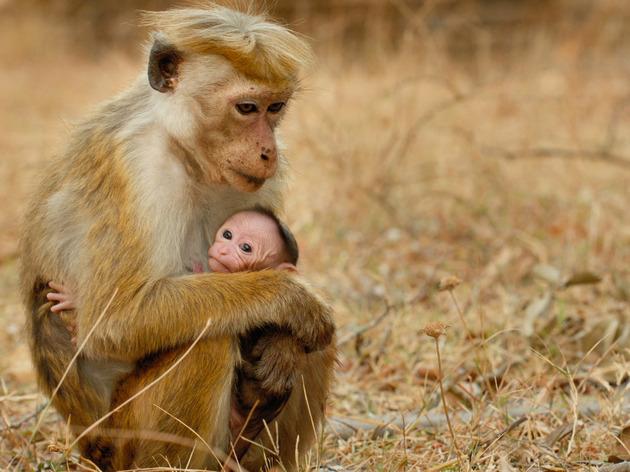
Disneynature’s annual wild kingdom-style nature documentary is predictably adorable but surprisingly absorbing. The toque macaque monkeys of Sri Lanka live in the 12th century ruins of Polonnaruwa in a society as rigidly structured and ruthlessly enforced as a high school cafeteria run by the mob.
After a chipper rendition of “Hey Hey We’re the Monkees” with an extra verse from former Monkee Micky Dolenz, Tina Fey’s warm and reassuring narration takes over, explaining the literal hierarchy of the monkeys, whose status is reflected by their position on their castle rock. “An intricate society of 50 monkeys band together in a strict social order.”
At the top is the alpha male, Raja, and under him are his male lieutenants/enforcers and three females known as the sisters, whose primary occupations are eating the best food and caring for Raja. Every element of the society — where the monkeys sit and sleep, what they may eat, who they may interact with — is clearly established and strictly enforced.
After we get the sense of the social structure, Fey introduces us to Maya, a young female at the bottom of the hierarchy who will be our hero throughout the story. She is a single mom with a son named Kip and since she is precluded from the literal easy pickings of the fruit tree reserved for the elite only, she has to be adventuresome and imaginative in finding food for them. Kip’s father Kumar is an outcast from his original tribe and, for showing interest in Maya and showing no fealty to Raja, from this one as well.
When a rival tribe invades, Raja’s luxurious lifestyle has left him unprepared to win a battle. The entire group is homeless. Maya and Kumar, who has returned, have skills that are suddenly valuable, even vital, for the survival of the monkeys. Maya helps them get food from the nearby town. Can Kumar help them reclaim Castle Rock?
Like all of the series, this is filled with “how in the world did that get that?” moments of extraordinary intimacy and power, like Maya’s tenderness with Kip, her harvesting of the termites who fly in just one day a year, and the monkeys’ interaction with other species, including a mongoose, a langur monkey, a monitor lizard, and, to their utter and hilarious mystification, a dog. Children will enjoy the hijinks, especially the monkey invasion of an empty school, where they discover snacks and a birthday cake. The predators and perils are gently presented and the issues of status and power are described in a manner that is open and accessible. Once the cheery but corny introductory song is over, this chapter avoids some of the cutesiness that marred previous releases. And the drama of the social structure is so intricate and abashedly familiar it will remind all of us to be a little kinder to those we consider beneath us and a little more willing to challenge the Rajas in our lives.
Parents should know that there are scenes of confrontation and predators, with some minor characters injured and killed and brief, discreet images of dead animal bodies.
Family discussion: What skills did Maya and Kumar have that were important to their group? How are the monkeys like and not like humans? How many ways did you see the monkeys communicate with each other and the other animals? How should Maya treat the Sisterhood and the lower-status monkeys?
If you like this try: the other Disneynature films, including “Chimpanzee,” “African Cats,” and “Bears”