
Faith-Based Movie Picks — The Today Show
Posted on March 31, 2015 at 3:13 pm
In honor of Easter and Passover, the Today Show has some good suggestions for faith-based movies, from the very serious and respectful to the light-hearted.
Posted on March 31, 2015 at 3:13 pm
In honor of Easter and Passover, the Today Show has some good suggestions for faith-based movies, from the very serious and respectful to the light-hearted.
Posted on March 30, 2015 at 3:40 pm
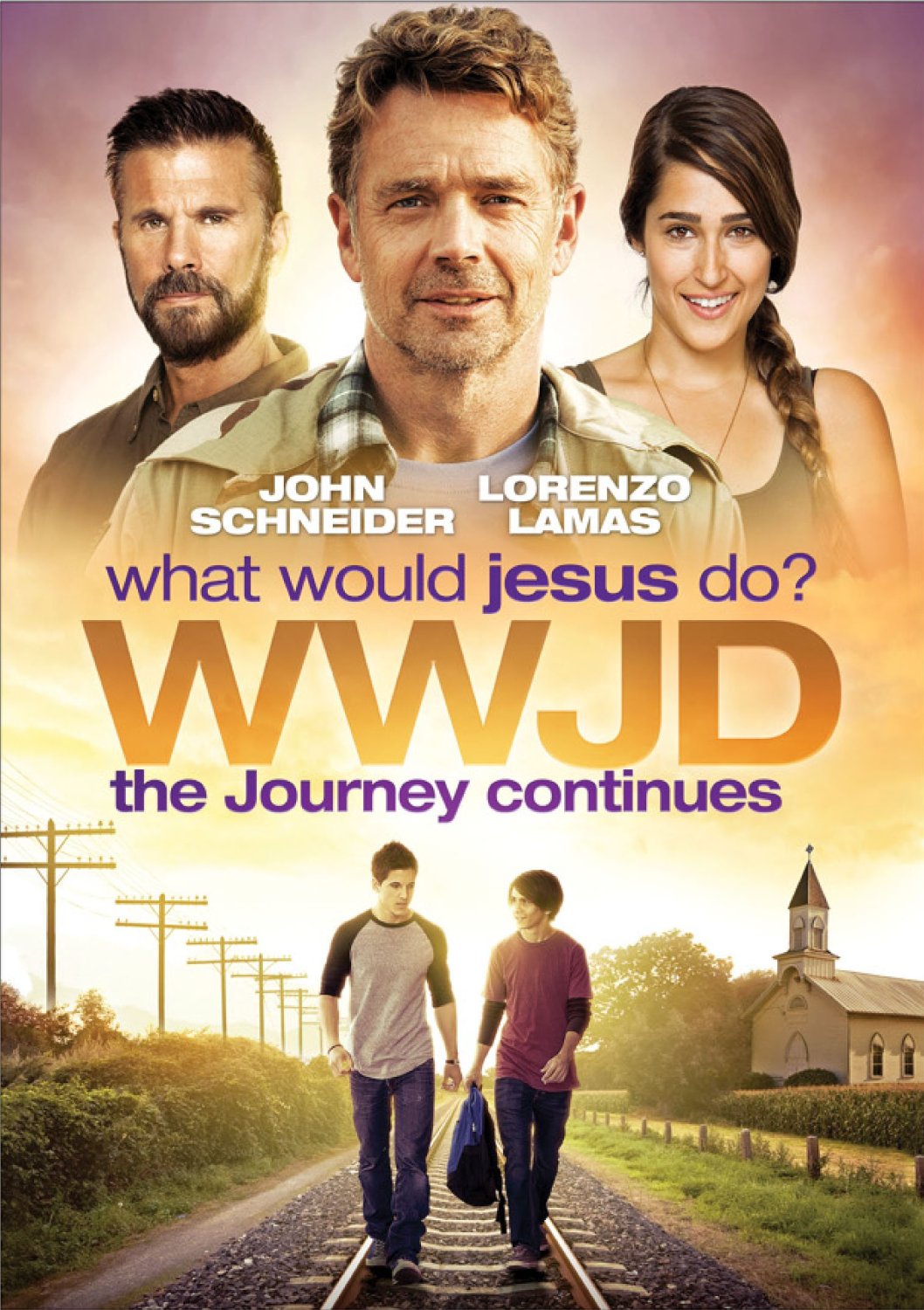
We are honored to present an exclusive clip from “WWJD (What Would Jesus Do): The Journey Continues,” inspired by the best-selling classic book In His Steps

In this film, the drifter (John Schneider) once again arrives in a new town – inspiring a group of people to live as Jesus would. From a troubled teen heading down the wrong path and dragging his brother along with him to a young woman struggling with the pressures of being in a romantic relationship to a family hoping to reunite with their estranged father. And, when the local pastor Joseph loses his faith in the lord, the Drifter leads the pastor and the community on an improbable journey back to faith and redemption.
I have five copies of the DVD to give away! To enter, send me an email at moviemom@moviemom.com with WWJD in the subject line and tell me your favorite spring memory. Don’t forget your address! (US addresses only). I will pick a winner on April 5, 2015. Good luck!
Posted on March 29, 2015 at 4:55 pm

Writer/director Amy S. Weber first became interested in the problem of bullying when she was producing educational films for young people in 1996, over about a 10 year period. “I was working with mostly teenagers on real life stories documenting what those experiences were for them. We covered social issues, everything from violence in school to eating disorders, teen suicide, child abuse, family life, and unhealthy relationships, the list goes on and on. And it was through the hundreds of kids that I worked with through today actually, any of the young people that I work with and mentor, there is always this common theme to every one of the issues that plague them. And it came down to low self-esteem. It came down to identifying a lot of the issues that they were having, feeling like they couldn’t be themselves, they didn’t fit, they were afraid to be a target. And as we dove in a little bit deeper it was a common theme that being picked on and bullied, being really a target of someone or possibly just that fear overall, kind of stopped them from being who they were and living as their true selves. So this is definitely been a project in the making for many, many years to bring this, what’s going on in today’s world into the spotlight through this perspective. I really wanted “A Girl Like Her” to stem from their beliefs. They were the inspiration and hopefully it will offer some help.”
In the time she has been working with teenagers, Weber has seen enormous changes in the way that technology and social media add to the pressure. “The days of the schoolyard bully and escaping their wrath once you walk in your front door at home and now you are safe, those days are over. The Internet offers quite the tool for an abuser to also collect an army of people who can anonymously pursue a person’s spirit and that’s kind of how I see it.” She quoted the father of real-life bullying victim Phoebe Prince. “He said that bullying is a word that used to exist when you would run away through the fields or down the street from the guy that was going to beat you up. Now it’s a completely different story. And he described what happened to his daughter. It was basically a relentless pursuit of her spirit, the destruction of a human spirit. Social media and the social applications that young people can use have changed this game in epidemic proportions.”
She sees another problem in the increasingly hostile exchanges teenagers see in the media, celebrities, even politicians making harsh accusations. “If were to really just put denial aside and put our busy lives aside to see all the stress that goes on in our lives as adults in this world in which we have created, we would take a very honest look at what’s happening to our youth today. They are simply holding up a mirror reflecting back to us what we have created in terms of a world. What we show them each and every day, everything they see in the media from so-called leaders, from politicians to church leaders, the people who are in the spotlight, the messages that they share, the violent types of programs that teenagers are exposed to, video games, an overall sense of negativity.”
She said, “If you’re lucky enough that you live among people who are very positive and joyful people, you get to feel that and take that in every day. I have a group of people like that and it is wonderful being around them. But how many people can you can say are truly happy? People who find joy every day and see the silver lining in every situation. But how many people are what you would consider lost, miserable, unhappy? Perhaps we believe that children are supposed to rise above what they are learning on a daily basis, and expect them to be better than us; we expect them to know more than us. That is the thing I think has shocked me the most in all of the work that I’ve done with kids.
Weber worked very closely with the teenagers in the movie to develop the story. And it was very important to her that the bully, a “mean girl” named Avery, would not be demonized. “I wouldn’t call her monster. I would say her behavior is very much like a monster who is so unconscious of what she’s doing to Jessica’s spirit, she doesn’t seem to care. She is so unconscious of it that a daily pursuit of Jessica has become quite entertaining to her and her friends. And there’s this desensitizing that has happened, almost this numbing effect that takes place in Avery where she is, even when confronted, unable to see what she was doing, denial at its finest. She’s a good student, she believes she’s a good daughter, and a good friend. Jessica just bugs her and she’s unapologetic about it. This is just the way she feels and she would like to express herself. Then you start to peel back the layers. We get to know Avery and we created a safe space for Avery to explore herself, take a look at life through a different lens and literally gave her a camera that allows her to look at life through a different lens, and it’s not as it appears. The outer shell of perfection, the popularity, the beautiful girl, the friendships, the status in her school, it’s meaningless because of what she is away from that, the true Avery comes out, the unhappy Avery, the insecure Avery, the scared Avery, the one who isn’t proud of what’s going on in her family life, the broken Avery that we begin to see. So we humanize a monster and when you do that we can’t as an audience be in denial of the fact that she’s in pain. Something is going on inside of her that is creating this projection, a coping mechanism, a mental health component, all of these play a role in this character. It is shocking to the audience that when the transformation begins the audience transforms along with it. That’s what’s so powerful about Avery Keller and the dynamic of her character.”
All of the dialog was improvised by the young performers. She gave them the overview of the scene and then let them create their lines based on “the emotion of what was happening in this moment in their lives. And then we would draw from real life to bring that out into their characters. I wanted them to bring their own experiences and their own emotions and their own words because I wanted it as genuine and as authentic, as real and raw as possible and whatever happens in that scene we would just keep going. I think we captured some of the most powerful moments I’ve ever experienced as a film viewer all my life. But to be on the other side of that camera and to be involved in the scene with these actors as it unfolded was incredible. It was just incredible the raw emotion especially because of the topic and how it has affects so many people.”
Posted on March 28, 2015 at 8:00 am
Posted on March 26, 2015 at 9:48 pm
B+| Lowest Recommended Age: | Middle School |
| MPAA Rating: | Rated PG for language, thematic elements and smoking images |
| Profanity: | Some strong language |
| Alcohol/ Drugs: | Smoking |
| Violence/ Scariness: | Some sad stories |
| Diversity Issues: | A theme of the movie |
| Date Released to Theaters: | March 27. 2015 |
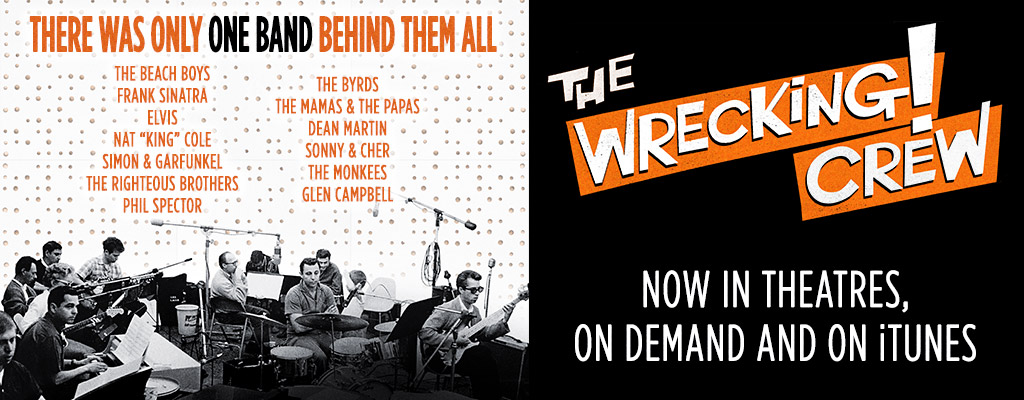
Maybe you like Frank Sinatra and your friend likes the Mamas and Papas. Maybe you’ve argued about who is better, the Beach Boys or Simon and Garfunkel, or maybe you prefer Elvis. Each of those monumentally talented performers had a highly distinctive sound but each of them was backed by the same group of astonishingly talented and remarkably versatile studio musicians known as “The Wrecking Crew.” Like other behind the music documentaries 20 Feet from Stardom


The Wrecking Crew backed up Bing Crosby, Glen Campbell (who was a Wrecking Crew member before he moved to the front of the stage), Herb Alpert, Cher, Nancy Sinatra, and the Monkees. The list of iconic albums that they didn’t play on is shorter than the one they did. Just as unforgettable as the timbre of the voices of superstars are the deedle-deedles or doot-doots (and the dum-dum-dum dum of the “Mission Impossible” theme song) and other musical cues and curlicues that make a song a hit. This movie has the pure joy of creating unforgettable music, and a satisfying chance to appreciate literally unsung heroes, but it also has loss and betrayal and secrets.
This is a love letter from filmmaker Danny Tedesco to his late father, one of the Wrecking Crew musicians, and those like him, who gave their best and were loved all over the world by fans who had no idea who they were. When Brian Wilson of The Beach Boys” tells us that Carol Kaye is the best bass player ever, it is impressive. When she shows us how she played the licks at the heart of “Good Vibrations,” it is soul-stirring. This is also a story that speaks powerfully to all of us who feel that our contributions are not as valued as they should be. And of course, it has some of the greatest music ever made, now to be listened to more thoughtfully and appreciated more than ever.
Parents should know that this movie has some sad stories, some strong language, and smoking.
Family discussion: Would you rather be a star or a studio player and why?
If you like this, try: 20 Feet from Stardom