Black Reel Awards: Selma Ties the Record

Posted on February 20, 2015 at 7:37 am

Copyright 2014 Paramount Pictures
It is a great honor to be one of the voters for the Black Reel Awards and I am so proud of our winners this year, with “Selma” deservedly tying the record set by “Precious” with eight awards.

Outstanding Motion Picture
Selma | Oprah Winfrey, Dede Gardner, Jeremy Kleiner & Christian Colson (Paramount)

Outstanding Actor, Motion Picture
David Oyelowo | Selma (Paramount)
belle-poster
Copyright 2014 Twentieth Century Fox

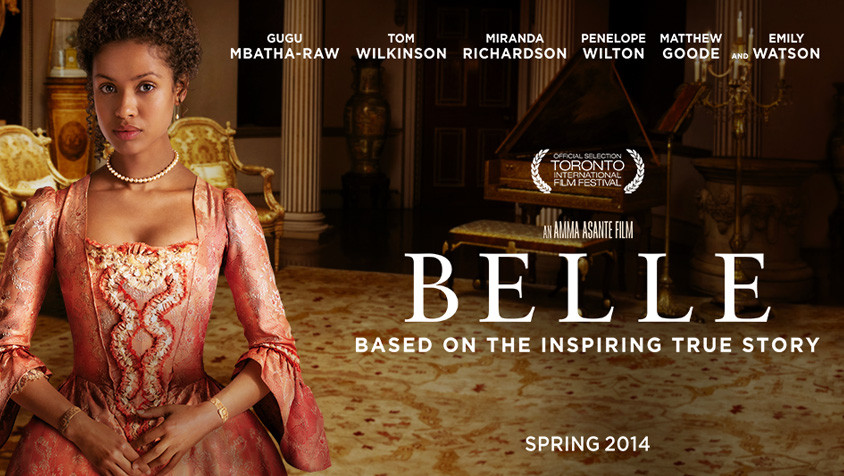
Outstanding Actress, Motion Picture
Gugu Mbatha-Raw | Belle (Fox Searchlight)

Outstanding Supporting Actor, Motion Picture
Wendell Pierce | Selma (Paramount)

Outstanding Supporting Actress, Motion Picture
Carmen Ejogo | Selma (Paramount)

Outstanding Director, Motion Picture
Ava DuVernay | Selma (Paramount)

Copyright 2014 Paramount Films

Outstanding Screenplay, Motion Picture
Chris Rock | Top Five (Paramount)

Outstanding Documentary
Anita: Speaking Truth to the Power | Freida Lee Mock

Outstanding Ensemble (Awarded to Casting Directors)
Selma | Aisha Coley (Paramount)

Outstanding Foreign Film
Fishing Without Nets (Kenya) | Cutter Hodierne (Drafthouse Films)

Outstanding Breakthrough Performance, Male
Tyler James Williams | Dear White People (Lionsgate/ Roadside Attractions

Outstanding Breakthrough Performance, Female
Teyonah Parris | Dear White People (Lionsgate / Roadside Attractions)

Outstanding Voice Performance
Morgan Freeman | The LEGO Movie (Warner Bros. Pictures)

Outstanding Score
Jason Moran | Selma (Paramount)

Outstanding Original Song
“Glory” from Selma | Performed by: John Legend & Common;
Written by: John Legend, Common & Che Smith (Paramount)

INDEPENDENT
Outstanding Independent Feature
The Retrieval | Chris Eska

Outstanding Independent Documentary
25 to Life | Mark Brown

Outstanding Independent Short
#AmeriCan | Nate Parker

TELEVISION
Outstanding Television Documentary or Special
Mr. Dynamite: The Rise of James Brown | Alex Gibney (HBO)

Outstanding TV Movie or Mini-Series
The Trip to Bountiful | Bill Haber, Cicely Tyson, Hallie Foote & Jeff Hayes (Lifetime)

Outstanding Actor, TV Movie or Mini-Series
Larenz Tate | Gun Hill (BET)

Outstanding Actress, TV Movie or Mini-Series
Cicely Tyson | The Trip to Bountiful (Lifetime)

Outstanding Supporting Actor, TV Movie or Mini-Series
Blair Underwood | The Trip to Bountiful (Lifetime)

Outstanding Supporting Actress, TV Movie or Mini-Series
Anika Noni Rose | A Day Late and a Dollar Short (Lifetime)

Outstanding Director, TV Movie or Mini-Series
Reggie Rock Bythewood | Gun Hill (BET)

Outstanding Screenplay, TV Movie or Mini-Series
Reggie Rock Bythewood | Gun Hill (BET)
Related Tags:


Awards Race and Diversity

McFarland USA

Posted on February 19, 2015 at 5:58 pm

B+
Lowest Recommended Age: Middle School
MPAA Rating: Rated PG for thematic material, some violence and language
Profanity: Some strong language
Alcohol/ Drugs: Drinking
Violence/ Scariness: Some gang-style violence, mostly off-screen, characters injured
Diversity Issues: A theme of the movie
Date Released to Theaters: February 20, 2015
Date Released to DVD: June 1, 2015
Amazon.com ASIN: B00UI5CUSM
Copyright Disney 2015

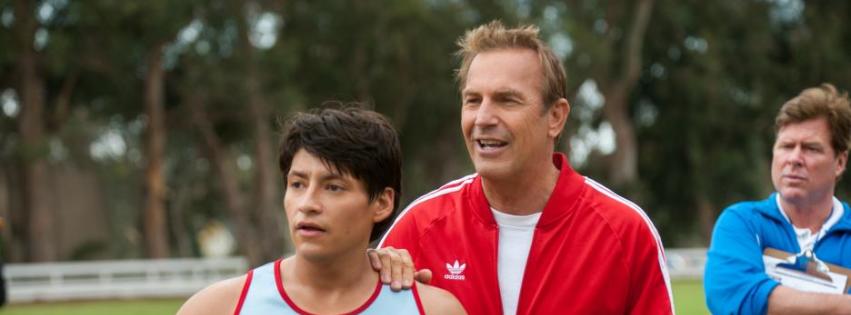
In 1987, Coach Jim White (Kevin Costner), who had never coached or even run cross country, took a team of kids from one of the poorest communities in California to a state championship. Of course that would have to become a Disney movie. But in 2015, it is near-impossible to make a movie about a white coach and his all-Latino team without falling into one of two equally fatal traps. We are no longer in an era when it is acceptable to have a “mighty whitey” movie has a white savior teaching people of color a better way to live. We are also no longer in an era where it is acceptable to have a “magical Negro” plotline, with a person of color teaching a white person a better way to live. We all have people in our lives who teach us important lessons, but presenting these stories in a sensitive way is an almost insurmountable challenge.

“McFarland USA” comes as close as it can to surmounting that challenge by wisely — and honestly — showing what everyone in the story learns from the experience. That comes from warm, sensitive performances by all involved and by telling details. The best is after the team comes in last in their first meet because the coach failed to check out the terrain. The team had never practiced on an incline and the course of the raise included some steep passages. So, for their next practice, Coach White brings them to a place where he and the audience see enormous piles of something under tarps. White knows only that this is a good place to practice running uphill. The team knows what is under the tarps — millions of discarded almond shells, removed by field workers, so supermarkets across the country can stock shelled nuts in little plastic pouches. The symbolism, and White’s growing understanding not just of the challenges faced by his team but of their dedication, perseverance, and strength is un-sappy and touching.

It begins with White getting fired for an outburst at an arrogant high school football captain, and taking a job as an assistant football coach in the small farm town of McFarland in central California. The entire population is Latino and most of them work in the fields as “pickers,” starting at age 10. The kids and teenagers work before and after school. White is quickly relieved of his responsibilities as assistant coach when he takes a player out of the game because he has been injured. He decides to start a cross-country team, even though the principal tells him ‘That’s a private school sport.  They breathe different air.”  White has no experience.  Also, because this is 1987, it would be about a decade before he could just Google how to do it. No one at the school has the time — or the shoes — for distance running. But he can see that they can run, and he gets them to agree to try to compete.  At first, he does not even have a stopwatch to time their runs.  He uses a kitchen timer.

It is a poor community.  No one in the boys’ families has more than a 9th grade education.  The high school is next door to the prison, with a barbed-wire fence.  The families see sports as “not essential,” a distraction that keeps the boys away from paying work on the fields.  “Every hour with you is food off my table,” says one father.  But White and the community learn to trust each other, even after a scary encounter.

Director Niki Caro (“Whale Rider”) has a sensitive touch and a trust in her story and characters that gives them space to breathe.  The running scenes are vivid and exciting.  By the time we get to the end credit sequence, showing the team now in their 40’s and still running every day in McFarland, we see that more than the state championship has been won.

Parents should know that there are a few bad words, some drinking, and some gang-style violence. It is mostly off-screen, but characters are injured and there are brief disturbing images.

Family discussion: Which teachers have made you see that you were capable of more than you thought? How did White and the team demonstrate that to each other?  When did the team start calling him “coach” and why?

If you like this, try: “Spare Parts,” “Chariots of Fire,” and “Hoosiers” and this interview with Carlos Pratts

Related Tags:


Based on a true story DVD/Blu-Ray Pick of the Week Sports Stories about Teens

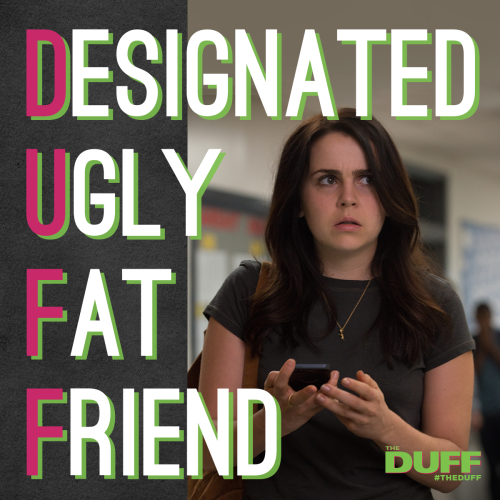
The DUFF

Posted on February 19, 2015 at 5:43 pm

B
Lowest Recommended Age: Middle School
MPAA Rating: Rated PG-13 for crude and sexual material throughout, some language and teen partying
Profanity: Some strong and crude language, one and a half f-words
Alcohol/ Drugs: Teen drinking
Violence/ Scariness: Bullying
Diversity Issues: A theme of the movie
Date Released to Theaters: February 20, 2015
Date Released to DVD: June 8, 2015
Amazon.com ASIN: B00WAEEG7M
Copyright 2015 CBS Films

A haiku has 17 syllables. A limerick has five lines. An omelet is made from eggs. And a teen romantic comedy will have our characters visit the mall, a locker room, a classroom, and the school bathroom. There will be a trying-on-clothes montage, a makeover, a house party, and a big school dress-up dance. Nothing wrong with that. We’d be disappointed if they skipped any of these essentials. But because we see those same elements over and over, it can be tough to get it right. For every “Mean Girls” or “10 Things I Hate About You” there are dozens of duds like “Drive Me Crazy” or “Confessions of a Teenage Drama Queen.”

“The DUFF,” based on the book by Kody Keplinger, mostly gets it right, thanks to witty performances and great chemistry from the wonderful Mae Whitman and Robbie Amell (“The Flash”), though they are both too old to play teenagers.

Bianca Piper (Whitman) has two best friends , fashionista Jess (Skyler Samuels), and hacker/jock Casey (Bianca A. Santos), both gorgeous and talented and loyal.  She does not mind too much that she is socially awkward, except when it comes to her inability to say more than two words (literally) to her soulful, acoustic guitar-playing crush, Toby (Nick Eversman).  And then Wes, the handsome boy next door, who happens to be the star of the school football team (Amell), tells her that she is the DUFF (designated ugly fat friend), the accessible gateway between her hot friends and the rest of the world.  She is hurt.  She is humiliated.  She is furious.  She un-friends Jess and Casey in a funny encounter that involves almost a dozen different kinds of social media entanglements.  With no one else to rely on, she decides to ask Wes for advice, in exchange for helping him with his chemistry test.  Cue the trip to the mall with the makeover/trying on clothes montage.

Wes has a “strobe light” (off and on) relationship with the school’s uber-mean girl, named, of course, Madison (Bella Thorne, an actual teenager).  Madison’s greatest goal in life is to become a reality TV star and she has her own DUFF/acolyte, constantly following her around to film her for her YouTube channel.

Seeing Wes with Bianca makes Madison determined to get him back in time for (of course) the big homecoming dance, where the homecoming king and queen will be announced.   Her friend spots Bianca and Wes at the mall, and secretly films Bianca joking about her crush on Toby.  Madison edits and uploads the humiliating video, which quickly spreads throughout the school.

Bianca is crushed.  

But with the support of Wes, she decides to own it, deciding that the experience is like the acid bath that created Batman villain, The Joker.  In a nice touch, even though they are hurt by Bianca’s accusations, Jess and Casey decide to help out behind the scenes by taking the video down.  They really are her friends.  But Bianca is so colossally embarrassed that what had seemed insurmountable humiliations like saying three or more words to Toby seem trivial.  Soon, they have a date for dinner.  And she has a beautiful new LBD to wear, courtesy of Wes.

The adults in the story are played by underused top talent (Allison Janney, Ken Jeong, Romany Malco), but the focus here is on the kids and they deliver their lines with a nice confidence and snap.  It is not as endlessly quotable as “Mean Girls” but it feels fresh and resilient.  There is even a suggestion that a makeover may not be right for Bianca, or, at least, that any makeover should leave her more like herself, in the world of high school movies, positively revolutionary.  Whitman makes Bianca so thoroughly herself throughout that anyone would be glad to have her for a BFF.

Parents should know that this movie includes crude sexual references and some strong language, including one and a half f-words. There is a party with some teen drinking.

Family discussion: How does this compare to your school experience? Why did Bianca believe she was a DUFF, even though her friends really loved her?

If you like this, try: “Nick and Nora’s Infinite Playlist,” “Sydney White,” and “Mean Girls.”

Related Tags:


Comedy Date movie DVD/Blu-Ray Pick of the Week Romance School Stories about Teens

On PBS for Black History Month: American Denial

Posted on February 19, 2015 at 3:31 pm

Next Monday, PBS’ Independent Lens series will show “American Denial,” a documentary about where racism comes from and why it is so difficult to overcome.

Follow the story of Swedish researcher Gunnar Myrdal, whose landmark 1944 study, An American Dilemma: The Negro Problem and Modern Democracy, probed deep into the United States’ racial psyche. The film weaves a narrative that exposes some of the potential underlying causes of racial biases still rooted in America’s systems and institutions today.

An intellectual social visionary who later won a Nobel Prize in economics, Myrdal first visited the Jim Crow South at the invitation of the Carnegie Corporation in 1938, where he was “shocked to the core by all the evils saw.” With a team of scholars that included black political scientist Ralph Bunche, Myrdal wrote his massive 1,500-page investigation of race, now considered a classic.

An American Dilemma challenged the veracity of the American creed of equality, justice, and liberty for all. It argued that critically implicit in that creed — which Myrdal called America’s “state religion” — was a more shameful conflict: white Americans explained away the lack of opportunity for blacks by labeling them inferior. Myrdal argued that this view justified practices and policies that openly undermined and oppressed the lives of black citizens. Seventy years later, are we still a society living in this state of denial, in an era marked by the election of the nation’s first black president?

American Denial sheds light on the unconscious political and moral world of modern Americans, using archival footage, newsreels, nightly news reports, and rare southern home movies from the ‘30s and ‘40s, as well as research footage, websites, and YouTube films showing psychological testing of racial attitudes. Exploring “stop-and-frisk” practices, the incarceration crisis, and racially-patterned poverty, the film features a wide array of historians, psychologists, and sociologists who offer expert insight and share their own personal, unsettling stories. The result is a unique and provocative film that challenges our assumptions about who we are and what we really believe.

Related Tags:


Race and Diversity Television

Replacing Jon Stewart — And Why the New Daily Show Host Should Be a Woman

Posted on February 15, 2015 at 4:08 pm

My friend Nell Scovell has an excellent piece in the New York Times about why the “host of possibilities” that Jon Stewart’s departure from “The Daily Show” opens up should focus on a woman as his replacement.

t will be the sixth time in just over a year that a prominent late-night desk will be up for grabs. All this turnover would seem like a great opportunity to throw a female host into the mix. But it hasn’t happened yet. So next time, right? There’s always next time. Except next time probably won’t be for a long time. Most late-night hosts stay put for decades. It’s the closest thing to a Civil Service job in TV.

Scovell’s list is long and telling.  The departures of Matt Smith (Dr. Who), Craig Ferguson, David Letterman, Stephen Colbert, and Jay Leno all led to calls for women to be considered and replacements who are male.  No question that all of those replacements are enormously talented.  But are they the only talented options?  Or the most talented?

The one solace: Whoever gets Mr. Stewart’s job will do better at hiring women than Jay Leno and Mr. Letterman, but that’s only because you couldn’t do worse. Mr. Leno went off the air with zero female writers; Mr. Letterman is set to bow with just one. (I like the image that together they average half a woman.)

At this point, I’d cheer a host being joined by a female sidekick.

This week’s release “Hot Tub Time Machine 2” has the heroes go into the future.  There are some pretty wild predictions about what lies ahead, but for me, the one that I wish was less of a long shot is the future host of “The Daily Show,” my favorite of its correspondents, Jessica Williams.

Related Tags:


Gender and Diversity Race and Diversity Television
THE MOVIE MOM® is a registered trademark of Nell Minow. Use of the mark without express consent from Nell Minow constitutes trademark infringement and unfair competition in violation of federal and state laws. All material © Nell Minow 1995-2026, all rights reserved, and no use or republication is permitted without explicit permission. This site hosts Nell Minow’s Movie Mom® archive, with material that originally appeared on Yahoo! Movies, Beliefnet, and other sources. Much of her new material can be found at Rogerebert.com, Huffington Post, and WheretoWatch. Her books include The Movie Mom’s Guide to Family Movies and 101 Must-See Movie Moments, and she can be heard each week on radio stations across the country.

Website Designed by Max LaZebnik