The DVD includes gently animated and beautifully narrated versions of four books about important figures in black history.
Duke Ellington Forest Whitaker reads this tribute to one of the 20th century’s most celebrated and influential musicians.
Ellington Was Not a Street Phylicia Rashad reads Ntozake Shange’s story about growing up amidst many of the great figures of African-American history.
Ella Fitzgerald: The Tale of a Vocal Virtuosa She had an exquisite voice and unsurpassed musicianship to use it like a jazz instrument. Billy Dee Williams tells the story of how she got her sound.
John Henry Samuel L. Jackson reads the story based on the famous legend and folk ballad about the hammer-driving man who could beat anyone, even the machine.
Human and animal characters in peril, references to hunting and eating whales, sad animal death
Diversity Issues:
Diverse characters
Date Released to Theaters:
February 3, 2012
Date Released to DVD:
June 18, 2012
Amazon.com ASIN:
B005LAIGQ4
“You’re not as easy to hate as I thought,” an oil man tells an environmental activist in “Big Miracle,” the heartwarming true story of a 1987 effort to rescue three Alaskan whales. It could just as well have been said by any of the more than a dozen lead characters who find themselves part of a “cockeyed coalition.” People who viewed each other with suspicion, if not downright animosity, are brought together to save a family of whales affectionately named after Flintstones characters.
The obstacle for the whales was five miles of ice that had to be cut away in sub-zero temperatures so the whales could get to the ocean. The bigger obstacle was the struggle for the humans to try to find a way to work together.
“Big Miracle” is the story of a rescue operation put together by people who each wanted something different. Native Inupiat whale hunters wanted to “harvest” (kill and eat) the whales. Environmentalists wanted to protect them. The US military did not want to ask for help from a Soviet ice cutting ship. An oil developer wanted to improve his reputation. Two Minnesota entrepreneurs wanted to show off their ice melting machine. Politicians wanted to look good or look innocent. And journalists wanted a story.
Director Ken Kwapis and screenwriters Jack Amiel and Michael Begler deftly keep the multi-character story from getting too cluttered with the help of appealing performances that give us an instant connection to the humans who are literally trying to save the whales. Standouts in the cast include John Krasinski as a television reporter who is tired of being stuck in a backwater where nothing exciting happens, Kathy Baker as an unexpected supporter with inside information, Dermot Mulroney as a frustrated military officer, and John Pingayeck on his first movie role as a grandfather trying to teach his grandson to listen to the world outside his earphones.
When the reporter’s story is picked up for a national broadcast, the first to arrive is Rachel (an earnest and believably bedraggled Drew Barrymore). She is an environmental activist with no resources but a good story. One by one, those who resist getting involved revise their positions when they are in the spotlight. No one wants to risk bad publicity–or pass up the chance to look heroic.
Even as the people come together, the logistical challenge becomes overwhelming and — parent alert — the ultimate rescue is bittersweet, not entirely triumphant.
The people stories, especially a trumped-up romantic triangle, are not as intriguing as the portrayal of pre-Internet news media. With only three network news broadcasts just half an hour each evening, everyone from school children to White House staffers watched the same stories. The archival footage is like the hub that holds all the parts of the story together, and there are some pointed jabs at media focus on the sensational over the significant.
A turning point comes when White House aide Kelly Meyers (based on Bonnie Carroll) persuades President Ronald Reagan, at the end of his term, to call on his counterpart in the USSR for help from a Soviet ice cutting ship. (Be sure to watch for photos of Carroll’s real life wedding to the military officer she met at the rescue over the closing credits.).
Meyers sets up a “Hello Gorby, this is Ronnie” phone call that serves as a literal ice breaker for the whales and a metaphorical one for two nations in the very earliest stages of post-Evil Empire relations. The people saved the whales, but the real miracle was that they learned their differences were small compared to what they had in common with each other and with the giant mammals who needed their help.
Parents should know that this movie includes animal and human peril and references to hunting and eating whales. One of the whales dies (off-screen).
Family discussion: How many different reasons did the characters have for helping the whales? How did the risk of bad publicity or the benefits of good publicity change their behavior? What is different now from the era when this took place?
If you like this, try: “Free Willy” and “Whale Rider” and the book about the real-life rescue by Tom Rose
Have you ever wished you had taken another path? We all wonder what our lives would be like if we had made a different choice and movies like “Me Myself I,” “The Family Man,” and “Sliding Doors” feature characters who get a chance to see the road not taken. The latest film to explore this idea is “Me Again,” a funny and inspiring film about a middle-aged pastor (David A.R. White) who gets a chance to see himself in several different lives, from a wealthy businessman to a model and even a fish.
I spoke to the beautiful Ali Landry about her role as the preacher’s estranged wife and her faith as a sustaining force in her life and her relationships.
Why was this film something you wanted to do?
Me Again is a great little family film and very witty and funny and I liked the topic it tackled.
Is it important to you that your work be family-friendly?
Yes. There are a lot of things I consider when I look at a project, but the most important is the takeaway for the audience. Does it inspire them to take action? What is the message behind it?
What is the takeaway for this film?
They say it several times in the film — happiness is a choice and before you start looking outside the place you are in, think about the blessings that you do have in your life. My husband and I talk about it all the time. We don’t understand how a marriage can survive without having God in it. All you have to do is reach out and He will answer. He is there for you.
What do you and your husband do to keep God present in your marriage?
We go to church of course. We have a Bible study we go to — that’s where we met. We surround ourselves with like-minded friends. And we like to do business where everyone is on the same page. My husband knows that his producing partners will hold him accountable and have his back in every situation.
Tell me a little about your faith journey.
I grew up Catholic and I was practicing to a certain extent but I was not walking the walk. I was going through my life with blinders on. I am very clear on the changing moment. Before I met my husband I was in a relationship for six years. There was infidelity and it really caused me to re-evaluate and change my entire life. That was the moment I began seeking out God and needed Him to help me put one foot in front of the other.
Do you have a favorite Bible verse?
I didn’t have a favorite verse at the time when I was seeking God but I would pray before opening the Bible and ask a question and the passage I would read would give me a wave of peace and I always thought, “My questions were answered.”
How do you balance your home and work life?
That is the big question. Every day I try to figure it out. I go into every day with the intention of being the best I can be for my husband, for my children, for my work, for my friends. But I try to give myself a break. As a mom there’s the overwhelming guilt you always have about not doing enough but the next day is a new day and I will start fresh and try again.
Do you, like the character in the movie, sometimes wish you could see what your life would be if you took another path?
I don’t even go there. I honestly feel like in that situation I told you about I heard God’s voice more clearly than I ever had in my life. That’s where I was seeking Him out the most. Even with the choices I’ve made since then I’ve felt I was swimming against the tide and out on my own. I had a lot of pushback from my agents and managers when I gave them limitations on what I would and would not do. But it gave me strength and I know I am doing exactly what I need to be doing in my life. Any time I see a glimmer of “what if” or “I wish,” it’s about switching the gears in your mind. I know I am where I am supposed to be and I’ve never been so happy and content. That’s the difference in having the Lord in your life. It keeps you in check.
Is it difficult to be a person of faith in show business?
Absolutely! I have to say no to a lot of projects. Thank goodness my husband and I are on the exact same page and he encourages me. I was working working working for ten years with no breaks. As soon as I took a stand, everything stopped and that was shocking. But he encouraged me to take on my own projects and and I am working very hard and very excited and happy.
Tell me about your newest television project.
It’s called “Hollywood Girls Night.” It was originally “Hollywood Moms Night.” Alison Sweeney and I started it about 18 months ago. We would invite our friends, other girls in the business and celebrity moms once a month, pot luck at each others’ homes, to be a support system for each other. On television you see women so many times tearing each other apart. One of my friends is actually on one of those shows and they pull her into meetings and say, “There’s not enough drama, you need to confront each other!” We wanted to do something where we just showed up for each other, a support system both professionally and in our home lives. People really responded to that and said they wanted to start their own groups. So we decided to create a television show, and it premieres on March 5. And I have another project called Spokesmoms, where every mom is a spokesmom, giving moms that really strong voice about the products they love.
Someday to be used in film schools as a textbook example of how not to adapt a best-selling novel for the screen, “One for the Money” is mis-cast, mis-scripted, and mis-directed in every category. Janet Evanovich’s popular series of series of books about lingerie saleswoman-turned bounty hunter Stephanie Plum seemed like a sure bet. But what’s not a sure bet is an actress who signs on as producer so she can cast herself in what turns out to be a misbegotten vanity project.
Katherine Heigl is a beautiful actress whose greatest attribute is an imperishable freshness. In the right movie, like “Knocked Up,” that works in her favor. Surrounded by the crudest possible material the contrast she provided gave warmth and romance to the film. But her range is limited and she is way beyond her capacity as a gritty Jersey girl who once ran over the guy who never called after they had sex on the floor of the bakery where she was working. Stephanie Plum is not supposed to be perky and adorable. She’s supposed to be sadder but wiser, determined, and, above all, game. Director Julie Ann Robinson has more experience with television (“Two Broke Girls,” Heigl’s “Grey’s Anatomy”) and never finds the right rhythm for the material. It is lumpen and awkward and it telegraphs its surprises. And just because it is written, directed, and produced by women does not keep it from being sexist, with some unfortunate stereotyped sassy black hookers thrown in for added discomfort.
It is hard to work up the energy to be offended by the stereotypes, though, when one is suffocating from the lethargy induced by the movie’s sluggish pacing and the fog induced by Heigl’s attempts at snappy dialog and a New Jersey accent.
Stephanie is a divorcee (“I had a husband. I didn’t like it. I don’t want another one.”) who lost her job selling lingerie and is about to lose her car for failure to keep up the payments. Her cousin is a bail bondsman who needs someone to help with filing. She blackmails him into giving it to her and then realizes that the real money is in bounty hunting and that the number one fugitive is Joe Morelli (Jason O’Mara), a cop charged with murder who in one of the movie’s most tiresome contrivances, has a past connection with Stephanie. Everyone in Trenton has a past connection with Stephanie.
We are then treated to a series of scenes in which Stephanie gets some guidance on bounty hunting from the hunky Ranger (Daniel Sunjata, another “Grey’s Anatomy” transplant) and has a series of cat-and-mouse encounters with Joe (the hunky Jason O’Mara of “Life on Mars”), trading painful quips that are supposed to be flirtatious but thud with a squish like overripe grapefruit. The mixed messages (Joe may be on the lam and handcuff her, naked, to the shower rod but he brings her coffee in bed) would be annoying if the whole movie was not too lethargic to merit that much attention.



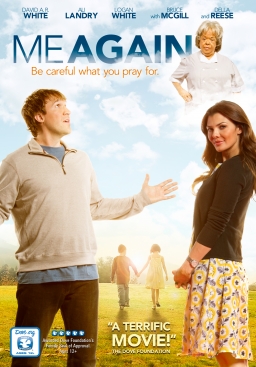
 ,” a funny and inspiring film about a middle-aged pastor (David A.R. White) who gets a chance to see himself in several different lives, from a wealthy businessman to a model and even a fish.
 seemed like a sure bet. But what’s not a sure bet is an actress who signs on as producer so she can cast herself in what turns out to be a misbegotten vanity project.