
Interview: Michael Landon, Jr. of ‘The Velveteen Rabbit’
Posted on February 25, 2009 at 8:00 am
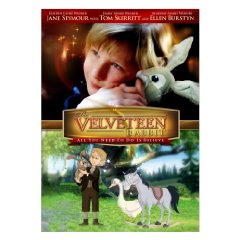 Michael Landon Jr.’s new film is The Velveteen Rabbit, based on the classic book
The movie opens in select cities this Friday, February 27, and will be out on DVD
It must have taken a lot of courage to adapt a book that has such passionately devoted fans!
It was very daunting. One of the things though that I wanted to do that’s quite different than Margery Williams’ source material was that she tells the story form the rabbit’s point of view and there have been sweet little films
In our story, the boy, called Toby, is sent away for the holidays with his stern grandmother. He finds the attic with all the forgotten toys and this little rabbit leads him to this imaginary world that he loves.
Is the movie live action or animated?
Both! It is live action, shot in Montreal, until Toby goes to the imaginary world, and that part is animated. We wanted to try to give it a period kind of feel because it takes place in 1910. We wanted to keep that feel through 2D and update it a little with 3D. Feature Films for Families owns an animation company and they spearheaded the animation, which took over three years. The cast includes Ellen Burstyn, Tom Skerritt, and Jane Seymour. The live action scenes were done more than three years ago.
Wow, so the kid who played Toby must be practically grown up!
He’s a teenager now! Wild to hear him.
Why has this story been so powerful for so many people over the generations?
The theme for me is that love makes us real. That’s a theme that transcends time. There’s definitely something for everyone in this film and something to connect the generations, just as it is when you read the story to children. Any parents and grandparents who see this, they’ll leave inspired and not only entertained but want to be closer and love better.
Did you have a special toy when you were a kid?
Charlie, a monkey! He was by far my favorite, he was my bud. He would still be with me but my mom got rid of all my stuffed animals, which devastated me.
What films and film-makers inspired you?
In terms of overall storytelling ability, Spielberg. No one is as versatile as he is. He can can tell a story like “E.T.” and then do “Jaws” and “Schindler’s List.” He’s on the top of my list. I like visionary directors like Ridley Scott. He is stunning. His background in production design makes his films something to behold, mesmerizing. Chris Nolan is a genius film-maker; I’m blown away by him. Going back years, Frank Capra is one of my all-time favorite classic directors, who tells a story that is not only compelling but makes me want to be a better person. That’s more of what I set out to do with this film and my others, too.
What makes you laugh?
My kids crack me up, not necessarily on purpose! And I love the old Pink Panther films with Peter Sellers.
What are you doing next?
I’m finishing up a novel, The Silent Gift, co-writing with Cindy Kelley, with whom I co-wrote “The Velveteen Rabbit” and other films. Coming in late spring early summer I have “The Shunning,” an Amish story based on a novel by Beverly Lewis and I am also working on “When Calls the Heart” with Maggie Grace. I have a history with both of those authors and it is wonderful to be able to continue to develop those relationships.
 , exploring these elements of the book. “Tales of the Black Freighter” is an animated film version of the graphic novel’s richly layered story-within-a-story, a comic book pirate story read by a young man in New York City while the city is being destroyed. A marooned sailor’s story mirrors the events in the Watchmen’s world. “300’s” Gerard Butler provides voice talent. And we get one perspective on the origins of the Watchmen from Hollis Mason’s tell-all autobiography, “Under the Hood.”
  book series by Peter Malone, MSC with Rose Pacatte, FSP, explores movies that highlight themes or issues emphasized in the Gospel. The books propose practical points for reflection, conversation and personal growth, in addition to insightful film analysis and information about the film and the people who made it.
  ,
,  , exploring the chasm between the sunny footage of birthdays and beach visits and the longing, failure, betrayal, and loss that was going on inside.
 ,
,  , and
, and