Herself

Herself

Posted on January 7, 2021 at 5:33 pm

B +
Lowest Recommended Age: High School
Profanity: Some strong and crude language
Alcohol/ Drugs: Alcohol
Violence/ Scariness: Brutal domestic abuse, illness, adult and child injured
Diversity Issues: Diverse characters
Date Released to Theaters: January 8, 2021
Herself
Copyright Amazon 2020

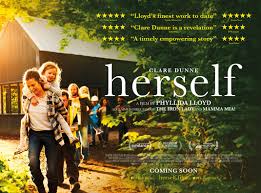
Reflexive pronouns are used differently in the UK. In the US, we mostly use “himself” and “herself” to emphasize achievement: “He learned to ride his bicycle himself!” But in the UK those words are colloquially used as subjects, to refer to individuals. So, in “Herself,” a film co-written by and starring Irish actress Clare Dunne, a man who is helping her character with a big project hands her a tool to take the first step, saying, “We’ll let herself do the honors.” The title refers to both uses of the word, indicating agency and independence.

Dunne plays Sandra, who tells her daughters in the opening scene that the birthmark under her eye was God’s way of making sure he can always find her, because “there are a lot of Sandras in Dublin.” We can see immediately what a patient, loving mother she is, and then again as she dances with her daughters to Sia in their kitchen. But when her husband Gary (Ian Lloyd Anderson) comes home, the mood shifts subtly but unmistakably. In what is obviously a pattern, he sends the girls outside and begins to beat Sandra brutally. But this time is different. She has made a plan and whispered the code word to her older daughter. Soon they are in shelter space in a hotel.

Sandra sees a video of a man explaining how anyone can build a tiny house. Without any help from the social service agencies, she decides to do it — by herself.

But what that means is getting the help of other people, including a local builder named Aido (Conleth Hill), neighbors, and the disabled doctor she works for as a cleaning lady (the always-marvelous Harriet Walter, mistress of the dry delivery). Like all abusers, Gary had cut her off from other people. But learning to trust and to reach out is as healing as the house itself.

Little details add a lot of richness to the story, showing us instead of telling us. Sandra meets Aido when he rebukes a sales clerk for being rude to her. And we see Aido change his mind about saying no to her when his son Francis (Daniel Ryan), who has Down syndrome, quietly hands Sandra his old work boots to help her get started. Gary’s mother has a poignant confession. A sympathetic social worker (Cathy Belton) helps Sandra when Gary sues her for custody. And the scenes with the neighbors, many of them immigrants, who help build the house are charming and engaging. Dunne’s performance is deeply moving and the story is genuinely heartwarming.

Parents should know that this film includes domestic abuse. Adults and children are injured. There is some strong and crude language.

Family discussion: Why did Sandra tell the judge she was asking the wrong questions? What can we do to provide better support for people like Sandra?

If you like this, try: “Still Mine” and “Places in the Heart”
Related Tags:


Drama Family Issues movie review Movies -- format Movies -- Reviews
If Not Now, When?

If Not Now, When?

Posted on January 7, 2021 at 3:18 pm

B-
Lowest Recommended Age: High School
Profanity: Some strong language
Alcohol/ Drugs: Addiction
Violence/ Scariness: Fight scene, angry confrontations
Diversity Issues: None
Date Released to Theaters: January 8, 2021

If Not Now, When?
Copyright 2020 Vertical Entertainment
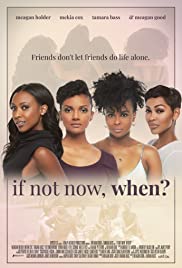
Meagan Good and Tamara Bass co-produced, co-directed, and star in “If Not Now, When?” with a screenplay by Bass. It is the story of four friends who come together as one of them is facing a crisis, and then support each other as each of them faces difficult decisions about life, work, parenting, and romance. Sound soapy? It is, but not because those issues should be dismissed as, in the words of Stephen H. Scheuer’s 1958-1993 guide to movies, “for the ladies.” Plenty of films make clear that those are foundational life questions that everyone struggles with. But the script is the weak point in this film, with exposition-heavy dialogue that too often tells instead of shows.

As we might expect, the strong point of the movie is the performances. Bass and Good understand actors, starting with the casting, and they give them the space to bring more life and emotion to the script than it merits.

In a brief prologue, we see the four friends in high school, working up an elaborate dance routine for a promposal — which is quickly declined. But they’re not bothered. It is clear that they are just as happy going with each other. Tyra (played as a teenager by Li Eubanks), asks them to wait while she goes to the bathroom. It turns out she is in labor. She has not told anyone she is pregnant, not even her friends. They stay with her and promise their support.

Fifteen years later, Tyra (Good) is being discharged from a hospital following an accidental drug overdose. Her friends and her husband, Max (Kyle Schmid) stage an intervention, telling her she needs to go to rehab because she is dependent on opioids. She refuses until she sees her 14-year-old daughter Jillian (Lexi Underwood), who found her unconscious and had to call 911. She reluctantly agrees to go, though at first insists that she does not have a problem.

While she is in rehab, we spend time with the three friends. Suzanne (Mekia Cox) is married to a bitter, unfaithful, alcoholic former football player. She loves another man but won’t leave her husband because she is pregnant, and, more important, because she wants everyone to think her life is perfect. Patrice (Bass), a nurse, is drawn to a doctor at her hospital, but is afraid he will reject her when he learns more about her. Jillian thinks of Patrice as a second mother, and is living with her while Tyra is away.

And Diedre (Meagan Holder), a gifted dancer, is weighing two offers, a dream job choreographing a pop star’s tour and a chance to reconcile with her ex (McKinley Freeman as Jackson), the father of her son. Other than the football player, the men are all gorgeous and pretty much fully devoted to supporting the ladies they adore. With over four different stories and ten characters, including children, there is not enough time to give enough depth to most of them to make us invest in their stories. Much of the film has no score other than some on-the-nose needle drops. Oddly, the lyrics of one say “you are what you choose to be” but another says, “I’ll be different for you, baby.”

Trya’s story gets the most attention, and the most interesting relationship in the film is between Tyra and her counselor at rehab, an exquisite performance by Valarie Pettiford. But the movie really comes to life only when the women are talking to each other, renewing their connections and providing the support that only those ride-or-die friends for decades can give. Good and Bass clearly share that connection, but it is only intermittently that it comes across in the film.

Parents should know that this film includes drug addiction and alcoholism, infidelity, some violence, sexual references and situations, and some strong language.

Family discussion: Why was it so difficult for these women to admit their problems? What made Tyra change her mind about cooperating with treatment?

If you like this, try: “Waiting to Exhale” and “Now and Then”

Related Tags:


Drama movie review Movies -- format Movies -- Reviews Romance
Best Documentaries 2020

Best Documentaries 2020

Posted on December 30, 2020 at 10:28 pm

Copyright 2020 Jaywalker Films
We are living in the golden age of documentaries, each year better than the one before. While print and broadcast media are struggling to keep their audiences, too often by becoming shrill and blurring the line between news and commentary, documentaries are becoming a powerful force for journalism, vivid, revealing, and letting us see and hear the significant participants in the story. Many of them were about politics, some more directly than others. But like nearly all documentaries, they were about people who are passionate and dedicated to what they do, whether it is seeking justice or winning an athletic competition. The best of the year, in alphabetical order:

All In ties current voter suppression policies to the Jim Crow history of keeping the poor and people of color away from the voting booth.

Athlete A, named for the then-anonymous gymnast whose complaint led to the first public disclosure of decades of abuse by Larry Nassar, reveals that the toxic culture of USA Gymnastics was about protecting the brand, not the girls.

Boys State: The American Legion brings high school students together to run mock elections in separate gatherings for boys and girls. This documentary is a microcosm of our political system, as seen by and perpetuated by teenagers.

Crip Camp: As significant and has hard fought and as perpetual as the movements for racial and gender equality, but not nearly as well known is the fight for disability rights. And it turns out in large part it began at a summer camp for disabled teenagers in the 1970s. Archival footage of the camp days and the protests and interviews with the major players are moving and inspiring.

Dear Santa: Director Dana Nachman says she hopes her movies inspire tears, laughter, and chills, and “Dear Santa,” about the USPS staff and volunteers who make sure children’s letters to Santa get answered, has plenty of all three. This film’s message that it’s truly better to give than receive is especially timely, combined with the now-nostalgic images of maskless people crowding together and giving each other hugs.

Dick Johnson is Dead is a fantastical meditation on loss from director/cinematographer Kirsten Johnson as her father struggles (cheerfully) with memory loss.

Feels Good Man A gentle cartoonists finds to his horror that his drawing of a frog has been adopted as a symbol by white supremacists, with a fascinating, terrifying, and very creepy look at the way memes go viral.

The Fight follows lawyers from the American Civil Liberties Union as they challenge four Trump administration initiatives that raise issues of inequality: separating families seeking legal immigration, the denial of abortion rights for an undocumented minor in custody, the prohibition of trans people in the military, and the insertion of a question about citizenship in the 2020 census.

Howard is not just the story of the life of the gifted writer/lyricist Howard Ashman (“The Little Mermaid,” “Little Shop of Horrors”), but the story of how stories come together, particularly in one monumental turning point at Disney animation.

John Lewis: Good Trouble is the story of one of the leading figures of the 20th century, the youngest speaker at Dr. Martin Luther King’s March on Washington, the student protester whose skull was broken on the march to Selma, and the US Congressman who was an irrepressible force for good.

Nationtime William Greaves’ restoration of archival footage lets us see many of the luminaries at the 1972 meeting of the National Black Political Convention held in Gary, Indiana. Their stirring speeches are inspiring and illuminating as we consider how much has changed and how much has not.

Best Documentaries 2020
Copyright Netflix 2020

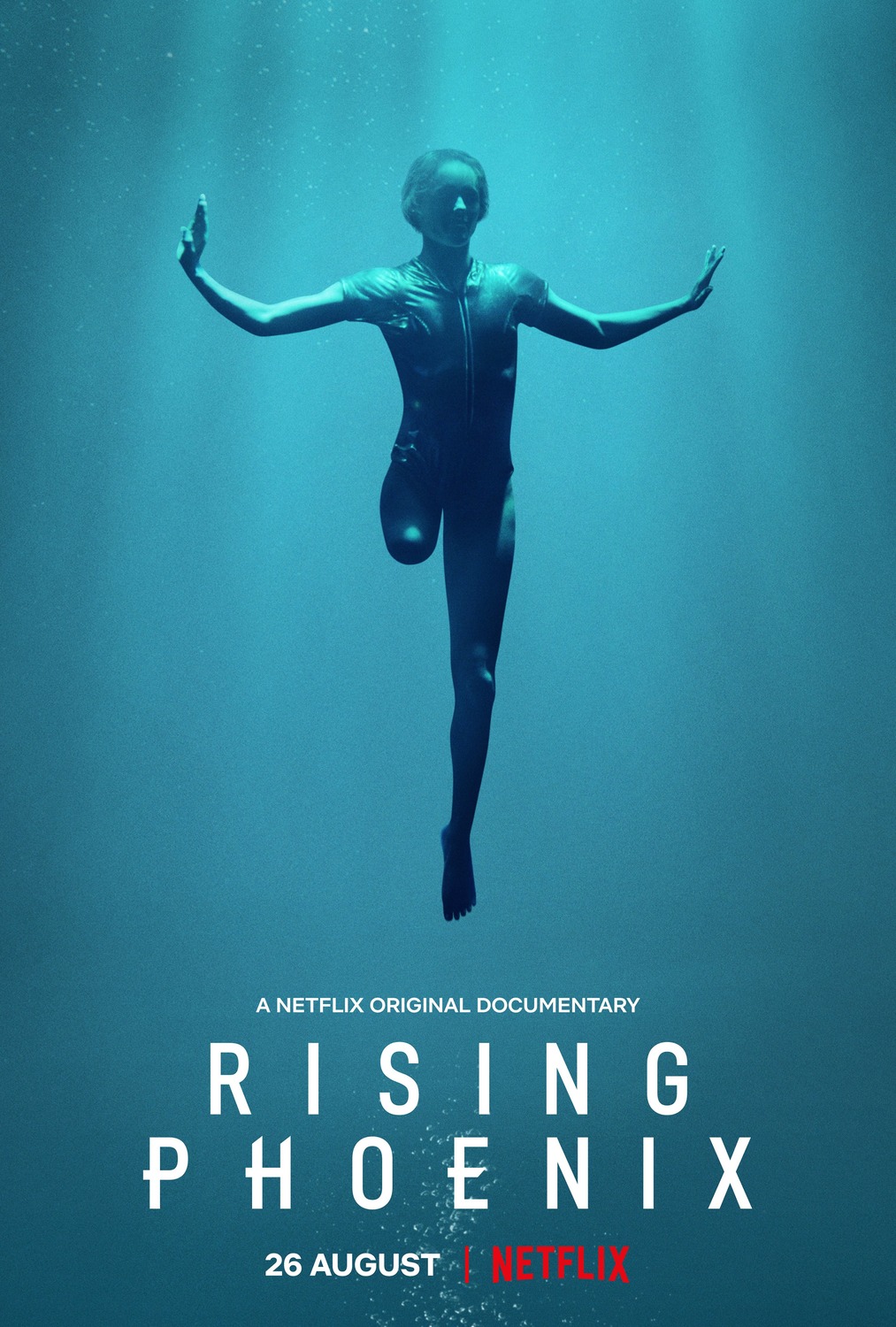
Rising Phoenix The Paralympics, which take place just after the Olympics in the same location, is about more than who can be the fastest, the strongest, the best. It is about reclaiming the idea of wholeness, for the athletes themselves but, more importantly, for everyone, to show differently abled people as powerful, capable. The athletic feats are stunning. The stories are even moreso.

Slaying the Dragon is about the Republican funders’ decision to focus on getting candidates elected by gerrymandering (though both parties are guilty) following the first election of President Obama and the citizen-led initiatives to overturn it.

The Surge “The Surge” follows three idealistic Democratic women who were inspired by the election of Donald Trump to run for office.

The Way I See It White House photographer Pete Souza proves and exemplifies two perennial adages: If a picture is worth a thousand words, his photographs are as eloquent as a whole library. And if journalism is the first draft of history, Souza not only reminds us of how much of our sense of events is formed by images like his, and in his new documentary, “The Way I See It,” like the photographs he took, reward a deeper look.

Related Tags:


Documentary
Soul

Soul

Posted on December 22, 2020 at 4:18 pm

A-
Lowest Recommended Age: 4th - 6th Grade
MPAA Rating: Rated PG for some language and thematic elements
Profanity: Mild language
Alcohol/ Drugs: None
Violence/ Scariness: Issues of life and death
Diversity Issues: Diverse characters
Date Released to Theaters: December 25, 2020

Copyright Pixar 2020
Pixar likes to take big swings, not just artistically but thematically. In “Soul,” Pixar has its first adult male (human) and its first Black lead character in Joe Gardner, voiced by Jamie Foxx. It has a less stylized look, set in a sepia-toned New York City. And it is about the most fundamental existential questions of all: Why am I me? What makes life meaningful?

We are human because we ask those questions. And the answer to that second one is: In part to make movies like this one, to explore what makes life worthwhile.

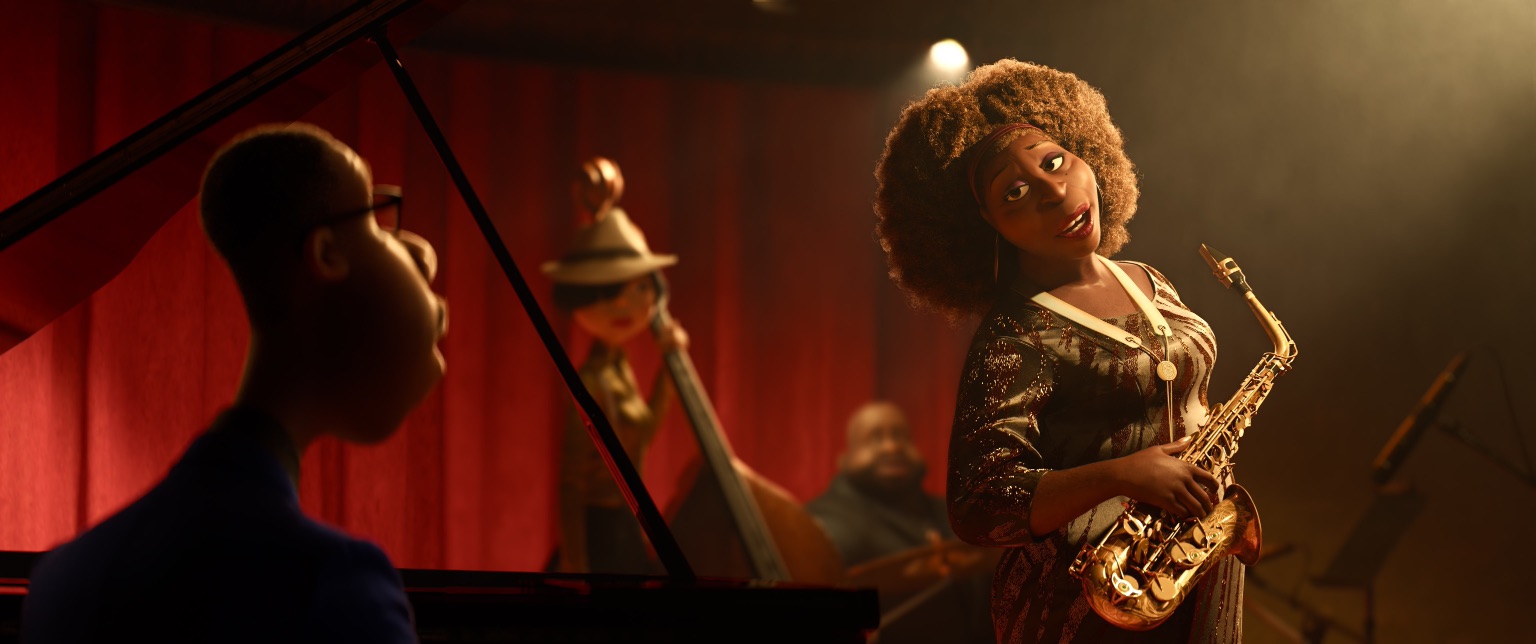
Joe is a jazz musician. At least, that’s what he is in his heart, what he wants to be, what he thinks he was born to be. But what he is at the moment is a high school music teacher trying to make teenagers’ instruments sound less screechy and more on key. And then (this is still in the first minutes of the movie) he gets the chance of his dreams. A former student named Curly (Questlove) invites Joe to to audition for saxophonist Dorothea Williams (Angela Bassett). Joe takes a risk by adding his own ideas to Dorthea’s music, and she agrees to let him join her on stage that night. It’s everything he ever hoped for.

That’s why he is not paying careful attention as he walks home, and so he falls into a sewer and dies. We’re still in the first minutes of the film.

Instead of The Great Beyond, Joe ends up in The Great Before, where young souls prepare to be born. Joe thinks this could be his opportunity to return to earth and become the musician he knows was his reason for being alive. The counselors who guide the little souls think he is a mentor, and assign him to their hardest case, known as 22 (Tina Fey). Mentors like Lincoln, Mother Teresa, and Gandhi have all failed to persuade her. So we have one character who will do anything to get back to life on earth and one who refuses to go because she doesn’t see the point.

Copyright 2020 Pixar

The counselors look like Calder wire sculptures. They are all named Jerry. And they have a diverse range of voices, including Wes Studi, Fortune Feimster, and Richard Ayoade. Why do they look and sound like that? Because they are too complex for humans to comprehend, they have created these simple, accessible forms.

That’s what all story-tellers try to do, what stories are for, and what Pixar has done here: they take very complicated characters and themes and make them accessible to us. When they do it right, we cry. And then we continue to think about what they illuminate for us. If they do it right, we are enlarged by it, as the characters are. This is Pixar, so it will make you laugh, think, and cry, and then think some more. And because it is Pixar the art, from the character design to the real and imagined settings are believable and enthralling. The sublime jazz music is from Jon Batiste and the score is from top team Trent Reznor and Atticus Ross (also heard this year in “Mank” and “Watchmen”).

Co-writer/co-director Kemp Powers (screenwriter of one of December’s other best films, “One Night in Miami”) was one of many Black voices brought in to make sure the film is authentic to the lived experience of Black people for two reasons. First, they wanted Black audience members to recognize the characters and the experiences. Powers encouraged the addition of one of my favorite scenes in the film, the barbershop owned by Joe’s friend Dez (Donnell Rawlings). Co-writer/co-director Pete Docter is exploring what happens to us after we survive growing up, as in his now-classic “Inside Out.”

We learn from Joe’s interactions with Dez and Curly that he is so caught up in music and his fear of not realizing his dream of playing “Black improvisational music” that he does not really listen to others. (An encounter later on with another student helps him begin to realize that even people who are not a part of his “real” life have something to tell him.) And we learn before Joe does that just because we have a dream does not mean it is the only dream or the best dream.

There are so many ideas and insights and so much music in “Soul” that it rewards several viewings. In The Great Before, each soul waiting to be born visits the Hall of You, to pick up individual personal qualities, like being excitable or aloof. They can give the soul the what and the who, but the why is something they have to discover for themselves. There is a sort of no-man’s-land for people who operate outside the rules of The Great Before, including a pirate shipped manned (so to speak) by people like Moonwind (talk show host Graham Norton) who is still alive on earth but through meditation communes with the universe. There are many lovely touches in the details, like the pre-credits “When You Wish Upon a Star” played by Joe’s students.

Joe and 22 end up back on earth, chased by a celestial accountant named Terry (Rachel House) trying to bring them back to The Great Before. Can Joe get to the performance after all? Can 22 find some reason to live as a human? (You don’t have to be an existential philosopher to agree with her that pizza is pretty great.)

We’ve all seen a lot of movies with heroes who seek and find their one true purpose. Many are based on real life, about people who became successful and famous ins spite of doubters. There are always those who nag them to do something else and we are supposed to see them as short-sighted and selfish. “Soul” wants us to see more than that, and it shows us how to begin.

Parents should know that this movie concerns life and death and a character is killed in an accident early in the film and then goes to The Great Before. There is some mild language and some cartoon-style peril.

Family discussion: What would you see in the Hall of You? What would you tell 22? How has this year made you think about what is important?

If you like this, try: “Inside Out” and “Everybody Rides the Carousel”

Related Tags:


Animation Fantasy movie review Movies -- format Movies -- Reviews Spiritual films
THE MOVIE MOM® is a registered trademark of Nell Minow. Use of the mark without express consent from Nell Minow constitutes trademark infringement and unfair competition in violation of federal and state laws. All material © Nell Minow 1995-2026, all rights reserved, and no use or republication is permitted without explicit permission. This site hosts Nell Minow’s Movie Mom® archive, with material that originally appeared on Yahoo! Movies, Beliefnet, and other sources. Much of her new material can be found at Rogerebert.com, Huffington Post, and WheretoWatch. Her books include The Movie Mom’s Guide to Family Movies and 101 Must-See Movie Moments, and she can be heard each week on radio stations across the country.

Website Designed by Max LaZebnik