Pioneers of African-American Cinema — Now on DVD

Posted on August 17, 2016 at 3:18 pm

The 5-disc set Pioneers of African-American Cinema, funded via Kickstarter, is a treasure of rarely-seen films from pioneering filmmakers like Oscar Micheaux. The New York Times wrote, “From the perspective of cinema history — and American history, for that matter — there has never been a more significant video release.”

These were known as “race films,” made in an era where the few mainstream roles for performers of color were sometimes cut entirely out of the films when they were shown in the South, and a small group of black filmmakers made films with all-black casts that were created for black audiences. The Blu-Ray set includes archival treasures.

There is also “The Moses Sisters Interview,” a 33-minute videotape made by the historian Pearl Bowser in the late 1970s that features the performers Ethel, Lucia and Julia Moses reminiscing about their careers. Other documentaries include the 1937 Works Project Administration short “We Work Again,” with footage from Orson Welles’s all-black Federal Theater Project’s production of “Macbeth,” and excerpts from fieldwork footage the novelist Zora Neale Hurston shot in the South as part of her ethnographic research.

Related Tags:


Film History Movie History Race and Diversity

Hidden Figures Will Tell The Story of Three Black Women at NASA

Posted on July 10, 2016 at 8:00 am

Three of my favorite performers will star in a new film called “Hidden Figures,” the true story three African- American women who worked for NASA during the 1960s space race.  of Janelle Monae, Octavia Spencer and Taraji P. Henson will star as Katherine Johnson, Dorothy Vaughan, and Mary Jackson, who are a crucial part of NASA’s history.

Here’s Katherine Johnson.

And the cast congratulates her.

Related Tags:


Based on a true story Behind the Scenes Gender and Diversity Race and Diversity

#OSCARSlesswhite — New Additions to the Academy Bring Some Diversity

Posted on July 2, 2016 at 4:31 pm

Some good news from the Motion Picture Academy — the acceptance of a younger, more diverse group of highly qualified members, which should help with the embarrassingly narrow focus that led to the #oscarsowhite problem last year, not a single person of color nominated for an acting award. New members include actors Idris Elba, Brie Larson, John Boyega, America Ferrera, Michael B. Jordan, Emma Watson, Tina Fey, Oscar Isaac, Tom Hiddleston, Ice Cube, and directors Ryan Coogler, Julie Dash, Adam McKay and Patty Jenkins. and Chadwick Boseman. It is the Academy’s largest and most diverse new group of members, more than double the 322 invited last year. 41% of the new invitees are people of color. There are 283 new international members from 59 countries. Academy president Cheryl Boone has made good on her promise for prompt action. Here’s hoping we see this kind of improvement every year.

Related Tags:


Commentary Gender and Diversity Race and Diversity
Free State of Jones

Free State of Jones

Posted on June 23, 2016 at 5:40 pm

B+
Lowest Recommended Age: High School
MPAA Rating: Rated R for brutal battle scenes and disturbing graphic images
Profanity: Some strong and racist language
Alcohol/ Drugs: Alcohol
Violence/ Scariness: Intense and graphic violence including battle scenes, hanging of adults and children, brutal abuse, rape, and lynching
Diversity Issues: A theme of the movie
Date Released to Theaters: June 24, 2016

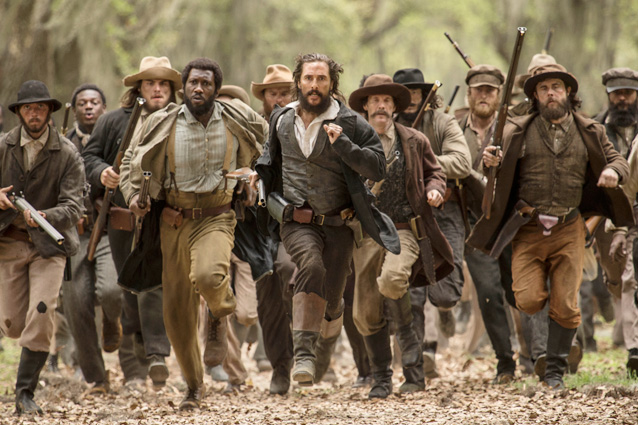
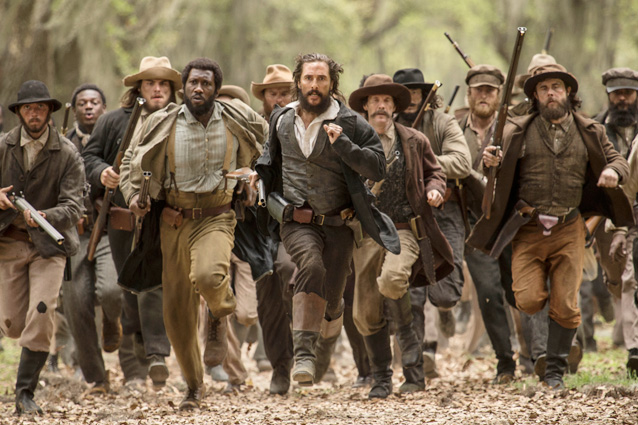
freestateofjonesThe timing is not great. “Free State of Jones” is a Civil War drama based on the true story of a community of Confederate deserters and runaway enslaved people who banded together to fight for their own vision of freedom. It was filmed once before as “Tap Roots,” with Van Heflin, Susan Hayward, and Boris Karloff (as an Indian!), but this version, from “The Hunger Games'” Gary Ross, deals forthrightly with the racial issues, or at least tries to. There is an inescapable and maybe unconquerable problem in telling a story set in Civil War era Mississippi with a glorified white man as the hero, in a time when one of the most anticipated films of the year is the Sundance Grand Jury and Audience award winner “Birth of a Nation,” a film that grabbed and repurposed its title from the blatantly racist D.W. Griffith film of the silent era.

Ross brings the same passion for tackling tyranny to this story that he did to “Hunger Games.” It’s just that we’re no longer dealing with speculation and metaphor, and that means a political overlay reflecting both historical and contemporary controversies.

Matthew McConaughey plays Newt Knight, a Mississippi farmer with a wife and young son who is serving as a nurse in the Confederate army. Early on, we see him removing the uniform from a wounded enlisted man so he can tell the doctors he is an officer and get him treated. Increasingly frustrated with the endless carnage on behalf of wealthy elites who exploit the poor, it is too much for him at last when his nephew is killed in battle and he leaves, taking the body home to be buried. There he finds the Confederate forces are taking all of the food from the local farmers, leaving them to starve. On the run from the military seeking defectors, he hides out in a swamp, where he meets up with runaway slaves. There he decides that his allegiance is not to the Confederacy, which is sending poor boys to fight to preserve what today we might call the 1 percent. “I ain’t fighting for cotton,” another solider tells him. “I’m fighting for honor.” “That’s good,” Knight responds. I’d hate to be fighting for cotton.”

Writer/director Ross, working with the locations where these events occurred and a touching score from Nicholas Britell, evocatively conveys the hardscrabble lives, the literal and spiritual grit, the desperation and conviction it inspires. Knight hands guns to three little girls and, when the Confederate officer does not take them serious, Knight tells him that guns will shoot anybody. “It don’t seem to matter where the bullet comes from.” The depth of research is evident throughout, but it is never pedantic. The storyline is grounded in historical events like the Confederacy’s requisitioning of food and supplies, and post-war exploitation and terrorism, led by former Confederate officials, that prevented former enslaved persons from basic rights and murdered those who tried to assert them. There are brief glimpses into a conflict 85 years later, as the descendent of Knight’s relationship with a former slave named Rachel (Gugu Mbatha-Raw) is criminally prosecuted for marrying a white woman in violation of the state’s laws prohibiting mixed marriages. It is there to remind us that we can never dismiss the events of the past as behind us.

Parents should know that this film has very intense and graphic violence including Civil War battles and skirmishes, hanging, rape, and lynching, adults and children injured and killed, very disturbing images, some strong language with racist epithets, some sexual references

Family discussion: What did Knight find most unjust about the Confederacy?  What did we learn from the 1948 courtroom scenes?

If you like this, try: “Glory” and “The Red Badge of Courage” and read about the story that inspired the film.

Related Tags:


Based on a book Based on a true story Drama Epic/Historical Movies -- format Race and Diversity War

Interview: Aisha Harris on Slate’s Black Film Canon — The 50 Greatest Films Made By Black Directors

Posted on June 7, 2016 at 3:56 pm

Aisha Harris and Dan Kois got ideas from a range of filmmakers, critics, and historians to prepare Slate’s list of the “50 Greatest Films by Black Directors,” a response to the many “canonical” lists that overlook these films. In an interview, she talked about why it was important to research and publish this list, which they called “The Black Film Canon,” and what she learned. I asked why they limited the list to films by black directors. “The idea came from Dan Kois through the idea of #Oscarsowhite controversy and how big a deal that was earlier this year. And part of the running narrative about the reason why that there were hardly any black people nominated this year is because they often don’t get to tell their own stories. They haven’t made it to the point where they can direct a big budget film. And so we wanted to make sure that this was a list that focused specifically on black people being able to tell their own stories and the opportunities that they’ve had to do that. Obviously there are plenty of really great films not on the list that are about black characters; ‘Cabin in the Sky,’ ‘Stormy Weather,’ ‘The Wiz,’ but we were specifically interested in those who were able to get behind the camera and I think there is something really powerful to be said about black people being able to tell their own story. One of the movies is ‘Malcolm X.’ That was originally supposed to be directed by Norman Jewison who obviously directed some great films about race, including ‘In The Heat of the Night’ and ‘A Soldier’s Story,’ but we all know that movie would have been vastly different and maybe not as powerful as Spike Lee’s version of ‘Malcolm X.’ So I think there is something to be said for being able to tell your own story and that’s what we wanted to get across with this list.”

It was great to see titles on the list that some people might consider not serious or prestigious enough for “canon” status, reflecting the same broad range that has what was once dismissed as a genre film, “Vertigo,” on the top of the once-a-decade Sight and Sound ranking. “For us that was another goal. What we wanted with this list was to broaden the scope of what canon means. It doesn’t have to mean high art’ it doesn’t have to mean that every single piece of that film is perfect or that it has a big budget or it is a Hollywood studio film. We wanted to make sure that our list represented films that are culturally significant but maybe aren’t considered ‘great’ by the usual people who make these canons. A lot of people, including me, forget that ‘House Party’ premiered at Sundance in 1990 and that helped redefine what an indie film could look like. It was at the forefront. It was what indie films could look like in the 90s. We also wanted this also to be an accessible list. A lot of these movies are challenging and I am all for challenging films — we should all be challenged by films. But there is room on the list for films that don’t necessarily have to be so heavy. I think we should celebrate the movies that aren’t heavy as well as the ones that are.”

Some of the films reflect the internalized bigotry — and commercial pressures to reinforce stereotypes — of their era. “that is the sort of thing you always have to consider with older movies, especially when you’re talking about black films and black representation on films. I mean ‘The Blood of Jesus,’ the Spencer Williams film, if you are a modern viewer it’s not the easiest film to watch. The acting was theatrical and it has a very old-school mentality about the power of religion and this very antiquated notion of the sinner and redemption. But at the same time you can’t ignore the fact that it’s a very culturally significant film, it’s an historically significant film and it exists. Spencer Williams, if people know him at all, he’s known for being one half of Amos and Andy which obviously has been heavily criticized and does not hold up today by modern standards. So it is important to remember that he was also a filmmaker and a talented one at that at a time when there were barely any black filmmakers. I think is something that is worth looking at and he’s worth being acknowledged as a filmmaker and not just as this character who now is just shorthand for Uncle Tom.”

They also made a point of including black women directors like Kasi Lemmons (“Eve’s Bayou”) and Ava Duvernay (“Middle of Nowhere” and “Selma”). “As polarizing as Spike Lee can be, I think most people acknowledge that he is a force to be reckoned with whether you are talking just about black films or a film in general but when it comes to women it is just a whole different ballgame. A lot of the women on the list have only one or two feature films under their belt and they have been in the game for 20, 30 years. Leslie Harris made ‘Just Another Girl on the IRT,’ and I think that remains to this day her only feature film. And Kasi Lemmons has not made that many movies, Gina Prince-Bythewood did ‘Love and Basketball,’ and then she did ‘Beyond The Lights‘ 14 years later, so they aren’t getting the same opportunities. I mean it’s hard for black males it’s even harder for black women and Ava Duvernay is hopefully turning the tide on that and she’s obviously very vocal and very active about promoting other women and other women of color in filmmaking and I think it’s great that we have someone like her that’s hopefully leading the charge along with the sudden attention to Hollywood being so white and so male.”

Harris was not familiar with all of the films on the list and hopes it will bring them to a wider audience as well. “I just think it gets at the emotional core of slavery and also the politics that happens within slavery that I think a lot of films do not do.
Another movie that I was unfamiliar with was ‘Medicine for Melancholy.’ That’s the 2008 film by Barry Jenkins and it stars Wyatt Cenac and it’s this very beautiful black and white film. I think some people made the comparison to ‘Before Sunrise.’ It takes place in one day. Two people have a one night stand but there is also so much more going on, there are some questions about gentrification and about romance and I was really happy to see that movie and discover it. That’s one of the things I appreciated about the list and I am glad that we did was that we did not just rely on myself and Dan. We didn’t want this to be just a list. We wanted to get as many perspectives as possible and as many informed perspectives as possible and that opened up a whole other realm and I think that made the list all the better to have those suggestions thrown after us.”

Related Tags:


Film History Interview Movie History Race and Diversity
THE MOVIE MOM® is a registered trademark of Nell Minow. Use of the mark without express consent from Nell Minow constitutes trademark infringement and unfair competition in violation of federal and state laws. All material © Nell Minow 1995-2026, all rights reserved, and no use or republication is permitted without explicit permission. This site hosts Nell Minow’s Movie Mom® archive, with material that originally appeared on Yahoo! Movies, Beliefnet, and other sources. Much of her new material can be found at Rogerebert.com, Huffington Post, and WheretoWatch. Her books include The Movie Mom’s Guide to Family Movies and 101 Must-See Movie Moments, and she can be heard each week on radio stations across the country.

Website Designed by Max LaZebnik