How to Train Your Dragon (2025)

How to Train Your Dragon (2025)

Posted on June 15, 2025 at 9:32 pm

B
Lowest Recommended Age: 4th - 6th Grade
Date Released to Theaters: June 13, 2025
Date Released to DVD: August 13, 2025

It may be completely unnecessary but this live action version of the terrific 2010 animated “How to Train Your Dragon” is still a great story. The story is heartwarming, the visuals are exciting, and the themes of courage used for a deeper understanding are still worthy. 

Copyright 2025 Universal

I object to the idea that an animated film is just a lesser version until technology develops to create a “live action” remake (the dragons are CGI). Animation has its own artistry, vibrance, and expressiveness. This version is almost a shot-for-shot remake, emphasizing the original’s unsurpassability, yet somehow it is nearly half an hour longer. The original – and its sequels and spin-offs – are so memorable that this remake is like enjoying a cover band version of a classic song more for the memories it evokes of the original than for its own merits. 

Our young hero is Hiccup (Mason Thames), the son of single dad and chief Stoick (Gerard Butler, who voiced the same character in the original). They live in Berk, a craggy, stark, unforgiving, and remote Scandinavian community beset by dragons who steal their food. Status is based on killing dragons and many people in the community proudly sport scars and prosthetics to demonstrate their courage in these battles. Stoick, disappointed by his son’s lack of warrior spirit, reminds Hiccup that his mother was killed by a dragon (though those of us who have seen the animated sequels know that she is still alive). Hiccup is apprenticed to Stoick’s best friend Gobber (Nick Frost), whose prosthetic hand and foot are the result of fighting dragons, and who now provides weapons and teaches those teenagers who, unlike Hiccup, are going to be trained to be dragonslayers.

As in the original, the dragons here are wonderfully imagined, with many fascinating species. Each looks different and poses different kinds of threats. While Stoick has taken all of the warriors in search of the dragons’ nest, Hiccup finds and befriends a wounded Night Fury he names Toothless, hiding their relationship from everyone else until they are discovered by Astrid (Nico Parker), the best young warrior trainee. He takes her for a ride on Toothless and she is convinced that dragons are worthy of respect and affection. 

Very little has changed in the storyline, as noted. But perhaps 15 years distance has brought some changes in our atmosphere and understanding. For me at least, Stoick’s harsh judgment of Hiccup as weak and fearful because he does not want to cut the heads off of dragons felt like a slightly broader statement about masculinity, hierarchies based on community standards, and fear of the unknown than a father’s distorted but genuine wish to protect his son from creatures that were responsible for so much loss. Perhaps that was just because I know the story so well and thought the padding dragged a little.

Thames portrayal of Hiccup is sincere and he allows us to see the teenager sort through his feelings as he allows curiosity to triumph over tradition. Parker, the daughter of Thandiwe Newton and Ol Parker, is excellent, showing us Astrid’s fierceness and, like Hiccup, the curiosity that leads her to question her community’s assumptions, even though by the standards she was raised with, she is at the top. 

Production designer Dominic Watkins skillfully translates the animated world with intricate, textured, settings filled with intriguing details. The ships, the landscape, the workshop, even the doors in the arena that open up to allow dragons to enter for the training sessions area are all gorgeously imagined to bring us into the world. Lindsay Pugh’s costumes and the hair designs by a talented group of artists help define the characters, who dress for battle but show a lot of personality and intention in the way they present themselves. The flying scenes are dynamic, fun to watch, and I’m sure a glimpse at what the new ride at Universal Studios will be like.

Parents should know that this movie has extended peril and violence, though human and dragon deaths are off-screen. We hear about injuries and deaths, including the death of Hiccup’s mother. It also includes a very positive portrayal of people (and a dragon) with disabilities.

Family discussion: Why was Hiccup the first to see that the dragons could be friendly? Why was it hard for his father to accept that?

If you like this try: the animated moviesthe books, and the television series
Related Tags:


Based on a book DVD/Blu-Ray Family Issues Fantasy movie review Movies -- format Remake Series/Sequel Stories about Teens
The Wedding Banquet

The Wedding Banquet

Posted on April 17, 2025 at 5:16 pm

B
Lowest Recommended Age: Mature High Schooler
MPAA Rating: Rated R for language, some sexual material, and nudity
Profanity: Constant f-words, strong language
Alcohol/ Drugs: Drinking and drunkenness
Violence/ Scariness: Family issues
Diversity Issues: A theme of the movie
Date Released to Theaters: April 18, 2025

“The Wedding Banquet,” more an adaptation than a direct remake of the Ang Lee film of the same name, may appear from the marketing to be a comedy, even an outright farce. But it is a bittersweet, tender-hearted story about the families we are born into and the ones we find for ourselves. Of course, both kinds of families can hurt our feelings and drive us crazy.

Lee (“Killers of the Flower Moon’s” Lily Gladstone) and Angela (Kelly Marie Tran from “The Last Jedi”) live in Seattle, in a home Lee inherited from her father, on land that was once the home of the indigenous Duwamish people who were her ancestors. Their closest friends Min (Han Gi-Chan) and Chris (“SNL’s” Bowen Yang live in a guest house on the property.

Both couples are devoted and very much in love, but each has a difficult problem. Lee and Angela have just had a second very expensive failed attempt at IVF and are struggling emotionally and financially about taking a chance on one more try. Angela’s mother May Chen (the always-ravishing Joan Chen) is very supportive but also intrusive and self-centered, enjoying her involvement in a Pride group for Asian-Americans and their families.

Min is Korean. His student visa has run out and he is under a lot of pressure from his wealthy grandmother (Youn Yuh-Jung as Ja-Young) to return home and take a job in the family business. He proposes to Chris, but Chris does not want to feel that Min only wants to get married so he can stay in the US.

Min thinks he can solve everyone’s problems by marrying Angela so he won’t have to leave the country and in return paying for the next IVF treatment for Lee. But he will learn what Sir Walter Scott said so accurately: “Oh what a tangled web we weave/When first we practice to deceive.” Every lie leads to another complication, including the arrival of Ja-Young and her insistence that they have a full-on Korean ceremony, which includes many photographs and a banquet.

There is at least one plot development that may be convenient but stretches credulity a few steps too far. But it avoids being predictable and sit-com-ish, with the four characters racing around to prevent Ja-Young from learning the truth and overly predictable twists. It is a much gentler film, and as appealing as the actors playing the two couples are, the heart of the film is the two women in the older generations. Yuh-Jung is spectacularly moving as the grandmother who wants for her grandson what she never had, a loving marriage. It turns out she is enmeshed in her own performative effort and that she is wiser and more compassionate than Min allowed himself to see. Chen gets a chance to show off some crack comic timing as well as a touching scene with her daughter. It is the performances that carry the day here, with everyone involved clearly having a wonderful time revisiting a film that meant a lot to them.

Parents should know that this film includes strong language, drinking and drunkenness, and a non-explicit sexual situation with brief nudity.

Family discussion: Why did Angela’s mother annoy her so much? Were you surprised by Ja-Young’s reaction to meeting Angela? The story reflects many changes in society since the 1993 original that inspired it. What changes do you think we will see if they do another version in 30 years?

If you like this, try: the Ang Lee original film that inspired this one

Related Tags:


GLBTQ and Diversity movie review Movies -- format Movies -- Reviews Remake Romance
The Amateur

The Amateur

Posted on April 8, 2025 at 1:50 pm

B-
Lowest Recommended Age: Middle School
MPAA Rating: Rated PG-13 for some strong violence, and language
Profanity: Some strong language
Alcohol/ Drugs: Some alcohol
Violence/ Scariness: Extended peril and violence, fights, guns, explosions, car chase and car crash, some disturbing images
Diversity Issues: None
Date Released to Theaters: April 11, 2025
Copyright 2025 20th Century Studios

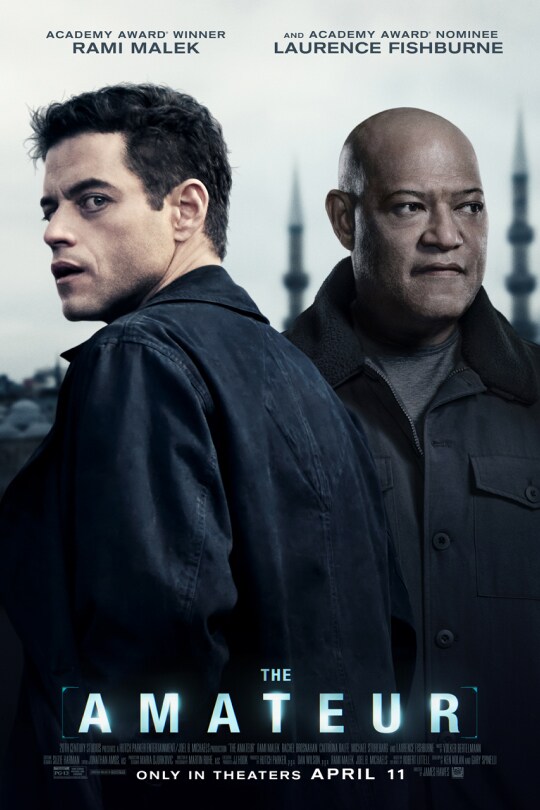
Two powerful, enduring fantasies combine in “The Amateur,” the story of a nerdy computer guy who becomes an assassin to kill the four people responsible for murdering his wife. We all like to think that our Clark Kent selves, underestimated by pretty much everyone are just the secret identity of a powerful superhero. Indeed, being underestimated is its own kind of superpower. And we all wish we were capable of bringing justice, even rough justice, to those who cause harm. It is a remake of a 1982 film starring John Savage and Marthe Keller, based on the novel by Robert Littell.

Rami Malek stars as Charlie Heller, a computer guy (“decription and analysis” and apparently also some programming) who literally works in the five-stories-below-ground basement of the CIA, spending all day looking at screens. We see him at home with his beautiful, devoted wife Sarah, played by Rachel Brosnahan, perfectly fulfilling her responsibility to make enough of an impression for us to share Charlie’s sense of devastating loss. (Side note, as someone who well remembers the Aldrich Ames spy scandal, that a computer guy at the CIA who lives in what is clearly a multi-million dollar house in the country, on a huge piece of land with a barn big enough to hold a plane would be a big red flag as a likely double agent no matter how successful his wife is. )

Sarah is leaving on a five-day business trip to London. She asks him to come with her, knowing that he will not travel because he is set in his ways and also because he says he is untangling a puzzle at work. They exchange affectionate goodbyes, and then just to show us what a shy loner Charlie is, we see him going into the CIA office in Langley, Virginia, where he is greeted by someone there to be the opposite: Jon Bernthal as “The Bear,” a field agent (spy) who is confident, personable, and good at wheedling some IT support out of Charlie.

We also see Charlie receiving information from an anonymous contact in an undisclosed location. And then, a couple of days later, we see Charlie informed by his boss that Sarah has been killed in a terrorist attack. The CIA is not going to go after them because they are mercenaries and they want to go after the people who hired them. (At least that’s what they tell Charlie.)

And that is when our humble guy decides to leave the basement and his reluctance to travel behind so he can personally kill the four men who were involved. His boss (burly Holt McCallany as Director Moore) agrees to provide him with field agent training and sends him off to learn from sensei Colonel Henderson (Laurence Fishburne), not because he supports what Charlie wants to do but to get him away from home and the office so they can find out where he has hidden the documentation of the rogue black ops he has threatened to release if they do not give him what he wants.

Apparently all the training a spy gets takes place in a couple of days, so after we and the Colonel see what Charlie is good at (making IEDs) and not good at (shooting or killing), Charlie is off to track down the four mercenary bad guys. Charlie takes a backpack of fake passports and starts jet-setting around Europe (we obligingly are given not just the names of the cities where these various encounters take place but also their longitude and latitude). At this point it’s just counting down the culprits with a series of cleverly designed traps. If you guess that the anonymous person Charlie knew online, the apparently amiable spy, and the Colonel will show up again, plus the obligatory graffiti-covered bathroom in a nightclub scene for any spy movie that doesn’t have a swanky black tie gala scene, you are correct.

If you’ve seen the trailer, you’re probably there for the pool scene, and it is a lulu, especially in IMAX. Nice to have Charlie say “It’s all about integrity” with a double meaning. There are a few good twists, plus the always-welcome Julianne Nicholson as the newly-appointed head of the CIA who has her own concerns about what Moore is up to, and the always-superb Michael Stuhlbarg, who elevates everything he is in and here make a near-ridiculous scene almost make sense. “The Amateur” may not be memorable or make sense, but it benefits from a strong cast, it looks glossy (outstanding work on the settings), the action scenes move along well and that pool scene really is pretty special.

Parents should know that this film includes a brutal capture and murder of a beloved wife followed by the murder of the people involved. Characters are injured and killed. Characters drink alcohol and use some strong language.

Family discussion: How did Charlie make the most of what he was good at? What did we learn from the lunch scene with O’Brien and Moore? (And how likely is it that they would be discussing CIA business in a restaurant?)

If you like this, try: “Three Days of the Condor” and the Bourne movies

Related Tags:


Action/Adventure IMAX movie review Movies -- format Movies -- Reviews Remake Spies Thriller
Cyrano

Cyrano

Posted on January 31, 2022 at 6:48 pm

A-
Lowest Recommended Age: Middle School
MPAA Rating: Rated PG for some strong violence, thematic and suggestive material, and brief language
Profanity: Brief strong language
Alcohol/ Drugs: Alcohol
Violence/ Scariness: Sword fights and battles, characters injured and killed
Diversity Issues: A theme of the movie, but transphobic humor
Date Released to Theaters: February 4, 2022
Date Released to DVD: April 18, 2022

Copyright 2021 MGM
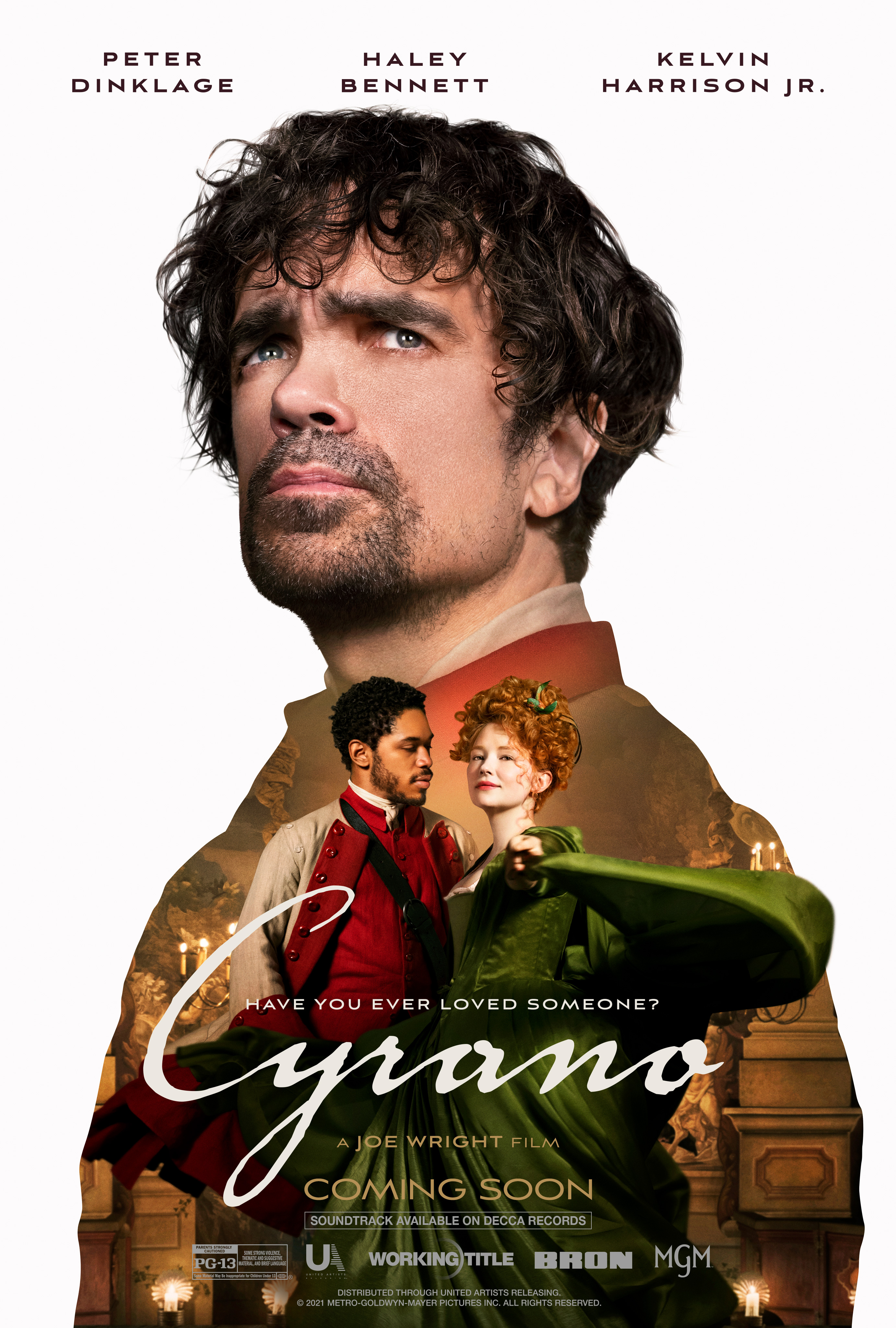
Cyrano” is a gorgeous film, a true labor of love. The basis, of course, is one of the great classic plays of all time, Edmond Rostand’s 1897 Cyrano de Bergerac, inspired by a real soldier/writer. Jose Ferrar won an Oscar for his performance as the title character in a 1950 film. The story of the man who cannot tell the woman he loves how he feels because of the way he looks has been adapted and rebooted many times, with probably the best known Steve Martin’s Roxanne and most recently set in a high school in “The Half of It.” Everyone can identify with a character who is afraid to approach the object of their affection and everyone would like to identify with a character whose wit is as ready and sharp as his sword. In the original and the Steve Martin version, the main character’s rapier-like comebacks to a thoughtless bully are a highlight.

In the original and “Roxanne,” the impediment is a nose so big that the Cyrano character believes no one can see him as a romantic partner. In this swooningly romantic new version, set, like the original, in the 17th century, the physical obstacle is size. Writer Erica Schmidt adapted the play as a musical to be performed on stage by her husband, actor Peter Dinklage (“Game of Thrones”) as Cyrano, and ravishingly lovely Haley Bennett as Roxanne. They play those parts in this film, directed by Bennett’s significant other, Joe Wright (“Atonement,” “Pride and Prejudice”)

Roxanne is loved by three men: Cyrano, the handsome but better-with-a-sword-than-with-poetic-love-letters Christian (Kelvin Harrison, Jr. of “Waves”), and the selfish, predatory De Guiche (Ben Mendelsohn). Cyrano has been her closest friend and confidant since childhood. De Guiche is pressuring her to marry him. Her maid reminds her that she has no money and no other options for supporting herself. But one night at the theater, she glimpses Christian, a newcomer to the military unit where Cyrano serves, and she loses her heart to him. Cyrano agrees to ghost-write love letters from Christian to Roxanne. He pretends it is to help the new recruit but in reality it is to have his one chance to tell the woman he loves how he feels, even if the letters are signed by someone else.

In a way, Schmidt is giving her words to the man he she loves so that we can see him the way she does, gallant, mordantly witty, a brilliant actor, and a person of deep and generous humanity. A scene where he is almost about to dare to hope that Roxanne will say she loves him, the emotions that flicker across his face as he is almost successful maintaining his composure is one of the most touching moments on screen this year.

With Schmidt and Wright creating the words and images for the people they love, in spectacularly beautiful costumes (Massimo Cantini Parrini and Jacqueline Durran) and settings (Sicily filling in as 17th century France) with music and even some dance numbers, the unabashed romanticism almost bursts out of the screen. Bennett makes a lovely Roxanne, clever and spirited but allowing her own romanticism to blind her to the love that is already hers. Mendelsohnn seems to specialize in bad guys these days, and this is another strong performance, De Guiche’s brutality glimpsed under a very thin veneer of suavity. Harrison makes a gallant Christian. But it is Dinklage who is in every way the heart of the story. Just as we get to see Cyrano finally use his own words under cover of darkness to play the part of the man whose outside matches his inside, in this film we get to see Dinklage take center stage, with a performance of heart-stopping vulnerability. Rostand would be proud, and so would the man who inspired the play that continues to capture us more than a hundred years later.

Parents should know that this film includes brief strong language, sexual references, sword fights, and battle scenes, with characters injured and killed.

Family discussion: Should Cyrano have told Roxanne how he felt? If so, when? Is there a time when you misjudged someone based on looks or when you were misjudged?

If you like this, try: “Roxanne” and the Ferrar and PBS versions of “Cyrano de Bergerac”

Related Tags:


Based on a play Classic Date movie Drama DVD/Blu-Ray Epic/Historical movie review Movies -- format Remake Romance
West Side Story (2021)

West Side Story (2021)

Posted on December 9, 2021 at 5:33 pm

A-
Lowest Recommended Age: Middle School
MPAA Rating: Rated PG-13 for some strong violence, strong language, thematic content, suggestive material and brief smoking
Profanity: Strong and racist language
Alcohol/ Drugs: Drinking, smoking, references to drugs
Violence/ Scariness: Gang violence, knives, gun, characters injured and killed
Diversity Issues: A theme of the movie
Date Released to Theaters: December 10, 2021
Date Released to DVD: March 21, 2022

Why remake a 60-year-old movie that won ten Oscars and is still beloved, even while admitting its shortcomings and its being quaintly out of date on some of the issues it raises? Because Steven Spielberg and screenwriter Tony Kushner have taken the best from the original and made the essence of the story even more powerful and meaningful. “West Side Story,” the original itself a remake of Shakespeare’s “Romeo and Juliet,” itself a reworking of an Italian story that had at least three different versions before Romeo compared Juliet to the sun and Juliet asked what there was in a name. The themes of love, loss, fear, and anger will always inspire our stories, and the incomparable music by Leonard Bernstein, with lyrics by then then-25-year-old Stephen Sondheim, are as thrilling as ever in this new version.

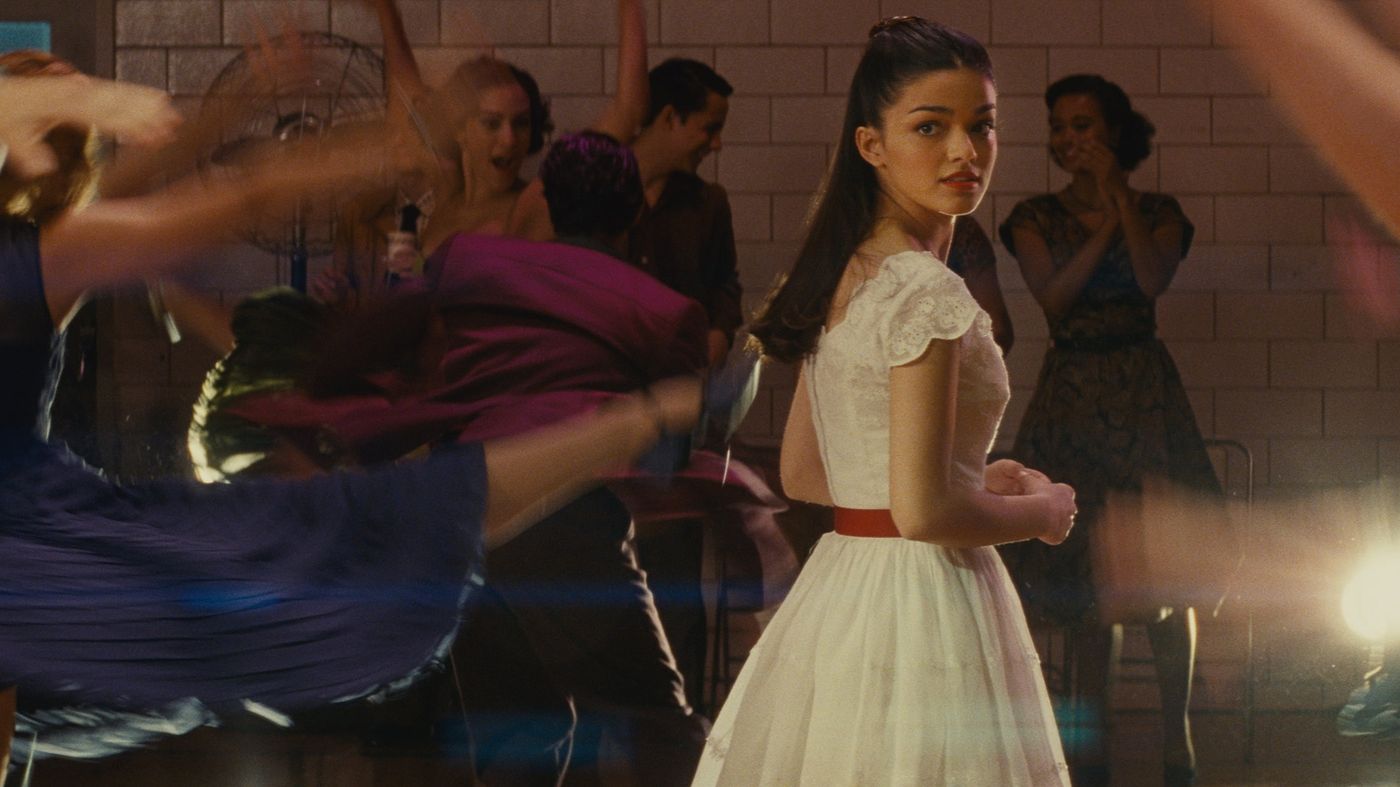
Maybe there will be another remake 60 years from now, but it is hard to imagine it being better than this one. Spielberg’s gift for visual story-telling, with brilliant cinematography from Janusz Kaminski, production design from Adam Stockhausen, and editing by Sarah Broshar and Michael Kahn match and enhance the muscular electricity of the Bernstein score. There are star-making performances from the entire cast, especially Ariana DeBose as Anita, Mike Faist as Riff, and Rachel Zegler as Maria. Rita Moreno, who won an Oscar for her performance as Anita 60 years ago, all but steals the movie as Valentina, a new role, replacing Doc, the owner of the convenience store. In this version, she is his widow, their own marriage a symbol of what Tony and Maria aspire to.

Copyright 20th Century 2021

Kushner’s changes are subtle and judicious, making the story deeper and more urgent. The opening shots show us that the turf battle has already been lost. The wrecking ball is knocking everything down. The only home the Jets have ever known is being torn down “for slum clearance” to make way for a gentrification project that will include a high-end high-rise and the high-culture Lincoln Center for performing arts. When Anita sings in “America” about some day living in an apartment with a terrace, she is standing near a sign showing the glamorous building that will replace the town-down tenements.

The setting looks like a bombed-out war zone. This makes the the emotion more vivid and the stakes more concrete (in both senses of the word). When “West Side Story” was first written, juvenile delinquents were listed by a majority of Americans as one of their most important concerns, next to atomic weapons. In order to make the concerns of the gangs as visceral today, Kushner shows us why Riff and the Jets feel that everything is being taken from them. The detective tells them that all the white people in the community who were smart enough to get out are gone. They are, he says, “the last of the can’t make it out Caucasians.”

Everything that gave them a sense of power, belonging, and control (“little boy, you’re a man, little man, you’re a king”) is being reduced to rubble and replaced with spaces that would be alien to them even if they could afford them. There is dust everywhere, and everything is washed out, knocked down, and covered with grit. The Jets cannot fight City Hall. All they have left is their fury and what they use to assuage it — the feeling of brotherhood. They sing of the Jets as a family (“you’ve got brothers around; you’re a family man”) while Tony says he envies the Puerto Ricans’ strong, committed biological families. There is no one to take it out on but the newcomers who are even lower on the social hierarchy than they are, the Puerto Ricans. Riff says, “I wake up to everything I knew being sold or wrecked or being taken away by someone I don’t like.”

Their gang, the Sharks, is fueled by resentment at being treated like second-class Americans in their own country. And they, too, are worried about losing their sense of family. They want the opportunities available to white, native English-speaking Americans but they want to remain intact, insular, restricting their associations to those they can trust. Their internal conflict is shown in “America,” where the girls sing of what they can do and buy and the boys jeer at them for ignoring the bigotry they will face — while not being willing to go back to Puerto Rico.

Some changes reflect our more sensitive understanding of the very issues the original depicted. In this version, the Latinx characters are played by Latinx performers of different skin tones and no one wears brownface make-up. All of the performers do their own singing. In addition, the Spanish dialogue is not subtitled. Some gender/sexuality insults remain in the script but the character once derisively called “Anybody’s,” who we might now call non-binary, is portrayed with more depth. The dance numbers are less balletic, more a reflection of the energy of emotions the characters are feeling.

Kushner’s changes to the script are sometimes subtle but every one adds to the emotion and revelation of character. In this version, Tony has even more reason to be reconsidering his commitment to the Jets, and he has an example in Valentina, his employer and friend, of what is possible. The “Cool” song has much more of an impact here, sung by Tony to Riff when he discovers that Riff has bought a gun. “I Feel Pretty,” instead of a bridal shop, is sung in a department store, where Maria is an after-hours cleaner. The dance through the aspirational scenes of mannequins “enjoying” middle class life parallels the reference to the apartment with a terrace. And Tony takes Maria to see The Cloisters, a beautiful cathedral-like setting for “One Hand, One Heart” that evokes the timelessness of Romeo and Juliet.

This story is very much of its time but its themes, too, are timeless, and with this new version we can experience it with the deeper understanding of its themes, a new generation of performers making it as new to us as it is to them, and one nod to the past with Moreno reminding us that like the late Bernstein and Sondheim, brilliance is always forever renewing itself.

Parents should know that this movie includes strong language with some racist terms, sexual references and a non-explicit situation, drinking, smoking, references to drugs, and gang violence, with knives and a gun. Characters are injured and killed.

Family discussion: If the story took place today, who would be in the gangs and how would it be different? What do we learn from the “Office Krupke” song? Why do Riff and Tony see things differently? What advice would you give to Tony and Maria?

If you like this, try: the original 1961 film, “In the Heights,” the wonderful documentary about Rita Moreno, and “Romeo and Juliet”

Related Tags:


Classic DVD/Blu-Ray movie review Movies -- format Musical Remake Romance Tragedy
THE MOVIE MOM® is a registered trademark of Nell Minow. Use of the mark without express consent from Nell Minow constitutes trademark infringement and unfair competition in violation of federal and state laws. All material © Nell Minow 1995-2026, all rights reserved, and no use or republication is permitted without explicit permission. This site hosts Nell Minow’s Movie Mom® archive, with material that originally appeared on Yahoo! Movies, Beliefnet, and other sources. Much of her new material can be found at Rogerebert.com, Huffington Post, and WheretoWatch. Her books include The Movie Mom’s Guide to Family Movies and 101 Must-See Movie Moments, and she can be heard each week on radio stations across the country.

Website Designed by Max LaZebnik