Captain America: Civil War

Captain America: Civil War

Posted on May 4, 2016 at 8:00 pm

B+
Lowest Recommended Age: Middle School
MPAA Rating: Rated PG-13 for extended sequences of violence, action and mayhem
Profanity: Brief strong language
Alcohol/ Drugs: None
Violence/ Scariness: Extended superhero/action violence with chases, crashes, and explosions, characters injured and killed.
Diversity Issues: Diverse characters
Date Released to Theaters: May 6, 2016
Date Released to DVD: September 13, 2016
Amazon.com ASIN: B01D9EUNB4
Copyright 2016 Marvel

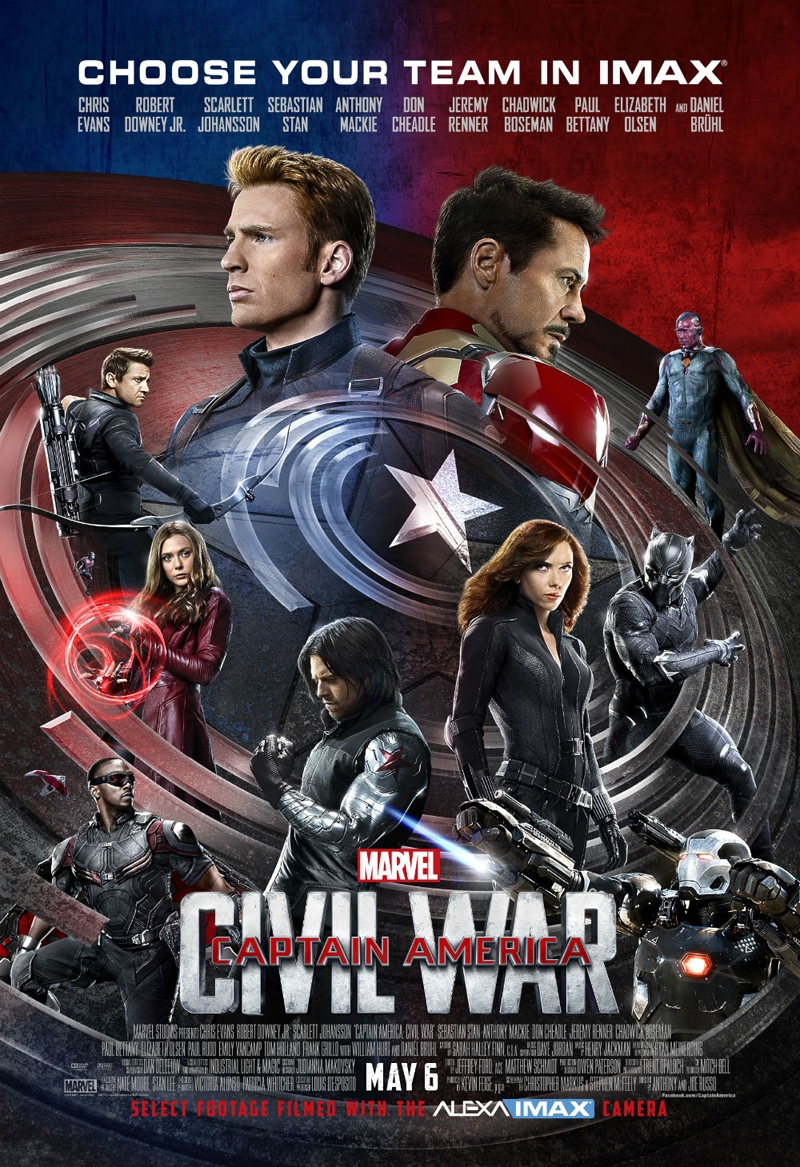
The most important element of any superhero movie is the villain. He (or she) has to pose a credible threat to humanity and challenge particular strengths and vulnerabilities of someone with extraordinary powers. In “Captain America: Winter Soldier” there was a paranoiac Pogo-esque “we have met the enemy and he is us” theme that is expanded in “Civil War.” It goes to the heart of the Avengers themselves as a critical issues divides them so they are fighting each other.

The issue is not one we usually see in superhero movies or indeed action movies in any category: consequences. Part of the fun of action movies is seeing all of the chases, fights, and explosions, without having to worry about the cleanup or what the military euphemistically calls “collateral damage.” But this story has more impact because it acknowledges and engages with the damage that superheroes do while they are preventing worse damage. It falls somewhere between “The Incredibles” and “Eye in the Sky.”

The true meaning of collateral damage is presented early on in “Civil War.” Tony Stark (Robert Downey, Jr.) has just announced that he will fund all of the student research projects at MIT when he is confronted by a mother (a small masterpiece of devastation and fury from the extraordinary Alfre Woodard). Her son was on a humanitarian mission when he was killed in the Sokovia crash of an entire city at the end of Avengers: the Age of Ultron. For her, it doesn’t matter that the entire world was saved in theory by a supervillain who is not around when her son was killed in reality by a man who is. “You think you fight for us,” she says. “You fight for yourself.”

Stark is devastated. “We’re no better than the bad guys.” The man we first saw demonstrating his company’s military weapons as though he was a rock star performing an arena show and who had no problem defending the money he made in munitions finally has to reckon with the truth he barely realized he had been moving closer to. And that is why, after the typical superhero opening action sequence we get a non-typical reaction. With SHIELD collapsed following “Winter Soldier,” the Avengers are operating on their own, without any oversight. A coalition of 117 nations insist that they agree to be subject to a UN commission (the “or what” is not ever spelled out because, what would it be?).

One of the film’s most intriguing developments is that not only do the Avengers line up on opposite sides but they don’t take the positions we might expect. Stark’s post-confrontation grapple with guilt has the most anarchistic of superheroes suddenly looking for the comfort of some rules. And the shock of SHIELD’s corruption has the most Boy Scout-ish of all superheroes, Captain America (Chris Evans) suddenly resistant to putting himself under anyone’s control. Some of the avengers pick a side on principle; some are more instrumental or practical. The Black Widow (Scarlett Johansson), who has her own history of unspeakable crimes, says, “Staying together is more important than how we stay together.”

Directors Anthony and Joe Russo deftly manage an enormous cast of characters. It’s easier to list those who do not appear in this film: Pepper Potts, Thor, Nick Fury, and the Hulk. Pretty much everyone else is here, and superbly added to the mix we have Paul Rudd as Ant-Man, who has some surprises in store, Black Panther (a lithe, powerful, and compelling Chadwick Boseman), avenging the death of his father, and the brand-new Spidey (Tom Holland, with Marisa Tomei as Aunt May). Bucky/Winter Soldier (Sebastian Stan) is here, too, and his storyline nicely mirrors the larger themes. He has been responsible for terrible crimes and abuses and some can never forgive him. But Captain America knows something about military operations. “We try to save as many people as we can,” he says. “Sometimes doesn’t mean everybody.” He knows how a human can become a weapon, and he is determined to get his friend back. Remember, this is not the Justice League. They are Avengers, and another character’s determination to get vengeance provides one of the movie’s most signficiant twists.

I don’t want to give away too much, so I’ll just say the action is everything you’d hope, with superhero-on-superhero collisions beyond the dreams of fanboy heaven. Keep an eye on the motorcycle. And the helicopter. And Ant-Man. And some cool special effects with Stark’s augmented flashback/therapy. And stay through the credits, of course.

Parents should know that this film includes extended sci-fi/comic book action violence with chases, crashes, and explosions, characters injured and killed, and brief strong language.

Family discussion: What are the best arguments for Ironman’s position on the accords? For Cap’s? How is this Spider-Man different from other portrayals of the character?

If you like this, try: “The Avengers” and “Captain America: The Winter Soldier”
Related Tags:


3D Action/Adventure Comic book/Comic Strip/Graphic Novel DVD/Blu-Ray Pick of the Week Scene After the Credits Science-Fiction Series/Sequel Superhero
Mother’s Day

Mother’s Day

Posted on April 28, 2016 at 5:20 pm

Copyright 2016 Open Road Films
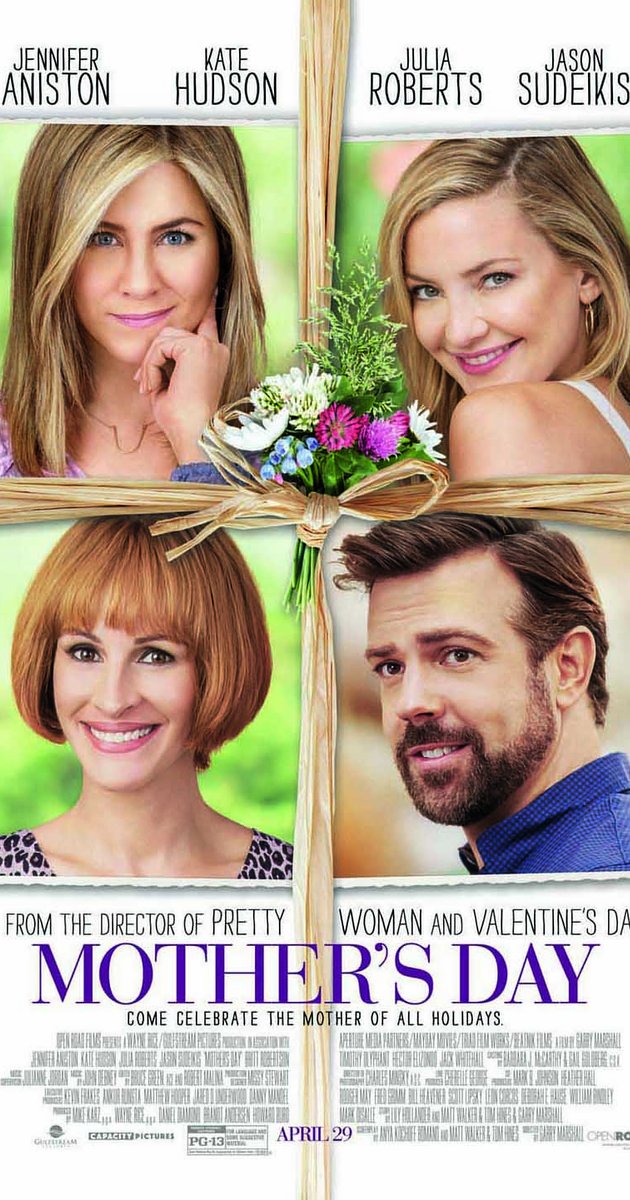
I tried, Garry Marshall, I really did, but you finally broke me. I did my best to enjoy Valentine’s Day (I called it a tweet of a movie but gave it a B for being mildly entertaining) and New Year’s Eve (I called it a big budget version of the old television series “The Love Boat” and gave it a C, but managed to find some genuinely touching moments). I was fully expecting to find some light entertainment with a galaxy of big stars showing that they can make lackluster material shine a little bit.

So, if “Mother’s Day,” the third in Marshall’s big star/tiny script mash-ups keyed to a holiday, was no worse than the first two, I was determined to give it the benefit of the doubt. I have a mom; I am a mom, I wrote a book about the best movie mothers, and so I’m the prime audience for a bunch of stories about the tenderest and often the most fraught of relationships, mother and child. If it managed to be inoffensive, I would have recommended it. But with this film, Marshall and his inexperienced co-screenwriters cross the tipping point from merely synthetic to downright vile, with apparently no notion of the difference between humor that points out the virulence of bigotry and “jokes” that treat racism and homophobia like just another cutesy personality quirk.

As with the earlier films, there are a lot of characters presenting variations on the theme. But the characters do not even rise to the level of stereotypes and the storylines couldn’t fill a fortune cookie. There is a chasm-sized disconnect between the film’s assumptions about our belief in any of them and its ability to deliver that level of interest. Not one thing is believable even in heightened, glossed-over movie terms. Everyone lives in gorgeous homes and there are no concerns about money. Intrusive product placement gives the film a sleasy infomercial vibe even as it pretends to make fun of home shopping channels hawking cheesy merchandise. Some odd random shots of individuals who have nothing to do with the story are either friends of the filmmaker or evidence that at one time the movie was even worse and got recut. It’s creepy that it takes place in the very diverse city of Atlanta but everyone is white except for the characters whose primary job is to serve as a racial stereotype. Pretty much everyone in the film is a stereotype, but the white ones are not offensive, just dull. The non-white ones are both.

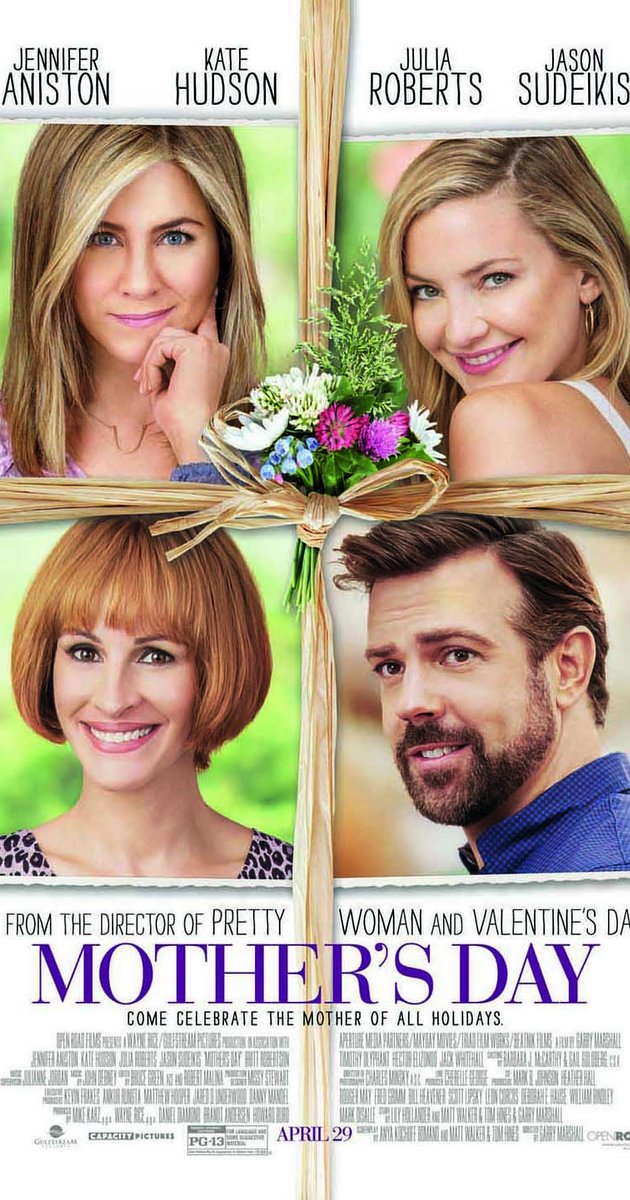
A quick recap of the set-ups — very quick so neither one of us will nod off in stunned boredom. Sandy (Jennifer Aniston) is a single mom with two sons who is upset because her ex (Timothy Olyphant) has married a beautiful young woman. Kristin (Britt Robertson of “Tomorrowland”) loves the father of her baby, an aspiring stand-up comic, but she won’t accept his marriage proposal because she was adopted and thus thinks she does not know who she is. Sisters Jesse (Kate Hudson) and Gabi (Sarah Chalke), who live next door to each other, have not told their bigoted, RV-driving, redneck parents about their spouses — Jesse is married to an Indian-American (Aasif Mandvi) and Gabi is married to a woman (Cameron Esposito). And sad widower Bradley (Jason Sudeikis) has to cope with being a single dad of two daughters. Julia Roberts, in a disastrous orange traffic cone of a hairdo (it’s actually a wig leftover from “Notting Hill”), is also on board as a shopping channel mogul presumably because Garry Marshall gave her her big break in “Pretty Woman” and she will do anything for him.

A series of exposition-heavy introductory scenes (Bradley and his daughters standing at the gravesite: “I can’t believe it’s been a year,” another character explaining, “I have abandonment issues,” Sandy, Jesse, and Gabi helpfully recapping everything that is going on in their lives to each other like the crawl at the bottom of the CNN screen) is followed by a series of micro-complications that fall somewhere between a 6th grade skit and a one-season basic cable sit-com, following by a series of contrived and cloying “resolutions.” The only clunky device left out is words of wisdom from a clown. Oops, no such luck. It’s there. And it’s not over! There are the most lifeless bloopers in the credits in the history of bloopers in the credits.

This is all larded with cornball slapstick wildly outdated “hilarity” that includes a man wearing a woman’s pink silk bathrobe, a man falling off a balcony, a man embarrassed at having to buy tampons for his daughter, a woman with her shirt ripped open holding supposedly professional design presentation model that looks like a third grade diorama, and the same woman getting her arm stuck in a vending machine.

It gets worse. Cops run down a speeding vehicle and make the only non-white character lie down on the ground. It gets resolved when one of the officers recognizes him; the issue of racial profiling is portrayed as a joke. So is a crack about a little person named “Shorty.” The stand-up comic ends up holding his baby and not delivering any jokes during his crucial make-it-or-break-it set, jokes which were not only funny but which might have made it funny and meaningful. Same for this wilted bouquet of a movie. Give Mom breakfast in bed instead.

Parents should know that this film includes discussions of bigotry but also insensitive portrayals of racism and homophobia, brief strong language, sad off-screen death of a parent, family issues about divorce and remarriage, some strong language, and alcohol, including scenes with a baby in a bar.

Family discussion: How did meeting Miranda make Kristen think differently about marriage? What should Jesse have told her parents about her husband?

If you like this, try: “Valentine’s Day” and “New Year’s Eve”

Related Tags:


Comedy Family Issues Series/Sequel
Barbershop: The Next Cut

Barbershop: The Next Cut

Posted on April 14, 2016 at 5:13 pm

Copyright 2016 Warner Brothers
Copyright 2016 MGM

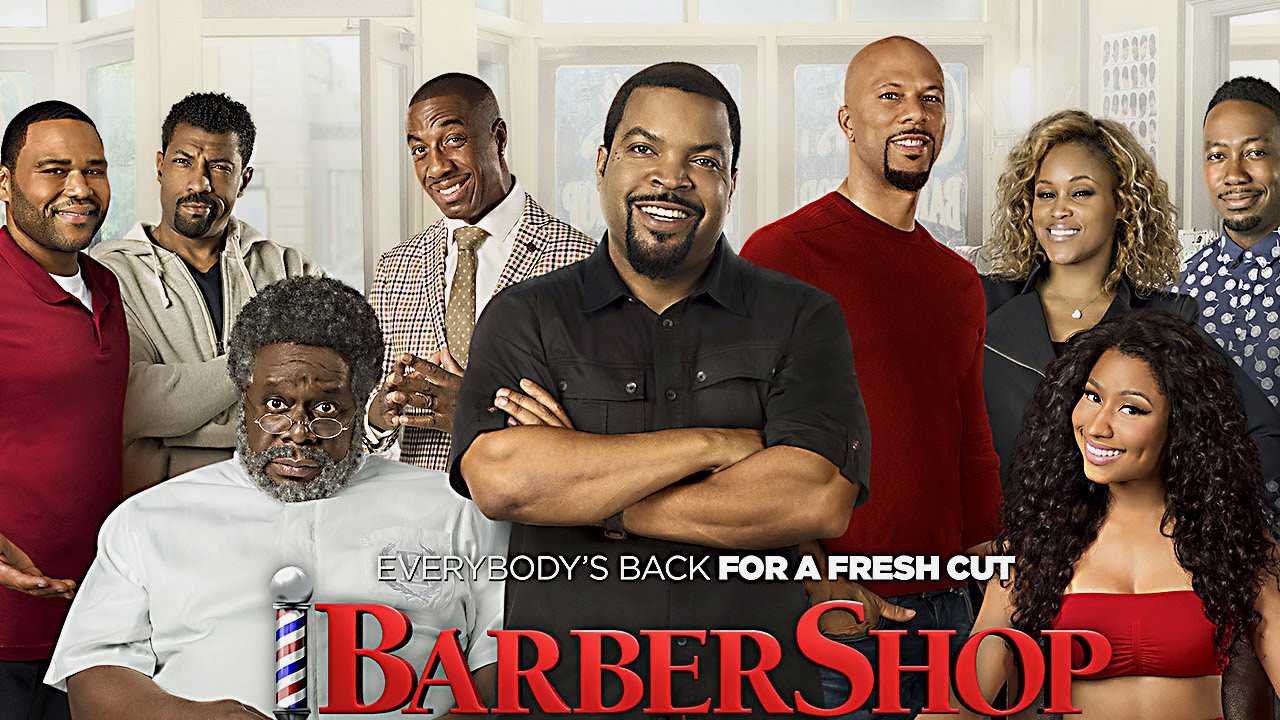
In 1991, Ice Cube was barely into his 20’s when he starred in Boyz N The Hood, one of the most powerful American films of the 20th century, a searing indictment of gang violence and a tribute to one of the truly great fathers in movie history. Fifteen years later, in the third of his “Barbershop” films (fourth if you include “Beauty Shop“), he is now playing the father role but still taking on the tragic toll of gang violence.

It is a gentler film, but it does not pretend that these are gentler times. One of the first images we see is a “No Guns Allowed” sign in the barbershop. Later, when a gang leader comes in for his regular appointment, he hands over two guns to be locked away while he’s in the chair. And there are moments that echo scenes in “Boyz” about the pressure put on young men to join gangs, the danger of the initiation rituals, and the challenges of being a father to a teenager.

The sharp, witty, and heartfelt screenplay is by “Black-ish’s” Kenya Barris and “Survivor’s Remorse’s” Tracy Oliver, and it is directed with warmth and style by Malcolm Lee (“Roll Bounce,” “Undercover Brother”). The original cast returns, led by Ice Cube as Calvin, Cedric the Entertainer and Eve as barbers (Eve’s Terri’s is still trying to protect her apple juice), Sean Patrick Thomas as the upwardly mobile Jimmy (now working for the mayor of Chicago), and Anthony Anderson as the up-to-something but not very good at it J.D. They’re joined by the always-hilarious J.B. Smoove as a jack-of-all-trades and master of most, the always-appealing Common as Rashad, Calvin’s friend and Terri’s neglected husband, the always-terrific Regina Hall as Calvin’s partner on the beauty-shop side, and the always-enticing Nicki Minaj as Draya, a hairdresser who might be interested in Rashad.

Calvin is worried about his 14-year-old son, Jalen (Michael Rainey Jr.), who is wearing dreads and a lot of attitude. He is spending a lot of time with Rashad’s son, Kenny (Diallo Thompson), and worries that he may be a bad influence. He worries more about the constant gang violence in their community, both the threat and the appeal it has for young boys. He thinks it might be time to leave the neighborhood and go somewhere safer.

All of these storylines and more are deftly handled, but, as with the first film, what makes it work is the talk, the constant banter that sways in and out of heartfelt discussion of all the big issues: race, gender, politics, community, family, and love. The talk is intimate and enticing, never stooping to explain its references for anyone’s definition of “mainstream” audiences. That gives it a satisfying warmth and authenticity.

As before, Cedric the Entertainer is the outrageous elder statesman of the group as Eddie, the one who goes there and gives everyone else a chance to react. There are mostly-genial accusations about what men and women want from each other, whether other minorities have the same historical and current struggles as African-Americans, the impact of celebrity scandals like Bill Cosby and R. Kelly, and what anyone can do to stop the violence. Once again, the role of the barber shop as community center, demilitarized zone, and even temporary housing makes this a place we want to keep coming back to.

NOTE: Stay for the credits as there is a funny extra scene.

Parents should know that this film includes sexual references and a non-explicit situation, strong language including racial epithets, gang-related violence, and characters who are injured and killed (off-screen). Characters drink and sell marijuana.

Family discussion: What should families like Calvin’s do to make their communities safer? Who else can make a difference? Where is your favorite place to go hang out and talk to friends?

If you like this, try: the earlier films, Chris Rock’s documentary “Good Hair,” and, for older audiences, “Chi-Raq” and “Boyz N the Hood”

Related Tags:


Comedy Race and Diversity Scene After the Credits Series/Sequel

Trailer: Rogue One, the new Star Wars Chapter, with Felicity Jones

Posted on April 7, 2016 at 8:14 am

“Rogue One: A Star Wars Story” stars Felicity Jones, Diego Luna, and Forest Whitaker. It’s clear from the storm troopers and the musical theme that we’re in the “Star Wars” universe, but these are new characters and a new look inside the rebel forces. It opens in December, and I’m already counting the days.

Related Tags:


Science-Fiction Series/Sequel Trailers, Previews, and Clips
Everybody Wants Some!!

Everybody Wants Some!!

Posted on March 31, 2016 at 5:10 pm

A+
Lowest Recommended Age: Preschool
MPAA Rating: Rated R for language throughout, sexual content, drug use and some nudity
Profanity: Constant very strong and crude language
Alcohol/ Drugs: Drinking, drugs
Violence/ Scariness: None
Diversity Issues: None
Date Released to Theaters: April 1, 2016

Copyright Annapurna Films 2016
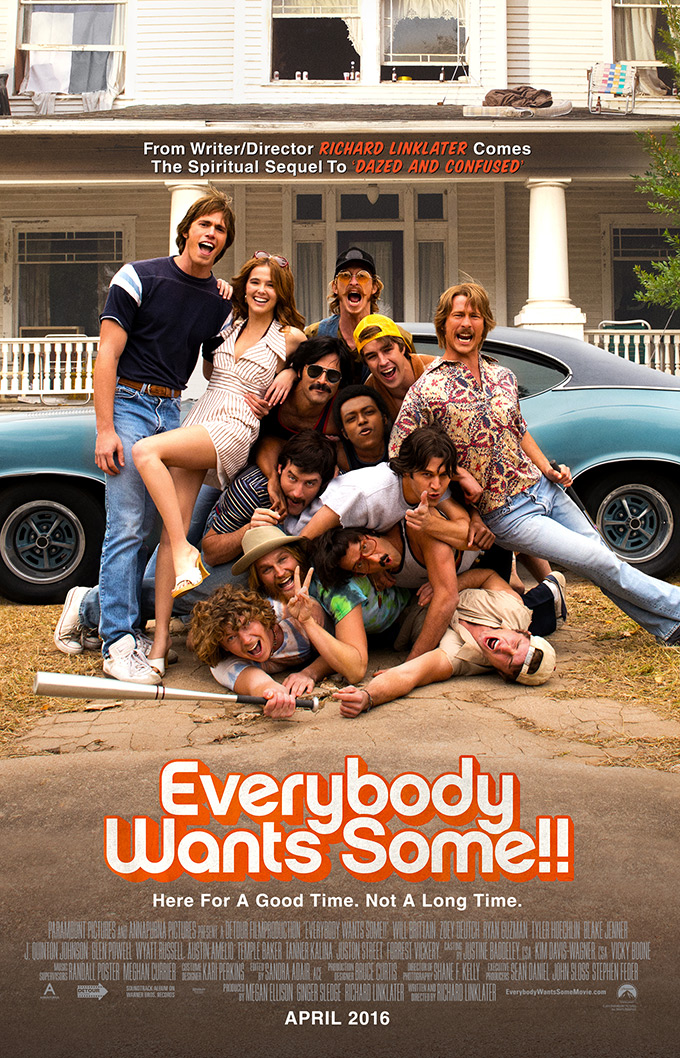
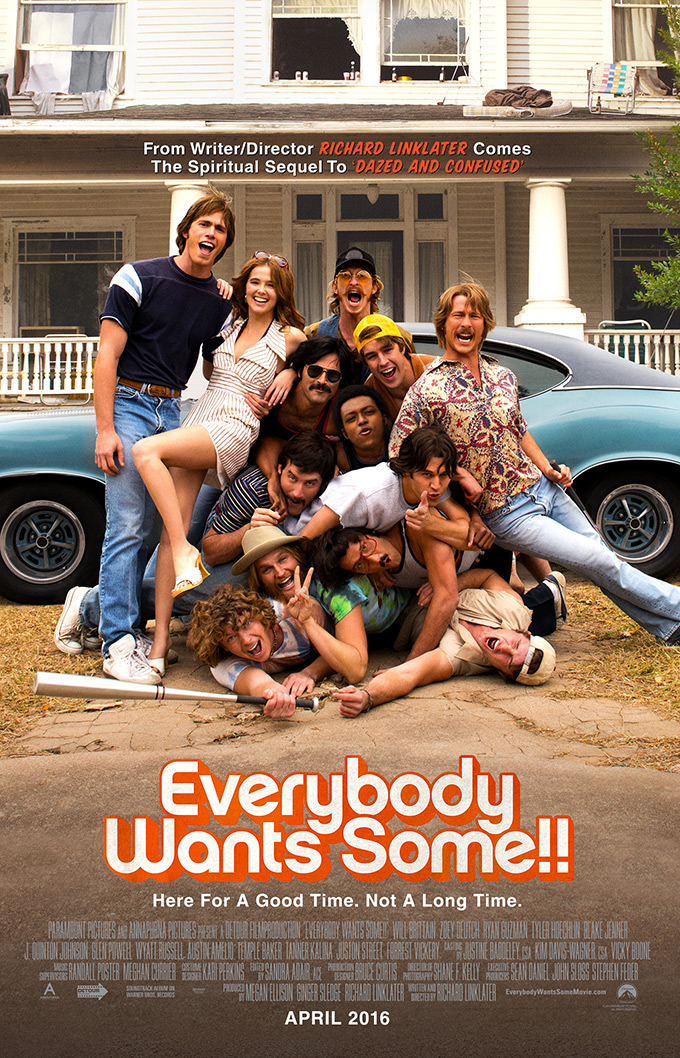
“Everybody Wants Some!!,” the “spiritual sequel” to Richard Linklater’s Dazed and Confused, is so much fun that it is easy to overlook how sweet it is and how smart it is. Those who are hoping for the same combination of slightly smug nostalgia, outrageous partying, smart, self-aware characters including at least one who is older than the others but prefers to hang out with teenagers, almost no grown-ups, and a superbly curated soundtrack will find all of that. Like “Dazed and Confused,” the title comes from a rock song with some smokin’ guitar licks, this one, two exclamation points and all, by Van Halen. But this film is subtler, more ambitious, heir not just to “Dazed and Confused” but also to Linklater’s impressionistic, existentialist film “Waking Life,” and even to his “Before” trilogy as well.

As in the earlier film, the time period is compressed. “Dazed and Confused” took place on the last day of high school. “Everybody Wants Some!!” takes place on the weekend before classes start at an unnamed Texas college. It opens with freshman Jake (Blake Jenner) driving to school in a convertible, blasting — of course — “My Sharona.” Welcome to 1980.

Jake is about to move into the house set aside for the members of the school’s baseball team, nationally ranked and the heroes of the school. (Linklater played college baseball for two years at Sam Houston State University.) As soon as he arrives and introduces himself to his new teammates, the dynamic that plays out through the rest of the film is established. These guys are athletes, so they are very competitive as individuals but also very aware that in order to be successful as a team they have to be competitive in a way that helps the team. Linklater and his exceptional young cast, all of whom had to audition both for acting and for ability to play baseball, perfectly capture the endless jockeying for position combined with an instinctive teamwork based on constant assessment of one another. They use a made-up word I can’t quote here to describe the way their physical and verbal interaction combines one-upmanship and more benign getting-to-know-you high spirits, both instinctively team building.

Not much happens in the movie, at least on the surface. The guys hang out and talk. There’s a ping pong game, some locker room hijinks, ingestion of various mood-altering substances, and of course a lot of discussion about and pursuit of the ladies. This leads them to several different venues and it is a lot of fun to see them adapt (including changes of clothes) as they go from a disco to a “kicker” (country music) bar, to a punk performance and finally a costume party given by the drama students.

But this is not the usual college comedy, thankfully avoiding the usual humiliation and clunky life lessons. The incoming freshmen are (mostly) smart, self-aware, and curious. The women (mostly) are not significant enough to merit much in the way of personality or storyline, and the male characters may tend to objectify or exploit them but the movie does not. They are smart, capable, looking for a good time, and self-aware, and the one we spend time with (Zoey Deutch, in a lovely performance as a drama student named Beverly) has a walk-and-talk (and float) conversation with Jake that reminds us this is a film from the writer/director of “Before Sunrise.”

The entire cast is superb, especially Jenner (“The Glee Project”), Wyatt Russell (“22 Jump Street”) as a transferring senior with a taste for philosophy and weed, Glenn Powell (“Expendables 3”) as the smooth-talking Finnigan, and J. Quinton Johnson as Dale, who is willing to explain to the newcomers what is going on.

Not much seems to be happening as the characters go from one party to another, but it does in fact cover a surprising range of ideas with a great deal of insight. It is a “spiritual sequel” in literal terms, if not grappling with then at least pondering the meaning of existence and the existence of meaning. The utterly perfect final shot brings that home perfectly.

As the characters keep changing their clothes to fit in at each venue, they ask themselves whether they are pretending or adapting. Jake talks about how each of them had always been the best baseball player at home, only to come to college and share a team with an entire group of best players. The guys think about who they are and what their goals are (hey, it’s a college movie; you know what their goal is, but there’s more there, too).

It takes place over a few days but Linklater’s perspective on existence, meaning, and the passage of time is subtly interwoven between the bong hits and the hitting of various balls. As the young baseball players reckon with their future prospects (and dream up a possible scout for the pros who could be hiding anywhere), they and we know that, like the movie itself, their time playing baseball is brief, and that’s all the more reason to enjoy the show.

NOTE: Stay through the credits to see a delightful musical number created by the cast

Parents should know that this film includes very strong and crude language, extensive partying with drinking and drugs, sexual references and situations, and nudity.

Family discussion: Did the guys’ competition with each other help or hurt the team? What are the biggest differences between what went on here and what would happen today?

If you like this, try: “Dazed and Confused,” “Waking Life,” and “Before Sunset” from the same writer/director

Related Tags:


Movies -- format Romance Scene After the Credits School Series/Sequel Stories about Teens
THE MOVIE MOM® is a registered trademark of Nell Minow. Use of the mark without express consent from Nell Minow constitutes trademark infringement and unfair competition in violation of federal and state laws. All material © Nell Minow 1995-2026, all rights reserved, and no use or republication is permitted without explicit permission. This site hosts Nell Minow’s Movie Mom® archive, with material that originally appeared on Yahoo! Movies, Beliefnet, and other sources. Much of her new material can be found at Rogerebert.com, Huffington Post, and WheretoWatch. Her books include The Movie Mom’s Guide to Family Movies and 101 Must-See Movie Moments, and she can be heard each week on radio stations across the country.

Website Designed by Max LaZebnik