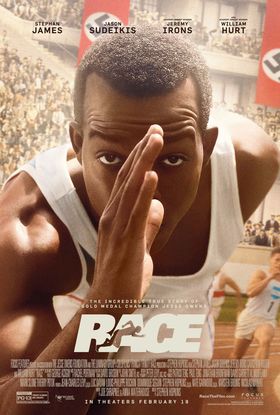
Race

Race

Posted on February 18, 2016 at 5:56 pm

B+
Lowest Recommended Age: Middle School
MPAA Rating: Rated PG-13 for thematic elements and language
Profanity: Racist and anti-Semitic language
Alcohol/ Drugs: Drinking, smoking
Violence/ Scariness: frank portrayal of racism and anti-Semitism in the 1930’s, including some scenes of violence
Diversity Issues: A theme of the movie
Date Released to Theaters: February 19, 2016
Date Released to DVD: May 30, 2016
Amazon.com ASIN: B01BTDOSFY
Copyright 2016 Focus Features

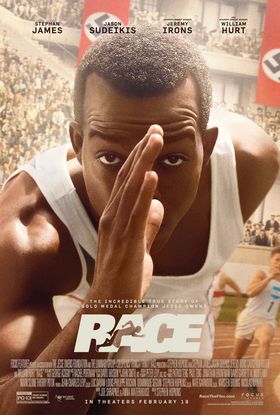
When Adolf Hitler wanted to send the world his message of German/Aryan supremacy at the 1936 Berlin Olympics, African-American runner Jesse Owens won four gold medals. It was the first time that Olympic events were seen everywhere via the films made by Nazi propagandist Leni Riefenstahl, and what they saw was a black man from America who was the fastest runner in the world.

Owens, who had previously broken three world records at one sporting event, was one of the greatest athletes of the 20th century. “Race” tells the story of his time at Ohio State, his relationship with his coach, Larry Snyder (Jason Sudeikis, excellent in his first dramatic role), his relationship with Ruth (Shanice Banton), the mother of his child and later his wife, and his astonishing four gold medals in the Olympics, including one event where he was a last-minute substitute.

Owens is played by Stephan James (“Selma”) in a star-making performance. And director Stephen Hopkins and writers Joe Shrapnel and Anna Waterhouse do an exceptional job of putting Owens and the Olympics in the context of the era’s racial and geopolitical conflicts. This is a film that grapples thoughtfully and in a nuanced manner with morality and compromise in many different categories. Throughout, there are fascinating twists, as characters must evaluate complex ethical dilemmas or discover unexpected moments of grace and honor. When Owens arrives in Berlin, he asks to be directed to the dorm rooms for black athletes only to be told there aren’t any. For the first time in his life, he stays in an integrated dorm and it is in Nazi-era Berlin.

Avery Brundage (Jeremy Irons) must negotiate with the Germans to ensure that basis human rights will be respected at the Olympics; if not, he tells Joseph Goebbels(Barnaby Metschurat), the US team will not compete. The Nazis agree to his terms, but they are determined to tell their story their way and will use whatever threats or prizes they can to do so. Riefenstahl, an extraordinary filmmaker who was brought in by Hitler to document the supremacy of the Germans, understood what her job was but in her own way insisted on maintaining some integrity as an artist. And Owens himself faces a wrenching choice when the NAACP asks him not to go to the Games to protest Hitler’s abuses. What is the best way to send that message, to stay home, or to force Hitler to watch Owens prove wrong Hitler’s claims of Aryan superiority?

This is rich, complex, and compelling drama and a fitting tribute to a great athlete and a great American. Plus, it is entertaining and supremely satisfying to see him run — and win.

Parents should know that this movie includes a frank portrayal of racism and anti-Semitism in the 1930’s, including some scenes of violence and bigoted language, sexual references and non-explicit situations, and drinking and smoking.

Family discussion: What are the best reasons for Owens not to go to the Olympics? Do you agree with his decision? How were the conflicts faced by Owens and Riefenstahl similar?

If you like this try: Owens’ book, Jesse: The Man Who Outran Hitler, and the American Experience documentary about Owens
Related Tags:


Based on a true story Biography DVD/Blu-Ray Pick of the Week Race and Diversity Sports
The Ringer

The Ringer

Posted on December 20, 2015 at 3:49 pm

B-
Lowest Recommended Age: Middle School
MPAA Rating: Rated PG-13 for crude and sexual humor, language and some drug references.
Profanity: Some crude language
Alcohol/ Drugs: Scenes in bar, character chews a cigar
Violence/ Scariness: Comic peril and violence, serious injury played for humor
Diversity Issues: A theme of the movie
Date Released to Theaters: December 23, 2015
Date Released to DVD: March 23, 2016

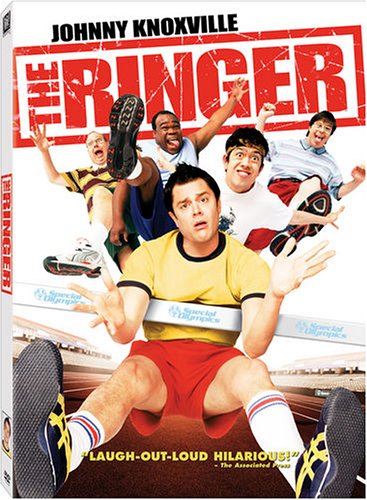
The single most interesting aspect of The Ringer, a movie about a man who pretends to be disabled so that he can compete in the Special Olympics, is that the movie was made in cooperation with and with the endorsement of the Special Olympics organization, and 150 Special Olympics athletes appear in the film.

Unfortunately, the story of how the movie got made is much more interesting than the formulaic story of the movie itself. Steve (Johnny Knoxville), a nice non-disabled guy who needs money to help someone get an operation pretends to be “high-functioning developmentally disabled” to compete in the Special Olympics. He assumes that as a former high school track athlete, he will have no trouble winning, so that his gambler uncle (Brian Cox) can win a huge bet, paying off his own gambling debts and getting the money for an operation. Of course Steve (1) learns that he is the one with the more serious disability, and (2) meets a very pretty volunteer at the Special Olympics (Katherine Heigl as Lynn). You know the rest.

The one thing that is not formula in this movie is its portrayal of the developmentally disabled athletes as loyal, dedicated, smarter than most people think, and very funny. While the non-disabled people in the movie are often clueless, inept, or corrupt, the Special Olympians are on to Steve almost immediately, and they don’t just out-smart him; they out-nice him, too. They become the first real friends he has ever had.

This aspect of the movie provides some fresh and funny moments, but too much of the film is taken up with sub-par “jokes” like Steve’s uncle registering him for the competition under the name of a notorious serial killer and a man having three of his fingers cut off in a lawnmower. The developmentally disabled cast members show considerable charm, especially Edward Barbanell as Steve’s roommate, Billy.   Barbanell contributed the movie’s funniest line and delivers it with exquisite comic timing. But a lackluster script and charm-free performances by Knoxville and Cox don’t do justice to the Special Olympians in the story or in the cast. Furthermore, despite its best intentions, the use of non-disabled actors to play disabled characters in many of the key roles gives the film an air of condescension that is never fully overcome. I’m glad the Special Olympians have been recognized in a mainstream Hollywood movie; I just wish it was the movie they deserved.

Parents should know that the movie has some crude language and crude humor, including getting hit in the crotch. Characters drink (scenes in a bar) and smoke (Steve’s uncle is constantly chewing on a cigar).
Families who see this movie should talk about friends and family members with disabilties and how to prevent prejudice against them.

Families who enjoy this movie will also enjoy an old movie called Miss Tatlock’s Millions, in which a man pretends to be a long-lost heir who is developmentally disabled so that he can get the money. They will also enjoy Stuck on You (some mature material), directed by the Farrelly brothers, who produced this film. They cast disabled performers in all of their movies and the credit sequence in Stuck on You has a lovely speech by one of them about how much the experience meant to him. A scholarly article from Disability Studies Quarterly explores the portrayal of disabled people in the Farrellys’ movies.

Families who see this movie should talk about what Steve learned from his experience and why.

Families who want to learn more about how this movie was made can learn about what it takes to be a Special Olympian.   I recommend this report from the magazine of the Special Olympics organization and this statement from the heads of the organization about what they hoped the film would accomplish:

“Laughing at a person and laughing with a person are very different forms of humor, and it is our belief that this comedy will give audiences the chance to laugh with Special Olympics athletes while appreciating their joy and wisdom. Equally importantly, we believe that the stigmas presented in the early scenes of the movie will be seen as folly by the end of The Ringer. Many of us know all too well how hurtful insensitive words can be. Special Olympics hopes people seeing the movie will be inspired to reach out to people with intellectual disabilities and say, to quote Special Olympics athlete Troy Daniels, ‘Come sit by me’ – a simple gesture that reflects a world of acceptance and mutual respect.”

The Special Olympics, founded by Eunice Shriver, the sister of President John F. Kennedy, now serves more than 1.7 million developmentally disabled athletes in more than 200 programs in more than 150 countries.

Related Tags:


Comedy DVD/Blu-Ray Sports
Creed

Creed

Posted on November 24, 2015 at 5:18 pm

B+
Lowest Recommended Age: High School
MPAA Rating: Rated PG-13 for violence, language and some sensuality
Profanity: Some strong language
Alcohol/ Drugs: Social drinking
Violence/ Scariness: Intense sports violence (boxing), illness and disability
Diversity Issues: Diverse characters
Date Released to Theaters: November 25, 2015
Date Released to DVD: March 7, 2016
Amazon.com ASIN: B019EEK7ZA
Copyright Warner Brothers 2015

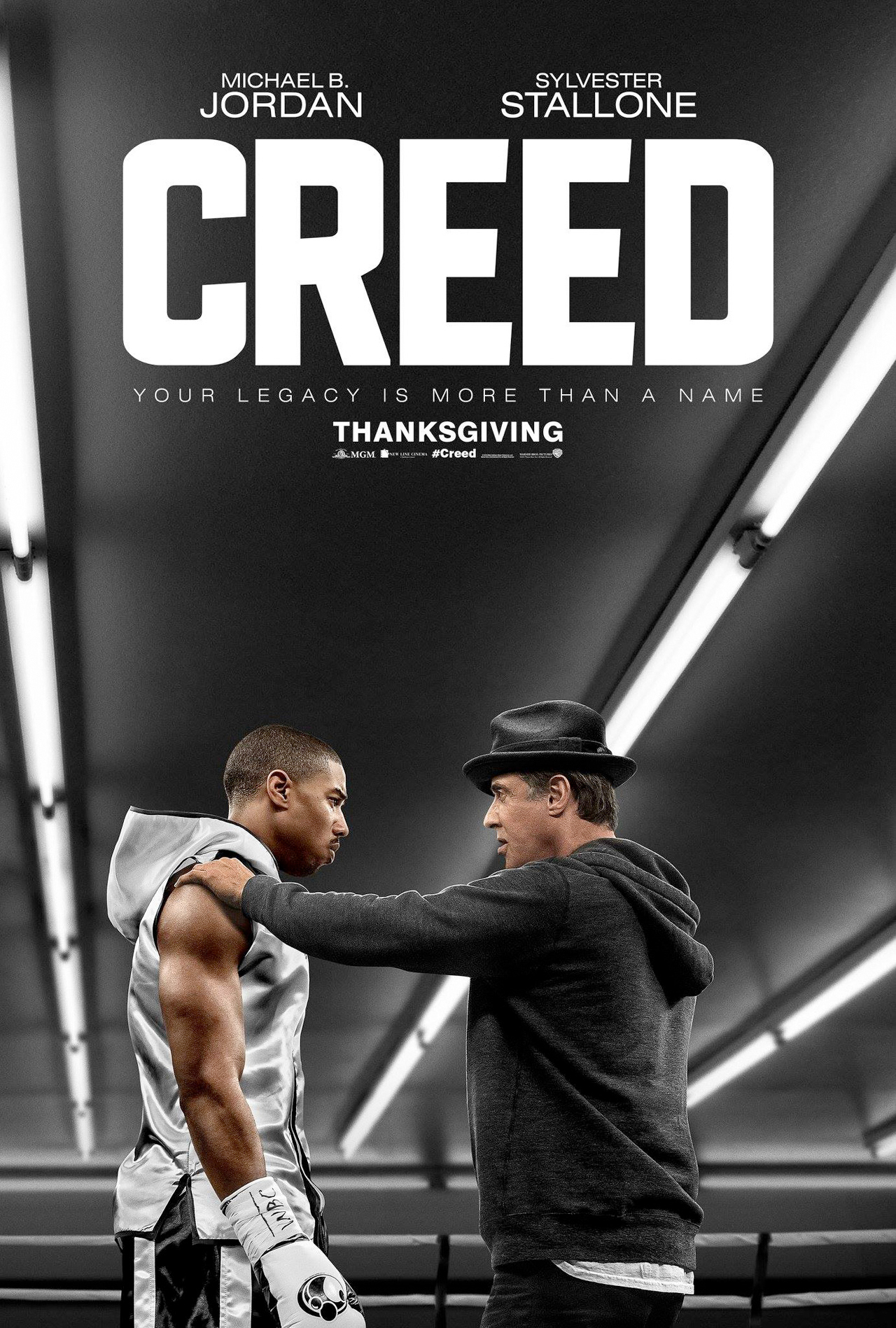
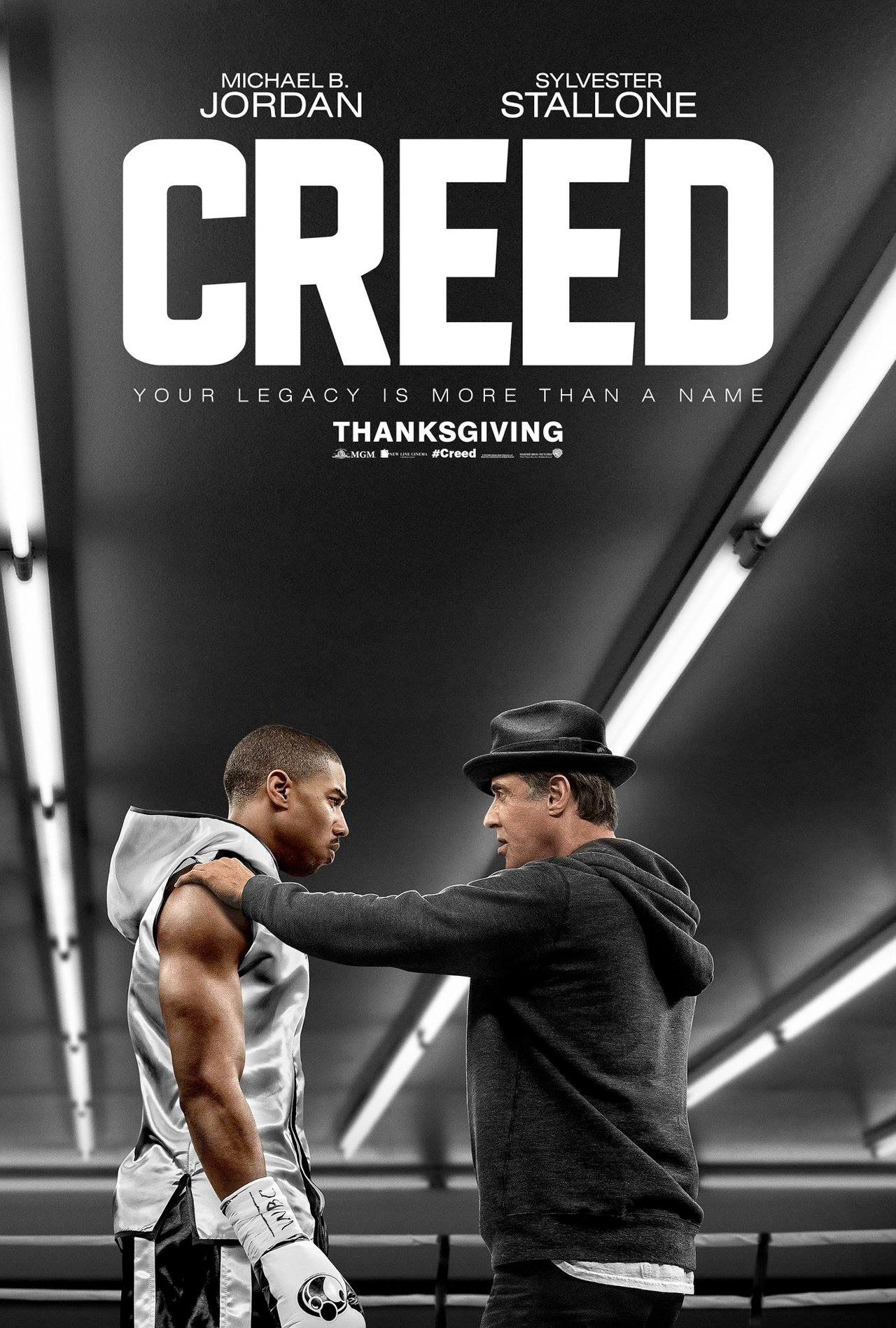
Rocky had to find the eye of the tiger. When we first met him back in 1976, Rocky Balboa (Sylvester Stallone) was an amiable, good-hearted lug who loved his pet turtles, Cuff and Link, and if he ever saw himself getting into the ring with champ Apollo Creed (Carl Weathers), he could only imagine it would be as a sparring partner. His aspiration was not to get his nose broken and go the distance. Over the course of six films, he took on ever-more daunting opponents, so we could always think of him as the underdog. In the first film, he had the advantage of surprise. Creed assumed he could easily defeat the unknown fighter. Rocky did go the distance (and did get his nose broken), and lost in a split decision. In the second film, Creed knew what to expect and his pride was on the line. This time, it was Rocky who got soft after his fame and success. He had to get hungry and learn to be a fighter again. Rocky faced — and defeated — a champion at the top of his game.

Rocky went on to fight ever-more terrifying foes: Clubber Lang (Mr. T) who was not the decent, honorable guy that Creed was, and then the steroid Soviet man-machine Ivan Drago (Dolph Lundgren). In the last two films, Rocky struggled with the killer knock-out punch that we all face — old age. His trainer Mickey and his wife Adrian have died. He still wants to go the distance, but now it does not seem so distant any more.

And now here is another fighter looking for a title shot. We first meet young Adonis Johnson (called Donny) in juvie, where we learn that he just can’t stop fighting. Eye of the tiger is not his problem. It is taming the tiger he has to work on.

Apollo Creed’s widow Mary Anne (dignified but warm-hearted Phylicia Rashad) is willing to give him a home. Donny’s father was Apollo Creed. His mother is dead. Mary Anne has decided to raise him. And she has no intention of letting him become a fighter.

Donny (charismatic Michael B. Jordan) is doing well in his office job, but there is something in him that just needs to punch people. So he leaves Mary Anne working in an office and he seeks out Rocky as a trainer. Rocky does not want to train anyone (see Tommy Morrison in #5). He just wants to miss Adrian in the restaurant he named for her. But this would not be a Rocky movie if Rocky didn’t go back to the gym, and pretty soon that training montage starts up. Gosh darn if it doesn’t still work, especially when that Rocky theme starts filtering through.

Pretty soon there’s a pretty girl, of course, Bianca, played by Tessa Thompson (“Dear White People” and if you haven’t seen it, please do so now). I loved this character for many reasons, primarily because she never took the “oh, don’t fight, you’ll get hurt” role (that is left to Rashad), and because she plays a character who embraces life so fully that she responds to a progressive hearing loss by devoting herself to her passion for creating music while she can. It is genuinely moving to see a disabled character in a film who is not defined by disability. Bianca is a strong, confident, passionate woman and Thompson plays the role beautifully in every sense of the word. Plus, she and Jordan have some sizzling chemistry.

This next chapter (apparently the beginning of a new series) goes the distance. Jordan, thankfully far from the catastrophically awful “Fantastic Four,” is back with writer/director Ryan Coogler. Their last film together, “Fruitvale Station,” was one of the best movies of 2013. As they did in that film, they have created a character who is complex, layered, trying to understand his past and not sure whether he can move on from it. Jordan can hold the screen with as much star power as any young actor in Hollywood today. He and Coogler are true to the Rocky tradition without being trapped by history. Yes, they go back to the steps at the Philadelphia Museum of Art. And yes, you will tear up when they do.

Parents should know that this film includes intense scenes of boxing with graphic injuries, strong language, sexual references and a sexual situation.

Family discussion: Why didn’t Adonis want to use his father’s name? What changed his mind? What would you do if you had Bianca’s health challenges?

If you like this, try: the “Rocky” movies and “Southpaw”

Related Tags:


Drama DVD/Blu-Ray Pick of the Week Series/Sequel Sports
My All American

My All American

Posted on November 12, 2015 at 5:32 pm

If I wrote this review the way writer-director Angelo Pizzo wrote the script for “My All American,” it would be something like this: I saw a movie. It was about football. Freddie Steinmark worked hard and inspired his team, but then got sick. It was sad.

Copyright 2015 Clarius Entertainment

Pizzo wrote two of the best sports films of all time, “Rudy” and “Hoosiers,” but here, in another real-life sports story, he has decided that the audience needs a kind of running commentary from every character to explain — instead of show — the audience what is going on. In an early scene, Steinmark’s mother (Robin Tunney) tells him that because he is smaller than his friends, he will have to work harder. Later, other characters tell us repeatedly what we should be able to see: that he works harder than everyone else, that he is religious, even that he is handsome. This is a movie where a coach actually says that Steinmark has courage and guts. The dialogue is so exposition-heavy that it is like sawing lumber.

It is good to see a biopic that does not rely on the usual scenes of the girlfriend complaining that the lead character does not spend enough time with her. But Steinmark is portrayed as such an all-around saint that he is bland, without any character beyond niceness and determination. All of the characterizations are paper-thin. It is as though everyone on the screen is just another color commentator, not a character.

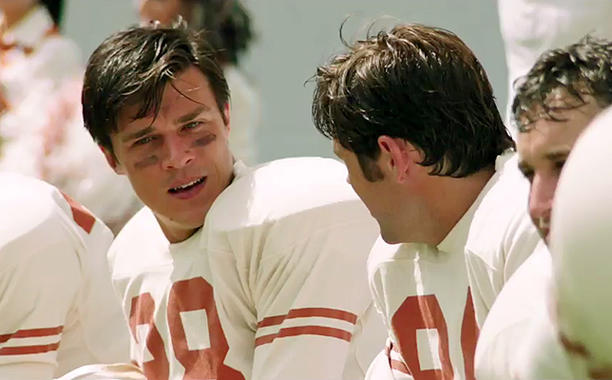
Steinmark (Finn Wittrock of “The Big Short”) is the son of hard-working Catholics. His father has two jobs, security guard by day, cop at night, but is so dedicated to his son’s athletics that he never misses a practice or a game. When a teammate suggests that perhaps Steinmark’s father is living his own dreams of an athletic career through his son, Freddie says no and the subject never comes up again. Freddie wants to play for Notre Dame and then the Chicago Bears. But college coaches think he is too small — except for Darrell Royal (Aaron Eckhart) at the University of Texas, who recruits Steinmark and his best friend. Steinmark’s devoted girlfriend, Linda (Sarah Bolger, one of the adorable Irish girls from “In America”), is accepted to UT as well.

Steinmark is so remarkable (as everyone keeps telling us and telling us and telling us) that he is made first-string in his sophomore year. He leads the defense so successfully that the championship is within reach. And then he begins to have a problem with his leg.

There are very clumsy attempts to do what “Rudy” and “Hoosiers” did in creating a sense of time and place. Here, the references to the war in Vietnam (and the protests), the moon landing, long hair, and 60’s songs are jarring and haphazard. The absence of any person of color may be authentic as regards the team, but on the campus? In the hospital? It is so strange that it becomes a distraction. The framing story of an interview decades later with Royal adds nothing. The football scenes are capably staged, but do not move the story forward.

There are references to Steinmark’s faith — he goes to mass every day and we see him pray and encourage his friend to pray. But we never get a sense of what the faith means to him or how it helps him understand his illness. There is more drama and more character in a throwaway scene involving another player who loses his position than there is in the portrayal of Steinmark’s story.

And there is only the slightest reference to one of the most interesting parts of the story; the lack of treatment options for someone with cancer in 1969. Steinmark’s diagnosis came just before the United States made its first major commitment to a “war on cancer,” with federal funds being used for research. This is the kind of context that could have provided the story with the impact it fails to muster.

Parents should know that there is brief strong language and a brief view of a bare tush, as well as discussions of serious illness and a sad death.

Family discussion: Were you surprised by Bill’s reaction to being replaced? What was it about Steinmark that made him so important to his coach?

If you like this, try: “Rudy,” “Hoosiers,” and “The Express”

Related Tags:


Based on a true story Illness, Medicine, and Health Care Sports
THE MOVIE MOM® is a registered trademark of Nell Minow. Use of the mark without express consent from Nell Minow constitutes trademark infringement and unfair competition in violation of federal and state laws. All material © Nell Minow 1995-2026, all rights reserved, and no use or republication is permitted without explicit permission. This site hosts Nell Minow’s Movie Mom® archive, with material that originally appeared on Yahoo! Movies, Beliefnet, and other sources. Much of her new material can be found at Rogerebert.com, Huffington Post, and WheretoWatch. Her books include The Movie Mom’s Guide to Family Movies and 101 Must-See Movie Moments, and she can be heard each week on radio stations across the country.

Website Designed by Max LaZebnik