The Phenom

The Phenom

Posted on June 23, 2016 at 5:38 pm
Copyright 2016 Bron Capital Partners

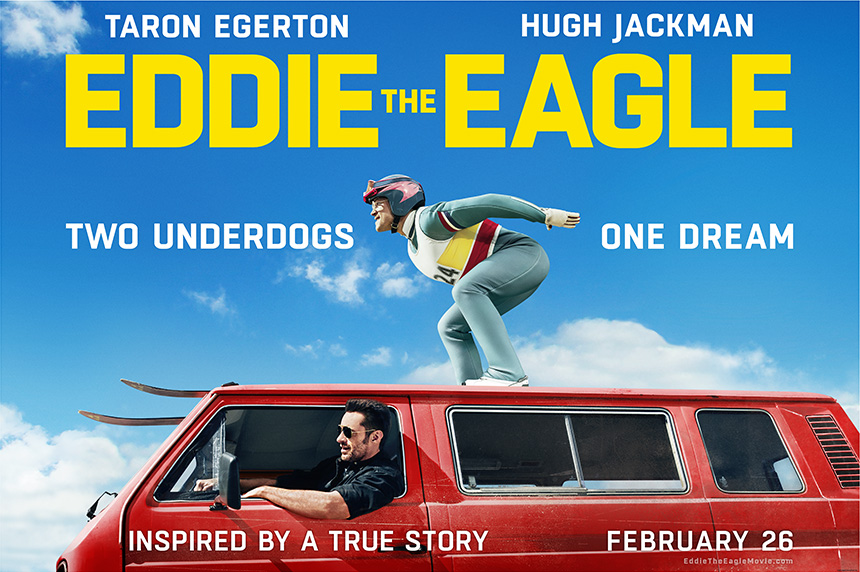
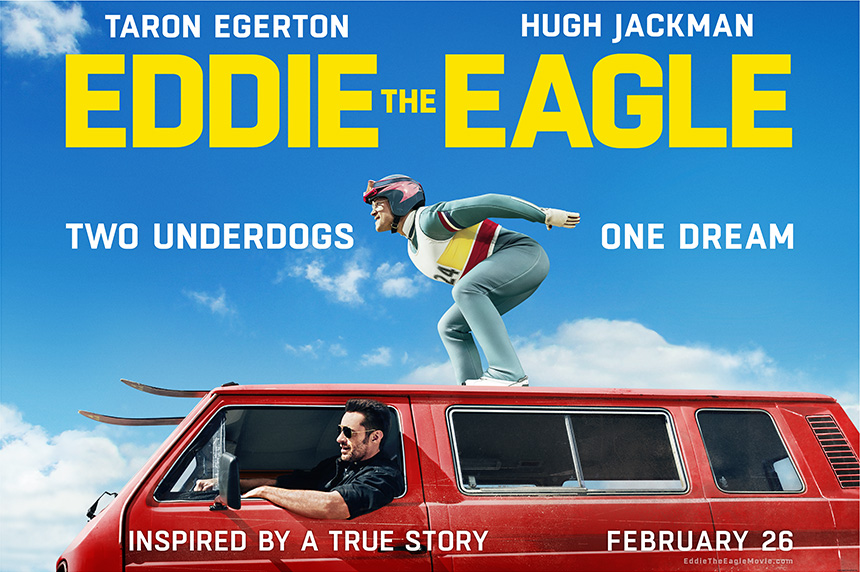
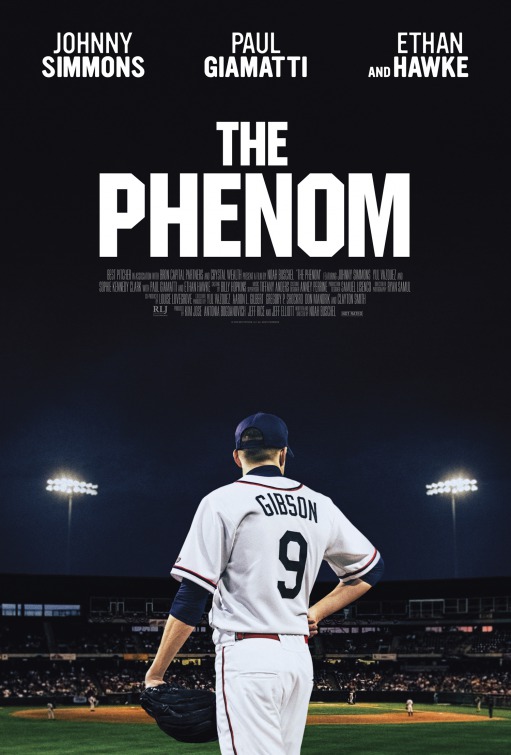
For writer/director Noah Buschel, “The Phenom” is clearly a labor of love. For the audience, it is a small gem filled with unexpected insight and performances of exceptional precision and intelligence. We may think we know what to expect from a film about a gifted athlete who explores the impact of his abusive father with the help of an understanding therapist. But each scene has surprises, with sharp dialogue, vivid characters, and a lot to say about the business of both sports and media. This is a sports movie that quotes F. Scott Fitzgerald. And there’s a brief but powerful scene as the athlete talks to the press that reminds us of how mch this film rewards careful attention.

Johnny Simmons plays Hopper, a “phenom” of a pitcher who has had trouble delivering in the major leagues. He’s sent to the team’s psychologist, a former phenom himself, who was featured on the cover of TIME Magazine at age 22 because of his pioneering work in helping athletes achieve focus and overcome fear. Dr. Mobley is played by Paul Giamatti, who has another connection to baseball — his father, Bart Giamatti served as the Commissioner of Major League Baseball.

Giamatti’s Dr. Mobley is understated, reassuring, and accessible. “A lot of young pitchers struggle with control,” he tells Hopper. It’s “a passing thing.” He does not even want to give it a name because that would “legitimize” it. He tells Hopper that it can be good to look back because damage from the past can be “vaseline on the lens” that interferes with our ability to understand the present and accomplish what we hope for.

Hopper’s whole life has been about getting to the major leagues. His father, Hopper senior (Ethan Hawke) is a volatile bully Hopper’s teacher describes as “an expert at cutting corners and when there weren’t any corners, he’d make circles around her.” He constantly berates his son, bragging that he taught him everything he knows, forcing him to run splits as punishment for smiling. “Never show emotion on the mound. And you’re always on the mound.” He tells Hopper to develop an “intimidation face.”

Hopper has dinner at his girlfriend’s house and is so disconnected from life off the field that he has no idea of how to respond in a home where people discuss ideas and events at the dinner table. Later, when he hurts the girl’s feelings and she speaks up, he tells her the only thing he knows: “You need to toughen up.”

Hopper clearly has to choose between two father figures — his biological father, whose approval he cannot help seeking, and Mobley, whose safe space could be something Hopper could learn to trust. Simmons finds a way to show us the feelings the repressed young pitcher still cannot acknowledge, and his scenes with both Giamatti and Hawke are all the stronger for being understated, never overly dramatic. Owing more to “Ordinary People” than to baseball classics like “Bang the Drum Slowly,” this is a touching drama made up of small moments told with truth and care.

Parents should know that this unrated film has some adult material including drugs and drug dealing, an abusive parent, and strong language.

Family discussion: Why didn’t Hopper know how to talk to Dorothy? Should Dr. Mobley have told him the truth? What was his best advice?

If you like this, try: “Ordinary People” and “Fear Strikes Out”

Related Tags:


Drama Family Issues Sports VOD and Streaming

New OJ Simpson Documentary Gives the Bigger Picture

Posted on June 10, 2016 at 3:51 pm

Premiering tomorrow on ABC and then continuing on ESPN, the documentary series “OJ Simpson: Made in America” is for people who watched the “American Crime Story” series about Simpson’s murder trial, for people who remember his career as a football superstar and television personality, for those who remember the 1995 trial for the murder of his ex-wife and her friend and his acquittal, and for those who read current headlines about the injustices of our legal system, with lenience for the white and wealthy and disproportionate police brutality and punishment for the poor and non-white.

Vulture’s Jen Chaney writes:

Practically every moment of its seven-and-a-half-hour running time is thought-provoking, astonishing, sobering, hilarious, tragic, and sometimes all of those at once….Basically, O.J. Simpson: Made in America is about almost everything that has mattered in this country over the last 50 years. “We talk about O.J. as though the story is O.J.,” says journalist Celia Farber, one of the many sources who speak directly to camera throughout. “The story is O.J. and us.”

Related Tags:


Crime Documentary Sports Television

Jackie Robinson — Tonight and Tomorrow on PBS

Posted on April 11, 2016 at 8:53 am

Tonight and tomorrow, watch the extraordinary story of Jackie Robinson, the first African-American to play major league baseball, on PBS: April 11-12, 2016, 9:00-11:00 p.m. ET. It’s also the story of his wife, Rachel. As Michelle Obama points out in this clip, he could not have done it without her guidance and support.

Related Tags:


Biography Sports Television
Trailer: “The Program” is About Lance Armstrong

Trailer: “The Program” is About Lance Armstrong

Posted on March 11, 2016 at 3:46 pm

One of my favorite directors (Stephen Frears of “The Queen”) and two of my favorite actors, Ben Foster and Chris O’Dowd star in the story Lance Armstrong, who was a worldwide symbol of determination and resilience until he was disgraced by revelations about doping. It is based on the book Seven Deadly Sins: My Pursuit of Lance Armstrong by David Walsh.

Related Tags:


Based on a true story Sports Trailers, Previews, and Clips
Eddie the Eagle

Eddie the Eagle

Posted on February 25, 2016 at 5:28 pm

Copyright 2016 20th Century Fox

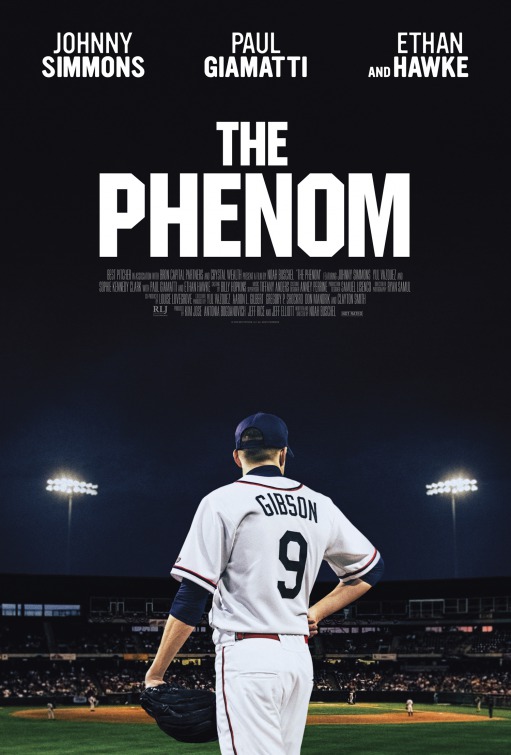
There are heroes who inspire us because they win, showing indomitable determination and courage, like Jesse Owens in Race. And then there are heroes who inspire us when they lose. They also have indomitable determination and courage. They just do not have any talent. But they go farther than anyone thinks they can. Think of “Rudy,” or “Cool Runnings,” or even the original “Rocky” movie. And now add Eddie the Eagle. He was a sickly boy with a dream of competing in the Olympics. When he was bumped from the British ski team, partly for being clumsy and lower class (at least in this film), he switches to ski jumping. There is one advantage: Great Britain does not have a ski jump team and has not competed in the event in 60 years. The rules had not been updated since then, so, unbelievably, anyone who competed successfully (meaning jumped without falling) could qualify. And since no one else was trying, all Eddie had to do was enter one competition and land on his feet.

The bad news was that he had to land on his feet after skiing down a 70 meter slide.

The real Eddie won hearts with his unpretentiousness and enthusiasm, the nickname dubbed in response to his waving his arms in glee and relief after making it down from the jump in one piece. He was refreshing in an era of product-izd athletes groomed from elementary school for endorsement deals and “Up Close and Personal” segments. At the end of the Games, he was the only athlete mentioned in the final speach, singled out for “soaring like an eagle.”

So it is too bad that the movie does something the real Eddie never did — it cheats. It does not trust the real story or the audience. So with the excuse of an “inspired by” credit rather than a “based on” implication of sticking closer to reality, it insists on amping up the ante with schmaltzy/cutesy made-up characters and events. Hugh Jackman brings tons of charm to the fictitious character of an angry, bitter guy who was once on the American ski jump team but got booted for drinking, women, and a bad attitude. Of course he will be inspired by Eddie’s unsullied determination and good attitude. Taron Egerton (“Kingsman: The Secret Service” and the forthcoming “Robin Hood: Origins”) makes Eddie believably awkward, but the character is nearly infantilized, limited to such a narrow range of qualities and emotions. The big showpiece athletic feat is amped up as well, when just the actual fact of climbing up 30 stories and sliding down it on two little sticks should be plenty.

Parents should know that this film includes illness and sport-related peril and injury, some sexual references, brief non-sexual nudity, smoking, alcohol abuse, and some strong language.

Family discussion: What made Eddie’s goals for himself reasonable ones? Why did Bronson decide to help him? How did helping Eddie change the way Bronson thought about himself?

If you like this, try: “Cool Runnings” and “Rudy”

Related Tags:


Biography Inspired by a true story Sports
THE MOVIE MOM® is a registered trademark of Nell Minow. Use of the mark without express consent from Nell Minow constitutes trademark infringement and unfair competition in violation of federal and state laws. All material © Nell Minow 1995-2026, all rights reserved, and no use or republication is permitted without explicit permission. This site hosts Nell Minow’s Movie Mom® archive, with material that originally appeared on Yahoo! Movies, Beliefnet, and other sources. Much of her new material can be found at Rogerebert.com, Huffington Post, and WheretoWatch. Her books include The Movie Mom’s Guide to Family Movies and 101 Must-See Movie Moments, and she can be heard each week on radio stations across the country.

Website Designed by Max LaZebnik