Rosewater

Posted on November 16, 2014 at 11:04 pm

B+
Lowest Recommended Age: High School
MPAA Rating: Rated R for language including some crude references, and violent content
Profanity: Strong and crude language
Alcohol/ Drugs: Drinking
Violence/ Scariness: Riots and brutal attacks on rioters and rebels, torture
Diversity Issues: A theme of the movie
Date Released to Theaters: November 14, 2014
Copyright 2014 Open Road Films

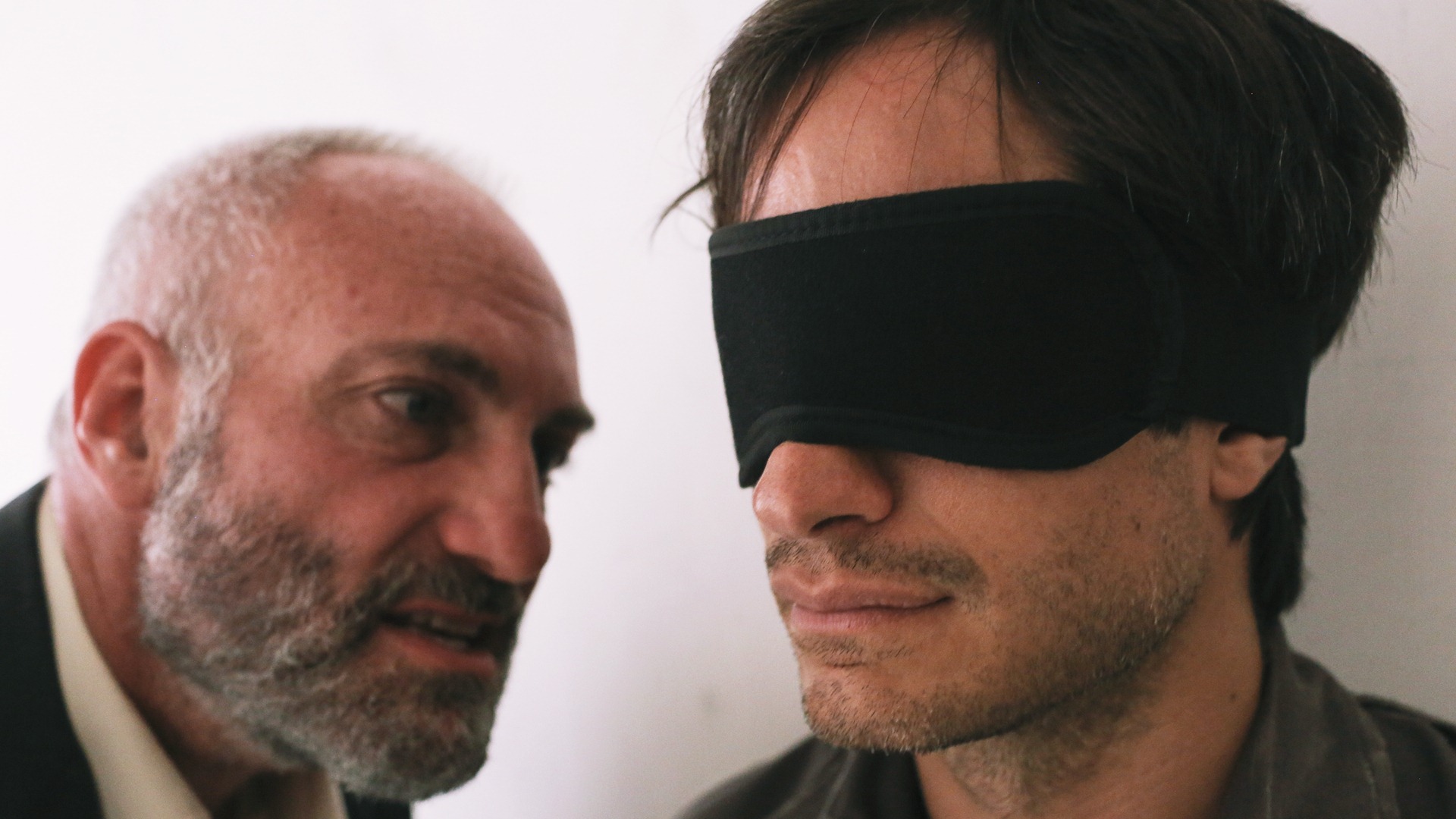
First-time writer/director Jon Stewart has made a remarkably assured film about the imprisonment and torture of Iranian journalist Maziar Bahari It is an absorbing drama that is at the same time the story of a very specific individual and a thoughtful consideration of contemporary geopolitics that avoids stereotypes or jingoism. This not only makes it a better story; it elevates the level of discourse without preachiness.

Bahari (a superb Gael Garcia Bernal) was working for Newsweek when he returned to Iran to cover the election in 2009. He knew the dangers of posing a threat to the government in Iran. His father and sister both died in prison as accused enemies of two different regimes. And now, as he filmed the protests over the disputed election victory of Mahmoud Ahmadinejad and the “Dish University” maintained by dissidents, he knows he is putting himself and his subjects and sources at risk. It is possible he does not consider the risks posed by his decision to be interviewed by “The Daily Show,” where he jokes about being a spy.

He is asleep at his mother’s home when officials arrive to take him to prison.  It is disturbing and shocking that he is neither disturbed or shocked.  While his mother (Shohreh Aghdashloo) bravely snaps at the man who orders her to wear a headscarf, Bahari is calm and polite.

Stewart wants us to understand the pressure that Bahari’s interrogator (Danish actor Kim Bodnia) is under. Stewart shrewdly introduces us to the man who smells of rose water as he is on the phone to his family, and showing us that he is just one link in a chain of oppression and bureaucracy. And he is not afraid to use cinematic touches to show us what is going on in Bahari’s mind. We see a face reflected on the walls as he walks through the streets. Later, in prison, he has conversations with his father and sister. They seem real to us, but they are not hallucinations. They are just visual embodiments of Bahari’s thought processes or fantasies has the weeks in solitary confinement turn into months, with no contact from the outside world. These memories of his family members who were also imprisoned help him stay strong. They even help him briefly outsmart Rosewater, as he fabricates a series of sexual encounters to describe in questioning, his “specialist” (interrogator) listening in horrified fascination, Bahari having, for once, the upper hand.

Stewart wisely also keeps us confined with Bahari, not telling us more than he knows about efforts to get him out of prison. When we finally see archival footage of then-Secretary of State Hillary Clinton talking about the importance of having him freed, we share his sense of relief that the world knows what is going on and cares about it. The other prisoners have no such support. And yet, Stewart finds a way to end on an image of hope that circles back to origins of the film itself. In moving out from behind the “Daily Show” desk, he is inviting us, as he has and as Bahari has, to shift from observer to participant.

Parents should know that this film includes some mature material: riots, abuse and torture (not graphic), some sexual references, and some strong language.

Family discussion: In what way did Maziar use his imprisoners’ weakness? What were their most effective tactics and what were his?

If you like this, try: “Z” and “Beaufort” and Bahari’s book, Rosewater: A Family’s Story of Love, Captivity, and Survival

Related Tags:


Based on a book Based on a true story Drama Movies -- format War

Fury

Posted on October 16, 2014 at 5:58 pm

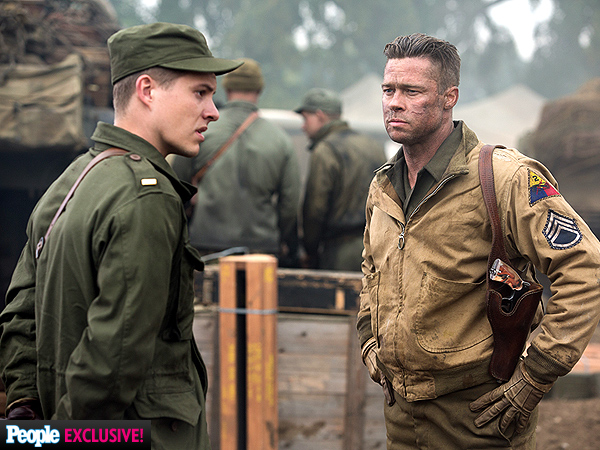
fury brad pittHistory, Winston Churchill reminds us, is written by the victors. But sometimes those victors have some second thoughts, more complex thoughts, about the nature of heroism, patriotism, and the spoils (in both senses) of war. And sometimes people want to comment on contemporary conflicts but find that it is more compelling in an historical framework. That is how we get “Fury,” a fictional story set in the last days of WWII, with Brad Pitt as “Wardaddy” (everyone gets a “war name”), the leader of a tank team pushing through an increasingly desperate Germany.

“Fury” is what is painted on the gun barrel of the tank. Death, both German and Allied Forces, is everywhere. Our forces, we are told at the beginning, are “outgunned and out-armored,” with “staggering losses.”

The first person we see looks like a cowboy hero, a lone figure on a horse, silhouetted against the sun.  He is not a cowboy and he is not a hero.  He is about to be killed, and not in a Hollywood, glamorized, bang bang way.

“It will end, soon,” Wardaddy tells Norman (Logan Lerman), his fresh-faced and terrified new driver, a kid fresh from the typing pool who has never been in a tank or fired a gun in combat. “But before it does, a lot more people have to die.”

I’m in favor of movies that show war as brutal, morally compromised, and horrific. Ultimately, though, it has to have more to say than that.  It is a movie, a work of drama, and if it is not going to be about something bigger than how terrible war is, it runs the risk of making the very horrors it depicts turn into entertainment and have exactly the opposite impact from the original intention.  Steven Spielberg did it with “Saving Private Ryan,” making both the personal story of the individual characters and the larger story about sacrifice and honor compelling and meaningful.

But writer/director David Ayer, whose previous films included the pulpish law-and-order “SWAT,” “Sabotage,” and “End of Watch,” is no Spielberg (though this film borrows a lot from “Saving Private Ryan”).  This film tells us very little about history, war, or the human experience.

Parents should know that this film includes very intense and graphic wartime violence with many characters injured and killed, executions, disturbing images, sexual assault, looting, constant very strong and crude language, drinking, smoking

Family discussion: How does this differ from other portrayals of WWII combat? What are the different ways the men in this movie cope with the moral compromises of war? Why did the men choose “war names” and what did they signify?

If you like this, try: WWII dramas “Saving Private Ryan” and “The Big Red One” and the Israeli film “Beaufort”

Related Tags:


Action/Adventure Drama War

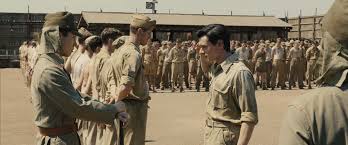
Remembering the Vietnam War: 10 Movies

Posted on July 25, 2014 at 8:00 am

gardens of stoneAs we observe the 50th anniversary of the War in Vietnam, here are ten of the best of the movie and documentary depictions of the war and its impact on history and culture in the United States. The best-known films about Vietnam include “Apocalypse Now,” “Full Metal Jacket,” “Platoon,” “The Deer Hunter,” “Coming Home,” “Good Morning Vietnam.” But over 2000 films have touched on or portrayed the Vietnam war and there are sure to be many more to come as we continue to grapple with the strong feelings about the conflict. These are others I think are well worth watching.

1. We Were Soldiers The very first U.S. military involvement in Vietnam is explored in this somber portrayal of military honor and politicians’ hubris.

2. Gardens of Stone James Caan and James Earl Jones star in this poignant story of the war at home and in Southeast Asia, focusing on the Arlington Cemetery’s “Old Guard.”

3. Hearts and Minds This documentary was made in 1974 so it is as much an artifact of its time as it is an accurate depiction of events as we have come to understand them.  But it is a powerful film with some important footage of the era.

4. China Beach This beautifully acted television series is a rare look at the war through the eyes of women.

5. Hamburger Hill The story of the 101st Airborne’s attempt to take a single hill in one of the most brutal engagements of the war stars Dylan McDermott and Don Cheadle.

https://www.youtube.com/watch?v=QA7qVIqh6_8

6. Born on the Fourth of July Tom Cruise plays Vietnam veteran Ron Kovic, who became an anti-war protester after he returned.

7. Little Dieter needs to Fly Werner Herzog made a documentary about a German immigrant fell in love with planes and became an American naval pilot in the Vietnam War, where he was captured and then escaped, and then made it again as a feature film called Rescue Dawn with Christian Bale.

8. Vietnam – A Television History The PBS series about the Vietnam war has been re-edited and updated. It is still a thoughtful, balanced history of the conflict and its context.

9. In Country Bruce Willis stars in the story of a girl who wants to find out what happened to her father, who never returned from Vietnam.

10: Remembering Vietnam: The Wall at 25 Maya Lin’s memorial to the Americans who died in Vietnam is one of the most powerful spaces in Washington D.C. Vietnam veteran Jan Scruggs was determined to build a Vietnam memorial. Maya Lin was the Yale undergraduate whose etched granite memorial was selected by the judges but was considered insulting by some in the veteran community. The site has become a place for thousands of visitors to pay their respects. Many of them leave tokens with deep personal connections, and that is now a part of the memorial as well.

Related Tags:


After the kids go to bed For Your Netflix Queue Lists War

Veterans Remember D-Day

Posted on June 6, 2014 at 9:43 am

On this 70th anniversary, we are grateful for the dedication of the troops who defended our freedom.

In The Longest Day, an all-star cast appears in the story of Allied forces preparing for a massive D-Day assault upon the beaches of Normandy during World War II. For documentary footage, check out D-Day: 70th Anniversary Collection.

Related Tags:


Documentary War

Edge of Tomorrow

Posted on June 5, 2014 at 6:00 pm

Are there moments you would like to relive, so you could make a different choice?edgeoftomorrow poster

It’s a universal fantasy that has played out many times in books and films. It can be a gift (About Time). It can be a curse, though a curse with some benefits that could involve saving the world, personal growth, and falling in love (“Groundhog Day,” “Source Code”). In “Edge of Tomorrow,” Tom Cruise plays Major Bill Cage, a slick military officer who stays far away from the fighting by handling press relations for the global effort to defeat mechanical spider-y aliens called Mimics. A general (Brendan Gleeson) wants to send him to the front to get footage of the battle. Cage’s usual smooth patter fails to dissuade him, so he tries blackmail, which so infuriates the general he is demoted and sent to the front, not to shoot movies but to shoot Mimics. He gets hollered at by a Kentucky non-com named Major Sergeant Farell (Bill Paxton), thrown into a exo-skeletal fighting suit, and dropped from a plane, where he gets killed. End of story.

Except that it isn’t. Cage somehow has been caught up in a time loop that keeps bringing him back to that rude awakening in Farell’s division. Like a video game character, when he gets killed, the system is reset and no one but he remembers that it has all happened before. Over and over, he repeats the same actions. No matter what he does, nothing changes until in the midst of battle he meets up with the war’s most decorated soldier, Rita (Emily Blunt), who looks him in the eye and says, “Come find me when you wake up.”

It feels like a nightmare, but it is not. To explain more about what is going on would be to spoil some of this highly entertaining film’s best surprises.  Director Doug Liman and editor James Herbert are terrific at using the re-sets to add energy to the storyline rather than bogging it down.  They use different angles and pacing to help us keep it all straight, even though sometimes we follow Cage back to his original starting point and sometimes we join him well into another foray, not realizing until just the right moment how many tries it took him to get to that point.  Liman deftly plays the rinse-and-repeat familiarity for both us and Cage as comedy and as thriller as needed. Big props to the creature designers, too.  The Mimics are like lethal tumbleweeds made of razorblades, moving at hyperspeed.

Cruise describes himself on Twitter as “running in movies since 1981,” but growing up in movies is something he has done just as often.  He is just right as the slick and callow advertising man turned press relations officer who has to find a way to stay alive and then find a way to save the world.  Blunt is excellent as the battle-worn veteran.  As Cage has to find his inner soldier, Rita has to ask herself whether she can let go of hers, lending just enough emotional heft to the storyline to keep the story moving forward even when the events are repeating.

Note: the DVD release is renamed “Live Die Repeat”

Parents should know that this film includes constant sci-fi/action-style peril and violence with scary aliens and many characters injured and killed.  There is some strong language including one f-word.

Family discussion:  What did Cage learn about himself by repeating the same day?   Why didn’t he tell Rita about the helicopter at first?

If you like this, try: “Source Code” and the graphic novel that inspired this film, All You Need Is Kill by Hiroshi Sakurazaka

Related Tags:


3D Action/Adventure Based on a book Comic book/Comic Strip/Graphic Novel Fantasy IMAX Romance Science-Fiction War
THE MOVIE MOM® is a registered trademark of Nell Minow. Use of the mark without express consent from Nell Minow constitutes trademark infringement and unfair competition in violation of federal and state laws. All material © Nell Minow 1995-2026, all rights reserved, and no use or republication is permitted without explicit permission. This site hosts Nell Minow’s Movie Mom® archive, with material that originally appeared on Yahoo! Movies, Beliefnet, and other sources. Much of her new material can be found at Rogerebert.com, Huffington Post, and WheretoWatch. Her books include The Movie Mom’s Guide to Family Movies and 101 Must-See Movie Moments, and she can be heard each week on radio stations across the country.

Website Designed by Max LaZebnik