Fashion icon nonagenarian Iris Apfel is renowned for her taste and style. But people who see this movie, the last from documentary legend Albert Maysles, will remember her for her fearlessness and life force. Along with the signature big, round, black-rimmed glasses, her attire on any given day could include a hand-painted leather Valentino jacket she originally bought decades ago for her husband, pants made from fabric she haggled over at an exotic open market, and gorgeous big, clunky beads as likely to be worth a fortune as they are to have been picked up at the time store.
No one ever got a bigger kick out of getting dressed than Iris (she admits she likes dressing for a party far more than the party itself) and no one ever got a bigger kick out of life and love, either.
Iris is an artist and the world is her canvas. She is a living installation project of wild color and design. But her greatest art form is her life, and it is an enormous treat to see this valentine by one legend to another.
Families should know that this film includes some strong language and discussion of illness and loss.
Family discussion: What would change in your life if you wore something a little bit more adventurous? What do you think of her comments on “pretty?”
If you like this, try: “The September Issue” and “The Eye Has to Travel”
Rated R for graphic nudity, language, sexual references and some violence
Profanity:
Very strong language
Alcohol/ Drugs:
Drinking and drug use, intoxication
Violence/ Scariness:
Violence and peril, characters injured and killed
Diversity Issues:
Diverse characters
Date Released to Theaters:
April 17, 2015
Date Released to DVD:
July 14, 2015
Amazon.com ASIN:
B00XI057M0
Copyright A24 2015
Movies about artificial intelligence or computers achieving consciousness are, of course, really about what it means to be human.
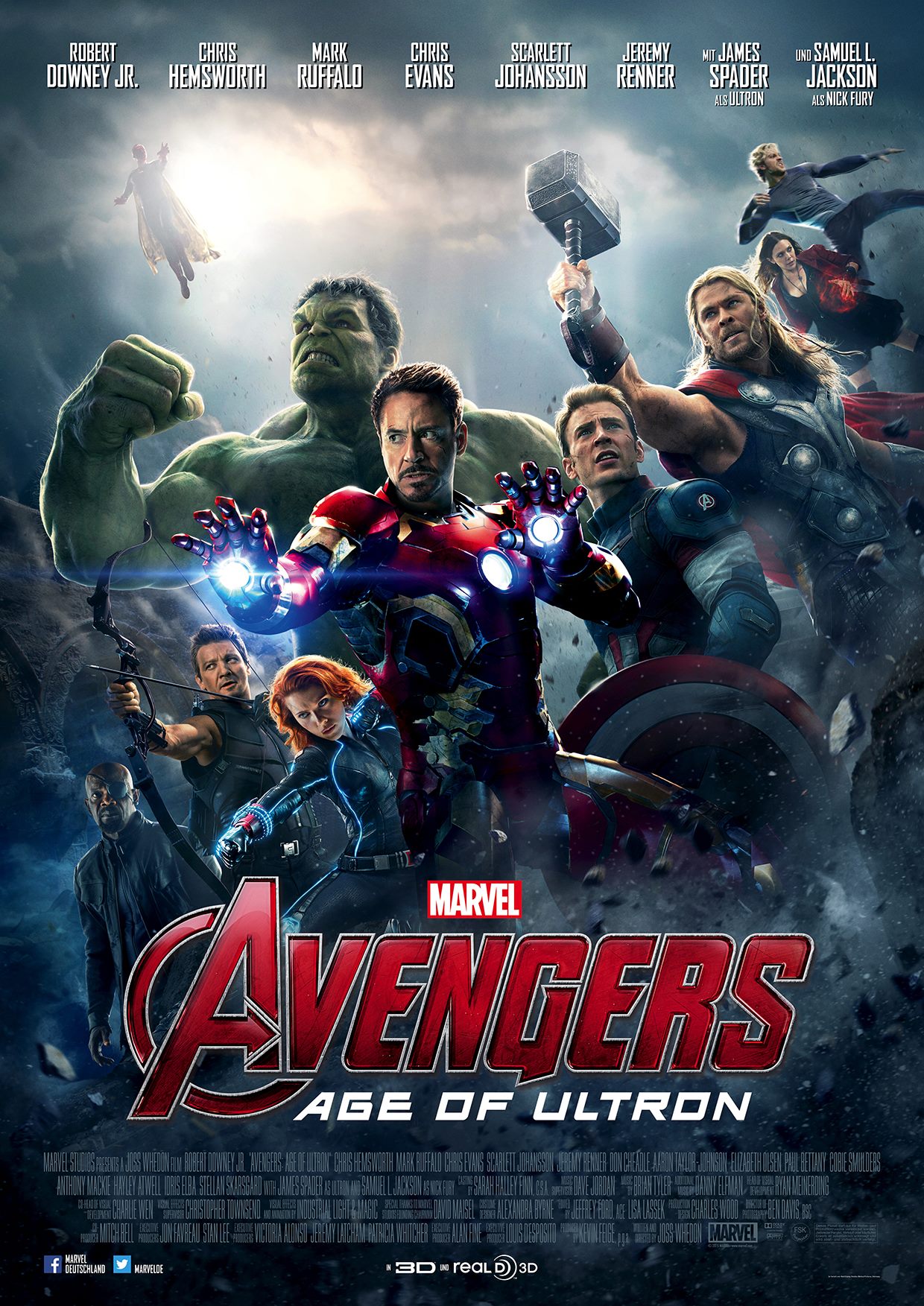
When software and hardware combine to mimic or exceed human qualities in “Her,” “Chappie,” “2001: A Space Odyssey,” “Terminator,” or the upcoming Avengers sequel, even “Planet of the Apes,” it is a way to think about what it is that defines us. Alan Turing of “The Imitation Game” used our ability as humans to recognize each other as the famous Turing test to determine whether artificial intelligence has been created. The test is passed when a person cannot tell whether the entity on the other side of a conversation is human. If we cannot tell the difference, then we have to rethink our exceptionalist notions of human supremacy. We accept, sometimes reluctantly, the notion that computers are vastly superior in computation and memory, that they can whomp us in chess or on Jeopardy. But can a machine achieve what we think of as consciousness? Or conscience?
Caleb (Domhnall Gleeson) is a computer programmer who gets the equivalent of Charlie Bucket’s golden ticket. He wins a chance to spend a week at the home of the brilliant founder of his company (think Steve Jobs), a man who at age 13 invented the most powerful search engine and now lives in a home so remote that a helicopter flies over the thickly wooded property for two hours before they reach the residence. They are in the middle of nowhere. (The film was made at the stunning Juvet Landscape Hotel in Norway.)
Nathan (Oscar Isaac, all brutish charm, feral, and entitled, with shaved head and beard), welcomes him with a rough candor, explaining that he is hung over, and giving Caleb a keycard, so that he will have access to those parts of the home where he is welcome and be kept out of those where he is not. It turns out he has been brought there for a purpose. Nathan has been working on what he describes as the greatest scientific advance of all time. He is not creating a robot. He is trying to create life. He wants Caleb to perform the Turing test on his latest creation, named Ava (Alicia Vikander of “Anna Karenina”).
But it turns out that it may not be Ava who is being tested.
Ava is gorgeously designed. Nathan admits that he created her to be intensely appealing and she is, both her humanoid face and her transparent neck and midriff that allow us to glimpse her mechanics. Vikander gives her a tentativeness and innocence, with a sweet seriousness and (at least at first) an endearing wish to please. She tells Caleb to wait while she gets a surprise and it turns out to be clothes that cover up the machinery so well that it is not just the human part of Caleb that recognizes her as a part of the same species; it is the depths of the lizard brain instinct. We may have wondered why Nathan’s test was conducted in a glass box that separates Ava and Caleb. Perhaps it was to prevent him from abandoning the Turing test for a more animalistic evaluation based on smell and touch.
There is that always-compelling hubris/Frankenstein/Jurassic Park/sorcerer’s apprentice element of foolish, narcissistic grandiosity in creating something out of a grant vision without appreciating how dangerous it will be. Something always goes wrong. And anyone who does not realize that does not really understand that part of the essence of humanity, for better and worse, is the chasm between our ability to dream and our ability to execute.
First lesson: Isaac Asimov was right. Second lesson: the qualities of human-hood go beyond syntactical complexity and conversational non-linearity. To be human means independence of thought and action, and the pesky thing about independence is that it overlaps with rebellion. We know computers can outsmart us. Can they out-human us, too? Is it any wonder that Caleb flays his own arm just to check that what is inside is not made of gears and chips?
Screenwriter Alex Garland (“28 Days Later,” “Sunshine,” “Never Let Me Go”), directing for the first time, has an eye for gorgeous visuals and a superb sense of balancing the future-wow with the ordinary to make his sci-fi-style extrapolations amplify and illuminate who we are.
Parents should know that this film has very strong language, substance abuse, explicit nudity and sexual situations, and violence.
Family discussion: What is Ava’s most human quality? What is Nathan’s least human quality?
If you like this, try: Read up on the Turing test and watch movies like “A.I.” and “Her”
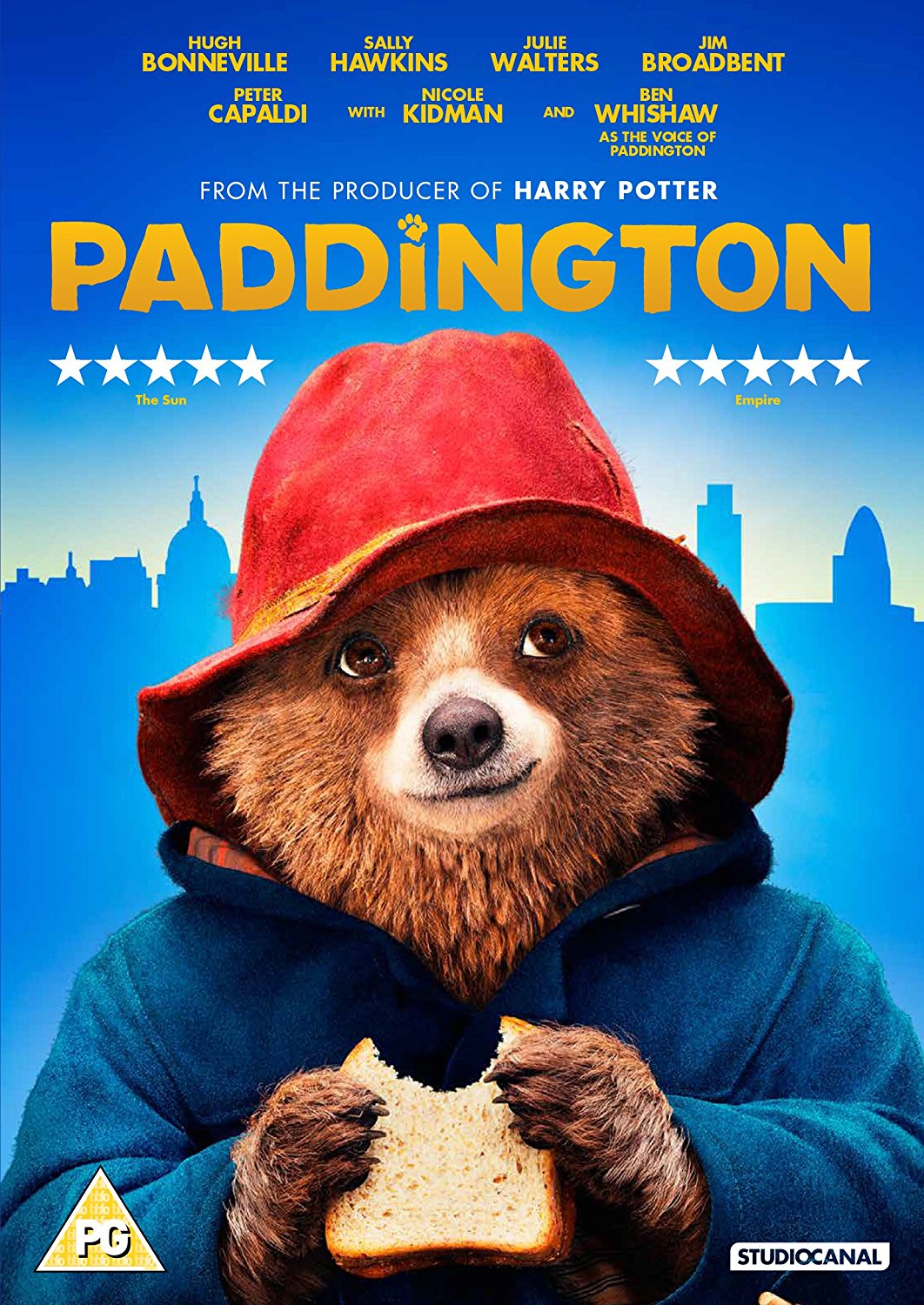
A generation ago, a British explorer named Montgomery Clyde (Tim Downie) was rescued by a rare breed of bears in Peru. He lived with two of them, Pastuzo (Michael Gambon) and Lucy (Imelda Staunton), teaching them some English, including the 107 ways to describe rain that Londoners like to use, and introducing them to the pleasures of orange marmalade. When he said goodbye, he assured them of a warm welcome if they ever came to London bestowed his red hat on Pastuzo.
Pastuzo and Lucy raised their nephew (Ben Wishaw), teaching him all they had learned from Clyde, developing their own artisanal marmalade recipe, and enchanting him with tales about the far-off land called London where their friend would be happy to welcome him. When Pastuzo is killed, Lucy moves to a home for retired bears and the young cub stows away on a freighter bound for London, wearing the red hat and carrying a suitcase filled with jars of marmalade.
At Paddington Station, he meets the Brown family. Risk-averse Mr. Brown (“Downton Abbey’s” Hugh Bonneville) does not want to have anything to do with him, but warm-hearted and spontaneous Mrs. Brown (Sally Hawkins) invites him home, naming him for the train station where they met. The Browns have two children, Judy (Madeleine Harris), a teenage daughter who never takes out her earbuds, and Jonathan (Samuel Joslin), a budding inventor.
As soon as they get home, the extra-prudent Mr. Brown calls his insurance company to extend the protection of his homeowner’s policy, but it is not fast enough. Paddington’s first encounter with a bathroom ends in catastrophe. Mr. Brown is horrified. But Mrs. Brown is sympathetic, and Judy and Jonathan are delighted. A little chaos can be a good thing. And learning to enjoy the differences we encounter in others is a very, very good thing.
As the Browns warm to Paddington, their neighbor, Mr. Curry (“Doctor Who’s” Peter Capaldi) has only one pleasure — having something new to complain about. And there is a more sinister villain as well. A taxidermist at the natural history museum named Millicent (Nicole Kidman, who also co-produced the film) wants Paddington so she can kill him, stuff him, and put him on display. “Is he endangered?” asks one of the museum staff. Millicent narrows her eyes, channeling Cruella De Vil. “He is now.”
The advertising for the film regrettably focuses on the slapstick and gross-out jokes (Paddington thinks Mr. Brown’s toothbrush is for cleaning out his ears). Thankfully, as a whole the film is true to the gentle humor and sweetness of the books. Wishow perfectly captures Paddington’s innocent friendliness and Bonneville and Hawkins are just right as the couple who only need a slight adjustment to reconnect with each other and their children. A brief flashback showing why Mr. Brown became so worried about safety will be appreciated by the children and parents in the audience, and even Millicent’s motives are revealed to be less about evil than about her feelings of hurt and loss. Paddington remains a most welcome visitor, and I hope we see more of him.
Parents should know that this film includes a sad (offscreen) death and some peril, including a taxidermist who wants to kill and stuff Paddington. Characters use some mild language and there is comic mayhem and peril and some bodily function humor. A woman flirts with a man to get him to do what she wants. A man dresses as a woman for disguise and another man finds him attractive. A character gets a security guard drunk so that other characters can break into a building.
Family discussion: Why did Mr. Brown change his views on taking risks when his daughter was born? Why doesn’t Mr. Curry like Paddington? Can you do a “hard stare” and when would you use it?
If you like this, try: the Paddington books and the “Curious George” books and movies — and taste some marmalade!
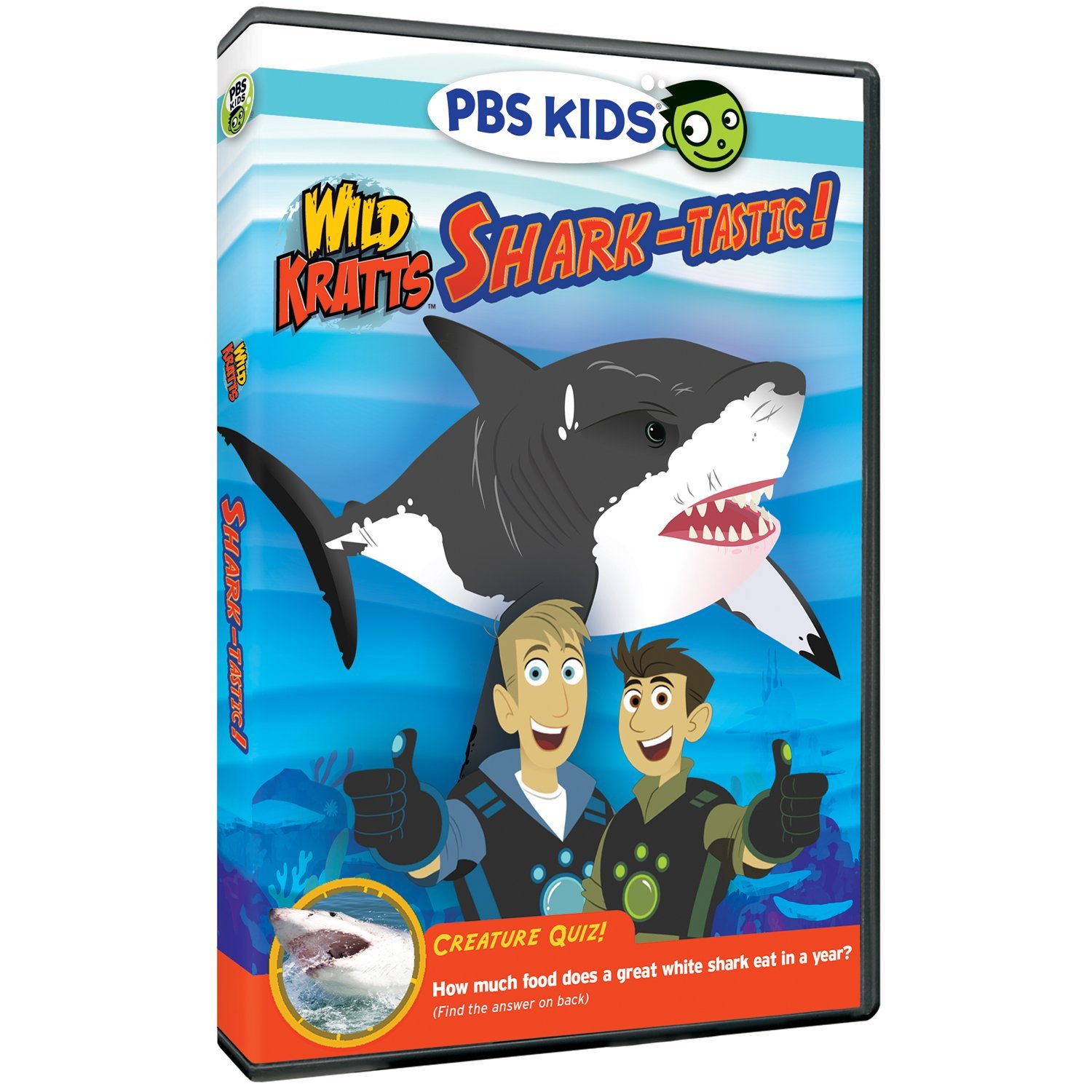
PBS’s Wild Kratts is one of my favorite series for families. I love the relationship between the two real-life Kratt brothers and their enthusiasm and sense of adventure. The episodes have a nice balance between adventure, humor, and information about animals and nature. They have some fun and educational online games as well.
1. Stuck on Sharks – Exploring the mysterious great white shark.
2. Octopus Wildkratticus – The team must save a 7 tentacle octopus.
3. Tortuga Tune-Up – The team learns from a hawksbill sea turtle how to defend against a tiger shark.
4. Speaking Dolphinese – The teams learns the dolphin language.
I have a copy to give away, along with a supplementary booklet! Send me an email at moviemom@moviemom.com with Kratts in the subject line and tell me your favorite undersea creature. Don’t forget your address! (US addresses only) I will pick a winner at random on April 20, 2015.
Rated PG-13 for some thematic elements and brief strong language
Profanity:
Brief strong language including anti-Semitic epithets
Alcohol/ Drugs:
None
Violence/ Scariness:
WWII-era peril and violence
Diversity Issues:
A theme of the movie
Date Released to Theaters:
April 1, 2015
Date Released to DVD:
July 6, 2015
Amazon.com ASIN:
B00VU4YO7K
The very title is a form of theft. When Gustav Klimt painted the portrait that gives this film its name, he called it “Portrait of Adele Bloch-Bauer.” She was a warm, vibrant young woman who was a vital part of the extraordinary period of intellectual and cultural life in Vienna known as the Sacred Spring era. Adele Bloch-Bauer died in 1925, and the portrait hung in a place of honor in the apartment her husband shared with his brother, sister-in-law, and two young nieces.
And then the Nazis invaded Germany, their atrocities included stealing the valuables of the Jews they were sending to concentration camps. They took the portrait of Adele Bloch-Bauer and hung it in a place of honor, after they renamed it to remove identity of the subject and the Jewish association of her name. “Portrait of Adele Bloch-Bauer” became the anonymous “The Woman in Gold.” The beautiful choker necklace she wore in the painting was also stolen and given to the wife of Nazi officer Hermann Goering.
More than half a century later, Maria Altmann, the niece of Adele Bloch-Bauer, asked the grandson of her old friend from Vienna if he could help her get the painting back. This film is the story of the painting, the lawsuit, and Maria’s indomitable spirit.
Dame Helen Mirren is radiant as Maria, witty, spirited, an irresistible force who cannot give up. While we never doubt for a moment that she will prevail, Mirren makes us want to watch it all unfold. It is an extremely difficult case, with many arcane legal details, and the real-life story, like all real-life stories, is more complicated and controversial than any movie can convey. Director Simon Curtis (“My Week with Marilyn”) and first-time screenwriter Alexi Kaye Campbell keep the focus on the odd-couple relationship between Maria and the young lawyer (Ryan Reynolds), with flashbacks to show us Maria’s relationship with her Aunt Adele, and then her wedding to a handsome opera singer, just as the Germans are about to invade. Tatiana Maslany (“Orphan Black”) is lovely as the young Maria, and makes us believe she could grow up to become Helen Mirren.
The portrait of Adele Bloch-Bauer now hangs in the Neue Galerie. And now this movie is a part of its story, putting Adele back into the picture and giving us a portrait of the niece who insisted that her story be told.
Parents should know that this film includes WWII-era peril and violence, with references to concentration camps and genocide. There is brief strong language including anti-Semitic epithets.
Family discussion: Why did Maria refuse Ronald Lauder’s offer to get her more experienced lawyers? What was the most important discovery in winning the case?