Eleanor the Great

Eleanor the Great

Posted on September 25, 2025 at 5:24 pm

B +
Lowest Recommended Age: High School
MPAA Rating: Rated PG-13 for thematic elements, some language and suggestive references
Profanity: Some strong language
Alcohol/ Drugs: None
Violence/ Scariness: References to the Holocaust, sad death
Diversity Issues: A theme of the movie
Date Released to Theaters: September 26, 2025
Copyright 2025 Sony Pictures Classics

Scarlett Johansson’s first film as a director shows the careful attention she has been paying as a performer, starting with the importance of casting. The irreplaceable June Squibb stars as the title character, an outspoken 94-year old who moves from her home in Florida to New York after the death of Bessie (Rita Zohar), her roommate and best friend.

The opening scenes show the ease, comfort, and support of that friendship, as they strap on their velcro-strap shoes, grab Eleanor’s cane, go for a walk and shop for groceries. Bessie collapses in the store, and we see them in the hospital, Eleanor making sure Bessie sees a doctor right away by telling the nurse Bessie is a member of the family who donated the money for a wing at the hospital, despite the fact that it is not true. She also lies to a nosy neighbor, just to annoy her. This comfort with deception appears at first to be harmless but it is an indication of the dangers ahead.

In New York, Eleanor reunites with her recently divorced daughter, Lisa (Jessica Hecht), and college student grandson, Max (Will Price). In contrast to her relationship with Bessie, her connection to her family is prickly, contrary, and sometimes judgmental. Lisa has signed Eleanor up for a singing group at the Jewish Community Center and encourages her to look at assisted living options. Eleanor is not interested. At the JCC, she wanders into a meeting, not realizing it is a support group for Holocaust survivors. When called upon to introduce herself, she uses one of Bessie’s stories. Sitting in on the meeting is a journalism student named Nina (a radiant Erin Kellyman), who is captivated by Eleanor’s story and wants to write about her.

Nina’s mother died six months earlier and her father, a television news reporter (Chiwetel Ejiofor as Roger) has been distant, dealing with his own grief. The dislocation and grief they share leads Nina and Eleanor to become close friends very quickly.

The chemistry between them is palpable, so we want that friendship to continue to be a source of connection and healing for them. But we know, as Eleanor realizes at some level, that the “stolen valor” lie at its foundation must detonate, causing great pain for both of them. What is unexpected is compassion and generosity of the way it is resolved, I suspect the reason Johansson and Squibb were drawn to the story.

Squibb is, as we saw in “Nebraska” and “Thelma,” a treasure and this role gives her a chance to play a character who is fully human, flawed, grieving, and still learning. The British Kellyman has an impeccable American accent and she is a gem, lighting up the screen with her vulnerability and the way she treasures and is reassured by her friendship with Eleanor. Johansson created a space for superb performances by everyone in the cast, including Jessica Hecht as Eleanor’s frustrated daughter and Zohar as Eleanor’s roommate and lifelong friend.

Sqiibb, Kellyman, Johansson, and first-time screenwriter Tory Kamen have made a film about loss, friendship, and compassion. Eleanor may not always be great, but this movie lets us see the parts of her that really are.

Parents should know that this movie includes some strong language, references to the Holocaust, and grief over the deaths of a wife and mother and a friend.

Family discussion: Why did Eleanor lie? Why was it hard for her to be as nice to her daughter as she was to Nina and Bessie? Were you surprised by Lisa’s response?

If you like this, try: “Thelma,” also starring June Squibb
Related Tags:


Drama Family Issues movie review Movies -- format Movies -- Reviews
One Battle After Another

One Battle After Another

Posted on September 25, 2025 at 5:03 pm

A-
Lowest Recommended Age: Mature High Schooler
MPAA Rating: Rated R for pervasive language, violence, sexual content, and drug use
Profanity: Constant very strong, bigoted, and crude language
Alcohol/ Drugs: Drinking and drugs
Violence/ Scariness: Characters in peril, some injured and killed, graphic and disturbing images, guns and bombs
Diversity Issues: A theme of the movie, racist characters
Copyright 2025 Warner Brothers

Writer/director Paul Thomas Anderson (“Boogie Nights,” “Magnolia,” “The Phantom Thread”) has taken a novel written 35 years ago by an author often described as “unfilmable” and turned it into a vital, provocative, and disturbingly (in a good way) of-the-moment two hour and forty minute film that seems to go by in half the time. The film is a grand epic anchored by three Oscar-winners bringing their A game. It balances action, politics, metaphor, and satire, with heightened characters who are larger than life but still feel real and a knockout, urgently percussive score from Johnny Greenwood. There is also humor, some slapstick, though not handled quite as deftly.

While much of the story is original, like Thomas Pynchon’s 1990 book, Vineland, the story is about a couple who were in a militant activist group, here called the French 75. The couple is identified by the authorities just after their child was born. The woman went into the witness protection program and the man and the baby got new identities and were relocated by French 75.

Elements of the story evoke the unrest of the 1960s, when the most extreme activists protesting the Vietnam War and racial injustice broke the law, even becoming violent. The Weather Underground’s name was inspired by the Bob Dylan line that “You don’t have to be a weather man to know which way the wind blows.”Weather Underground’s Kathy Boudin and David Gilbert served more than 20 years in maximum-security prisons for their roles in a 1981 Brink’s robbery in upstate New York, in which a guard and two police officers were killed while Bernardine Dohrn and Bill Ayers were on the run from the authorities (partly inspiring the film “Running on Empty”).

French 75 is a Weather Underground-inspired group, but their attacks are even more militaristic and violent. Anderson’s script is very loosely based on the book and substitutes more timely issues and attitudes. While, like the group in the Pynchon book they have broadly anti-capitalist, anti-oppression views, we meet them as they are about to raid a US immigration center on the Mexican border.

The character who will be called Bob for most of the film (Leonardo DiCaprio) is in charge of explosives. Perfidia (Teyana Taylor) is one of the leaders, with a fierce, aggressive attitude and a lot of guns. The soldier in charge of the center is Colonel Steven J. Lockjaw, played by Sean Penn in an incendiary performance, one of his best in years. Just watch the way he walks, the heft of his shoulders. Perfidia confronts him in a scene charged with highly sexualized power dynamics. He is humiliated and enthralled.

French 75 operatives zip tie the hands of the military and unlock the cages filled with rows of cots with people shivering under silvery Mylar blankets, one of innumerable striking images from cinematographer Michael Bauman. The raiders lead the immigrants into a truck and take them across the border into the US.

Perfidia is passionate about the issues and perhaps even more by the excitement and adrenaline of their raids. Bob, a bit shy and nerdy, shows her how he builds the explosives and she finds it thrilling. Soon they are a couple. Meanwhile, Lockjaw is obsessed with her. When she is captured, he says he will help her if she is nice to him. That means naming names of French 75 members and it means sex.

Perfidia has a baby, but soon leaves the infant with Bob and disappears. Sixteen years later, the couple and the baby are hiding out. No one knows where Perfidia is; she ran away from witness protection. The father and daughter, now called Bob and Willa (an outstanding debut by Chase Infiniti), are living quietly in a small Colorado town.

Lockjaw, still in the army and still deeply conflicted, wants to find Willa to determine if he is her father, and if so, to eliminate her. Perfidia is Black and Lockjaw, like Bob, is white. Lockjaw is desperate to join an elite club of the ruling class, which accepts only members who are “homegrown” (white, American-born, and gentile, with no ties to anyone who is not). If Willa is his daughter, he will not be eligible for membership. He finds out where Bob and Willa are hiding and fabricates a reason to be deployed to the area, arriving with a platoon of heavily armed soldiers.

Willa is frustrated by Bob’s constant use of marijuana and alcohol and by what she sees as his paranoia and overly strict rules. She goes to a school party with friends and is captured. Bob, with the help of Willa’s martial arts teacher, known as Sensei (Benicio Del Toro), goes after her, still wearing the ratty bathrobe he was wearing as he waited for her at home, smoking weed and watching “Battle of Algiers.” He has a special gizmo that French 75 gave him to help find her 16 years earlier, but it has been a while and he has abused many substances, so he cannot quite remember the passwords he needs to get help from the underground network or find a place to charge his phone. (The humor of this situation wears thin.)

We go back and forth from the military interrogations (even the bravest crumble when their families are at risk) to exceptionally well-designed, very exciting various efforts to capture and rescue Willa and her attempted escapes. There are fascinating characters along the way, including weed-growing nuns, the “homegrown” cabal, and a Native American tracker/hitman.

There will be a lot of conversations about this film, and a lot of arguments about how to unpack it. Anderson has enough respect for the audience not to make it easy and enough pure talent to keep us enthralled enough to try to parse it. While there are some exaggeratedly blatant villains in the film, the more important characters are the conflicted Lockjaw and the ineffectual Bob. The best clue is with the title, reminding us, again, that eternal vigilance is the price of liberty.

Parents should know that this movie includes peril and violence with characters injured and killed and graphic and disturbing images. guns, bombs, militant and military activity, guns and bombs. Characters smoke, drink, and use drugs and very strong and crude language. Characters are bigoted and use offensive terms.

Family discussion: How have things changed since the book that inspired this movie was written? Is Bob a good father?

If you like this, try: “White Noise”

Related Tags:


Action/Adventure Based on a book Comedy Drama movie review Movies -- format Movies -- Reviews Politics Satire
London Calling

London Calling

Posted on September 18, 2025 at 5:08 pm

B-
Lowest Recommended Age: Mature High Schooler
MPAA Rating: Rated R for strong/bloody violence, language throughout, drug use and some sexual content
Profanity: Constant strong and crude language
Alcohol/ Drugs: Alcohol, drug dealing
Violence/ Scariness: Character is an assassin, constant violence with many characters injured and killed, graphic bloody disturbing images, murder played for comedy
Diversity Issues: None
Date Released to Theaters: September 19, 2025
Copyright 2025 Quiver

Like its handsome anti-hero, this movie sometimes misfires, but it is easy on the eyes.

Josh Duhamel, always excellent, plays Tommy Ward, a hitman for some British gangsters. He’s reached that age when he should have his eyes checked, but he is too stubborn and perhaps too vain, so he just squints a bit more when he points his gun. In the opening scene, at a masquerade ball, he is directed to kill a guy in a horse mask. Because of his poor vision, he mistakenly kills someone in a donkey mask. This sets the dark comic tone for the film, but it doesn’t have the unabashed, slightly sociopathic brio of “Pulp Fiction,” so if a lethal “oops” doesn’t strike your funny bone, this film may not be for you.

To make it worse, the man Tommy killed is a distant relative of the crime boss, Freddy Darby (Aiden Gillan), who is known, as we are repeatedly told, for taking family very seriously. So after a quick farewell to his young son, now living with his ex-wife and her new husband, Tommy escapes to Los Angeles, as far from London as he can.

Some time later, we see Tommy driving a beater car and working for an LA crime boss named Benson (Rick Hoffman). Freddy discovers where Tommy is and comes after him. The only way for Tommy to get away is to train Benson’s doughy, LARP-ing teenage son in the ways of the assassin.

That whole tough guy forced to spend time with LARP kid thing was handled much better in “Role Models.” On the other hand, the whole tough guy tenderized by kid thing is better here than “Cop and a Half,” “My Spy,” and so many other interchangeable, forgettable others, not to mention Christoph Waltz’s “Old Guy,” which came out seven months ago.

In this case, Tommy’s charge is not exactly a kid. Julian (Jeremy Ray Taylor) is 18. Benson is alternately horrified and disgusted with him. He describes him to Tommy as “kind of like Rain Man but he really sucks at math.” Does he really think going out on a job with a hitman is going to make him into a model of toxic masculinity so he can take over the family business? This is not the kind of movie that ponders that question. We’ve got the set-up. What matters is how it is going to play out.

And that part, if you think of the carnage as a well-choreographed cartoon, is pretty good. Duhamel, amusingly but accurately described as having “oddly perfect bone structure,” also has oddly perfect and almost always overlooked timing. The done of this movie never quite settles, but Duhamel has a lock on Tommy’s character, and every minute he’s on screen is better than this movie has a right to be. It’s funny that just as Tommy’s aim is off due to his unwillingness to have his eyes checked, but Julian’s house of playing Fortnite have given him deadly accuracy with a gun.

The grudging teamwork that builds up between them is as plausible as it needs to be, as Tommy taps into the part of him that misses being a father to his son. It sags toward the end with that “Role Model” type veer into LARP and an oddly sour final moment. But it’s worth watching for Duhamel and the fight scenes.

Parents should know that this is an extremely violent story with the main character a hitman and many murders and injuries. There are some graphic and disturbing images and sounds, a brief non-explicit scene with porn, very strong language, drinking, and drugs.

Family discussion: Why wouldn’t Tommy get glasses? How did spending time with Tommy change Julian’s relationship with his father? How did their time together make Tommy think differently about his relationship with his son? Does a man have to solve his own problems? Why?

If you like this, try: “Shoot Em Up” and “Mr. Right”

Related Tags:


Action/Adventure Comedy movie review Movies -- format Movies -- Reviews
A Big Bold Beautiful Journey

A Big Bold Beautiful Journey

Posted on September 16, 2025 at 3:35 pm

B +
Lowest Recommended Age: High School
MPAA Rating: Rated R for language
Profanity: F word used many times
Alcohol/ Drugs: Alcohol
Violence/ Scariness: Sad off-screen death of a parent, medical issue for an infant
Diversity Issues: None
Date Released to Theaters: September 19, 2025

Two strangers meet at a wedding, and the next day find themselves — in both senses of the term — on a car trip, guided by a mysterious GPS, through apparently endless unoccupied rural landscapes, stopping at doors that appear unconnected to any structure but turn out to be portals to the past. The journey, with a script by “The Menu’s” Seth Reiss and directed by Kogonada is romantic in the dictionary meaning of the term, “characterized by themes of love, emotion, imagination, and nature.”

Copyright 2025 Columbia

Margot Robbie plays Sarah, and Colin Farrell, who starred in Kogonada’s “After Yang,” plays David. They both arrive at the wedding unaccompanied. And, as we will learn, they both arrive in vehicles provided by a very quirky firm simply called The Car Rental Agency, “specializing in emergencies.” The agency, which operates in a gigantic warehouse with just two cars, 1990s Saturns. Its two proprietors (Kevin Kline and Phoebe Waller-Bridge) sit behind a table and, when David shows up having found his car with a boot for unpaid tickets, a flier for the rental company conveniently nearby, they have a file on him. He initially turns down their GPS, insisting that he can just use his phone. But they warn him that phones can fail, and it is clear they won’t let him go without the GPS, so he takes it.

The GPS works normally on the way to the wedding, where David and Sarah meet, drawn to one another but hesitant. It seems like a missed connection. The next morning, the GPS (voiced by Jodie Turner-Smith, Farrell’s co-star in “After Yang”) invites David on an adventure and then directs him to get a “fast food cheeseburger.” Sarah is there, also eating a cheeseburger. As they leave, her car won’t start and the GPS tells him to give her a ride. The big, bold, beautiful journey begins.

The first doorway is mostly to get them used to the idea, and then each successive doorway takes them to more complicated and painful memories. Two of particular impact show us separate past encounters that intersect in meaningful ways. Others allow David and Sarah to understand their parents (sensitive performances by real-life couple Lily Rabe as Sarah’s mother and Hamish Linklater as David’s father). They get to glimpse how their time at the wedding could have been different. The one audience may respond to the most viscerally, because it’s high school, takes David back to his performance at age 15 in the lead role of “How to Succeed in Business Without Really Trying.” The details of these encounters are wisely chosen and performed with the delicacy and authenticity of Kogonada’s previous films. The affection for theater kids (notice the posters in Sarah’s high school bedroom and the song David sings in the car) underscores the importance of finding the truth in stories.

Cinematographer Benjamin Loeb (also of “After Yang”) brings a poetic sensibility to the images, enhancing the fantasy element of the story but grounding it (literally) in the landscape. The shape and bright primary colors of the umbrellas are striking, and overhead shots evoke a heroic adventure. The story’s encouragement for those who have the courage to take a risk and change old patterns has a quiet optimism that may send some of us to open a few bold and beautiful doors ourselves.

Parents should know that this movie includes many uses of the f-word, some sexual references, and a brief, non-explicit sexual situation, a sad death of a parent, and a medical issue involving an infant.

Family discussion: How are Sarah and David alike? How are they different? How did what they learn about themselves change the way they thought about each other? What moment in your life would you want to go back to in order to learn from it?

If you like this, try: “9 Days” and “All of Us Strangers”

Related Tags:


Drama Family Issues Fantasy movie review Movies -- format Movies -- Reviews Road Trip Romance
Spinal Tap II: The End Continues

Spinal Tap II: The End Continues

Posted on September 11, 2025 at 5:17 pm

B +
Lowest Recommended Age: High School
MPAA Rating: Rated R for language and some sexual references
Profanity: Strong and crude language
Alcohol/ Drugs: Alcohol
Violence/ Scariness: Comic peril and violence
Diversity Issues: None
Date Released to Theaters: September 12, 2025
Copyright 2025 Bleecker Street

Remember that iconic moment in “Amadeus” when Salieri composes a simple little piece in honor of Mozart’s arrival, and then, the greatest composer of all time, only 25 years old and incapable of imagining Salieri’s bitter jealousy, sits down to play the piece and cannot help turning it into something magical. I could not help thinking of that moment when the real-life Sir Paul McCartney, after a flawless faux interview where he, seemingly sincere, describes a very crude lyric from one of fictional metal group Spinal Tap’s songs as “lit-ra-tchure.” It is followed by the genuine look on his face when he struggles to appear to enjoy their rehearsal performance. Then he sits down at a piano to show them some suggested tweaks, which they immediately reject.

I did not expect a sequel to exceed or even meet the level of the original Spinal Tap movie, which ushered in the era of the mockumentary and remains, to my mind, in the top ten funniest and most quotable feature films of all time. But whether you are a fan who has seen the original multiple times or are coming to these characters with no preconceived notions (but come on, watch the original!), you will have a lot of fun at this one, like the first a take that perfectly balances comedy with authenticity down to the details and a deep, unqualified affection for the souls who just want to share their music with an audience. Hey, Ozzie Osborne said he didn’t laugh at the original because it was too close to the truth.

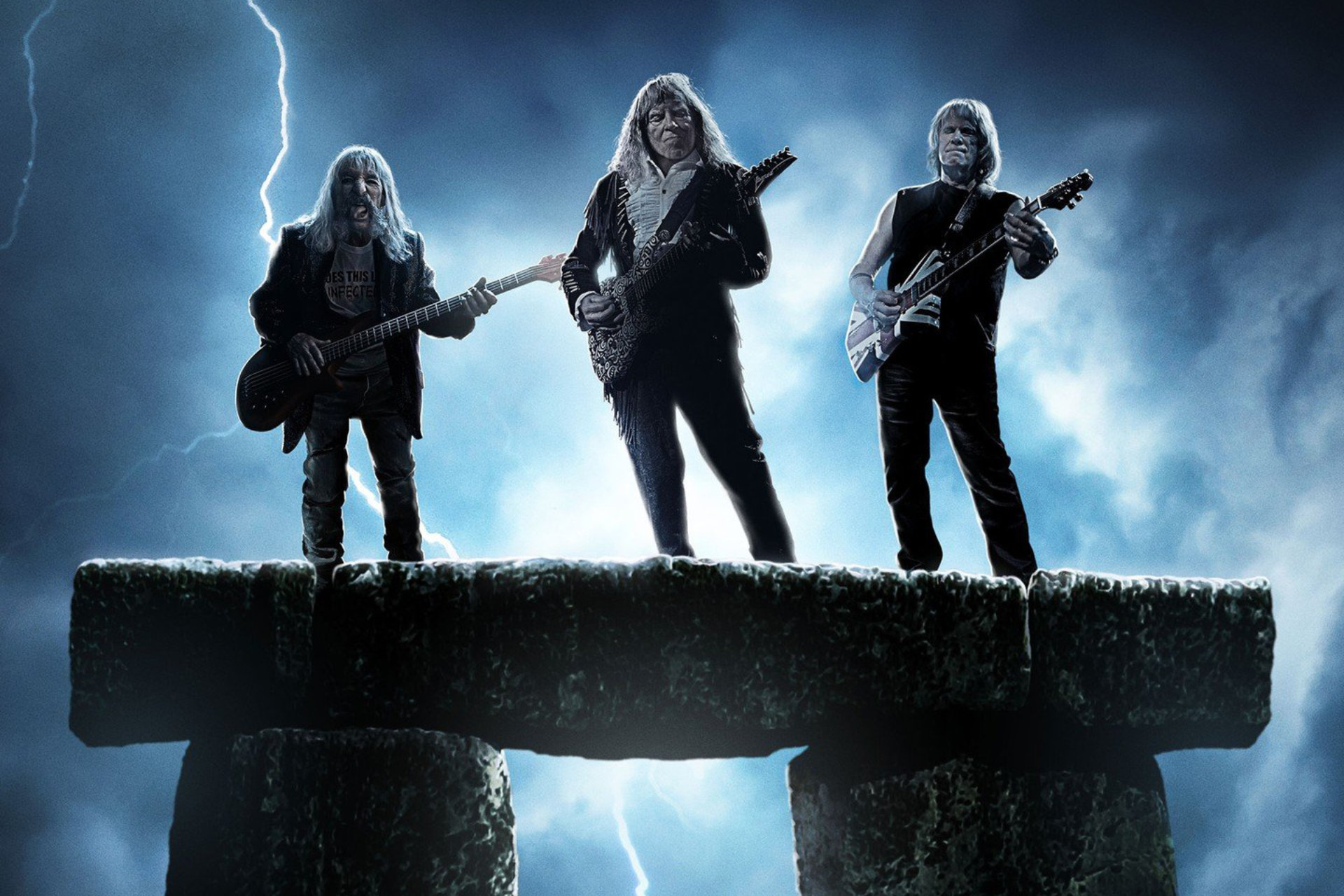
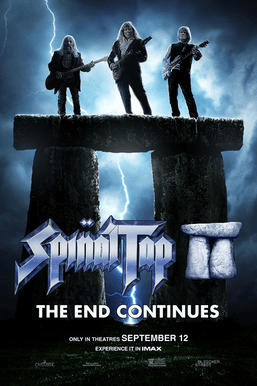
I’m not going to spoil the surprises, the visits with characters from the first film and cameos from real-life legends. I’ll just say that it is extremely funny and point out that on the poster the number 2 is represented by a close-up of one of the megaliths from Stonehenge.

“The End Continues” begins with the classic premise: getting the band back together. They have not spoken in years and all seem settled with projects they like. But when the daughter of their late manager discovers that she has inherited their contract, she books them for one last performance, in New Orleans.

As fans well know, the band has lost a number of drummers over the years, apparently 11 of them, so one of their first tasks, after three star drummers turn them down, is to audition prospects, find one brave enough to take the job (Valerie Franco) and then rehearse to get ready for the show.

That’s pretty much it, but we do not need anything else except to revisit some of our favorite moments from the first film. It’s great fun to get a reprise of “Listen to the Flower People,” and yes, Nigel Tufnel (Christopher Guest) is still captivated by the possibilities of music technology. I hope the end does continue forever. Rock on, Nigel, David, and Derek, rock on!

Parent should know that this film has strong language, crude humor, sexual references, and bawdy lyrics.

Family discussion: What do the occupations of the musicians at the beginning of the film tell us about them? What real-life musicians do they resemble?

If you like this, try: the Christopher Guest films featuring many of these performers, including “Waiting for Guffman,” “Best in Show,” and “A Mighty Wind”

Related Tags:


Comedy movie review Movies -- format Movies -- Reviews Musical Satire Series/Sequel
THE MOVIE MOM® is a registered trademark of Nell Minow. Use of the mark without express consent from Nell Minow constitutes trademark infringement and unfair competition in violation of federal and state laws. All material © Nell Minow 1995-2026, all rights reserved, and no use or republication is permitted without explicit permission. This site hosts Nell Minow’s Movie Mom® archive, with material that originally appeared on Yahoo! Movies, Beliefnet, and other sources. Much of her new material can be found at Rogerebert.com, Huffington Post, and WheretoWatch. Her books include The Movie Mom’s Guide to Family Movies and 101 Must-See Movie Moments, and she can be heard each week on radio stations across the country.

Website Designed by Max LaZebnik