Encanto

Encanto

Posted on November 23, 2021 at 5:27 pm

A-
Lowest Recommended Age: Kindergarten - 3rd Grade
MPAA Rating: Rated PG for some thematic elements and mild peril
Profanity: None
Alcohol/ Drugs: None
Violence/ Scariness: Some peril and family conflict
Diversity Issues: None
Date Released to Theaters: November 24, 2021
Date Released to DVD: February 7, 2022

Copyright Disney 2021
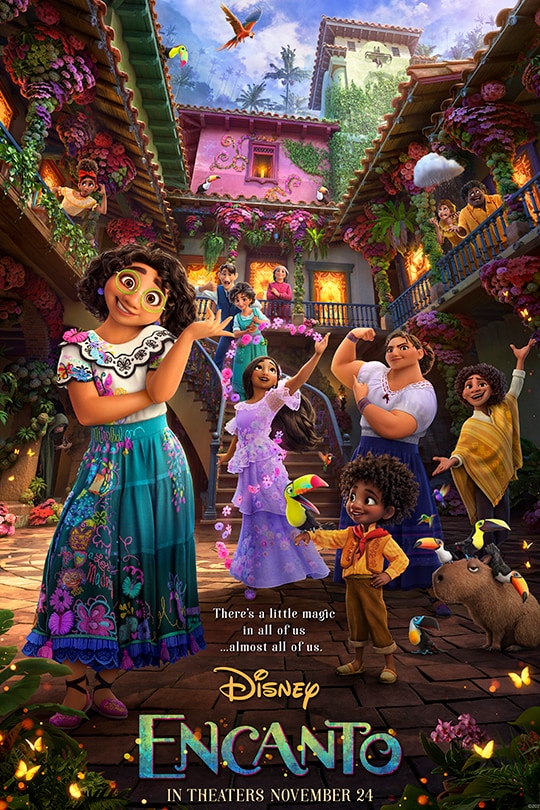
We all feel that way at times. It seems like everyone has something special except for us. “Encanto,” the new animated film from Disney captures that imposter phenomenon with a story set in Columbia about a girl who is the only one in her family with no magical powers. It is colorful and exciting and funny and warm-hearted and, something harder to find, it is also wise.

As we learn in one of Lin-Manuel Miranda’s bright, energetic songs early in the film, Mirabel (sweetly voiced by Stephanie Beatriz) loves her family and is very proud that her mother has healing powers and her aunt has superstrength. Other family members can understand animals, predict the future, or shape-shift. Mirabel’s sister’s superpower just seems to be perfection.

The Madrigal family has a rich, storied history. When her grandparents were young, they fled their home. Her grandfather was killed by the people they were trying to escape. But her grandmother, clutching her baby, was blessed with the powers to help her community survive. A generation later, the family is the center of that now-settled community, living in a home with its own magical powers and personality. That house, communicating with flipping floor tiles and steps that slip into slides and creating dazzling new rooms to recognize each family member’s powers, is one of the movie’s highlights.

The family has a ceremony when each member receives his or her magical powers. But for some reason, Mirabel’s never arrived. She even wears glasses (the first Disney lead character to do so) to show just how ordinary and relatable she is.

Unexpectedly, the magic the family has counted on and taken pride in — and taken for granted — seems to begin to be dissolving. And that is when the girl who does not think she is special begins to understand that she, and only she, has the qualities the family needs to keep them together.

That means adventure. It also means learning some lessons about how even the most loving, high-performing, and functional families have to deal with secrets and sometimes painful and scary truths. This insight is gently but thoughtfully explored, understanding that sometimes it is especially difficult to be honest with happy families for fear of letting the others down. But when family policy is “We don’t talk about Bruno,” it is time for someone to ask why. And when we do not leave room for family members to be less than perfect, it is time to tell them it is okay if they make mistakes and in fact if they don’t, it’s a good idea to tell them to make some. Families will enjoy “Encanto” but what may be more meaningful are the conversations we have afterward.

NOTE: Before the film there is an animated short called “Far from the Tree,” a gorgeously animated story about animal mothers and the curious babies they try to keep safe.

Parents should know that this movie includes some fantasy peril and some difficult family struggles.

Family discussion: Which magical power would you like to have? Why did one family member hide? How do you honor a miracle?

If you like this, try: “Brave,” “Raya and the Last Dragon,” and “Moana”
Related Tags:


Animation DVD/Blu-Ray Family Issues Fantasy For the Whole Family Movies -- format Movies -- Reviews Musical
House of Gucci

House of Gucci

Posted on November 23, 2021 at 5:14 pm

B
Lowest Recommended Age: Mature High Schooler
Profanity: Strong language
Alcohol/ Drugs: Alcohol, constant smoking
Violence/ Scariness: Murder, betrayal
Diversity Issues: Class issues are a theme in the movie
Date Released to Theaters: November 24, 2021

Copyright MGM 2021
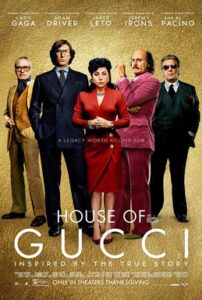
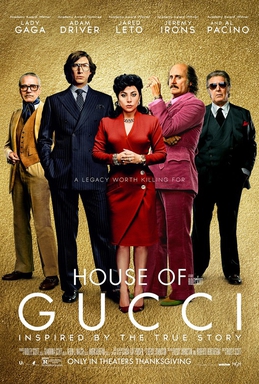
Remember the 80’s television series “Dynasty?” Combine that with the current HBO series “Succession” plus “The Godfather” and you have “House of Gucci,” the bananas real story of betrayal, ruthlessness, power, money, fashion, more money, and murder.

Lady Gaga gives everything she has to the role of Patrizia Reggiani, the ambitious woman who married into one of the wealthiest families in Europe, the people behind one of the top luxury and style brands in the world. We first see her working for her father’s trucking company when a friend invites her to be his date to an elegant costume ball. There she meets the shy, slightly awkward Maurizio Gucci (Adam Driver), a law student and the son of Rodolfo Gucci (Jeremy Irons), who runs the company with his brother Aldo (Al Pacino).

Patrizia perks up when she hears Mauritzio’s last name and becomes very flirtatious. He tells her she looks like Elizabeth Taylor, and she purrs back, “I’m more fun than Elizabeth Taylor.” When he does not call her after the party, she tracks him down, pretending it is just a coincidence that they have run into each other at a book store, though she admits she does not read.

Like all wealthy people, Rodolfo and Aldo are very concerned with maintaining the family fortunes. As Aldo ruefully admits to his brother, while each of them has a son, Rodolfo is proud of his but Aldo thinks his son Paolo (an unrecognizable Jared Leto) is an idiot. You can think of Paulo as this movie’s Fredo, especially when you see him with Pacino. Rodolfo, though, does not approve of Maurizio’s relationship with Patrizia because she is lower-class (she can’t tell Klimt from Picasso!) and, he correctly suspects, she is after the money. Maurizio defies his father and marries Patrizia. Cut off from the family fortune, he goes to work for Patriza’s father, and we see him happily wearing overalls and power-hosing trucks with the other employees.

But this simple, happy life does not last.

Rodolfo dies, as we know he will because he coughed in his first scene. By then, Patrizia has insinuated herself with Aldo, which helps Maurizio get back in the company. She may also have contributed her skills at forging signatures.

Family business can be an oxymoron. The more business there is, the harder it is on the family. The more family there is, the harder it is on the business. That’s where it all turns into a high-gloss, ultra-glam soap opera, not that there’s anything wrong with that. The various schemes are not always clear and, as noted widely in social media, the accents are inconsistent and sometimes distracting. In fairness to Lady Gaga, she is doing something very specific with hers, code switching to sound more upper class — or try to — in some circumstances. And, this will surprise no one, she is never less than fascinating to watch. Driver, always impressive, gives one of his best performances ever as Maurizio, from his shy, awkward meeting with Patrizia to his more confident, more authoritative time as head of the company. Even with all of the plotting and betrayal, though, we do not get much insight into the characters inside those clothes and mansions. The glamor and the family drama provide the icing and it is yummy enough you might not notice that there isn’t much cake holding it up.

Parents should know that this movie includes extensive material inappropriate for young viewers: sexual references and situations, very strong language, family confrontations and betrayals, and murder-for-hire.

Family discussion: Did Patrizia ever love Maurizio? What are the biggest problems for families who are also in business together?

If you like this, try: the Sara Gay Forden book that inspired the film and television series like “Succession” and “Billions”

Related Tags:


Based on a book Based on a true story Drama movie review Movies -- format Movies -- Reviews
King Richard

King Richard

Posted on November 18, 2021 at 5:00 pm

B +
Lowest Recommended Age: Middle School
MPAA Rating: Rated PG-13 for violence, strong language, a sexual reference and brief drug references.
Profanity: Strong language
Alcohol/ Drugs: Drug references, alcohol
Violence/ Scariness: Some violence including a drive-by shooting and assaults
Diversity Issues: A theme of the movie
Date Released to Theaters: November 17, 2021
Date Released to DVD: February 7, 2022

Copyright Warner Brothers 2021
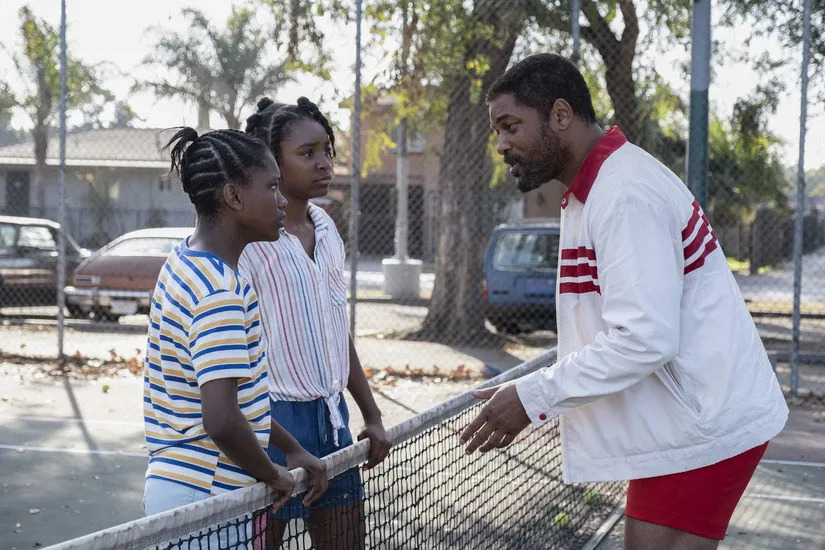
The first thing you need to know about “King Richard” is that it was produced by three of the daughters of the title character, Richard Williams, and it is an unabashed love letter to their father. And two of those daughters are tennis legends Venus and Serena Williams. Richard Williams has been a controversial character. Unconventional does not begin to cover his approach to his daughters’ careers in tennis and the royal appellation was not intended as a compliment. But no one can argue with the results of the 78-page plan he famously prepared, with step one having two more children so he could start from the beginning. “King Richard” is the story of the Williams sisters’ early years, first when they are little girls in Compton, California and then a few years later when they are being coached at a large facility in Palm Beach, Florida, ending as Venus competes at age 14 in her first professional tournament.

Will Smith plays Richard Williams, and as he did in “The Pursuit of Happyness,” playing another real-life devoted and determined father, he gives a complex, layered performance. He makes it clear that Richard’s determination is as much the result of trauma as of ambition, as much the result of frustration and resentment over the opportunities he did not have as of his commitment to making sure his daughters had opportunities, especially opportunities no one else thinks are possible.

Actors, like tennis doubles partners, need to be a team, and Aunjanue Ellis as the girls’ mother Oracene ‘Brandy’ Williams matches Smith at every turn, just as Oracene was a full partner in parenting and coaching their daughters. Their scenes together show us a deep and sometimes difficult connection, whether she is comforting him as she treats his wounds or confronting him about his failings.

We have all seen a lot of biopics, and they don’t make movies about real-life characters unless they did something big and important. And that is why those films always have some scene where the main character is either being pushed to succeed and another where he or she is being tearfully accused of neglecting an important relationship. This film is unusual because the girls, including their three older sisters (one of whom, Isha Price, also served as a producer of the film) never complain about the training and practices, even in the pouring rain. Richard is supporting them as much as he is leading them. The scenes of the family together, in their tiny Compton home or riding in the family van, are — the only word that applies is joyful. Richard and Oracene are dedicated to excellence in school and in tennis but it is clear that what matters most to them is giving their girls good values and the skills and confidence to achieve whatever they want.

Saniyya Sidney and Demi Singleton are excellent as the younger Venus and Serena, and there are solid supporting performances from everyone else in the cast including the young girls who play the other Williams sisters and the older girls who play Venus and Serena in the later part of the film. Tony Goldwyn as the taciturn Paul Cohen, a coach who agrees to take on Venus but not her younger sister, and Jon Bernthal as the more excitable Rick Macci, who brings the whole family to his training compound and puts Richard on the payroll for a percentage of the girls’ future earnings.

Smith says that seeing the video of Richard Williams protecting then-14-year-old Venus from an intrusive reporter — and the look of pride and relief on her face, the confidence that he would always have her back — had an enormous impact on his notion of what it means to be a parent. It inspired him to be both a protector and a supporter of his children’s ambitions.

Smith does not go for the easy win here. He tones down his endless charm and screen charisma and tendency to charm to let Richard shine through. In his sensitive performance, we see that Richard is damaged and vulnerable. He knows he is dealing with people who are unimaginably more powerful than he is and that they will find his manner and appearance discomfiting. These are people who like being comfortable. He knows he does not have the luxury of getting angry when they open doors he knows his daughters deserve to go through. He is insistent, not confrontational, and always polite, though he knows that holding back is demeaning and unfair. “You’re wrong but I won’t hold that against you,” he smiles, and it is a Richard smile, not a Smith megawatt grin.

Like all champions, he keeps his eye on the ball and he leads with his strengths. He did something even more important and even more difficult than raising “two Mozarts” — he raised daughters who love him enough to want the world to see him the way they do.

Parents should know that this film includes some strong language, drug references and alcohol, sexual references that are crude and predatory, and some violence, with assaults and a drive-by shooting, and some family conflict.

Family discussion: Would you want to be part of this family? What would be in your 78-page plan?

If you like this, try: “Venus and Serena,” an excellent documentary

Related Tags:


Based on a true story Biography DVD/Blu-Ray Movies -- format Movies -- Reviews Race and Diversity Sports
Ron’s Gone Wrong

Ron’s Gone Wrong

Posted on October 21, 2021 at 5:15 pm

B-
Lowest Recommended Age: 4th - 6th Grade
MPAA Rating: Rated PG for some rude material, thematic elements and language
Profanity: Some schoolyard language
Alcohol/ Drugs: None
Violence/ Scariness: Some peril nd violence
Diversity Issues: A theme of the movie
Date Released to Theaters: October 22, 2021

Copyright 2021 20th Century
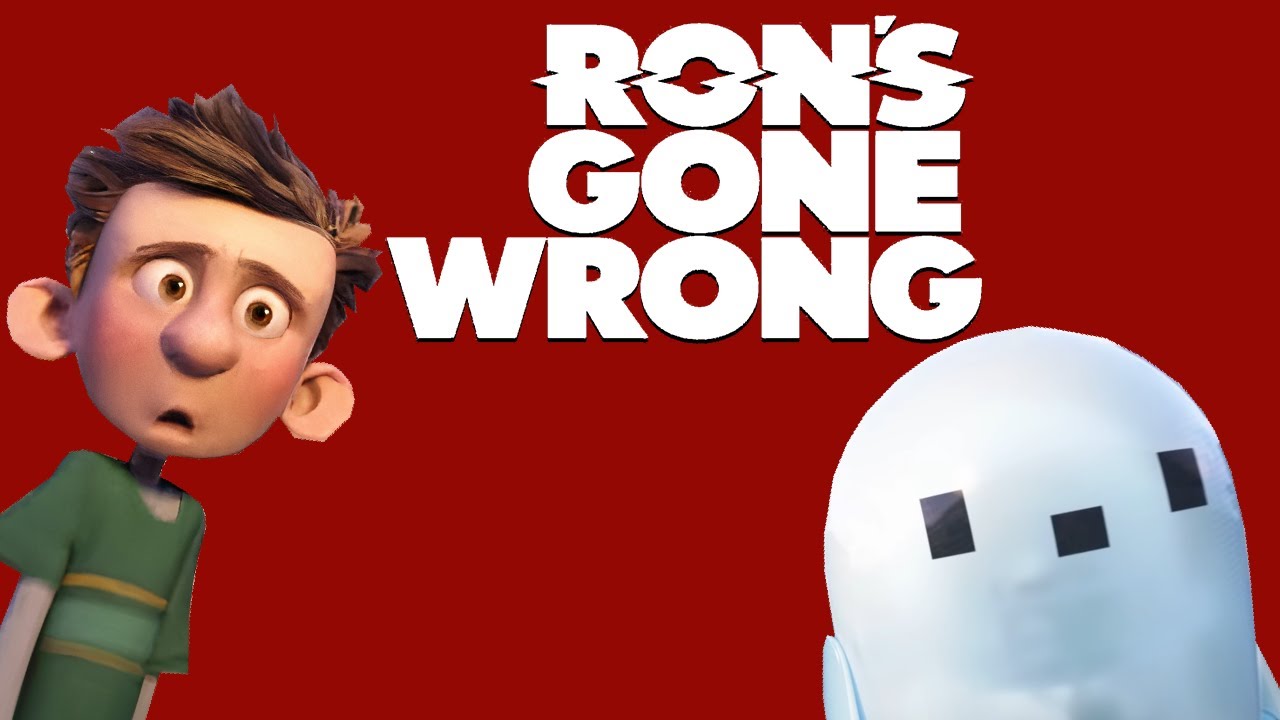
“Ron’s Gone Wrong,” the first feature from Locksmith Animation, has excellent voice talent but average character design and storyline. And it is unfortunately similar in theme to other films including the recent and much better “Mitchells vs. the Machines.” Its heart is in the right place and it is reasonably entertaining for children but forgettable.

Like “Short Circuit,” it is the story of a malfunctioning robot that is better than a correctly functioning robot because its imperfections make it more human and relatable, more “real.” The storyline is reminiscent of many other films including “Big Hero 6” and “E.T.”

Barney (voiced by the terrific Jack Dylan Grazer of “Shazam”) lives with his single dad, Graham (Ed Helms), and his Bulgarian grandmother Donka (Oscar-winner Olivia Coleman). Money is tight, and Graham, while devoted to his son, is often distracted and worried.

Marc (Justice Smith) is a young tech whiz who has a big announcement at his Apple-like computer company. He is presenting his latest invention, the ultimate accessory, a rolling robot friend, a cross between the Amazon Echo, the Apple Watch, Al Capp’s Shmoos, and Robby the Robot from “Forbidden Planet.” While Marc’s plan is just to create a machine that will learn all about its owners so it can be ever-interested, ever-responsive, an ideal companion. His colleague Andrew (Rob Delaney) sees the purpose of the cute little B-Bots differently. All that information about your background and preferences you so willingly share with your B-Bot? Andrew is going to make a ton of money selling it!

Barney feels like an outcast at school. His teacher pushes him to sit on the “Buddy Bench” at recess to let his classmates know he would like to make a friend, but he feels humiliated. All the other kids have B-Bots, which they use for everything from “influencer” social media posts to games, communication, so much of social interaction that they have just about forgotten how to talk to each other directly. But Barney does not have a bot because his father cannot afford it.

And then it is his birthday, and Donka surprises him with a bot, except that this one is unauthorized because it was damaged falling off a truck. That is Ron (voiced by Zach Galifianakis), and he and Barney begin to get to know one another, Ron’s mistakes, mostly from being overly literal, only endear him to his new owner/friend.

So, unlike Ron, as far as the script goes all the pieces are in place for Barney and his classmates to learn some lessons about friendship and not relying on social media for feedback and approval and for some of the grown-ups to learn some lessons about priorities and the risks of capitalism. It all unfolds as expected with not enough original moments along the way. The movie needs to learn its own lesson that a safe, predictable by-the-numbers formula is a little boring.

Parents should know that this movie has some schoolyard language and some peril and mild violence. Barney is mourning his late mother.

Family discussion: Why was it hard for Barney to make friends? What else could he have done? Would you like to have a B-Bot? What would you do with it?

If you like this, try: “The Mitchells vs. the Machines”

Related Tags:


Animation movie review Movies -- format Movies -- Reviews Stories About Kids
The French Dispatch

The French Dispatch

Posted on October 20, 2021 at 10:00 am

B
Lowest Recommended Age: Mature High Schooler
MPAA Rating: Rated R for language, graphic nudity, and some sexual references
Profanity: Some strong language
Alcohol/ Drugs: Drinking, smoking
Violence/ Scariness: Peril and violence including kidnapping of a child and a shoot-out, student uprising
Diversity Issues: None
Date Released to Theaters: October 22, 2021

Copyright 2021 Searchlight
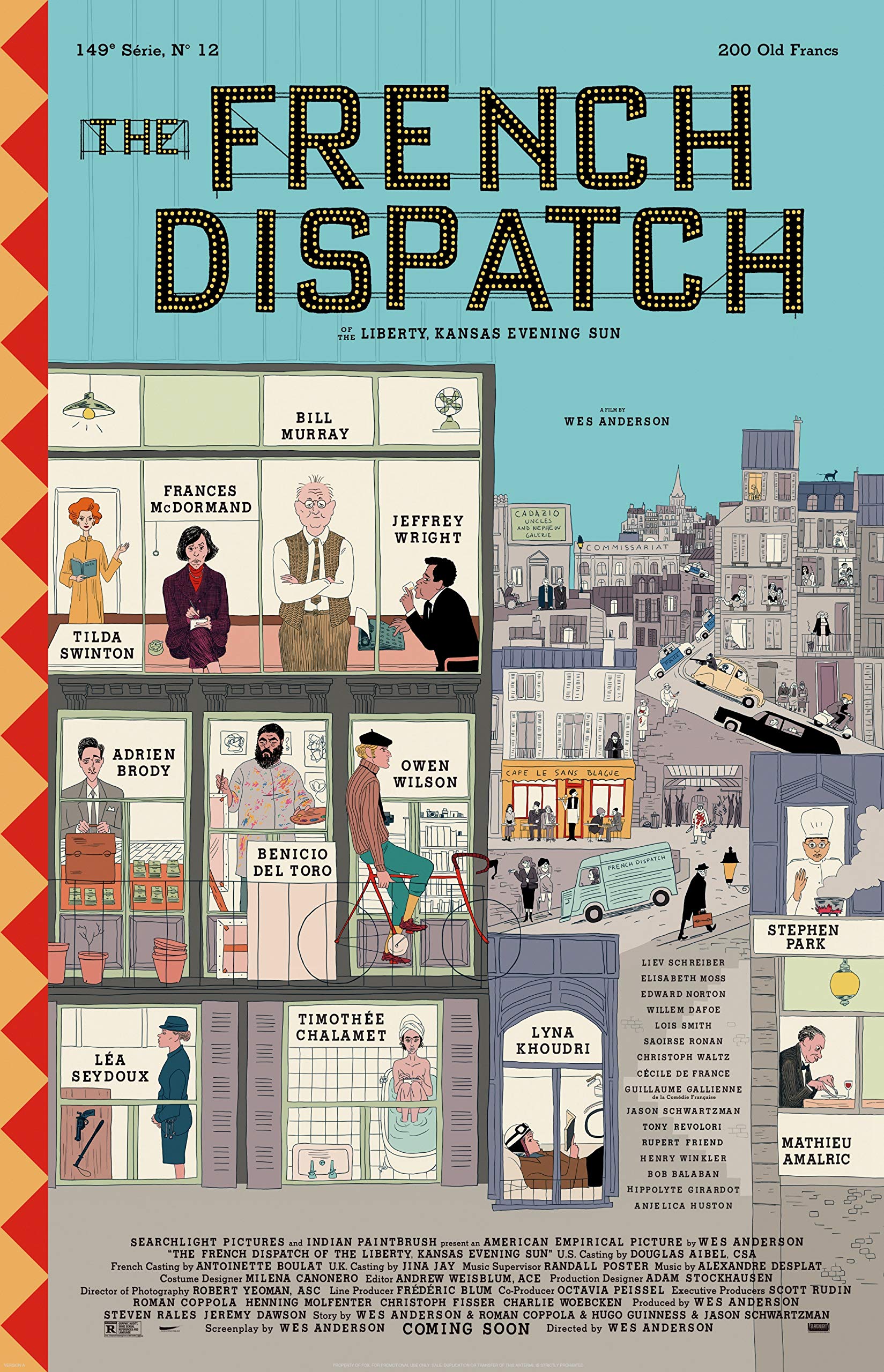
The dictionary has two conflicting definitions for the word “precious,” and both apply to writer/director Wes Anderson’s films as a group and to his latest, “The French Dispatch” especially. “Precious” can mean very valuable or important, deserving of being carefully preserved. And it can also mean excessively refined or affected. If you are an Anderson fan, you will be glad to hear this is the Wes Anderson-iest Wes Anderson film so far. If you are not, well, you’ve been warned.

Anderson’s exquisitely assembled films are more Cornell Box or M.C. Escher puzzle than narrative, the props and settings more important than the characters or storyline. I enjoy the attention to detail and the whimsy of his films, occasionally spiced with moments of, sorry, il faut parler français por un instant, “choquer le bourgeois.” I love his repertory cast of actors, who are always clearly having a blast and not quite winking at the audience. But I also find them claustrophobic, and overly precious in both senses of the word, speaking to those who feel smug about understanding them in a way they believe ordinary, less sophisticated people can not. Like that French I used just now, which by the way means: “it is necessary to speak French for a minute to ‘shock the ordinary people.'” See? It works just fine en englais. Anderson seems to aim for whimsy but one thing whimsy cannot be is heavy-handed.

Anderson has found the idea subject for “The French Dispatch,” a real-life publication almost as precious (still in both senses of the word) as his fantasized characters and environments, The New Yorker, and in particular the New Yorker of the romanticized era of the mid-20th century. There is a long list of New Yorker writers and editors who are listed in the end credits, including the two legendary editors, co-founder and editor from 1925-1951 Harold Ross and William Shawn, editor from 1952-1987 (and father of writer/actor Wallace Shawn).

The film is both an anthology and a retrospective, again Anderson’s preferred matryoshka Russian nesting doll narrative structure. Is with the death of the title publication’s founder and editor, Arthur Howitzer Jr. (Bill Murray), a “Citizen Kane” style set-up that continues with peeks inside some of the magazine’s classic stories, delivered as chapters. The setting is the fictional French town of “Ennui-sur-Blasé” (ennui and blasé both French words adopted by English speakers meaning world-weary and bored). The premise is a look inside an issue of the magazine, which, following the orders of its founder, will cease publication after his death. In another layer of matryoskha, The New Yorker reported that the parallels between its real-life articles and the film include: Herbsaint Sazerac (Owen Wilson), inspired by writer Joseph Mitchell. Julian Cadazio (Adrien Brody), inspired by Lord Duveen, the subject of a 1951 six-part New Yorker profile by S. N. Behrman. Roebuck Wright (Jeffrey Wright), inspired by James Baldwin and A.J. Liebling. Lucinda Krementz (Frances McDormand), inspired by Mavis Gallant, who wrote a two-part 1968 piece on the student uprisings in France.

There are stories within stories as we see the writers discuss what they have written. J. K. L. Berensen (Tilda Swinton, fabulously, of course) delivers a lecture to an audience with slides showing the work of an acclaimed artist (Benecio del Toro) who happens to be criminally insane and confined to prison, where his muse and nude model is one of the guards (Léa Seydoux). Lucinda Krementz (Frances McDormand) is a steely observer of student unrest who gets involved with one of the young leaders (Timothée Chalamet). The strongest of the stories has Jeffrey Wright as Roebuck Wright, who can perfectly recall every word he has written and is invited by a television interviewer (Liev Schreiber) to recite from memory his very convoluted story about the kidnapping of young boy. Wright’s melodious, slightly husky voice in Anderson’s near-monotone style set opposite a story of grotesque twists and turns tilts toward precious in the second sense of the word, but the sheer charisma of the design, with Anderson’s signature dollhouse-style cutaways, has some of the first meaning of the word as well.

Parents should know that this film has sexual references and non-explicit situations, some strong language, and some peril and violence, including a kidnapping, poison, and a shoot-out with many characters injured and killed.

Family discussion: Which of the stories did you like best?

If you like this, try: “The Life Acquatic with Steve Zissou,” “The Royal Tennenbaums,” and the books about the New Yorker by James Thurber and Brendan Gill

Related Tags:


Comedy Drama movie review Movies -- format Movies -- Reviews
THE MOVIE MOM® is a registered trademark of Nell Minow. Use of the mark without express consent from Nell Minow constitutes trademark infringement and unfair competition in violation of federal and state laws. All material © Nell Minow 1995-2026, all rights reserved, and no use or republication is permitted without explicit permission. This site hosts Nell Minow’s Movie Mom® archive, with material that originally appeared on Yahoo! Movies, Beliefnet, and other sources. Much of her new material can be found at Rogerebert.com, Huffington Post, and WheretoWatch. Her books include The Movie Mom’s Guide to Family Movies and 101 Must-See Movie Moments, and she can be heard each week on radio stations across the country.

Website Designed by Max LaZebnik