In the Heart of the Sea

In the Heart of the Sea

Posted on December 10, 2015 at 5:36 pm
Copyright 2015 Village Roadshow

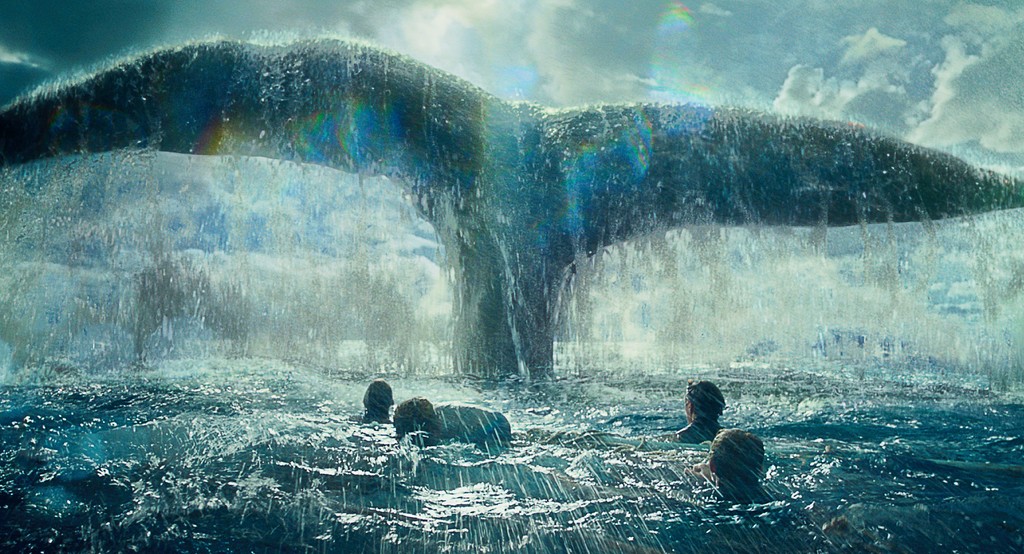
Herman Melville’s Moby Dick is a brilliant novel about humanity, nature, obsession, power, and pretty much everything else, with a lot of technical information about whaling thrown in for good measure and metaphor. Nathaniel Philbrick’s acclaimed book about the tragic real-life whaling expedition that inspired Melville to write Moby Dick is In the Heart of the Sea: The Tragedy of the Whaleship Essex. This film is director Ron Howard’s uneven attempt to give that story the mythic force of Melville’s tale (itself never adequately adapted for film).

Like Moby Dick, this is a story of man against nature, not just the powerful animals man tries to trap and kill but of man against the animalistic elements of his own nature. That is represented, as it so often is, by the conflict between two men. The captain of the Essex is George Pollard (Benjamin Walker). He and everyone on the shop know that he is captain only because he comes from a high-born shipping family. The first mate is Owen Chase (Chris Hemsworth, with his “Rush” director), resentful of Pollard because he was promised the captain job and knows he is more qualified.

On the first night out, Pollard makes a point of cruelly describing Chase’s father’s time in prison to establish his superiority — and his willingness to use humiliation as a management tactic. In his desperation to establish his superiority, he does not realize that it makes him look thuggish and scared. It certainly does not inspire respect or loyalty. But Chase is determined to make it work. This time, if he meets his quota, he has it in writing that his next voyage will be as captain.

The whalers are under enormous pressure. Whale oil powers the world of the 1820’s (there is a clumsy hint that the world may be shifting to fossil fuels). Whaling ships go to sea for years at a time, traveling across the Atlantic to kill whales, extract the blubber, and melt it down.

Ships — whether on water or in space — are ideal settings for stories because they are isolated from the society at large. Everything is heightened because there is no way to leave and no recourse for support or appeal. But that intensity and drama is dissipated here with a useless framing story as author Melville (Ben Whishaw) tries to get the ship’s only survivor (Brendan Gleeson) to tell him what happened. The connection is awkwardly positioned against Moby Dick‘s narrative voice and unforgettable Job-like status as the sole survivor who can carry the story and the survivor character’s sympathetic wife is a distraction and her scenes suggest after-the-fact re-shoots.

Melville was wise to reshape the story. This version has gorgeous scenery, a moving score by Roque Banos, and superb special effects, but the power of the images is undercut by a story that tries to carry more meaning than it can hold.

Parents should know that this is a whaling saga with constant and intense peril and violence including fire, guns, storms, starvation, murder, cannibalism, and sinking ship, many characters injured and killed, brief strong language, and drinking and alcoholism.

Family discussion: Why did Pollard embarrass Chase on the first night out? What were the biggest differences between Pollard and Chase in the way they treated the men? Do you agree with Chase’s “abominable” decision?

If you like this, try: “The Perfect Storm” and Melville’s Moby Dick
Related Tags:


Action/Adventure Based on a book Based on a true story
A Royal Night Out

A Royal Night Out

Posted on December 3, 2015 at 5:57 pm

Copyright Atlas Distribution 2015

The fantasy of royalty mingling among the commoners goes back as far as royalty itself, turning up in classic stories from the Arabian nights to Mark Twain’s Prince and The Pauper to Audrey Hepburn’s Oscar-winning Roman Holiday, and in civilian form, the many runaway heiress films like It Happened One Night.  An urban myth that Queen Elizabeth II and her sister, Princess Margaret celebrated VE Day, the end of the WWII battles in Europe and the surrender of the Nazi forces, by mingling with the crowd, has been turned into a fantasy that the then-teenage princesses had a wild night out on the town. It’s sort of Cinderella in reverse.

King George (played by Rupert Everett and yes, the one from The King’s Speech) and his wife, also called Elizabeth (Emily Watson) are preparing for various ceremonies to recognize the end of the war, including a speech the King is to give on the radio just before the official end of hostilities at midnight. His daughters are the future queen Elizabeth (Sarah Gadon, with an endearing freshness and just a hint of steel), called Lilibet by her family, and the fun-loving Margaret (Bel Powley of “Diary of a Teenage Girl”). Although their father relies on them to be with him when he speaks on the radio, still a very difficult challenge for the man whose stutter was the theme of “The King’s Speech,” they persuade their parents to let them out just once, so they can mingle among the “ordinary people.” Elizabeth has never made a pot of tea, visited a public ladies’ room, or had a drink in a pub, all of which she will get to experience. She has never been spoken to in a familiar manner, and had to be reminded to remove her tiara by a footman who suggests it might rather give her away.

The king and queen think they have outsmarted their daughters by assigning them a military escort and arranging that their outing will be confined to a closed room with carefully selected guests. But the girls escape and are quickly separated. Margaret spends the rest of the night going from one wildly improbable situation to another (including a brothel) while Lilibet searches for her with the help of an RAF airman named Jack (the very appealing Jack Reynor from “Sing Street”), who does not think much of the military or posh people.

Even the most Masterpiece-loving American Anglophiles will find this story lightweight and inside, with some of the accents hard to parse and some of the references obscure. But Gadon, especially in the last half of the movie, is lovely as the girl who grows to enjoy being called Lizzie, and it is satisfying to see her interest in learning about the people who will be her subjects and growing into her power as a woman and a monarch.

Parents should know that this film has drinking, some drug use, some scuffles and fights, sexual references and situations (including prostitutes and a threesome), references to wartime casualties, and some strong language.

Family discussion: If you were a prince or princess, what would you most want to see and experience? Why didn’t Jack want the help of the royal family?

If you like this, try: “Roman Holiday”

Related Tags:


Epic/Historical Inspired by a true story
The Letters

The Letters

Posted on December 3, 2015 at 5:46 pm

Copyright Freestyle Releasing 2015

Mother Teresa, the Albanian nun who devoted her life to “the poorest of the poor” in India, is one of the foremost figures of the 20th century, and on the way to being recognized as a saint by the Catholic Church. Some people are disturbed by discovering through her published letters that at times she felt doubts about herself, her work, and even about God. But it was that same resolute honesty that compelled her to follow her calling and it would be more disturbing if she never doubted or if she doubted and did not feel she could express it. Her accomplishments are even more impressive once we learn how fiercely she wrestled with God.

In “The Letters,” Juliet Stevenson plays Mother Teresa, from her early days as a nun to establishing her own order. At first, in the convent in India, she is teaching young girls in starched uniforms who sit quietly and are eager to learn. But she receives “a calling within a calling” and believes she has been called on by God to work with “the poorest of the poor.” Reconciling this determination with her vow of obedience and her dedication to humility is not easy. Persuading the people that she hopes to help that all she wants is to help them, not convert them, is not easy.

The tall actress Juliet Stevenson does a fine job as the tiny nun. Some people may object that the movie caters to those who are already believers. It does not question Mother Teresa’s greatness or her tactics and it elides over some of the controversies concerning the expansion of her operations and whether her faith-based approach was always best for the people she was helping. Some viewers will find the film slow, though for me that was one of its strengths. Writer/director Bill Riead makes sure that its quiet power is more like a prayer than a biographical portrait, a calling inside a calling inside a calling and one that its subject would find most suitable.

Parents should know that this movie’s themes concern work with the “poorest of the poor,” with extreme deprivation and illness.

Family discussion: What is the best way to help the “poorest of the poor?” Why did Mother Teresa want to help people who were not Catholic?

If you like this, try: “The Life Journey of Mother Teresa,” a documentary

Related Tags:


Based on a true story Biography Drama Spiritual films
Brooklyn

Brooklyn

Posted on November 25, 2015 at 5:22 pm

Copyright 20th Century Fox 2015

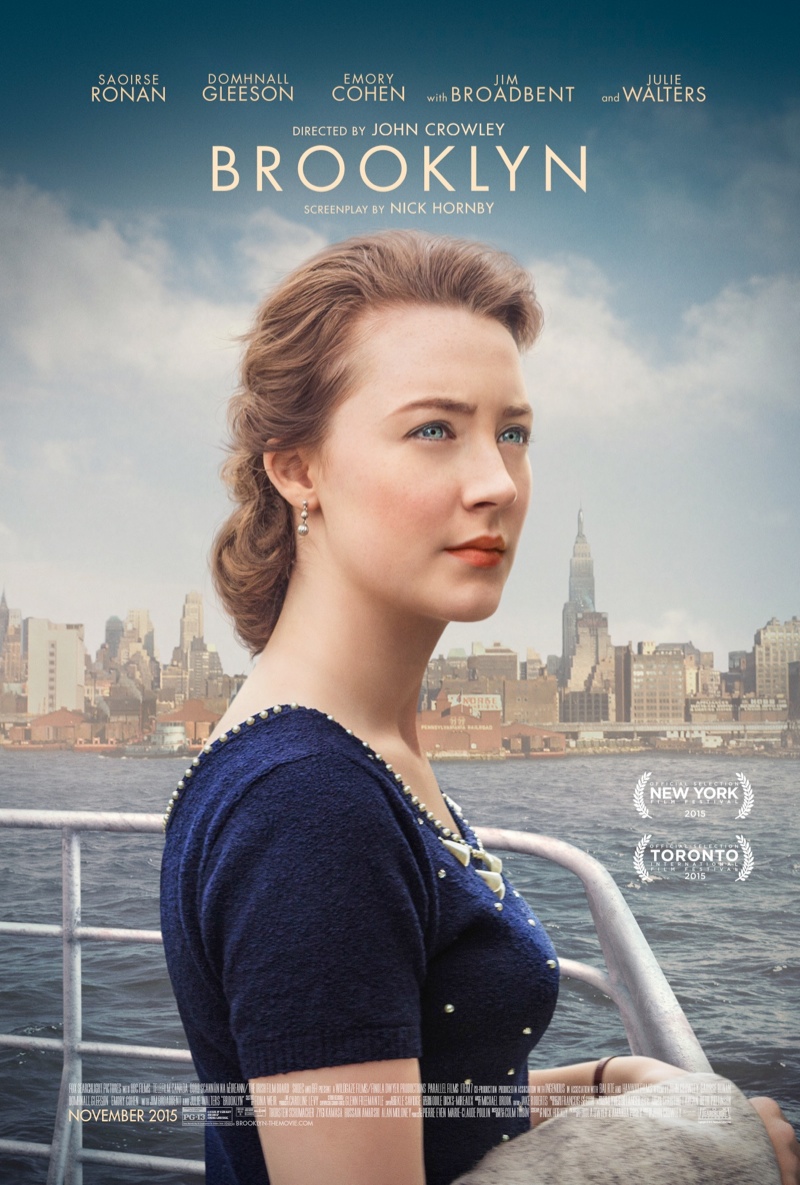
“Brooklyn,” based on the book by Colm Tóibín, is exquisitely lyrical, the story of a young woman who immigrates from Ireland to New York in 1952. She is sad, homesick, and lonely at first, then just as she begins to feel at home she is called back to Ireland.

Movies can show us monsters and aliens and explosions but none of that will ever have the quiet power of Saoirse Ronan in close-up. The breathtaking intimacy of being so close to her face, her sky-blue eyes, the lift of her chin, is a story in itself. For once, the Irish-raised actress is using her own accent, and the lilt of it is pure and poetic.

She plays Eilis (pronounced EYE-lish), who lives with her mother and sister Rose in a small town. Rose has helped her make arrangements with a priest in New York (Jim Broadbent) for an apartment and a job. Eilis loves her family. But she is stuck in a part-time job working for a shrew in a grocery store. Ireland in the post-WWII years has little to offer her by way of love or work. And so she takes a voyage. The reason she is the only one at dinner the first night out is revealed when she gets very, very sick. But a sympathetic roommate helps her through and advises her about how to pass muster at Ellis Island — to act like an American, which means looking confident.

Eilis moves into an all-Irish boarding house, owned by the formidable Mrs. Keough (Julie Walters), a sharp-eyed but not unkind woman who can tell the difference between the simpering giggles of the other girls and the shy but steady Eilis. Soon Eilis is working at a department store, where the complexities of the transactions (payment sent to a central location via vacuum tube) and inventory are not as challenging as learning to chat pleasantly with the customers. It is an amusing change from the store in Ireland, where the owner barked at someone for wanting shoe polish on a Sunday, and “Mad Men’s” Jessica Paré is excellent as the manager.

Eilis slowly begins to feel at home.  Ronan’s performance is precise and sensitive.  She shows, not tells us how Eilis begins to bloom through taking some bookkeeping classes and meeting a nice guy, an Italian boy named Tony (the piercingly sweet Emory Cohen).  There is believable magic in their sweetly developing relationship.

And then, there is a tragedy at home and Eilis has to go back to Ireland.  But is that her home anymore?  Can she fit into her old place?  Does she want to?

Director John Crowley is a careful observer, and every moment rewards careful observation from us.  A yawn in church.  The faces of the people at the dock saying goodbye to their emigrating family members.  The look on Eilis’ face as she struggles to tell Tony how she feels — it is a wonder, and one of the year’s best films.

Parents should know that this film includes a non-explicit sexual situation, sexual references, some strong language, and a sad death.

Family discussion: Did Eilis make the right choice? Why or why not? Who was most helpful to her?

If you like this, try: “In America,” another story of Irish immigrants in New York

Related Tags:


Based on a book Date movie Drama Romance
The Good Dinosaur

The Good Dinosaur

Posted on November 24, 2015 at 5:43 pm

Copyright Disney 2015

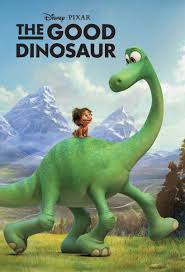
“The Good Dinosaur” is the good movie. Not the great movie. Not the especially memorable movie. Just the perfectly nice and pleasant movie, much stronger in visual splendor than in storyline.

Delayed for 18 months as Disney replaced the original director and realigned the story, the seams are palpable. And too much of it is much too familiar: a mismatched pair has to find their way home (see “Finding Nemo,” “Toy Story,” etc. etc.), a young animal is devastated by witnessing the death of his father through a natural disaster (see “The Lion King” — the staging is very similar), a boy with no family is cared for and preyed upon in the wilderness by animals (“The Jungle Book”), and it takes place a long, long time ago (see “Ice Age,” “The Land Before Time,” and “The Croods”).

But it is beautiful to look at, and the story is very sweet, a traditional “boy and his dog,” except here the “boy” is the dinosaur and the human is more like a pet. In the world of this film, the asteroid that killed the dinosaurs bypassed earth, and so millions of years after the real dinos died off, they are not only still here, but they are thriving. Humans are just beginning to stand erect and have not yet developed language or tamed fire (but have somehow invented very handy leaf-clothes that are woven together so well they always cover the private bits). The dinosaurs can speak and they have learned how to farm, using their snouts to plow the field and building a silo to store grains for the winter. A loving herbivore dino couple (Jeffrey Wright and Frances McDormand) lovingly watch their three eggs hatch as the story begins. The biggest egg produces the smallest dino baby. They name him Arlo (Raymond Ochoa).

While his brother and sister are confident and capable, Arlo is fearful and anxious. His chore is feeding the chickens and they terrify him. His parents explain that each of the children will have a chance to literally make their mark — to add their paw print to the silo to show that they have made a contribution to the family. “You’ve got to earn your mark by doing something big for something bigger than yourself,” the father dinosaur explains.

Arlo’s siblings make their marks. But Arlo cannot seem to get beyond his fears. His father gives him a chance to set a trap for the animal that has been stealing their grain. But when the creature — a little human boy — is caught, Arlo lets him go. The father dinosaur tries to teach Arlo how to handle fear. But, leading Arlo to chase after the boy, a thunderstorm swells the river and Arlo’s father only has time to save his son before he is swept away.

Arlo gets separated from his family, and the only one who can help him is the young human, who crawls on all fours and pants like a puppy. Arlo names him Spot, and together they meet a variety challenges, many involving friendly characters or predators. Highlights include a very funny Styracosaurus whose antler protuberances are occupied by birds and animals (see “Thidwick the Big-Hearted Moose.”) But it is very funny to hear him introduce each of them, explaining about one of the birds, “He protects me from having unrealistic goals.” A brief visit to a collection of gophers who get literally blown out of their holes is delightfully choreographed. Sam Elliott provides just the right gravelly bass voice as another dinosaur dad who is less scary than he looks (but even that is too reminiscent of the better shark scene in “Nemo”).

The patched-together quality is most telling in a quasi-dream sequence (see “Footsteps” plaques at your aunt’s house) and an ending that seems to undercut some of what we thought we learned about what makes a family. The visuals are gorgeous, especially the clouds, the landscape, and the play of water and light. But the story is only intermittently as engaging as the background images.

Be sure to get there in time to see the short film before the feature, a heartwarming autobiographical tale about a Hindu father at his morning prayers. As he pays tribute to his deities, his son is on the other side of the room, watching a television show about superheroes. The way they are brought together has more imagination, heart, and inspiration in its brief running time than “The Good Dinosaur” has as a full-length feature.

Parents should know that this film includes extended peril, with some characters injured and killed (and eaten). There is a sad death of parent (who returns in a dream, which may be confusing or disturbing to young children), omnivorous dinosaurs with big teeth, etc., trippy fermented berries, and some potty humor.

Family discussion: How will you make your mark? Who in your family has a scar and what is the story behind it?

If you like this, try: “The Land Before Time,” “Finding Nemo,” and “Inside Out’

Related Tags:


3D Animation Fantasy For the Whole Family Scene After the Credits
THE MOVIE MOM® is a registered trademark of Nell Minow. Use of the mark without express consent from Nell Minow constitutes trademark infringement and unfair competition in violation of federal and state laws. All material © Nell Minow 1995-2026, all rights reserved, and no use or republication is permitted without explicit permission. This site hosts Nell Minow’s Movie Mom® archive, with material that originally appeared on Yahoo! Movies, Beliefnet, and other sources. Much of her new material can be found at Rogerebert.com, Huffington Post, and WheretoWatch. Her books include The Movie Mom’s Guide to Family Movies and 101 Must-See Movie Moments, and she can be heard each week on radio stations across the country.

Website Designed by Max LaZebnik