Blue Moon

Blue Moon

Posted on October 21, 2025 at 5:24 pm

A-
Lowest Recommended Age: High School
MPAA Rating: Rated R for language and sexual references
Profanity: Very strong and explicit language
Alcohol/ Drugs: Drinking, smoking, alcoholism
Violence/ Scariness: Reference to sad death and wartime trauma
Diversity Issues: References to homophobia
Date Released to Theaters: October 24, 2025

Lorenz Hart, called Larry by most people, was one of the greatest lyricists of all time. He and Richard Rodgers created songs of ineffable wit and pure poetry, mingling melancholy with romanticism, songs like “My Funny Valentine” (“Your looks are laughable/unphotographable/but you’re my favorite work of art”), “Bewitched, Bothered, and Bewildered” (“I’m wild again, beguiled again/A simpering, whimpering child again/Bewitched, bothered and bewildered – am I”), and the song that gives this movie its title, “Blue Moon” (“And then there suddenly appeared before me/The only one my arms will hold/I heard somebody whisper, “Please adore me”/And when I looked, the moon had turned to gold”).

Copyright 2025 Sony Pictures Classics

This movie takes place on one night, almost entirely in one place, Broadway’s favorite bar and restaurant, the now-century-old Sardi’s. It is 1943, and it is a night that will change American theater and the fortunes of Rodgers and Hart forever. Unfortunately the fortunes of the two men will change in opposite directions. It is the opening night of “Oklahoma!” (with an exclamation point in the title), which moved Broadway musicals from fanciful light entertainment with forgettable plots and dancing chorus girls doing taps and kicks to stories about American archetypes, choreographed by Agnes de Mille, who made the dance help define the story and characters, and with songs by Rodgers and his new partner, Oscar Hammerstein, that moved the story forward.

Hart (played by Ethan Hawke, with a comb-over and some movie magic to make him appear to be under five feet tall), sees the opening number of the show and knows immediately that it will be a huge hit, that it is corny and superficial, that he could never produce anything like it, and that his partnership with Rodgers is doomed. So he leaves the play and goes to the bar, where he talks to a sympathetic bartender (Bobby Cannavale) and a GI on leave, playing the piano (Jonah Lees).

One of the most heartbreaking and beautifully written scenes of the year has Rodgers (Andrew Scott) and Hart talking about the possibility of working together again. They argue about the purpose and meaning of what they do. Hart wants to send a message. Rodgers wants to make people happy and be successful. Rodgers wants to meet at 9 and work on a schedule. Hart wants to struggle for inspiration. It is agonizing to watch as it is for the characters because they have obvious respect and admiration and gratitude for one another, and because they are both right, both wrong, and incapable of finding a way to reach one another. Another brilliantly conceived scene has two of the mid-century’s most gifted writers talking to each other, Hart and E.B. White (Patrick Kennedy). The dialog is gorgeously written, a conversation between two men who know what it is to appreciate language of precision and beauty.

The movie is about Hart’s fatal combination of sense of superiority and self-loathing. We sometimes see that conflict in his lyrics, as in “The Lady is a Tramp.” He is charming and seductive but he is also smart enough to deliver devastating barbs. Hart is anguished by longing for the impossible, here personified by a 20-year-old college girl named Elizabeth (Margaret Qualley).

He wants desperately to be loved. He quotes the line from “Casablanca,” “Nobody ever loved me that much.” But he is so terrified of the risks of intimacy that he is compelled to pursue the unobtainable or push away anyone who might get too close, to make sure he never gets another “I love you, but not that way” response. Elizabeth wants to use him to meet Rodgers, but she really does care for him. Unfortunately, what she loves about him is his endless, hungry interest in what she says, things, and does, which she is young enough to mistake for affection instead of manipulation and a twisted sense of himself as the participant in her stories rather than the one who hears them after the fact.

Elizabeth is based on a real-life character whose correspondence with Hart was part of the basis of the film. But the big scene between them is a disappointment, too long, too redundant. The brief appearances by not-yet-famous visitors to the opening night party whose names might be more recognizable today could be of interest to those immersed in theater history, but it becomes stunt-ish and distracting. That is just because the rest of it is so good we want to get back to what it does

Director Richard Linklater and screenwriter Robert Kaplow last worked together on the under-appreciated “Me and Orson Welles,” another story about a complicated creator of ambitious art. And Linklater has a second film coming out this year, “Nouvelle Vague,” about another complicated creator of ambitious art, Jean-Luc Goddard as he made his first film, “Breathless.”

In the film, Hart explains that he fell in love with intricate internal rhymes when he heard George M. Cohan’s “Over There.” Kaplow’s script is itself lyrical, a beautiful meditation one life, art, loss, and longing, and this film shows us that Hart is himself something of an intricate internal rhyme, complex, unexpected, and sometimes hard for others to understand.

Parents should know that this movie includes drinking and alcoholism, smoking, strong language, and explicit sexual references.

Family discussion: Why was it hard for Rodgers and Hart to understand each other and compromise? What do we learn from Hart’s conversation with E.B. White?

If you like this, try: Listening to Ella Fitzgerald singing the Rodgers and Hart songbook, and if you don’t mind its utter historical inaccuracy and just want to enjoy performances of classic Rodgers and Hart songs by Judy Garland, Lena Horne, Betty Garrett, and Mickey Rooney, watch “Words and Music”

Related Tags:


Based on a true story Biography movie review Movies -- format Movies -- Reviews
Honey, Don’t!

Honey, Don’t!

Posted on August 21, 2025 at 6:43 pm

B-
Lowest Recommended Age: Mature High Schooler
MPAA Rating: Rated R for strong sexual content, graphic nudity, some strong violence, and language
Profanity: Strong and crude language
Alcohol/ Drugs: Alcohol
Violence/ Scariness: Peril and violence, many characters injured and killed, very graphic and disturbing images
Diversity Issues: None
Date Released to Theaters: August 22, 2025
Copyright 2025 Focus

I liked “Drive Away Dolls,” Ethan Coen’s previous film starring Margaret Qualley as a free-spirited queer woman who has a series of crazy adventures involving gangsters and a mysterious suitcase many people are interested in. “Honey Don’t!” is not a sequel, more an offshoot that aims for the same sort of vibe, this time with Qualley as a queer private detective in Bakersfield, California. Qualley is mesmerizing but the movie is too meandering, more a series of set-pieces than a story.

Qualley is the title character, independent, confident, direct, and quippy. She is a female version of the classic movie detective, a loner (we see her casually dismissing a one-night stand) but resolutely honest. A man wants to hire her to find out if his boyfriend is cheating and Honey tries to talk him out of it because if he wants to hire her, it means he already knows. A woman who made an appointment to consult Honey ends up dead and in a car that overturned rolling down a ridge on the side of the road. Her prospective client never made it to the hiring point, but Honey investigates.

Others have gone to the upside down car before her. Marty, the local homicide detective (Charlie Day), who keeps trying to ask Honey out on a date, is there with the forensic crew. Before they got there, a mysterious woman with a Lulu bob arrived on a motorcycle, reached into the car to pull a ring from the dead woman’s finger, took time to go skinny dipping in the lake, and left.

This is not the kind of film where everything ties up at the end. It is the kind of film that lurches from scene to scene as though it is one of those Pass the Paper/Exquisite Corpse drawing games where no one knows what the first and second part of the picture looks like when it is their turn to draw the third. The individual set-pieces are very entertaining, especially Honey’s meeting with an aspiring mega-church preacher (Chris Evans) whose pulpit is between two giant portraits of himself and who tells his congregation to “submit and serve the lord,” often meaning having submitting to serving him by having sex.

The actors and filmmakers are clearly having a blast, especially costume designer Peggy Schnitzer, whose ensembles for Qualley are all knock-outs. The movie features the slightly surreal dialogue that is beloved by the Coen brothers and the love for female bodies and sexuality that we saw in “Drive Away Dolls” continues to be sigh-worthy, no matter what your pronouns or orientation. There are moments of inspired derangement. Overall, though, there’s more style than substance, a hollowness that even Qualley’s star quality cannot make up for.

Parents should know that this film has peril and violence with many characters injured and killed and some graphic and disturbing images. It also includes nudity and very explicit sexual situations including a threesome and bondage. Characters use strong language and drink alcohol.

Family discussion: Why did Honey feel obligated to investigate Mia’s death? What questions did she ask that made a difference?

If you like this, try: “Drive Away Dolls”

Related Tags:


Crime movie review Movies -- format Movies -- Reviews
Kinds of Kindness

Kinds of Kindness

Posted on June 27, 2024 at 5:15 pm

C
Lowest Recommended Age: Adult
Profanity: Constant very strong language
Alcohol/ Drugs: Drinking and smoking, characters drugged for abuse
Violence/ Scariness: Explicit, disturbing violence including self-mutilation, suicide, and rape, very graphic and shocking images
Diversity Issues: None
Date Released to Theaters: June 28, 2024
Copyright 2024 Searchlight

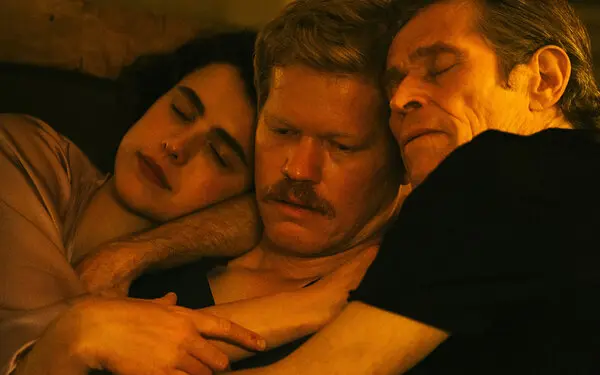
Director Yorgos Lanthimos is more interested in shock and sensation than story or character. He reunites with his “Poor Things” stars Emma Stone and Willem Dafoe and his “The Lobster,” “Dogtooth,” and “Killing of a Sacred Deer” co-screenwriter Efthymis Filippou for “Kinds of Kindness,” which is not about kindness at all but about obsession, dominance, and sacrifice. In its almost three-hour run time it features self-mutilation, suicide, murder, rape, a valuable broken tennis racket, and a cult centered around a notion of purity, a sweat lodge, and the possibility of reviving the dead. And it features a repertory cast of actors playing different characters in three otherwise unrelated stories, each appearing with a title referring to “R.B.F.”

Those initials are glimpsed onscreen just once, at the beginning of the film. “Sweet Dreams are Made of This” by Eurythmics intones on the soundtrack, telling us what is ahead: “Some of them want to abuse you. Some of them want to be abused.” There are many symbolic allusions throughout, though most gesture toward meaning rather than attempting it. Like these: There is a street named Perdido (lost). A close-up of two mouths kissing is so extreme it may make you wonder how humans ever got started with it. There is the novel Anna Karenina. That broken tennis racket was smashed during a game by John McEnroe. There’s also a cracked helmet worn in a race by Ayrton Senna. We see a blue pick-up truck, and then two more just like it.

The first story is titled: “The Death of RMF.” A man comes to the door of a luxurious home and is let in by a beautiful young woman (Margaret Qualley) wearing a very short silk robe. She describes what he is wearing to someone over the phone, including the monogram on his shirt: RMF, which she initially mistakes for BMF, explaining that the embroidery is poorly done. The person on the other end of the phone is Raymond (Dafoe), wealthy, powerful, and obsessively concerned with controlling the most intimate details of everyone around him. One of those is Robert (Jesse Plemons), an executive in Raymond’s construction business, who lives in a modern mansion with his wife, Sarah (Hong Chau). Robert receives a hand-written note card with a minute-by-minute description of his day, from the socks, shoes, and suit he must wear to when he must and must not have sex with his wife. Robert for the first time, after ten years, tries to say no to Raymond when his first attempt to complete a dangerous, possibly deadly, task, is unsuccessful. This is when we find out what Raymond is willing to do, how much he is willing to debase himself by pleading, lying, stealing, harming himself, and worse.

“RMF is Flying” is the title of the second story, with Plemons as a police officer named Daniel whose wife, Liz (Emma Stone) is missing with her colleagues who were on a marine research trip. Daniel cannot think of anything else, worrying about what she is eating, imaging that a suspect in the police station looks like her. His partner and best friend is Neil (Mamoudou Athie), married to Martha (Qualley). They do their best to provide comfort and support, but Daniel is inconsolable. And then Liz returns. But Daniel believes something is wrong, and this being who looks and sounds like Liz cannot possibly be his wife.

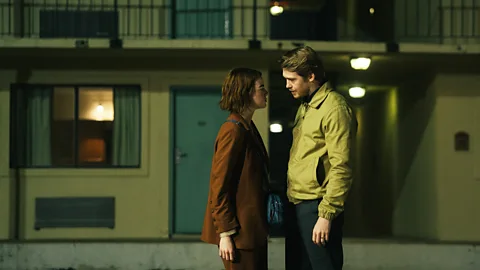
The title of the third story is “RMF Eats a Sandwich.” This time, Stone plays Emily and Plemons is Andrew. They are testing young women on behalf of a group we will learn about. This is so important to her that she has left her husband, Joseph (Joe Alwyn) and the daughter they just call The Little One (Merah Benoit).

The screenplay relies heavily on the shock value, the performances and the production design by Anthony Gasparro to make the movie seem weightier than it is. And when that’s not enough, it winks at the audience to let us know that it just doesn’t care.

NOTE: Stay into the credits to see a bit more. Stone’s dance is every bit as good as the one that was a highlight of “Poor Things.”

Parents should know that this movie has pervasive adult material including sexual references and explicit situations, nudity, very strong language, alcohol and smoking, and graphic and disturbing images including suicide, murder and police shooting an unarmed man.

Family discussion: Why does Robert do want Raymond tells him to do? Why do Emily and Andrew do what Omi and Aka tell them to do? Why does the tennis racket mean so much to Sarah and so little to the people who buy it? How do you decide who you trust? Who is RMF and why does he matter to these stories?

If you like this, try: “The Lobster” and “Poor Things”
Related Tags:


Drama movie review Movies -- format Movies -- Reviews Satire Thriller
Drive-Away Dolls

Drive-Away Dolls

Posted on February 22, 2024 at 6:39 pm

B +
Lowest Recommended Age: Mature High Schooler
MPAA Rating: Rated R for crude sexual content, full nudity, language and some violent content
Profanity: Very strong language
Alcohol/ Drugs: Alcohol
Violence/ Scariness: Extended peril and very intense violence including beheading, guns, fire, torture, some graphic and disturbing images
Diversity Issues: Diverse characters
Date Released to Theaters: February 23, 2024
Date Released to DVD: April 23, 2024

Once there was a vibrant category of trashy, low-budget films for the cheap theaters and drive-ins. Sometimes called grindhouse films or exploitation films because they were designed to be shocking, they are so beloved by Quentin Tarantino and Robert Rodriguez that they made a tribute film called “Grindhouse” that was a high-budget version of the kind of 50s double features that inspired them when they were growing up. “Drive-Away Dolls,” from Ethan Coen and Tricia Cooke, is another tribute to the Grindhouse-era films. While the sex and violence that was so shocking in the 1950s that audiences did not care about the shabby the production values are no longer shocking today, “Drive-Away Dolls” captures the transgressive spirit of those films, with no air quotes or irony, just engaging and very sincere joy in the genre. Top-level actors, camerawork, music, and wipes (we’ll get to them later) are just a bonus. Coen and Cooke (an un-credited co-director) say this is the first installment of their planned “lesbian b-movie trilogy.” Cooke is queer and they have spoken about their non-traditional marriage, which they have said is reflected in the relationships in the film.

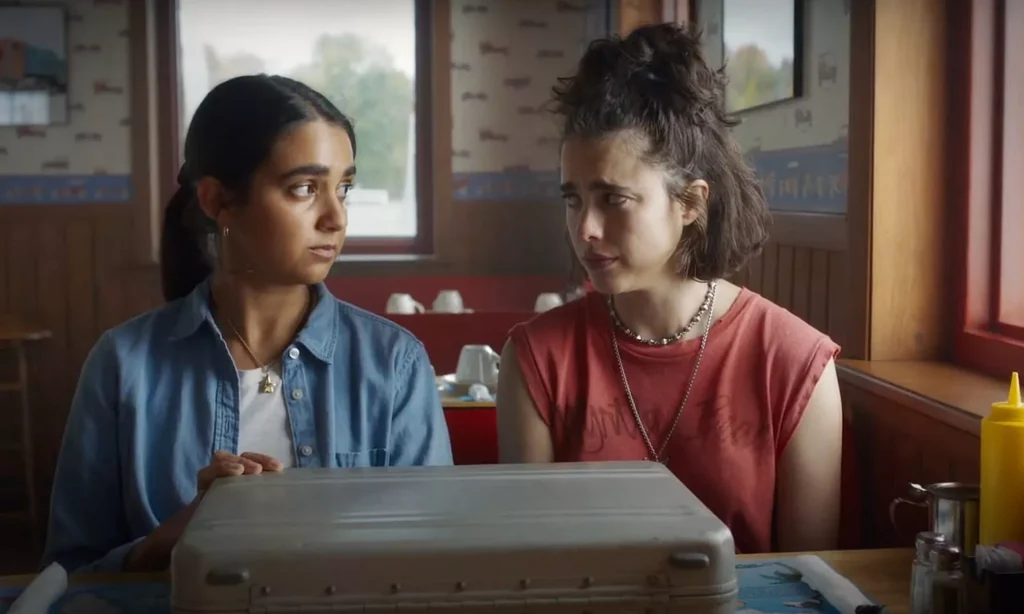
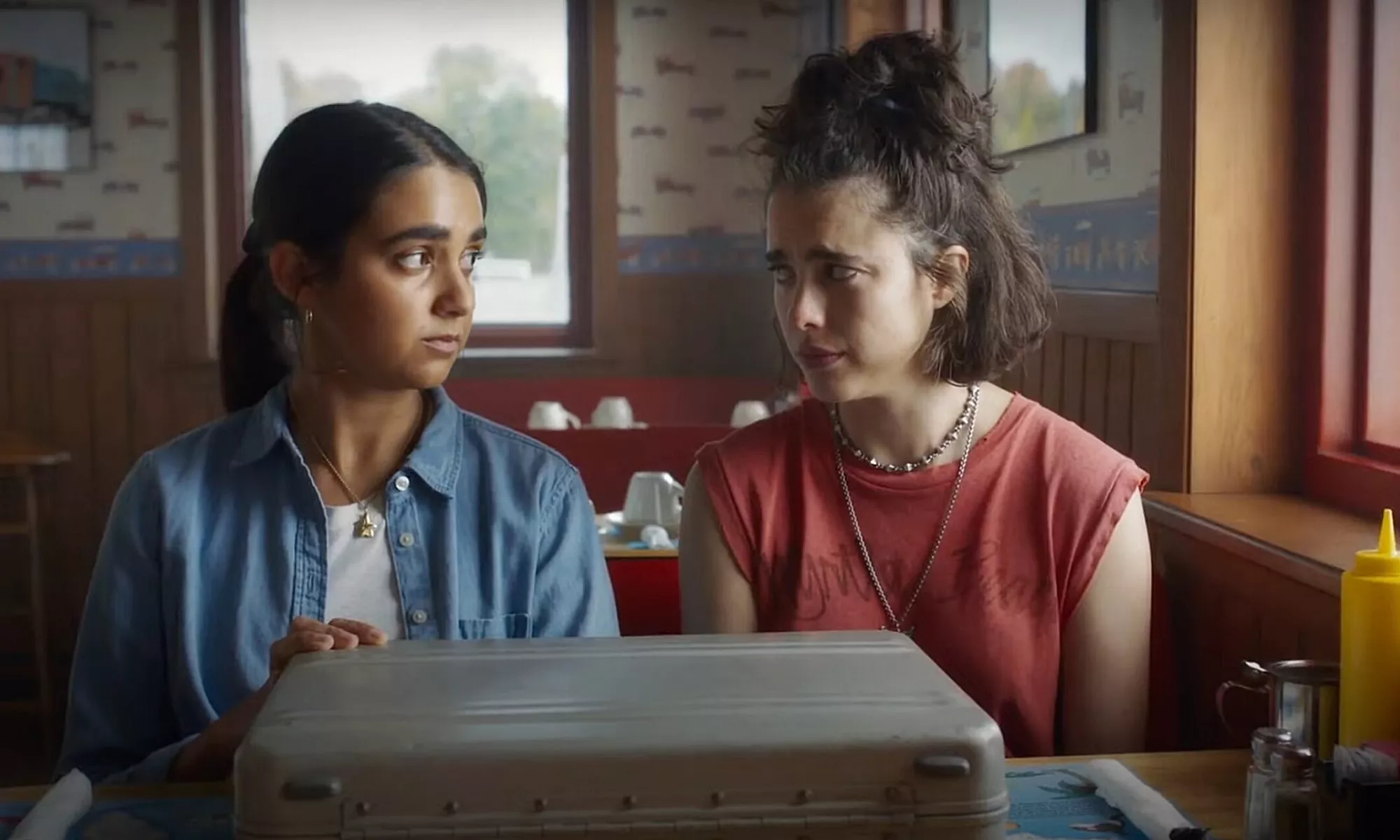
The foundation for the story is one of the oldest and most beloved in the history of human stories: two people who are very different take a journey with many adventures along the way that expand their understanding of themselves and their world. Those people are the very free-spirited, impulsive Jamie (Margaret Qualley) and the very conventional, wear a suit to the office and correct people’s grammar Marian (Geraldine Viswanathan). It is 1999, and they are queer women living in Philadelphia. Jamie’s girlfriend Sukie (Beanie Feldstein) has just kicked her out for cheating, and she has no place to stay. Her friend Marian is feeling stressed and wants to go to Tallahassee for a break. So, Jamie decides to come along, and suggests they get a drive-away car, through a service that matches up drivers with people who want their cars to be driven to another city. As it happens, Jamie and Marian show up at the drive-away company run by Curlie (a wonderfully dry Bill Camp) just as a car going to Tallahassee has been dropped off. Curlie, who has been told to expect a pick-up and assumes that they are the ones. We, on the other hand, know that they are not.

Jamie paints “Love is a sleigh ride to hell” on the trunk of the car, and the adventure begins. The car they are driving to Tallahassee is of great interest to some very bad people. We have already seen that they are prepared to kill and inflict all kinds of mayhem and that it relates somehow to, perhaps a nod to Tarantino and “Pulp Fiction” here, an aluminum briefcase with contents that, unlike “Pulp Fiction,” will eventually be revealed and, trust me on this, you are not going to guess correctly.

The film is stylized but stylish with wipes — the transitions from one shot to the next — that are amusingly old-school and surprising guest star cameos I will not spoil here. Jamie and Marian have a lot of adventures along the way, including a make-out party with a female soccer team that is skillfully filmed in a manner that is empowering rather than explotative. The goons (as they are credited) sent to get back the briefcase have their own adventures in between bickering with each other about whether finesse or brutality is the best way to get what they want. The film includes the characteristic Coen twisty-funny dialogue, and makes good use of the settings, including statues of William Penn and Ponce de Leon gazing down on the wild adventures below. Qualley and Viswanathan are two of Hollywood’s most engaging young stars and their performances are joyful and captivating, their imperishable freshness and high spirits making it impossible for the outrageous elements to seem tawdry. It’s not for everyone, but it will be an instant favorite for fans of the Coens.

Parents should know that this movie has nudity and explicit sexual references and situations, a lot of peril and violence including a beheading, guns, knives, and fire, and very strong language.

Family discussion: Where would Jamie and Marian be today and what would most surprise them about what has and has not changed since 1999? How did they see each other differently over the course of the trip?

If you like this, try: “Grindhouse” and “Bottoms”

Related Tags:


Action/Adventure Comedy Crime DVD/Blu-Ray movie review Movies -- format Road Trip Romance

Spike Jones and Margaret Qualley Make a Knock-Out of a Perfume Commercial

Posted on August 30, 2016 at 8:39 am

Margaret Qualley (daughter of Andie MacDowell) stars in a new commercial for Kenzo Perfume, directed by Spike Jonze (“Her,” “Being John Malkovich,” “Where the Wild Things Are”) and it is wonderfully, deliciously, deliriously nutty.

https://www.youtube.com/watch?v=ABz2m0olmPg

The choreography is by Ryan Heffington (Sia’s “Chandelier”) and the song is “Mutant Brain” by Sam Spiegel (Jonze’s brother) and Ape Drums​.

Related Tags:


Advertising Shorts
THE MOVIE MOM® is a registered trademark of Nell Minow. Use of the mark without express consent from Nell Minow constitutes trademark infringement and unfair competition in violation of federal and state laws. All material © Nell Minow 1995-2026, all rights reserved, and no use or republication is permitted without explicit permission. This site hosts Nell Minow’s Movie Mom® archive, with material that originally appeared on Yahoo! Movies, Beliefnet, and other sources. Much of her new material can be found at Rogerebert.com, Huffington Post, and WheretoWatch. Her books include The Movie Mom’s Guide to Family Movies and 101 Must-See Movie Moments, and she can be heard each week on radio stations across the country.

Website Designed by Max LaZebnik