The LEGO Batman Movie

The LEGO Batman Movie

Posted on February 6, 2017 at 5:26 pm

Copyright Warner Brothers 2017

“The LEGO Batman” movie is not just sure to be one of the funniest movies of the year, with laugh lines that come so fast it is impossible to catch your breath before the next one. It is also the most astute mash-up of love letter and take down of a popular culture icon since the brilliant “Galaxy Quest.”

“The LEGO Movie” was an unexpected blockbuster, sweet and very funny, surprisingly ambitious in scope. This spin-off is more focused, its basic structure very much in the tradition of the DC Comics character as created by Bob Kane and Bob Finger and as interpreted through the Adam West television series of the 1960’s, the Dark Knight comics and movies, and the Tim Burton movies, all of which get quick, understated, very clever nods so deeply enmeshed in the history and culture of Bruce Wayne/Batman and his world as to satisfy the heart of the most devoted fanboy. There’s even a plane from McGuffin Airlines.

The movie opens on a black screen. In case we don’t understand why, LEGO Batman explains that “all important movies begin with a black screen” and edgy music and logos. Just in case that isn’t pretentious enough, there’s also a quote on the screen…from that great philosopher Michael Jackson.

The Joker (Zach Galifianakis) has a great big bomb and is getting ready to blow up Gotham. This is very serious as it turns out Gotham is held up only by, well, pretty much a table. Batman comes in to take the bomb and save the day — also to break the Joker’s heart because he won’t acknowledge that the Joker is the most special and important of all of the villains. Pro tip: when you confiscate the Joker’s big “unnecessarily complicated” bomb, disable it before you stow it in the Batcave museum.

Gotham saved, Batman goes home to a lonely lobster thermidor dinner and a solo screening in his home theater, where he has a collection of mostly-cheesy romantic comedies. When he’s not responding to the Bat Signal and saving the day, he roams around Wayne Manor gazing pensively at old family pictures (note that on that last shot of his parents outside the theater, the nearby street sign says “Crime Alley”). But of course it would not be a Batman movie without some fancy society gala, so he dons his tux and goes to Commissioner Gordon’s retirement party. Barbara Gordon (Rosario Dawson) is taking over and to Batman’s dismay she tells the crowd that she plans to stop relying on Batman for all of Gotham’s crime-fighting needs. (After all, even with all his skill, Gotham is still constantly being attacked by deranged and very colorful bad guys.) She wants to involve more people in law enforcement. Batman is not at all happy about this. Furthermore, he is so distracted he sort of accidentally agrees to adopt an enthusiastic orphan with big anime-style eyes (Michael Cera as Dick Grayson).

Joker has come to a similar conclusion and he decides to team up, too — with the inhabitants of Superman’s Phantom Zone, including just about every literary bad guy anyone 12 and under might know, from Harry Potter’s Voldemort to King Kong and Oz’s Wicked Witch of the West.

The jokes come very fast, usually understated and references to pop culture, which adds to the feeling of being in on something. And the visuals are delightful, perfectly evoking the adorable clunkiness of the LEGO universe. The flames are made of plastic and the guns go “pew pew pew” instead of “bang bang bang.” But the cleverest idea of all was understanding that the very same qualities that make Batman, especially in his Dark Knight persona, so compelling work even better if he acts petulant and childish instead of a brooding and mysterious. The playground-style taunts are funny because they are real and relatable, no matter how old you are.

Parents should know that this movie has cartoon-style action and peril, with no one hurt, some schoolyard language and potty humor.

Family discussion: Why is it hard for Batman to rely on other people? Why does he like to watch romantic comedies? How does he feel when he sees all the other Justice League superheroes at the Fortress of Solitude? Why does the Joker care how Batman feels about him?

If you like this, try: “The LEGO Movie”
Related Tags:


3D Animation Comedy Comic book/Comic Strip/Graphic Novel For the Whole Family Series/Sequel
I Am Not Your Negro

I Am Not Your Negro

Posted on February 2, 2017 at 5:26 pm

B+
Lowest Recommended Age: Middle School
MPAA Rating: Rated PG-13 for disturbing violent images, thematic material, language and brief nudity
Profanity: Some strong language, racist epithets
Alcohol/ Drugs: Smoking
Violence/ Scariness: Archival footage of social unrest, civil rights era and contemporary violence
Diversity Issues: The theme of the movie
Date Released to Theaters: February 3, 2017
Date Released to DVD: May 1, 2017
Amazon.com ASIN: B06WLH94HD

Copyright 2016 Magnolia Pictures
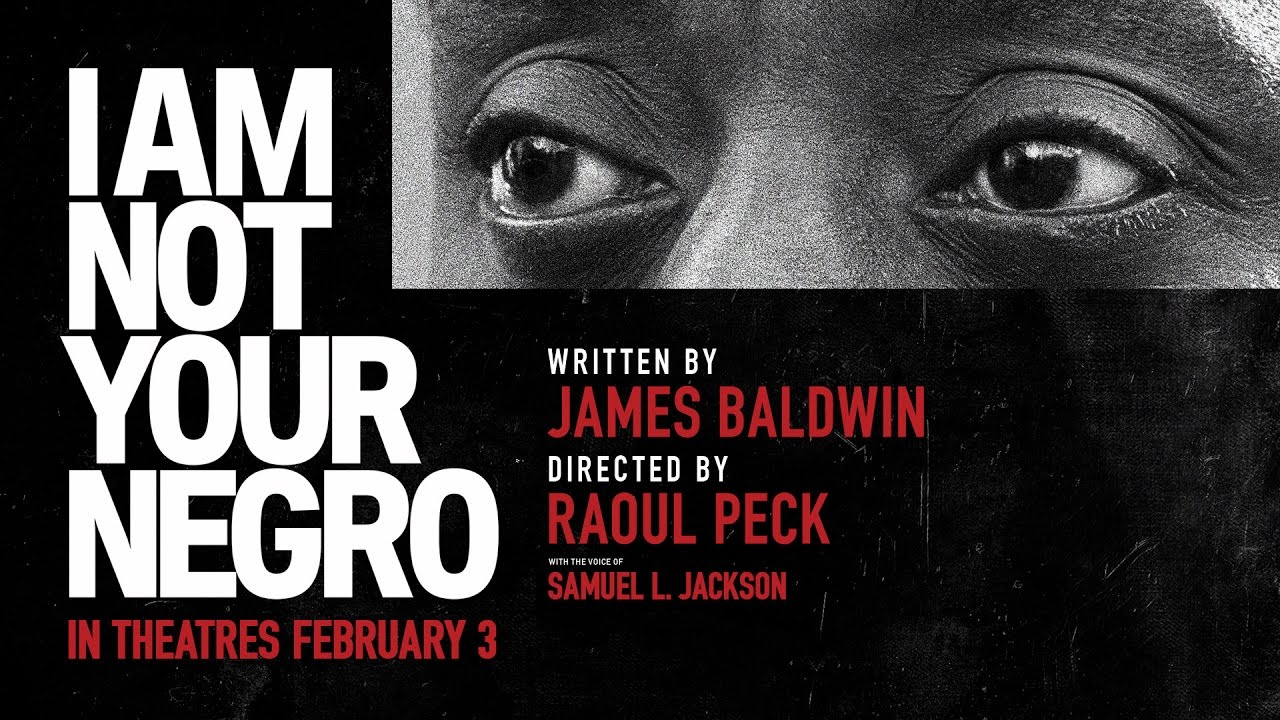
Director Raoul Peck has made a powerful and vitally timely film about James Baldwin — and about today. By juxtaposing Baldwin’s words with images from Ferguson and other contemporary conflicts over race and poverty, he underscores the impact and importance of Baldwin’s commentary.

It is shocking how little has changed. Peck makes that point subtly by going behind the grainy black-and-white images that are so familiar to us from the Civil Rights Era, so stylized that they seem almost as distant as daguerreotypes. Intensive research over a ten-year period led to the discovery of previously unseen archival footage, some in color, matched here with new contemporary material, some shown in black and white to make even more seamless the connection between past and present.

Still, there are some stunning reminders of what has changed, none more shocking than the sight of not one but two public intellectuals as guests on a night-time network television talk show. Yes, before the days when talk shows were made up of silly games and sillier reality show “stars” and Hollywood performers pushing their latest projects, people used to come on television and talk about ideas. We see James Baldwin and a Yale professor on the Dick Cavett show. Yes, the professor condescendingly whitesplains race relations, clearly thinking he is complimenting Baldwin by pointing out all they have in common.

It is good to be reminded that at one time there were public intellectuals who engaged with policy and culture so bracingly. Peck reminds us that Baldwin was a social critic who was fascinated with movies and the message they reflected and conveyed about our society. Through his eyes, we see Doris Day as an emblem of whiteness, John Wayne “heroically” killing Indians, movies ignoring race (and the stories of anyone who was not white) and movies fumbling in their attempt to portray race, like “Uncle Tom’s Cabin” with its saintly slaves and “Imitation of Life” with the light-skinned girl who wanted to deny her heritage, and her mother.

The movie credits Baldwin himself as its author, and rightly so. Baldwin is a mesmerizing screen presence with his deep-set eyes and lacerating wit. But it is his words that make this film come alive, knowing, provocative, patient, but insistent.

Parents should know that this film includes some violent and confrontational images from the Civil Rights Era and contemporary racial abuses and protests, and some strong language.

Family discussion: What do the contemporary images tell us about Baldwin’s ideas? What would he say about today’s controversies? Would he say we have made progress?

If you like this, try: “Eyes on the Prize” and the books by James Baldwin

Related Tags:


Documentary DVD/Blu-Ray Pick of the Week Race and Diversity
The Space Between Us

The Space Between Us

Posted on February 2, 2017 at 5:15 pm

Copyright STX Entertainment 2016

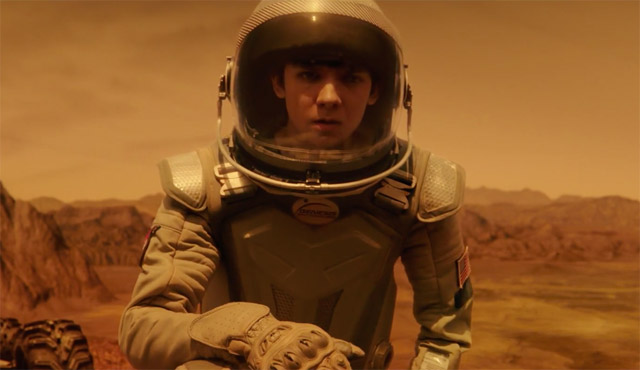
An intriguing premise is repeatedly undercut by clunky dialog and corny plot twists in “The Space Between Us,” the story of a teenager born on Mars and his first trip to Earth.

It begins in 2018, just before the launch of the first expedition to colonize Mars. Nathaniel Shepherd (Gary Oldman) has been planning it since he was 12 years old and now, a joint project from NASA and the private Genesis corporation is sending a team not just to explore Mars, but to live there for four years, in a settlement called East Texas. With the depletion of resources and abuse of the planet, Mars is the best chance for humanity to continue. “Mother Nature does not negotiate.” The night before launch, Shepherd presents the crew, lead by Sarah, who captivates the crowd with her gallantry and confidence. “Courage,” she tells them, “is fear that has said its prayers.”

All goes well at first, but it turns out, about halfway to Mars, that Sarah has committed a reckless misjudgement. She is pregnant. Nathaniel, worried about losing funding for the project, keeps it secret. Sarah dies giving birth and the baby is raised by the scientists on Mars, without anyone on Earth knowing about him other than Nathaniel and a couple of his colleagues. “East Texas runs on money, science, good faith, and PR,” Nathaniel says. He will not risk the mission. And the child, gestated in zero gravity, might not be able to survive the trip home or life on Earth.

By the time we see him again, Gardner (Asa Butterfield, still soulful, and quite the beanpole since we saw him in “Hugo”) is a teenager. His only friends are an astronaut scientist named Kendra (Carla Gugino), who treats him like a lab assistant, and a robot sidekick.

In some ways, he is just like teenagers on earth, moody, uncommunicative, very interested in meeting a girl, determined to find his father, and determined to test whatever boundaries there are. In some ways he is different. He knows very little about the most basic elements of life on earth. And, because he is the first human to grow up in the 62 percent lower gravity of Mars, his physical development — bone density, heart — has been affected so that even if he did get a chance to come to earth, it could kill him.

But remember what I said about boundaries? And girls? Gardner has been e-chatting with a high school girl named Tulsa (Britt Robertson, seven years older than Butterfield and looks it), who lives in foster care in Colorado. He runs away from the NASA/Genesis medical facility to meet Tulsa and asks her to help find his father, with Nathaniel and Kendra in pursuit. There were so many possibilities here, to see Earth through the eyes of someone whose only knowledge of the planet and human interaction involving more than the same five people came from Wim Wenders’ “Wings of Desire” and old how-to movies about dating. Instead, we get a syrupy love story and chases with a helicopter, a crop duster, and a series of stolen cars.

Last year’s “The Martian” made the science fascinating. “The Space Between Us” tries to make it superfluous, neglecting some basic principles of physics but even worse, some basic principles of logic.

Parents should know that this film includes some mild language, non-explicit teen sexual situation, alcohol abuse, teen mayhem (stealing, reckless driving), some peril, childbirth scene, sad death, and health risks.

Family discussion: What’s your favorite thing on earth and why? What surprised Gardner most? What advice would you give him about how to act on Earth?

If you like this, try: “The Martian” and the film Gardner watches, “Wings of Desire”

Related Tags:


Date movie Drama Science-Fiction Stories about Teens
Gold

Gold

Posted on January 26, 2017 at 5:30 pm

Copyright TWC 2016

In “Gold,” People Magazine Sexiest Man Alive Matthew McConaughey has more fun playing a bald, overweight, often obnoxious character than we have watching him. The problem, as so often the case when stars produce their own vehicles, is that the movie assumes more affection for the character than it is able to generate. McConaughey plays prospector Kenny Walls (based on real-life goldbug John Felderhof — don’t Google him if you don’t want spoilers). The film, directed by Stephen Gaghan (“Traffic,” “Syriana”) is a rise and fall (and rise and fall and I won’t reveal which one he ends up on) story of a third generation prospector, always on the search for gold. A dream inspires him to go to Indonesia, where he teams up with a legendary specialist in finding gold, Michael Acosta (Edgar Ramírez), who takes him deep into the jungle.

They don’t have enough money. The workers desert them. Kenny gets malaria. The assay reports come back negative.

And then great news. They’ve struck gold.

And then the real challenge comes. The jungles of Indonesia are not nearly as treacherous as the jungles of Wall Street. Once the gold has been found, everyone wants a piece of the action. The qualities that made Kenny succeed in finding gold may not be the ones he needs to keep it. A smooth investment banker (Corey Stoll) and the head of the world’s biggest gold operation want Kenny’s mine. They have the resources to get the greatest value from it. They also have the resources to make life very, very unpleasant if he does not cooperate. When Kenny rejects the first option, the second kicks in.

There’s a lot going on here. There’s the relationship between Kenny and his girlfriend (Howard brings enormous warmth and intelligence to a one-dimensional role). There’s the bromance between Kenny and Mike, the search for gold, the struggles with the money people, the issues with Kenny’s original colleagues. Kenny speaks feelingly about the quality that unites all prospectors: the belief that something is there. So we are supposed to think of him as a loveable dreamer. But the movie keeps undercutting that by portraying him as selfish, not very smart, and not nearly as interesting as his buddy Mike or the characters played by Bruce Greenwood and Toby Kebbell. Flash forwards give away too much, too early. The film keeps panning for the gold of storytelling and coming up with lesser metal.

Parents should know that this film includes constant very strong and crude language, some peril and violence including guns and predatory animal, and illness, some disturbing images, drinking and drunkenness, chain smoking, fraud and betrayal.

Family discussion: Would you trust Kenny with your money? Should he have taken the deal? What should he do with the package he receives at the end?

If you like this, try: “The Wolf of Wall Street,” also featuring McConaughey

Related Tags:


Not specified
A Dog’s Purpose

A Dog’s Purpose

Posted on January 26, 2017 at 5:29 pm

Copyright Amblin Entertainment 2016

The doesthedogdie website helpfully lets us know what some people consider the most important deciding factor in selecting a film. They — and their visitors — will have a tough time with this one because in one sense there are at least three dogs who die in this film but in another the whole point of the movie is that dogs do not really die; there are doggy spirits that go on from dog to dog, learning how to be more devoted, more loving, more helpful. So yes, there are some tough moments for both the human and canine characters in this film. I cried just watching the trailer. But on the other hand, there are gorgeous and adorable dogs. Even better, there are puppies.

“A Dog’s Purpose,” based on the best-selling book by W. Bruce Cameron is an unabashed love letter to dogs and the humans who are lucky enough to be loved by them. Yes, it is sugary and sentimental, but so is the devotion dogs and people have to each other. These are not cats like Garfield, who often scorn us and bestow their favors sparingly, or an “Every Which Way But Loose” orangutan who can outwit us. These are dogs who have nothing but time to play with us or comfort us and are always overjoyed to see us.

Bailey, voiced by Josh Gad of “Frozen,” is born (puppies), then quickly caught by animal control and (subtly) killed. Then, he is born again, and adopted by a boy named Ethan. Bailey is curious about the world and his place in it. Much of the gentle humor of the film comes from Bailey’s efforts to understand human behavior, and much of the sweetness comes from his realization that his purpose is to love, to help, and to remind humans of something important they tend to forget and dogs are very good at — to appreciate this exact moment, to inhabit it fully.

Bailey and Ethan adore one another, happy to play together all day. Bailey gets up to the usual dog mischief, but the real problem in the family is when Ethan’s dad becomes depressed, begins to abuse alcohol, and becomes abusive. By that time, Ethan is a teenager, in love with Hannah (Britt Robertson), and being recruited for football scholarships to college. But things go wrong for Ethan, and Bailey gets old and tired…and is reborn as Ellie, a K-9 dog partnered with Carlos (John Ortiz), and then as a corgi adopted by a lonely student (Kirby Howell-Baptiste), and then as a neglected dog abandoned by his owner’s boyfriend.

There’s nothing subtle, surprising, or sophisticated about this story, which is as chewed over as a dog’s favorite bedroom slipper. But audiences will be won over by the unabashed affection for its subject and funny-only-after-the-fact incidents that will be only too familiar to anyone who has ever lived with a dog. Its belief in the deep connection between humans and the devoted dogs in their lives — and did I mention the puppies? — help it connect to us as well.

NOTE: The release of some leaked behind-the-scenes footage appeared to show one of the dogs being mistreated by a handler in order to get him to do a stunt. The producer of the film has made a detailed statement about the incident, accepting responsibility for some mistakes but also making it clear that the leaked footage was edited to distort what happened. Anyone concerned about the treatment of the dogs on the film should read his statement in its entirety.

Parents should know that this film has tense, sad, and dangerous situations including very sad deaths of beloved pets and character injured, alcohol abuse, depression, domestic abuse, neglect of animal, fire, law enforcement violence including kidnapping, shoot-outs, and rescue, some potty humor, and some disturbing images.

Family discussion: What do you think a dog’s purpose is? How is it different from a human’s purpose?

If you like this, try: The book by W. Bruce Cameron and the movies “My Dog Skip,” “Marley & Me,” and “The Three Lives of Thomasina”

Related Tags:


Based on a book Comedy Crime Drama Family Issues Romance Talking animals
THE MOVIE MOM® is a registered trademark of Nell Minow. Use of the mark without express consent from Nell Minow constitutes trademark infringement and unfair competition in violation of federal and state laws. All material © Nell Minow 1995-2026, all rights reserved, and no use or republication is permitted without explicit permission. This site hosts Nell Minow’s Movie Mom® archive, with material that originally appeared on Yahoo! Movies, Beliefnet, and other sources. Much of her new material can be found at Rogerebert.com, Huffington Post, and WheretoWatch. Her books include The Movie Mom’s Guide to Family Movies and 101 Must-See Movie Moments, and she can be heard each week on radio stations across the country.

Website Designed by Max LaZebnik