Zero Days

Posted on July 7, 2016 at 5:46 pm

B+
Lowest Recommended Age: Middle School
MPAA Rating: Rated PG-13 for some strong language
Profanity: Some strong language
Alcohol/ Drugs: None
Violence/ Scariness: References to weapons of mass destruction
Diversity Issues: None
Date Released to Theaters: July 8, 2016

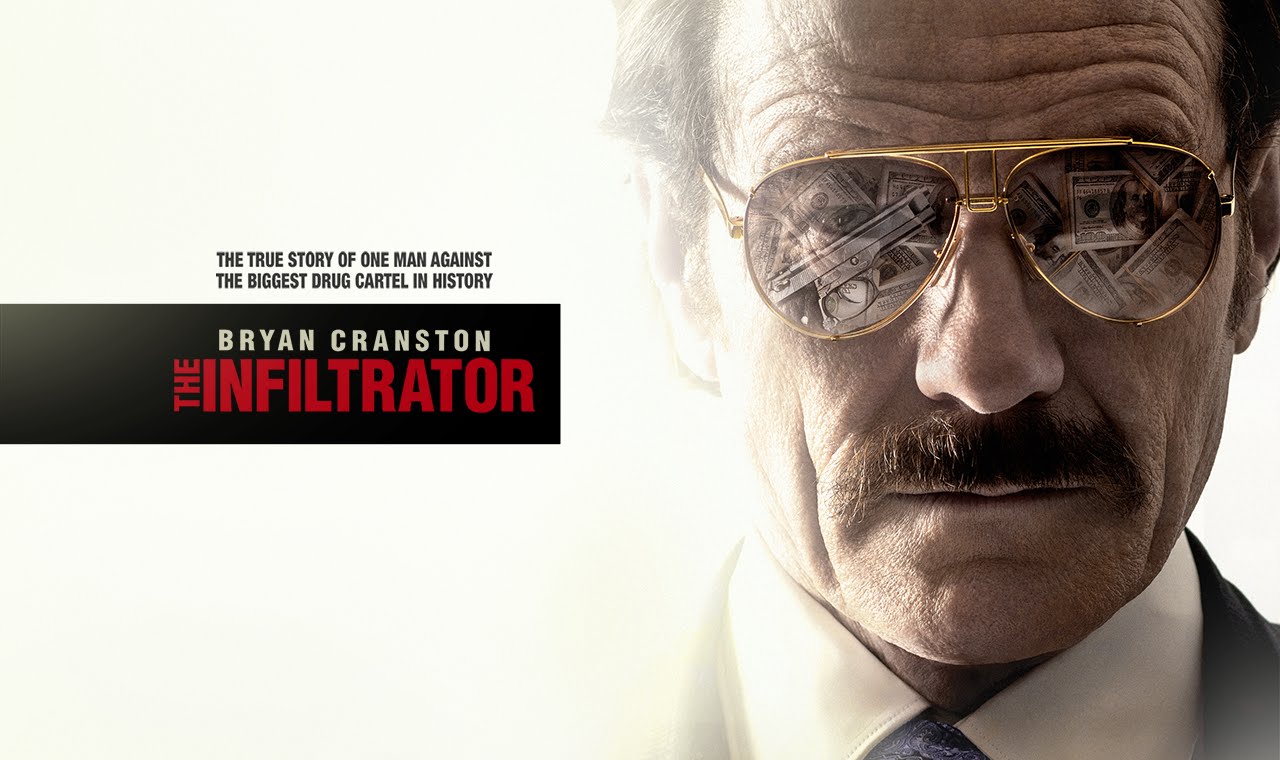
If I could require every candidate running for office to see one movie, it would be “Zero Days,” the most terrifying movie of the year. It is the story of the Stuxnet virus developed by the US and Israeli governments to infect the nuclear facilities in Iran. As one of the experts in the film notes, for thousands of years combat was carried out by the army on land and the navy on the water. In the 20th century, battles moved into the air, and so we needed an air force. And the development of atomic weapons posed unprecedented threats and daunting challenges of statecraft as well as warcraft. And now the greatest threats come from code in a thumb drive.

“Zero Days” begins with a collage of experts all saying some version of “I can’t answer that,” “Even if I knew, I couldn’t tell you,” or “That is classified.” And then writer/director Alex Gibney, the man behind documentaries about sensitive topics including Enron, Wikileaks, Scientology, use of torture by US military, and Steve Jobs, finds many of the answers anyway. His most candid source appears to us only as a disembodied face made up of code, dissolving around the edges.

Stuxnet is the name given to the weapons-grade virus by the Symantec engineers who are trying to dissect it so they can protect their customers from it. They have never seen anything so professionally constructed and destructive. (We find out later that internally, the constructors referred to it as Olympic Games.) They begin to suspect that it was put together by a nation-state to be used to disrupt enemy programs, but the project is so secret that even the US Department of Homeland Security has no knowledge of it and is spending its resources to make sure it is not used against American citizens.

Gibney skillfully shapes the story, giving us views of experts in national security, public policy, and viruses, who make it clear that by opening up the door to this category of warfare, the US opens itself up to massive and possibly permanent disruptions from our financial services and banking systems to our power grid, transportation, and water safety. A diplomat says that people thought it was impossible to develop international agreements on nuclear weapons, but, after only two decades, one exists. This movie makes clear that we do not have that kind of time, and that in this election year, there is no more important priority to put on the national agenda than this one.

Parents should know that this film has some strong language and deals with weapons of mass destruction.

Family discussion: Who should decide when to use computer viruses? How much does the public have the right to know?

If you like this, try: Gibney’s film “We Steal Secrets: The Story of Wikileaks.”

Related Tags:


Movies -- format
Mike and Dave Need Wedding Dates

Mike and Dave Need Wedding Dates

Posted on July 7, 2016 at 5:45 pm

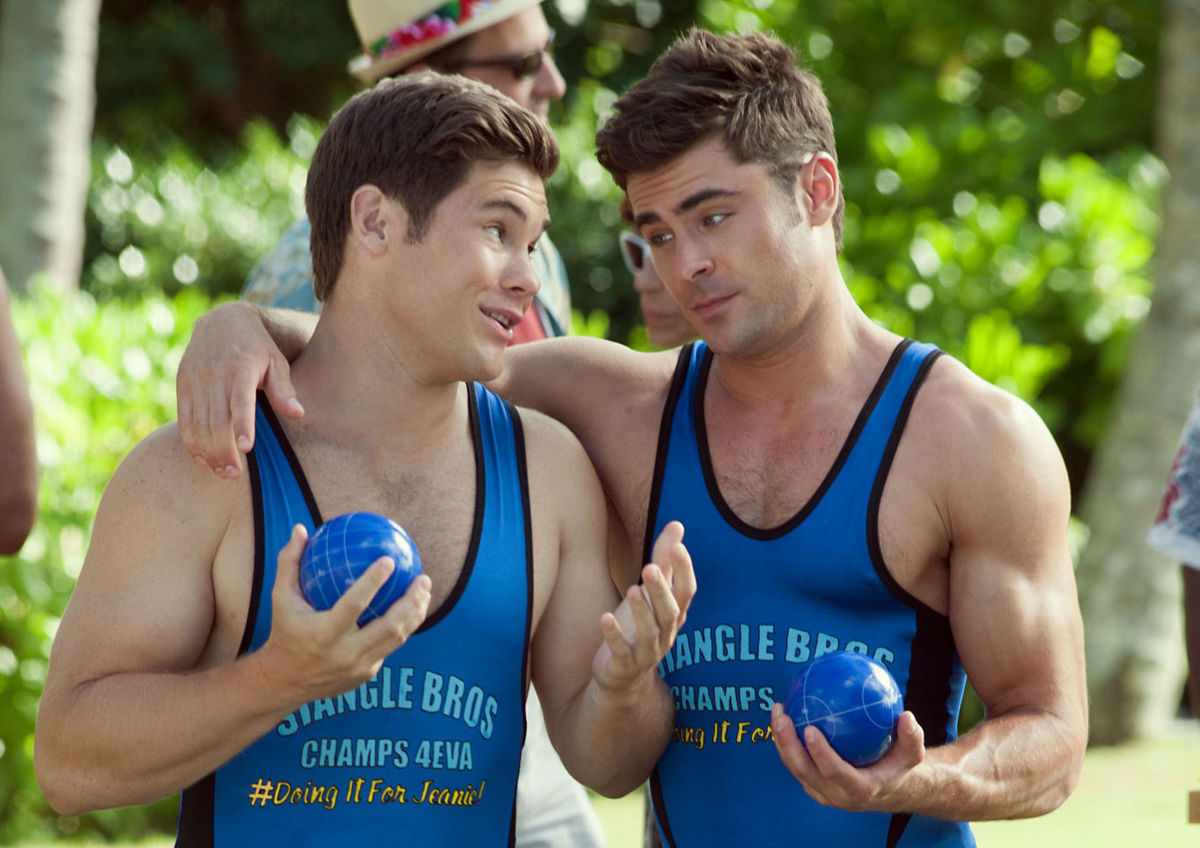
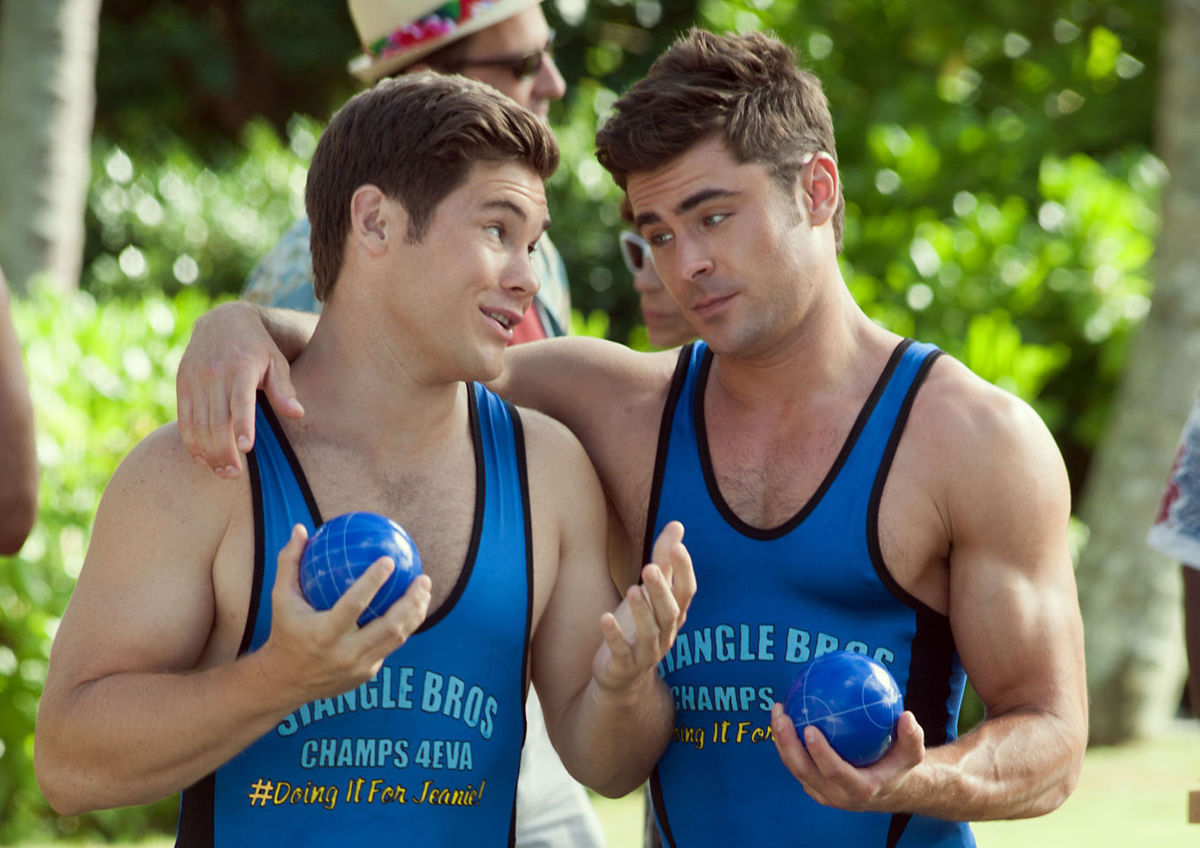
mike and dave2So, two bros — literal, biological bros and bros in the bro-iest of spirits — advertised on Craigslist for wedding dates. This being America, that got them on talk shows, which led to a book deal, which led to a movie starring four of of Hollywood’s funniest young stars. Your ability to appreciate the result of this unstoppably bro-tastic marketing juggernaut will depend entirely on your tolerance for bro humor. Be warned; mine is pretty low. Your mileage may vary.

Mike (Adam Devine) and Dave (Zac Efron) love each other and their family. They love their life of awesome parties and wild hijinks. But their parents and sister Jeannie (Sugar Lyn Beard) stage an intervention. Jeannie is getting married in Hawaii and she would like them to tone it down, so she can have an elegant, civilized celebration, nothing requiring ambulances, fire engines, or lawyers.

They come up with an idea. The worst problems seem to occur when Mike and Dave are trying to impress or party with girls. If they can find some “nice, respectable, smart girls” to accompany them to the wedding as their dates, it will have a calming effect. So, committed to #doingitforjeannie but with no idea of where to find such nice stable ponies, they of course turn to the place one goes to find used furniture, Craigslist, leading to the Wendy Williams Show, where they are spotted by Tatiana (Aubrey Plaza) and Alice (Anna Kendrick), two girls who are as irresponsible and wild as the brothers. But of course they have to hide that to appear suitable for this occasion and thus get two free tickets to a lavish party in Hawaii. “We’re going to flip the script and Bachelorette that s***.”

Okay, we all know where this is going. Lots of mayhem. Lots of substance abuse and outrageous behavior. An ATV stunt that leaves the bride looking like “burn victim Barbie.” An intimate massage. Many inappropriate comments to various wedding attendees.

But “oh, no, they didn’t” comedy about irresponsible and grossly inconsiderate behavior only gets you so far, even in a gorgeous setting. Four of the most talented, appealing, and very funny performers anyone could hope for cannot make what is essentially a 10-minute sketch into a movie.

Parents should know that this film has extremely graphic adult material with very crude sexual references and explicit situations, comic peril and violence with some injuries, drinking, drugs, and very strong and crude language.

Family discussion: What makes someone a good wedding date?  Why was it so hard for Mike and Dave to behave themselves?

If you like this, try: “Wedding Crashers,” “American Pie,” and “Saving Silverman”

Related Tags:


Comedy Inspired by a true story
Life, Animated

Life, Animated

Posted on July 7, 2016 at 5:34 pm

B+
Lowest Recommended Age: Middle School
MPAA Rating: Rated PG for thematic elements, and language including a suggestive reference
Profanity: None
Alcohol/ Drugs: None
Violence/ Scariness: Emotional upheavals
Diversity Issues: A theme of the movie
Date Released to Theaters: July 8. 2016
Copyright 2016 The Orchard

Temple Grandin described her experience of trying to understand social interaction as a person with autism: like an anthropologist on Mars. The kinds of social cues that come naturally to neurotypicals can seem strange and even disorienting to people on the autism spectrum, who may be overwhelmed with undifferentiated input that makes it even more difficult to understand the mood and motives of the people around them. “Life, Animated,” based on the best-seller by Ron Suskind, is the story of Owen Suskind’s efforts to use Disney animated films to help him understand and communicate with the people around him. Taking up where the book ends, it is the story of the most universal of human experiences — leaving home, becoming independent, negotiating romance and work — as seen through the unique mind of a man who finds his answers in Disney movies.

And of course so many Disney movies are about growing up. We see Owen watching Wendy in “Peter Pan” as she says, “I have to grow up tomorrow.” And Owen tells us he is a little nervous and a little excited about graduating and moving out of his parents’ house and into a group home.

Owen was developing normally until age three, and then suddenly he “vanished.” He stopped speaking. “It’s like we were looking for clues to a kidnapping.” His parents found themselves in those less-friendly doctor’s offices, the ones that have rooms with special windows for observation. Owen was diagnosed with “pervasive developmental disorder,” which basically means: “we have no idea what the problem is or how to fix it.”

The Suskinds, one of the most loving, wise, and devoted families ever put on film, were determined to undertake “a rescue mission to get inside this prison of autism and pull him out.”

And it turned out, from the inside of that prison, Owen was on his own rescue mission. Suddenly, at 6 1/2, after years of no clear sign that he could still speak or of how much he understood, he said to his parents after his brother’s birthday party, “Walter doesn’t want to grow up, like Mowgli and Peter Pan.”

That is not only a complex sentence; it is a complex idea. The family began to use the Disney films as a sort of English as a second language mode of communication. Owen’s father used a puppet of “Aladdin” character Iago to speak to him, and Owen answered back. “We began to speak to him in Disney dialog.” As an expert in the film notes, animated characters are exaggeratedly expressive. Their fear, anger, and affection is clearly shown, and repeat viewings are illuminating and reassuringly the same, a welcome consistency in a world of chaos and unpredictability. “Disney keeps the world neat and tidy.”

It also gives Owen a chance to interact. He starts a Disney club for other people with autism. A surprise visit from two Disney voice talents is a movie highlight, and, clearly for the actors unused to such unalloyed enthusiasm, a career highlight for them.

And Owen draws the characters, too. But only the sidekicks, never the principals, the stars. Perhaps he feels that he is a sidekick as the people around him have adventures he will not.

Director Roger Ross Williams, a family friend, is clearly trusted by the family and he more than earns it with a sensitive, understanding approach. With the permission of Disney, he includes clips and animation inspired by Disney that tells Owen’s story in a way that lets us see through his eyes the way that “Peter Pan” and “Aladdin” let him see through ours.

Parents should know that this film includes discussions of autism, growing up, and separation, a painful break-up, and a mild sexual reference.

Family discussion: What movie helped you understand feelings and communication? What is the best way for families and friends to help people like Owen?

If you like this, try: “How to Dance in Ohio” and “The Story of Luke”

Related Tags:


Disabilities and Different Abilities Documentary Family Issues Movies -- format
The BFG

The BFG

Posted on June 30, 2016 at 5:50 pm

B+
Lowest Recommended Age: Kindergarten - 3rd Grade
MPAA Rating: Rated PG for action/peril, some scary moments and brief rude humor
Profanity: None
Alcohol/ Drugs: Brief scene with drunken characters
Violence/ Scariness: Extended fantasy-style violence, reference to off-screen violence, including death of children, but no characters injured
Diversity Issues: None
Date Released to Theaters: July 1, 2016
Date Released to DVD: November 28, 2016
Amazon.com ASIN: B01G4N5Q0A
Copyright 2016 Disney

Steven Spielberg. the director who, with his partners, named their movie studio Dreamworks, understands that movies are like a guided dream. Roald Dahl’s story is about a Big Friendly Giant who collects, selects, edits, and delivers dreams to make people happy and conveys messages that are beyond the capacity of verbal human interaction. Clearly, this story connects with Spielberg profoundly, and it shows.

At 3 am one night in 1983, a girl named Sophie (Ruby Barnhill) is the only one awake in the horrible London orphanage where she lives. We can see right away that she is brave and smart, even fierce, as she threatens to call the cops on some drunken revelers making noise in the street. But then she witnesses a disturbance of another kind. Someone very, very large, as tall as her building, is walking quietly — no, stealthily — through the streets.

And then an enormous hand reaches silently and carefully into the window of the room filled with sleeping girls and the very awake Sophie, and grabs her, quilt and all. It is a giant.

He knows how to stay hidden. We see him employ some clever camouflage that keeps the Londoners from seeing him, and then takes off for Giant country, far, far away, but a matter of moments if you’ve got giant legs to leap with. Sophie is terrified. She is sure that the giant wants to eat her. But he does not eat children, he tells her, in his funny, corkscrew, word-twisting language. He has only taken her because she saw him, and he cannot risk her telling anyone about him. He has taken her to keep her from giving away his secret, which means she will have to stay with him forever.

Sophie is determined to run away. But that night, in the crow’s nest of a ship that is one of the many curios crowding his home, she dreams that she escapes, only to be captured and eaten by some even bigger giants. Through this dream, she begins to understand what her giant, soon to be known as the BFG, can’t explain any other way. She cannot be safe if she leaves his house. The other giants, who are as big to him as he is to Sophie, are uncivilized brutes and bullies. They eat “human beans,” including children (a bit less grisly than in the book, but still creepy).

The BFG, whose huge ears listen to everything, even the quietest whisperings of the heart, collects dreams. Sophie goes with him to the place where dreams grow, and she helps him deliver the happiest possible dreams to a young boy and his family. The lonely little girl and the lonely giant get to know one another, and become friends. But the other giants can smell her, and they won’t leave the BFG and Sophie alone. They have to come up with a plan to get rid of the child-eating giants forever. It will involve dreams. And corgis.

This is a slighter story than Dahl’s richly imagined Charlie and the Chocolate Factory, Matilda, and James and the Giant Peach, with much of its humor coming from the BFG’s mangled words and his affection for his favorite beverage, Frobscottle, a fizzy green drink with bubbles that float down, rather than up. The noisy and powerfully butt-lifting physical consequence of this downward gas is what the BFG calls a whizpopple. And there is also an extended scene with the BFG trying to fit into the “bean”-sized world, sitting on a bench on top of a piano and using a rake as a fork.

That almost doesn’t matter, given Spielberg’s gorgeously imagined world and the performances of Mark Rylance as the BFG and Barnhill as Sophie. Rylance, whose last collaboration with Spielberg won him an Oscar for “Bridge of Spies,” is transformed via motion capture into the BFG, and does not lose an atom of his ability to express the BFG’s melancholy, isolation, gentleness, and integrity.

Spielberg has always been superb in casting, especially with children. Barnhill’s performance would be remarkable if she were interacting in a built, rather than virtual world. Given that in much of the movie she was probably looking at a tennis ball hanging in front of a green screen, it is truly astonishing. She so clearly believes in what we see around her and to her character’s friendship with the BFG that we believe in it, too. Next-level special effects help, too, with utterly seamless interaction between the digital and practical effects and gorgeous, wonderfully intricate production design that makes the BFG’s home both cozy and strange. The setting for retrieving the dreams is enchanting, though the visualization of the dreams themselves is not up to the level of the rest of the design. But the friendship between the BFG and Sophie is real magic.

Parents should know that this film includes extended fantasy peril and some violence (no characters hurt), references to children being eaten by giants, and some potty humor.

Family discussion: What dream would you most like to have? Why wasn’t the BFG like the other giants?

If you like this, try: Roald Dahl books and movies including “Willie Wonka and the Chocolate Factory,” “Fantastic Mr. Fox,” “Matilda,” and “James and the Giant Peach”

Related Tags:


3D Based on a book DVD/Blu-Ray Pick of the Week Fantasy
The Legend of Tarzan

The Legend of Tarzan

Posted on June 30, 2016 at 4:15 pm

B-
Lowest Recommended Age: Middle School
MPAA Rating: Rated PG-13 for sequences of action and violence, some sensuality and brief rude dialogue
Profanity: Some racist epithets and mild language
Alcohol/ Drugs: Some social drinking
Violence/ Scariness: Extended peril and violence, characters injured and killed, some disturbing and graphic images and scary animals
Diversity Issues: Historical abuse and enslavement
Date Released to Theaters: July 1, 2016

Copyright 2016 Warner Brothers
“The Legend of Tarzan” gets some things right. The swinging through the trees is exhilarating. Alexander Skarsgård (Tarzan/John) and Margot Robbie (Jane) are beautiful to look at, as is the African scenery. The CGI animals are pretty good. Thankfully, other than a few flashbacks, it avoids dwelling on the over-familiar origin story. And it is nice to see a shift from the colonialist perspective of some Tarzan stories to recognition of the real-life atrocities inflicted by Belgium’s King Leopold on the African natives, exploiting their resources and enslaving their people.

But there’s a lot the movie does not get right. It’s not terrible; it’s just oddly off, as though it was assembled by a committee that didn’t communicate with each other very well. The first problem is that Tarzan is depressed. I do not know why people seem to think that we somehow make classic literary characters more sophisticated or modern by making them depressed, but I’ve had enough of it. We’ve already had a depressed Batman and a depressed Superman this year. We don’t need a depressed Tarzan. Tarzan, now using his birth name of John Clayton, Lord Greystoke, is living in England when we first see him. Presented with an invitation to return to the Congo as the guest of King Leopold, he declines. Lifting a pinky as he sips from a porcelain teacup to demonstrate just how far he has come from running naked through the jungle, he explains simply, “It’s too hot.” He does not want to go back. But an American named George Washington Williams (played by Samuel L. Jackson and a toupee) persuades him to return, so he can investigate charges of abuse and enslavement. Jane is thrilled to return to Africa, and John reluctantly agrees to let her come along.

The invitation from the King was engineered by Leon Rom (Christoph Waltz, in his usual ultra-civil, ultra-evil mode). If he can deliver John to Chief Mbonga (a regal Djimon Hounsou) the chief will give him access to the diamond mines. When John escapes, Rom takes Jane and some of her tribal friends prisoner.

There’s an unfinished quality to the film. The tone shifts from a literally heavy-handed early image of a cruel hand wrapped in a rosary ripping a flower from its stem to some awkward and anachronistic attempts at humor (Samuel L. Jackson after a diplomatic speech: “And I thought the Civil War was long!”), and distracting random camera-swooping. But the real drag on the film’s momentum is Tarzan himself, who is so morose that the energy seeps out of the story. Reportedly, Skarsgård spent six months working out all day. He looks great, but to be honest he already looked great, and the fixation with male or female movie stars remaking their bodies for roles is barbaric. What needed the work was the script.

Parents should know that this film includes extended peril and violence, guns, spears, explosions, predator animals some disturbing images, characters injured and killed, some sexual references, and brief strong and racist language.

Family discussion: Why did John and Jane have different views about going back to Africa? How did John’s idea of honor change and why?

If you like this, try: the many other movie and television portrayals of Tarzan and the books by Edgar Rice Burroughs

Related Tags:


Action/Adventure Based on a book Movies -- format Remake
THE MOVIE MOM® is a registered trademark of Nell Minow. Use of the mark without express consent from Nell Minow constitutes trademark infringement and unfair competition in violation of federal and state laws. All material © Nell Minow 1995-2026, all rights reserved, and no use or republication is permitted without explicit permission. This site hosts Nell Minow’s Movie Mom® archive, with material that originally appeared on Yahoo! Movies, Beliefnet, and other sources. Much of her new material can be found at Rogerebert.com, Huffington Post, and WheretoWatch. Her books include The Movie Mom’s Guide to Family Movies and 101 Must-See Movie Moments, and she can be heard each week on radio stations across the country.

Website Designed by Max LaZebnik