Independence Day: Resurgence

Independence Day: Resurgence

Posted on June 24, 2016 at 12:33 pm

Copyright 20th Century Fox 2016

Twenty years ago, Jeff Goldblum and Will Smith flew into an alien mothership and uploaded a computer virus in a movie that is still one of the definitive summer blockbusters, Independence Day. Two decades later, moviemaking technology has made a lot of progress, and it has some striking visuals, but it is missing a lot of the brio of the first, especially Will Smith. This is one of those movies with a story that involves billions of people around the world but pretty much the same six people keep running into each other and their relationship issues are as important as the impending attack that in military terms is deemed “extinction level.”

The alien attack of 1996 did something humans were not able to accomplish on their own after thousands of years. It united the world, which came together to adapt the alien technology and develop a comprehensive monitoring and defense system, including space stations and an outpost on the moon. The US President (Sela Ward) coordinates with other world leaders in what seems to be an era of unprecedented peace and prosperity, if operating under the constant pressure of recovering from unprecedented losses and the fear of another invasion.

In the first film, a nerdy scientist named Dr. Okun (Brent Spiner) who had been hidden away in Area 51 was used as something like a ventriloquist’s dummy by an alien and has been in a coma ever since, tenderly care for by his partner. All of a sudden, his eyes fly open and he is awake. There are other indications around the world that dormant capacities for communication are being triggered by what could be another approaching invasion. That includes the former President (Bill Pullman, with beard, cane, and PTSD) who not only inspired the world with a great speech but personally flew a fighter plane to attack the alien ship.

David Levinson (Jeff Goldblum), who in the last film was a cable company computer technician who was the first to identify the anomalies that indicated an alien interference, visits Africa to speak to a warlord whose people engaged in hand-to-tentacle combat with aliens. The ex-wife played by Margaret Colin in the last film has vanished from the storyline, without even the half-sentence explanation that lets us know what happened to Will Smith’s character. Instead, we meet a scientist played by Charlotte Gainsbourg who says she has identified some symbols, especially a circle with a horizontal line through it, that people who have had some alien contact feel impelled to draw or paint. And the aliens who have been locked up in Area 51 for 20 years are suddenly awake and screaming…or celebrating. Yes, they are back and they are big. One thing the movie does well is show us the scale and scope of this new invasion.

But what it does not do well is connect us to the characters. There are utterly pointless and unconvincing subplots about a past between Goldblum and Gainsbourg, who have no chemistry whatsoever, but still find more sizzle than the subplot about the hopelessly bland trio of the three fighter pilots, the daughter of the former President, the son of the Will Smith character from the last movie, and Liam Hemsworth, trying to be all “Top Gun”-adorably dashing but more “Starship Troopers.” The actors do their best, but they are stuck with clunky sci-fi cliche dialog. The first film had some clever references to classics like “2001,” but this one just borrows shamelessly from other, better films. The aliens may be bigger and better in this return, but the script is not.

Parents should know that this film has extended sci-fi peril and violence with some disturbing images and characters who are injured and killed, including vast destruction and genocide. Characters use some strong language and there is brief potty humor.

Family discussion: What should the President have considered in deciding about the orb? What would you want to ask it?

If you like this, try: the original “Independence Day” and “Close Encounters of the Third Kind”

Related Tags:


3D Action/Adventure Science-Fiction Series/Sequel
Free State of Jones

Free State of Jones

Posted on June 23, 2016 at 5:40 pm

B+
Lowest Recommended Age: High School
MPAA Rating: Rated R for brutal battle scenes and disturbing graphic images
Profanity: Some strong and racist language
Alcohol/ Drugs: Alcohol
Violence/ Scariness: Intense and graphic violence including battle scenes, hanging of adults and children, brutal abuse, rape, and lynching
Diversity Issues: A theme of the movie
Date Released to Theaters: June 24, 2016

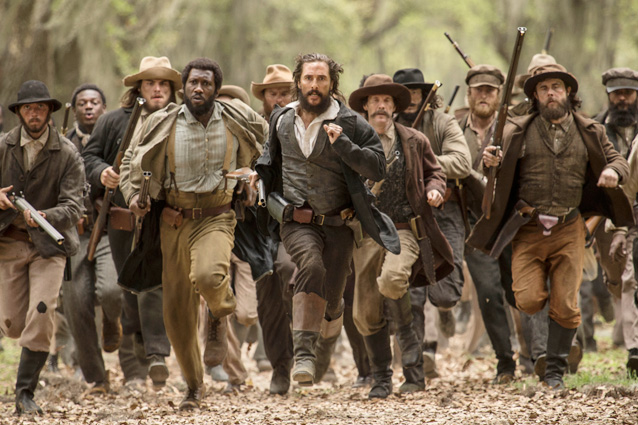
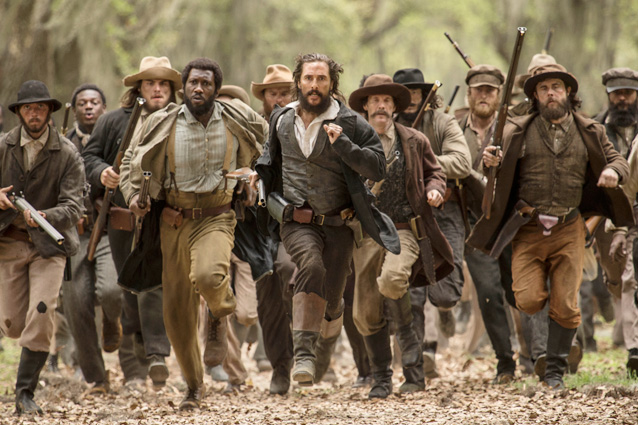
freestateofjonesThe timing is not great. “Free State of Jones” is a Civil War drama based on the true story of a community of Confederate deserters and runaway enslaved people who banded together to fight for their own vision of freedom. It was filmed once before as “Tap Roots,” with Van Heflin, Susan Hayward, and Boris Karloff (as an Indian!), but this version, from “The Hunger Games'” Gary Ross, deals forthrightly with the racial issues, or at least tries to. There is an inescapable and maybe unconquerable problem in telling a story set in Civil War era Mississippi with a glorified white man as the hero, in a time when one of the most anticipated films of the year is the Sundance Grand Jury and Audience award winner “Birth of a Nation,” a film that grabbed and repurposed its title from the blatantly racist D.W. Griffith film of the silent era.

Ross brings the same passion for tackling tyranny to this story that he did to “Hunger Games.” It’s just that we’re no longer dealing with speculation and metaphor, and that means a political overlay reflecting both historical and contemporary controversies.

Matthew McConaughey plays Newt Knight, a Mississippi farmer with a wife and young son who is serving as a nurse in the Confederate army. Early on, we see him removing the uniform from a wounded enlisted man so he can tell the doctors he is an officer and get him treated. Increasingly frustrated with the endless carnage on behalf of wealthy elites who exploit the poor, it is too much for him at last when his nephew is killed in battle and he leaves, taking the body home to be buried. There he finds the Confederate forces are taking all of the food from the local farmers, leaving them to starve. On the run from the military seeking defectors, he hides out in a swamp, where he meets up with runaway slaves. There he decides that his allegiance is not to the Confederacy, which is sending poor boys to fight to preserve what today we might call the 1 percent. “I ain’t fighting for cotton,” another solider tells him. “I’m fighting for honor.” “That’s good,” Knight responds. I’d hate to be fighting for cotton.”

Writer/director Ross, working with the locations where these events occurred and a touching score from Nicholas Britell, evocatively conveys the hardscrabble lives, the literal and spiritual grit, the desperation and conviction it inspires. Knight hands guns to three little girls and, when the Confederate officer does not take them serious, Knight tells him that guns will shoot anybody. “It don’t seem to matter where the bullet comes from.” The depth of research is evident throughout, but it is never pedantic. The storyline is grounded in historical events like the Confederacy’s requisitioning of food and supplies, and post-war exploitation and terrorism, led by former Confederate officials, that prevented former enslaved persons from basic rights and murdered those who tried to assert them. There are brief glimpses into a conflict 85 years later, as the descendent of Knight’s relationship with a former slave named Rachel (Gugu Mbatha-Raw) is criminally prosecuted for marrying a white woman in violation of the state’s laws prohibiting mixed marriages. It is there to remind us that we can never dismiss the events of the past as behind us.

Parents should know that this film has very intense and graphic violence including Civil War battles and skirmishes, hanging, rape, and lynching, adults and children injured and killed, very disturbing images, some strong language with racist epithets, some sexual references

Family discussion: What did Knight find most unjust about the Confederacy?  What did we learn from the 1948 courtroom scenes?

If you like this, try: “Glory” and “The Red Badge of Courage” and read about the story that inspired the film.

Related Tags:


Based on a book Based on a true story Drama Epic/Historical Movies -- format Race and Diversity War
The Phenom

The Phenom

Posted on June 23, 2016 at 5:38 pm

Copyright 2016 Bron Capital Partners

For writer/director Noah Buschel, “The Phenom” is clearly a labor of love. For the audience, it is a small gem filled with unexpected insight and performances of exceptional precision and intelligence. We may think we know what to expect from a film about a gifted athlete who explores the impact of his abusive father with the help of an understanding therapist. But each scene has surprises, with sharp dialogue, vivid characters, and a lot to say about the business of both sports and media. This is a sports movie that quotes F. Scott Fitzgerald. And there’s a brief but powerful scene as the athlete talks to the press that reminds us of how mch this film rewards careful attention.

Johnny Simmons plays Hopper, a “phenom” of a pitcher who has had trouble delivering in the major leagues. He’s sent to the team’s psychologist, a former phenom himself, who was featured on the cover of TIME Magazine at age 22 because of his pioneering work in helping athletes achieve focus and overcome fear. Dr. Mobley is played by Paul Giamatti, who has another connection to baseball — his father, Bart Giamatti served as the Commissioner of Major League Baseball.

Giamatti’s Dr. Mobley is understated, reassuring, and accessible. “A lot of young pitchers struggle with control,” he tells Hopper. It’s “a passing thing.” He does not even want to give it a name because that would “legitimize” it. He tells Hopper that it can be good to look back because damage from the past can be “vaseline on the lens” that interferes with our ability to understand the present and accomplish what we hope for.

Hopper’s whole life has been about getting to the major leagues. His father, Hopper senior (Ethan Hawke) is a volatile bully Hopper’s teacher describes as “an expert at cutting corners and when there weren’t any corners, he’d make circles around her.” He constantly berates his son, bragging that he taught him everything he knows, forcing him to run splits as punishment for smiling. “Never show emotion on the mound. And you’re always on the mound.” He tells Hopper to develop an “intimidation face.”

Hopper has dinner at his girlfriend’s house and is so disconnected from life off the field that he has no idea of how to respond in a home where people discuss ideas and events at the dinner table. Later, when he hurts the girl’s feelings and she speaks up, he tells her the only thing he knows: “You need to toughen up.”

Hopper clearly has to choose between two father figures — his biological father, whose approval he cannot help seeking, and Mobley, whose safe space could be something Hopper could learn to trust. Simmons finds a way to show us the feelings the repressed young pitcher still cannot acknowledge, and his scenes with both Giamatti and Hawke are all the stronger for being understated, never overly dramatic. Owing more to “Ordinary People” than to baseball classics like “Bang the Drum Slowly,” this is a touching drama made up of small moments told with truth and care.

Parents should know that this unrated film has some adult material including drugs and drug dealing, an abusive parent, and strong language.

Family discussion: Why didn’t Hopper know how to talk to Dorothy? Should Dr. Mobley have told him the truth? What was his best advice?

If you like this, try: “Ordinary People” and “Fear Strikes Out”

Related Tags:


Drama Family Issues Sports VOD and Streaming
Hunt for the Wilderpeople

Hunt for the Wilderpeople

Posted on June 23, 2016 at 5:22 pm

B+
Lowest Recommended Age: High School
MPAA Rating: Rated PG-13 for thematic elements including violent content, and for some language
Profanity: Some strong language
Alcohol/ Drugs: Drug reference
Violence/ Scariness: Extended action-style peril and violence, some injuries
Diversity Issues: Diverse characters
Date Released to Theaters: June 24, 2016

Copyright 2016 Piki Films
Writer-director Taika Waititi brings the same wild imagination and subversive wit to “Hunt for the Wilderpeople” that he did to the vampire comedy “What We Do in the Shadows.” Based on the book by New Zealand favorite Barry Crump, it is the story of “a real bad egg,” a boy named Ricky (Julian Dennison) who has been in an endless series of foster homes and finally comes to live out in the wilderness with the warmhearted Bella (Rima Te Wiata) and silent, reserved Hec (Sam Neill). Just when Ricky begins to feel at home, a tragic loss has him running away into the bush, followed by Hec, and then followed by the social worker (Rachel House) and the cops.

Waititi’s films have a lively energy that provides a delicious counterpoint to the understated comedy. The story is told with wry chapter titles, beginning with “A Real Bad Egg.” Ricky is described as “a bit of a handful” with a history that includes “disobedience, spitting, running away…and that’s just the stuff we know about.” But we can see that this chubby kid who says he intends to grow up to be a drug dealer and rap star and get killed in a drive-by wants to be part of a family, even though he does not know exactly how. Bella has just the combination of bluntness and generosity of spirit to make Ricky begin to feel welcome. He’s not looking for cuddles and compliments. There is a bracing reality to Bella that begins to help him thaw. She kills a pig with a knife and says, “There’s dinner, sorted. Want to help me gut it?” He gets a dog and comes up with three possible names: Psycho, Megatron, or Tupac. This is a place where those names are just fine.

On the run, he is back to trusting no one but himself. He says he lives in Rickytown, population: Ricky. Hec tells him it’s time to get back to Realitytown. But that trip has to wait when Hec is injured and they have to stay in “Broken Foot Camp” until he is well enough to walk. And that gives them a chance to get to know each other, and become enough of a team to take on some of the challenges they meet along the way.

They meet some delightfully quirky characters, including three hunters who mistake Hec a child molester (an attempt at humor that does not work at all well), a paranoid hermit known as Psycho Sam (Rhys Darby), and a girl on a horse who brings Ricky home, where her father asks him if he can take a selfie. Waititi’s affection for the independent spirits of the people who live in the wilderness make us, like Ricky, glad to spend time with them.

(NOTE: look for writer/director Waititi in a small role as a clergyman)

Parents should know that this film includes extended peril and some violence including guns, with characters injured, a sad death, themes of abandonment, references to molestation, a drug reference, and some strong language.

Family discussion: When did Ricky and Hec begin to trust each other? When were they in the greatest danger?

If you like this, try: “Big Game” and “The Dish”

Related Tags:


Action/Adventure Based on a book Movies -- format Stories About Kids

Finding Dory

Posted on June 16, 2016 at 5:42 pm

A-
Lowest Recommended Age: Kindergarten - 3rd Grade
MPAA Rating: Rated PG for mild thematic elements
Profanity: Mild language
Alcohol/ Drugs: None
Violence/ Scariness: Peril, separation from parents
Diversity Issues: Sensitive treatment of disabilites
Date Released to Theaters: June 24, 2016
Date Released to DVD: November 14, 2016
Amazon.com ASIN: B01FJ4UGF0

Pixar’s first feature film was “Toy Story” because their then-groundbreaking computer animation technology could only create characters who were stiff and smooth. Plastic toys were ideal characters. Each film since has shown exponential technological progress — the furry creatures of “Monsters Inc,” the balloons in “Up,” Merida’s curly red hair in “Brave.” With “Finding Dory,” Pixar has created its most ambitious character yet, a seven-appendaged, camouflaging octopus named Hank, voiced by Ed O’Neill. Hank moves like jello in water in a plastic bag, each appendage separate, and his skin and shape adapt to take on whatever colors and textures are in the background. Hank is an astonishing marvel of a character, always surprising, completely believable, wonderfully expressive, and endlessly fascinating.

Hank is one of the characters encountered by Dory, the short-term memory-impaired, whale-language-speaking blue tang who helped Marlin (Albert Brooks) find his lost son in “Finding Nemo.” At the end of that film, she tells Marlin that “I look at you, and I… and I’m home.”

Following a flashback to Dory’s early years with her devoted and understanding parents (Diane Keaton and Eugene Levy), we see that she is living with Marlin and Nemo when she has a flicker of recollection. Her parents are in California, the other side of the ocean. She knows she needs help to get there. Marlin, still fearful about anything he cannot control, does not want her to go and he really does not want to go with her. But having almost lost his own son he knows how much Dory needs to be with her family, and he knows he could never have found Nemo without her help. And so they hitch a ride across the ocean with Crush the sea turtle (director Andrew Stanton), but then they get separated at a marine life sanctuary, which is where Dory meets Hank.

Dory has been tagged for transport to an aquarium in Cleveland. Hank wants that tag; he does not want to be returned to the ocean. He wants to be safe and he wants to be left alone. He agrees to help Dory find her parents if she will give him the tag. Meanwhile, Marlin and Nemo (Hayden Rolence) try to catch up with Dory, with some help from a pair of alpha exemplars of the territorial imperative, British-accented sea lions (Dominic West and Idris Elba) and a scrawny, wild-eyed loon named Becky. Meanwhile, Dory runs into an old friend, a visually-impaired whale shark named Destiny (Kaitlin Olson). And there’s another sort of friend, played in an adorable cameo by Sigourney Weaver as sort of herself.

With most of the action in the marine sanctuary, this film misses the grandeur and beauty of “Nemo’s” underwater setting, spending much of its time on a series of expertly executed action sequences with comic moments and delightful characters.  Once again, the film centers on the essential joy/anxiety conundrum of being a parent or a child.  Dory’s parents are endlessly patient and encouraging, though she hears them privately worrying about how they can teach her to stay safe and be independent despite her cognitive impairment.  Destiny and her neighbor,  a Beluga whale named Bailey (O’Neill’s fellow “Modern Family” star Ty Burrell), both have to overcome their disabilities as well.  Bailey has a sort of PTSD following an injury and has to learn to use his echolocation to “see” what is happening to Dory.  The treatment of disabilities is exceptionally nuanced and tender-hearted, not the usual pity or saintlike treatment.  Everyone has strengths as well as weaknesses.  When Marlin realizes that instead of over-analyzing everything he has to learn to think more like Dory, he, Nemo, Dory herself, and those of us who are leaning just a little closer toward the screen, learn to trust her heart and ours as well.

The DVD/Blu-Ray release has a fabulous assortment of extras, including interviews with resident of the real Marine Life, the adorable “Piper” animated short film, “Animation & Acting.” a look at the art of creating a deep and profound connection between an audience and a fish, and my favorite, “The Octopus That Nearly Broke Pixar,” the story of Hank, the challenges and rewards of bringing to life Pixar’s crankiest, most technically challenging character ever. The cast talks about their favorite underwater creatures and there is some background on the story development. There’s even an all-emoji version of the story!

NOTE: Be sure to get to the movie in time to see the utterly winning short film, “Piper,” and be sure to stay all the way through the credits for some extra scenes, including the appearance of some favorite characters from the first film.

Parents should know that this movie has extended peril and some violence, some mild language and brief potty humor. Even more than the first film, it is a frank but sympathetic portrayal of characters with disabilities.

Family discussion: What is a good way to help someone who has memory impairment? Why did Hank change his mind? What is the difference between the way Dory and Marlin think about how to solve problems, and should you be able to do both?

If you like this, try: “Finding Nemo” and your local aquarium or marine life sanctuary and learn more about the sea creatures in the film.

Related Tags:


3D Animation DVD/Blu-Ray Pick of the Week Scene After the Credits Talking animals
THE MOVIE MOM® is a registered trademark of Nell Minow. Use of the mark without express consent from Nell Minow constitutes trademark infringement and unfair competition in violation of federal and state laws. All material © Nell Minow 1995-2026, all rights reserved, and no use or republication is permitted without explicit permission. This site hosts Nell Minow’s Movie Mom® archive, with material that originally appeared on Yahoo! Movies, Beliefnet, and other sources. Much of her new material can be found at Rogerebert.com, Huffington Post, and WheretoWatch. Her books include The Movie Mom’s Guide to Family Movies and 101 Must-See Movie Moments, and she can be heard each week on radio stations across the country.

Website Designed by Max LaZebnik