Central Intelligence

Central Intelligence

Posted on June 16, 2016 at 5:22 pm

B-
Lowest Recommended Age: High School
MPAA Rating: Rated PG-13 for crude and suggestive humor, some nudity, action violence and brief strong language
Profanity: Some strong language
Alcohol/ Drugs: Drinking, scenes in bar
Violence/ Scariness: Extended action-style violence, characters injured and killed, some disturbing images and sounds and torture
Diversity Issues: Diverse characters
Date Released to Theaters: June 17, 2016
Date Released to DVD: September 26, 2016
Amazon.com ASIN: B01H4FJQ2G
Copyright 2016 Warner Brothers

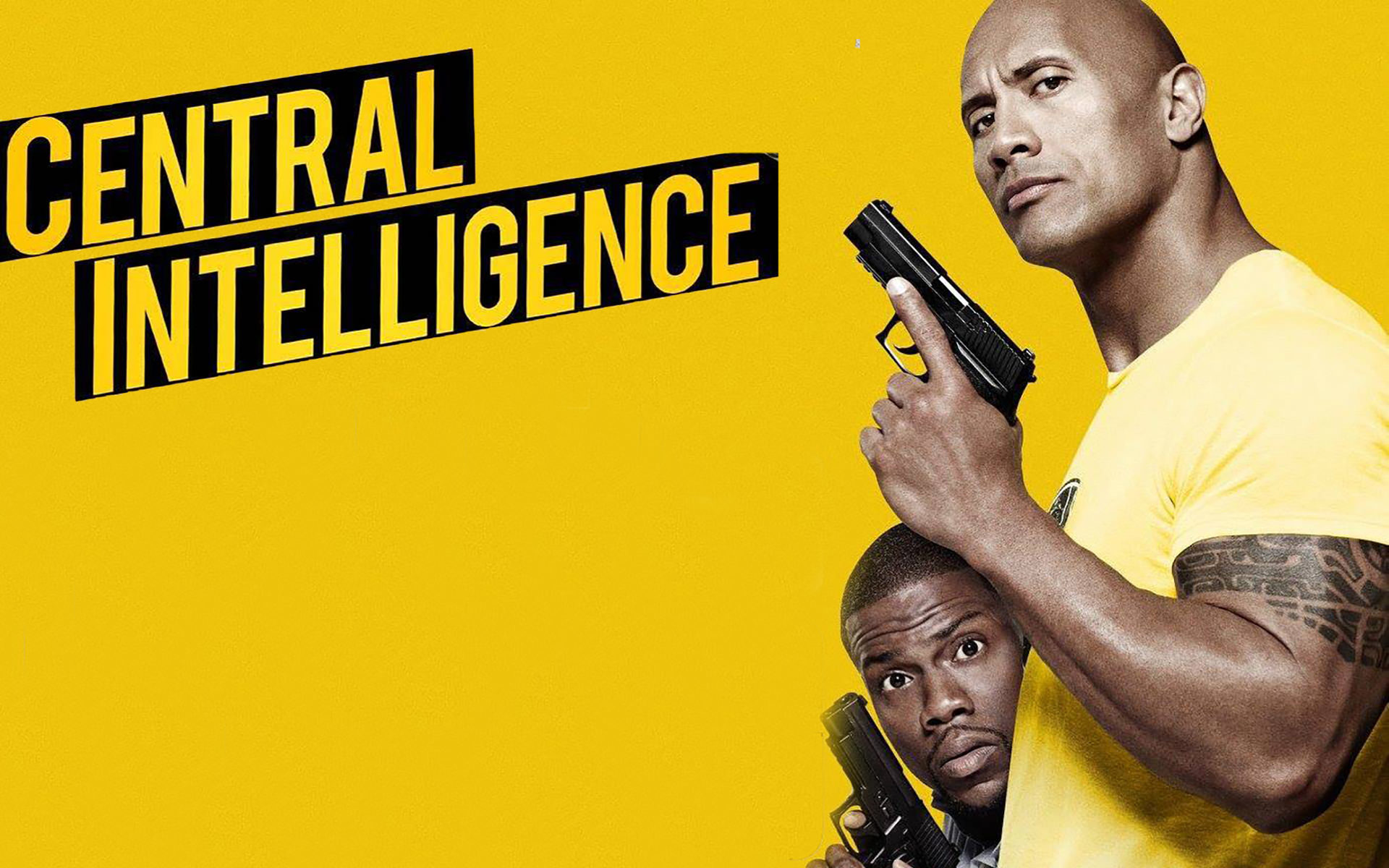
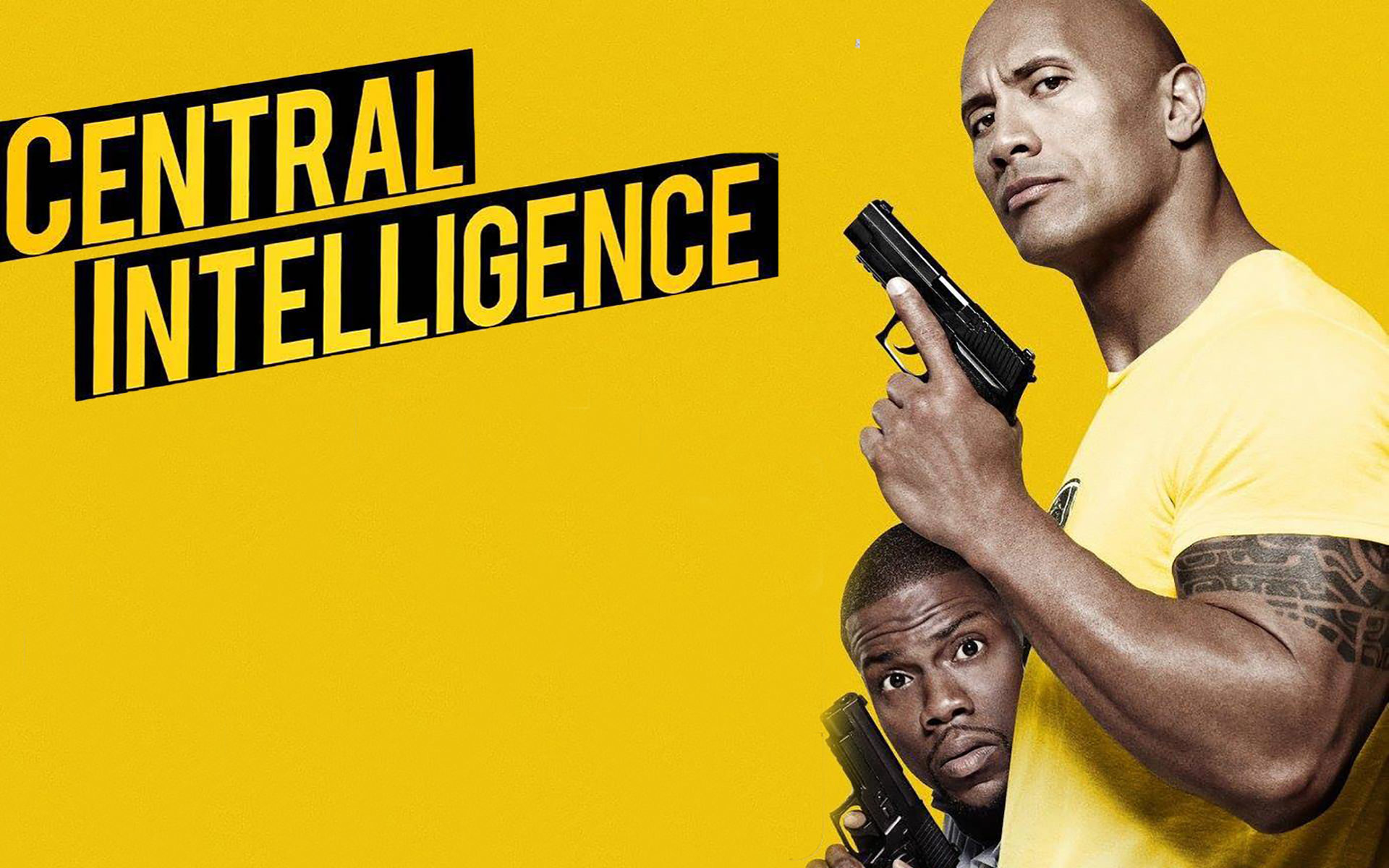
There’s not much intelligence of any kind, central or otherwise, in this silly spy comedy, but what did you expect from a movie based on the sight gag of pairing man mountain former WWE star Dwayne “The Rock” Johnson with pocket-sized pepperpot comic Kevin Hart? But its good-natured script by Ike Barinholtz, David Stassen, and director Rawson Marshall Thurber and the pleasure of watching the appealing stars enjoying themselves make it work.

Hart, something of a straight man for a change, plays Calvin, a one-time high school all-star voted Most Likely to Succeed, now an accountant working in a building with a huge inflated gorilla in front of it, and just passed over for promotion. He adores his wife, Maggie (“The Game’s” Danielle Nicolet), but is disappointed in himself.  His wife wants him to go to couples therapy, but he is reluctant. “Black people don’t go to therapy.  We go to the barbershop.  Or we watch the movie ‘Barbershop.'”

Just before the 10th high school reunion he has refused to attend, he hears via Facebook from a classmate now known as Bob Stone (Johnson), who lists his “likes” as unicorns, cinnamon pancakes, and guns. In high school he was known as Robby. He was very overweight and awkward. Bullies grabbed him in the locker room shower and threw into the gym naked in front of the whole class. Calvin was the only one who was kind to him, handing him his letter jacket to cover up.

Now Bob is handsome and muscular, but not intimidating because he is wearing a unicorn t-shirt, a front-facing fannypack, and jorts.  It seems all he wants from Calvin is a chance to thank him.

But then he punches out some bullies in the bar.  He’s really good at it. And then he asks Calvin to help him with a “forensic accounting problem.”  He asks to spend the night on Calvin’s fold-out couch (Maggie does not seem to be around). It’s a little weird, but then it gets scary. The next morning the CIA shows up because, according to Agent Pamela Harris (Amy Ryan, playing it very straight), Bob Stone is a traitor and a threat to national security who is about to deliver some very dangerous computer codes to the highest bidder.

All of this is just to set up a zany series of chases, shoot-outs, captures, and escapes, with a terrified Calvin trying to figure out who is telling the truth and stopping in the middle for many, many pop culture references, a marriage counseling session, and a visit to the ringleader of the guys who bullied Bob in high school (Jason Bateman).

The good spirits and anti-bullying message are sullied by some uncomfortably unkind “humor,” especially concerning a surprise cameo appearance that consists only of her being swept away by Johnson’s body and having crossed eyes.  I’m pretty sure that punching a bully is not the message of empowerment that we should be getting here.  But they’re no more serious about the message than they are about the storyline.  This movie is about hanging out with Johnson and Hart as they goof on their own personas, and that is silly fun.

Parents should know that the film includes some comic nudity (bare tushes), potty humor, strong language, and extended action-style violence with torture and some disturbing sounds and images. Characters are injured and killed.

Family discussion: What is the best way to prevent bullying? Why didn’t Calvin achieve what he thought he would?

If you like this, try: “Spy” and the original “The In-Laws”

Related Tags:


Comedy DVD/Blu-Ray Pick of the Week Scene After the Credits Spies
Now You See Me 2

Now You See Me 2

Posted on June 9, 2016 at 5:40 pm

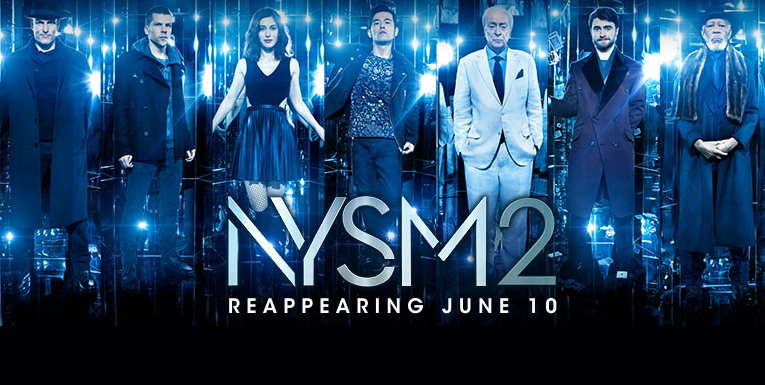
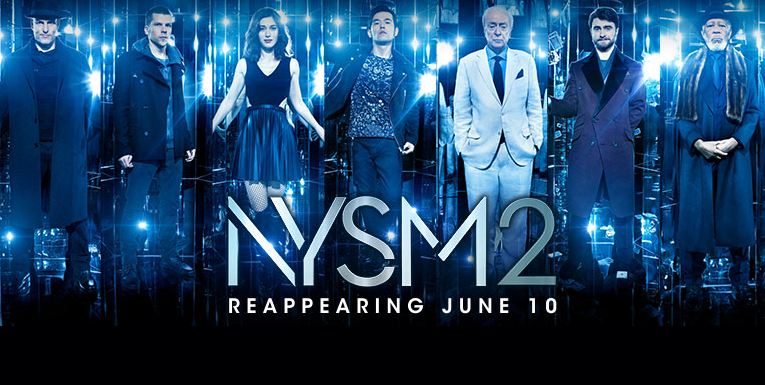
now-you-see-me-2The first “Now You See Me” was a deliciously entertaining heist film with “the Four Horsemen,” a team of magicians, engaged in a diabolically clever combination of misdirection and triple-cons for the purpose of revenge, Robin Hood reparations, and showmanship. We know what that means for part 2 — the Empire strikes back, and it is a popcorn pleasure. The Horsemen stole from billionaire Arthur Tressler (Michael Caine) and framed the magician turned debunker Thaddeus Bradley (Morgan Freeman) so he ended up in prison.

At the end of the last film, the surprise twist revealed FBI agent Dylan Rhodes (Mark Ruffalo) as the brains behind the operation. As this one opens, the FBI, with Deputy Director Natalie Austin (Sanaa Lathan) in charge, does not know and thinks Rhodes is still looking for three of the Horsemen. They believe Jack Wilder, played by Dave Franco, was killed. They’re wrong about both. Rhodes is working with the Horsemen, including Wilder. But there is a new member of the group: Lula (Lizzy Caplan, replacing Isla Fisher). And they immediately run into a snag involving someone who knows a bit about magic in the movies: Daniel Radcliffe as Walter Mabry, a mysterious, mega-wealthy guy who wants the Horsemen to steal something for him. It’s the usual MacGuffin — some sort of computer thing that would give him access to everything/control of everything blah blah, and it’s locked away in a place with the kind of crazy security reserved for heist movies. All the world’s biggest, richest baddies are after it, and so the Horsemen have to find a way to get in there before one of them gets it.

The first movie had sensational performance showpieces. This one is more “Mission: Impossible” (the television series, not the Tom Cruise movies) until the final scene. But it keeps the sly twists coming, using all the magicians’ favorite ruses, from misdirection to an almost-balletic slight of hand. Just like “The Avengers,” it is a lot of fun to see each of the Horsemen use their skills — mentalist Merritt McKinney (Woody Harrelson), lock wizard Wilder, card master Daniel Atlas (Jesse Eisenberg). We learned in the first film that McKinney’s brother stole all his money and disappeared; it turns out he was an identical twin brother, and he shows up, played by Harrelson with hair that looks like that awful perm Mike Brady had in the last season of “The Brady Bunch.”

It has all the twists and reveals and surprises we were hoping for, including one saucy switch that is not about magic, just social conventions that have not caught up to reality, some very old school means of communication, and a touch of movie magic in giving us a glimpse of one character’s past with some CGI that looks a little more realistic than the “work” that has ruined so many Hollywood faces. Director Jon M. Chu (the “Step Up” movies) has a superb sense of space and movement, giving the story exuberance and flair. It’s a fitting encore and I hope we will see them all again in part 3.

Parents should know that this film includes some strong language, and some action-style peril and violence.

Family discussion: Would you want to be selected by The Eye? Which magic trick would you like to be able to master?

If you like this, try: the original film and “The Sting”

Related Tags:


Crime Series/Sequel
Genius

Genius

Posted on June 9, 2016 at 5:23 pm

Copyright Lionsgate 2016

They are legends of 20th century American letters, so renowned a single name suffices: Fitzgerald, Hemingway, Rawlings, Lardner, Wolfe. But there is another name — Maxwell Perkins — who was essential to their work and often advisor and support system for their personal lives as well. A. Scott Berg’s brilliant 1978 biography of Perkins has inspired a film that focuses on the most important relationship of Perkins’ professional life — his work on the first two books by Thomas Wolfe.

Intriguingly, all of the major male roles are taken by British and Australian actors playing Americans, and unsurprisingly they are all superb, never missing an final r or an elongated vowel — or worse — showing off. Colin Firth plays Perkins, a mild-mannered man who loved his family but was most alive as a appreciator of literature — he knew it when he received it as a manuscript and he knew how to trim away the underbrush to make it better. His great skill was seeing the story the writer wanted to tell and doing whatever was necessary to get it into the hands of readers.

After Hemingway’s spare, masculine prose and Fitzgerald’s elegant sentences and impeccable structure, Perkins receives a submission from Wolfe that is vital, poetic, and a veritable avalanche of words. “Please tell me it’s double-spaced,” he says, looking at the pile of paper. “That’s a long paragraph,” Perkins daughter remarks, reading over his shoulder. “It started four pages ago,” her father replies.

Like Michelangelo seeing the statue inside the block of marble, Wolfe sees a novel that preserves Wolfe’s torrential style but prunes away the excess. He reassures Wolfe that he will only “shape it a bit, cut off the top branches.” Wolfe knows it needs pruning. “You don’t know how I struggled to cut the gorgon down.”

And Wolfe (Jude Law), who tells Perkins that not just his books but most of all literature is about the search for a father, responds to Perkins’ utter engagement in service to his story. The relationship between a writer and a great editor is one of the most intimate and fulfilling, something between a gifted psychoanalyst, an inspiring teacher, and a fairy godparent — or, just a parent. Perkins, the father of five daughters (charmingly portrayed), found a spiritual son in the troubled genius, and, as Berg’s book argues, was a genius himself in the way he was able to cull out of him timeless classics.

This sympathetic portrayal acknowledges the devastation that can be wrought by geniuses. We see Wolfe’s troubled relationship and careless dismissal of his supporter and mentor, the set designer Aline Bernstein (Nicole Kidman), who is anguished not because she left her husband and children for the much-younger Wolfe, but because once she was successful at getting him launched, he did not need her anymore. We the devastation that can be felt by them as well, as Fitzgerald (Guy Pearce) struggles to write and to care for his wife, Zelda, who is near-catatonic. But the hero of the story is the man waiting patiently backstage, ready to supply a discreet loan or a helpful suggestion: Don’t name the book Trimalchio in West Egg — how about The Great Gatsby? The quiet dignity and integrity of Firth’s performance is a tribute to all whose art is a life of service.

Parents should know that this film includes drinking and drunkenness, smoking, abusive behavior, some sexual references, mental illness, and a sad death.

Family discussion: What did Perkins see in Wolfe that the other publishers did not? Do you agree with Wolfe’s statement that literature is about the search for fathers? How was that reflected in his relationship with Perkins?

If you like this, try: the writing of Wolfe, Fitzgerald, and Hemingway and the biography of Maxwell Perkins by A. Scott Berg. You can also read the unedited manuscript originally submitted to Perkins to see if you think he was right.

Related Tags:


Based on a book Based on a true story Biography Drama
Me Before You

Me Before You

Posted on June 2, 2016 at 5:21 pm

Copyright 2016 New Line Cinema
It’s all about the eyebrows. Emilia Clarke (“Game of Thrones”) has gamine-like “natural” eyebrows ideal for expressing wonder, hurt feelings, and enthusiasm, and Sam Claflin (“Hunger Games”) has circumflex-like eyebrows ideal for expressing skepticism, irony, and stoicism. All four eyebrows get an extensive workout in “Me Before You,” based on the international best-seller by JoJo Moyes about Louisa Clark (Clarke), a high-spirited, warm-hearted pixie of a girl, just laid off from her job behind the counter at a bakery, and Will Traynor (Claflin), a once-energetic, once-successful finance type from a wealthy family who is now paralyzed below the shoulders following an accident. Lou is hired by Will’s mother (the redoubtable Janet McTeer) as a “companion” for Will, a position that only exists in novels about warm-hearted young women sent to castles with names like Thornhill that have eligible but tortured men waiting to have their hearts warmed. Will has an Aussie aide who handles the icky physical stuff (Stephen Peacocke), so Lou is there to bring cheer to Will, who has no intention of being cheered. And did I mention he lives in a literal castle?

Lou’s family depends on her for money, because her father has been laid off (due, as we will find, to the financial engineering of Will’s one-time protege). And so she accepts the job with no real understanding of caring for a severely disabled person and stays in it even when he refuses to speak to her or to accept her many offers of a cup of tea. Ultimately, through a combination of ennui, frustration, and the impossibility of resisting the charm of Lou’s kindergarten teacher meets Lisa Frank and Hello Kitty-style attire, Will begins to thaw a little. The immense pressure of what he has lost inspires him to want more for her than she wants for herself, and he feels impelled to show her that, even with a castle in its midst, her little town cannot be enough for all she should want from life. Did I mention that his name is Traynor?

This is not a movie that leaves anything to the imagination. Just in case you were not sure of that, Lou’s boyfriend Patrick (one-time Neville Longbottom Matthew Lewis) is Will’s polar opposite, a fitness instructor and “motivational coach” who thinks a few more reps can solve any problem. And just in case that isn’t enough, there’s a brief encounter with the divine Joanna Lumley to spell it all out for Louisa and for us as well.

Okay, so no surprises here, especially if you’ve read the book. Bring a handkerchief, maybe two. But Clarke and Claflin have palpable chemistry, and we are no more able to resist Lou than Will is. As she takes him back out into the world, she thinks it is for him, but he knows it is for her, and we find that the real hero of the story is Will’s, well, will.

SPOILER ALERT: Some groups have raised concerns about the film’s portrayal/advocacy of assisted death, adapting the movie’s #liveboldly tagline to urge movies to portray disabled people who are active and engaged.

Parents should know that this film includes non-explicit sexual references and situation, mild language, severe injury and discussion of assisted death.

Family discussion: Should Will have changed his mind? What will Louisa do next?

If you like this, try: “Love Story” and “A Walk to Remember”

Related Tags:


Based on a book Illness, Medicine, and Health Care Romance
Alice Through the Looking Glass

Alice Through the Looking Glass

Posted on May 26, 2016 at 5:50 pm

Copyright 2016 Walt Disney Pictures

“Alice Through the Looking Glass” the movie has almost no relationship to Alice Through the Looking Glass, the book by Lewis Carroll in spirit, character, or storyline. That might possibly be all right if the spirit, character, or storyline were in any way worthwhile, but it is not. Gorgeous production design and some cool stunts do not make up for a story that begins as passable and ends as painful.

Tim Burton, who produced this one, previously gave us an “Alice in Wonderland” with an adult Alice (Mia Wasikowska) replacing the little girl of the story and spending way too much time in the above-ground “real” world as she attends a party, turns down a proposal of marriage from the odious Haimish (Leo Bill), and accepts instead the offer from his father to serve as crew on a merchant ship.

In “Looking Glass,” we first see Alice, now captain of the ship, in an exciting escape from pirates that show us her courage and love of adventure. But when the ship returns to port in London, she finds that Hamish’s father has died, leaving him in charge, and he refuses to let her go back to sea. In his home, she finds a mirror over a fireplace that is a portal back to Wonderland, led by the former caterpillar, now-butterfly (voice of of the much-missed Alan Rickman).

Having already imported the talking flowers, chess pieces, Tweedledum and Tweedledee, and the Jabberwocky from “Through the Looking Glass” into the first film, conflating the first story’s Queen of Hearts (the “Off with the head!” one) with the second story’s Red Queen (the chess one) this movie takes — but makes no use of — the first book’s characters like the Cheshire Cat and the White Rabbit, and then has a completely invented story about time travel.

This has many disagreeable aspects, but the worst is when it puts Sasha Baron Cohen as the embodiment of Time into a scene with Johnny Depp as the Mad Hatter and allows them to try to out-grotesque each other in a manner clearly intended to be charming. It is not.

Neither is the plot, which relies heavily on just the kind of treacly heartstrings-plucking backstories that Carroll would never have allowed, asking us to feel sympathy for outrageous behavior and affection for caricatures. The first film’s attempt to create a warm, devoted friendship between Alice and the Mad Hatter was rather ooky. In the sequel, we are asked to believe that she has returned to do whatever it takes to help him because they love each other so much.

To paraphrase the folks behind “Seinfeld,” in the Alice world, there should be no hugging and no apologizing — and no heartfelt professions of affection, especially when they are not in any way justified by the characters’ history with each other.

Alice is needed on the other side of the mirror because the Mad Hatter has found something that has convinced him that his family is still alive, and not killed by the Jabberwock as he had thought. Why is this so important? Is it because he misses them so? Not really. It is because he feels bad about his behavior and needs to see them again so he can be forgiven. The disconnect between the expressions of devotion and the narcissistic reality of behavior is disturbingly cynical. Alice decides the only way she can save his family is to go back in time to the Jabberwock battle, which means she has to retrieve the chronosphere from Time himself, and that leads to more time travel as she solves various not-very-mysterious mysteries and Time chases her to get it back. Not that any of it makes any sense, logically or emotionally.

The production design is imaginative and witty, but it is buried under a gormless, hyperactive mess of a film. The book is endlessly witty and imaginative and delightful with all kinds of wordplay, math puzzles, and chess references from Carroll (aka Charles Dodgson), a math professor.  The movie wastes all of that opportunity.  Look at the title — the movie should be about a reverse world, not a heist/time travel saga that only concludes you can’t change history.  If I had the chronosphere, I’d use it to go back to the moment I sat down to watch this movie so I could go home.

Parents should know that this film has extended fantasy peril with many disturbing images, discussion of loss of parents, brief image of someone dying, and bullying.

Family discussion: If you could go back in time, what time would you pick? Why did the Hatter and the White Queen have a hard time telling their families how they felt?

If you like this, try: the many other movie Alice stories including the Disney animated version and the Kate Beckinsale version of “Through the Looking Glass” and the books by Lewis Carroll

Related Tags:


3D Action/Adventure Based on a book Fantasy Remake Series/Sequel
THE MOVIE MOM® is a registered trademark of Nell Minow. Use of the mark without express consent from Nell Minow constitutes trademark infringement and unfair competition in violation of federal and state laws. All material © Nell Minow 1995-2026, all rights reserved, and no use or republication is permitted without explicit permission. This site hosts Nell Minow’s Movie Mom® archive, with material that originally appeared on Yahoo! Movies, Beliefnet, and other sources. Much of her new material can be found at Rogerebert.com, Huffington Post, and WheretoWatch. Her books include The Movie Mom’s Guide to Family Movies and 101 Must-See Movie Moments, and she can be heard each week on radio stations across the country.

Website Designed by Max LaZebnik