Genius

Genius

Posted on June 9, 2016 at 5:23 pm
Copyright Lionsgate 2016

They are legends of 20th century American letters, so renowned a single name suffices: Fitzgerald, Hemingway, Rawlings, Lardner, Wolfe. But there is another name — Maxwell Perkins — who was essential to their work and often advisor and support system for their personal lives as well. A. Scott Berg’s brilliant 1978 biography of Perkins has inspired a film that focuses on the most important relationship of Perkins’ professional life — his work on the first two books by Thomas Wolfe.

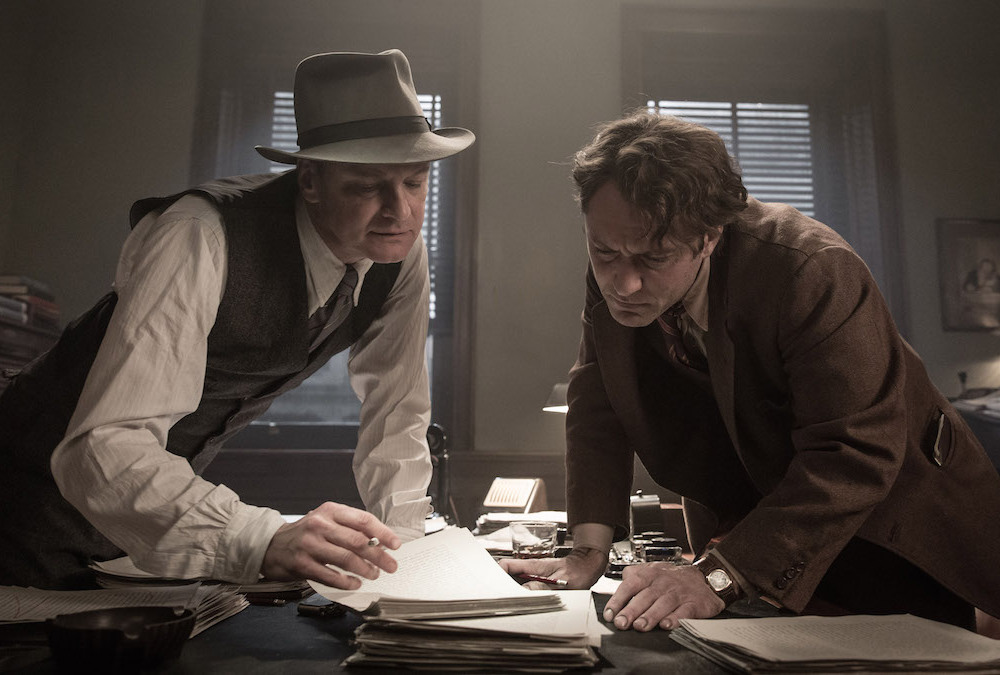
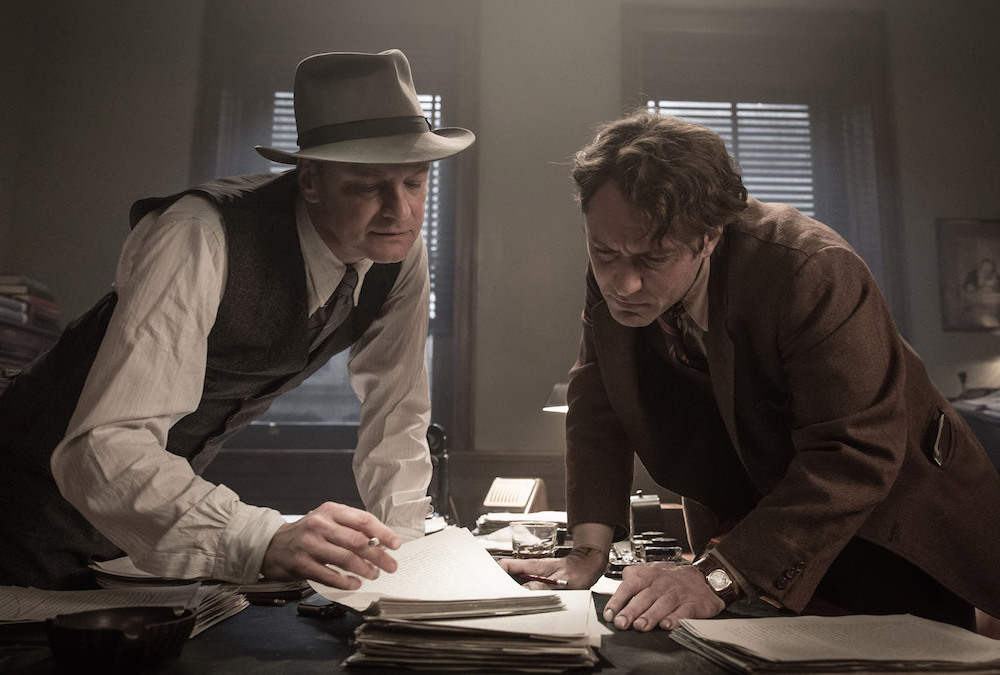
Intriguingly, all of the major male roles are taken by British and Australian actors playing Americans, and unsurprisingly they are all superb, never missing an final r or an elongated vowel — or worse — showing off. Colin Firth plays Perkins, a mild-mannered man who loved his family but was most alive as a appreciator of literature — he knew it when he received it as a manuscript and he knew how to trim away the underbrush to make it better. His great skill was seeing the story the writer wanted to tell and doing whatever was necessary to get it into the hands of readers.

After Hemingway’s spare, masculine prose and Fitzgerald’s elegant sentences and impeccable structure, Perkins receives a submission from Wolfe that is vital, poetic, and a veritable avalanche of words. “Please tell me it’s double-spaced,” he says, looking at the pile of paper. “That’s a long paragraph,” Perkins daughter remarks, reading over his shoulder. “It started four pages ago,” her father replies.

Like Michelangelo seeing the statue inside the block of marble, Wolfe sees a novel that preserves Wolfe’s torrential style but prunes away the excess. He reassures Wolfe that he will only “shape it a bit, cut off the top branches.” Wolfe knows it needs pruning. “You don’t know how I struggled to cut the gorgon down.”

And Wolfe (Jude Law), who tells Perkins that not just his books but most of all literature is about the search for a father, responds to Perkins’ utter engagement in service to his story. The relationship between a writer and a great editor is one of the most intimate and fulfilling, something between a gifted psychoanalyst, an inspiring teacher, and a fairy godparent — or, just a parent. Perkins, the father of five daughters (charmingly portrayed), found a spiritual son in the troubled genius, and, as Berg’s book argues, was a genius himself in the way he was able to cull out of him timeless classics.

This sympathetic portrayal acknowledges the devastation that can be wrought by geniuses. We see Wolfe’s troubled relationship and careless dismissal of his supporter and mentor, the set designer Aline Bernstein (Nicole Kidman), who is anguished not because she left her husband and children for the much-younger Wolfe, but because once she was successful at getting him launched, he did not need her anymore. We the devastation that can be felt by them as well, as Fitzgerald (Guy Pearce) struggles to write and to care for his wife, Zelda, who is near-catatonic. But the hero of the story is the man waiting patiently backstage, ready to supply a discreet loan or a helpful suggestion: Don’t name the book Trimalchio in West Egg — how about The Great Gatsby? The quiet dignity and integrity of Firth’s performance is a tribute to all whose art is a life of service.

Parents should know that this film includes drinking and drunkenness, smoking, abusive behavior, some sexual references, mental illness, and a sad death.

Family discussion: What did Perkins see in Wolfe that the other publishers did not? Do you agree with Wolfe’s statement that literature is about the search for fathers? How was that reflected in his relationship with Perkins?

If you like this, try: the writing of Wolfe, Fitzgerald, and Hemingway and the biography of Maxwell Perkins by A. Scott Berg. You can also read the unedited manuscript originally submitted to Perkins to see if you think he was right.
Related Tags:


Based on a book Based on a true story Biography Drama
Me Before You

Me Before You

Posted on June 2, 2016 at 5:21 pm

Copyright 2016 New Line Cinema
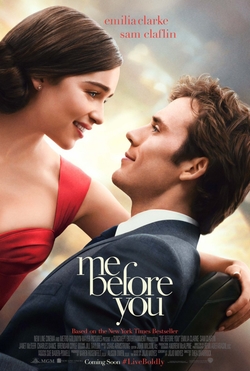
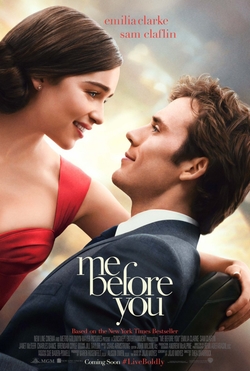
It’s all about the eyebrows. Emilia Clarke (“Game of Thrones”) has gamine-like “natural” eyebrows ideal for expressing wonder, hurt feelings, and enthusiasm, and Sam Claflin (“Hunger Games”) has circumflex-like eyebrows ideal for expressing skepticism, irony, and stoicism. All four eyebrows get an extensive workout in “Me Before You,” based on the international best-seller by JoJo Moyes about Louisa Clark (Clarke), a high-spirited, warm-hearted pixie of a girl, just laid off from her job behind the counter at a bakery, and Will Traynor (Claflin), a once-energetic, once-successful finance type from a wealthy family who is now paralyzed below the shoulders following an accident. Lou is hired by Will’s mother (the redoubtable Janet McTeer) as a “companion” for Will, a position that only exists in novels about warm-hearted young women sent to castles with names like Thornhill that have eligible but tortured men waiting to have their hearts warmed. Will has an Aussie aide who handles the icky physical stuff (Stephen Peacocke), so Lou is there to bring cheer to Will, who has no intention of being cheered. And did I mention he lives in a literal castle?

Lou’s family depends on her for money, because her father has been laid off (due, as we will find, to the financial engineering of Will’s one-time protege). And so she accepts the job with no real understanding of caring for a severely disabled person and stays in it even when he refuses to speak to her or to accept her many offers of a cup of tea. Ultimately, through a combination of ennui, frustration, and the impossibility of resisting the charm of Lou’s kindergarten teacher meets Lisa Frank and Hello Kitty-style attire, Will begins to thaw a little. The immense pressure of what he has lost inspires him to want more for her than she wants for herself, and he feels impelled to show her that, even with a castle in its midst, her little town cannot be enough for all she should want from life. Did I mention that his name is Traynor?

This is not a movie that leaves anything to the imagination. Just in case you were not sure of that, Lou’s boyfriend Patrick (one-time Neville Longbottom Matthew Lewis) is Will’s polar opposite, a fitness instructor and “motivational coach” who thinks a few more reps can solve any problem. And just in case that isn’t enough, there’s a brief encounter with the divine Joanna Lumley to spell it all out for Louisa and for us as well.

Okay, so no surprises here, especially if you’ve read the book. Bring a handkerchief, maybe two. But Clarke and Claflin have palpable chemistry, and we are no more able to resist Lou than Will is. As she takes him back out into the world, she thinks it is for him, but he knows it is for her, and we find that the real hero of the story is Will’s, well, will.

SPOILER ALERT: Some groups have raised concerns about the film’s portrayal/advocacy of assisted death, adapting the movie’s #liveboldly tagline to urge movies to portray disabled people who are active and engaged.

Parents should know that this film includes non-explicit sexual references and situation, mild language, severe injury and discussion of assisted death.

Family discussion: Should Will have changed his mind? What will Louisa do next?

If you like this, try: “Love Story” and “A Walk to Remember”

Related Tags:


Based on a book Illness, Medicine, and Health Care Romance
Alice Through the Looking Glass

Alice Through the Looking Glass

Posted on May 26, 2016 at 5:50 pm

Copyright 2016 Walt Disney Pictures

“Alice Through the Looking Glass” the movie has almost no relationship to Alice Through the Looking Glass, the book by Lewis Carroll in spirit, character, or storyline. That might possibly be all right if the spirit, character, or storyline were in any way worthwhile, but it is not. Gorgeous production design and some cool stunts do not make up for a story that begins as passable and ends as painful.

Tim Burton, who produced this one, previously gave us an “Alice in Wonderland” with an adult Alice (Mia Wasikowska) replacing the little girl of the story and spending way too much time in the above-ground “real” world as she attends a party, turns down a proposal of marriage from the odious Haimish (Leo Bill), and accepts instead the offer from his father to serve as crew on a merchant ship.

In “Looking Glass,” we first see Alice, now captain of the ship, in an exciting escape from pirates that show us her courage and love of adventure. But when the ship returns to port in London, she finds that Hamish’s father has died, leaving him in charge, and he refuses to let her go back to sea. In his home, she finds a mirror over a fireplace that is a portal back to Wonderland, led by the former caterpillar, now-butterfly (voice of of the much-missed Alan Rickman).

Having already imported the talking flowers, chess pieces, Tweedledum and Tweedledee, and the Jabberwocky from “Through the Looking Glass” into the first film, conflating the first story’s Queen of Hearts (the “Off with the head!” one) with the second story’s Red Queen (the chess one) this movie takes — but makes no use of — the first book’s characters like the Cheshire Cat and the White Rabbit, and then has a completely invented story about time travel.

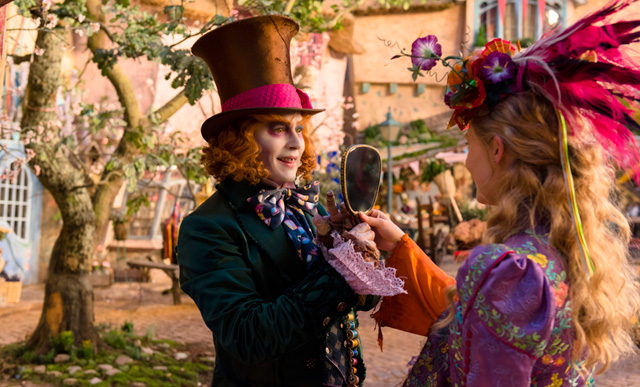
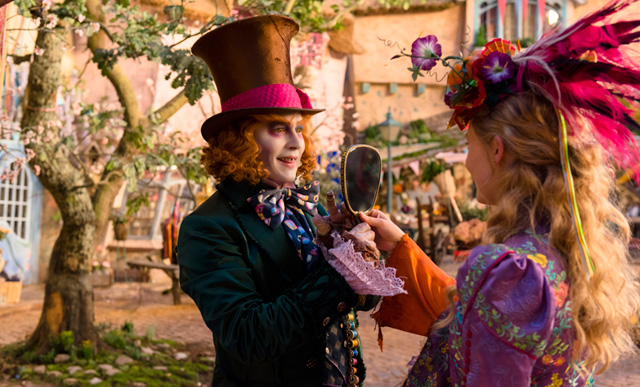
This has many disagreeable aspects, but the worst is when it puts Sasha Baron Cohen as the embodiment of Time into a scene with Johnny Depp as the Mad Hatter and allows them to try to out-grotesque each other in a manner clearly intended to be charming. It is not.

Neither is the plot, which relies heavily on just the kind of treacly heartstrings-plucking backstories that Carroll would never have allowed, asking us to feel sympathy for outrageous behavior and affection for caricatures. The first film’s attempt to create a warm, devoted friendship between Alice and the Mad Hatter was rather ooky. In the sequel, we are asked to believe that she has returned to do whatever it takes to help him because they love each other so much.

To paraphrase the folks behind “Seinfeld,” in the Alice world, there should be no hugging and no apologizing — and no heartfelt professions of affection, especially when they are not in any way justified by the characters’ history with each other.

Alice is needed on the other side of the mirror because the Mad Hatter has found something that has convinced him that his family is still alive, and not killed by the Jabberwock as he had thought. Why is this so important? Is it because he misses them so? Not really. It is because he feels bad about his behavior and needs to see them again so he can be forgiven. The disconnect between the expressions of devotion and the narcissistic reality of behavior is disturbingly cynical. Alice decides the only way she can save his family is to go back in time to the Jabberwock battle, which means she has to retrieve the chronosphere from Time himself, and that leads to more time travel as she solves various not-very-mysterious mysteries and Time chases her to get it back. Not that any of it makes any sense, logically or emotionally.

The production design is imaginative and witty, but it is buried under a gormless, hyperactive mess of a film. The book is endlessly witty and imaginative and delightful with all kinds of wordplay, math puzzles, and chess references from Carroll (aka Charles Dodgson), a math professor.  The movie wastes all of that opportunity.  Look at the title — the movie should be about a reverse world, not a heist/time travel saga that only concludes you can’t change history.  If I had the chronosphere, I’d use it to go back to the moment I sat down to watch this movie so I could go home.

Parents should know that this film has extended fantasy peril with many disturbing images, discussion of loss of parents, brief image of someone dying, and bullying.

Family discussion: If you could go back in time, what time would you pick? Why did the Hatter and the White Queen have a hard time telling their families how they felt?

If you like this, try: the many other movie Alice stories including the Disney animated version and the Kate Beckinsale version of “Through the Looking Glass” and the books by Lewis Carroll

Related Tags:


3D Action/Adventure Based on a book Fantasy Remake Series/Sequel
Weiner

Weiner

Posted on May 26, 2016 at 5:17 pm

B+
Lowest Recommended Age: High School
MPAA Rating: Rated R for language and some sexual material
Profanity: Very strong language
Alcohol/ Drugs: Some alcohol
Violence/ Scariness: Tense confrontations, family dysfunction
Diversity Issues: None
Date Released to Theaters: May 27, 2016

Copyright 2016 Motto Pictures
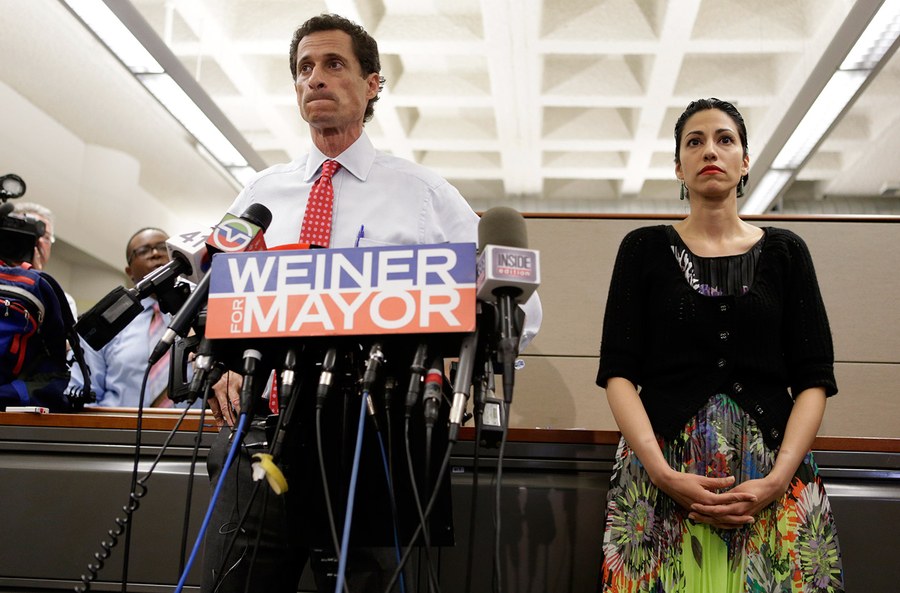
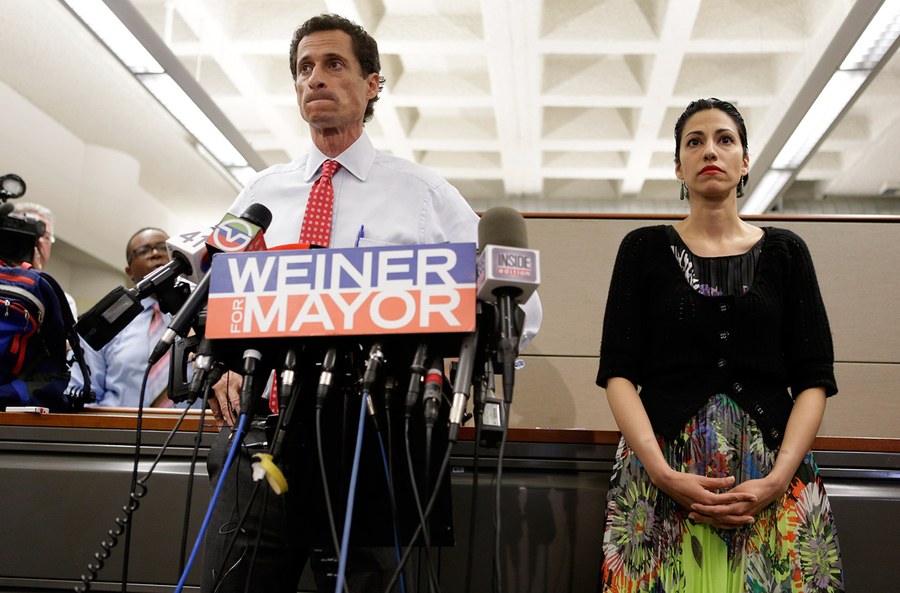
“The name of a man is a numbing blow from which he never recovers.” This quote from Marshall McLuhan opens the sharp and illuminating new documentary about former Congressman and failed New York City mayoral candidate Anthony Weiner, whose political career was derailed by a sexting scandal that unfortunately resonated all-too-perfectly with a last name that is a sometime-slang term for the part of the body he was sharing online. “I did the thing,” Weiner says in what we see is a characteristic mix of candor and denial. And the only thing harder to understand is how he thought he could do “the thing” without bringing down his political career is the willingness of his anguished wife, Hillary Clinton aide Huma Abedin, to literally stand behind him.

And then there is the question of why they would agree to this very film, recording agonizingly painful moments, both public and private. Weiner agreed to allow access to his former staffer, Josh Kriegman and his co-writer/director Elyse Steinberg for what he clearly hoped would be a film about his comeback and instead documented yet another downfall.

Cue the montage of late-night hosts making jokes about scandal #1, when Weiner accidentally sent out what he meant to be a private tweet photo of his bulging underpants to the whole world, followed by archival footage of him insisting he would not resign from Congress, followed by his resignation.

And then, what he saw as his comeback. “To clean up the mess I had made by running for mayor was the straightest line to do it.” He does not want to “live in this defensive crouch.” And yet, he acknowledges, “I lied to them, I have a funny name, and they don’t do nuance.”

While some people resist the prospect of “a punchline as a mayor,” he was ahead in the polls, with a group of bright, dedicated, young staffers. We see Weiner at his best, reaching out to voters and contributors, marching in a parade, passionate about the issues. And then comes scandal #2, the one where he texted nude photos to a young escort known as “Sidney Leathers,” using the name “Carlos Danger.” The second-saddest image in the film is the stricken face of Weiner’s campaign communications director as she must ask him whether he plans to deny the latest round of allegations, struggling with the deep ickiness of the situation on the personal and professional levels.

This movie does not attempt to explain why Weiner would undertake such behavior when he had to be aware of the professional and reputational risks, or why his wife, who clearly hates any kind of public exposure, stays with him, even though, as she says at one point, it is a nightmare. But the superbly edited film, with extraordinary intimate access based on deep trust, has a lot of insights about celebrity culture, media, and what we expect from politicians. Inevitably, the story of the frog and the scorpion comes up. Why do we make decisions we know will doom us? Is it our nature? And who is the frog and who is the scorpion in American politics, media, and culture? This movie suggests that the American electorate may be both.

Parents should know that this film includes strong language, material concerning sex scandals, some brief graphic images, and crude references.

Family discussion: Would you vote for Anthony Weiner? How much should a candidate’s private life matter in considering his or her suitability for office?

If you like this, try: the political documentaries “A Perfect Candidate” and “The War Room”

Related Tags:


Documentary Movies -- format Politics
X-Men: Apocalypse

X-Men: Apocalypse

Posted on May 24, 2016 at 5:18 pm

B
Lowest Recommended Age: Middle School
MPAA Rating: Rated PG-13 for sequences of violence, action and destruction, brief strong language and some suggestive images
Profanity: Brief strong language
Alcohol/ Drugs: None
Violence/ Scariness: Extended comic book/action peril and violence, characters injured and killed
Diversity Issues: A metaphorical theme of the movie
Date Released to Theaters: May 27, 2016
Date Released to DVD: October 3, 2016
Amazon.com ASIN: B01G9AXWH2
Copyright 20th Century Fox 2016

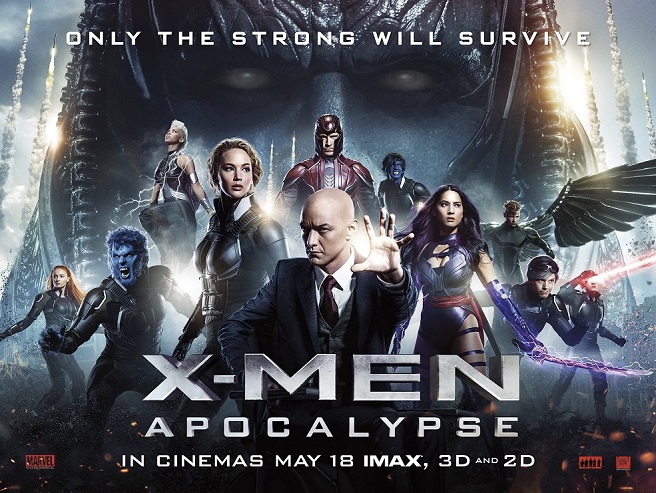
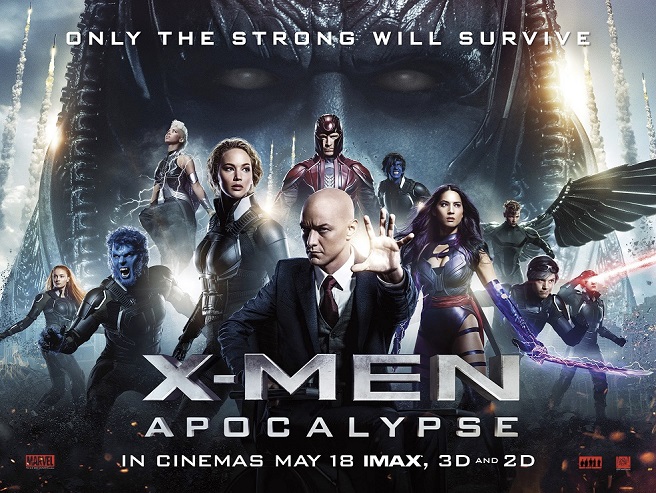
We love superheroes, but most of the time what makes a superhero movie work is the supervillain. Just as the Avengers on the other side of the Marvel Universe move into X-Men territory by having the supes fight each other, with a villain in “Civil War” who is a mere human, with the most human of motives and goals rather than Loki’s “let’s blow up the universe and roast marshmallows on the flames” sort of threat, the X-Men, whose primary plotlines rest on the shifting loyalties of its mutant members, switches direction toward a more Loki-esque bad guy.

That would be the first mutant of all, going all the way back to ancient Egypt, where he was a god. He is resurrected, he is nearly omnipotent, and he is played by one of the most exciting actors in movies, Oscar Isaac. But there are three big problems with Apocalypse, and that means there are three big problems with the movie.

First, we never really understand that “nearly” part about his powers, and therefore we cannot judge the threat he poses in any given confrontation. Second, Isaac is a superb actor with deeply expressive eyes and voice. Yet he is put into a mask that conceals his eyes and given a double-tracked distortion of his voice. The big, hulking outfit also impairs the precise, distinctive physicality he has brought to roles as different as “Star Wars” ace Po Dameron, the title folk musician of “Inside Llewyn Davis,” and billionaire Nathan Bateman (“Ex Machina”). The power of his presence as a performer is all but muted just when we need a character to be terrifying.

Plus, we’ve seen ancient Egyptian super villains before. After the many versions of “The Mummy,” we need something more than he’s from the time of the pyramids plus chanting. But there is a very cool opening sequence that brings us through history to 1983, the pre-digital era when overhead projectors in classrooms represented cutting-edge technology. And Magneto seems to have found peace, in a small town, with a factory job, and a loving wife and daughter.

Of course, that can’t last. And soon he has experienced yet another devastating loss, and returns to his bad, furious, destructive self — until someone who is even more furious and destructive comes along.

When I say that this episode is a “Muppet Babies” take on the X-Men, I do not necessarily mean that in a bad way. Origin stories are intriguing, and the X-Men have always had an adolescent quality, with the onset of their mutant powers coming with puberty and acting as a heightened metaphor to examine the sense of uncertainty, anxiety, and isolation that comes with the physical and emotional changes that separate teenagers from their childhood. It is intriguing to see Scott (Tye Sheridan) rubbing his red eyes as he becomes Cyclops. But Sophie Turner does not have the screen presence of Famke Janssen as the young Jean Grey, in part because her telepathic gift is not as cinematically dynamic.

Quicksilver (Evan Peters) once again provides the high point, not just in a darker showpiece callback to the sensational Pentagon kitchen scene in the last film but in the film’s brief but most emotionally authentic scene, involving his relationship to Magneto. In a movie about mutants with superpowers, the best moment is human.

Parents should know that this film includes extended comic book-style action violence, with characters injured and killed and some disturbing images, skimpy costumes, and some strong language.

Family discussion: What is the biggest challenge in getting the X-Men to work together? Which powers would you like to have?

If you like this try: the other X-Men movies, especially “Days of Future Past”

Related Tags:


3D Action/Adventure Comic book/Comic Strip/Graphic Novel DVD/Blu-Ray Pick of the Week Series/Sequel Superhero
THE MOVIE MOM® is a registered trademark of Nell Minow. Use of the mark without express consent from Nell Minow constitutes trademark infringement and unfair competition in violation of federal and state laws. All material © Nell Minow 1995-2026, all rights reserved, and no use or republication is permitted without explicit permission. This site hosts Nell Minow’s Movie Mom® archive, with material that originally appeared on Yahoo! Movies, Beliefnet, and other sources. Much of her new material can be found at Rogerebert.com, Huffington Post, and WheretoWatch. Her books include The Movie Mom’s Guide to Family Movies and 101 Must-See Movie Moments, and she can be heard each week on radio stations across the country.

Website Designed by Max LaZebnik