The Hobbit: The Desolation Of Smaug

Posted on December 12, 2013 at 6:00 pm

B+
Lowest Recommended Age: Middle School
MPAA Rating: Rated PG-13 For extended sequences of intense fantasy action violence, and frightening images
Profanity: None
Alcohol/ Drugs: None
Violence/ Scariness: Extensive and intense fantasy-style violence with characters in peril, monsters, weapons, and fights, characters injured and killed
Diversity Issues: Diverse characters, some
Date Released to Theaters: December 13, 2013
Date Released to DVD: April 7, 2014
Amazon.com ASIN: B00BEJL75I

The_Hobbit_The_Desolation_Of_Smaug_36556Everybody ups his game in this second of the three-part Peter Jackson version of J.R.R. Tolkein’s The Hobbit; or, There and Back Again.  The first one courageously tried out the new hyper-clear technology with twice as many frames per second that felt disorienting, chilly, and a little thin.  More seriously, it got bogged down in the storytelling.  A book about a journey became a movie that spends 40 minutes at home before anyone goes anywhere (with two different songs).  This second chapter starts right in the middle of the action and never stops.

Here’s a summary of the first film to get you up to date in case you skipped it or don’t remember: Bilbo Baggins (Martin Freeman), the title character, is accompanying a brave group of dwarves on a quest that will take them to the mountain lair of an angry dragon named Smaug who sleeps on an endless pile of stolen gold and jewels.  In part one, they made it part of the way there.  Part two begins in the midst of the action.  They are still far from their destination but every step is treacherous and every stage in the journey brings more trouble.  Middle Earth is deeply troubled by its divisions.  Dwarves and Elves do not trust one another.

Martin Freeman returns as Bilbo, whose epic travels inspire an inner journey toward meaning and purpose.  We see his struggle when he cannot bring himself to tell Gandalf (Ian McKellen) the truth about what he found.  He wants to tell the wizard about the magical golden ring he discovered.  But when the moment comes, and he can only say that what he found in the cave is his courage.  That is an intriguing statement, partly true, partly self-evidently false as he does not have the courage to tell Gandalf about the ring. But as we know from the Ring trilogy, part of the power of that plain gold band is the way it works on those who — at least temporarily — possess it.  Perhaps it is the ring that tells Bilbo to keep the secret.

But Bilbo, reluctant to join the dwarves in part one, is fully committed now, so in that sense he has found his courage, and finding it, now sees himself differently.  And it is that inner journey that holds the story together amidst the arrows and giant spiders and swashbuckling and guy with bird poop on his head and portentous statements like, “The fortunes of the world will rise and fall but here in this kingdom we will endure” (when we know they will) and “This forest feels as though a dread lies upon it” (when we know it does), and “It’s not our fight” (when we know it is).

Purists may object to the insertion of a brand-new character, but Evangeline Lilly as Tauriel, a warrior elf, is such a welcome addition that even Tolkein should be glad to add her to the cast.  And then, finally, there is Smaug, a scary monster who can see where humans, hobbits, dwarves, and elves cannot.  Benedict Cumberbatch, in his fifth major film appearance this year, provides the voice of ultimate predatory evil, and a cliffhanger that leaves us eager for the final chapter.

The intricacy of the detail everywhere you look is more than gorgeous.  It lends a timelessness to the story.  It tells us that there is a history here, that the people who created these structures intended them to be permanent and beautiful.  The fight scenes, staged as well or better than any other this year, are more than graceful violence.  They, too, communicate a seriousness of purpose and meaning that these characters bring to their lives — and inspire in ours.

Parents should know that like the other “Lord of the Rings” films, this one includes intense and sometimes graphic fantasy violence with monsters (dragon, giant spiders), weapons, fights, and constant peril, and characters are injured and killed.

Family discussion:  What title would you pick for yourself?  Why does Bilbo agree to get the Arkenstone?  Why doesn’t he tell the truth about the ring?

If you like this, try: the book by J.R.R. Tolkien and the “Lord of the Rings” Trilogy

Related Tags:


3D Action/Adventure Based on a book DVD/Blu-Ray Pick of the Week Epic/Historical Fantasy Series/Sequel

Out of the Furnace

Posted on December 5, 2013 at 6:00 pm

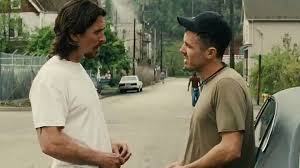
out of the furnace“Out of the Furnace” gets no credit for its good intentions because it collapses under the combined weight of pretentiousness and condescension. This is Hollywood’s idea of a searing drama about life in recession-era heartland, as phony as a painted backdrop.  It is clearly intended to be a sympathetic portrait of two brothers betrayed by America. Russell (Christian Bale) lost his job when the steel mill closed down. His brother Rodney (Casey Affleck) went into the military and came home shattered by what he saw in four tours in Iraq. With no alternatives, their problems get worse. Rodney makes money in bare-knuckle fights, but keeps getting into trouble because he cannot bring himself to take a dive when told to do so by the fight promoter, Petty (Willem Dafoe). As their situations become more desperate, Rodney insists that Petty introduce him to meth dealer DeGroat (Woody Harrelson), so that he can make more money.

Co-writer/director Scott Cooper (“Crazy Heart”) tries to convey a sense of relentless pressure, crumbling infrastructure, and ever-constricting choices that force Russell and Rodney into making decisions with catastrophic consequences. But the film could easily be used to make the opposite points. Over and over, the brothers are told not to do something — like get involved with a murderous meth dealer — and they do it anyway. Russell is losing his job because the economy is bad. But he loses the girl he loves (Zoe Saldana) because he goes to prison. He goes to prison because he goes to a bar, gets drunk, drives, and causes an accident that kills two people. He has a lot of strong feelings and sense of loyalty for his brother and he is very upset about the death of his parents and his girlfriend leaving him for another man. When it comes to the innocent people he killed, he does not seem to have a sense of responsibility. We are supposed to be on his side because he is a decent guy who loves his brother, cares for his dying father, and misses his girlfriend, who married the decent local cop while Russell was in prison. But it is hard to be sympathetic when he — and the film — make no distinction between the limits imposed on him and the bad choices he made. Indeed, the movie ultimately becomes condescending, even contemptuous, in ignoring one of the core principles of narrative, which is respecting just that distinction. We are supposed to be on Rodney’s side because something in him, some core integrity, will not allow him to lose a fight he knows he can win. The metaphor is off-base and heavy-handed.

These are all great actors, and they all work hard to give good performances, but that in itself finally seems distancing. If they understood the essential humanity of the people dealing with these circumstances, the veterans struggling with PTSD, the factory workers whose jobs are gone, they would not distance themselves with such obvious artifice. Harrelson’s over-the-top sociopath seems to be from another movie entirely. Only Dafoe and Forest Whitaker as the sympathetic policeman create characters with any sense of authenticity, with Zoe Saldana relegated to a sad girlfriend role, doubly dreary because it is so tiresomely predictable.  The real Russells and Rodneys deserve better, and so does the audience.

Parents should know that this film has very strong and disturbing violence with graphic images, fatal drunk driving accident, murder, brutal fight scenes, guns, description of wartime violence, constant very strong language, substance abuse, and non-explicit sexual situations.

Family discussion: What does the title refer to? Why do the characters constantly ignore advice that will keep them out of trouble? What does this movie want to say about our economy and political system?

If you like this, try: “Killing Them Softly” and “October Country”

Related Tags:


Crime Drama Tragedy

Frozen

Posted on November 26, 2013 at 5:00 pm

A-
Lowest Recommended Age: Kindergarten - 3rd Grade
MPAA Rating: Rated PG for some action and mild rude humor
Profanity: Brief schoolyard language
Alcohol/ Drugs: None
Violence/ Scariness: Scary wolves, snow monster, peril, sad death of parents
Diversity Issues: Strong female characters
Date Released to Theaters: November 27, 2013
Date Released to DVD: March 17, 2014
Amazon.com ASIN: B00G5G7K7O

frozen poster

Smart, exciting, funny, sweet, tuneful, and gorgeously animated, the Oscar-winning “Frozen” adapts Hans Christian Andersen’s classic fairy tale into a story of two sisters kept apart by a scary secret.  Scary wolves, an enormous snow monster, a perilous journey, a warm (yes)-hearted snowman, a loyal reindeer, a sleigh ride, a sensational ice castle, and a little romance keep things moving briskly, but it is the relationship of the sisters that makes this movie something special.  There’s a surprisingly strong emotional connection.

The king and queen of Arendelle love their two daughters, Elsa and Anna, and the girls are best friends.  Anna loves to ask her big sister to “do the magic,” because Ilsa was born with the special power to create snow and ice.  But an accident almost becomes a tragedy, and the trolls who heal Anna remove her memory of her sister’s gift.

Their parents lock the gates around the castle and keep the girls apart.  They tell Elsa to “conceal it, don’t feel it.”  They want to protect her from those who might be afraid of her ability and protect those she might hurt as she grows up and her gift becomes more powerful.  She wears gloves all the time and stays in her room.  Anna wanders the castle alone, singing to the paintings, with no one to talk to.  Although she no longer remembers the details of their former closeness and the time they spent together, she is devastated that her sister will not see her.

Their parents are lost at sea, and three years later Elsa (Broadway star Idina Menzel) is about to be crowned queen.  Anna (Kristen Bell of “Veronica Mars”) is overjoyed to be seeing her sister and excited about meeting the people who will come through the gates that are opened at last.  She is charmingly awkward, having had no opportunity to learn any social skills, but that does not seem to matter to the very handsome Prince Hans (Santino Fontana), who proposes just a few hours after they meet.  Anna is overjoyed.

But Elsa forbids the marriage and when Anna objects, her frustration and  fury explodes, turning the balmy summer into a frozen winter.  Elsa runs away, locking herself into a dazzling palace made of ice in the mountains.  Anna follows, sure that she can make things right if she can just talk to Elsa about what is going on.  And that is where the adventure begins.  She meets a rough-hewn ice harvester named Kristoff (Jonathan Groff of “Glee”) and his reindeer Sven and a sunny-spirited, warm-hearted, and familiar-looking snowman named Olaf (Josh Gad of “Thank You for Sharing”).  And when they get to the ice palace, things do not turn out the way she expects.

Human animated characters tend to be bland-looking, but the voice talents have enormous spirit that gives them a lot of life.  Broadway stars Menzel, Groff (“Spring Awakening”), Bell (“The Adventures of Tom Sawyer”), and Gad (“The Book of Mormon”) make the most of a tuneful score featuring the Oscar-winning “Let It Go.”  The songs are beautifully acted as well as sung.  Highlights include an adorable ode to summer from Olaf, who is not quite clear on the physical properties of snow as temperatures rise, Kristoff’s “duetted” ode to reindeer with Sven (he sings both parts), and Menzel’s powerful “Let it Go.”  Bell’s sweet voice is lovely as she sings to the paintings in the castle about her longing for people and then exalts in her love for Prince Hans.  There is also a charming ensemble with trolls singing about how we’re all in our own way “fixer-uppers.”

The animation is everything we hope for from Disney, one “how did they do that?” after another, with ice and snow so real and so touchable you may find yourself zipping up your parka in the theater.   But the effects and action are all in service of the story, with a contemporary twist that is as welcome as summer’s return.

NOTE: Be sure to get to the theater in time as one of the highlights is the pre-feature short, starring a vintage Mickey Mouse voiced by Walt Disney himself.  It is a masterpiece of wit and technology that must be seen a couple of times to fully appreciate.  And be sure to stay through the end of the credits for an extra scene re-visiting one of the film’s most powerful characters.

Parents should know that this film include characters in peril, some injuries and action-style scares, monster, the sad deaths of a mother and father, some potty humor, and kissing.

Family discussion:  What’s a fixer-upper?  Why did Elsa’s parents tell her not to feel?  Why was she afraid of her power?  Why didn’t her parents want anyone to know the truth, and how did that make Elsa and Anna feel?  Who do you think is a love expert?

If you like this, try: “Tangled,” “Brave,” and “The Princess and the Frog”

Related Tags:


3D Action/Adventure Animation Based on a book DVD/Blu-Ray Pick of the Week Family Issues Fantasy For the Whole Family Movies -- format Scene After the Credits

Philomena

Posted on November 24, 2013 at 8:40 pm

B+
Lowest Recommended Age: High School
MPAA Rating: Rated PG-13 on appeal for some strong language, thematic elements and sexual references
Profanity: Very strong, frank, and explicit language for a PG-13
Alcohol/ Drugs: Drinking
Violence/ Scariness: Sad deaths and abuse
Diversity Issues: Diverse characters, issue of anti-gay bigotry is discussed
Date Released to Theaters: November 22, 2013
Date Released to DVD: April 14, 2014
Amazon.com ASIN: B00GSBMNOQ

Philomena-dench-movieDame Judi Dench has played many strong-minded, determined characters, from Queens (Victoria and Elizabeth I) to the even more imperious head of the MI6 who can take on James Bond with an air of crisp authority.  As the title character in “Philomena,” she shows us the radiance and inner core of strength in a woman we might otherwise find easy to overlook.

Martin Sixsmith (co-screenwriter Steve Coogan) underestimates her at first, too.  Sixsmith is a journalist-turned politician smarting from a public humiliation after he was fired for something he did not do.  He gets little sympathy from those around him and it seems clear that being aggrieved has only fed his sense of superiority, isolation, and entitlement.  He mutters something about writing a book on Russian history, though he realizes no one is very interested in reading it.  When he meets a young Irish woman who offers him her mother’s story of a half-century search for the son she was forced to give up for adoption, his first reaction is a haughty, “I don’t do human interest stories.”  The truth is, he is not really interested in humans, in part because they have not done a very good job of being interested in him.

Sixsmith did eventually write some books about Russia.  But first he decided to give human interest a try.  The result was Philomena: A Mother, Her Son, and a Fifty-Year Search.

When she was a teenager, Philomena (Dench) became pregnant and her parents sent her to the now-notorious Magdalene Sisters workhouse.  The girls were forced to work for years to pay (financially and spiritually) for their sins.  The abused and underage girls also signed away all of their rights to their babies, including access to information about where they were placed.  Philomena (Sophie Kennedy Clark as a young woman) was working in the laundry when her son was taken from her and adopted by an American family.  For half a century, as she became a nurse, married, and had more children, she missed him and worried about him.  Sixsmith found an editor to pay him to write the story, covering expenses for a trip to America to see if they could track him down.  She hopes the story will have some lurid details.  “Evil is good — story-wise, I mean….It’s got to be really happy or really sad.”

Coogan knows he is at his best playing slightly high-strung, slightly self-involved guys who are too smart for the room and usually end up outsmarting themselves (see “The Trip”).   It is especially satisfying to watch his character go from irritation to respect and then affection.  There’s a reason the movie is named for her.  Philomena is a surprise.  If she has awful taste in books and movies, it is because she has the gift of being able to be pleased.  When it comes to the big things, she is refreshingly clear-eyed and open-minded.  And  she understands what it takes to not let anyone make you a victim.

More improbable than any fictional story would dare to be, the journey taken by Philomena and Sixsmith is bittersweet and ultimately transcendent.  Performances by Dench and Coogan of great sensitivity illuminate this story of a quiet heroine and the man who was lucky enough to learn from her.

Parents should know that this movie was initially rated R and then given a PG-13 on appeal.  It concerns young teenagers put in a home for out-of-wedlock pregnancies and forced to give up their babies for adoption and there is frank discussion of sex and a childbirth scene, the abuse of the young women by the nuns who ran the home, and the life of a character as a closeted gay man.  Characters use very strong and explicit language and there is some drinking.

Family discussion: Why did Martin and Philomena feel differently about forgiveness?  Did she find what she was looking for?

If you like this, try: “The Magdalene Sisters” and “The Trip”

Related Tags:


Based on a book Based on a true story Drama DVD/Blu-Ray Pick of the Week Family Issues

Delivery Man

Posted on November 21, 2013 at 6:00 pm

B
Lowest Recommended Age: Mature High Schooler
MPAA Rating: Rated PG-13 for thematic elements, sexual content, some drug material, brief violence and language
Profanity: Very strong and crude language
Alcohol/ Drugs: Character grows marijuana, alcohol, hard drug abuse treated seriously but irresponsibly
Violence/ Scariness: Fight, drug abuse
Diversity Issues: Diverse characters
Date Released to Theaters: November 22, 2013
Amazon.com ASIN: B00GEKO51U

delivery-man-vaughnThe undeniable sweetness of “Delivery Man” makes its inherent silliness just about forgivable.  Or, it just might be the sense of relief that Vince Vaughn is finally making a movie that is just silly instead of crass and stupid like “Couples Retreat,” “Four Christmases,” “Fred Claus,” and pretty much most of what he’s done since “Wedding Crashers.”

Vaughn plays his usual likeable shlub, this time Dave, the son of a butcher.  His brothers work in the store with their father, but all Dave can do is drive the delivery truck, and he does not even do that very well.  “It’s like every day you find some new way to push the limits of incompetence.”

He also has the usual long-suffering girlfriend, a cop named Emma (Cobie Smulders), who, like all girlfriends in these arrested development movies, has only one responsibility in the story, which is to look beautiful when she tells him that it’s time for him to grow up.  It turns out that she is pregnant, and she does not believe he has it in him to be responsible enough to be a dad.

In the midst of all this, he discovers that he already is a dad, at least in the strictly biological  sense.  Some time ago, he was a “very, very frequent donor” at a sperm bank, which carelessly made it available to many more women than its guidelines allowed.  A lawyer shows up in Dave’s apartment to tell him that he is the biological father of 533 children, and 142 of them have sued the facility to find out the identity of the mysterious “Starbuck” whose genetic heritage they carry.  Starbuck is not related to the coffee shops or the Moby Dick character who inspired their name.  It is the name of the French-Canadian film adapted by its writer-director for this remake, and the name of a legendarily productive stud bull.

Dave is known only as “Starbuck” to the progeny, and his anonymity is guaranteed by the terms of his donor agreement.  His best friend is Brett (Chris Pratt, a highlight of the movie and quickly becoming one of our most indispensible comic actors), a lawyer who is beleaguered by his four young children.  “My children cannot pick up the frequency of my voice,” he explains, exhausted.  Brett gives Dave the folder of information on the 142 plaintiffs and tells him not to open it.  What was he thinking?

Dave reads just one file, and is thrilled with his connection to a very accomplished young man.  So he takes out another one, and then another, and finds that many of them need help.  And he finds that helping them gives him a great sense of satisfaction and purpose.  Most don’t need much help.  Dave covers a would-be actor’s day job (badly) so he can go on an audition.  He warns off catcallers harassing a young woman in a short skirt.  He helps an inebriated kid get home.  These are in the trailer and are fairly cute.

Some have serious problems.  One is a drug addict.  One is severely disabled and cannot communicate.  These are handled superficially at best and downright irresponsibly at worst.

It’s all just a matter of time before everyone finds out, generally in the most awkward of ways.  Cue the fake Jay Leno monologue.  But babies are heart-tugging, even twenty years later, and the longing for family from both the children and their bio-dad is so touching that even the most preposterous resolution somehow seems just fine.

Parents should know that the film is about a man who fathered more than 500 children through a series of donations to a fertility clinic and it includes explicit references and crude jokes about producing samples and fertility treatments.  Characters use strong and crude language, drink, grow marijuana and abuse harder drugs (the movie implies that addicts can quit easily without any help), and there is some brief violence.

Family discussion: How should Dave prove that he “deserves” to be the baby’s father?  What did the children want from the lawsuit?  How did he help them?

If you like this, try: “Baby Mama”

Related Tags:


Comedy Courtroom Family Issues Movies -- format
THE MOVIE MOM® is a registered trademark of Nell Minow. Use of the mark without express consent from Nell Minow constitutes trademark infringement and unfair competition in violation of federal and state laws. All material © Nell Minow 1995-2026, all rights reserved, and no use or republication is permitted without explicit permission. This site hosts Nell Minow’s Movie Mom® archive, with material that originally appeared on Yahoo! Movies, Beliefnet, and other sources. Much of her new material can be found at Rogerebert.com, Huffington Post, and WheretoWatch. Her books include The Movie Mom’s Guide to Family Movies and 101 Must-See Movie Moments, and she can be heard each week on radio stations across the country.

Website Designed by Max LaZebnik