Eye in the Sky

Eye in the Sky

Posted on March 10, 2016 at 5:43 pm

B+
Lowest Recommended Age: High School
MPAA Rating: Rated R for some violent images and language
Profanity: Very strong language
Alcohol/ Drugs: None
Violence/ Scariness: Military violence including terrorism, bombs, explosions, characters injured and killed, some disturbing images
Diversity Issues: Diverse characters
Date Released to Theaters: March 11, 2016
Date Released to DVD: June 27, 2016
Amazon.com ASIN: B01CUMHBJS
Copyright Bleeker Street 2016

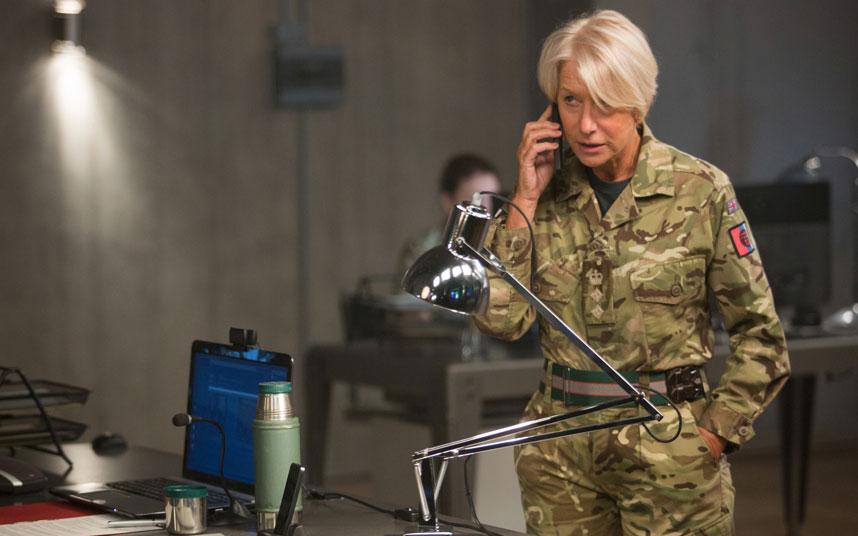
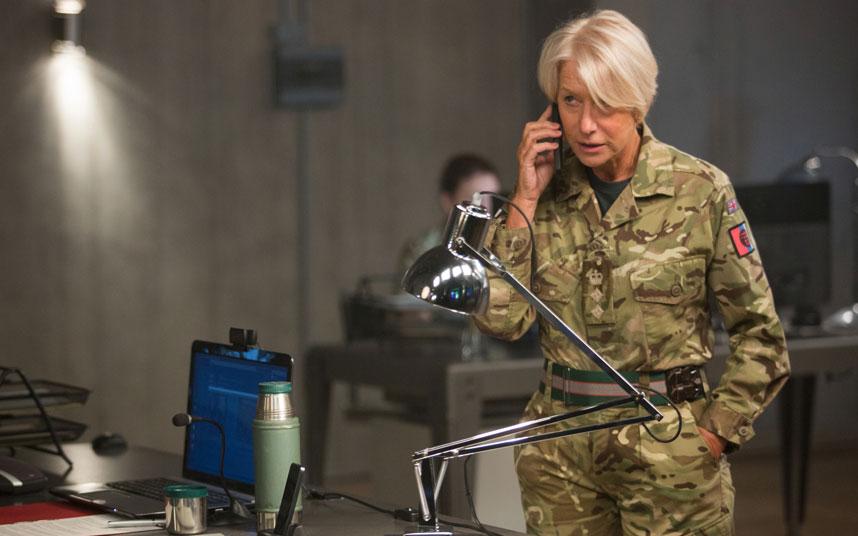
“Eye in the Sky” is a rare thriller that grips the mind and heart equally. Drones take our military closer than we have ever been before to the people and the activities of the enemy as they remove us further than we have ever been before from the visceral reality of the actions we take based on what we have learned. This film takes us inside the tactical, political, legal, and moral choices faced by the international governments and military in combating terrorism. Director Gavin Hood and screenwriter Guy Hibbert show us the stakes rising and the options shrinking with each passing second, so we in the audience must constantly ask ourselves not just what the characters should do but what we would do.

Colonel Katherine Powell of the British Army (Helen Mirren) is awakened by her phone. Intelligence received via drone indicates that three from the top ten international most wanted list of terrorists may possibly be together at a home in Kenya. The British and the US are especially interested in one couple they have been trying to find for six years. The wife is British and the husband is American. Both countries want them captured and tried at home.

If her team can positively identify the couple and the man they are meeting with, the mission will turn from reconnaissance to capture. But then the drone camera reveals that the danger is far more dire and imminent than they thought. The house is not just a meeting place. They are arming suicide bombers, taping their last statements, and presumably getting ready to send them into densely populated areas for maximum carnage. The people working on this are all over the world, with a military unit in Hawaii that analyzes images from a drone in Kenya, flown by a pilot in Las Vegas, commanded by military personnel in England, under the direction of elected officials who are both away from their countries on business.

The military has the capacity to prevent the suicide bombers from inflicting damage on civilians by blowing them up before they leave. But they are in the middle of a residential area. Is this warfare or an execution? Does it matter that two of the targets are British and US citizens? Does it matter that a little girl is selling bread just outside the house?

The international scope of the mission and the bureaucratic/political decision-making is fascinating. Information inside the house comes from a tiny mini-drone that looks like an insect, flown into the house by an operative nearby who is pretending to be both selling buckets in the open market and playing a video game on a phone. The operative is played by “Captain Phillips” star Barkhad Abdi, a very different and equally impressive performance of great intelligence and thoughtfulness. Information from the outside, including the biometric identification of the suspected terrorists, comes from drones monitored by Americans half a world away. Sitting at screens are Aaron Paul and Phoebe Fox as US military who are diligent and dedicated but not really prepared to blow up the people they’ve been spying on, especially that little girl.

There is a literal ticking time bomb in that house. We can see it. What should we do about it? Should we risk that child’s life to keep the suicide bombers from taking more lives? For the military, including Colonel Powell and her boss, Lieutenant General Frank Benson (the late Alan Rickman, making us miss him even more sharply), it is a mathematical calculus; not simple, but clear. They know they must consult the lawyers, who remind them of the criteria, almost a formula, they are required to apply. But the bureaucrats get nervous, and bump it up to the politicians. Calls must be made all over the world as the officials are participating in various diplomatic events; at one point it is even suggested that the question be put to the President of the United States.

But the film shows us that these questions have already been asked and answered. There is a calculus that is reassuringly quantitative and comprehensive but disturbingly clinical. As we see the people all over the world watching the people inside the house, trying to figure out how to apply those algorithms expressed in acronyms and percentages, the film forces us along with the characters to try to apply formulas to a world that will always confound them.

Parents should know that this movie features military violence including drones, guns, explosions, terrorism, suicide bombers, with some grisly and disturbing images, and very strong language. An extended part of the film focuses on potential “collateral damage” to civilians, including a child, from military action.

Family discussion: How would you improve the decision that was ultimately made? How would you improve the process for making it? Who should decide?

If you like this, try: the documentary “Drone”
Related Tags:


Drama DVD/Blu-Ray Pick of the Week Politics War
The Young Messiah

The Young Messiah

Posted on March 10, 2016 at 5:17 pm

Copyright 2016 Focus
We have a very clear picture of Jesus’s birth, and it is endlessly re-enacted and depicted each year at Christmas time. But we know almost nothing about His childhood, other than his astonishing the elders with his depth of knowledge.

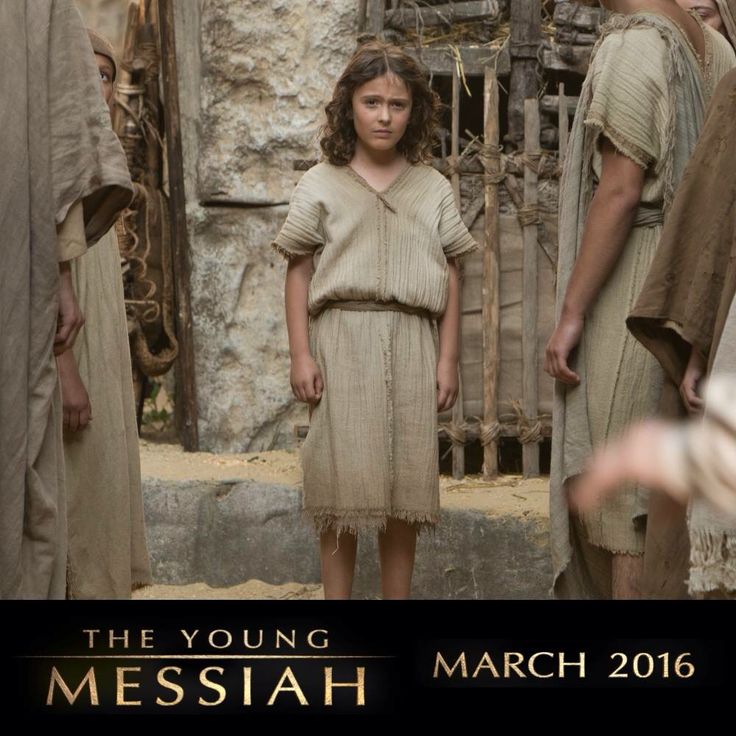
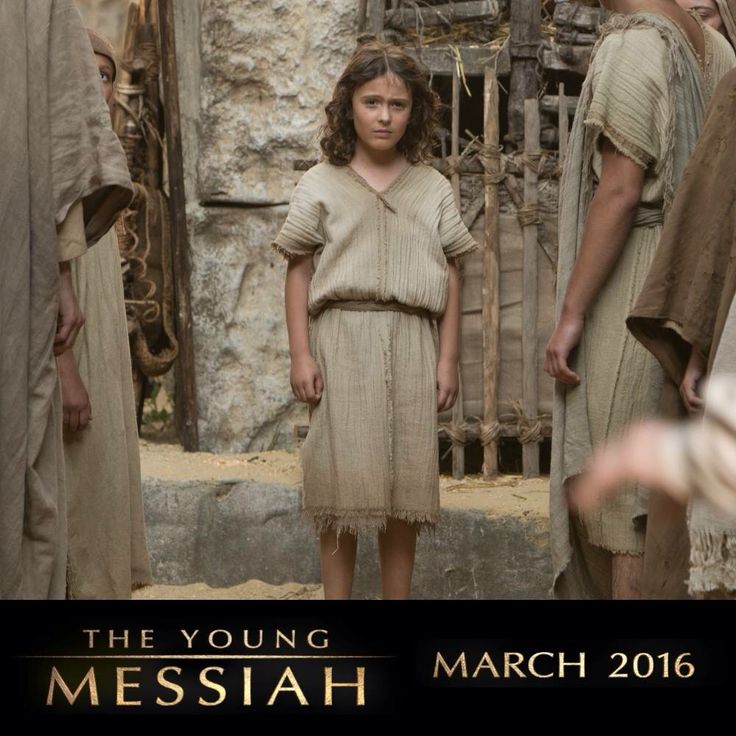
“The Young Messiah,” “inspired by scripture and rooted in history,” shows us His early years. It is a reverential, respectful portrayal of Jesus at age 7, as the Romans were trying to find and kill Him, and as He was just beginning to understand His power and purpose. It is based on the book by Anne Rice.

Jesus is played by sweet-faced Adam Greaves-Neal. We first see Him listening to a young girl who is teaching him to draw a camel. When a bully gives her a hard time, Jesus steps in to defend her and the bully starts attacking Him. A mysterious hooded figure tosses an apple core to trip up the bully, who falls, hits his head on a rock, and dies. No one else could see the man in the hood, and Jesus is blamed for the boy’s death.

The young Messiah insists on visiting the body, and it is there He performs His first miracle, bringing the boy back to life. This is an extraordinary moment because no one, even Jesus himself, knew such a thing was possible or that He was capable of it. And yet Jesus is so young, and his compassion so deep, that it seems completely natural for him. It confirms the greatest hopes but also the greatest fears of Mary and Joseph as it makes him a target for the Romans. And, like all parents, they have to find a way to protect their child and to answer His questions, though both are difficult and both at the same time seem impossible. “How do we explain God to His own son?” Even more difficult, how can they explain to Him a world in which the road is lined with crucified Jews and babies were murdered because the Romans were so afraid of Him? And how should they guide Him in using a power no one really understands? Mary can only say, “Keep your power inside you until your Father in Heaven shows you the time to use it.”

As Jesus and his family travel from Egypt to Jerusalem, Herod sends a soldier named Severus (Sean Bean) to find the boy and kill Him. Severus is not worried about reports that the boy can perform miracles. “There’s only one miracle,” he says, brandishing his sword. “Roman steel.”

Greaves-Neal is not really an actor, but his performance has an appealing dignity and tenderness. “Am I dangerous?” he asks, not “Am I in danger?”

It is especially good to see the young Jesus portrayed as compassionate but also intensely curious about the world. That thirst for knowledge and understanding is as inspiring to those around Him as His miracles.

Parents should know that this film include Biblical violence including crucifixion, bullying, and characters are injured and killed.

Family discussion: What do we learn about Jesus from his reaction to the bully? How did his curiosity about the world and scripture help him understand his purpose?

If you like this, try: “Risen” and “The Gospel of John” and read my interview with director Cyrus Nowresteh

Related Tags:


Drama Epic/Historical Spiritual films
London Has Fallen

London Has Fallen

Posted on March 3, 2016 at 5:22 pm

Copyright Gramercy 2016

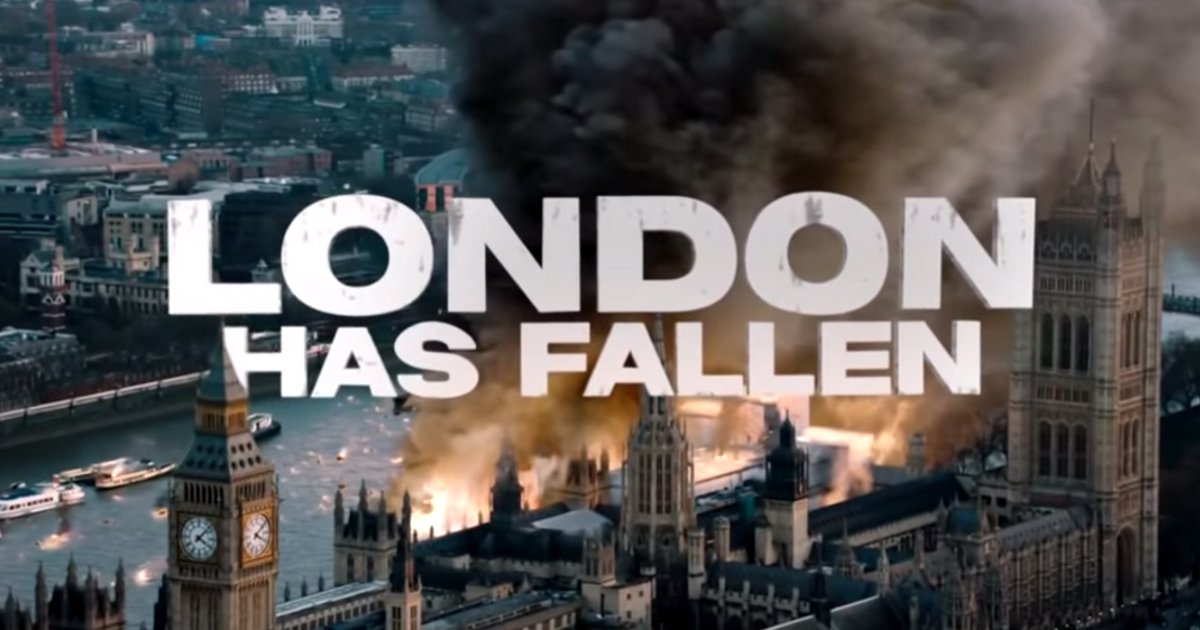
“London Has Fallen” is a love letter from producer-star Gerard Butler to himself and every bit as dumb and dreary as that sounds. This sequel to the more violent of the two attack on the White House movies of 2013 follows an opening scene of a drone attack on a terrorist group, establishing the revenge motive, with a re-introduction to our hero, manly showboat Secret Service hero Mike Banning (Butler), out jogging with (and out-jogging) President Benjamin Asher. “What are you made of?” the President asks with the same air of astonished admiration producer/star Butler clearly expects from the audience. “Bourbon and bad choices,” says Mike, letting us know that he is harder than nails and tougher than hell. All right, then!

Bad news from London. The Prime Minister has died. So that means all the world leaders will attend the funeral, creating a security problem of unprecedented proportions and a heck of a traffic jam, too. Meanwhile, just to amp up the emotion in the laziest possible way, manly Mike and his adoring wife Leah (Radha Mitchell) are expecting a child. Mike stops home to chat with her about paint samples for the new nursery (and whether six security cameras trained on the crib is overdoing it, “and a Kevlar mattress,” ha ha). He also composes a draft letter of resignation but has to leave when the President needs him for the trip to London.

The rest of the movie is just a lot of shooting and explosions as most of the world leaders are wiped out and Mike has to keep the President safe and get him back to Washington. Plus some totally predictable (especially if you saw the last one) scenes of officials back home in the situation room watching intently on screens and saying things like “I think you’d better see this,” and at least one highly predictable death of a major character and at least one “surprise” about a traitor who turns out to be someone previously trusted.

I’d say it was more FPS game than movie, but at least in a game there is some excitement in the challenge of skill and timing. This is just passively watching things and people getting blown up and blown away, with many squishy sounds to remind us that blood is spurting. It is porn-y and fetishistic in the loving depiction of so much carnage, with iconic locations destroyed and many characters killed.

Just as distasteful is the portrayal of producer/star Butler as super-smart, always right, always picking the right target to hit and the right corner to turn, and able to take out dozens of bad guys all by himself, every single time. Excesses of self-regard and self-promotion are dwarfed by a complete failure of self-awareness. Mike blows away yet another swarthy generic bad guy and someone says, “Was that necessary?” “No,” Mike answers casually and moves on to the next one.

Those bad guys are tough. Not only do they blow up the city and murder world leaders, they “are all over social media.” Try burning that down, Mike Banning!

Gerard, was this movie necessary?

No.

Parents should know that this movie has extensive, intense and graphic peril and violence with guns, explosions, terrorism, and many characters injured and killed, disturbing images, world leaders assassinated, massive destruction, and constant strong language.

Family discussion: How do Mike and the President see things differently? If you were running the Secret Service, what would you do to protect the President?

If you like this, try: “Olympus Has Fallen” and “G.I. Joe”

Related Tags:


Action/Adventure Series/Sequel
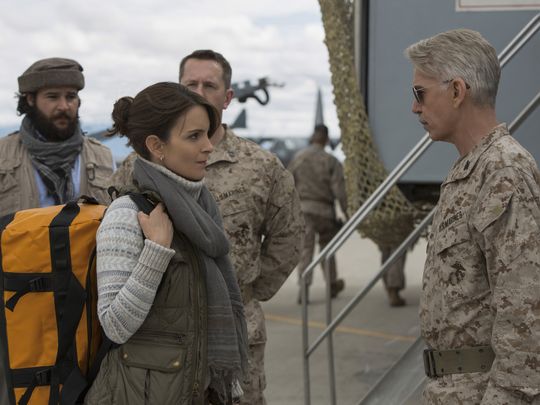
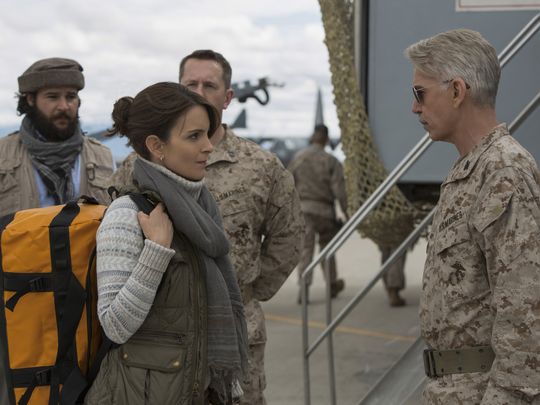
Whiskey Tango Foxtrot

Whiskey Tango Foxtrot

Posted on March 3, 2016 at 5:20 pm

Copyright 2016 Paramount

When Michiko Kakutani of the New York Times reviewed the book that inspired “Whiskey Tango Foxtrot,” the memoir of journalist Kim Barker about her days covering US military operations in Afghanistan and Pakistan, she wrote:

What’s remarkable about “The Taliban Shuffle” is that its author, Kim Barker — a reporter at ProPublica and the South Asia bureau chief for The Chicago Tribune from 2004 to 2009 — has written an account of her experiences covering Afghanistan and Pakistan that manages to be hilarious and harrowing, witty and illuminating, all at the same time.

It’s not just that Ms. Barker is adept at dramatizing her own adventures as a reporter — though she develops the chops of a veteran foreign correspondent, she depicts herself as a sort of Tina Fey character, who unexpectedly finds herself addicted to the adrenaline rush of war.

And now that book is a movie, and the role of Ms. Barker is being played by non-other than Tina Fey, who also co-produced. As always, her work is whip-smart and original. This is not Liz Lemon goes to war, it is an impressively sensitive dramatic performance.

But Barker’s story has been movie-ized, giving it the “inspired by” rather than “based on” designation, and removing the “r” from the character’s name to create some space. The real Barker was a print journalist, but making her a television correspondent to make it more cinematic. And the various love interests are fictional. It is disappointing that the movie makes the impetus for the assignment a combination of professional and romantic ennui. Barker was a dedicated journalist looking for a big story.

But much of the essence of it is the real deal, starting with Barker/Baker’s plan to spend three months in Afghanistan that turned into three years, and the ramped-up intensity of spending days embedded with the military, frantically editing the story, and then trying to obliterate memory and consciousness with some hard-core partying, only to start over again. Baker is inexperienced but dedicated and smart. She quickly impresses the cynical General (Billy Bob Thornton) who sees embedded journalists as a bother and a risk. And she quickly bonds with the other woman reporter (Margot Robbie), who shows her the ropes and asks very politely if she can sleep with Baker’s hunky security guy.

Alfred Molina is excellent, as always, as an Afghani official, though we should be past the time when European actors are cast as Middle Eastern characters. And maybe we do not need any more stories of Western characters discovering the mysteries of the other side of the world, with illuminating life lessons from exotic people. We don’t want this to be “Under the Tuscan Sun” but with war instead of sun-ripened Italian tomatoes, and it gets uncomfortably close at times. But the thoughtful script from longtime Fey collaborator Robert Carlock keeps the film from making war be just a growth experience for a reporter looking to shake up her life a bit, and the contrast between what the war does to the people trying to tell the story, knowing that the people back home just change the channel anyway give the story a sobering weight.

Parents should know that this movie has constant very strong, crude, and colorful language, drinking, drugs, smoking, wartime violence with some graphic images, characters injured and killed, sexual references and situations, and nudity.

Family discussion: What was the most important story Kim Baker reported? What did she mean when she said it “started to feel normal?”

If you like this, try: The book that inspired this film, The Taliban Shuffle, and the film “The Year of Living Dangerously”

Related Tags:


Drama Inspired by a true story Journalism War
Zootopia

Zootopia

Posted on March 2, 2016 at 10:00 am

A-
Lowest Recommended Age: Kindergarten - 3rd Grade
MPAA Rating: Rated PG for some thematic elements, rude humor and action
Profanity: A few schoolyard words
Alcohol/ Drugs: Animals are drugged, making them violent
Violence/ Scariness: Action-style law enforcement peril and violence, chases, bullies, some injuries
Diversity Issues: A theme of the movi
Date Released to Theaters: March 4, 2016
Date Released to DVD: June 7, 2016
Amazon.com ASIN: B01B2CX0LU

Copyright 2016 Disney

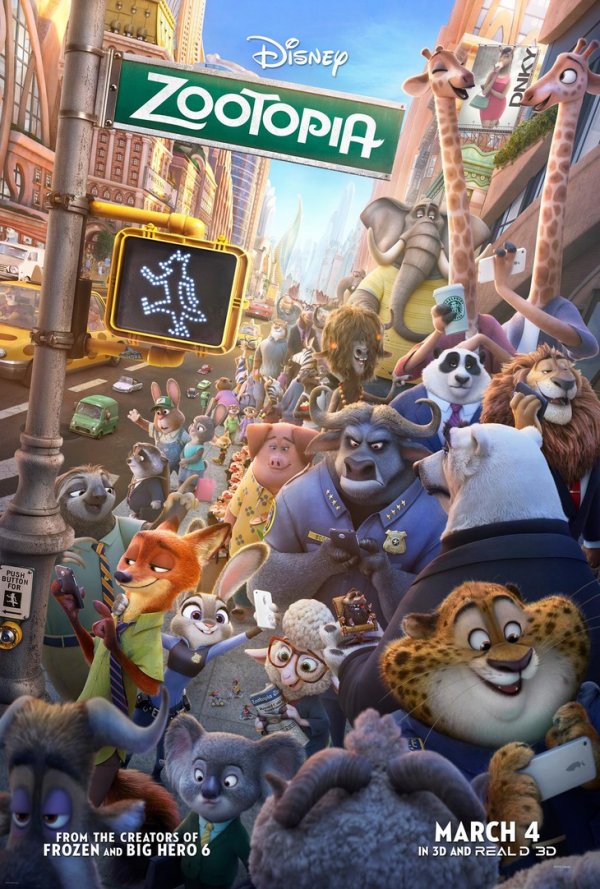
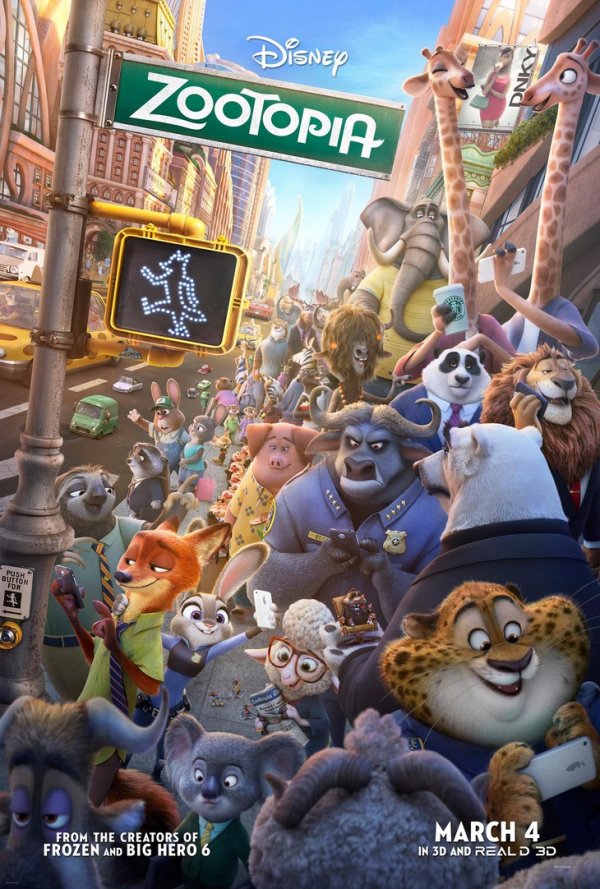
Simmer down, out there. In this, the craziest of all political moments in US history, some people are going to tell you that Disney’s adorable “Zootopia” is full of subtext about issues like immigration, sexism, terrorism and the role of law enforcement. There are references to current ways of talking about issues of trust and finding a balance between autonomy and community, but if there’s subtext in this bright, wonderfully imagined Oscar-winning story about animals of all sizes and appetites living together, it is Isaiah 11:6: the lion shall lay down with the lamb.

Of course that depends on which lion and which lamb, and, in this movie, it also depends on a farm-town bunny named Judy (Ginnifer Goodwin) who wants more than anything to be a cop in the big city of Zootopia. There’s some skepticism; rabbits have never been in the police force, which is made up of bigger, more physically powerful animals. But Judy has studied more and worked harder, acing her police academy studies and even mastering the obstacle course. She arrives ready to arrest lots of bad guys, only to be assigned…parking duty. Undaunted, she is determined to be the very best meter maid ever, so resolutely honorable she even gives herself a ticket.

And Judy is so observant that even on parking duty she notices details that could lead to clues about the city’s biggest crime wave, the disappearance of 14 of the city’s citizens, including, most recently, an otter whose devoted wife (Octavia Spencer) is frantic with worry.

A con artist fox (Jason Bateman, perfectly sly as Nick Wilde) may be able to provide important clues. Judy forces him to help her by threatening to turn him in, and our team is on the case. They may appear to be misfits — predator and prey, law-breaker and law-enforcer, cynic and optimist. But it turns out they are a very good match.

Bateman gives Nick’s voice a sardonic, superficially laid-back but really checking out all the angles tone, and Goodwin brings intelligence and integrity to Judy’s enthusiasm. They complement each other perfectly and their growing appreciation, understanding, and friendship is believable and heartwarming. Other outstanding voice talent includes Jenny Slate as a sheep who is the over-worked and under-appreciated deputy mayor and Idris Elba as a cape buffalo police chief.

The world of Zootopia is wonderfully imagined and the animators have a lot of fun with the drastic scale and biome differences in the Zootopia population. Investigations and chase scenes take us through a variety of ecosystems, from Tundra Town and Sahara Square to the Rainforest District. Like Gulliver or Alice in Wonderland, Judy’s proportionate relationship to the immediate surroundings and characters varies wildly. Her pursuit of a weasel thief (Alan Tudyk) goes through a rodent-occupied area where she is as tall as the buildings and has to step around the cars. And she has to find a way to tuck parking tickets behind the windshield wipers of vehicles that are sized for tiny mice and towering giraffes.

Alert audience members will enjoy marvelously understated and witty details, from references to “The Godfather” and “Breaking Bad” to a Department of Motor vehicles staffed entirely by sloths — one, named Flash, gives new meaning to the corny mug on his desk that says “You want it when?” There are some sly pokes at cultural touchstones, with an app featuring a beloved pop star (voiced by Shakira), a “Lemming Brothers” bank, and even a call-out to Disney’s own unstoppable “Let it Go” powerhouse, “Frozen.”

Judy’s irrepressible optimism and equally irrepressible determination make her an endearing heroine, and Nick’s thinly disguised longing for a reason to believe in her keeps him skeptical but not cynical. The themes of predators and prey finding ways to live together peacefully — and the fear and selfishness that threaten that peace — is a graceful context for their learning to trust one another. Disney has created a film I’ve already seen twice and a place I will happily return to again any time.

Parents should know that this film includes law enforcement-style peril and some violence. Characters are drugged and become aggressive and violent. A character is a con artist who cheats, lies, and steals.

Family discussion: Why didn’t Judy’s father want her to join the police force? How did being bullied affect Nick’s choices? How can we make it possible for everyone to be able to follow whatever dreams they have?

If you like this, try: “Over the Hedge” and Disney’s animal-populated version of “Robin Hood”

Related Tags:


3D Animation DVD/Blu-Ray Pick of the Week Talking animals
THE MOVIE MOM® is a registered trademark of Nell Minow. Use of the mark without express consent from Nell Minow constitutes trademark infringement and unfair competition in violation of federal and state laws. All material © Nell Minow 1995-2026, all rights reserved, and no use or republication is permitted without explicit permission. This site hosts Nell Minow’s Movie Mom® archive, with material that originally appeared on Yahoo! Movies, Beliefnet, and other sources. Much of her new material can be found at Rogerebert.com, Huffington Post, and WheretoWatch. Her books include The Movie Mom’s Guide to Family Movies and 101 Must-See Movie Moments, and she can be heard each week on radio stations across the country.

Website Designed by Max LaZebnik