Alliance of Women Film Journalist Awards 2013

Posted on December 20, 2013 at 6:00 am

I’m honored, as always, to be a part of the Alliance of Women Film Journalists and proud to announce our awards for 2013

AWFJ EDA ‘BEST OF’ AWARDS

12-years-a-slave-2Best Film

  • 12 Years a Slave

Best Director (Female or Male)

  • Steve McQueen – 12 Years a Slave

Best Screenplay, Original

  • Her – Spike Jonze

Best Screenplay, Adapted

  • John Ridley – 12 Years a Slave

Best Documentary

  • Stories We Tell – Sarah Polley

Best Animated Film

  • The Wind Rises – Hayao Miyazaki

Best Actress

  • Cate Blanchett – Blue Jasmine

Best Actress in a Supporting Role

  • Lupita Nyong’o – 12 Years a Slave

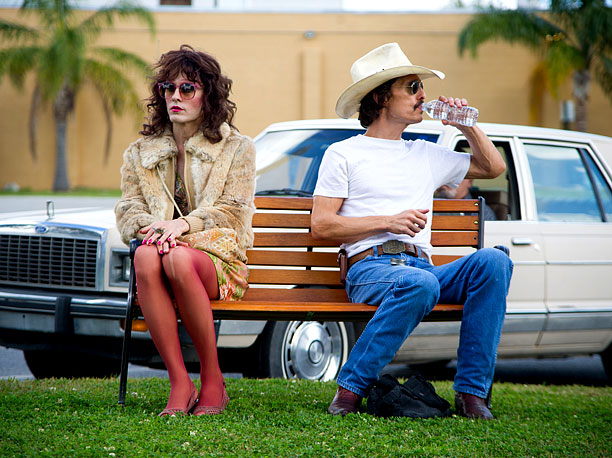
Dallas-buyers-clubBest Actor

  • Matthew McConaughey – Dallas Buyers Club

Best Actor in a Supporting Role

  • Jared Leto – Dallas Buyers Club

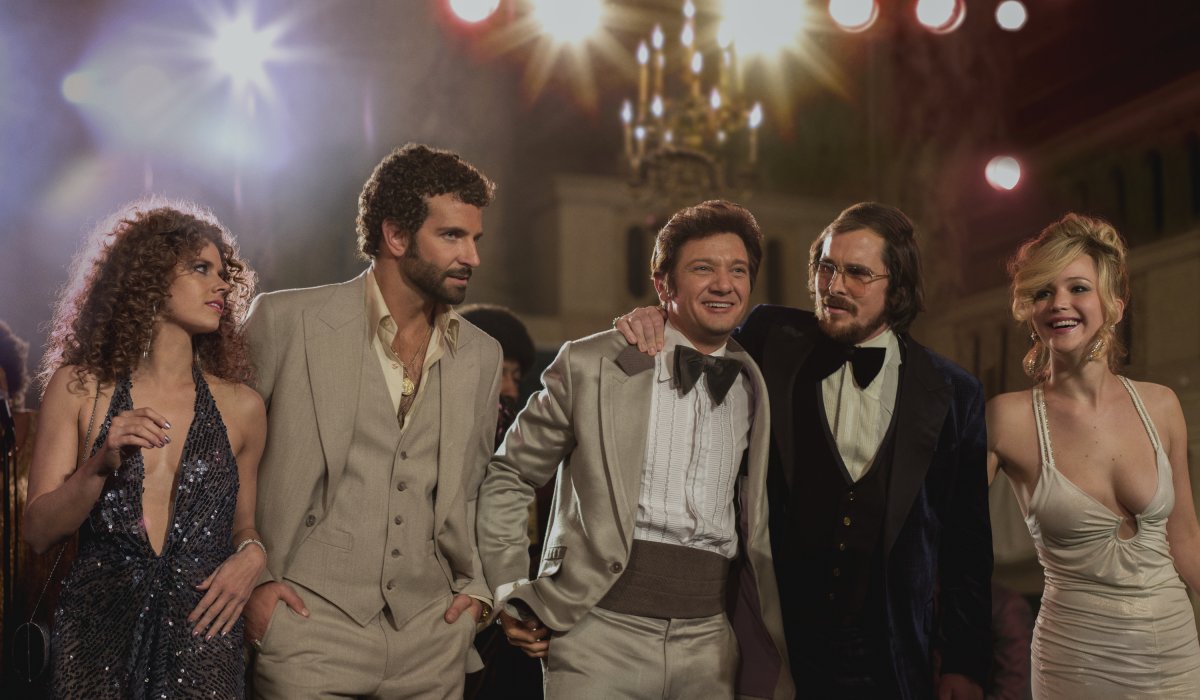
Best Ensemble Cast

  • American Hustle

Best Editing

  • Gravity – Alfonso Cuaron and Mark Sanger

Best Cinematography

  • Gravity – Emmanuel Lubezki

Best Film Music Or Score

  • Inside Llewyn Davis – T-Bone Burnett

Best Non-English-Language Film

  • The Hunt – Thomas Vinterberg – Denmark

EDA FEMALE FOCUS AWARDS
These awards honor WOMEN only.

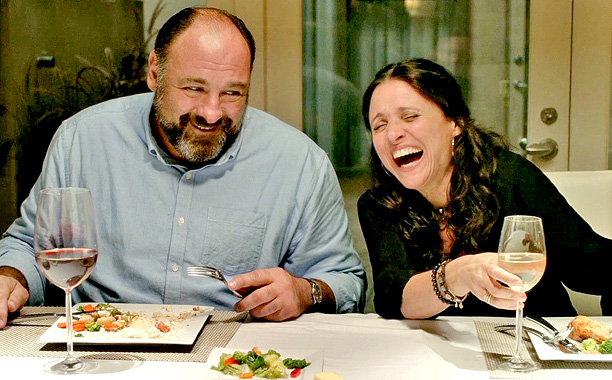
enough-saidBest Woman Director

  • Nicole Holofcener – Enough Said

Best Woman Screenwriter

  • Nicole Holofcener – Enough Said

Kick Ass Award For Best Female Action Star

  • Sandra Bullock – Gravity

Best Animated Female

  • Anna (Kristen Bell) in Frozen

Best Breakthrough Performance

  • Lupita Nyong’o – 12 Years A Slave

Actress Defying Age and Ageism

  • Sandra Bullock – Gravity

AWFJ EDA Female Icon Award
(Presented to an actress for the portrayal of the most positive female role model, or for a role in which she takes personal and/or career risks to plumb the female psyche and therefore gives us courage to plumb our own, and/or for putting forth the image of a woman who is heroic, accomplished, persistent, demands her rights and/or the rights of others.)

  • Angelina Jolie for continued commitments to humanitarian causes, and for promoting awareness about breast cancer.

This Year’s Outstanding Achievement By A Woman In The Film Industry
(Presented only when warranted to a female who has had a banner-making, record-breaking, industry-changing achievement during any given year.)

  • Haaifa Al-Mansour for challenging the limitations placed on women within her culture by making the film Wadjda.

EDA SPECIAL MENTION AWARDS

the-counselor-posterAWFJ Hall Of Shame Award

  • The Counselor – Ridley Scott

Actress Most in Need Of A New Agent

  • Cameron Diaz for The Counselor

Movie You Wanted To Love But Just Couldn’t Award

  • The Counselor

Unforgettable Moment Award

  • 12 Years A Slave – Solomon Northrup hanging

Best Depiction Of Nudity, Sexuality, or Seduction Award

  • Her – Scarlett Johansson and Joaquin Phoenix for their digital lovemaking.

Sequel or Remake That Shouldn’t Have Been Made Award (Tie)

  • Carrie
  • Oz, Great and Powerful

Most Egregious Age Difference Between The Leading Man and The Love Interest Award

  • Last Vegas – Michael Douglas and Bre Blair
Related Tags:


Awards

Walking with Dinosaurs 3D

Posted on December 19, 2013 at 6:42 pm

B
Lowest Recommended Age: Kindergarten - 3rd Grade
MPAA Rating: Rated PG for creature action and peril, and mild rude humor
Profanity: Some schoolyard language
Alcohol/ Drugs: None
Violence/ Scariness: Dinosaur predator violence and peril, sad death of parents
Diversity Issues: None
Date Released to Theaters: December 20, 2013
Date Released to DVD: March 24, 2014
Amazon.com ASIN: B00HDKJESO

walking_with_dinosaurs

Dinosaur movies pretty much all have the same plot.  Unless it is a fantasy like “Jurassic Park,” the story is pretty simple: the dinos have to migrate and there are a lot of encounters and adventures along the way. What separates Walking With Dinosaurs 3D from earlier entries like “The Land Before Time” and Disney’s then-state-of-the-art “Dinosaur” is the beauty and majesty of the great creatures, marred a bit by a jokey script with too much focus on poop and barf jokes, silly winks at the audience about the animals’ “future as an oil field,” and distracting anthropomorphism.

A brief prologue set in modern day has a brother and sister visiting their paleontologist uncle (“Star Wars’” Karl Urban) in Alaska.  The girl is excited by the broken tooth found by her uncle and happy to accompany him to the dig to see if they can find more bones.  But her older brother is bored.  “I’m not really into digging for dead things.”  He’d rather text his friends about how lame everything is.

But then a bird (voice of John Leguizamo) appears to explain that “Every fossil tells a story.”  He transforms into his prehistoric ancestor, garishly colored with trailing trail feathers and toothy-looking protuberances from his beak, to narrate the story of his friend Patchi (voice of Justin Long), from just after hatching as the runt of the nest to adulthood and becoming a father with his own eggs to guard.

Our hero is Patchi, a Pachyrhinosaurus (thick-nosed lizard), whose early run-in with a predator leaves a hole in his frill that helps us identify him as he goes from hatchling to adolescent to adult.  He is a cheerful, curious, friendly vegetarian, a bit in the shadow of his alpha male older brother, Scowler (voice of Skylar Stone).  Their father is the pack leader who shows the rest of the tribe the way when it is time to migrate.  But along the way there is danger, especially from predatory meat-eaters who find the plant-eaters delicious.  Patchi’s parents are killed (off-screen) protecting their young.  Scowler takes over via head-butt battle, and it looks like he may take over the pretty female Patchi likes as well (Tiya Sircar as Juniper).  Will brains triumph over brawn?

Kids in the audience seemed to enjoy the slapstick and potty humor and it is possible that it tempered the scarier themes.  It will certainly make fans of the television series happy, and, I hope, inspire curiosity about the real stories that fossils tell.  Viewers with more serious interest in dinosaurs will want to take advantage of the Blu-Ray’s “Cretaceous” option and skip the human voices.

Parents should know that this film has dinosaur-era violence, characters in peril, injured and killed, sad deaths of parents, and potty humor.

Family discussion:  Why did Patchi and Scowler make different choices?  Which was your favorite kind of pre-historic creature and why?

If you like this, try: the television series and visit your local natural history museum to learn more about dinosaurs

Related Tags:


3D DVD/Blu-Ray Pick of the Week Movies -- format Talking animals

American Hustle

Posted on December 19, 2013 at 6:00 pm

american-hustle

“Some of this actually happened,” the movie’s opening shot deadpans.  It is true that the United States government both threatened and paid a con man to help them con some bigger fish and then accidentally ended up conning some of the biggest fish ever caught — six US Congressmen and a Senator.  David O. Russell directed and co-wrote “American Hustle,” the story of 1970’s fraud, insanity, and betrayal, plus a lot of “what were we thinking” hair and clothes and a rockin’ soundtrack, from “Goodbye, Yellow Brick Road” to “How Can You Mend a Broken Heart,” “Does Anybody Really Know What Time it Is?” and the inevitable “Horse With No Name.”

The storyline has so many layers of double-cross, lies, betrayal, grandiosity, and sheer insanity that the audience may feel they are getting lost, but in a way, that is the point, and of course, that is the decade for it.  I mean, look at the home perm on Bradley Cooper, who plays the hotdog FBI agent Ricky DiMaso as something of a cross between Starsky, Hutch, and Huggie Bear.

And then there is the hair on Christian Bale as Irving Rosenfeld.  It can perhaps best be described as an edifice.  As the movie begins, we are treated to the painstaking assembly of his pompadoured comb-over, remarkable to witness and a dead-on detail that lets us know who we will be following for the rest of the film.  He is a phony, he is all about making the surface look better than it should, and  he will do whatever it takes to put forward the image that will sell whatever he is trying to sell. Ascot, check.  Pinky rink, check. Briefcase full of cash, check.

Flashback.  Rosenfeld is the master of at least half a dozen medium-sized scams when, at a party, across the room, he spies a beautiful woman.  It is Sydney Prosser (Amy Adams).  They share a love of Duke Ellington and a talent for re-invention.  “My dream” she tells us, “more than anything, was to become anything else than what I was.”

They cook up an almost-legal scam, taking  up-front fees on the promise of using their connections to obtain loans from some vaguely defined “London connections.”  All is fine until they get busted.  And DiMaso, intrigued by their world of deception, persuades them to work for him to bring down some big-time criminals.

But things get complicated and messy.  DiMaso’s boss (a terrific Louis C.K.)  is reluctant to have federal officers engage in criminal activities, even to catch other criminals.  One of the great joys of this film is when the boss keeps trying to tell DiMaso an ice-fishing story that never gets to the point because the hotheaded DiMaso keeps interrupting him.  Rosenfeld is married to an unhappy, volatile wife named Rosalyn (a dazzling performance of astonishing depth and mesmerizing assurance by Jennifer Lawrence) and stepfather to her son.  He has to find a way to resolve things with the FBI, the mob, and the politicians.

The unfinished ice-fishing story is the point.  This is not a nice, linear explanation for what happened.  This is a bunch of stories that intersect in a maze of all seven of the deadly sins plus a few that should also be on the list.  Brilliant performances by everyone in the cast (including Alessandro Nivola as an FBI official and an unbilled guest star as a guy from the mob) and a witty, insightful script are what hold it together.  Lawrence makes us furious at and sorry for her character at the same time, and she is sizzlingly funny.

The purpose of this film is not to illuminate the particular events of Abscam.  It is to meditate on the irrepressible American enthusiasm for self-invention and the thicket of betrayal and damage that can be the result.  It is about the stories we tell, even the ones like the ice fishing story that never get to make a point.  Russell himself can’t resist tweaking the details, making the characters more interesting and sympathetic than they really were.  But that wouldn’t be a good story.

Parents should know that this film has very strong adult material including constant bad language, explicit sexual references and situations, nudity, drinking and drug use, extensive criminal behavior and betrayal.

Family discussion: Who are the biggest con artists in this story?  How do the characters determine who deserves their loyalty?  Was justice done?

If you like this, try:  “Flirting with Disaster,” “The Fighter,” and “Silver Linings Playbook,” from the same director


Related Tags:


Based on a true story Crime Drama Politics Satire

Inside Llewyn Davis

Posted on December 19, 2013 at 6:00 pm

A-
Lowest Recommended Age: Mature High Schooler
MPAA Rating: Rated R for language including some sexual references
Profanity: Strong language
Alcohol/ Drugs: Drinking, drug use and drug overdose
Violence/ Scariness: A few punches, drug overdose
Diversity Issues: None
Date Released to Theaters: December 20, 2013
Date Released to DVD: March 10, 2014
Amazon.com ASIN: B00DVZ414C

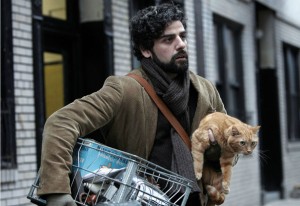
Inside-Llewyn-Davis-cat

Oscar Isaac gives the best performance of the year as the title character in the most intimate and profound movie yet from the Coen brothers.  The story is set in the New York folk music world of 1961 and the Coens insisted on filming the songs live rather than pre-recording, and one of the wonders of this film is the way that Isaac makes each song more than a musical performance — each is a part of his characterization that tells us who Davis is and where he is on a week-long journey we will see in near Sisyphian terms.  The breaths and pauses are as much a part of the performance as the notes he plays and sings.  When he is not singing, Davis reacts very little, and one of the great pleasures of this film is seeing Isaac convey immense conflict and sensitivity to us in the audience while those around him see only his superficial expressionlessness.  In one scene, a doctor offhandedly gives him surprising news about someone else.  In that one moment he says almost nothing but conveys a dozen different emotions and questions and losses.  This is the story of a man who expresses himself only through his music.  But he does not have the gifts to make him successful enough to support himself or achieve any sense of security and acceptance.

The Coens like to put their central characters under a lot of stress, and in this film Davis must deal with disappointment and anger all around him and his own sense of frustration in not being able to honor the songs that are his whole world by making them as important to others as they are to him.  Ultimately, it becomes a larger story about the way all of us struggle to find meaning and a place for ourselves.  And all of that is to the heavenly music impeccably curated by T. Bone Burnett and performed by a cast that includes Justin Timberlake, Carey Mulligan, and Broadway’s Stark Sands.  The Coens also like to create physical environments that reflect the internal pressure (the peeling wallpaper in “Barton Fink” was almost another character).  Here, the re-creation of early 60’s Greenwich Village is relatively low-key and naturalistic, but there are still cramped corridors with impossibly acute vectors to amplify Davis’ external manifestation of the grungy world that seems to have no exit.

The film’s title, “Inside Llewyn Davis,” is the also the name of a record album made by the early 1960’s folk singer played by Isaac.  We first see him singing in a Greenwich Village club, performing “Hang Me, Oh Hang Me,” a song that “was never new and never gets old.”

The folk singers of the early 60‘s thought of themselves as truly authentic in a world where suburban materialism and conformity were idealized.  A movement that presaged and in some ways helped to spark the counterculture and protest of the late 60’s was, of course, inherently inauthentic itself.  Folk music is beautiful wherever it is sung, even in the kind of homogenized, commercial versions looked down on by Davis (and gently mocked in “A Mighty Wind”).  But what makes it authentic is that it is music sung by folk in their community, not by professional musicians in a New York club.  The essence of the struggle any artist — or any person — faces between integrity and selling out is explicit here.  Davis criticizes his friend and sometime lover as “careerist” for trying to get ahead in the music business.  But he himself makes a trip to an influential producer to see if he can get better bookings.  And as authentic as Davis may think he is, he is contemptuous the performances by a soldier and a woman from the country, both of whom arguably have a better claim to “authenticity” than he does.

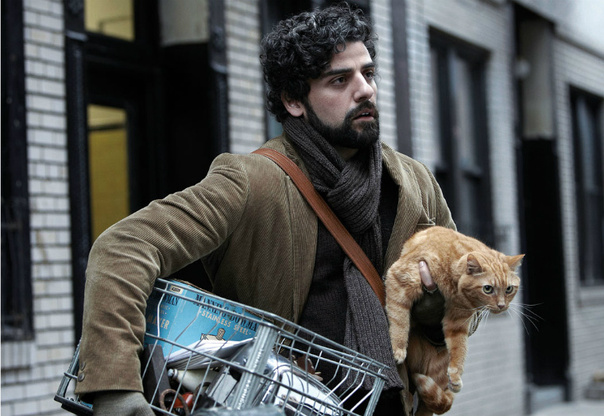
Like all Coen brothers anti-heroes, Davis is a man under pressure.  He has nowhere to live, and sleeps on couches he scrounges from friends.  He seems to have no sense of gratitude.  He shows some sense of responsibility.  He spends the night at the home of a benign Columbia professor who loves his music, stopping to play a cut from the album he made with his former partner (Isaac sings with Marcus Mumford).  Then, when he is leaving, the professor’s marmelade cat slips out the apartment door just as it swings shut and locks behind him.  Davis scoops up the cat and takes him on the subway, calling the professor’s office to let him know the cat is safe.  He then drops the cat off at another apartment he often uses as a place to stay, the home of singing duo Jim (Justin Timberlake) and Jean (Isaac’s “Drive” wife, Carey Mulligan), where he finds out that Jean is (1) pregnant and (2) furious because it might be his.  He again responds responsibly, if not graciously.  And when Jim (of course not knowing anything about his relationship to Jean) arranges for Davis to get a quick gig as a session musician for a silly but irresistible little novelty ditty called “Please Mr. Kennedy,” he gives it his best.

We follow Davis over the course of a week, one frustrating encounter after another, with Jean, with the head of the tiny record label that produced his last record, a doctor who performs abortions, his silent father in a nursing home, his suburban sister, on a long ride to Chicago with a jazz musician (Coen brothers regular John Goodman) and his near-silent driver (Garrett Hedlund), a nerve-wracking audition with an important producer (F. Murray Abraham).  In each of them, Davis is subdued. He has feelings, but he expresses them in his music.  There is something in these ancient songs about death, betrayal, and injustice that touches his heart. Singing them is his deepest connection to himself.  “Just exist?” he asks his sister, when she suggests he give up folk music.  But even when he wants to give up, he can’t.

Davis knows that things seem hopeless for him.  He tries to slide his box of remaindered LPs under a table only to find an almost-identical box of another singer’s records there already.  He looks out of the car window at a highway exit that he and we know could lead to an important chance at connection and meaning.  We see around Davis what he cannot.  We see him make a decision as he leaves the recording studio that suits his purposes at the moment but that we know he will be bitter about forever. A young, tousled-hair singer goes on at the club and we know he will transform the world in a way Davis can not.  But in a very real and very satisfying way, the Coens and Isaac have reclaimed him for us with their own story that was never new, and never gets old.

Parents should know that this film includes strong language, a fistfight, references to sex, adultery, abortion, and suicide, drinking, smoking, and drug use and overdose.

Family discussion:  Why was it so hard for Llewyn to succeed?  What do we learn about him from the decision not to go to Akron?  From his heckling of another performer?

If you like this, try:  “Don’t Look Back” and “A Mighty Wind” — and the Showtime concert featuring the music from the film, “Another Day, Another Time”

Related Tags:


Drama DVD/Blu-Ray Pick of the Week Inspired by a true story Musical
THE MOVIE MOM® is a registered trademark of Nell Minow. Use of the mark without express consent from Nell Minow constitutes trademark infringement and unfair competition in violation of federal and state laws. All material © Nell Minow 1995-2026, all rights reserved, and no use or republication is permitted without explicit permission. This site hosts Nell Minow’s Movie Mom® archive, with material that originally appeared on Yahoo! Movies, Beliefnet, and other sources. Much of her new material can be found at Rogerebert.com, Huffington Post, and WheretoWatch. Her books include The Movie Mom’s Guide to Family Movies and 101 Must-See Movie Moments, and she can be heard each week on radio stations across the country.

Website Designed by Max LaZebnik