Nell Minow has been reviewing movies online as The Movie Mom since 1995, with over 3000 published reviews. Her books include 101 Must-See Movie Moments and The Movie Mom's Guide to Family Movies, and she appears on radio stations each week to talk about new releases in theaters and on DVD/Blu-Ray/streaming. Mastodon NOTE: Purchases from my links to Amazon pay me a small fee, usually well under one dollar.
Trailer: Cyrano, Starring Peter Dinklage
Posted on October 7, 2021 at 9:56 am
This new version of the play about the man who can only woo the woman he loves through letters signed by someone else looks gorgeous, and swooningly romantic. For earlier versions, see Jose Ferrar in “Cyrano de Bergerac” and Steve Martin’s modern update, “Roxanne.”) Peter Dinklage has all of the dash and world-weariness we want to see in the character and up-and-coming stars Hayley Bennett and Kelvin Harrison, Jr. look like they will cross over into well-deserved mega-stardom from this film. Can’t wait.
My only complaint about the very funny (and very accurate) documentary on Netflix called “Attack of the Movie Cliches” is that it should have been a series. There are so many other examples and variations of the movie conventions it covers, from the “meet cute” to the “Wilhelm scream.” I hope the other movie cliche it will salute is the sequel!
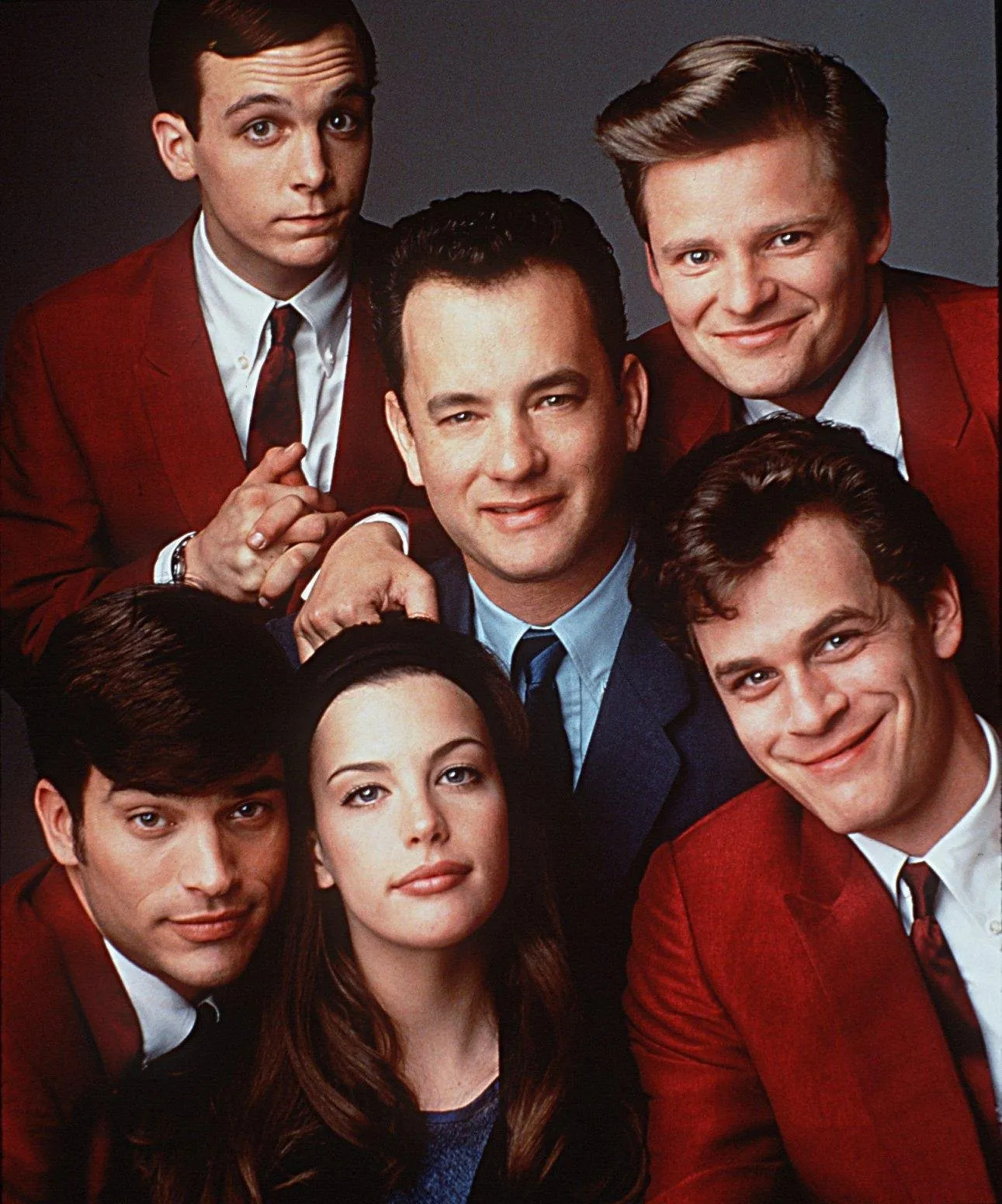
Copyright 1996 Play-ToneI can’t count how many times I’ve seen “That Thing You Do,” one of the most purely delightful films of all time. The key may be in one of the comments of writer/director Tom Hanks (who also appears in the film) in this oral history on Ringer: “No bad guys in my movie.” The behind-the scenes stories are wonderful and what really comes through is the appreciation of everyone involved in the movie for Hanks’ talent and his kindness.
Nell Scovell Talks About The Groundbreaking Sabrina, The Teenage Witch
Posted on October 4, 2021 at 12:13 pm
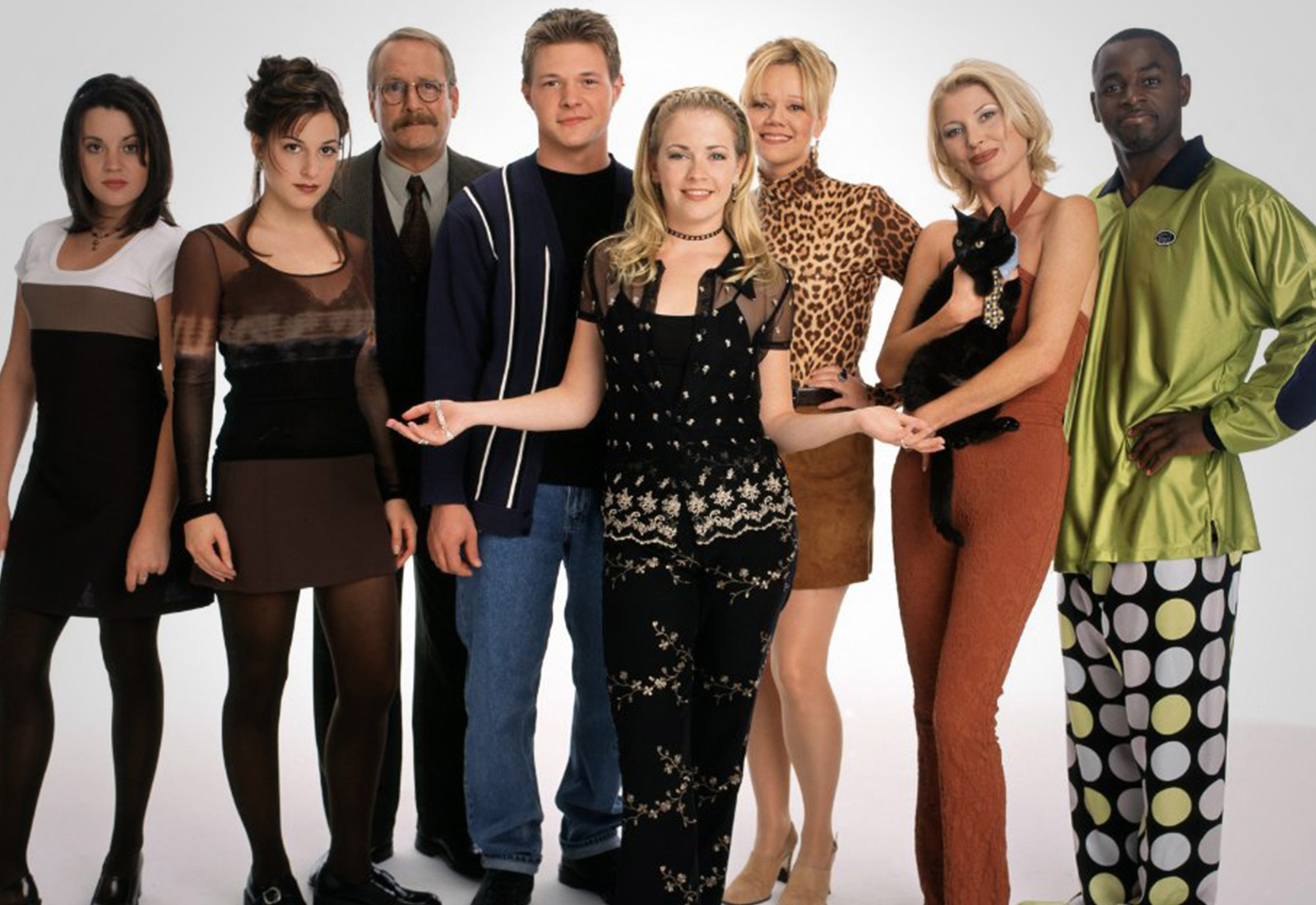
Copyright 1996 ViacomIt was 25 years ago that “Sabrina the Teenage Witch” premiered as a part of ABC’s “TGIF” line-up of family-friendly shows. The character was based on the Archie comic book series, but it was showrunner Nell Scovell who gave her a last name and a subtly but unabashedly feminist spin. In a 25th anniversary interview, Scovell told Elle that what made it fun for her was a twist on the magical female stories like “Bewitched” and “I Dream of Jeannie.” Those characters had to hide their powers. Sabrina, who only discovers her powers when she turns 16 and is thus still learning how to use them, is encouraged to make the most of her gifts. She had some of Scovell in her as well. “The revolutionary idea of Sabrina is she’s a good kid. She doesn’t want to be a cheerleader popular. She, like me, wanted to be good in school, and a good person.”
Extended and graphic violence including crime violence, murders, and riots
Diversity Issues:
A theme of the movie
Date Released to Theaters:
October 1, 2021
Copyright 2021 Warner Brothers
On January 10, 1999, HBO audiences first met a New Jersey mob boss named Tony Soprano, played by James Gandolfini. He was a brilliantly written, even more brilliantly acted character, in 86 episodes over six seasons, winning every possible award and accolade. The conflicts he faced, and, even more compellingly, the conflicts he embodied as a ruthless killer who loved his family made him one of the most vivid, complex, fascinating characters in the history of television or even the history of fiction. In the show’s first episode, Tony meets with Dr. Melfi, a therapist. The struggle between the honesty, empathy, and accountability central to therapeutic resolution and the secrecy and ruthlessness necessary for survival in criminal operations provided the basis for the series.
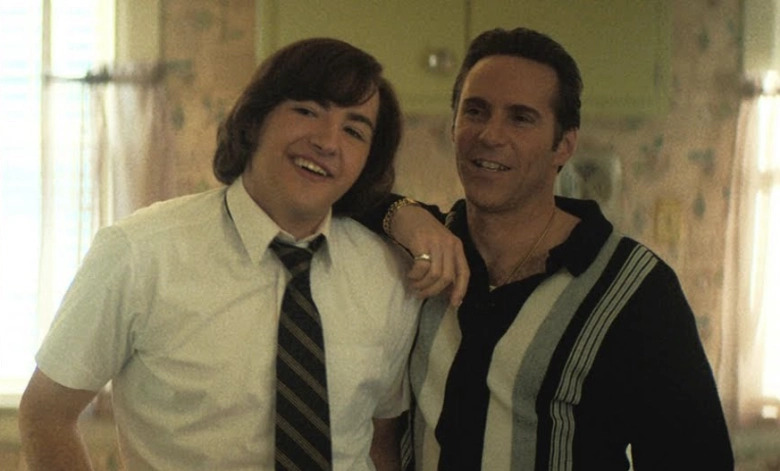
But the show was not named “Tony Soprano.” It was named for the entire family, the biological family (Tony’s mother, uncle, cousin-in-law, and sister played central roles, along with his wife, son, and daughter) and the crime family, as mobsters are termed internally and by law enforcement. Six years gave us a deep dive into the life and internal conflicts of Tony Soprano, and now the people behind the series show us something about how he got there with “The Many Saints of Newark,” with Michael Gandolfini, sone of the late James Gandolfini, as the teenage Tony.
Any film based on a much-beloved work has to be evaluated on two levels. Let’s start with the audience who has little or no connection to the series. The film represents the same complex, layered story-telling as the series and stands alone as a powerful exploration of themes of nature and nurture, destiny and choice, that have been the source of powerful story-telling as long as there have been stories. Fans of the series, especially those who payed very attention to detail, will appreciate both the references that might be characterized as fan service (teenage Tony comments that baby Christopher always cries when he sees him, we get to see how Uncle Junior hurt his back) and those that deepen and enrich the story we already hold dear.
In the series there were a number of references to Richard “Dickie” Moltisanti, father of Christopher and cousin of Tony’s wife Carmela, though he died in the 1970s, before the series began. “The Many Saints of Newark” makes him a central character, played by Alessandro Nivola. He is so good at disappearing into characters that he has not yet been recognized as one of the most talented actors in Hollywood. Here’s hoping this movie is the one that finally makes that clear to everyone.
Like Tony will be 20 years later, Dickie is conflicted. And some of his conflict centers on the young Tony (still a child in the early part of the movie, played by William Ludwig. Tony’s father, Johnny Boy Soprano, (Jon Bernthal) has little interest in his children and is out of the picture for much of young Tony’s life because he is in prison. Dickie is the closest to a father figure that Tony has, and there is genuine affection between them.
Dickie has his own issues. As Tony will later, he is conflicted about the choices he made and he compartmentalizes, holding on to the idea of himself as a good man, or at least a not entirely bad one. And yet he destroys the lives of people he cares about. Like the adult Tony, he brings his conflicts to a counselor of a kind, in his case an uncle who is serving a prison term for murder, played by Ray Liotta.
Dickie’s associate is Harold McBrayer, played by the magnetic Leslie Odom, Jr., the heart of the film. The racial politics of the era simmer and then explode into the real-life riots of 1967, the events of the time reflecting and affecting what is going on in the country and in the world of Dickie and his crime family. There are people who do not play by rules at great harm to others and there are people who break the rules to change the rules to make them better for others.
The movie opens in a cemetery, to the murmurs of the dead. A voice rises above the others, and he tells us that “the little fat kid,” Tony Soprano, killed him. And so, while Tony may think he has choices, we see him being pulled ineluctably to that moment when he will sit down with Dr. Melfi. At one point, Dickie tells Tony, “I understand you want to be a civilian and I respect that.” But in making a painful choice to try to help him go in a different direction, Dickie just makes it more difficult for Tony to do so. The drama is engrossing, the consequences are terrible, and these themes, of destiny and choice, provide emotional heft and a connection to the oldest and most enduring stories we know.
Parents should know that this is a movie about mob criminals and so it includes brutal violence, with many characters injured and killed. It also includes scenes of riots and looting, sexual references and situations and nudity, and constant very strong language.
Family discussion: Could Tony have become a “civilian?” Why didn’t he? What do we learn from the meeting with the school counselor?
If you like this, try: “The Sopranos” and “Goodfellas”