Interview: Candace Cameron Bure of ‘Truth Be Told’

Interview: Candace Cameron Bure of ‘Truth Be Told’

Posted on April 13, 2011 at 8:00 am
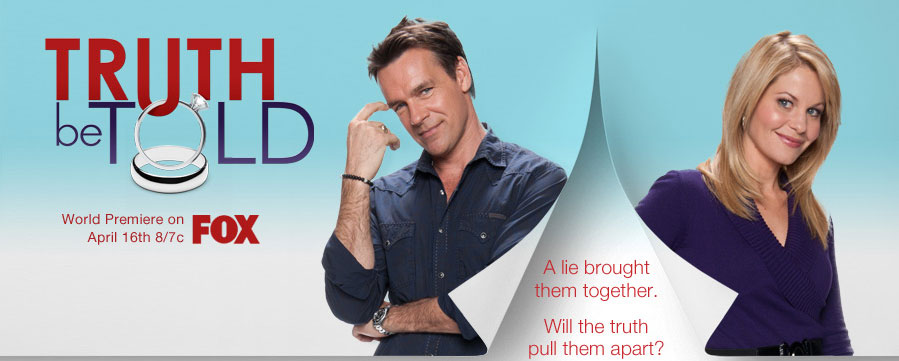
 

“Family Movie Night,” sponsored by Proctor & Gamble and Walmart, has produced another fine film for all ages.  Candace Cameron Bure (“Full House,” “Make It or Break It”) stars in “Truth Be Told,” the story of a marriage counselor who is not married.  When she has a job opportunity that requires a husband, she tells a lie, and enlists an old friend and his children to pretend to be her family.

I spoke to Candace about the role and about her work and her ministry, speaking about her faith and giving back to the community.

Tell me about “Truth Be Told.”

I couldn’t have been more excited when I was sent this script.  I had seen some of the Family Movie Night shows and said to myself, “I want to do one of those!”  When I read the script, it was absolutely perfect.  I fell in love with Annie Morgan, the character I play.  She’s a family and marriage counselor.  It was something I can totally relate to, and family and marriage are so important to me.  I do a lot of speaking at conferences and churches about family and marriage, so it was a topic I am passionate about.  The premise is that one little lie snowballs into this huge mess and honesty is always the best policy.

That’s what I love about this series.  These are not kids’ films that adults can tolerate or movies directed at adults without offensive content but true family movies with characters and situations that everyone in the family can understand and will want to talk about later.

I appreciate it as a mom.  I have 12, 11, and 9 year-olds. I loved the fact that Proctor & Gamble and Walmart teamed up to give us this time on a Friday night when we can sit down with our families and watch a movie that we don’t have to worry about.  It gives us things to think about and to open up some conversations with the family.  “What happens if you tell a lie?”  Depending on the age of your kids it can be a very simple conversation but you can turn it to a situation you and your family have recently experienced.  I can open the door for something else your child has been struggling with.  You use it as a platform for whatever dialogue needs to be exposed in your family at this time.

What happens in the film?

My character is offered a job at a radio station and because she is a marriage counselor, they assume she is married.  And family is very important to the man who owns the company.  She is probably not going to get the job unless she has a husband.  She runs into an old college friend who is a widower and convinces him and his children to pretend to be her family for the weekend.  The relationship develops — it is definitely a romantic comedy.

What is your experience like as you speak to groups about your faith?

I’ve been speaking and sharing my Christian faith for seven or eight years, and now I am speaking to the bigger groups like Extraordinary Women and Women of Joy.  I actually just got back from a conference with Extraordinary Women.  Sometimes there’s anywhere from 1500-15,000 ladies I will speak to.  It is an amazing opportunity for me to share my faith and what is important to me and ultimately the gospel of Jesus Christ.  I think I am as encouraged or maybe even more to see that God allows me to be used in that sense.  These ladies will tell me they are encouraged by hearing my story and yet I am in awe that I am just a person getting this opportunity so I feel very privileged.  It’s a very different thing from being on television.  Most people would think that you would automatically be comfortable if you’re an actress to go up on stage to speak but it is actually very different.  It’s not the number of people that scares me.  The more there are, the easier it is for me.  But it is a very different thing to open your heart and share your heart and be exposed in that way, not reading a memorized script or acting a different character.  I get much more nervous speaking live at an event.  You throw a camera on me and I am comfortable!

You have written about your faith as a way to manage food issues.

I had an emotional attachment to food.  I ran to food for comfort, to fill a void instead of realizing I had to run to God for those things.  I learned to honor my body by eating healthily and exercising but really by putting my faith into the forefront of my relationship with food by honoring my body as a temple God gave me and learning to run to Him for those needs and not to turn to food for it.  I don’t enjoy getting up at 5 am some mornings but I see it as a necessity to take care of my body.  To eat healthy, that’s all about the choices I make whether in a restaurant or the grocery story.  The food’s not making it for me.  There are so many tools out there to get us on the right track and help us make better choices.  We don’t value those choices as much as we should.  One choice a day, one choice an hour.  If you look at it this way, it’s not so overwhelming.

Do you have a favorite Bible passage?

I don’t like that question because there are so many good ones!  But the one that’s been on my computer desktop recently is Philippians 1, Verse 6.  I just go, “God’s good work is in all of us and He will carry that on.”  I don’t need to worry about it, I don’t need to stress over it.  I know God has a plan set before me and I need to obediently just follow the footsteps that he’s laid out and keep my eyes focused on Him and He will carry out that good work to completion.  And whatever that is, it might not be my own expectation but He knows what that is.

It’s everything.  We read the Bible together and we talk about verses that can help us focus for that day.  If we have a need or a worry for that day we find verses where it talks about it.  We go to church.  My kids are involved in Awana and youth group. My daughter has started leading worship and singing at her chapel.  They go to a Christian school.  So it is in every aspect of our lives but most important, my husband and I try to be that example, to show them that it is not just words but by our own actions and what we do.



Related Tags:


Actors Interview Movie Mom’s Top Picks for Families Television
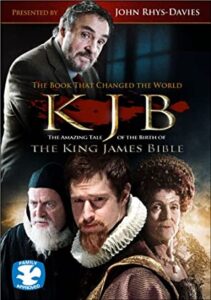
Interview: John Rhys-Davies of KJB: The Book That Changed the World

Interview: John Rhys-Davies of KJB: The Book That Changed the World

Posted on April 10, 2011 at 8:00 am

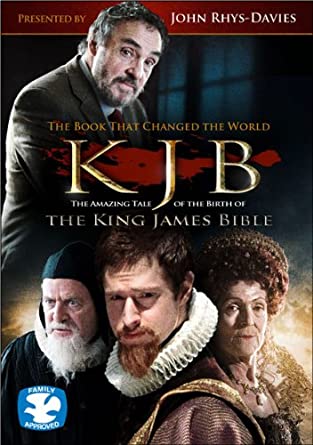
I couldn’t help it.  When I picked up the phone to hear the voice of distinguished actor John Rhys-Davies, I had to enjoy a moment pretending I was talking to Sallah from “Raiders of the Lost Ark” or Gimli from “Lord of the Rings.”  Rhys-Davies and his gorgeous speaking voice have appeared in everything from blockbusters to “Star Trek: Voyager” and “Spongebob Squarepants.”  I very much enjoyed speaking to him about the new DVD release of KJB: The Book That Changed the World, a documentary celebrating the 400th anniversary of the most widely-used and influential English translation of the Christian Bible.

How do you think about faith and science?

I count myself a a rationalist and a skeptic with a very conscious awareness of my indebtedness to Western Christian civilization and I am a fairly passionate defender of it.  My background is as a Welsh Protestant and I find myself championing all sorts of causes when I find them unfairly portrayed.  I am a believer in the evolutionary process and yet I have sympathy for the friends of mine who are creationists.  I don’t find the positions incompatible.  That means I irritate both camps.  How do you expect God to communicate to people — to speak about event horizons and milliseconds?  It is better to say, “In the beginning….”  There is no necessity for them to disagree.  Dare I say it is a failure on the imaginations of both parts.

The issues of faith I keep coming back to.  I am convinced logically that to say there is no God is the act of a fool.  When you get back to fundamental questions — why should anything exist?  A, I’m not sure what the answer is in terms of the science and B, I’m not sure that science can even ask that question.  And it is sophistry to say that it is not a valid question.  In the absence of an answer, reasoned speculation seems to be legitimate.  Given the size of the earth and the number of possible universes that exist — I was told once it was 10 to the 500th power.  The revised figure is 10 to the thousandth to the ten thousandth power, a scale so far beyond our comprehension that to make any assertions about it is simply fatuous.

Don’t you think that is exactly why the Bible presents its lessons in parable and metaphor?  Because so much is beyond our comprehension? 

Copyright Lionsgate 2011


I think that is a very legitimate observation.  Aquinas got it right when he said, “God is that which nothing is greater.”  But the size of that greatness is slowly revealing itself to us.

Were you on location for some of this film?

Only a few occasions like Holyrood Abbey in Edinburgh, where the kings of Scotland were crowned, Westminster Abbey, Magdalen College and the Bodleian Library at Oxford, and the library of the Archbishop of Canterbury. Beautiful places.  And one had the privilege of meeting ultra-smart minds, people who could understand complex matters and give a simple, clear answer.  Not like me!  I can’t give a soundbite for love or money.

What surprised you in learning about the history of this translation?

The human drama.  And the real surprise for me was the enormous sense of emotion that I felt when I actually held it in my hand.  I was moved to tears. It shocked me into realizing how deep the instinct of faith is still in me.  I’m choking up at the recollection of it even now.

You know that argument the traditionalists have with the modernists about the translation: “Then I shall see him face to face but through a glass, darkly,” that wonderful Elizabethan expression.  It always happens to be my favorite because I know exactly what it means.  Imagine murky, dirty, Elizabethan London.  Carts, horses, noise, excrement.  People dumped chamber pots onto the street.  The glass windows were not the clear glass we have now but rather like those sort of obscure, bubble-filled slightly opaque things that let some light in but you could not exactly see through, and that’s the image they found of the way we can look at God.

The scrupulousness of the scholarship, the care, the sense of importance of what they were doing, the need to get it right, and the extraordinary tensions between them.  And as they worked together and refined things, slowly they began to respect each other’s talents and scholarship.  And that strange mutation takes place when you realize that what you’re doing is not just an exercise but a mounting sense of excitement: “What we’re doing is really extraordinarily good.”  I think by the end they knew what they were making was pure gold.


Related Tags:


Actors Interview
Tracy and Hepburn: The Definitive Collection

Tracy and Hepburn: The Definitive Collection

Posted on April 3, 2011 at 6:20 pm

A+
Lowest Recommended Age: 4th - 6th Grades
MPAA Rating: Not Rated
Profanity: None
Alcohol/ Drugs: Some social drinking and smoking
Violence/ Scariness: Mild
Diversity Issues: A theme of the movies
Date Released to Theaters: 1940's
Date Released to DVD: April 12, 2011
Amazon.com ASIN: B004K4FUT8

Now this is a pure movie magic. There has never been an on- and off-screen romance like the nine-movie pairing of Spencer Tracy and Katharine Hepburn. When writer-director Joseph Mankiewicz introduced them, Hepburn, who was wearing special heels that added several inches to her slender frame, said, “I’m afraid I’m too tall for you, Mr. Tracy.” Mankiewicz said, “Don’t worry, he’ll soon cut you down to size.” And thus began a movie legend.  She was never as natural and playful on screen with anyone else.  And his love for her just shone from him, always.

Their first movie together was “Woman of the Year.” They work for the same newspaper. He’s a sportswriter and she’s an expert in international affairs who writes an influential political column. They meet when he she says something dismissive about sports on the radio and he writes a column telling her off. He’s called into the publisher’s office and as he walks in, the first thing he sees is her lovely leg as she leans over to adjust her stocking. He offers to take her to a baseball game and she goes, in a preposterous outfit, and completely charms everyone there. I’m not wild about the movie’s last half hour, but it is one of the great pleasures of movie history to watch these brilliant performers fall in love. Their best movie is probably “Adam’s Rib,” the story of married lawyers on opposite sides in a murder case. And their most heart-felt performances are probably in their last film, completed just before Tracy’s death, “Guess Who’s Coming to Dinner?” The speech Tracy makes about his love for his wife is clearly straight from his heart. Their weakest film is the all-but-forgotten “Sea of Grass,” understandably omitted from this new collection, which also leaves out “Keeper of the Flame,” a flawed but intriguing film about a reporter who visits the widow of a respected statesman to write about her late husband that raises some powerful issues about how and when certain information should be made public.

I am delighted that seven of their films are now available in the splendid Tracy & Hepburn: the Definitive Collection.  It includes their best-loved and best-remembered films and some that may be new to fans.  “State of the Union” is their only Frank Capra film, a surprisingly timely (if talky) story about an industrialist turned Presidential candidate and his estranged wife.  Real-life actor-turned Presidential candidate Ronald Reagan borrowed one of his best lines on the campaign trail from this film.  I especially love “Pat and Mike,” the story of a sheltered athlete (you can see Hepburn, a superb athlete herself, playing golf and tennis) who meets a street-smart promoter (look for a young Charles Bronson in a small role) and “Desk Set” (she runs the information resources division of a broadcast network and he comes in to install the first computer — it’s about the size of a dozen refrigerators).  And I am very fond of “Without Love,” set in my home town of Washington DC during the World War II housing shortage.  He’s a scientist and she is a young widow.  They impulsively decide to get married “without love” so that they can work together and you can guess the rest.  Lucille Ball in her pre-Lucy days appears as Hepburn’s sophisticated friend who has a way with a wisecrack.

http://www.youtube.com/watch?v=besQOvmq9nw

I have one copy of this treasure to give to a lucky reader.  Send me an email at moviemom@moviemom.com with “Tracy-Hepburn” in the subject line and tell me which is your favorite of their films and why.  Don’t forget to include your address.  A week from today I will pick one entry at random.  Good luck!

Related Tags:


Actors Contests and Giveaways DVD/Blu-Ray Pick of the Week For Your Netflix Queue Movie Mom’s Top Picks for Families Rediscovered Classic
Remembering Elizabeth Taylor

Remembering Elizabeth Taylor

Posted on March 27, 2011 at 12:00 pm

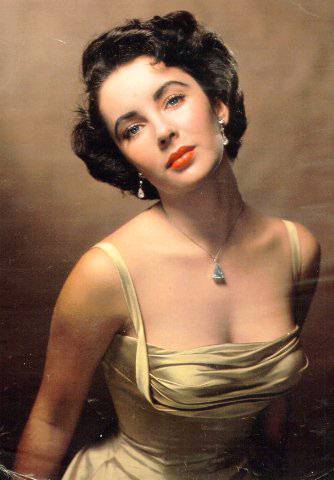
I have loved the tributes to the incomparable Elizabeth Taylor this week and wanted to share some of the best. My friend Margo Howard has a priceless recollection of having Elizabeth Taylor as her babysitter. Dan Zak in the Washington Post asked movie critics and people who knew Miss Taylor to contribute their favorite memories and performances, and I was honored to be included. Adam Bernstein’s obituary in the Washington Post captured her beautifully. He described her as ” a voluptuous violet-eyed actress who lived a life of luster and anguish and spent more than six decades as one of the world’s most visible women for her two Academy Awards, eight marriages, ravaging illnesses and work in AIDS philanthropy.”

By her mid-20s, she had been a screen goddess, teenage bride, mother, divorcee and widow. She endured near-death traumas, and many declared her a symbol of survival — with which she agreed. “I’ve been through it all, baby,” she once said. “I’m Mother Courage.” News about her love affairs, jewelry collection, weight fluctuations and socializing in rich and royal circles were followed by millions of people. More than for any film role, she became famous for being famous, setting a media template for later generations of entertainers, models and all variety of semi-somebodies. She was the “archetypal star goddess,” biographer Diana Maddox once wrote.

Slate’s brilliant movie critic, Dana Stevens, wrote a perceptive appreciation of Miss Taylor as personality, actress, star, and woman: “She was at her best playing characters who inhabited their own bodies with a confident, careless pleasure…Even in her lowest moments onscreen and off, Elizabeth Taylor was always bursting to excess with life.” She also includes a link to Roger Ebert’s marvelous 1969 interview with Miss Taylor and Richard Burton. Ebert’s poignant Elizabeth Taylor tribute in the Wall Street Journal

Turner Classic Movies will have an all-day tribute on April 10. They’re all worth watching but be sure to set your DVR for the ones I’ve put in bold.

6 a.m. – Lassie Come Home (1943), with Roddy McDowall and Edmund Gwenn; directed by Fred M. Wilcox.

7:30 a.m. – National Velvet (1944), with Mickey Rooney, Anne Revere and Angela Lansbury; directed by Clarence Brown.

10 a.m. – Conspirator (1952), with Robert Taylor and Robert Flemyng; directed by Victor Saville.

11:30 a.m. – Father of the Bride (1950), with Spencer Tracy, Billie Burke, Joan Bennett and Don Taylor; directed by Vincente Minnelli.

1:15 a.m. – Father’s Little Dividend (1951), with Spencer Tracy, Billie Burke, Joan Bennett and Don Taylor; directed by Vincente Minnelli.

2:45 p.m. – Raintree County (1957), with Montgomery Clift, Eva Marie Saint, Lee Marvin, Rod Taylor and Agnes Moorehead; directed by Edward Dmytryk.

6 p.m. – Cat on a Hot Tin Roof (1958), with Paul Newman and Burl Ives; directed by Richard Brooks.

8 p.m. – Butterfield 8 (1960), with Laurence Harvey and Eddie Fisher; directed by Daniel Mann.

10 p.m. – Who’s Afraid of Virginia Woolf? (1966), with Richard Burton, George Segal and Sandy Dennis; directed by Mike Nichols.

12:30 a.m. – Giant (1956), with James Dean and Rock Hudson; directed by George Stevens.

4 a.m. – Ivanhoe (1952), with Robert Taylor and Joan Fontaine; directed by Richard Thorpe.

Related Tags:


Actors
Interview: Phil Hall of ‘What if They Lived?’

Interview: Phil Hall of ‘What if They Lived?’

Posted on March 24, 2011 at 8:00 am

We miss the performers who left us too soon almost as though we knew them.

In a new book, Phil Hall and Rory Leighton Aronsky ask What If They Lived?, with essays about stars and almost-stars from the silent era to the present, with biographical details, career assessments, and fascinating glimpses of projects they might have completed if they had lived longer. Hall was kind enough to answer my questions.

Q: How did this book come about?

Phil Hall: I always wondered what would have become of the great stars that died too young. If you see James Dean in “Giant” or Marilyn Monroe in “The Misfits,” it is difficult not to rue that there would be no further performances from its iconic stars – but if fate was kinder, could they have topped what they already created? The idea for the book percolated for years, but my attempts to get a publisher interested in the project were in vain. For whatever reason, many publishers did not think this was a good idea. Fortunately, BearManor Media, the publisher of my last book – The History of Independent Cinema – was convinced that this had potential. Rory Leighton Aronsky joined me as the co-author on the project, and here we are!

Q: Do you have a favorite of the stars that you wrote about?

Phil Hall: The biggest surprise for me was Jayne Mansfield. Many people have dismissed her as a second-rate Marilyn Monroe imitator that audiences rejected. In fact, she was an extremely talented comic actress and her films were popular. Unfortunately, her studio, 20th Century Fox, found it more profitable to loan her out to cheapo production companies for crummy movies rather than build star vehicles around her. That wrecked her film career. But she could have worked steadily without being a movie star. In the mid-1960s, she sold out New York’s Copacabana at a time when nightclubs were considered passe. I also found a clip of Mansfield appearing as a “mystery guest” on the TV show “What’s My Line.” She received the most thunderous audience response imaginable when she came on stage – and this was two years before her death in a 1967 automobile accident.

Q: Some of the performers you wrote about died as big stars, but some died before they achieved all they were capable of. Which of the stars you wrote about do you think would have surprised audiences the most by showing more than anyone knew they were capable of?

Phil Hall: By the time of his death, Robert Walker was on the cusp of showing a depth of versatility that was not present in many of his films. Walker spent most of the 1940s playing a light leading man or a stolid military type. In his last two films, “Strangers on a Train” and “My Son John,” he showed that he was capable of handling dark, complex dramatic roles. This would have opened a new avenue of career possibilities, and he think that could have enjoyed a long and successful career.

Q: You write about stars like James Dean and Marilyn Monroe who continue to be modern-day icons and others like Judy Tyler and Evelyn Preer who are hardly remembered. Why do some stars remain so present in our culture and others do not?

Phil Hall: A lot of it depends on their output. Judy Tyler had a solid career in television and theater, but she only made two films – and only one, “Jailhouse Rock,” is remembered today. The bulk of Evelyn Preer’s cinematic output came in the all-black “race films” produced by Oscar Micheaux, but most of these films are considered lost. A great deal of public recognition also rests on the role of film critics and scholars in defining the popular cinema culture. For example, Larry Semon was a very popular star of comedy films in the 1920s, but very few contemporary critics or scholars are willing to champion in his cause. And, in some cases, we remember the stars because of off-screen tragedies rather than on-screen triumphs: Roscoe Arbuckle, Thelma Todd and Sharon Tate are the most prominent examples. But the beauty of cinema is the ability to preserve a performance forever, with the hope that future generations will come to re-evaluate a star’s personality and talent. I would say that there is a greater popular appreciation of Dorothy Dandridge and Jayne Mansfield today, due in large part to critics, scholars and fan revisiting their performances and recognizing their value to the film culture.

Q: Is there one uncompleted project you wrote about that you most wish could have been made?

Phil Hall: Laird Cregar was supposed to do a Broadway version of Shakespeare’s “Henry VIII,” but he died before the production could take shape. I cannot imagine a better actor to play the monarch, and he could have easily made it into a signature role that could have been taken to the film or television screen.

Q: Your profiles of each of the stars are insightful and evocative. How did you do your research?

Phil Hall: By reading too many books, magazines and websites, and by having conversations with experts who knew more about the subject than I could. For example, online film critic John J. Puccio is also an expert on classical music, and he provided invaluable opinions regarding Mario Lanza’s future potential, while rock music writer Ricky Flake helped me speculate on the future that Elvis Presley never had.

Q: Why do you think Judy Garland would have focused on concerts rather than movies if she had lived?

Phil Hall: I think there would be a combination of factors. First, there was a lack of quality roles for women of Garland’s age and personality. Second, Garland had a reputation for being (for lack of a better word) difficult, and many producers were not eager to take that risk. Third, there was the same problem that kept Montgomery Clift away from films: getting insurance for the star. Garland’s health problems were front-page news for years, and her presence in a film would have jacked up the budget in order to cover her insurance.

Q: Some of the people you wrote about had their careers limited by racism, sexism, or homophobia. Did that influence your ideas about what would have been possible for them if they had lived until more tolerant times?

Phil Hall: It did, because the contemporary concept of tolerance was a fairly recent development. We cannot create an alternative universe for the past where these talented people could have flourished without the restrictions that limited their careers. At the same time, we have to take into consideration another discriminatory concept: ageism. Hollywood is an industry that in constantly on the search for young new faces – good parts for people in their forties or older are difficult to come by, especially for women. What roles would exist for a 50-year-old Marilyn Monroe? It would be like that lyric from Stephen Sondheim’s “Follies”: “First you’re another sloe-eyed vamp. Then someone’s mother, then you’re camp.”


Related Tags:


Actors Books Interview Writers
THE MOVIE MOM® is a registered trademark of Nell Minow. Use of the mark without express consent from Nell Minow constitutes trademark infringement and unfair competition in violation of federal and state laws. All material © Nell Minow 1995-2026, all rights reserved, and no use or republication is permitted without explicit permission. This site hosts Nell Minow’s Movie Mom® archive, with material that originally appeared on Yahoo! Movies, Beliefnet, and other sources. Much of her new material can be found at Rogerebert.com, Huffington Post, and WheretoWatch. Her books include The Movie Mom’s Guide to Family Movies and 101 Must-See Movie Moments, and she can be heard each week on radio stations across the country.

Website Designed by Max LaZebnik