Critic’s Choice Awards

Posted on January 9, 2009 at 10:18 pm

I was not able to make it to this year’s Critic’s Choice Awards in person, but I really enjoyed casting my votes and watching it on television. Here are the winners and keep in mind they are often a better predictor of the Oscars than the Golden Globes:
Best Picture:
“Slumdog Millionaire”
Best Director:
Danny Boyle, “Slumdog Millionaire”
Best Actor:
Sean Penn, “Milk”
Best Actress:
Meryl Streep, “Doubt” & Anne Hathaway, “Rachel Getting Married” (tie)
Best Supporting Actor:
Heath Ledger, “The Dark Knight”
Best Supporting Actress:
Kate Winslet, “The Reader”
Best Writer:
Simon Beaufoy, “Slumdog Millionaire”
Best Foreign Language Film:
“Waltz With Bashir”
Best Animated Film:
“WALL-E”
Best Documentary:
“Man On Wire”
Best Acting Ensemble:
“Milk”
Best Young Actor/Actress:
Dev Patel, “Slumdog Millionaire”
Best Composer:
A.R. Rahman, “Slumdog Millionaire”
Best Song:
“The Wrestler,” by Bruce Springsteen (“The Wrestler”)
Best Action Film:
“The Dark Knight”
Best Comedy Movie:
“Tropic Thunder”

Related Tags:


Awards

Special Effects: Best and Worst

Posted on January 7, 2009 at 11:12 pm

Den of Geek has made a list of the best movie special effects shots of all time — and the worst.
Special effects go back to the very beginning of film. The first great genius of special effects was George Melies, a stage magician. He was the one who figured out that he could make people appear and disappear by stopping the camera. His film “A Trip to the Moon” is still filled with charm. The rocket ship smashes into the face of the man in the moon. His moon creatures are delightfully acrobatic. The explorers come back to earth by just jumping off!
I visited the German museum of film in Frankfurt and learned that the German word for special effects is “filmtricks.” It has little to do with resources or technology — the special effects in the original 1933 “King Kong” hold up well more than 80 years later, and I think the best special effects of 2008 were in “Iron Man,” where they were almost entirely mechanical and not computer-generated. Just like everything else about the movies, it is the humans who make the difference, not the machines or the money.
Thanks to iorek for the excellent link!

Related Tags:


Lists

Scary G-rated Movies

Posted on January 6, 2009 at 8:00 am

Emily Bazelon writes in Slate about the scariness of G-rated movies. Like several of the commenters on this site, she found The Tale of Despereaux scarier than she expected and so did her 5-year-old. Even though he had heard the audio book and knew the storyline, for at least a third of the time he “watched the movie with a pained expression and his hands over his ears. ”

Why, given this likely audience, did the moviemakers feel the need to include extended sequences with fear-pumping music; a giant menacing cat that charges after Despereaux in a gladiator ring; and Botticelli, the torture-obsessed leader of Rat World? And what’s the point of a G rating if movies like Despereaux fall into that category? This movie confirms my feeling that it’s past time to replace G with better age-tailored guidance. I remember sad G-rated kids’ movies from childhood: Disney classics like Pinocchio
, Dumbo, and Bambi. But my kids didn’t find “Bambi” distressing. Instead, what’s hard for them to handle are new movies, ostensibly created for their age group, from which they emerge metaphorically dripping in sweat, wrung out by an hour and a half of suspense and overexcitement.

Bazelon is looking for some mathematical formula to help her evaluate the movies she is considering for her children. But it is not that easy. A study published in the Journal of the American Medical Association in 2000 produced the utterly predictable conclusion that every one of the 74 G-rated movies they reviewed had at least some violence in it. That includes comic bops on the head and various kinds of mild peril as well as fights with weapons that conclude with fatal injuries.

The study found a total of 125 injuries (including 62 fatal injuries) in 46 (62%) of the films. Characters portrayed as “bad” were much more likely to die of an injury than other characters (odds ratio, 23.2; 95% confidence interval, 8.5-63.4). A majority of the violence (55%) was associated with good or neutral characters dueling with bad characters (ie, using violence as a means of reaching resolution of conflict), and characters used a wide range of weapons in violent acts.

Classic G-rated films from The Wizard of Oz (flying monkeys, Scarecrow set on fire, scary witch) to The Black Stallion (sinking ship, loss of a parent) as well as, yes, Pinocchio (another sinking ship, child turns into a donkey, characters swallowed by a whale), Dumbo (scary fire, mean bullies), and Bambi (death of mother, forest fire) have both scared and enchanted children for generations. And every generation thinks, as Bazelon does, that the new movies are just scarier. But that is not the problem.
The problem is that (1) every movie and every movie scare is different; it is almost impossible to say whether one movie is scarier than another in the same rating category in part because (2) every child is different. A child who handles the death of Bambi’s mother without blinking one week (seen at home, on a small screen) may be very disturbed a week later in a dark theater with a big screen seeing the mother of the princess die of shock after seeing a rat in her soup at the beginning of The Tale of Despereaux, a moment I (apparently incorrectly) expected to be more upsetting to children in the audience than the gladiator scene with the bound princess delivered to the hungry rats to be devoured (but rescued before they get even a nibble). Children’s developmental rates are uneven and unpredictable and you can never be certain how they will process the moments of peril and tension in a story.
I’ve never met anyone who couldn’t immediately tell you about some movie that they found traumatic as a child or teenager (I get the flying monkeys a lot). I take that seriously; after all, a large part of what I do here is help guide parents to give them the information they need to protect their children. And I urge parents to leave the theater or turn off the TV if they think children are unhappily frightened. But I realize, as all parents should, that one of the purposes of story-telling is to give us the opportunity to test our emotions and our responses and give us a sense of control over our inexpressible fears. Before there were scary movies there were scary fairy tales and nursery rhymes and before that there were scary stories around the campfire. The best we can do as parents is to protect our children when we can and teach them how to handle their fears when we can’t.

Related Tags:


Commentary Understanding Media and Pop Culture

Viva Las Vegas

Posted on January 5, 2009 at 7:20 am

A-
Lowest Recommended Age: All Ages
MPAA Rating: Not rated
Profanity: None
Alcohol/ Drugs: Social drinking
Violence/ Scariness: Mild peril
Diversity Issues: None
Date Released to Theaters: 1964

Happy birthday, Elvis! In honor of The King’s birthday this week, we present one of his best movies, the delirious Viva Las Vegas, co-starring the combustible Ann-Margret.
Elvis plays a race-car driver named Lucky who meets a spirited girl named Rusty. For once he has a co-star who is as dynamic a musical performer as he is. It includes classics like the title tune and saucy duet “The Lady Loves Me,” plus a sizzling Ann-Margret dance number. And a car race! Just the thing to start off the new year.

Related Tags:


Classic DVD/Blu-Ray Pick of the Week For all ages For Your Netflix Queue Musical

The Worst Movies of 2008 — but some of the Best Reviews

Posted on January 4, 2009 at 8:00 am

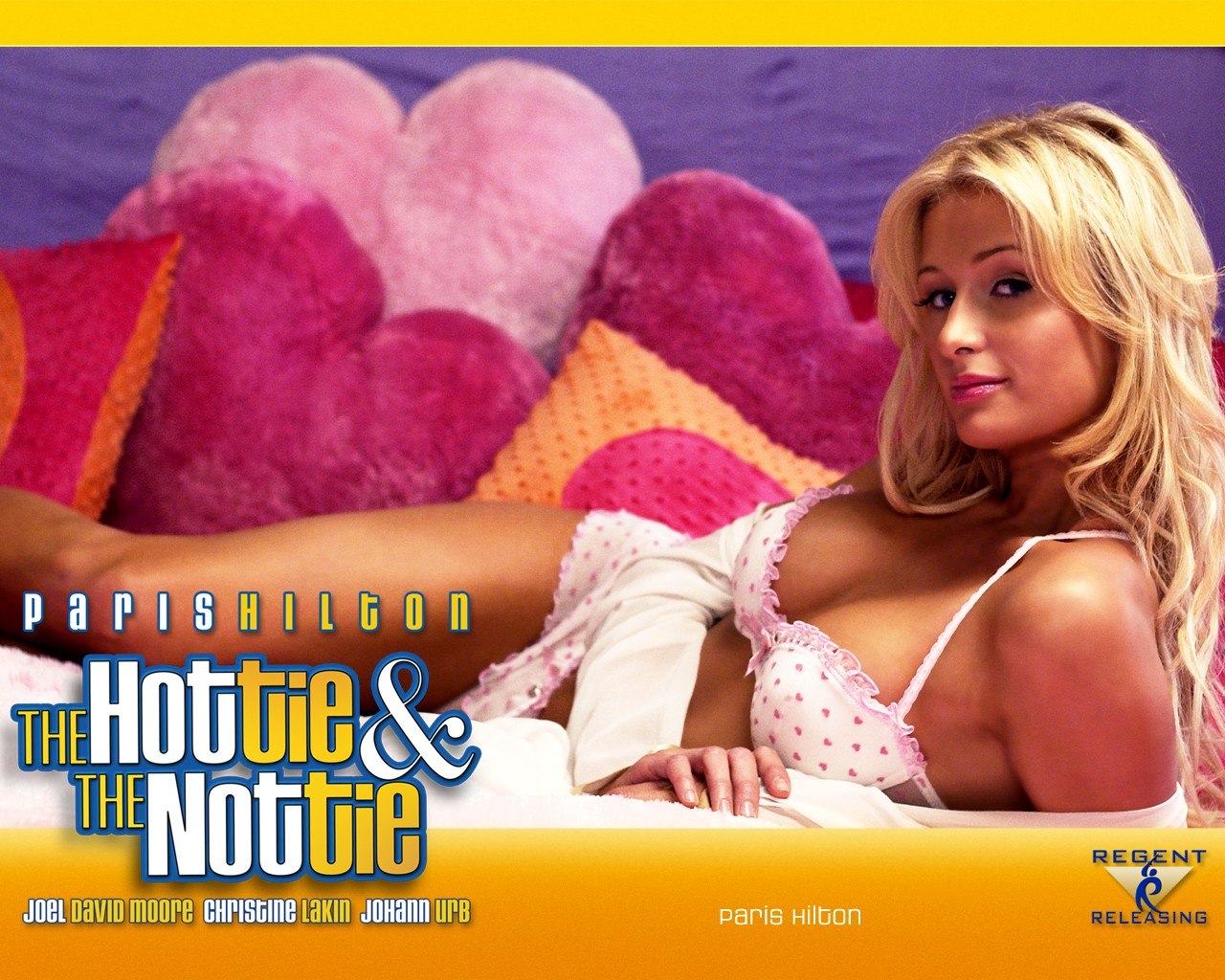
The Washington Post covers Rotten Tomatoes’ round-up of the year’s worst movies and what makes it fun to read is not just the list of what-were-they-thinking horrible films but the quotes from the reviews by the critics who suffered through them. My own pick for the worst film of the year is featured on Rotten Tomatoes along with the choices from Ben Mankiewicz, Roger Ebert, and others invited to participate by the RT editors. Hottie-and-Nottie-1461.jpg
Maybe it’s just a case of new year’s optimism but for me the good news from this article is less about the lousy movies (what did we expect from Paris Hilton, Uwe Boll, or those “Epic Movie” people?) that it is about the good work done by the critics who reviewed them. The movies may have been a waste of time but the reviews, as quoted on Rotten Tomatoes and in the Post, were not. Anguished, maybe, even angry at times, but often funny and always clever, thoughtful, and game.
It doesn’t take a critic to know that a movie is awful, but it can take a critic to help us understand how and why it is awful. The movie may not be fun to watch but the critic can make explaining why it is not fun to watch a lot of fun to read and, on a good day, we will learn something, too. And I give extra credit to the intrepid souls who make the effort to see the “cold opens,” the films that are not shown in advance to critics because the studios are certain they won’t get a single good review. They’re better prognosticators than they are film-makers; several of those cold opens ended up on the worst list including the dead last, “One Misssed Call,” which did not get a single good review.
I usually don’t mind seeing bad movies. The really horrible ones can be easier to watch than movies that are just dull and mediocre. My son and I used to joke that the motto of our movie-going club was “just because a movie is no good is no reason not to see it.” He has generously accompanied me to some legendary flops, including Catwoman and Battlefield Earth. It is often easier to write a good review of a bad movie than a good review of a great movie, and the Post article reminds us that terrible movies often inspire some very well-written complaints.
All of this is a good way to get ready for the first releases of 2009. The big prestige movies of December, released in time for awards consideration, are inevitably followed by the January left-overs. We normally don’t see much worth recommending until mid-February at the earliest. So this round-up of last year’s worst movies as reviewed by some of the best critics is a timely reminder to sharpen my metaphorical pencils and get ready to do my best to make reading about bad films as entertaining as I wish it had been to watch them.

Related Tags:


Commentary Media Appearances Understanding Media and Pop Culture
THE MOVIE MOM® is a registered trademark of Nell Minow. Use of the mark without express consent from Nell Minow constitutes trademark infringement and unfair competition in violation of federal and state laws. All material © Nell Minow 1995-2026, all rights reserved, and no use or republication is permitted without explicit permission. This site hosts Nell Minow’s Movie Mom® archive, with material that originally appeared on Yahoo! Movies, Beliefnet, and other sources. Much of her new material can be found at Rogerebert.com, Huffington Post, and WheretoWatch. Her books include The Movie Mom’s Guide to Family Movies and 101 Must-See Movie Moments, and she can be heard each week on radio stations across the country.

Website Designed by Max LaZebnik