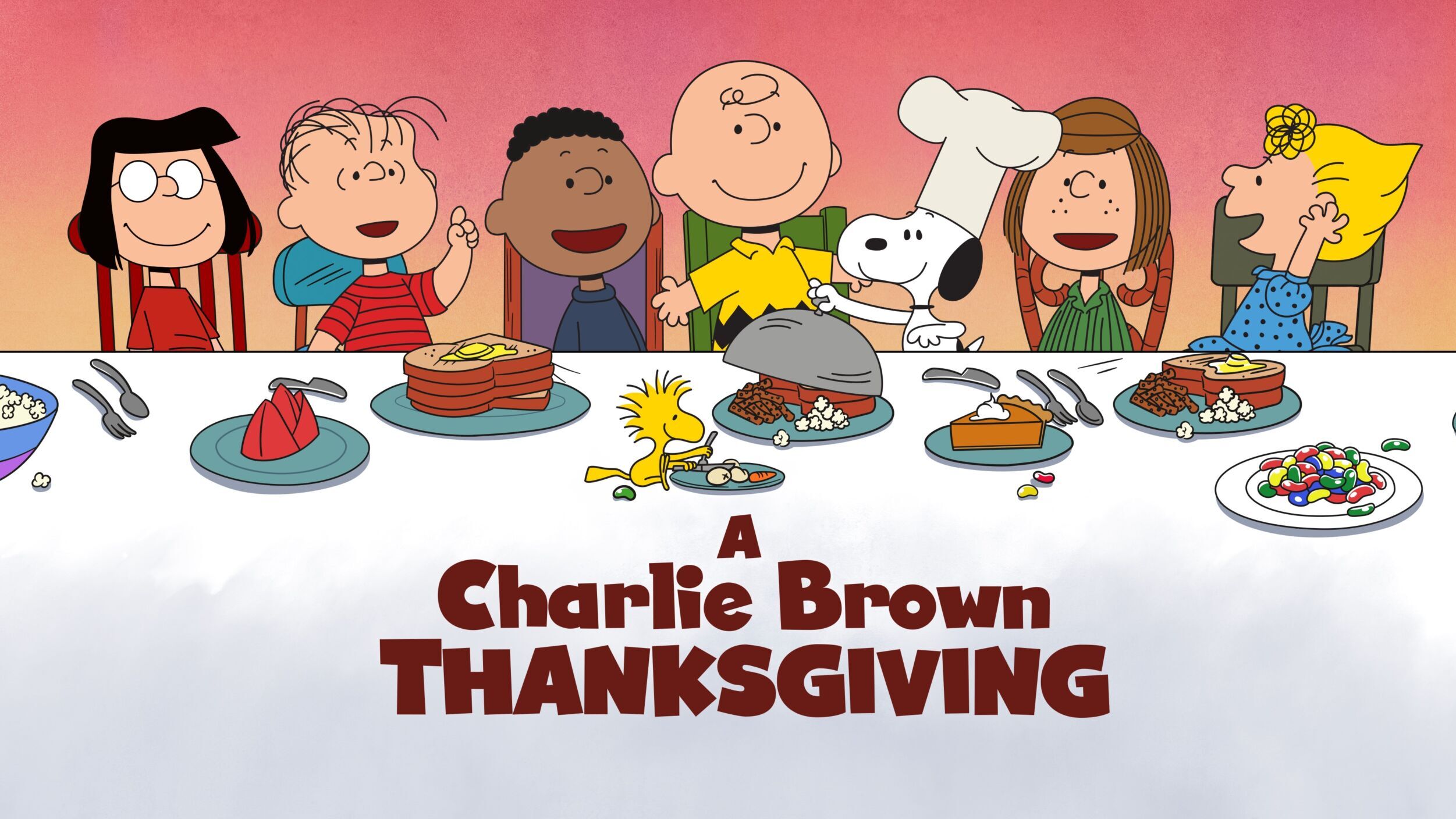
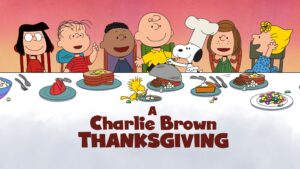
A Charlie Brown Thanksgiving This is the one with the famous episode about Charlie Brown trying to kick the football Lucy keeps snatching away from him. And Peppermint Patty invites herself to Charlie Brown’s house for Thanksgiving and he is too kind-hearted to tell her that he won’t be there because his family is going to his grandmother’s. When the Peanuts gang comes over for a feast prepared by Charlie Brown himself, Patty gets angry at being served toast and jelly beans. But when she realizes how hard her friend tried to be hospitable, she learns what gratitude really means.
Squanto and the First Thanksgiving , Native American actor Graham Greene and musician Paul McCandless tell the story of Squanto’s extraordinary generosity and leadership in reaching out to the Pilgrims after he had been sold into slavery by earlier European arrivals in the New World.
An Old Fashioned Thanksgiving Jacqueline Bisset stars in this warm-hearted tale, based on a short story by Louisa May Alcott (Little Women).
My favorite Thanksgiving movies are “What’s Cooking?” with four families preparing for the holiday and “Pieces of April,” about a family, including a terminally ill mother, driving to an estranged daughter for Thanksgiving. Both are funny, touching, and wise. Wishing all of you a Thanksgiving filled with gratitude for being together, even the crazy parts.
In Bloody Ground, Black soldiers tell their own stories about fighting in the Korean War. Korea is “the forgotten war.” But to those who fought in it, it was the “unforgettable war.” If the names of all those killed were put on a wall, it would be larger than the Vietnam Wall. And Korea lasted only three years, Vietnam about ten. The agony of the winter of 1950-51 is an epic to compare with Valley Forge and the Bulge. Korea was also our last segregated war. This is the story of the black 24th Infantry Regiment, told in the words of the men themselves. Like all black troops since the Civil War, they were reviled by whites and their own commander for “bugging out” – running before the enemy. The charge can still be read in the Army’s own official histories. Yet the 24th left more blood on the field than their white comrades – if they did bug out, they must have been running the wrong way. It’s a good thing we weren’t with Custer,” one black GI muttered – “they’d have blamed the whole thing on us.” The 24th won the first battle of the war, won its division’s first Medal of Honor, and guarded the shortest and most vulnerable road to Pusan. If the port had fallen, the war would have been lost, leaving a red dagger pointed at Japan. It did not fall. That winter, after the Chinese attacked, the entire American army bugged out in perhaps the worst military disaster in American history. “That,” said another black veteran, “was when I learned that whites could run as fast as blacks.” This is the story of those unsung heroes, who helped turn the Communist tide for the first time. The men bring that forgotten war and their own unsung bravery to life in their own sometimes funny, often heart-breaking, and always exciting words.
Copyright Stanley Frankel 1999
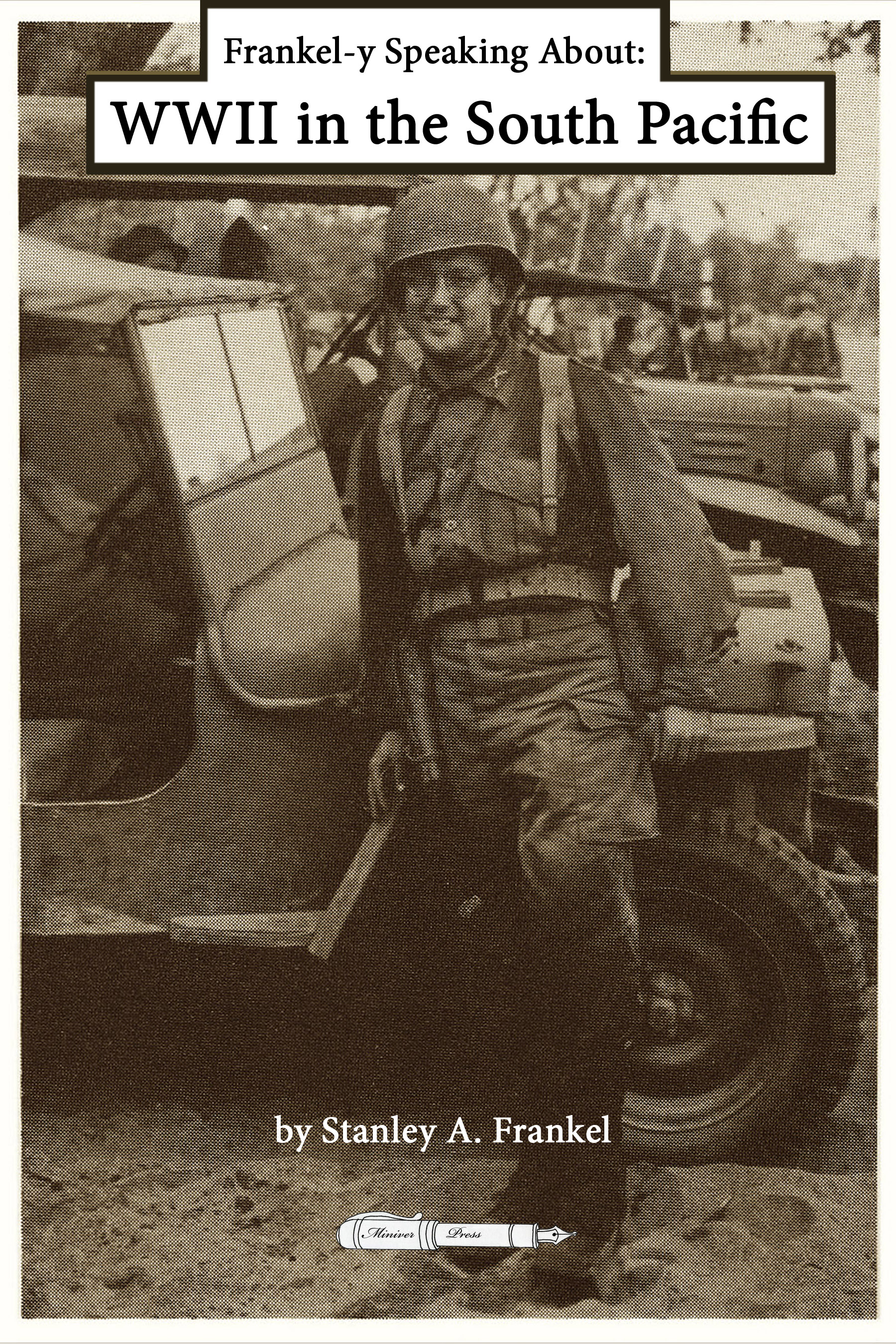
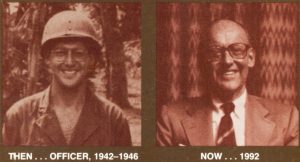
Stanley Frankel’s book about his experiences is called Frankel-y Speaking About WWII in the South Pacific. Stanley Frankel didn’t want to be a soldier. But the draft board had different plans. The leader of college protests against the US entering WWII found himself in the 37th Infantry Division, shipped to the Pacific Theater. While in the army, he wrote journal entries, letters to his dear Irene, and articles that slipped past the censor to be published in newspapers and magazines in the US while the war was raging. Frankel served from 1941 to 1946, and was then ordered to stay on after the war as part of a team tasked with writing the historical account of his division. After that he became a successful advertising executive, award-winning professor, political speechwriter for national candidates, and beloved husband, father, and grandfather.In this memoir, Frankel tells his story interspersed with in-the-moment journals, letters, and articles he wrote while stationed in the Pacific. Take a journey through time with this raw first-hand account, and experience what it was like to be in the jungles and battles of an intense and brutal part of World War II. In his later writings, see the post–World War II world through the eyes of a veteran selected as the official historian of his division. Unforgettable stories leap off the page, from the chilling to the hilarious. Feel the terror as an explosive flies through a window into a huddle of soldiers. Laugh at the account of soldiers delighting in the discovery of an abandoned factory flooded with ice-cold beer. Frankel describes serving alongside Private Rodger Young who gave up his life in New Georgia to save 20 men of his patrol and inspired a song. He brings us into the Rescue of Bilibid Prison, and the battles of Bougainville and Guadalcanal. This is a wise, honest, and beautifully written book for anyone who has wondered about the realities of combat, the journey of shouldering a duty you did not choose, or the experience of being among the “greatest generation” who came of age in the Depression and fought in World War II. This edition features a new introduction from Frankel’s grandson Adam, who followed in Stan’s footsteps to become a political speechwriter, including writing speeches for President Obama in the White House, and who is now an author himself, with his family memoir, The Survivors.
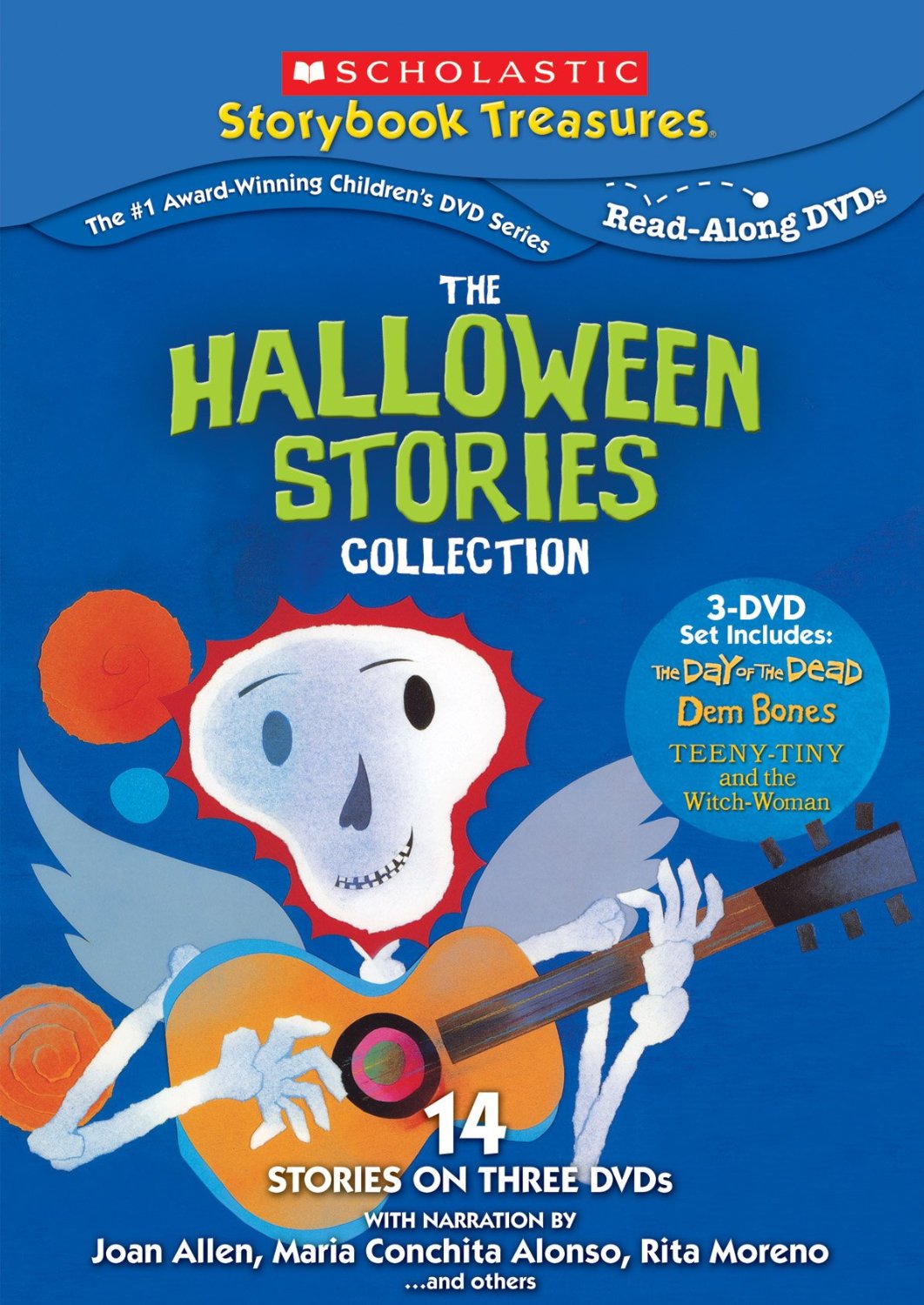
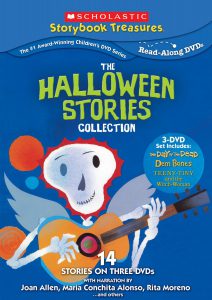
Halloween gives kids a thrilling opportunity to act out their dreams and pretend to be characters with great power. But it can also be scary and even overwhelming for the littlest trick-or-treaters. An introduction to the holiday with videos from trusted friends can help make them feel comfortable and excited about even the spookier aspects of the holiday.
Kids ages 3-5 will enjoy Barney’s Halloween Partywith a visit to the pumpkin farm, some ideas for Halloween party games and for making Halloween decorations at home, and some safety tips for trick-or-treating at night. They will also get a kick out of Richard Scarry’s The First Halloween Ever, which is Scarry, but not at all scary!
Witches in Stitches is about witches who find it very funny when they turn their sister into a jack o’lantern. And speaking of jack o’lanterns, Spookley the Square Pumpkin, is sort of the Rudolph the Red-Nosed Reindeer of pumpkins. The round pumpkins make fun of him for being different until a big storm comes and his unusual shape turns out to have some benefits.
Kids from 7-11 will enjoy , A Babysitter’s Guide to Monster Hunting. It has gorgeously imagined settings, a great cast, and an exciting story that hits the exact sweet spot between funny-scary and scary-funny. Which means it is exciting and fun. “Muppets Haunted Mansion” combines all the Muppet favorites with one of the most popular attractions at the Disney theme parks.
Don’t forget the classic It’s the Great Pumpkin, Charlie Brown and the silly fun of What’s New Scooby-Doo: Halloween Boos and Clues. Try The Worst Witch movie and series, about a young witch in training who keeps getting everything wrong. School-age kids will also enjoy The Halloween Tree, an animated version of a story by science fiction author Ray Bradbury about four kids who are trying to save the life of their friend. Leonard Nimoy (Mr. Spock on the original “Star Trek”) provides the voice of the mysterious resident of a haunted house, who explains the origins of Halloween and challenges them to think about how they can help their sick friend. The loyalty and courage of the kids is very touching.
Debbie Reynolds plays a witch who takes her grandchildren on a Halloween adventure in the Disney Channel classic in Halloweentown. Recent favorites include The House with a Clock in Its Walls, The Curse of Bridge Hollow, and Goosebumps.
Older children will appreciate The Witches, based on the popular book by Roald Dahl ((the original with Anjelica Huston, not the remake with Anne Hathaway) and Hocus Pocusand the new sequel, with children and teens battling three witches played by Bette Midler, Sarah Jessica Parker, and Kathy Najimy. And of course there is the deliciously ghoulish live-action double feature Addams Family and Addams Family Values based on the cartoons by Charles Addams. Episodes of the classic old television show are online and there are now two animated films for younger kids. The second is better than the first. The new Munsters from Rob Zombie is not good, but the original TV series episodes are still fun.
Beetlejuice is a classic, now even a Broadway musical. I’m fond of Beautiful Creatures, based on the best-selling YA novels about a witchy family in the American South.
The Nightmare Before Christmas has gorgeous music from Danny Elfman and stunningly imaginative visuals from Tim Burton and Henry Selick in a story about a Halloween character who wonders what it would be like to be part of a happy holiday like Christmas. Selick’s Coraline, based on the book by Neil Gaiman, is wildly imaginative and I am looking forward to the Halloween release of his latest, “Wendell & Wild,” co-written with Jordan Peele, who lends his voice to the film with his longtime colleague Keegan-Michael Key.
Rated PG-13 for thematic content involving racism, strong disturbing images and racial slurs
Profanity:
Racist epithets
Date Released to Theaters:
October 28, 2022
Date Released to DVD:
January 16, 2023
Copyright 2022 Orion PicturesIn March of 2022, President Joe Biden signed the Emmett Till Antilynching Act, making lynching a federal hate crime. It only took 67 years.
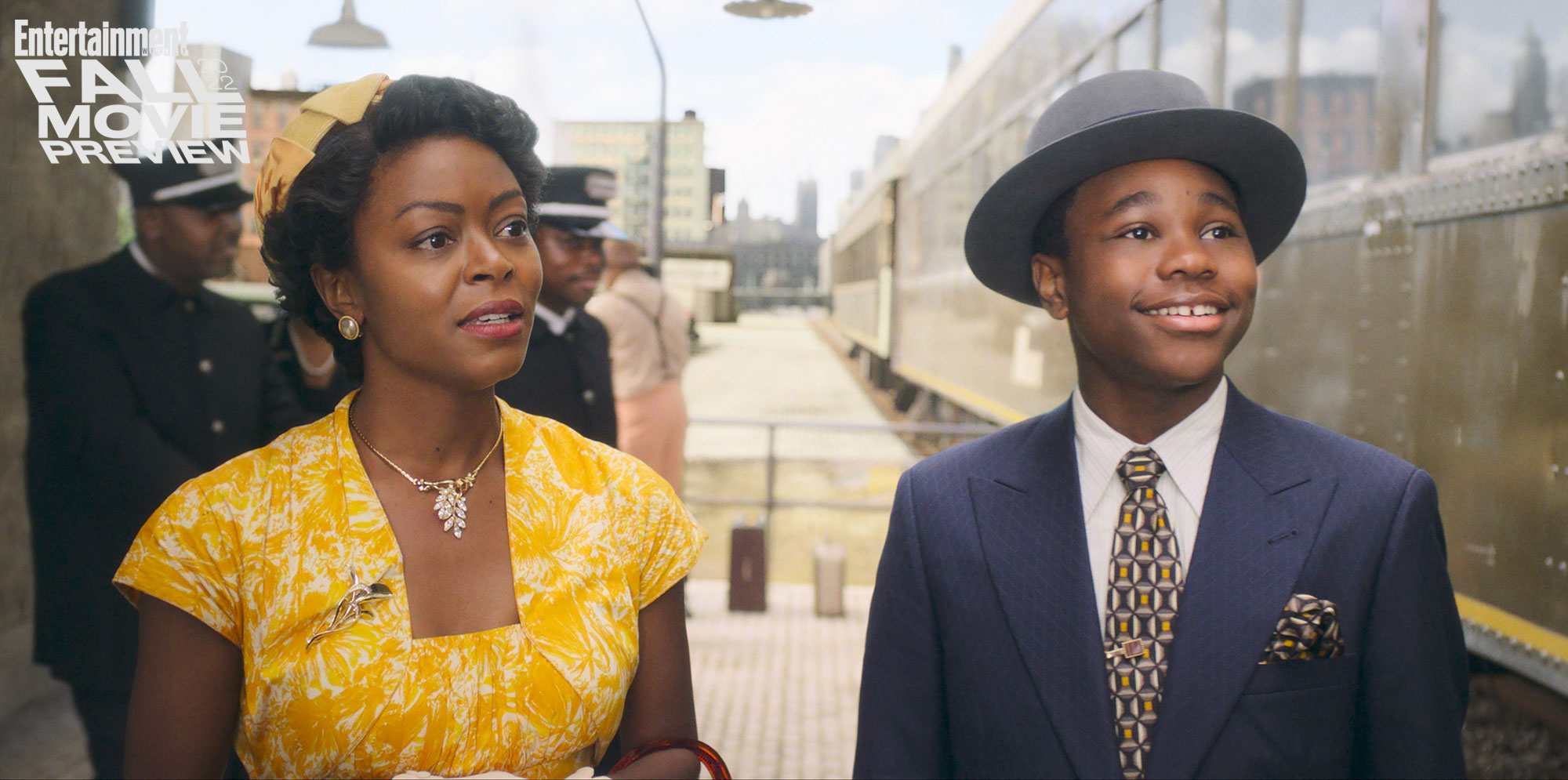
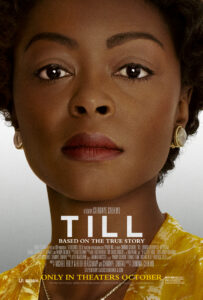
It was in 1955 that a 14-year-old Black boy from Chicago named Emmett Till was murdered in Mississippi for allegedly whistling at a white woman. “Till” is his story, but it is more importantly the story of his mother, who responded to the greatest pain a parent can experience with determination to save other families from that kind of tragedy. I will give her the respect denied her by the white people of Mississippi and refer to Till’s mother, later known as Mamie Till-Mobley, as she was by the Black people who honored her during this period, Mrs. Bradley. She is played with infinite grace and dignity by Danielle Deadwyler in a performance that is one of the most thrilling of the year.
Emmett (Jalyn Hall) was a happy, friendly, high-spirited boy who was devoted to his single mother and thought the world was a safe place. We first see him with his mother at Chicago’s famous department store, Marshall Field’s, politely responding to a clerk who suggests that she shop in the basement, clearly a racist response. Mrs. Bradley tries to warn Emmett that things are different in the Jim Crow South, that he must be careful, ultra-respectful, and, if called upon, get down on his knees and beg forgiveness for any suspected slight. But Emmett is young and a bit of a show-off. His casual demeanor and his speaking to the 21-year-old white woman at the cash register was considered an insult. And so, Her husband and his friend banged on the door of Till’s relatives, took him from their home at gunpoint, and murdered him.
Mississippi wanted to bury him there, along with the story. But with the intervention of the NAACP, his body was returned to Chicago, so abused and mutilated that it was barely recognizable as human. The mortician urged her not to look and to close the casket at the funeral because, he says carefully, “He’s not in the right shape” to be seen. But Mrs. Bradley insisted that he must be seen, that what happened to him must be understood. The moments of her communion with her son’s body, the faces of those viewing him at the funeral, and Deadwyler’s description in court testimony of how she was able to identify him as her son are galvanizing. “He is in just the right shape. The world is going to see what they did to my boy,” she says. That legacy continues with this important, impactful film.
Parents should know that this movie is the true story of a brutal hate crime. The murder is sensitively handled, but we do see, as Mrs. Bradley would have wanted, his body and the reactions of the people who viewed the open casket. Characters smoke, drink and use racist language, including the n-word.
Family discussion: How does the experience of Emmett Till relate to the issues raised by Black Lives Matter today? What do we learn from her conversation with Preacher? Why did Mrs. Bradley’s decision to speak out make a difference?
Copyright 2022 UniversalTwo very different people claim that they have no interest in love and relationships but love will outsmart you and — at least in movies — love loves a challenge. “Bros” is the first Hollywood studio romantic comedy about a gay couple, and it arrives with solid credentials: produced by Judd Apatow (“The 40 Year Old Virgin,” “Knocked Up”) and co-written and directed by Nicholas Stoller (“Forgetting Sarah Marshall,” “Get Him to the Greek”).
The other screenwriter and star is Billy Eichner, playing a heightened version of his real-life persona: cynical and often abrasive. He has said in interviews that he was determined not to make this story comfortable for “normies” by simply replicating cis-het rom-com tropes. This is not a script that could be easily retrofitted for some pretty Jennifer or Jessica to sparkle through some misunderstandings and end with an apology and a proposal. “Love is not love!” he says, explaining that expecting gay couples to replicate the dynamics of straight couples just to make them more acceptable is refusing to recognize that their differences are who they are. This is more of a “We’re here! We’re queer! Get used to it” attitude. Everyone in the film, including the actors playing straight characters, is gay, except for a few celebrity cameos.
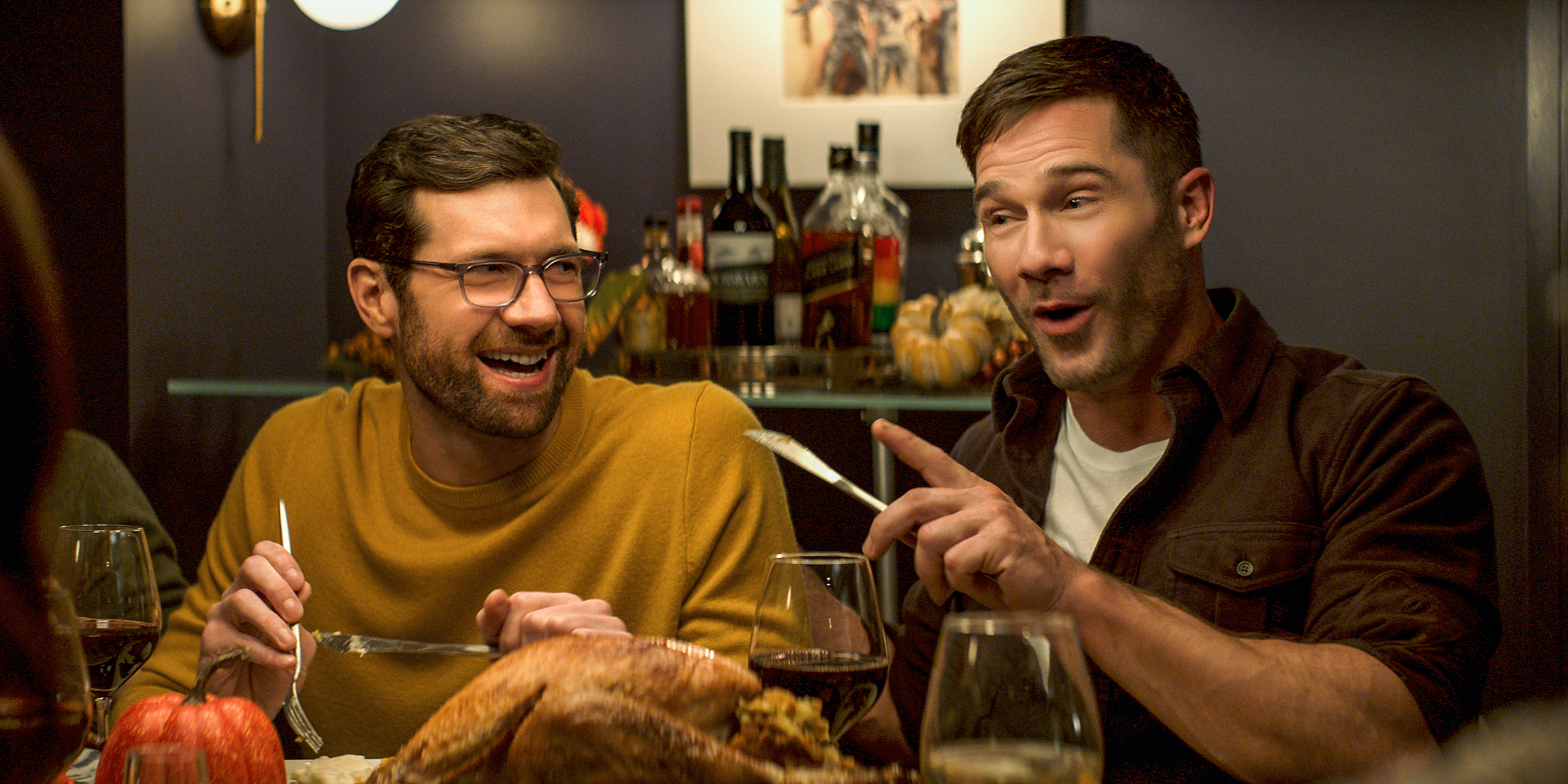
Eichner plays Bobby Leiber, a popular podcaster who has just accepted a new job as the head of the country’s first museum of LGBTQIA history. Some of the movie’s best scenes are in the museum’s conference room, as Bobby and the staff argue about the best way to represent their community. They want to be honest but they also want to get the funding they need to open the museum. So, does that mean an exhibit about Abraham Lincoln, because some people think he was gay? Or does it mean an exhibit with a car that travels through a hall of gay trauma proposed by a wealthy donor? That potential donor, by the way, is played by “SNL’s” Bowen Yang, and he is hilarious.
Bobby insists that he likes being alone and independent. When two friends excitedly announced that they have invited a third man into their relationship to become a thruple, he says he does not even want to be part of a couple. He insists that he is doing fine with brief encounters with strangers found via apps, and tells us that walking home afterwards he feels warm and connected. And then he sees Aaron (Luke Macfarlane). While he won’t admit it to himself, he likes Aaron and he like likes Aaron. And that means he has to think about something he has spent his whole life not thinking about: whether anyone will like like him.
There’s a bushel basket of witticisms and pop culture references. The film also captures the way “S’up?” both stands for and impedes communication. Without getting too heteronormative, there is also a lot of heart. Everyone in the film is clearly very happy to be there and to tell this story, and I was happy to be able to watch it.
Parents should know that this movie includes sexual references and very explicit sexual situations and nudity, strong language, alcohol and drug use.
Family discussion: What was Bobby wrong about? Would you like to visit that museum? What should be in it?
If you like this, try: “Fire Island,” also featuring Bowen Yang.




 with a visit to the pumpkin farm, some ideas for Halloween party games and for making Halloween decorations at home, and some safety tips for trick-or-treating at night. They will also get a kick out of Richard Scarry’s The First Halloween Ever, which is Scarry, but not at all scary!
 has the beloved little monkey investigating the Legend of “No Noggin.” Disney characters celebrate Halloween in
  .
. is about witches who find it very funny when they turn their sister into a jack o’lantern. And speaking of jack o’lanterns,
  is sort of the Rudolph the Red-Nosed Reindeer of pumpkins. The round pumpkins make fun of him for being different until a big storm comes and his unusual shape turns out to have some benefits.
 and the silly fun of
  Try
Try  movie and series, about a young witch in training who keeps getting everything wrong. School-age kids will also enjoy
  , an animated version of a story by science fiction author Ray Bradbury about four kids who are trying to save the life of their friend. Leonard Nimoy (Mr. Spock on the original “Star Trek”) provides the voice of the mysterious resident of a haunted house, who explains the origins of Halloween and challenges them to think about how they can help their sick friend. The loyalty and courage of the kids is very touching.
 . Recent favorites include
  , based on the popular book by Roald Dahl ((the original with Anjelica Huston, not the remake with Anne Hathaway) and
  and the new sequel, with children and teens battling three witches played by Bette Midler, Sarah Jessica Parker, and Kathy Najimy. And of course there is the deliciously ghoulish live-action double feature
  based on the cartoons by Charles Addams.
  is a classic, now even a Broadway musical. I’m fond of
  has gorgeous music from Danny Elfman and stunningly imaginative visuals from Tim Burton and Henry Selick in a story about a Halloween character who wonders what it would be like to be part of a happy holiday like Christmas. Selick’s
  (horror/comedy treats) and the omnibus ghost story films