The MPAA Reveals Some Details of its Famously Secretive Rating System
Posted on November 3, 2018 at 8:18 am
As the Motion Picture Association of America’s rating system celebrates its 50th anniversary, it has revealed some details of its first half-century. The rating system was instituted after three decades of the famous, highly restrictive Hays Code, was no longer workable in the tumultuous 1960’s. Filmmakers and audiences wanted a wider range of material and movies like “The Pawnbroker” and “Carnal Knowledge” were undeniably (even, in the latter case, SCOTUS confirmed) of artistic merit. So then MPAA head Jack Valenti adopted a parental guidance rating which was further refined over the years. The documentary “This Film Has Not Yet Been Rated” exposed some of the failings of the system, including inconsistent ratings based on whether the movie was independent or studio-made, the lack of any qualifications of the secret raters, and the absurdity of the appeal system.
In the eyes of many filmmakers, the Motion Picture Assn. of America should be rated R — for reticent. The MPAA has long kept its rating methods a tightly guarded secret as it continues to wield enormous power over the types of explicit content that can been shown in U.S. cinemas.
Now the MPAA is drawing back the curtain on its rating system, at least partially. In a new report published Monday, the Washington-based trade organization representing Hollywood’s major studios released data on all films rated since the system was created five decades ago. The MPAA’s Classification and Rating Administration has rated 29,791 movies, the majority of which have received an R rating, which requires children under 17 to be accompanied by a parent or guardian.
The most films the MPAA has reviewed in any given year was in 2003, when it rated 940 titles (compared with just 563 last year). The organization attributed the surge to the popularity of DVDs at the time.
R-rated movies account for nearly 58% of all titles rated by the MPAA, followed by PG at 18%. The dreaded NC-17, and its predecessor the X, accounted for less than 2% of titles, though they have garnered the vast share of negative publicity whenever a director has sought an appeal. NC-17 prohibits children younger than 17 from entry into a movie theater.
The MPAA said that of the nearly 30,000 films it has rated, only 1.4%, or 428, have been appealed, and a scant 0.6% have had their rating overturned. Filmmakers often appeal NC-17 and R ratings in an effort to reach the largest audience possible. Recent successful appeals include Clint Eastwood’s “The 15:17 to Paris,” which went from R to PG-13, and the upcoming Rebel Wilson comedy “The Hustle,” which was also reduced to PG-13.
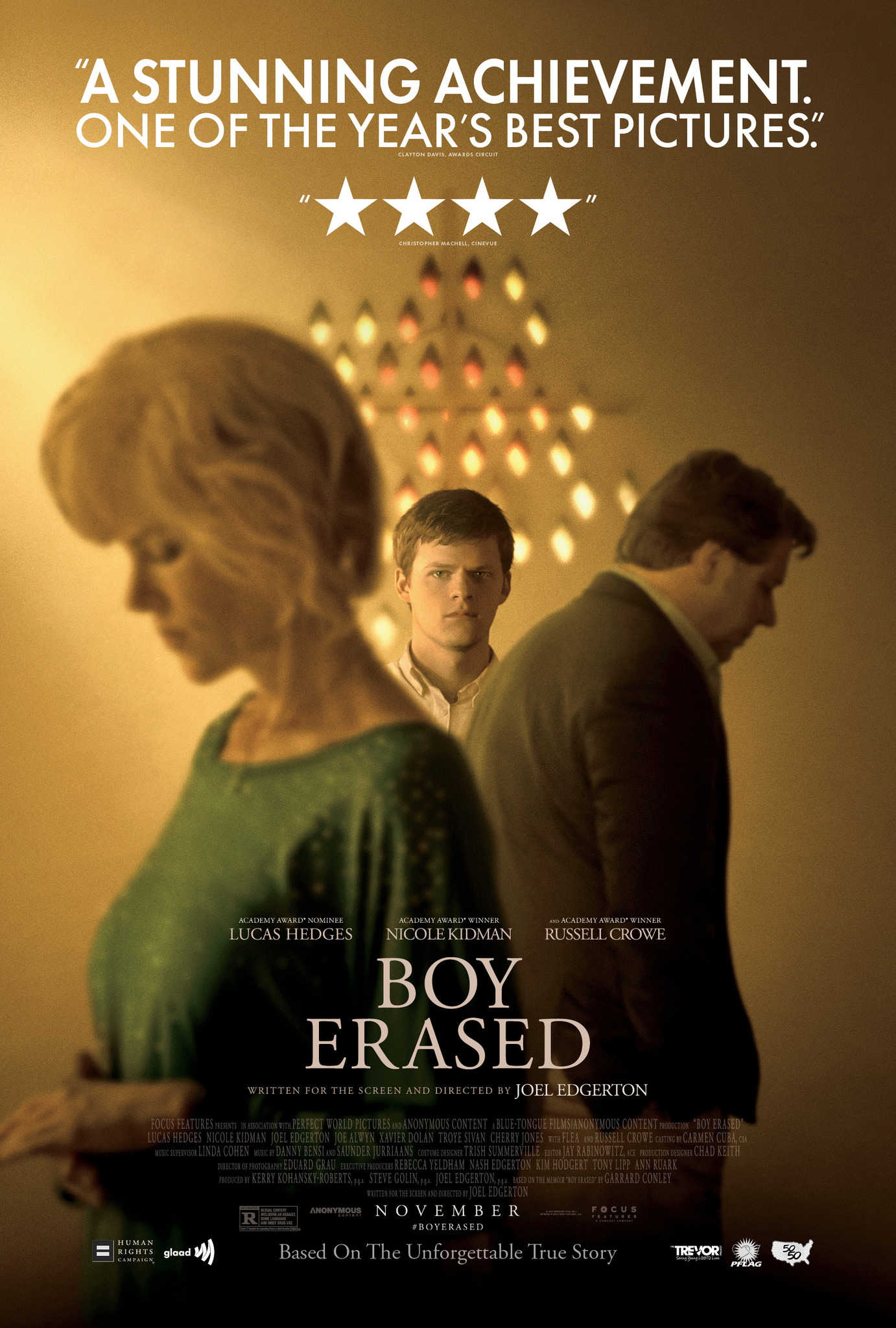
Rated R for sexual content including an assault, some language and brief drug use
Profanity:
Some strong language
Alcohol/ Drugs:
Brief drug use
Violence/ Scariness:
Graphic, disturbing rape scene
Diversity Issues:
A theme of the movie
Date Released to Theaters:
November 2, 2018
Date Released to DVD:
January 28, 2019
Copyright 2018 Focus Features
“Boy Erased” is the second major feature film released in 2018 about Christian “gay conversion” facilities (the documentary “Far from the Tree” touched on gay conversion therapy). It is based on the experience of and expose by Garrard Conley, “Boy Erased” might better be called “Boy Ineradicable” because it is the story of a college student who is at first genuinely grateful to be sent to the conversion facility to be “cured,” but there realizes, contrary to and because of that experience, that those who do not understand that he is healthy and love him as he is and for who he is — those are the people in need of conversion.
Home movies show us Jared (as he is called in the film, played by Lucas Hedges) as an only child growing up with devoted and loving parents. His father, Marshall (Russell Crowe) is a preacher and a prosperous owner of a car dealership. He is a sincere and honest man of faith, preaching redemption, not fire and brimstone. Jared’s mother is Nancy (Nicole Kidman), with blonde bouffant hair, perfect manicure, and sparkly sense of style. As Milton wrote in Paradise Lost, “For contemplation he and valour formed,
For softness she and sweet attractive grace; He for God only, she for God in him.”
Jared is a high school basketball player with a pretty cheerleader girlfriend and a brand new car as a birthday gift. But he pushes her away when she tries to get physical, telling her he wants to wait. In college, a handsome student invites him to join him in running and come to his church — and then he rapes Jared. Afterward, he cries, confesses he has done it before, and begs Jared not to tell. And then he pretends to be a counselor, and calls Jared’s parents to tell them that their son has been engaging in homosexual activity.
Jared at first denies it, and does not tell them the truth about the rape. But then he confesses that he does think about men. Marshall consults with senior clergy, and packs Jared off to what begins as a twelve-day live-out program run by a group gruesomely called Love in Action,” run by Victor Sykes (writer/director Joel Edgerton). Sykes tells the young people sent to his facility to make a moral inventory and to list all family members who have sinned, helpfully giving a list of categories to assign, from gang activity to gambling, alcoholism and drug abuse, and homosexuality. “None” is not an acceptable answer.
At first, Jared tries to change. But as he witnesses the abusive tactics, from humiliation to “recommendations” that the participants be switched from live-out, short-term care to live-in care for an indeterminate period, he begins to understand that he is not the one with the problem. Later, we see how his mother and father diverge in their ability to accept him for who he is.
Edgerton’s writing, directing, and performance are all first-rate here. He has said that the issue of imprisonment has scared and fascinated him all his life, and he powerfully creates the sense of claustrophobia and abandonment of the Love in Action facility, and the inept but extremely damaging techniques that exemplify the experiences of almost 700,000 people. His fellow Aussies Crowe and Kidman create real, human portraits, not caricatures. Kidman has two outstanding scenes showing us how Nancy resolves the conflicts between what she has been taught and the love of her son. In his big scene, Crowe shows us a man who is struggling with that conflict. “I sought the counsel of wiser men,” he says, and really, that is what it is all about. How do we decide who is wiser? The information about the main characters at the end provides a powerful coda. Flea is fine in a small role as one of the instructors at the facility, who confesses his own sins and tries to teach the participants how to stand in a manly way.
Hedges continues to impress with his exceptionally thoughtful performances, following his work in “Manchester by the Sea,” “Lady Bird,” and the upcoming “Ben is Back.” He shows us Jared’s vulnerability but also his resilience, and the essential decency that leads him to be true to himself because of his empathy for what the others are going through. This movie should do that for us as well.
Parents should know that this film concerns “gay conversion” with abusive and homophobic activities, a brutal rape scene, sexual references, some strong language, and brief drug use.
Family discussion: Why did Jared’s parents have different ideas about what was best for him? Who are the “wiser” people you consult for advice and why?
If you like this, try: “The Miseducation of Cameron Post” and “But I’m a Cheerleader”
Some peril and violence, swords, falls, no one hurt, characters grieving sad death of parent
Diversity Issues:
None
Date Released to Theaters:
November 2, 2018
Date Released to DVD:
January 28, 2019
Copyright 2018 Disney
“The Nutcracker and the Four Realms” is a beautiful empty mess of a movie. The production design by Guy Hendrix Dyas and costumes by Jenny Beavan are genuinely enchanting. Disney is a modern-day Medici, giving work to the world’s top artisans and the look of the film is gorgeously imagined. But boy, it’s like a fabulously wrapped gift that once you remove the ribbons and paper turns out to be nothing but an empty box. Ultimately, the visuals are so sumptuous and look-at-me that they overwhelm the story.
It is inspired, of course, by the classic ballet, which, let’s all admit, is not much of a story, based on a 200 year old tale by E. T. A. Hoffmann about a young girl named Clara who defeats an evil mouse king with the help of a nutcracker who comes to life. It’s just there to provide an excuse to play the one of the most beloved orchestral pieces of all time, the celestial Pyotr Ilyich Tchaikovsky Nutcracker Suite and to perform the now-classic dances. Half of the Nutcracker is just a performance put on for Clara by dolls and toys of different nationalities.
Almost as well-loved as the ballet, a perennial holiday favorite, is the sequence in Disney’s “Fantasia” (which premiered in 1940, four years before the first US performance of the Nutcracker ballet). Fish swim sinuously to the Arabian Dance music, and fairies bring winter to the forest to Dance of the Sugarplum Fairy. But what everyone remembers best is the mushrooms dancing to the Chinese section, one tiny mushroom racing to keep up.
In this version, Clara (Mackenzie Foy, struggling with her English accent and struggling even more with a story that veers from dull to wha??) is the middle child in family in mourning following the death of the mother. It is their first Christmas without her, and they are all feeling lost. Clara’s father (Matthew Macfadyen) tells the children that their mother left them each a gift to be opened on Christmas Eve, a favorite ball gown for her older sister, toy soldiers for her younger brother, and for Clara an intricate egg-shaped box without the key to unlock it. The note says that everything Clara needs is inside.
Clara, like her mother, is a gifted mechanical engineer (she amuses her brother with a clever Rube Goldbergian contraption that deserves more of a payoff later, but the filmmakers do not appear to be paying much attention or expecting us to be, either). So, at the very fancy Christmas Eve party where her father’s primary concern is that Clara dance with him “because everyone expects it,” Clara does just what he told her not to do — she sneaks off to find the host, her godfather (Morgan Freeman, in an eyepatch), who is ignoring the guests and tinkering in his workroom. She thinks he might have a key. And of course in a way, he does.
The next thing we know, Clara has been led to a mysterious Oz/Narnia-like enchanted land, where a mouse steals the key and she chases after him. With the help of a nutcracker come to life (Jayden Fowora-Knight) she learns some secrets about her mother and has to save the day from the evil character who wants to dominate the four realms. Believe me, you don’t need to understand this part. You probably don’t want to, either.
There are some references to “Fantasia,” including an image of a conductor and orchestra directly taken from the film. But why put the red mushrooms in the forest if they aren’t going to dance? Why bring in James Newton Howard to create a new score when it is definitively impossible to improve on Tchaikovsky? And why why why relegate Misty Copeland (mostly) to a credit sequence after the movie is over? The ballet scenes are frustratingly short, while chase scenes and PG-level action take far too much time.
Director Lasse Hallström, known for warm-hearted, deeply sympathetic films like “My Life as a Dog,” “What’s Eating Gilbert Grape,” and “Cider House Rules” had to leave the film for another project, and it was finished by Joe Johnston, known for skill with special effects stories like “Honey I Shrunk the Kids,” “The Rocketeer,” and “Jumanji.” This may explain a disjointed tone, particularly with one character whose transformation is fine as a matter of plot but jarringly wrong in tone that takes us completely out of the movie. It is lovely to have a fantasy film with a girl who has courage and agency, but the way it handles its themes of loss are disjointed as well, with a truly jarring disparity in the treatment of Clara and the rest of her family and slightly creepy suggestions about the way the girls make up to their father for the loss of their mother and about how evil and (mild) sexuality (double entendres) are linked.
This movie would be a lot better if it had fewer realms and better writers.
Parents should know that this is too intense for little ones, with scary soldiers, peril and some violence, swords, falls (no one hurt) and characters mourning a sad death of a parent.
Family discussion: What did the note from Clara’s mother mean? What made Clara different from her brother and sister? What made her change her mind about Mother Ginger? How do Clara and Sugar Plum respond differently to the loss of someone they loved?
If you like this, try: “The Wizard of Oz” and “Labyrinth”
Interview: James R. Hansen, Author of the Neil Armstrong Book “First Man”
Posted on October 28, 2018 at 4:27 pm
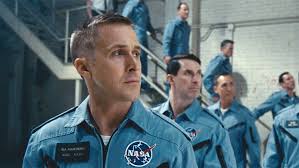
Courtesy James R. HansenJames R. Hansen wrote the book that inspired “First Man,” the new Ryan Gosling movie about Neil Amstrong, the first man to walk on the moon, and I had the great pleasure of talking to him about the time he spent with Armstrong and his family, what he learned from the biodata NASA kept on the astronauts during their journey, and what he thinks about the film’s depiction of Armstrong leaving something very meaningful on the moon before he returned safely to earth.
Where were you when you watched the moon landing?
I was on the floor in front of our television set, back in the day when television sets were these console units where the exterior was built into the TV. I was right in front of the TV set on the floor, in Fort Wayne, Indiana between my junior and senior year of high school. I was taking the college aptitude test that summer, working at a golf course mowing grass. I think I watched every minute. I think I was there probably from noon until midnight, so probably 12 straight hours of watching the coverage of Apollo.
So you grew up with the space program.
I was a second grader when Alan Shepherd flew the first space flight. We went down into the gym and took off our shoes and they had a big boxy TV right at the mid-court circle of the basketball court. That flight was just a sub-orbital flight that lasted maybe 15 minutes but I remember very clearly where I was on the floor. There was just something about the age and the era and the promotion of space exploration that grabbed a lot of people. I didn’t do a whole lot between the launches or between the missions but when it did happen I usually found my way to a TV set one way or the other.
One thing that will surprise people when they see the movie is that the space capsule is so small and vulnerable. Is that the way that Neil described it to you?
The vision of the director, Damien Chazelle, was to make the experience immersive for all of the movie viewers and to make it very visceral as well and so I think as a result there’s an emphasis on the sound. If you recall just the shutting of the hatches and everything, it’s almost like they’re being entombed in these things. At one point I went to the museum with Neil where the Gemini VIII spacecraft was still located. The Gemini in particular is just for two men. It’s just such a small space. The Apollo was rather roomy in comparison. I don’t think I did in my book as much as what Damien does in the film to communicate the almost claustrophobic aspects of being in these capsules and so I think the audience will experience this in a way that is in a lot of ways different than it’s been portrayed in earlier movies where you don’t experience the sounds and the vibrations. Damien went out of his way to try to put the viewer in to see it through Neil’s eyes, to feel it in a very direct kind of way, and I think that’s one of the really incredible things about the film.
What made Neil the right guy for that job?
In terms of his general training and experience for astronaut selection, here is a guy that had flown as a test pilot virtually every advanced experimental flying machine that the country was testing between 1956 and the time he became an astronaut in 1962. He was in fact in the second group of astronauts, which was an incredible group with James Lovell and John Young and Frank Borman and Ed White. Neil was the only one who had any experience for flying a rocket-powered airplane, the X-15, which is shown in the very first scene of the film. In terms of him becoming the commander of Apollo 11, one thing I try to do in a lot of my lectures is make clear that there was nothing preordained about him being the one selected. The approach to putting teams together the key was choosing good commanders and he had a feeling deep down that any of the commanders could have done any of the missions.
So Neil always made sure people understood that his opportunity to command Apollo 11 was really a matter of contingent circumstances. He was in the right place in terms of the order of the rotation. Still, he was really an outstanding person to end up doing it — I don’t think there’s any question about that. He had had the major problem with the Gemini VIII flight. There was some second-guessing about it, but in the end everybody felt like he and Dave Scott had handled that emergency extremely well under unbelievable pressure. So I think all of that’s relevant. On one hand it is important to make clear that he was really well trained and a good person to do this particular mission, on the other hand there were other good men as well that probably could have done it as well as he and I think the other commanders could have done the missions.
What is it that makes someone able to stay calm under that kind of pressure?
One thing that the movie can’t show that the book can and does is that in the movie we only see Neil in three flights, in three flying machines; he’s in the X-15, he’s in the Gemini VIII and he’s in Apollo. The guy made hundreds of flights in hundreds of different machines and he’d been flying since he was 16 years old, so he had experienced so many different flying machines and experiences in airplanes and there have been tough challenging moments in a lot of those flights. He flew 78 combat missions over North Korea and had half of his wing clipped off in one of them and he had to eject from the plane.
If you fly that many times, you are going to run into problems and things that are not working quite right. So the one thing that you can’t communicate in the film is that this guy has been in these things hundreds and hundreds of times. They’re engineers and test pilots in the plane so they really know the systems as well so that is an element that sort of explains their confidence in what they’re doing.
He was calm, but we know from the telemetry data that Neil’s heart rate was one of the highest if not the highest heart rates in almost all those flights and I talked to Neil about it. Neil’s own take on it was that if you really see when his heart rate peaked, it was always when he was in anticipation of some high-performance moment that he was going to have to execute. So really his take was that it wasn’t a representation of stress or anxiety about the flaw but just the body and the mind together getting ready for something that was going to have to be done out of the ordinary. He does have other instances of high heart rates too when he was over at Little West Crater during his lunar EVA. He had to get over to Little West Crater and get back to the lunar module pretty quickly because that wasn’t really a scheduled thing for him to do and there wasn’t much time and mission control was kind of nagging him to get back to the lunar module. When he was over at the crater his heart rate was over 180. Again it’s a question of how you interpret that, but I’ve always been a little bit reluctant to describe him as this cold, calm, collected person what nothing unnerves when a man is running such a high heart rate at the same time.
The movie focuses quite a bit on the way that Neil dealt with the death of his daughter. What did he tell you about it?
Typically of Neil, it was hard to get him to talk about it. I probably got him to talk about it more than anybody else ever had. As the movie makes it clear, he didn’t even talk to Janet about it and Janet told me the same thing. He just would not talk about it and Janet needed him to talk about it. She needed a husband that was comforting and supporting and she needed to be able to express her own grief. That’s one of the really sad things in their relationship and I think the movie captures that in some beautiful ways, especially that last scene. I got most of my information about the effect of the death on Neil from Neil’s sister June and from Janet because they observed it first-hand. June, who really loves her brother, was very understanding and she told me stories about in the aftermath of the death, stories that reinforced for her what a special love Neil had for that little girl and how it affected him not only in the immediate aftermath of the death but in her eyes how he never got over it.
The line when he responds to a question in his interview for the astronaut program in the movie comes from my book. I asked, “Did this affect your flying in any way?” and he said, “I think it would be unreasonable to assume that it would have no effect.” That’s just classic Armstrong speak. It’s an answer but it’s not terribly direct.
He didn’t really bring her baby bracelet to the moon and leave it there, did he?
There’s certainly no evidence that he did. The thing is there’s also no complete evidence that he didn’t. We don’t know what he took to the lunar surface because the manifest of the contents of his PPK (the personal property kit) where they took personal items has never been seen. Neil apparently had it. I asked him if I could look at it and he was going to try to find it and never found it and the boys don’t have it and Purdue University archives doesn’t have it so we don’t know where it is and even if we do find the manifest was what he took/the personal items that he took if something was really, really private he wouldn’t have necessarily even listed it.
Another part of this is that the visit over to the Little West Crater was not scheduled. It was not part of the mission plan. He just decided to go over and do that himself and what he did over there we really don’t know for sure because the TV Camera wasn’t on him at that point in time so it was a completely private moment. Sometimes the power of poetry prevails over the uncertainty of fact. I’m okay with it because there’s just enough degree of uncertainty about this that it’s not necessarily counterfactual, we just don’t know for sure.