
Dora’s Disappointing Makeover

Posted on March 7, 2009 at 4:00 pm

Here is the opening paragraph of a new press release:
Mattel, Inc. (NYSE:MAT) and Nickelodeon/Viacom Consumer Products (NVCP), announced today that Dora the Explorer™ is growing up! The companies have introduced a whole new way to look at Dora for girls five years and up. This groundbreaking initiative, featuring fashion dolls and accessories, is a completely new brand extension that empowers girls to influence and change the lives of Dora and her new friends. It’s innovative, diverse, wholesome, bi-lingual and entertaining.
“A whole new way to look at Dora” and “a completely new brand extension” both translate to “more things for us to sell,” of course. And my heart sinks to hear of plucky little Dora being turned into a “brand extension” “featuring fashion dolls and accessories.” So Dora is going to turn into Barbie now, all about what she wears and has instead of what she does and what she learns?
Judy Berman wrote on Salon’s Broadsheet that this makes the new middle schooler Dora “with a whole new fashionable look” sound like she’s becoming a Gossip Girl.

(S)tarting this fall, for the not-terribly-recession-conscious price of $59.99, your five year old will also be able to buy an older, doll version of the character. Though Mattel and Nick are waiting a few months to reveal exactly what she’ll look like, a bizarre silhouette accompanying the press release shows that, at the very least, Dora will have long hair and be decked out in a short skirt or dress and a pair of flats.

Dora_Silhouette_Final.jpg
Berman does not think this will go over very well with kids. “You can put a skirt on Dora and cinch her waist, but by the time kids reach kindergarten, they may well think of Dora as ‘baby stuff.'” But the authors of Packaging Girlhood: Rescuing Our Daughters from Marketers’ Schemes, Lyn Mikel Brown, Ed.D and Sharon Lamb, Ed.D, have put up an online petition calling for Mattel and Nickelodeon to halt Dora’s makeover.

What happened? FIRST it was Dora’s Magic Talking Kitchen, THEN Dora Princess, THEN Dora Babysitter in her cousin’s show, NOW DORA TWEEN.

Alas, we saw the signs. The cute flower lip gloss, the pinkified look, the sudden separation of Dora and Diego shows…What next? Dora the Cheerleader? Dora the fashionista with stylish purse and stilettos? Dora the Pop Star with Hoppin’ Dance Club and “Juice” Bar? We can expect it all, because that’s what passes as “tween” in the toy department these days….
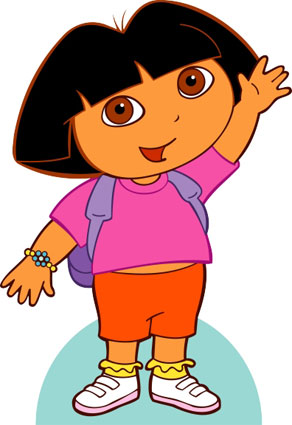
dorathe-explorerposters1.jpg

We know that if the original Dora grew up, she wouldn’t be a fashion icon or a shopaholic. She’d develop her map reading skills and imagine the places she could go. She’d capitalize on those problem solving skills to design new ways to bring fresh water to communities in need around the world. Maybe she’d become a world class runner or follow her love of animals and become a wildlife preservationist or biologist. We’ll never know because the only way a girl can grow up in tween town, is to narrow that symphony of choices to one note. It’s such a sell out of Dora, of all girls.

I agree. It’s a sell-out of Dora and of her fans, another example of popular culture promoting the idea that any girl over age 5 doesn’t care about anything but how she looks.
Related Tags:


Elementary School Marketing to Kids Parenting Preschoolers Tweens Understanding Media and Pop Culture

Teen ‘Idols’ — How to Talk to Jonas Brothers Fans

Posted on March 3, 2009 at 8:00 am

Do you have a Jonas Brothers fan in your family? Or maybe a fanatic?
Some parents have found their children’s devotion to the latest pop stars a little disconcerting. One father suggested that his daughter’s enthusiasm might merit a discussion of idolatry.
There’s a reason that they are called “idols.” Going back to Frank Sinatra and the bobby soxers before that to fan favorites like Oscar Wilde (whose fans were parodied by Gilbert and Sullivan in “Patience”), the individuals holding the position have been highly transitory but the idea of the teen idol has been enduring.
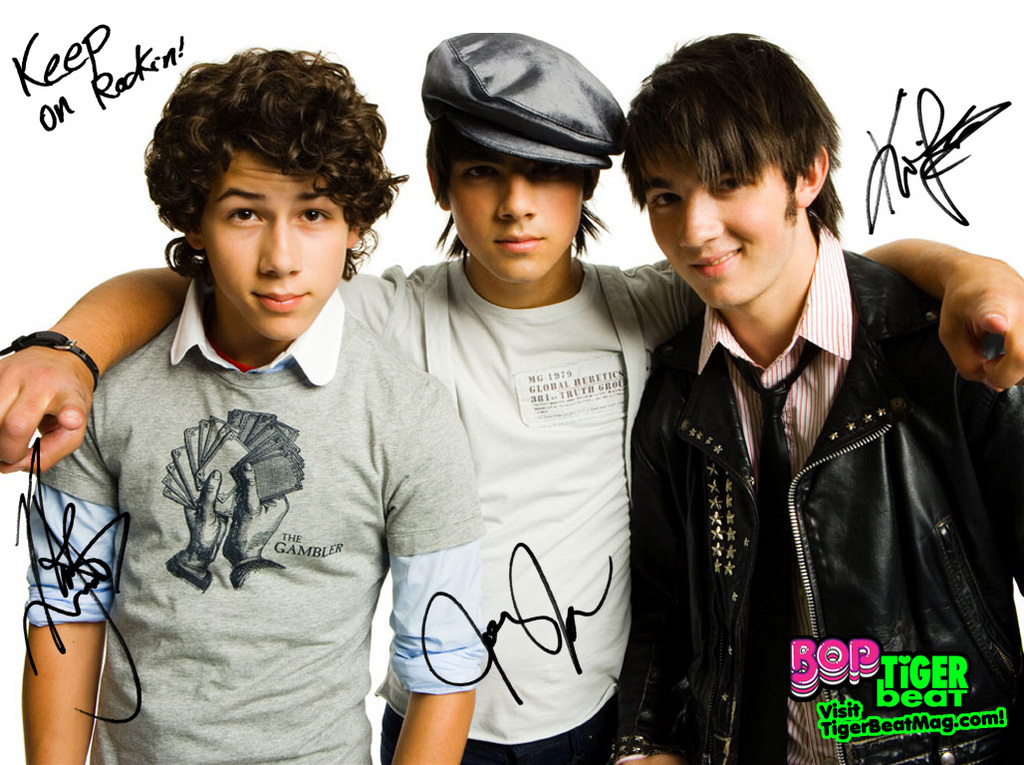
Certain themes are consistent. They may be a little edgy — sometimes a mildly transgressive element of their appearance like the Beatles’ long hair or a pierced Backstreet Boy. But overall, they tend to be reassuringly safe, slender, non-threatening, often almost pre-pubescent. Names like “Bobby,” “Ricky,” “Donny” suggest that they are almost children. Groups like the Jonas Brothers, ‘N Synch, and New Kids on the Block are popular because they give fans a chance to join in affection for the group but keep a sense of individual connection to “the cute one” or “the smart one” or “the funny one.” JonasBrothers1028x768TigerBeat.jpg
It is very important for parents to recognize that these idols are a “transition object” for tweens and young teens that is an essential step in their emotional development. In between the time when their primary focus is the home and family and the time when they will leave to begin their lives as adults, teen idols give them a chance for a dress rehearsal of some of the emotions they will feel. That does not mean that these feelings are not love or that they are not completely real. It does mean that there is an element of fantasy. Think of it as love with training wheels.
No matter how obsessively they may study the lives of these young men, they do not really know them. What they know is the carefully manufactured creation of corporate marketers. But that is just right for this stage of development because it enables them to project their own feelings onto them. It is exactly this fantasy that helps kids begin the journey to emotional maturity, the same way that playing dress-up was a way for them to begin to make sense of the adult world just a short time ago. Indeed, the love of teen idols is a form of dress-up, experimenting with some of the feelings of adulthood without the messiness of actual relationships.
Just as important, these feelings provide a bond with friends at this crucial moment when those connections are just assuming a much more significant role. Fanship gives tweens something to talk about, a private language, training wheels for what will become in their adult years the ability to talk to each other about the things that matter in a way that will strengthen their trust and respect.
Parents should respect these feelings and use them as a starting point for some important conversations. Ask them which brother they like best and why. This may be a chance to share some of your own experiences (you know that Bay City Rollers poster is still tucked away somewhere) but the focus of the conversation should be on the fan. They should reassure the child that these feelings of love are very real and an essential step toward building their ability for love and appreciation of family, romance, and even the divine.

Related Tags:


Commentary Elementary School Parenting Teenagers Tweens Understanding Media and Pop Culture

Christian Film-makers Find Their Audience

Posted on February 26, 2009 at 8:00 am

NPR has an excellent column by Barbara Bradley Hagerty about the increasing success of faith-inspired films. The San Antonio (Texas) Independent Christian Film Festival in January attracted more than 2000 audience members. And “Fireproof” has made more money than “Slumdog Millionaire,” produced for $500,000 and earning $33 million.

Instead of just complaining about sex and violence, Phillips says, Christians must make films that reflect their own values. He says he started the film festival five years ago when he realized that Christians were losing the hearts and minds of the young.

“What is the single biggest influence on our families?” he asks. “I wish I could tell you the biggest single influence were churches, but that regretfully is not the case. The truth of the matter is, it is the media the people take in which are shaping and forming ideas.”

If Christians want to compete in the world of ideas, he says, they have to make great movies. This festival is putting up a $101,000 top prize — the largest in the United States, and larger than Cannes or Sundance — to help them get there. Phillips says this is only the beginning.

The winner of that award is a movie called “The Widow’s Might,” a timely story about a community support for a woman who lost her home to a foreclosure. It was written and directed by its star, 19-year-old John Robert Moore.
This is all enormously encouraging. I hope that the combination of spiritual and financial returns from producing films with messages of faith, hope, compassion, and integrity will inspire the production of more films for people of faith.

Related Tags:


Spiritual films Understanding Media and Pop Culture

My Policy on Conflicts

Posted on February 24, 2009 at 11:04 pm

Per the FTC’s guidelines on blog disclosures, here is my policy:

I sometimes receive DVDs or other items for review or to give away in contests. All opinions are my own and as readers of the site know, I have no hesitation in expressing my negative views on any movie or DVD I do not like. But you should always question the bias of anyone expressing an opinion online or anywhere else.

This blog is a personal blog written and edited by me. This blog accepts no forms of cash advertising, sponsorship, paid insertions or other forms of compensation.

Any compensation received will never influence the content, topics or posts made in this blog. If I decide to accept advertising, all advertising will be identified as paid advertisements.

I am paid to provide information and opinions. I am not paid or compensated by the producers of the content I write about. The views and opinions expressed on this blog are purely mine. Any product claim, statistic, quote or other representation about a product or service should be verified with the manufacturer, provider or party in question.

This blog does not contain any content which might present a conflict of interest. Most of the DVDs or other promotional items I receive are used for giveaways or contests. If you ever have any questions or comments about this policy or anything else, I’d be glad to hear from you.

Related Tags:


Contests and Giveaways Understanding Media and Pop Culture

More on Scary Movies — from Christianity Today

Posted on February 24, 2009 at 8:00 am

Christianity Today asked parents what scary movies have “worked” with their kids — scared them enough to be entertaining and instructive but not too much to be truly upsetting.
I found the comments very insightful. Here are some excerpts:
I recently heard Tony Campolo speak, and he was trying to communicate to parents that “safe” is not what we are raising kids to be. Safe kids will not change the world. Instead, we want them to be wise, powerful, courageous, tenacious, furious at injustice, unprotected from reality, totally dedicated to serving Christ and his beloved people.
Pinocchio, The Wizard of Oz, Spirited Away, Mirrormask, even The Lion, The Witch, and The Wardrobe are all fine examples of scary movies for children. Because they are all steeped in the classic fairy tale tradition. These types of well-written, well-made films can provide integral lessons to youth as they journey on the scariest trip of all: the road to adulthood…”Family-friendly” need not mean “intellectually stunted.” These types of films, watched with a discerning eye, teach deep lessons.
Being scared in the moment can produce a teachable moment, but if the kid is prone to nightmares then nothing is being learned.
A little over a year ago, I wrote about why (and how) we like to be scared, and just this month we’ve had a spirited discussion about whether “Coraline” is too scary. I agree with this comment in the Christianity Today story:
Every single child is different, and the parents should know their child best. If your child is 12 and scared of things, I don’t care if a movie is rated G–if it’s going to scare your child, don’t take them. If you aren’t sure, read your child a thoughtful review of the movie and see if they even want to go. Some children of 6 aren’t scared by anything. Some children love the feeling of feeling scared; they’re aware that it’s “just” a movie.

Related Tags:


Commentary Understanding Media and Pop Culture
THE MOVIE MOM® is a registered trademark of Nell Minow. Use of the mark without express consent from Nell Minow constitutes trademark infringement and unfair competition in violation of federal and state laws. All material © Nell Minow 1995-2026, all rights reserved, and no use or republication is permitted without explicit permission. This site hosts Nell Minow’s Movie Mom® archive, with material that originally appeared on Yahoo! Movies, Beliefnet, and other sources. Much of her new material can be found at Rogerebert.com, Huffington Post, and WheretoWatch. Her books include The Movie Mom’s Guide to Family Movies and 101 Must-See Movie Moments, and she can be heard each week on radio stations across the country.

Website Designed by Max LaZebnik