Criticwire Survey: Should You Look Down on YA Movies?

Posted on June 14, 2014 at 8:00 am

The folks at Criticwire have a weekly survey of questions for movie critics.  This week’s question is especially important.

Q: Many of the positive reviews for “The Fault in Our Stars” boil down to either “It’s good for what it is” or “It gets the job done.” But in an essay at Slate that deals in part with John Green’s source novel, Ruth Graham says that one of the reasons more adult readers have turned to Young Adult novels is because it offers the pleasures of literary fiction without its challenges: “Adults,” she writes, “should feel embarrassed about reading literature written for children.” So, as a critic, what’s your feeling about measuring a movie—whether it’s “The Fault in Our Stars” or “X-Men: Days of Future Past” — against what it sets out to do as opposed to what it could do? (Likewise, do you damn “Orange Is the New Black” for not being “Oz”?) Do you take it on its own terms, or do you set your own?

My answer:

One of the reasons more adult readers have turned to Young Adult novels is that they are so damn good. There is a reason that YA and graphic novel sales are flourishing while what is considered traditional “literary” fiction is collapsing on itself, smothered by its preciousness, pretension, and neurasthenic post-modernism. It is often said that if “The Catcher in the Rye” was published today, it would be categorized as a YA novel. And yet it is still read with thoughtful appreciation for its art and depth, even by those who believe they confine themselves to work with literary aspirations.

This is not to say that best-selling YA books are all literature, any more than best-selling books for adults meet that standard. But too often books are put in the YA category just because they are about teenagers. Well, so is “Romeo and Juliet.” Stories are about teenagers for the same reason that stories are about war and death and vampires and zombies and MacGuffins that have to be found or the world will explode in 24 hours. As Augustus says in “The Fault in Our Stars,” it’s a metaphor. The heightened emotions and discoveries of that time of life intensify the elements of a story to provide a dramatic framework.

Graham should be ashamed by trying to embarrass anyone who is moved by a work of fiction. One of the most liberating discoveries of my life was learning that no one’s childhood is long enough to read all of the great books written for children and teenagers. I reread my favorites with increased pleasure and deeper understanding. I read new authors with great appreciation, and keep in mind that one generation’s low culture is quite often understood to be literature by the next.

That said, all movies should be measured against their own aspirations and the expectations of the intended audience. Otherwise, all movie reviews would read: “Well, it’s not ‘Citizen Kane.'”
Related Tags:


Critics Teenagers Tweens Understanding Media and Pop Culture

Movies Get Wiser About GLBT: How To Train Your Dragon 2 and 22 Jump Street

Posted on June 13, 2014 at 11:25 pm

This week’s two big national releases are both sequels featuring Jonah Hill.  But they have something more important in common: Both reflect a wiser, kinder, more just treatment of GLBT characters.  It was only a few years ago that I wrote an article about the disturbing prevalence of gender and sexual orientation “jokes” in movies for families that ranged from insensitive to insulting to downright offensive.

These two films show that that Hollywood has made real and gratifying progress.channing-tatum-jonah-hill-get-bromantic-for-ew

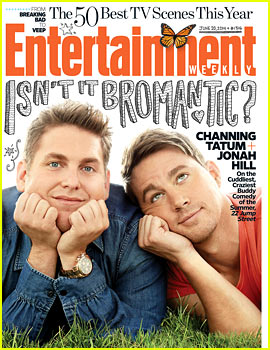
The very R-rated “22 Jump Street” has some fun with the idea that the two main characters have the dynamics of a romantic couple, and are seen that way by at least one other character.  The current cover of Entertainment Weekly reflects that theme as well.  This is a core element in many other comedy teams, from Laurel and Hardy (who even played each other’s wives in one film) to Martin and Lewis and Hope and Crosby.  As in their last film, “22 Jump Street” has explicit portrayals of characters being schooled about use of anti-gay epithets.  In real life, Jonah Hill has recently made a sincere and heartfelt apology for his own comment along those lines when he was provoked by an intrusive photographer.  There is still more progress to be made, but this film shows significant and meaningful improvement.


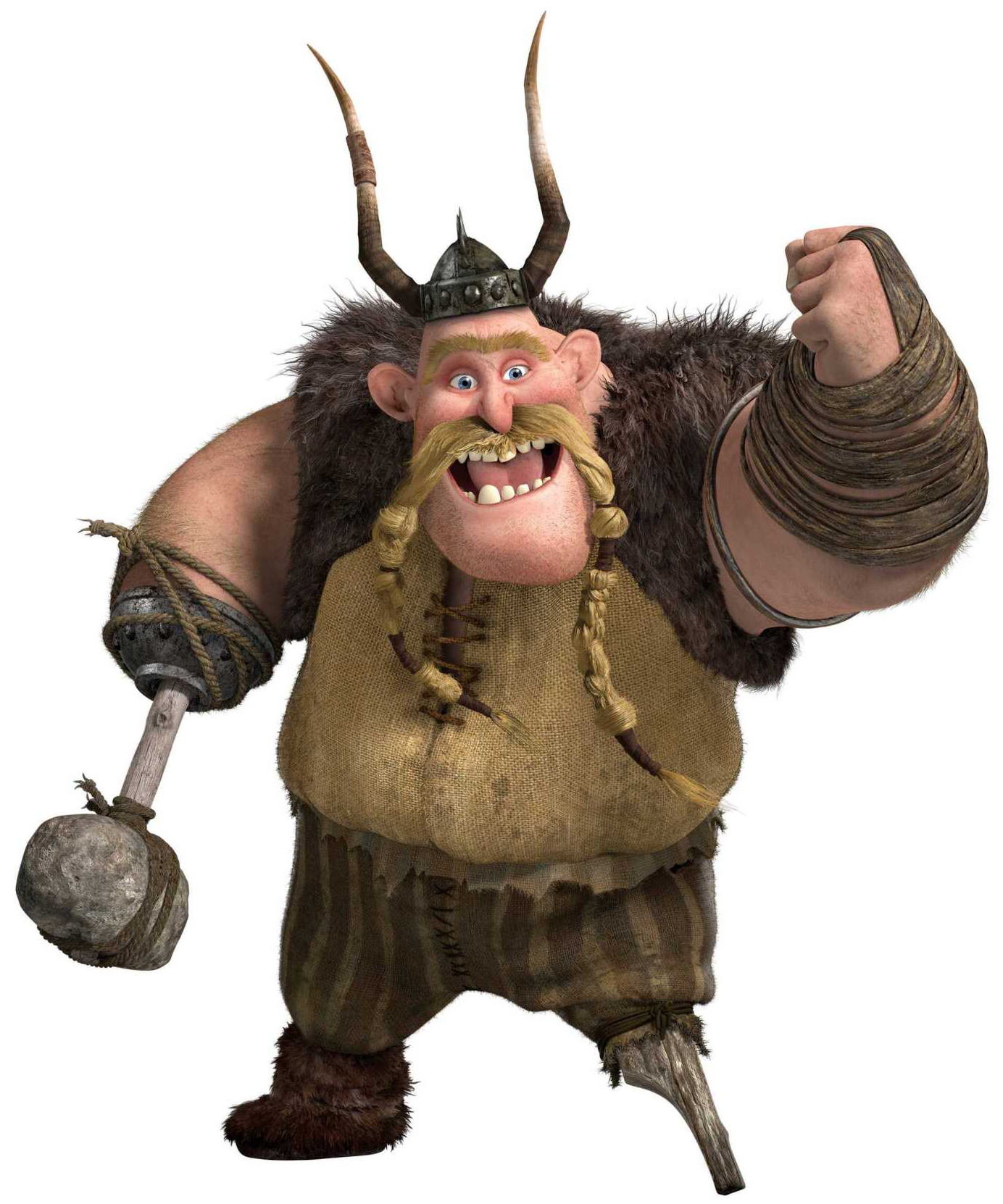
Gobber_The_BelchThe family film “How to Train Your Dragon 2” has a brief, understated comment by a character that the difficulty of dealing with women is just one reason he isn’t married, reportedly an ad lib by the actor who plays him.  Given that nearly half of today’s children live in states where marriage equality is the law, it may be that most of those who pay attention to this line will not recognize that as an indication that the character is gay.  It is unlikely to be noticed at all by most children.  Even The Catholic Register’s Steven D. Greydanus says it is not intrusive enough to recommend skipping the film in a piece showing admirable respect, though he can’t resist saying that he questions his earlier description of the character in question as “an old-school man’s man.”  Movies like this one will help the next generation understand that what makes a man a man is not who he loves but who he is.

Related Tags:


Commentary Gender and Diversity Understanding Media and Pop Culture

The Story Behind Hollywood’s Love for Superheroes

Posted on May 14, 2014 at 3:39 pm

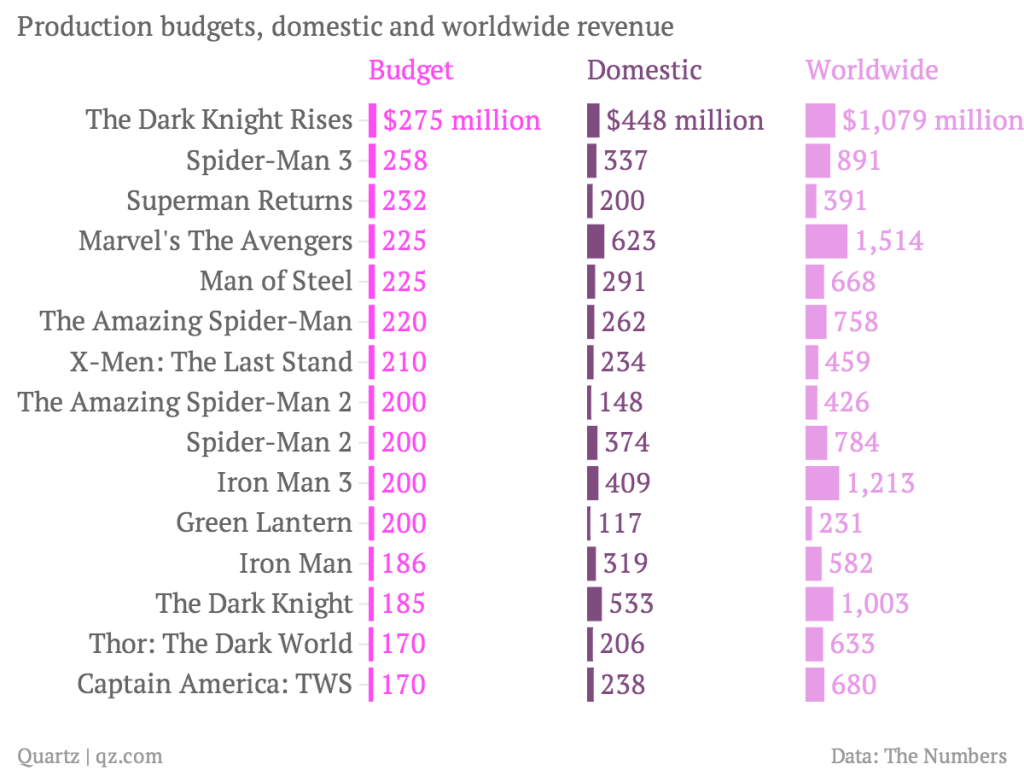
production-budgets-domestic-and-international-revenue-budget-domestic-international_chartbuilder-1There seems to be a new superhero movie every month or two this year.  We’ve already had “Captain America: The Winter Solider” and “The Amazing Spider-Man 2” and in a couple of weeks we’ll get the new X-Men film.  Quartz has four telling charts that explain the rise in superhero movies since the 80’s, when we had fewer than one a year.  Of course the technology that makes it possible to put any super-power or alien planet in a movie is one reason.  But this Quartz chart is the one that really matters.  Superhero movies are hugely popular overseas.  They don’t require English or an understanding of American culture.  With China soon to sell more movie tickets to American movies than are sold in the US, we can expect to see a lot more spandex on the screen for the foreseeable future.


Related Tags:


Understanding Media and Pop Culture

Is Television Still a “Vast Wasteland?”

Posted on May 9, 2014 at 8:54 am

dad tv


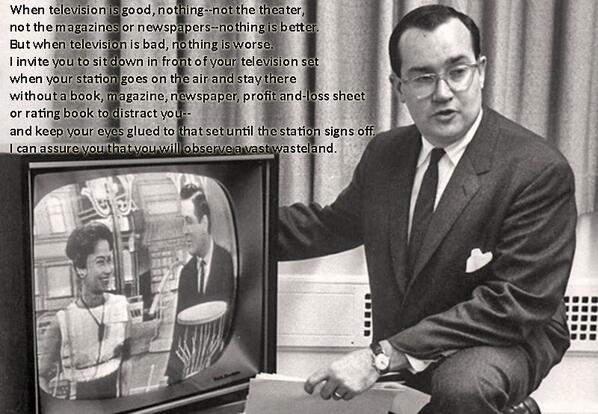
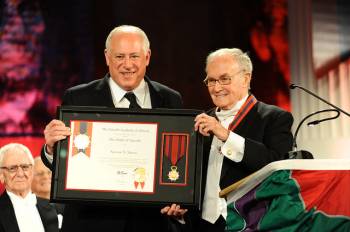
53 years ago today my dad, the new 35-year-old Chairman of the Federal Communications Commission appointed by President John F. Kennedy, made a speech to the National Association of Broadcasters that was on every list of the most influential speeches of the 2oth century.  We are very proud of him.  Last weekend, he was presented with the Lincoln Award by the Governor of Illinois.  It is the state’s highest award for public service.

And did you know that television writer/producer Sherwood Schwartz was so angry about the speech he decided to name the sinking ship on his new television show after my dad?  Yes, that’s how the S.S. Minnow on “Gilligan’s Island” got its name.  Really.

minow lincoln2


Related Tags:


Television Understanding Media and Pop Culture

Screen-Free Week 2014 Starts Tomorrow

Posted on May 4, 2014 at 8:58 am

Check out these ideas to help your family detox from television and the internet.  And before you turn off your computers for a week, watch this to remind you what we miss when we look at screens instead of each other.  Be sure to stay for the end.

Related Tags:


Movie Mom’s Top Picks for Families Parenting Understanding Media and Pop Culture
THE MOVIE MOM® is a registered trademark of Nell Minow. Use of the mark without express consent from Nell Minow constitutes trademark infringement and unfair competition in violation of federal and state laws. All material © Nell Minow 1995-2026, all rights reserved, and no use or republication is permitted without explicit permission. This site hosts Nell Minow’s Movie Mom® archive, with material that originally appeared on Yahoo! Movies, Beliefnet, and other sources. Much of her new material can be found at Rogerebert.com, Huffington Post, and WheretoWatch. Her books include The Movie Mom’s Guide to Family Movies and 101 Must-See Movie Moments, and she can be heard each week on radio stations across the country.

Website Designed by Max LaZebnik