Ghost in the Shell

Ghost in the Shell

Posted on March 30, 2017 at 11:11 pm
Copyright DreamWorks 2017

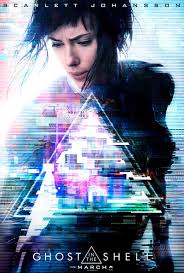
Oh, I don’t know. Maybe if you are a long-time fan of the “Ghost in the Shell” mange by Masamune Shirow and anime and are yet still not offended at the casting of a white actress in a Japanese story you might enjoy seeing a big-budget version of the story with very high-end design and special effects. I am new to the franchise and I was bored. Like a lot of video game movies, it loses the story and characters in a barrage of visual effects and shoot-outs.

Scarlett Johansson plays Major, who used to be a person but is now robot with a human brain or a human brain with a robot body. People do a lot of explaining in this movie, but never about the stuff we would like to have explained. So one character tells us that Major is not a machine but a weapon in the fight against cyber-terrorism. But we never find out why Major’s clothes keep disappearing when she goes into battle. Or why a robot breathes and cries.

In an early scene, we see businessmen at an expensive dinner, being served by elegant but not un-sexy robot geishas. I hope you have seen enough movies to know that when one of them arrogant insists that “There is nothing I can’t do, nothing I can’t know, nothing I can’t be,” he is not going to be around much longer. Some gunmen break in and start shooting, and Major arrives to fight them.

Major was once a human woman. When she was injured in the terrorist attack that killed her parents, her body could not be saved but in a pioneering experiment by Dr. Ouelet (Juliette Binoche), she is turned into a cyborg. At least that is the story she has been told. She has flashes of what could be memories but it seems to her as though there is thick fog over her memories “and I can’t see through it.” Dr. Ouelet is very proud of Major, almost maternal. And Major has a partner, Batou (Pilou Asbæk). Where she is a robot with a human brain, he is a human with mechanical parts.

The man/robot/operating system/entity behind the attack is cerebral hacking and killing more people as Major is experiencing what she calls “glitches,” especially after she does a risky “deep dive” into the network of the hacked geisha robot. But are they glitches or “Total Recall”/”Bourne”-style flashes of memory?

When the comic first appeared, some of these issues were cutting edge but they have been so thoroughly hashed out in so many movies (and in real life) that most of it is as outdated as a VHS video of “WarGames.” The issue of consent is more timely, as Major has to affirmatively accept various risks and procedures (like all of those “I agree” boxes you have to check every time you update your software), but the movie is too busy showing us zippy Pokemon Go-style virtual ads all over the city to spend any thought on it, or anything else, for that matter.  It is a shame that a movie about the spark of human consciousness that remains inside a machine is itself a machine without any evidence of humanity at all.

Parents should know that this film has constant sci-fi/action style peril and violence, guns, explosions, fire, terrorism, a suicide, murder, with characters injured and killed, and some graphic and disturbing images, some nudity, prostitutes and sexual predator, smoking, and drinking. There has been some controversy over the casting of non-Asian actors. Scarlett Johansson responded “I certainly would never presume to play another race of a person. Diversity is important in Hollywood, and I would never want to feel like I was playing a character that was offensive. Also, having a franchise with a female protagonist driving it is such a rare opportunity. Certainly, I feel the enormous pressure of that—the weight of such a big property on my shoulders.” The director of the anime version also supports Johansson in the role: “What issue could there possibly be with casting her? The Major is a cyborg and her physical form is an entirely assumed one. The name ‘Motoko Kusanagi’ and her current body are not her original name and body, so there is no basis for saying that an Asian actress must portray her.”  On Slate, Aisha Harris explains why a revelation late in the film is especially troubling in the movie’s portrayal of race.

Family discussion: Is Major a person, a machine, or a weapon? What enhancement would you like to have?

If you like this, try: the “Matrix” and “Bourne” series, “Lucy,”  and the Ghost in the Shell comics and anime

Related Tags:


3D Action/Adventure Comic book/Comic Strip/Graphic Novel Remake Science-Fiction
The Great Wall

The Great Wall

Posted on February 16, 2017 at 5:39 pm

B-
Lowest Recommended Age: Preschool
MPAA Rating: Rated PG-13 for sequences of fantasy action violence
Profanity: None
Alcohol/ Drugs: None
Violence/ Scariness: Extensive, intense, military and fantasy violence with scary monsters, spears, arrows, explosions, characters injured and killed
Diversity Issues: Diverse characters but some insensitive portrayals
Date Released to Theaters: February 17, 2017
Copyright Universal 2017

I get that you need a big Hollywood star to get big Hollywood money. But in “The Great Wall,” that means that Matt Damon has to save the day in ancient China, and having him share the fight with a tough female military leader (Tian Jing) who is Chinese (and very beautiful) does not reduce the quease factor.

Damon plays William, a mercenary who has fought for and against armies of several European nations, now traveling through China in search of the “black powder” they have heard is a new weapon of massive power to destroy. (Gunpowder, the first explosive, was developed by Chinese alchemists in the 9th century.) All of his group are killed except for his closest friend Tovar (Pedro Pascal) in an encounter with a mysterious beast. William kills it and keeps the claw to help find out what it was. When they are captured by an enormous army, it is the claw that keeps them from being killed. The army, a part of the Nameless Order, is stationed by the Great Wall to fight off those creatures, called Tao-Tie. They are dragon-like predators who are learning and evolving, becoming more powerful and working together to develop what can only be called strategy. The Nameless Order has to stop them before they can no longer be contained and take over China, and, after that, the world.

The six people who wrote the film include top-level screenwriters including Edward Zwick and Marshall Herskovitz (“thirtysomething,” “Nashville”), Max Brooks (“World War Z”), and Tony Gilroy (“Michael Clayton”) were not able to add any more depth than a videogame, and Matt Damon’s talent and charisma can only take his one-dimensional character so far, but the real star here is director Yimou Zhang, whose gift for visual imagery is always a pleasure to behold. In the grand tradition of Cecil B. DeMille or Busby Berkeley, his eye for epic scale, pageantry, and battle is superb. Blue-armored female soldiers leap off ledges to fight the Tao-Tie via military-grade bungee cords. Two interlopers are suddenly surrounded by a storm of red arrows, shot to keep them at the center of a perfect circle. A soldier accused of having a bow “not to the level of your skill” demonstrates what it — and he — can do with three arrows shot at once, one to adjust the trajectory of a tossed bowl and other two to pin it to a column. The film has no dialog about trust or what it means to risk your life, whether for money or for your community, no bromantic banter, and no discovery of the surprising secret to defeating the animals that comes close to the power of the endless row of faces, resolute, honorable, and determined it to whatever it takes to fight the Tao-Tie.

NOTE: Matt Damon and co-star Andy Lau both played the same character in the American and Chinese versions of the film that in the US was called “The Departed.” The Chinese version was “Infernal Affairs” and both are excellent.

Parents should know that this film includes extended military vs. monsters violence with many characters wounded and killed and disturbing images, arrows, spears, and explosions. While it features strong, brave female soldiers and officers and tries to balance the skill and courage of the Chinese and western characters, it is still disturbing to see in 2017 a movie where the indigenous people cannot solve the problem until the European arrives. You may wish to read the director’s statement on this issue.

Family discussion: Were William and Lin Mae alike? How did they earn each other’s trust?

If you like this, try: “House of the Flying Daggers” and “Curse of the Golden Flower”

Related Tags:


3D Action/Adventure Epic/Historical Fantasy Movies -- format
The LEGO Batman Movie

The LEGO Batman Movie

Posted on February 6, 2017 at 5:26 pm

Copyright Warner Brothers 2017

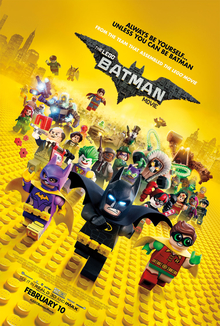
“The LEGO Batman” movie is not just sure to be one of the funniest movies of the year, with laugh lines that come so fast it is impossible to catch your breath before the next one. It is also the most astute mash-up of love letter and take down of a popular culture icon since the brilliant “Galaxy Quest.”

“The LEGO Movie” was an unexpected blockbuster, sweet and very funny, surprisingly ambitious in scope. This spin-off is more focused, its basic structure very much in the tradition of the DC Comics character as created by Bob Kane and Bob Finger and as interpreted through the Adam West television series of the 1960’s, the Dark Knight comics and movies, and the Tim Burton movies, all of which get quick, understated, very clever nods so deeply enmeshed in the history and culture of Bruce Wayne/Batman and his world as to satisfy the heart of the most devoted fanboy. There’s even a plane from McGuffin Airlines.

The movie opens on a black screen. In case we don’t understand why, LEGO Batman explains that “all important movies begin with a black screen” and edgy music and logos. Just in case that isn’t pretentious enough, there’s also a quote on the screen…from that great philosopher Michael Jackson.

The Joker (Zach Galifianakis) has a great big bomb and is getting ready to blow up Gotham. This is very serious as it turns out Gotham is held up only by, well, pretty much a table. Batman comes in to take the bomb and save the day — also to break the Joker’s heart because he won’t acknowledge that the Joker is the most special and important of all of the villains. Pro tip: when you confiscate the Joker’s big “unnecessarily complicated” bomb, disable it before you stow it in the Batcave museum.

Gotham saved, Batman goes home to a lonely lobster thermidor dinner and a solo screening in his home theater, where he has a collection of mostly-cheesy romantic comedies. When he’s not responding to the Bat Signal and saving the day, he roams around Wayne Manor gazing pensively at old family pictures (note that on that last shot of his parents outside the theater, the nearby street sign says “Crime Alley”). But of course it would not be a Batman movie without some fancy society gala, so he dons his tux and goes to Commissioner Gordon’s retirement party. Barbara Gordon (Rosario Dawson) is taking over and to Batman’s dismay she tells the crowd that she plans to stop relying on Batman for all of Gotham’s crime-fighting needs. (After all, even with all his skill, Gotham is still constantly being attacked by deranged and very colorful bad guys.) She wants to involve more people in law enforcement. Batman is not at all happy about this. Furthermore, he is so distracted he sort of accidentally agrees to adopt an enthusiastic orphan with big anime-style eyes (Michael Cera as Dick Grayson).

Joker has come to a similar conclusion and he decides to team up, too — with the inhabitants of Superman’s Phantom Zone, including just about every literary bad guy anyone 12 and under might know, from Harry Potter’s Voldemort to King Kong and Oz’s Wicked Witch of the West.

The jokes come very fast, usually understated and references to pop culture, which adds to the feeling of being in on something. And the visuals are delightful, perfectly evoking the adorable clunkiness of the LEGO universe. The flames are made of plastic and the guns go “pew pew pew” instead of “bang bang bang.” But the cleverest idea of all was understanding that the very same qualities that make Batman, especially in his Dark Knight persona, so compelling work even better if he acts petulant and childish instead of a brooding and mysterious. The playground-style taunts are funny because they are real and relatable, no matter how old you are.

Parents should know that this movie has cartoon-style action and peril, with no one hurt, some schoolyard language and potty humor.

Family discussion: Why is it hard for Batman to rely on other people? Why does he like to watch romantic comedies? How does he feel when he sees all the other Justice League superheroes at the Fortress of Solitude? Why does the Joker care how Batman feels about him?

If you like this, try: “The LEGO Movie”

Related Tags:


3D Animation Comedy Comic book/Comic Strip/Graphic Novel For the Whole Family Series/Sequel
xXx: The Return of Xander Cage

xXx: The Return of Xander Cage

Posted on January 19, 2017 at 5:28 pm

Copyright 2016 Paramount

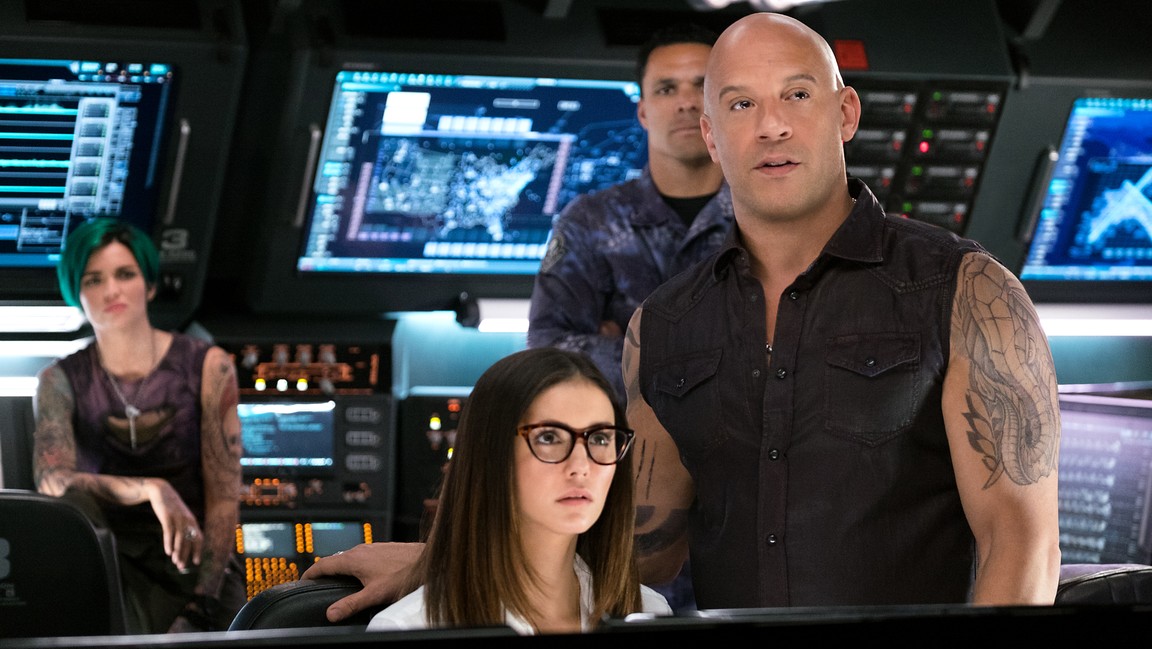
This ridiculous but ridiculously entertaining third chapter in the “XXX” action series is basically script by Mad Libs: Let’s have Vin Diesel in a . Which is how we get a motorcycle race over water and a ski jump into jungle. Plus a shoot-out in zero gravity. And why not. Sick of winter? Tired of the news? Here is a summer movie in January, with chases and explosions for days, badassery of all kinds, and many thousand yard stares, all presented for your delectation in gorgeous IMAX 3D.

So, to recap. In the first XXX movie, released in 2002, extreme sports and extreme tattoo anti-hero and adrenaline junkie Xander Cage (Vin Diesel) was recruited by federal agent Augustus Gibbons (Samuel L. Jackson) to do some tasks that normal military and government operatives were not cool and crazy enough to do. Chapter 2, “XXX: State of the Union” (2005) had Ice Cube stepping in for the reportedly deceased Cage. Twelve years later, it turns out that Xander Cage was just too cool to kill. He’s been enjoying life with crazy stunts and beautiful ladies. But tracks him down because has to be taken away from , and so once again his special skills are needed.

That special ops boss is Marke, played by Toni Collette as though she is doing a bad drag queen impression of herself, as opposed to the good drag queen impression she did in “Connie and Carla.” She helpfully provides X with a team of military tough guys. He dispatches them quickly by throwing them off a plane and rounds up his own Benneton ad of a team, a motley crew of wisecracking with and no fear: “the bad, the extreme, the completely insane,” we are reminded, as though that isn’t the very reason we are there. The movie helpfully skips over exposition that might get in the way of chases, explosions, shoot-outs, fight scenes, and quippy threats and bragging by providing helpful title cards for each character outlining, like Power Point on crack, their most significant achievements, characteristics, and useful other information like their go-to karaoke song or the fact that one of them, meeting with Samuel L. Jackson, thinks he is being recruited for the Avengers.

Everyone loves to run, jump, shoot, and fight except for Nina Dobrev as the Velma of this Scooby-Doo crowd, with oversize glasses, super-duper tech ability, and an inability to stop talking around X. She babbles anything that comes into her mind, explaining so thoroughly (in the world of this movie, more than six words in a row is a monologue) that she is not a field agent that we know eventually she will have to shoot a gun at someone, and adding, as she swoons over X’s muscles, “It’s not that I have a safe word or anything; it’s kumquat.”

X-Men style, this Island of Lost Toys bunch of misfits keeps shifting loyalties, so, gets to fight and fight alongside , too. It’s all delightfully preposterous but crazy fun and .

Parents should know that this film includes constant action-style peril and violence, chases, explosions, assault weapons, knives, terrorism, sexual innuendo and non-explicit situation, and some strong language.

Family discussion: Do you agree with Xander’s comment about rebels and tyrants? How do the characters decide when to be loyal and who to be loyal to?

If you like this, try: the earlier “xXx” movies and the “Transporter” and “Fast and Furious” series

Related Tags:


3D Action/Adventure IMAX Series/Sequel Spies
Moana

Moana

Posted on November 27, 2016 at 4:40 pm

Copyright 2016 Disney

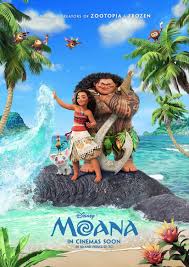
Disney has kept the best of its reliable formula and freshened it up with a spirited story inspired by the ancient myths of the Pacific Islands and a spirited heroine who dreams of adventure, not finding a prince. It is gorgeously animated, heartwarming, exciting, and slyly self-aware. At one point a character notes that if she has a dress and an animal sidekick, she must be a princess. And in a scene way at the end of the credits (stay ALL the way to the end), a character re-appears to compare himself to another well-known animated Disney character. But it is also utterly sincere in its affection for the heroine and her quest.

Moana (Auli’i Cravalho) lives on an Polynesian island paradise. Her father is the king and she will someday be the community’s leader. She has the run of the island, and loves the shore. She has the heart of an explorer, but her parents tell her that their people do not go beyond the reef because it is not safe out on the ocean. They do their best to warn her, but there is nothing that can stop Moana’s curiosity and sense of adventure, even after an initial voyage goes badly. Moana wants to know what happened to the courageous voyagers who once led expeditions from her island led by wayfarers who navigated with the stars. The ocean itself invites her to explore.

When an environmental disaster strikes, Moana realizes that the rules have to change. Her people will be wiped out unless she can return the heart that was stolen from Te Fiti, the goddess who created the world. Her heart, a pounamu stone, was stolen by the mischief-maker Maui (Dwayne Johnson), and the destruction that created has reached Moana’s island. Moana needs to find Maui and return the heart, before all of the island’s plants and fish turn to ashes.

Moana finds Maui, but he does not want to help, he has lost the stone, and Te Fiti broke the magical fishhook that is the source of most of his power. Without a working fishhook, his ability to shapeshift is badly compromised, leading to some hilarious misfires (watch quickly for one of his mistaken personas, a character from “Frozen”). Johnson’s ebullience is perfect for Maui, reminiscent of Robin Williams as the genie in “Aladdin,” with his mercurial personas and helpful but trickster role. He is covered with Maori-style tattoos which delightfully interact with him, a mini-movie of their own.

The two of them go on a journey filled with adventure and with great songs from “Hamilton’s” Lin-Manuel Miranda and Opetaia Foa’i. Highlights include Maui’s riotous “You’re Welcome,” as he explains all that he has given mankind (inspired by Maori creation myths) and “Shiny,” performed by Jemaine Clement as a treasure-loving giant crab. Moana is an appealing heroine, brave, smart, determined and devoted to her community. She is even devoted to her animal sidekick, a scrawny chicken with very little brainpower.

The animation is spectacular, with the ocean a character of its own, pygmy pirates, the giant crab, and a lava monster. And the resolution is especially satisfying, with not just redemption and triumph for our heroes and justice, compassion, and forgiveness rather than demonization of the character who would otherwise be the typical villain. The loveable characters, hummable songs, and heartwarming and joyful conclusion make this a holiday season treat for the whole family.

NOTE: Stay all the way to the end of the credits for an extra scene. And be sure to get there in time for the adorable animated short before the film, “Inner Workings,” a sort of variation of “Inside Out,” as we see a man’s internal organs responding to the world around him and enticing him to transcend his daily drudgery with a visit to the beach. It was directed by veteran Disney animator Leo Matsuda.

Parents should know that this film includes action-style peril and violence with some disturbing images, sad (offscreen) deaths, brief schoolyard language, and brief potty humor.

Family discussion: Why didn’t the ocean return the heart itself? What did Moana learn from Maui’s story about his parents?

If you like this, try: “Whale Rider,” “Brave,” and “Mulan” — and try navigating without GPS

Related Tags:


3D Animation Fantasy Musical Scene After the Credits
THE MOVIE MOM® is a registered trademark of Nell Minow. Use of the mark without express consent from Nell Minow constitutes trademark infringement and unfair competition in violation of federal and state laws. All material © Nell Minow 1995-2026, all rights reserved, and no use or republication is permitted without explicit permission. This site hosts Nell Minow’s Movie Mom® archive, with material that originally appeared on Yahoo! Movies, Beliefnet, and other sources. Much of her new material can be found at Rogerebert.com, Huffington Post, and WheretoWatch. Her books include The Movie Mom’s Guide to Family Movies and 101 Must-See Movie Moments, and she can be heard each week on radio stations across the country.

Website Designed by Max LaZebnik