
Mao’s Last Dancer

Mao’s Last Dancer

Posted on May 7, 2011 at 5:45 pm

Director Bruce Beresford, best known for “Driving Miss Daisy,” returns to the themes of cross-cultural connections in this film based on the memoir of Chinese ballet star Li Cunxin.

Li (Chinese surnames appear first) was taken from his poor, rural family at age 11 to study ballet. Madame Mao had declared the arts to be a priority and officials were sent to the furthest reaches of the country to find children who could be trained. Li succeeds more through determination than passion or natural ability, and despite Madame Mao’s insistence on ballet performances based more on political messages than on art. His family (with the radiant Joan Chen as his mother) is very proud of his contribution to China.In 1979, in the early, fragile days of US-China diplomatic relations, Li is sent to spend some time as a guest trainee with the Houston ballet, led by Ben Stevenson (the always-superb Bruce Greenwood).

His English is poor. His understanding of anything other than what he has been told by the Chinese authorities is non-existent. The Americans’ ability to understand him is not much better. But there is the common language of dance. And there Li is so dazzling he is quickly given an opportunity to perform in a key role on stage. The audience loves him.Li does not want to go home. He becomes romantically involved with a tender-hearted young dancer. He appreciates the opportunity to perform without regard to the political content of the ballet. He consults a lawyer (a crafty Kyle MacLachlan). He takes a very big risk for himself and also for those who have befriended him.The film feels episodic and oddly understated and remote. That may be in part because the key role of Li is divided between three actors, Wen Bin Huang as a child, Chengwu Guo as a teenager, and Chi Cao as an adult. Or, it may be because Li the character is reserved by nature and training and something of a cipher. But like its title character, the movie comes alive in the ballet performances, which are well-staged and convey not only the creative energy of their own story-telling but the ultimate expression of the performers’ passion for their art.
(more…)

Related Tags:


Based on a book Based on a true story Biography Drama Music Romance

Not Easily Broken

Posted on May 2, 2011 at 8:00 am

B
Lowest Recommended Age: High School
MPAA Rating: PG-13 for sexual references and thematic elements
Profanity: Some mild language
Alcohol/ Drugs: Social drinking
Violence/ Scariness: Car accident, character injured, tense confrontations
Diversity Issues: Diverse characters
Date Released to Theaters: January 9, 2009
Date Released to DVD: May 7, 2011
Amazon.com ASIN: B001QUF7DS

This week’s release of T.D. Jakes’ “Jumping the Broom” is a good time to take another look at his earlier film about marriage and in-laws, “Not Easily Broken.”

If we believe the movies, the tough part of relationships is getting to the “I dos.” Everything after that is some vaguely imagined “happily ever after.” But “Not Easily Broken,” based on the popular novel by preacher T.D. Jakes, is frank from its very first moments that “happily ever after” requires a lot of work and a lot of prayer. It starts where most movies end – with the wedding. Before pronouncing them husband and wife, the minister tells Clarice (Taraji P. Henson) and Dave (Morris Chestnut) that life will try to knock them down and they will need to hold on to each other and their faith in God to stay together. He says there are three strands in a marriage – the bride, the groom, and God and that they must honor all three to keep the bond strong. But the newlyweds will not fully understand what that means until they learn some very hard lessons. Or, as one character says, “You’ve got to let life turn you upside down so you can learn how to live right side up.” Dave struggles with disappointment. He once hoped to play professional baseball but was injured and ended up working in construction. Now his greatest satisfaction comes from coaching a team of young boys and from his hopes for having children. Clarice struggles with pride and selfishness. Her ambition at work puts a lot of pressure on their relationship. Both of them feel neglected and dissatisfied. And then things really get bad. Clarice is badly injured in an automobile accident when Dave is driving. Her physical and emotional recovery is painful and it puts even more stress on the marriage, especially when her mother (the great Jennifer Lewis) moves in with them to help out. Unlike this season’s other movie about marital struggles, “Revolutionary Road,” this film makes no pretence of sophistication and has no literary aspirations. But its lack of subtlety turns out to be one of its strengths. Its narrative force is grounded in an emotional sincerity and open spirituality that creates an instant connection to the audience and deepens as the story unfolds. And it is good to see a film that is completely at ease in portraying the church as a sustaining force in the life of is characters and community. The movie also benefits from two exceptionally talented and appealing performers in the lead roles. Henson is an actress of such extraordinary range that audiences might not realize she is the same person who played the warm-hearted adoptive mother who ages over decades in “The Curious Case of Benjamin Button,” half of an all-female team of hired killers in “Smokin’ Aces,” and the tough-talking woman with the enormous Afro and microscopic miniskirts in “Talk to Me.” Here Henson plays what is in some ways her most challenging role to date because her character is not an extreme one. She has to make Clarice careless and inconsiderate without losing our interest in making sure she is happy. Henson makes it work and makes us see why Dave loves Clarice even when he is not sure he still does.Chestnut (who also executive produced) has been too often relegated to “best friend” roles in big films (“The Game Plan”) and leading roles in smaller films (“The Perfect Holiday”). He is the essence of a leading man, a superbly gifted actor with effortless star power. Chestnut brings a depth and complexity to Dave that goes far beyond the script. Indeed, he makes Dave so sympathetic that he comes close to throwing the story off-balance by making it seem that Clarice is responsible for most of the couple’s problems. But Chestnut’s ability to make Dave’s integrity and devotion palpable shows us why the couple’s bond is important and, though often stretched, not easily broken. (more…)

Related Tags:


Based on a book Date movie Drama DVD/Blu-Ray Pick of the Week Romance Spiritual films
Tikki-Tikki-Tembo…

Tikki-Tikki-Tembo…

Posted on April 25, 2011 at 8:00 am

A
Lowest Recommended Age: All Ages
MPAA Rating: Not Rated
Profanity: None
Alcohol/ Drugs: None
Violence/ Scariness: Mild peril
Diversity Issues: A theme of the DVD
Date Released to Theaters: NA
Date Released to DVD: April 26, 2011
Amazon.com ASIN: B004HJ0ZM8

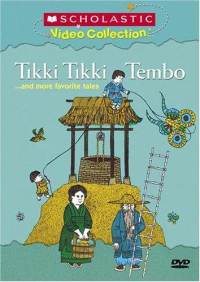
The DVD pick of the week is Tikki-Tikki-Tembo and More Stories of Asian Heritage, another from my very favorite series for young children and their families. This one arrives in time for May’s celebration of Asian Heritage Month in May, with some of the all-time greatest children’s classics, gorgeously illustrated and gently animated to encourage young readers. The title story is about a boy with a very, very long name — quite a problem when he falls down a well and someone has to get him some help.


The Tale of the Mandarin Ducks (Written by Katherine Paterson, illustrated by Leo & Diane Dillon, narrated by B. D. Wong) A compassionate couple risks their lives to reunite a pair of Mandarin ducks.

Grandfather’s Journey (Written and illustrated by Allen Say, narrated by B. D. Wong) A touching story about Grandfather’s travels from Japan to the United States and back again.

The Stonecutter (Written and illustrated by Gerald McDermott) Tasaku is a lowly stonecutter who longs for more power in this Japanese folk tale.

Lon Po Po: A Red-Riding Hood Story from China (Written and illustrated by Ed Young, narrated by B. D. Wong) This Asian version of the classic fairytale brings lessons about strangers, trust, and courage.

Sam and the Lucky Money (Written by Karen Chinn, illustrated by Cornelius Van Wright and Ying-Hwa Hu, narrated by Ming-Na Wen) On Chinese New Year Sam meets a stranger who helps him make the perfect decision on how to spend his lucky money.

Related Tags:


Animation Based on a book DVD/Blu-Ray Pick of the Week Early Readers Elementary School Movie Mom’s Top Picks for Families Preschoolers

Water For Elephants

Posted on April 22, 2011 at 10:02 am

B
Lowest Recommended Age: High School
MPAA Rating: Rated PG-13 for moments of intense violence and sexual content
Profanity: Some strong language
Alcohol/ Drugs: Drinking, smoking
Violence/ Scariness: Some peril and violence, sad deaths
Diversity Issues: Diverse characters
Date Released to Theaters: April 22, 2011
Date Released to DVD: 2011
Amazon.com ASIN: B0041KKYHE

According to the ringmaster of the Benzini Brothers Traveling Circus, “a circus survives on blood, sweat, pain and .”  In “Water for Elephants” we experience all of these, along with romance, danger, laughter and even a little bit of poetry.  This ambitious, colorful story of the travels of a second rate depression era circus is filled with metaphors about life and love—some more successful than others—but it is consistently engaging and a treat for the eyes.

Jacob Jankowski (“Twilight” idol Robert Pattinson) is a young veterinary student on the verge of graduating from Cornell when his world is suddenly turned upside down.  Jacob was never wildly enthusiastic about his plans to join his father’s small town veterinary practice but when his parents are killed in a car crash and all of their material possessions are seized by the bank, Jacob ends up with no money, no job, no food, and no place to live, so he sets off on foot down the road.

Tired of walking one night, he abandons his suitcase containing his last few possessions from his old life and jumps a passing freight train.   What seems like an anonymous gray train in the dark turns out to be a tumble through the looking glass.  As Jacob makes his way through the length of the train, we encounter the different surrealistic worlds of the circus.  There is the noisy clown car with its jostling, slap-happy world, the car carrying all the coochie dancers reaches out to him like the sirens reached out to Odysseus (As he makes his way through their car, one of them envelops him in her arms, cooing “I saw you during my act.  Want a ride?”).  The roustabouts live a grim, desperate life in sparse cars with none of the glamor and glitter of the other cars. Before Jacob joins the roustabouts, one grizzled old timer warns him, “If you have any kind of life to go back to, that’s what you should do.” At the end of the journey is the jewel in the crown, the luxurious train car reserved for ringmaster August Rosenblum (Christoph Waltz of “Inglourious Basterds) and his beautiful wife (and star attraction) Marlena (Reese Witherspoon).

The Benzini Brothers circus is always on the verge of bankruptcy and as they make their way from town to town they encounter the remains of other small circuses who have died by the side of the road, and whose carcasses are being scavenged for props and talents by the survivors. From one of these failed circuses August purchases a beautiful speckled elephant named Rosie.  He acknowledges he won’t be able to pay the men for two weeks but he hopes that Rosie will bring in enough “rubes” so that the circus will be able to survive a while longer.

The care, feeding and training of Rosie becomes a battle of wills between the cruel, pragmatic August and the idealistic, empathetic Jacob.  The battle expands to include a struggle for the affections of the beautiful Marlena and the treatment of the roustabouts, climaxing in “The Great Circus Disaster of 1931.”

This film has some visually gorgeous moments, such as the scene with Jacob and August sitting on top of the moving train under the starlit sky talking about life as the beautiful countryside winds by, or the scene with the beautiful and petite Marlena tending to the immense Rosie by lantern light.  Like the circus itself, these moments illuminate the poetic grace around us.

(more…)

Related Tags:


Based on a book Drama Movies -- format Romance

Gulliver’s Travels

Posted on April 19, 2011 at 8:00 am

A cringe-inducing catastrophe with all of the appeal of fingernails on blackboard, this movie’s first early warning sign should have been the omission of Jonathan Swift from the opening credits.

I thought at first it was an arrogant oversight. Now I think it is more likely his ghost showed up and threatened to haunt the film-makers and their descendants forever if they did not remove any mention of his name. Swift is the man who wrote the book, with satire so biting and fantasy so thrilling that it has endured for almost 300 years. It will survive this, too, but just barely.

The story has been updated so that Gulliver, like every other aspect of the story, is downgraded (and degraded). In Swift’s book, he is a surgeon. Here, played by a doughy and lusterless Jack Black, he is a guy who works in a newspaper mailroom, too insecure to try to get a promotion or ask out the beautiful editor he adores (Amanda Peet, who does her best to pretend she is in a better movie).

In order to impress her, Gulliver plagiarizes some travel pieces. She gives him an assignment to investigate the Bermuda triangle. I know this is a fantasy, but since when can newspapers afford a mail room staff and what appears to be a bountiful budget for investigative travel pieces?

Gulliver gets trapped in a vortex that lands him in a kingdom called Lilliput, populated by people who are just six inches tall. As in the book, at first he is captured, tied down while he is asleep on the beach. He stands up, ripping the ropes open. But there was noting in the book about his pants falling down, and then having him fall backwards with a poor Lilliputian apparently smothered by his, uh, tush separation.

And then it really gets disgusting. Gulliver has to rescue the king from a fire and, finding no water within reach, pees on everything to douse the flames . As dispiriting as that is, it is not as bad as the flaccid torpor of the script, which shows utter contempt for its audience in every line. Every reference, joke, and plot development is tired and predictable. Gulliver collects — guess! Yep, “Star Wars” action figures. At work, he slacks off by — guess! Playing “Guitar Hero.” When he persuades the Lilliputians that he is known as President Awesome back home where he comes from, we see posters all over the city with Gulliver appearing as the hero of every movie or play from “West Side Story” to “Wicked.” Those are hardly recognizable, much less knee-slapping references for anyone under 40.

Even worse, Gulliver is a thoroughly unpleasant character. He reflexively lies to everyone. He is selfish, incurious, and thoughtless. There is a dull storyline about a Lilliputian commoner named Horatio (a sweet Jason Segal) who dares to love the princess (a regal Emily Blunt), but it is ineptly handled. When the princess challenges the bad guy (Chris O’Dowd, the movie’s sole highlight) to come up with a reason for loving her, predictably, he can’t. But then, shouldn’t Horatio demonstrate some understanding or appreciation of the princess to show his fitness? The script and director Rob Letterman cannot be bothered to follow through. It just keeps desperately throwing stuff at the audience, finally including a killer robot.

Letterman, who showed he knows better in “Monsters vs. Aliens,” blows all the possibilities of the book’s shrewd (and still very relevant) commentary for silly sight gags like Gulliver’s using the Lilliputians to re-enact video games and DVDs. A “Titanic” joke! Stop!

A lump of coal in the stockings of everyone behind this mess.

Related Tags:


3D Action/Adventure Based on a book Comedy Fantasy Remake
THE MOVIE MOM® is a registered trademark of Nell Minow. Use of the mark without express consent from Nell Minow constitutes trademark infringement and unfair competition in violation of federal and state laws. All material © Nell Minow 1995-2026, all rights reserved, and no use or republication is permitted without explicit permission. This site hosts Nell Minow’s Movie Mom® archive, with material that originally appeared on Yahoo! Movies, Beliefnet, and other sources. Much of her new material can be found at Rogerebert.com, Huffington Post, and WheretoWatch. Her books include The Movie Mom’s Guide to Family Movies and 101 Must-See Movie Moments, and she can be heard each week on radio stations across the country.

Website Designed by Max LaZebnik