A Dog’s Way Home

A Dog’s Way Home

Posted on January 10, 2019 at 5:29 pm

B +
Lowest Recommended Age: 4th - 6th Grade
MPAA Rating: Rated PG for thematic elements, some peril and language
Profanity: Some mild language
Alcohol/ Drugs: None
Violence/ Scariness: Peril and violence, death of human and animal characters, characters with disabilities and PTSD
Diversity Issues: Diverse characters
Date Released to Theaters: January 11, 2019
Date Released to DVD: April 8, 2019

Copyright 2019 Columbia Pictures
I laughed and I cried and I said, “Aww,” watching A Dog’s Way Home and that is not a bad way to begin the year.

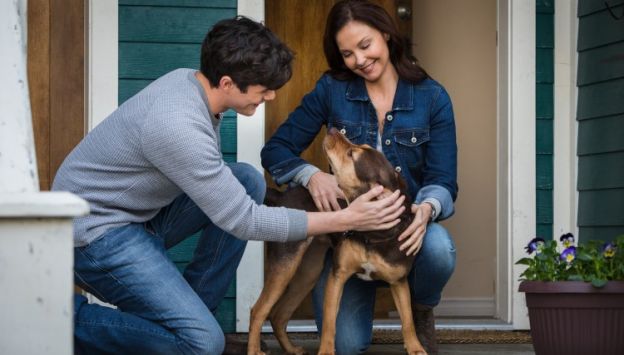
Bryce Dallas Howard provides the voice of Bella, a pit bull pup living under an abandoned house in Denver with a bunch of homeless cats. She is loved and happy until animal control comes and takes her mother away. The mother cat adopts Bella, who is comforted and at home until the arrival of two animal welfare volunteers, who come by to leave cat food every day. Lucas (a warmly appealing Jonah Hauer-King) is a Veterans Administration employee studying for the MCATs and living with his mother, an Army vet struggling with depression. He is instantly taken with Bella and adopts her, even though his lease does not allow dogs.

Pit bulls are not allowed in Denver. It is up to the individual animal control officer to decide which dogs are covered by the ban, and one has it in for Bella. He picks her up once and Lucas pays the fine. But if he picks her up again, she will be killed. The developer who owns the property with the abandoned homes will do anything to get Lucas and the other animal lovers to stop interfering with his permits.

Lucas brings Bella to New Mexico to stay with friends so she will be safe while he moves to a new apartment outside of the Denver city limits. But Bella does not understand. She remembers that Lucas taught her how to go home, and so she runs away and begins a 400 mile adventure that will take more than two years.

Bella has encounters with humans and animals along the way, some kind, some predatory. She makes some friends and has the opportunity to find new loving homes but she wants to be with Lucas.

Having Bella as our narrator adds some charm to the movie because her understanding may be limited in some respects, but she never loses sight of the essentials. The individual encounters introduce us to a range of human characters, some worth a movie of their own, like the disabled vets who are able to experience joy and purpose through Bella (especially when they have to hide her from the doctor in charge of the VA hospital in one of the film’s best scenes). She saves one man’s life and becomes the last friend of a homeless man (Edward James Olmos). And she mothers “big kitten,” an orphan mountain lion who will someday return the favor. The footage here is heartwarming and genuinely astonishing, especially after they meet again when the majestic cat is fully grown.

This is a nice way to start the year, a story of love and loyalty, canine and human.

Parents should know that this film features humans and animals in peril, injured and killed, animal hit by a car, animal killed by hunters, character dies and the body is discovered by children, and characters who struggle with PTSD and depression.

Family discussion: What did Bella understand better than the humans did? Why did Bella make such a difference for the veterans?

If you like this, try: “The Incredible Journey” and “A Dog’s Purpose”

Related Tags:


Based on a book DVD/Blu-Ray movie review Movies -- format Talking animals
If Beale Street Could Talk

If Beale Street Could Talk

Posted on December 27, 2018 at 12:08 pm

A
Lowest Recommended Age: Middle School
MPAA Rating: Rated R for language and some sexual content
Profanity: Strong language
Alcohol/ Drugs: Acohol
Violence/ Scariness: Some peril and violence, references to rape
Diversity Issues: A theme of the movie
Date Released to Theaters: December 25, 2018
Date Released to DVD: March 26, 2019
Copyright Annapurna 2018

When I interviewed writer/director Barry Jenkins about “Moonlight,” we talked about the movie’s haunting score, composed by Nicholas Britell. “Many directors would use songs of the era to place the audience in the film’s three time periods,” I said. “Two things,” he replied. “First, we could not afford the rights to those songs. But more important, I believe these characters deserve a full orchestral score.”

I thought of those words as I watched Jenkins’ latest film, “If Beale Street Could Talk,” based on the 1974 novel by James Baldwinmy #1 film of 2018, and winner of the Best Director, Best Supporting Actress and Best Film Spirit Awards. There were moments when it did not feel like I was watching the film. It was more like I was immersed in it, as though I could feel it pulsing through my veins. The entire theme of the movie could be, “These characters deserve a full orchestral score” along with the highest level of every other creative and aesthetic element available to a filmmaker, from Baldwin’s lyrical words to the luscious cinematography of “Moonlight’s” James Laxton, another gorgeous score by Britell, costumes that carry the narrative and illuminate the characters, and performances of infinite sensitivity and humanity.

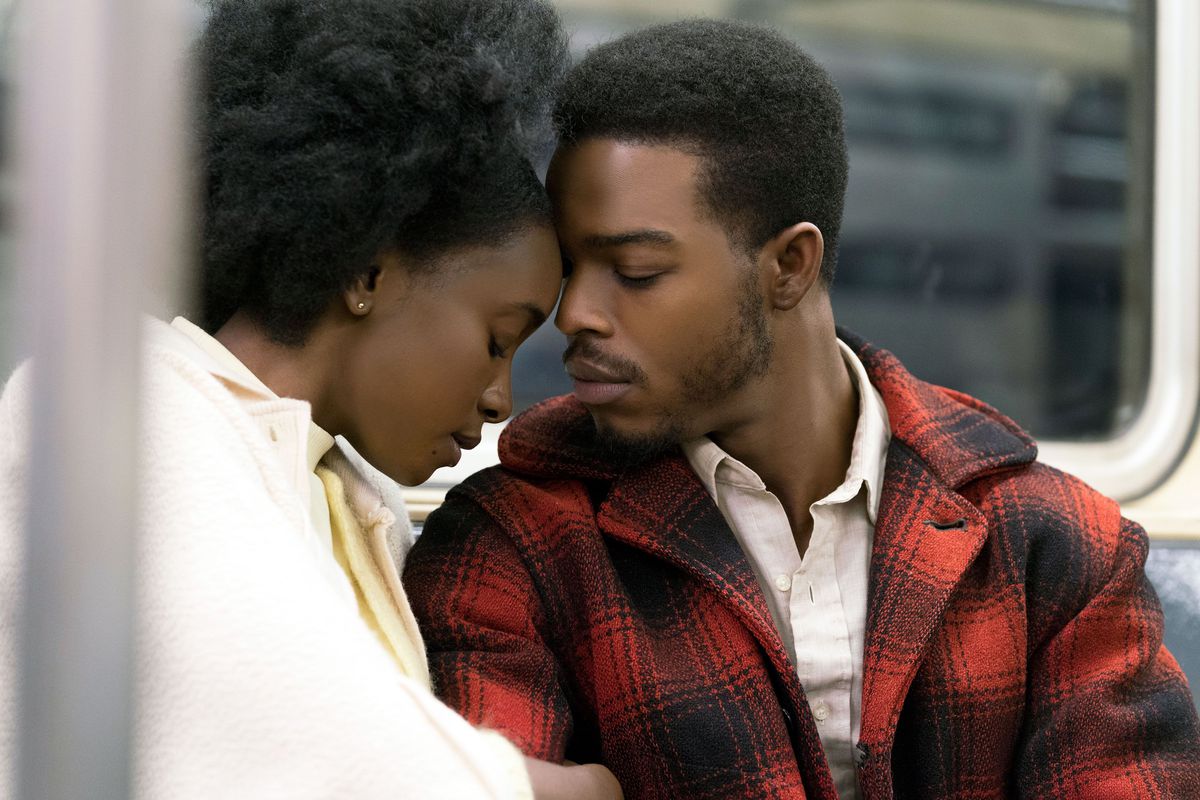
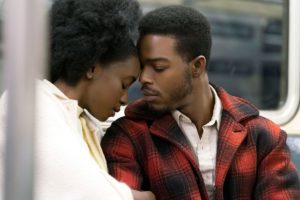
“If Beale Street Could Talk” succeeds brilliantly at one of cinema’s most central functions: a love story with sizzling chemistry between two impossibly beautiful people. Stephen James (“Race”) and newcomer Kiki Layne are 2018’s most compelling romantic couple, pure pleasure to watch. Their relationship is in every way the heart of this story, the reason we feel so sharply the injustice and, in some ways harder to accept, the resignation that is the most undeniable signifier of generations of institutional racism. We see that most powerfully when Oscar-winner Regina King, as the girl’s mother, looks in the mirror as she prepares like a matador entering the bullring for a meeting that could make all the difference for the couple. She cannot expect much, but she has to try. Throughout the movie, there is resignation and diminished hopes but there is also resilience. And “Beale Street” reminds us that undiminished and imperishable love abide: romantic love, the love of parents and siblings, even an unexpected encounter with a warmhearted landlord. There is the love Baldwin and Jenkins have for these characters. And, most of all, it reminds us that this is a story that deserves to be told with the best of what movies have to offer, including a full orchestral score.

James and Layne play Fonny and Tish, childhood sweethearts who are young and deeply in love. He is wrongfully arrested for rape by a bigoted cop with a grudge and is in jail when Tish tells him that she is going to have a baby. We see what happened before and what happens after in a jazzy, non-linear form, luscious images and exquisite performances. This film is a masterpiece, like its characters of a time nearly half a century ago, “ready,” and exactly right on time.

Parents should know that this film includes explicit sexual references and situations, references to rape, unjust charges and abuse of the justice system, racism, and some peril and violence.

Family discussion: Why does Sharon take off her wig? Why do the mothers respond so differently to the news of the baby?

If you like this, try: “Moonlight” from the same writer/director and the books of author James Baldwin

Related Tags:


Based on a book Drama DVD/Blu-Ray Family Issues movie review Movies -- format Race and Diversity Romance
Mary Poppins Returns

Mary Poppins Returns

Posted on December 18, 2018 at 10:25 am

A-
Lowest Recommended Age: Kindergarten - 3rd Grade
MPAA Rating: Rated PG for some mild thematic elements and brief action
Profanity: Mild language in a song
Alcohol/ Drugs: None
Violence/ Scariness: Some peril, references to sad death of parent
Diversity Issues: None
Date Released to Theaters: December 19, 2018
Date Released to DVD: March 18, 2019

Copyright 2018 Walt Disney
If I may borrow from the original “Mary Poppins movie” for a moment, the new sequel, “Mary Poppins Returns” is a very jolly holiday with Mary indeed. Inspired, like the first, by the book series by P.L. Travers, this movie has Emily Blunt taking over from Oscar-winner Julie Andrews as the magical nanny who arrives once again just as the Banks family needs her most.

In the first film, she was nanny to Jane and Michael Banks. She took them on magical adventures that included a tea party on the ceiling and diving into a chalk picture for an animated musical number with dancing penguins. But the real magic she brought to the Banks family was a reminder of what was important. The fond but distracted parents learned that it was more important to fly a kite with the family than to keep the job that supports the family and its domestic employees or fight for the rights of women. (Well, the 60’s was a complicated time. But the message of family connections is still valid.)

This sequel very sweetly brings Mary Poppins back, once again arriving from the sky via a parrot-head handled umbrella, again to care for the Banks children, meaning the now-grown Jane and Michael Banks (Emily Mortimer and voice of Paddington Ben Wishaw). Oh, and Michael’s three children, too, who have taken on too many adult responsibilities as the family still mourns the loss of their mother. Jane works for the rights of workers and does her best to help her brother and his children, who still live in the old house on Cherry Tree Lane.

They may lose the house, though, as Michael cannot pay the bank, yes, the same one his father worked at, what he owes. It’s now run by Mr. Wilkins (Colin Firth), who promises he will do everything he can to help Michael, but who shows up as a wolf in an animated adventure when Mary Poppins takes the children into the design on their late mother’s porcelain bowl, so perhaps he should not be trusted.

Jane and Michael remember Mary Poppins, but now believe that they only imagined the magical adventures. They have lost their ability to see magic in the world. Mary Poppins, with her brisk, no-explanations manner, has come back to show them how to find it. And that means a visit to another of her eccentric relatives (Meryl Streep, enjoying herself enormously), and journeys undersea via the bathtub and into the sky with balloons. And it means singing and dancing, too, with a wild music-hall-style number in an animated theater and a tender ballad about The Place Where Lost Things Go. Plus, Dick van Dyke is back. And he dances.

We take it for granted that this movie would have visual Disney magic. No one assembles a more gifted collection of production designers, costume designers, and visual effects designers than Disney, and no studio has a better, more organic sense of its own history and culture. So when Disney decided to revisit the 54-year-old classic based on P.L. Travers’s novels, after having already mined its own history with a movie about the making of that movie, it was fair to expect that it would look and feel as though we had never left. The magic touch is there, with gentle references to the earlier film, including the animated adventure with a retro, hand-drawn, cel-based look along the lines of Disney’s specialty, and an enchanting appearance from Dick Van Dyke, who played two characters in the original. Emily Blunt as Mary Poppins and “Hamilton’s’ Lin-Manuel Miranda as her lamp-lighting friend are practically perfect in every way. And, as “Saving Mr. Banks” reminded us, the real magic, is that at its heart it is not just about fantasy adventures but about healing the family. The songs, the special effects, the imagination are a lot of fun but what makes this movie top ten-worthy is the heart.

Parents should know that there are references to a sad death of a parent, worries about money, and some situations with mild peril. A song has some mildly spicy lyrics with references to nudity.

Family discussion: Which was your favorite adventure? Why didn’t Mary Poppins stay?

If you like this, try: the books by P.L. Travers and the classic original film

Related Tags:


Based on a book DVD/Blu-Ray Family Issues Fantasy movie review Movies -- format Musical Series/Sequel
Mortal Engines

Mortal Engines

Posted on December 13, 2018 at 5:37 pm

B-
Lowest Recommended Age: High School
MPAA Rating: Rated PG-13 for sequences of futuristic violence and action
Profanity: Some mild language
Alcohol/ Drugs: None
Violence/ Scariness: Extended and intense fantasy/action peril and violence, bombs, explosions, knives, many characters injured and killed including parents, some grisly images
Diversity Issues: Diverse characters
Date Released to Theaters: December 14, 2018
Date Released to DVD: March 11, 2019

Copyright Universal 2018
Well, it looks amazing. Producer Peter Jackson has brought the same artistic vision to “Mortal Engines” that he did to the “Lord of the Rings” films. But this time the visual splendor is just too sharp a contrast with a story that is a long, long way from the deeply imagined world of Tolkien. It is based on a seven (so far) series of books by Philip Reeve about a post-apocalyptic world in which cities roll around on enormous, ravenous monster steampunk vehicles. The vehicles are pretty cool. The story is not. It’s just another derivative post-apocalyptic story about utter catastrophe and corruption, where the only hope is a small group of hot teenagers, a lesser “Hunger Games/Divergent/Maze Runner/Ender’s Game” knock-off, with a touch of “Battlefield Earth,” “Terminator,” and even a hint of the original “Star Wars” trilogy (now episodes IV and V).

We’re informed at the beginning that it took just an hour to destroy life as we know it, literally, geographically remaking the map of the world, with super-weapons that shattered the surface of the planet. Humanity has reverted to survival of the fittest, which means that there is only a very thin veneer of any kind of social structure beyond “might makes right.” London is might, and in the opening scene we see the London literal ship of state take over a smaller city/vehicle absorbing its resources, including its residents, who are “welcomed” by being turned into slave labor.

That thin veneer includes some superficial trappings of the civilization that preceded it, including “historians” who operate a “museum,” where they try to parse the meaning of the shards of 21st century life, especially the technology as it appears written records did not survive. But we will learn that the real reason for this supposed interest in the past is to get access to the very same weapons that caused the disaster. Santayana said that those who do not study history are condemned to repeat it. In this case, the only history that is studied is by those who intend to repeat it.

The real star of the film is production designer Dan Hennah. The machinery is wonderfully intricate and detailed. The settings are so gorgeously done that they just point up the under-imagined quality of the script, which is basically: A rebel girl with a scar on her face (Hera Hilmar as Hester Shaw) and a “historian” from the museum (Robert Sheehan as Tom Natsworthy) are on the run from the evil Thaddeus Valentine (Hugo Weaving), who killed Hester’s mother and tried to kill Tom. He is the one whose interest in the museum’s artifacts was just a cover for tracking down all the missing pieces to reconstruct the big blaster, but he has a nice blonde daughter named Katherine (Leila George) who gets to find out that her father has been lying to her about pretty much everything. Hester and Tom are also on the run from a Terminator-type cyborg/zombie who was once a man but is now a single-minded killing machine (Stephen Lang, warming up for “Avatar” sequels or maybe cooling down from them.

Some books are fine as they are. Some are untranslatable to the screen, and some, like this one, should stay between the covers because bringing them to life only shows how lifeless they are.

Parents should  know that this movie includes intense and sometimes graphic peril and violence, murder, explosions, knives, guns, bombs, characters injured and killed including parents, and some disturbing images.

Family discussion: Why did Valentine pretend to love history? How were knowledge and ignorance of history both used by different characters?

If you like this, try: “The Maze Runner” and “City of Ember”

Related Tags:


Action/Adventure Based on a book DVD/Blu-Ray Fantasy movie review Movies -- format Romance Stories about Teens
Mowgli: Legend of the Jungle

Mowgli: Legend of the Jungle

Posted on November 29, 2018 at 5:25 pm

B-
Lowest Recommended Age: Middle School
MPAA Rating: Rated PG-13 for intense sequences of action violence including bloody images, and some thematic elements
Profanity: None
Alcohol/ Drugs: Drinking and drunkenness
Violence/ Scariness: Intense peril from animals and human hunter, characters injured and killed, some graphic and disturbing images
Diversity Issues: None
Date Released to Theaters: November 30, 2018
Copyright Netflix 2018

“Mowgli: Legend of the Jungle” is not the “Bear Necessities” Disney version of Rudyard Kipling’s story about the boy raised by wolves and befriended by a cuddly bear and an elegant panther. This is more like Tennyson’s vision of nature as red in tooth and claw. Andy Serkis, master of the art of motion capture acting, has directed this much darker version of the story, with simultaneous release this week in theaters and on Netflix. The motion capture performances are striking. Parents need to know, however, although this is the story of a young boy befriended by talking animals, this is not for young children or for the faint of heart of any age.

Serkis brought along some of his “Hobbit” co-stars, and the movie opens with an introduction from Kaa the snake, voiced by Cate Blanchett telling us that the jungle traditions are being challenged, presumably from the incursion of humans. When a couple are killed by the tiger Shere Kahn (Benedict Cumberbatch), a baby is abandoned. The death of the parents is off-camera, discreetly shown by an overturned, single shoe. But the baby is smeared with blood. Like Harry Potter, he is the Boy Who Lived, and he is special.

A wolf pack wants to adopt the boy they call Mowgli, and that means a meeting of the council of animals. It is agreed that he can stay and we will learn that is only in part because it is in the nature of the wolf mother to feel tenderness toward a helpless baby of any species. While some of the animals fear that keeping Mowgli will bring man into the jungle looking for him, others think that he will help keep them safe from humans. And all of them know that Shere Kahn will be back for Mowgli, and that it will take the full force of the pack to keep him safe.

Mowgli grows up (Rohan Chan), very much at home in the jungle, though painfully aware that he does not have the natural abilities of his wolf brothers. They are being coached by Baloo the bear (Serkis) to pass a racing test to qualify them to become full members of the pack. Mowgli cannot keep up with them if he races on all fours, as they do.

The motion capture work is excellent, as expected from Serkis and the images and camera work are striking, worth seeing on a big screen. But the storyline never fully escapes its colonialist origins. There’s a reason we refer to “the law of the jungle” and no simple way to make that into a workable metaphor about the human world. Think of “The Lion King,” for example (with a live-action version coming next year). It’s fine to sing about the circle of life if you’re at the top of the food chain. Bagheera the panther (Christian Bale) explains to Mowgli that animals who kill must look their prey in the eye as they are dying “so that the soul does not depart alone.” Not much comfort to the departing soul. Mowgli finds appropriate ambivalence in the human world, where the native community has brought in a white hunter (Matthew Rhys) who is kind to Mowgli but will never appreciate the animals like the boy who lived with them. Like the boy himself, the movie is not able to resolve its conflicting dualities.

Parents should know that this film includes animal and human peril and violence, with characters injured and killed, some disturbing and graphic images, guns, fire, animal attacks, sad death of parents (off-screen), drinking and drunkenness.

Family discussion: How are the wolves different from the other animals? What kinds of tests do humans try to pass? Do you agree with Mowgli’s choice about where to live?

If you like this, try: Disney’s animated and live-action “Jungle Book” movies

Related Tags:


Action/Adventure Based on a book movie review Movies -- format Movies -- Reviews Remake Stories About Kids Talking animals VOD and Streaming
THE MOVIE MOM® is a registered trademark of Nell Minow. Use of the mark without express consent from Nell Minow constitutes trademark infringement and unfair competition in violation of federal and state laws. All material © Nell Minow 1995-2025, all rights reserved, and no use or republication is permitted without explicit permission. This site hosts Nell Minow’s Movie Mom® archive, with material that originally appeared on Yahoo! Movies, Beliefnet, and other sources. Much of her new material can be found at Rogerebert.com, Huffington Post, and WheretoWatch. Her books include The Movie Mom’s Guide to Family Movies and 101 Must-See Movie Moments, and she can be heard each week on radio stations across the country.

Website Designed by Max LaZebnik