Live By Night

Live By Night

Posted on January 12, 2017 at 5:45 pm

Copyright 2016 Warner Brothers
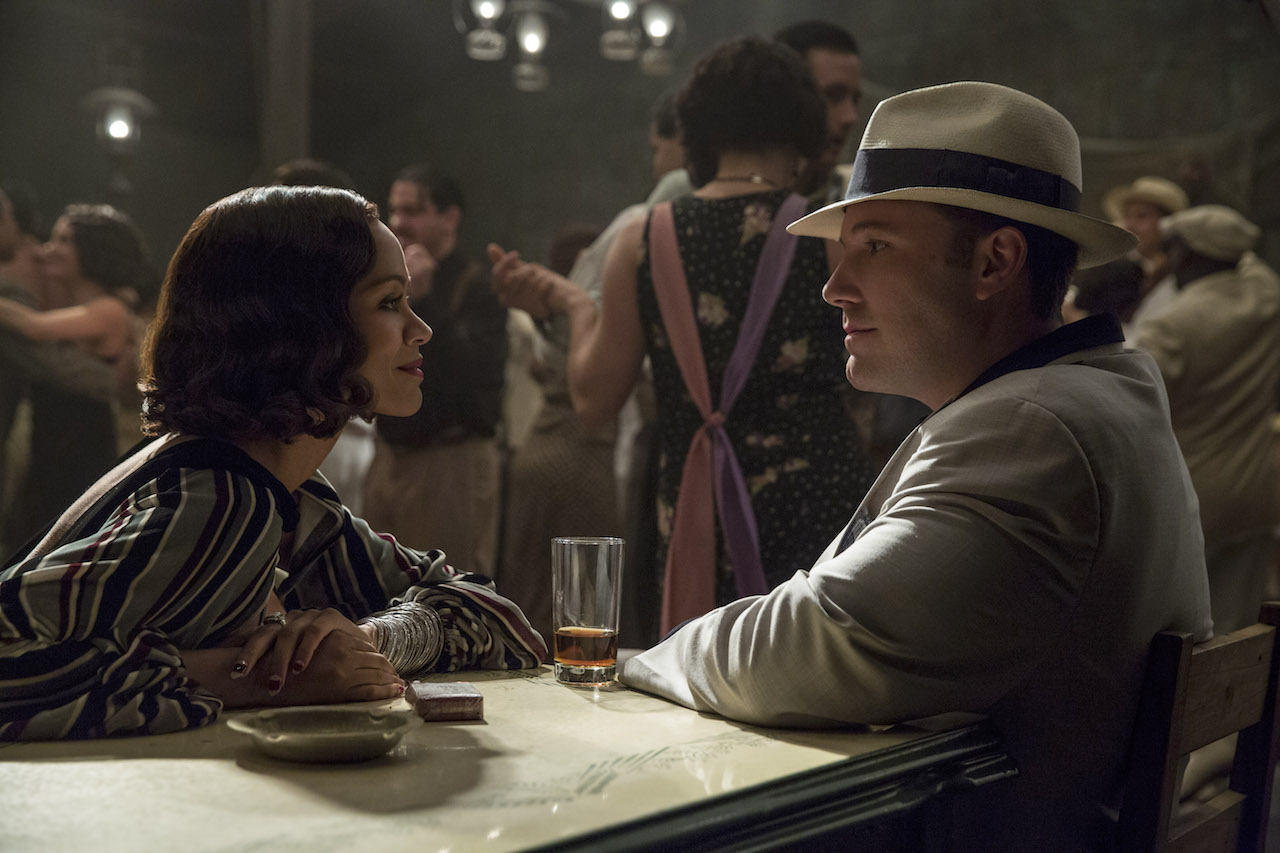
Ben Affleck the director picked the wrong screenwriter and the wrong star for “Live By Night,” based, like his far better “Gone Baby Gone” on a book by Dennis Lehane.

Unfortunately, this time Ben Affleck the director picked Ben Affleck the screenwriter and Ben Affleck the actor for this crime drama set in post WWI, prohibition-era Boston and Florida. Affleck the director has a good eye for detail. He understands the pacing of individual scenes, selects a great cast (other than himself), cinematographer (Robert Richardson), and composer (Harry Gregson-Williams) and has a good sense for visual storytelling. But in this case he was let down by Affleck the screenwriter, who allows the storyline to become so episodic it loses energy. And Affleck the actor gives the weakest performance in the film. He wants to be strong and stoic but comes across as blank and unfocused. It is disappointing to see Warner Brothers, the studio behind gangster classics, produce a film that has nothing of their grit or vitality.

Affleck plays Joe Coughlin, son of an Irish-American cop (Brendan Gleeson) who returns from fighting in WWI determined not to answer to anyone again. He wants to make his own rules. So he becomes involved in crime. Even criminals have rules, and Joe breaks those, too, having a passionate affair with Emma (Sienna Miller), who is supposed to be the girlfriend of the boss of the Irish mob. She betrays him (revealed early in the film, unlike the book), and is reported killed in a chase that ends with her car going into the water. He is badly beaten and then sent to prison.

When he gets out, he goes to Tampa, where he and his friend Dion Bartolo (Chris Messina) muscle their way into the crime scene there. Joe becomes involved with Graciela (Zoe Saldana) and she encourages him to take over the rum distribution. Immediately after telling him she will not sleep with him, she sleeps with him, discomfiting even in a retro story. More thuggery. More killing.

A local cop named Figgis (Chris Cooper) explains that he associates with crooks but is not one himself. His compartmentalization is geographic as well as moral, and he outlines for Joe with a map where he can operate. Later, when Joe needs leverage, he shows Figgis photos of his adored daughter Loretta (willowy Elle Fanning), hooked on drugs and prostituting herself. Joe will tell Figgis where she is in exchange for redrawing those moral boundaries. We later see Figgis punishing her by whipping her bare behind. And she becomes an Aimee Semple McPherson-style evangelist, showing the needle scars on her arms to the crowd as proof of her redemption, and calling on her followers to stay away from the demon rum that Joe is selling.

Joe’s run-ins with cruder thugs, including the KKK, are intended to show that he, too compartmentalizes and perhaps to raise the question of how each of us draws lines, and then redraws them, as we make choices about how far we will go. The excellence in production design and cinematography only show by contrast the superficiality of the story which like the other recent period film from an actor-turned-director, Warren Beatty’s “Rules Don’t Apply,” puts form above substance, or, worse, thinks they are the same thing.

Parents should know that this is a gangster film with extensive violence, including many graphic and disturbing images and characters who are injured and killed. The film also has strong language including racist epithets and sexual references and situations.

Family discussion: Why did Joe want to talk to Emma? How was Joe different from some of the other gangsters? How did his experience in the army influence him?

If you like this, try: “The Godfather,” parts 1 and 2
Related Tags:


Based on a book Crime Drama

Behind the Scenes: Pinocchio

Posted on January 12, 2017 at 8:00 am

One of the greatest animated films of all time is Disney’s Pinocchio, possibly the most beautiful hand-drawn film of all time. It is remarkable to think that it was made just three years after the groundbreaking but much simpler “Snow White.” It also has one of the all-time classic Disney soundtracks, with songs like “I Got No Strings” (featured in last year’s “Suicide Squad”) and the song that is still the Disney theme: “When You Wish Upon a Star.”

The Signature Edition is available today on Digital HD and Disney Anywhere, and will be out on Blu-Ray January 31, 2017, featuring extras like these:

Walt’s Process

Pinocchio – Creating Pleasure Island

Related Tags:


Animation Based on a book Behind the Scenes Classic Fantasy For the Whole Family Movie Mom’s Top Picks for Families
A Monster Calls

A Monster Calls

Posted on January 5, 2017 at 5:50 pm

Copyright 2016 Universal

It turns out that there is something even more painful than the most devastating loss imaginable. That is the lesson of “A Monster Calls,” based on the Carnegie Medal and the Greenaway Medal award winning book by Patrick Ness, illustrated by Jim Kay, from an idea by the late human rights activist Siobhan Dowd.

It takes place in the Irish countryside. “We begin,” the movie tells us, “like so many stories, with a boy too old to be a kid and too young to be a man and a nightmare.” The boy is Conor (Lewis MacDougall), whose adored single mother (Felicity Jones) is struggling with cancer and the ravages of its treatment. While other boys are gently awakened by their parents and sent off to school with a good breakfast and a lovingly packed lunch, it is Conor who makes breakfast for his mother (there are rows of medicine bottles in the kitchen cupboard). He also does the laundry before he goes to school, where a bully threatens him. He has a frosty grandmother (Sigourney Weaver) and an affectionate but useless father (Toby Kebbell). So, he is alone with his grief, his fear, his anger, and his paints, which he must learn to use to express them all.

Let’s think for a moment about the title: “A Monster Calls.” Is that “calls” as in “pays a call,” or comes to visit? Is it “calls” as in “calls out to?” Is it “calls” as in “calls out from?”

A teacher says sympathetically, “If you ever want to talk…” Conor’s dad arrives from America, where he lives with his new wife and new baby, and he takes Conor to an amusement park. But Conor does not want to talk and he is not amused. A glimpse of the old “King Kong,” Fear and Fury bookends, and a shiver-inducing creaking noise give us a hint that a terrifying, destructive monster may be coming.

And then, yes, Conor is visited by a monster, an enormous walking yew tree with the rumbling voice of Liam Neeson. Conor may think the monster is there to protect him, but that is not exactly true. He says he is there to tell Conor three stories, and then, he says, Conor must tell him one and it must be true. The monster’s stories have a yew tree connection, as does a possible new treatment for Conor’s mother. They begin like traditional fairy tales but do not pretend that the resolutions are fair or straightforward. The fury within the stories seems to take over Conor and he finds himself becoming violent before telling his story forces him to admit what terrifies him even more than the prospect of losing his mother.

This is a complex, richly imagined film with a deep understanding, clear-eyed but compassionate. The stories it contains help us to be honest about our own.

Parents should know that this film is about a boy whose mother is dying of cancer. There are some other disturbing images and situations, including a bully and a monster.

Family discussion: Which story surprised you the most and why? Why was it important for Conor to tell his story? What monsters live inside us?

If you like this, try: the book by Patrick Ness and “Secondhand Lions”

Related Tags:


Based on a book Drama Family Issues Illness, Medicine, and Health Care Stories About Kids
Silence

Silence

Posted on January 5, 2017 at 5:27 pm

Copyright Paramount 2016
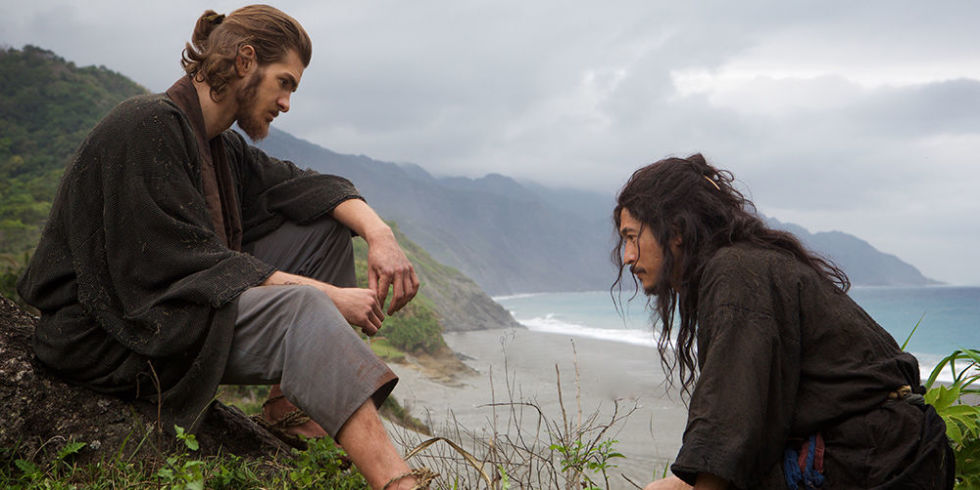
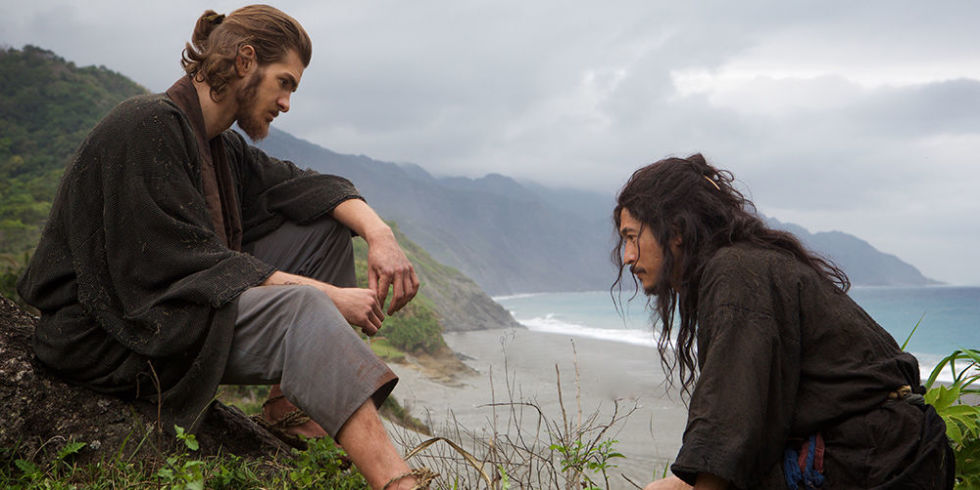
Like Joseph Conrad’s Heart of Darkness and Francis Ford Coppola’s Vietnam-era adaptation, Apocalypse Now, Martin Scorsese’s “Silence” is the story of men who take a journey to find a former leader who has disappeared into the untamed natural world.

It is the mid-17th century. Two Portuguese priests, Father Rodrigues (Andrew Garfield) and Father Garrpe (Adam Driver) go to Japan in search of their teacher and mentor, Father Ferreira (Liam Neeson). After receiving disturbing reports that he has publicly abandoned his faith, they say, “We have no choice but to save his soul.” They leave with “no luggage except our hearts.”

Ferreira had gone to Japan as a missionary and he and his colleagues had some success in converting Buddhist peasants. But Japan has now outlawed Christianity in any form, and as we see immediately, the officials have decided that the best way to eradicate it is to torture believers, forcing the priests to watch. Early efforts to fight Christianity failed because killing the priests made them martyrs, showing the strength and power of their faith when they refused to renounce it, even under torture. So the officials responsible for eradicating Christianity have had to develop a more subtle approach. Instead of torturing the priests, they torture and murder their followers, telling the priests that all they have to do to stop it is recant. It can be as simple as putting a foot on an icon of Jesus. “It’s a formality,” the Japanese official says in a soothing voice. “You don’t have to believe it.”

The priests have a choice: deny their faith in Jesus and Christianity or allow the suffering and death of innocent people. What should they do? Who has the answer?

For Martin Scorsese, who co-wrote and directed, this movie has been a passion project for three decades, since he read the award-winning novel by Shusaku Endo, inspired by the true stories of 17th century priests in Japan. Scorsese, who once thought of becoming a priest grapples here with the big questions about the letter and the spirit in the context of a time and a faith that traditionally has put a lot of emphasis on the letter as a frame and a discipline for the spirit. It is also a faith tradition that understands suffering as a part of faith practice, whether a way to appreciate the suffering of Jesus or to test one’s faith or to better understand others’ experiences, or to earn the rewards of heaven. The gorgeous visual scope and striking images are as powerful in telling the story of the clash of culture and religion as the narrative.

When it comes to performances, the film is off-balance, probably unintentionally, as the Japanese characters are more complex and completely realized than the one-dimensional priests. Garfield seems at sea as an actor, not just as a character, except in a few scenes where he has a chance to debate the “Inquisitor” (a wry, clever Issey Ogata). This movie about silence is at its best in the verbal jousting on faith, culture, truth, and power.

Translation: Extremely tense scenes of torture and brutality with some very disturbing graphic images, characters injured and killed

Recommendation: Mature teens-Adults

Family discussion: Were you surprised by the final shot? In the debate with the Inquisitor about culture and faith, who was right?

If you like this, try: “Unbroken” and “The Last Temptation of Christ”

Related Tags:


Based on a book Epic/Historical Spiritual films
THE MOVIE MOM® is a registered trademark of Nell Minow. Use of the mark without express consent from Nell Minow constitutes trademark infringement and unfair competition in violation of federal and state laws. All material © Nell Minow 1995-2026, all rights reserved, and no use or republication is permitted without explicit permission. This site hosts Nell Minow’s Movie Mom® archive, with material that originally appeared on Yahoo! Movies, Beliefnet, and other sources. Much of her new material can be found at Rogerebert.com, Huffington Post, and WheretoWatch. Her books include The Movie Mom’s Guide to Family Movies and 101 Must-See Movie Moments, and she can be heard each week on radio stations across the country.

Website Designed by Max LaZebnik