Denial

Denial

Posted on October 6, 2016 at 5:50 pm

Copyright 2016 Bleeker Street
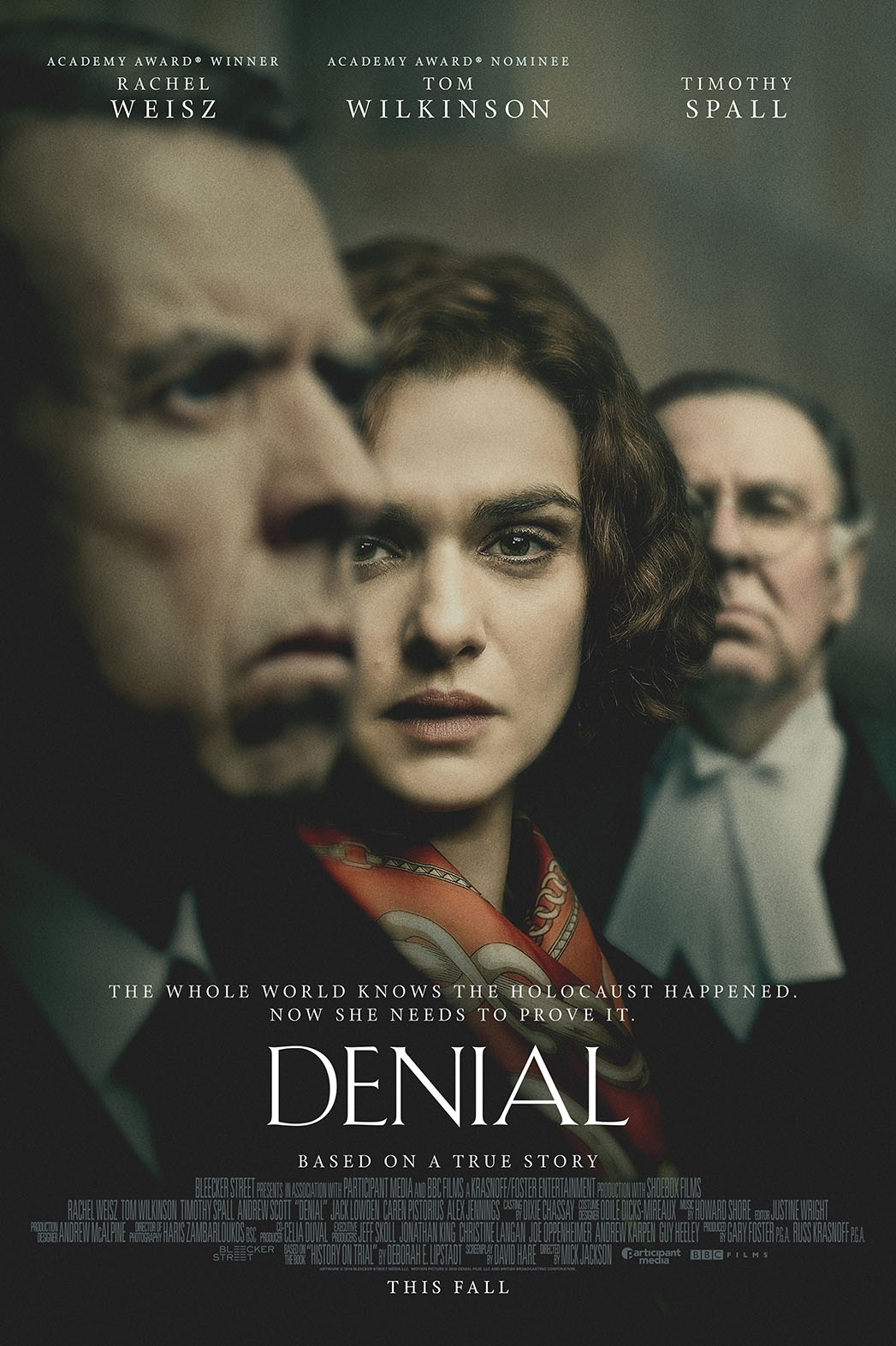
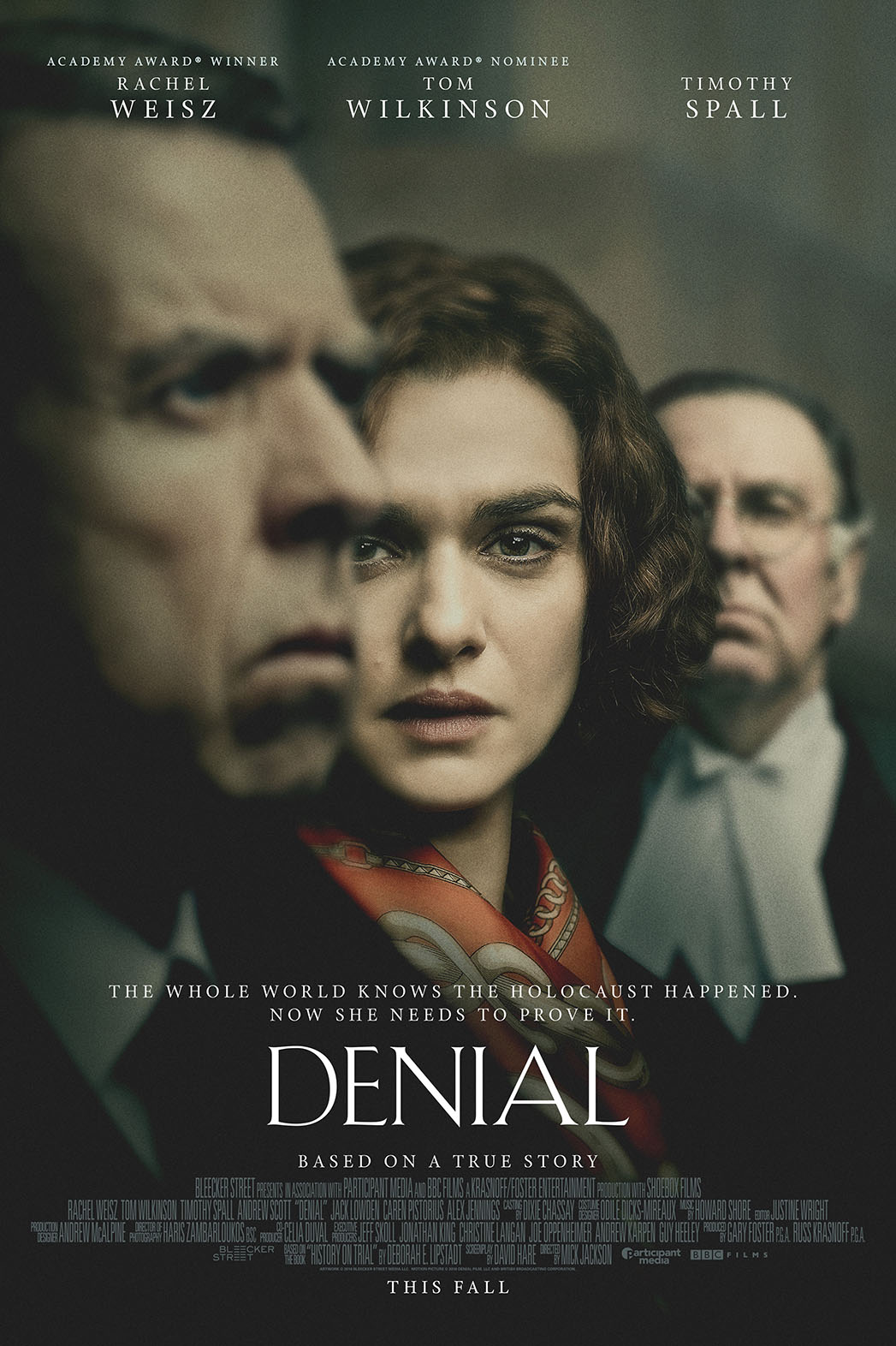
You can refuse. You can disagree. You can object. You can argue. But none of those words is as charged as “denial,” with its multiple uses all implying injustice, unfairness, even bullying. The title of this film establishes immediately that the courtroom and media battle it depicts is not one of popularity, reputation, or consensus. It is about the core issue of proof — how we know what we know, and, in this case, what that means as we approach the time when everyone with a memory of the experience in question is gone.

The experience in question, in the most literal sense of the term, is the Holocaust. David Irving (Timothy Spall, all oily charm), a British self-described historian, wrote and lectured widely about his view that Hitler never ordered the killing of Jews in concentration camp and that in fact there were no gas chambers used for mass executions of Jewish prisoners. He was intentionally offensive — in both sense of the word. He said:

Ridicule alone isn’t enough, you’ve got to be tasteless about it. You’ve got to say things like ‘More women died on the back seat of Edward Kennedy’s car at Chappaquiddick than in the gas chambers at Auschwitz.’ Now you think that’s tasteless, what about this? I’m forming an association especially dedicated to all these liars, the ones who try and kid people that they were in these concentration camps, it’s called the Auschwitz Survivors, Survivors of the Holocaust and Other Liars, ‘ASSHOLs’. Can’t get more tasteless than that, but you’ve got to be tasteless because these people deserve our contempt.

And he took his case to the classroom of a professor who specialized in the Holocaust, Emory’s Deborah Lipstadt (Rachel Weisz, feisty but thoughtful, with a red perm, bright scarves, and a Queens accent), to confront her in person, without notice but with a video camera. She refused to debate him, saying that it would legitimize his arguments. And she described him in her book, Denying the Holocaust: The Growing Assault on Truth and Memory, as:

one of the most dangerous spokespersons for Holocaust denial. Familiar with historical evidence, he bends it until it conforms with his ideological leanings and political agenda. A man who is convinced that Britain’s great decline was accelerated by its decision to go to war with Germany, he is most facile at taking accurate information and shaping it to confirm his conclusions.

He wanted more than a classroom confrontation after that. He filed a lawsuit against Lipstadt and her publisher, and he filed it in England, where the laws are more favorable for plaintiffs in libel cases. In the US, the person filing the suit has to prove his or her case. In the UK, it is up to the defendant to prove the truth of the statements made. In cinematic terms, the legal and physical setting heightens the inherent courtroom drama — all the wigs and posh accents and strangeness of the rules boost the theatricality of the presentation, especially after Lipstadt learns that neither she nor the Holocaust survivors who are vitally concerned with the trial will be allowed to testify. For Lipstadt, not being permitted to use her voice was a whole separate category of denial.

This is a compelling courtroom drama that goes to the deepest questions not just of Holocaust history or any history but of how we know what we know and who we believe. It is always tempting to say “let’s listen to both sides.” But as the late Daniel Patrick Moynihan used to say, “Everyone is entitled to his own opinion, but no one is entitled to his own facts.” The meticulous combing of Irving’s work to check footnotes and translate original documents (funded by Steven Spielberg and other donors) proved that Irving’s “conclusions” were based on misrepresentation. The meticulous combing of his shelves and shelves of diaries proved his bias. This is a compelling drama and an urgent reminder of the importance of rigorous challenges to unsubstantiated, malicious “history.”

Parents should know that this film deals with the Holocaust, with references to genocide and ethnic bigotry. It includes social drinking and some strong language.

Family discussion: What evidence would you want to see if you were the judge in this case? Should Professor Lipstadt have testified?

If you like this, try: This C-SPAN program about the trial, featuring Irving and Lipstadt and the website that includes the trial documents

Related Tags:


Based on a book Based on a true story Courtroom Drama
Snowden

Snowden

Posted on September 15, 2016 at 5:51 pm

B
Lowest Recommended Age: High School
MPAA Rating: Rated R for language and some sexuality/nudity
Profanity: Very strong language
Alcohol/ Drugs: Alcohol
Violence/ Scariness: Tension and peril
Diversity Issues: None
Date Released to Theaters: September 16, 2016

Copyright Endgame Entertainment 2016
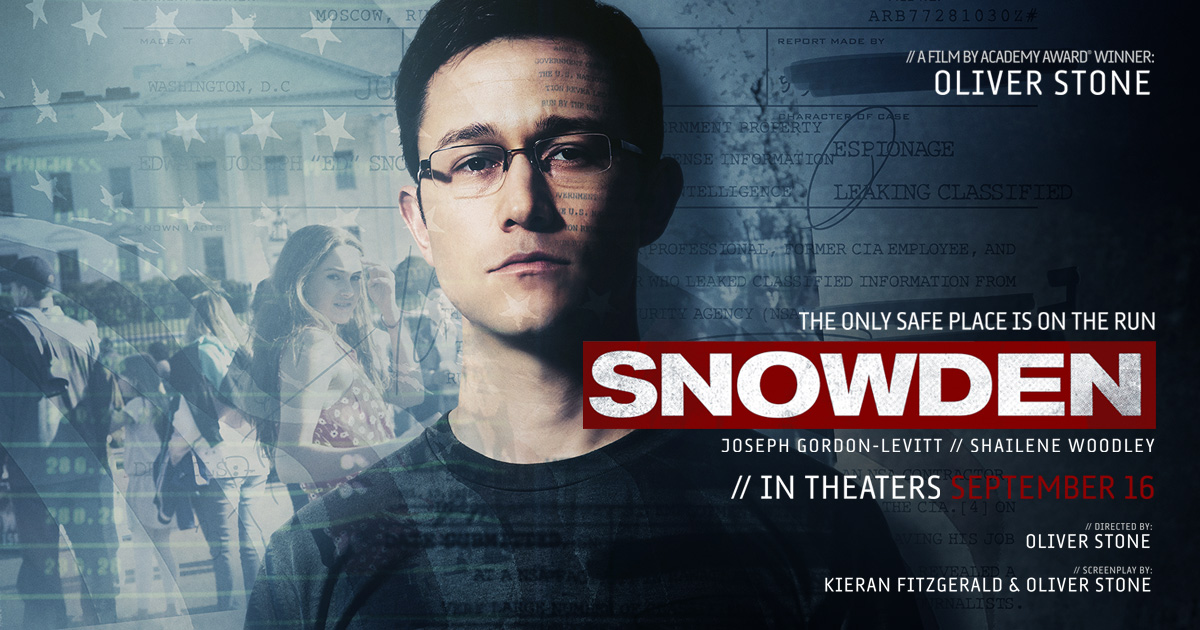
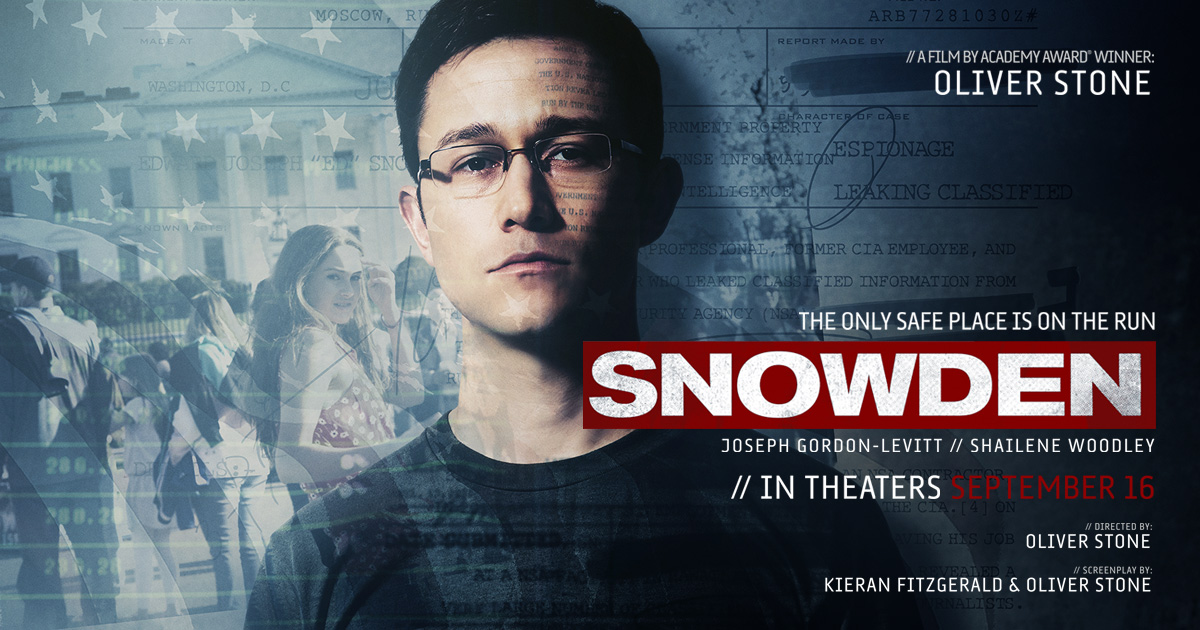
Who better to take on the story of Edward Snowden than cinema-of-paranoia director Oliver Stone? Well, Laura Poitras, who directed the documentary about Snowden, “Citizenfour,” and who is portrayed in this film by Melissa Leo. As is usually the case, the documentary is the better film. But Stone’s narrative version, “Snowden,” is an absorbing version of the story, presenting vitally important issues in an arresting, provocative manner, with some superb moments. It is flawed, as Stone’s “historical” films tend to be, by unnecessary stacking of the deck that detracts from the credibility of the film. Stone does not trust the government, which is fine, but he doesn’t trust his audience, which is distracting. If you are going to make your hero a seeker of Truth, then Hollywood-izing the story is counter-productive.

The movie takes on three big questions, answers one, partially answers another, and turns the third over to us. The first question is: what happened? How did a 29-year-old computer guy get access to what appears to be the entire scope of US intelligence, copy it, and turn it over to reporters? Second, why did he do it? And third, is he a hero or a traitor?

Snowden was an enormously gifted, deeply patriotic young man who was in training for military special forces when an injury forced his return to civilian life. “There are other ways to serve your country,” the doctor crisply advises him. Naming Ayn Rand as one of his influences does not raise any concerns in his battery of entry tests and interviews, including lie detector tests. And so he goes to work for the CIA, NSA, and private contractors for both agencies, gaining access to the information and intrusions into personal data that are being constantly combed and mined for possible terrorist activity. Think of it as the government having Google that searches not just all public material but everything we think of as private: every email, every phone call, every bank account and credit card transaction, even invading your non-digital, analog world, including your home. According to this film, the government can spy on you Big Brother style via your webcam, even if the indicator light is off. I will wait here while you go get a Band-Aid to cover it up right now.

A combination of consciousness-raising from his left-leaning girlfriend (Shailene Woodley), horrifying discoveries of 4th Amendment violations, disturbing revelations about the military-industrial complex (from Nicolas Cage!), and disappointment in President Obama’s failure to curb these abuses leads Snowden to decide to go public. Briefly touched on are some other possible factors: the abuse of Tom Drake, who tried to raise these questions through official channels, and, possibly, some psychological or cognitive disturbance resulting from the onset of epilepsy and the drug used to treat it, or from the level of work-related stress that may have triggered the seizures. There is one “Beautiful Mind”-style scene where Snowden’s CIA boss (Rhys Ifans) speaks to him via a Skype-ish video conference, with a looming, room-size head along the lines of the Wizard of Oz. It is not clear whether this is Snowden’s subjective viewpoint or intended to be a realistic portrayal, but the conversation is, even within the framework of this film about massive intrusions into private lives of citizens with no suggestion of any inappropriate activity, preposterously paranoic.

All of this would be so much easier to take if Snowden was not heroic and brilliant every single moment. Given 5-8 hours to complete a programming test at the beginning of his tenure at the CIA, he finishes in under 40 minutes (38, he corrects his instructor), and everywhere he goes, he blows everyone away with his mad skills. As he zippily downloads the files he plans to turn over to the press (in real life it took months, not minutes), colleagues knowingly nod their approval, hard to understand given his insistence that he was careful to make it clear that he alone was responsible for the breach. Gordon-Levitt is, as ever, an enormously talented actor, but he is playing something of a cipher, a person with low affect. The endlessly skilled Melissa Leo is playing a tough and savvy journalist but as written she has little to do but gaze adoringly as she points her camera. The standouts in the cast are two of the most versatile and talented young actors working on film today: Ben Schnetzer and Lakeith Lee Stanfield as two of Snowden’s colleagues. In their brief screen time, each of them creates vivid, three-dimensional characters we instantly connect to more than we do to any of the main characters.

No matter where we place the balancing point between national security and individual freedom, we can all agree that the decisions should not be made unilaterally by individuals in their 20’s like Edward Snowden and Chelsea Manning. Snowden says he is hoping to start a conversation. I hope that the conversations about this film will be less about its failings and more about what we should do to make sure the next Snowden does not decide to take this step.

Parents should know that this film has very strong language, sexual references and situations and some nudity, tense and perilous situations, and issues of betrayal.

Family discussion: Is Snowden a hero or a traitor? What would you have done if you discovered the level of government surveillance? Who should decide and how much should be disclosed?

If you like this, try: “Zero Days” and “Citizenfour

Related Tags:


Based on a book Based on a true story Drama Movies -- format Politics Spies
Bridget Jones’s Baby

Bridget Jones’s Baby

Posted on September 15, 2016 at 5:15 pm

Copyright Working Title 2016
I really don’t like saying this. But Bridget Jones has the same problem as Adam Sandler and the rest of those Apatow-ish man-boys. They haven’t figured out that cluelessness and mistakes that are endearing in a 20-something are annoying and then just exhausting when they get older. Bridget, again played by Renee Zellweger though without the yo-yo weight gain, says in this film that she has to stop making the same mistakes and start making new ones. Well, she’s right. But it’s pretty much the same mistakes, professional and romantic disaster, though with higher stakes this time. The filmmakers, director Sharon Maguire (the original Bridget Jones film) and Helen Fielding (creator of the character and co-screenwriter) rely on a level of affection for the characters we first met onscreen 15 years ago and most recently saw 12 years ago, but make no effort to re-introduce them to those of us who, like Bridget, were a lot younger then, or introduce then those who are too young to have seen them.

Bridget, finally at her goal weight and in a good job producing television news, has still not made things work with Mr. Darcy (Colin Firth), who is married to someone else, someone frightfully capable and intelligent. Bridget decides, with some encouragement, to go off and have some carefree sex with a random guy to perk up her spirits, so she goes “glamping” at a music festival something between Burning Man, Woodstock, and Canyon Ranch. After a meet cute than involves her falling into a mud puddle, she does have a wild night of love with a very handsome American named Jack, played by Dr. McDreamy himself, Patrick Dempsey, whose performance would have been a lot better if his character had, well, any characteristics other than being not Mark Darcy in every way.

A few days later, Bridget and Darcy find themselves at the same party and he tells her he is getting divorced. Next thing you know, she is as they say in the UK, up the spout, and has no idea, as they say in the US, who’s the daddy. If you think this is wildly hilarious, wait until she brings them both to childbirth preparation class and they are mistaken for a gay couple. What a knee-slapper! And this comes after the excruciating farce of keeping them from finding out they are both possible fathers (and that she slept with both of them) and the excruciating farce of telling them. The only thing that works in this mess is Emma Thompson at her very best as the obstetrician. Apparently she wrote her own dialog as she is listed as co-screenwriter, and her scenes have a wit and crackle that is sorely missing from the rest of the film.

Parents should know that this film includes very raunchy humor with explicit sexual references and situations and comic nudity, theme of question of paternity, very strong language used by adults and children, and alcohol.

Family discussion: How has Bridget changed since the first film? Is she making the same mistakes or new ones?

If you like this, try: the earlier Bridget Jones films, “and Baby Mama” and the “Catastrophe” series on Amazon

Related Tags:


Based on a book Comedy Romance Series/Sequel

Exclusive Clip: Milton’s Secret

Posted on September 15, 2016 at 8:00 am

The first film to be based on the work of best-selling author and spiritual teacher Eckhart Tolle is “Milton’s Secret,” a thought-provoking story about purpose, presence, family, and integrity. 

Milton (William Ainscough) is a 12 year-old boy growing up in an economically and socially unpredictable world. His mother and father (Mia Kirshner, David Sutcliffe) are workaholics with marital and financial problems, and he is bullied at school. When his grandfather (Donald Sutherland) visits, Milton learns that rehashing the past and worrying about the future are preventing him from finding true happiness. 

We are pleased to present an exclusive clip.

Related Tags:


Based on a book Teenagers Trailers, Previews, and Clips Tweens
The Light Between Oceans

The Light Between Oceans

Posted on September 1, 2016 at 5:55 pm

B
Lowest Recommended Age: High School
MPAA Rating: Rated PG-13 for thematic material and some sexual content
Profanity: Mild language
Alcohol/ Drugs: None
Violence/ Scariness: Discussion of wartime violence and loss, miscarriages, dead body
Diversity Issues: None
Date Released to Theaters: September 2, 2016
Date Released to DVD: January 23, 2017
Amazon.com ASIN: B01LDWUQ4I

Copyright Disney 2016
The lighthouse is on an island called Janus, and the lighthouse keeper explains that it is named for the two-faced god who is memorialized in the first month of each year, January. One face looks to the past, the other to the future — “two ways of looking at things.”

The theme of duality and perspective resonates throughout this story of the lighthouse keeper, Tom Sherbourne (Michael Fassbender) and his wife Isabel (Alicia Vikander), we see how two ways of looking at things can balance or unbalance each other.

Tom is a WWI veteran who tells the man looking for a temporary lighthouse keeper that he is not worried about the isolation of the job. “I just want to get away from things for a little while.” His mother died and he had a father who was so dictatorial that the regimentation of the military was a relief. We do not learn much about his wartime experiences except that they were brutal. He is, as he later admits, numb. The solitude and order of the lighthouse suits him.

But he meets the lively and warm-hearted Isabel, who impetuously proposes marriage, and realizes how much he had been longing for connection. She tells him, “You still have a light inside you, and I have seen it.” And he writes back, “I’ve never known it was all right to talk about the things I feel.”

They marry and are blissfully happy in their tiny little island. But after two harrowing miscarriages, Isabel is devastated. When a boat washes up near the shore containing a dead man and a crying baby, it seems that providence has given them what they were missing. It seems that way to Isabel. Tom knows that he must put the truth into his log and return the baby to her family. But Isabel is desperately in love with the child and insists that they can give her what she needs. Tom, who has promised to do everything he can to make her happy, agrees.

They adore the baby, who they name Lucy. But when Tom sees a woman sobbing in a graveyard (Rachel Weisz) and realizes she is probably Lucy’s real mother, his conscience begins to torture him. They have inflicted on her the same agony that they suffered.

The story gets soapy, and the tinkly piano score from Alexandre Desplat and scenes of waves crashing on the shore suggest literary pretensions that may work better in the acclaimed novel than they do on screen. But Fassbender and Vikander, two of the most compelling actors ever to appear on film, give powerful performances, and their on-screen chemistry, which turned into real-life romance, holds the film together when the story wavers.

Parents should know that this film has discussion of wartime violence and loss, miscarriages, a dead body, and devastating grief.

Family discussion: Who should raise Lucy? Why did she want to see Tom again? Was Frank right about forgiveness?

If you like this, try: “The Widow of Saint-Pierre”

Related Tags:


Based on a book Drama DVD/Blu-Ray Pick of the Week
THE MOVIE MOM® is a registered trademark of Nell Minow. Use of the mark without express consent from Nell Minow constitutes trademark infringement and unfair competition in violation of federal and state laws. All material © Nell Minow 1995-2025, all rights reserved, and no use or republication is permitted without explicit permission. This site hosts Nell Minow’s Movie Mom® archive, with material that originally appeared on Yahoo! Movies, Beliefnet, and other sources. Much of her new material can be found at Rogerebert.com, Huffington Post, and WheretoWatch. Her books include The Movie Mom’s Guide to Family Movies and 101 Must-See Movie Moments, and she can be heard each week on radio stations across the country.

Website Designed by Max LaZebnik