
Intro to “The Hunger Games”

Intro to “The Hunger Games”

Posted on March 19, 2012 at 3:59 pm

This week’s release of “The Hunger Games” is the most anticipated film of the spring and likely to be the biggest hit since the “Twilight” series.  It is based on the first of a wildly successful trilogy of books by Suzanne Collins.  For those who have not read the books, here is a brief introduction:

When and where does it take place?  It takes place in the future when North America has become a totalitarian country called Panem following an apocalyptic catastrophe.  Panem has a capitol city and thirteen numbered districts, each with its own specialty (lumber, mining, agriculture, textile, grains, etc.).

Who are the lead characters?  The book’s story is told by Katniss Everdeen, a 16-year-old who lives in the poor, coal-mining District 12 with her mother and younger sister, Prim.  They are very poor and ever since her father died, Katniss has been responsible for taking care of the family.  She is brave and loyal and a very skilled archer, hunter, and trapper, and uses those skills to find food for her family.  She is played in the film by Jennifer Lawrence.

Peeta Mellark also lives in District 12 and is the son of a baker.  He is kind-hearted and sympathetic and admires Katniss.  He is played in the film by Josh Hutcherson.

Gale Hawthorne is two years older than Katniss and has been her friend and has taught her how to hunt and helped her feed her family.  He is very responsible but angry at their circumstances and the unfairness of the government.  He is played in the film by Liam Hemsworth.
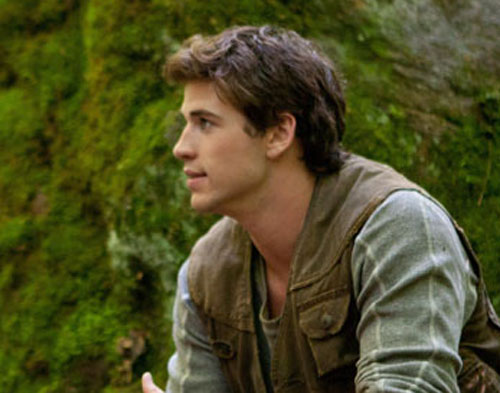
What are the Hunger Games?  The brutal leadership of Panem operates a system something between a gladiator fight and a reality television show each year called “The Hunger Games.”  Teenage boy and girl “tributes” are selected by lottery from each of the districts.  They are taken to the capitol where they are dressed up and prepared for a fight to the death that is nationally broadcast.  Katniss and Peeta compete in the games, advised by a previous champion, Haymitch Abernathy (Woody Harrelson).

What’s the deal with the bird pin?  Mockingjays are a unique hybrid species of bird in Panem.  Katniss wears a special mockingjay pin given to her by a friend from District 12 and the bird becomes a more important symbol later in the series and is the title of the final book in the series.

 

Related Tags:


Based on a book Books Understanding Media and Pop Culture
John Carter

John Carter

Posted on March 8, 2012 at 6:56 pm

It takes a while to get going and is about half an hour too long, but “John Carter” has some spectacular visuals and well-staged action scenes.  Edgar Rice Burroughs, the author of the Tarzan novels, also wrote the John Carter: Adventures on Mars series, about a Confederate Army veteran transported to Mars, who becomes involved in battles between two humanoid warring factions (one of which has, natch, a beautiful princess who does not want to marry the leader of the opposing side as her father is urging).  There are also some warlike but intelligent tall, green, egg-laying creatures with an extra pair of arms, and some mysterious robed messenger types with access to super-weapons.

Handsome but bland Taylor Kitsch plays John Carter.  In an overlong prologue, we see him as an angry loner seeking a legendary gold stash and refusing to join the U.S. Cavalry (headed by “Breaking Bad’s Bryan Cranston).  He finally discovers the cave with the gold, which is a storage facility used by what we would call a Martian, and a fight ends with his being transported to Mars, or, as the inhabitants call it, Barsoom.  He is discovered by some of the four-armed green Martians, including their leader Tars (voice of Willem Dafoe), who is fascinated by Carter’s ability to leap huge distances and heights, thanks to the Barsoomian gravity.  He is something between a pet and a prisoner, but things improve when they give him a drink that makes it possible for them to understand each other’s languages.

In the meantime, the robed messengers have delivered their super-weapon to Sab Than (“The Wire’s” Dominic West), the leader of the Zodanga, enemies of Helium, which is led by Tardos Mors (Ciaran Hinds), father of Princes Dejah Thoris (Lynn Collins), who are now in an increasingly precarious position.  It gets overly complicated for a while but then it picks up when John Carter gets involved with Dejah and has to fight some enormous monsters gladiator-style and there are some very cool flying ships.

The frame story adds unnecessary clutter to an already-muddled plot and Collins, an extraordinarily gifted and classically trained actress, is under-used in a decidedly un-classical role.  There has been some surprising speculation about Christian themes in the storyline, but I believe it is just the typical finding-the-hero-within-after-disillusionment, down to the big reveal about returning home to discover tragedy that we see in everything from “The Searchers” to “Star Wars: A New Hope.”     The most important reason it does not work well as a Christ story is that the main character is not very compelling and the narrative not very resonant.

(more…)

Related Tags:


3D Action/Adventure Based on a book Fantasy Science-Fiction
Being Flynn

Being Flynn

Posted on March 8, 2012 at 6:05 pm

B
Lowest Recommended Age: Mature High Schooler
MPAA Rating: Rated R for adult situations, language, nudity, and sex
Profanity: Constant very strong and explicit language
Alcohol/ Drugs: Drinking, smoking, drugs, substance abuse
Diversity Issues: A theme of the movie, character makes bigoted remarks
Date Released to Theaters: March 9, 2012
Amazon.com ASIN: B00772HR6O

Nick Flynn was working at a Boston homeless shelter when his father, Jonathan Flynn, came in looking for a place to stay. Nick was raised by his mother and had little contact with his father except for some letters explaining that he would soon be recognized as one of the three greatest writers in American history. Nick Flynn’s memoir, Another Bullshit Night in Suck City, has been adapted for the screen by director Paul Weitz, whose films often explore the relationships between fathers and sons (“About a Boy,” “In Good Company,” “American Pie”).

Paul Dano plays Nick, a young man who has some good instincts and some talent.  He is worse than directionless — he is stuck.  His mother (Julianne Moore) has died and he has no place to go.  He moves into a strip club-turned apartment that is barely more than a squat, selected over the other candidates because he has no family who might come in for an extended stay.  He takes the job at the homeless shelter because it is the first opportunity he hears of.  He is not unsympathetic but he is distant and untrained.  When a resident needs a new pair of pants Nick turns to one of the more experienced aides to ask what size.  The aide says simply, “Ask him.”  Nick begins to see — as we do — the artificiality of the denial-based distance we maintain from people we think might ask more from us than we can give or might make us think about how fragile our support system can be.  When his father (Robert De Niro) shows up in the line of people needing a bed, Nick has so many conflicting feelings he has to go numb — on his own and with some chemical assistance.  He wants to love his father and he wants his father to love him.  He wants to care for him but is afraid of not being able to — we learn more about why later in the story.  He is not prepared to acknowledge how much he wants to be like his father (in following his dream of being a writer) and does not want to be like him (unable to finish his story).  We hear their competing versions of the story but we know, as Nick does, that both are coming from him.

De Niro has one of his best roles as a man wavering between fierce pride and grandiosity.  Jonathan is a man of large gestures and unspeakably selfish behavior. De Niro keeps him human without compromising by trying to make him more sympathetic.  Ultimately, it is Jonathan’s lack of empathy that allows him to finally if briefly provide fatherly support and guidance in telling Nick an important truth that frees him from the past and provides direction for the future.

(more…)

Related Tags:


Based on a book Based on a true story Family Issues Movies -- format
Salmon Fishing in the Yemen

Salmon Fishing in the Yemen

Posted on March 8, 2012 at 6:02 pm

Paul Torday’s satiric novel of politics, money, love, and fishing has been brought to the screen with Ewan McGregor as a government fisheries expert and Emily Blunt as an aide to a Yemeni sheik who has what seems to be an impossible dream — building a salmon fishery in his desert country.

When Dr. Alfred Jones (McGregor) receives a polite letter from Harriet Chetwode-Talbot (Blunt) about the sheik’s proposal, he dismisses it as ridiculous and sends back a curt refusal: “Conditions in the Yemen make this project fundamentally infeasible.” But bad news about conflict in the Mid-East has the Prime Minister’s press secretary looking for “a good news story from the Middle East — a big one,” and British-Yemeni cooperation on something as benign as fly-fishing seems like just the photo-op-friendly project to distract the public.  Dr. Jones is directed to meet with Ms. Chetwode-Talbot (as they will continue to address one another).  It turns out that some elements of the “fundamental in-feasibility” of the project are not as infeasible as he thought.  For one thing, money is no object, and it is remarkable how many obstacles that clears.  And the support of the Prime Minister clears away most of the rest.  It’s like a benign “Charlie Wilson’s War” with fish instead of anti-aircraft weapons).

Dr. Jones makes up the most impossibly high figure he can think of, and that immediately becomes the budget for the project.  Suddenly, Dr. Jones has access to the most expert engineers in the world, including dam builders from China and to the equipment that can ship millions of fish thousands of miles.  Both he and Ms. Chetwode-Talbot discover the liberating feeling of imagining endless possibilities.  But there are complications and dangers that come from that much freedom.  There are challenges that are beyond the capacity of even the most skilled engineers.  Ms. Chetwode-Talbot has a boyfriend in the military who is fighting in the Mid-East and Dr. Jones has a wife who is on an extended business trip to Geneva.  Those commitments begin to seem like just another barrier once thought impenetrable, but now open to reconsideration.

Director Lasse Hellström dissolves some barriers of his own, deftly bridging genres with a story that combines political satire with adventure and romance and is not afraid to take on issues like faith and bridging cultural boundaries.  Amr Waked brings dignity and charisma to the role of the sheik.  “I have too many wives not to know when a woman is unhappy,” he tells Ms. Chetwode-Talbot.  He persuades Dr. Jones that what he wants is not a rich man’s whim but a part of a larger vision to inspire his countrymen and for the moment at least the idea sounds less absurd to us as well.  Kirsten Scott Thomas steals the show as the press secretary, whether she is sending tart IMs or scooting her children out the door as she barks orders into her cell phone.  The film effectively captures the ruthless pragmatism and frequent cynicism of political trade-offs.

It captures the broadening horizons of the two Brits transplanted to the desert as well.  As McGregor and Blunt root for fish “bred for the dinner table” to locate the instinct to swim upstream, we root for them to do the same.


Parents should know that this film includes strong material for a PG-13 including sexual references and a brief explicit situation, brief strong language, and wartime and sabotage violence.

Family discussion:  What does Dr. Jones discover about faith?  How does the project make him think differently about his own options?  What do you think will happen next?

If you like this, try: “Chocolat” and “Local Hero” and the novel by Paul Torday

Related Tags:


Based on a book Comedy Drama Romance
The Lorax

The Lorax

Posted on March 1, 2012 at 6:30 pm

Adapting Dr. Seuss for a feature film is a challenge. The movies can capture his whimsical drawings and mischievous humor but they fail when they pad his storylines and jettison his rhymes.  Dr. Seuss had a genius for saying a lot with a little, which is one reason the half-hour animated television versions of his stories hold up so well.  But more is less when it comes to adapting Dr. Seuss, and in this latest, as in too many before, most of what is added is unnecessary, distracting, and nowhere near the quality of the original.

The Lorax applies all of the latest tools of technology with great skill and imagination and never match the standard of Dr. Seuess’ paintbrush on paper.  It is beautifully designed and makes great use of 3D. Unfortunately, it weighs down the story of the book, becoming something Dr. Seuss never was — heavyhanded.

The legendary Dr. Seuss wrote the story of The Lorax as a cautionary tale about environmental pollution and corporate greed in an era when the country was newly awakened to the dangers confronting our fragile ecological system. In the age of hippies and “flower power” and yearning for a return to nature, The Lorax fit right in.

In this expanded version of the story, twelve year old Ted (Zac Efron) has grown up in the town of Thneeville, where everything is “plastic and fake.” There is not one living tree, or even any place to plant a tree because the dirt has been covered up with plastic. The richest man in town, Mr. O’Hare, (Bob Riggle) makes his money selling bottled clean air (aided by large ruthless bodyguards and a corporate propaganda campaign). Mr. O’Hare believes that trees are a threat to his corporate profits because “trees make air for free.”

Ted daydreams of the beautiful young Audrey (Taylor Swift), and when Audrey wishes on her birthday that she could see “a real tree” rather than the plastic replicas in Thneeville, Ted sets out on a quest which gets him into all kinds of trouble and leads him on all kinds of adventures. (“If a boy does the same stupid thing twice, it’s usually for a girl.”) His exploits in the sewer system of Thneeville and outside the city limits are beautifully done. Ted’s quest takes him to an ancient hermit, the Once-ler, (Ed Helms) who tells the story of his long ago encounter with a strange woodland creature, the Lorax (Danny DeVito) who “spoke for the trees.” In a series of flashbacks the Once-ler explains how the trees were all killed off. The rest of the movie involves Ted, Audrey and Ted’s grandma battling corporate spies, security cameras and a brainwashed mob to see if trees can be restored. In a scene reminiscent of the recent animated classic “Wall-E,” there are wild chase scenes for the one last remaining seedling.

The Lorax is at its best when the animators are able to escape from the more heavy-handed aspects of the plot. Three singing, break-dancing goldfish provide a delightful background chorus to the action. The underground sewer system of Thneeville is a marvel of cartoon engineering. And there are some nice moments with Ted’s family, which seem to be inspired by the family in Carol Burnett’s old “Mama” skits from her variety TV show.

There is plenty of room for more animated parables sensitizing today’s young audiences to the importance of ecological concerns. However, Dr. Seus’ The Lorax would have been a better, more artful movie if its makers had exercised some artistic control and moderation over Dr. Seus’ manifesto from the opening salvos of the environmental wars.  The book itself emphasizes sustainability so that natural resources will be around for production of goods.  The film over-complicates the plot but over-simplifies the message.

Parents should know that this movie includes mild peril and themes of environmental destruction. Small children may find some of the exciting chases or the scenes of pollution a little intense.

Family discussion: Why did the Once-ler break his promise to the Lorax? Why did the citizens of Thneeville dislike trees? Would you be brave enough to do what Ted did?

If you like this, try: “Wall-E” and “Robots,” the Dr. Seuss book and the earlier and superior animated version with Eddie Albert as the narrator.

Related Tags:


3D Animation Based on a book Comedy Environment/Green For the Whole Family
THE MOVIE MOM® is a registered trademark of Nell Minow. Use of the mark without express consent from Nell Minow constitutes trademark infringement and unfair competition in violation of federal and state laws. All material © Nell Minow 1995-2026, all rights reserved, and no use or republication is permitted without explicit permission. This site hosts Nell Minow’s Movie Mom® archive, with material that originally appeared on Yahoo! Movies, Beliefnet, and other sources. Much of her new material can be found at Rogerebert.com, Huffington Post, and WheretoWatch. Her books include The Movie Mom’s Guide to Family Movies and 101 Must-See Movie Moments, and she can be heard each week on radio stations across the country.

Website Designed by Max LaZebnik