Director Rod Lurie (“The Contender”) brings us “Killing Reagan,” the story of the assassination attempt on Ronald Reagan On March 30, 1981. It is coming to the National Geographic Channel on October 16, 2016, with Tim Matheson and Cynthia Nixon as the Reagans.
Rated R for strong violence, language throughout, some sexual content and drug material
Profanity:
Very strong language, homophobic slurs
Alcohol/ Drugs:
Drugs and drug dealing, alcohol, smoking
Violence/ Scariness:
Extensive and graphic violence, guns, car crash, mob executions, disturbing images
Diversity Issues:
Diverse characters
Date Released to Theaters:
July 12, 2016
Copyright 2016 Broad Green
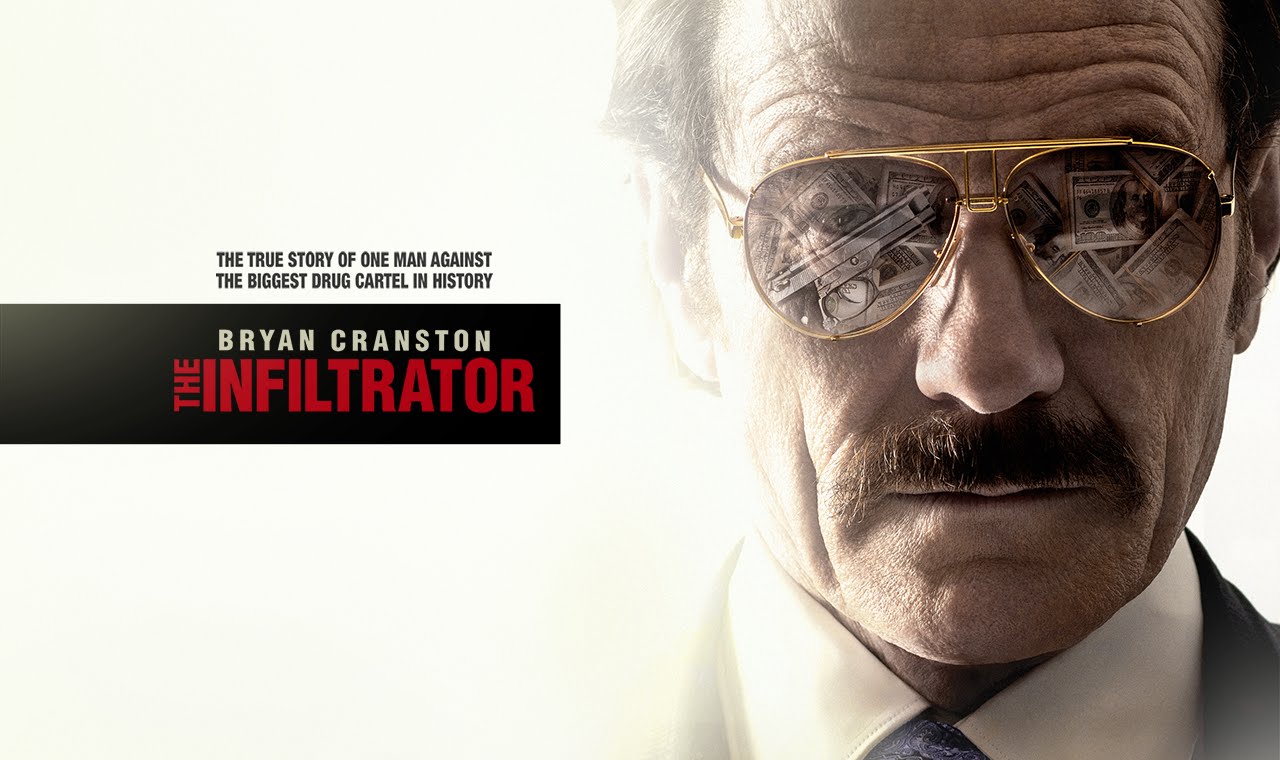
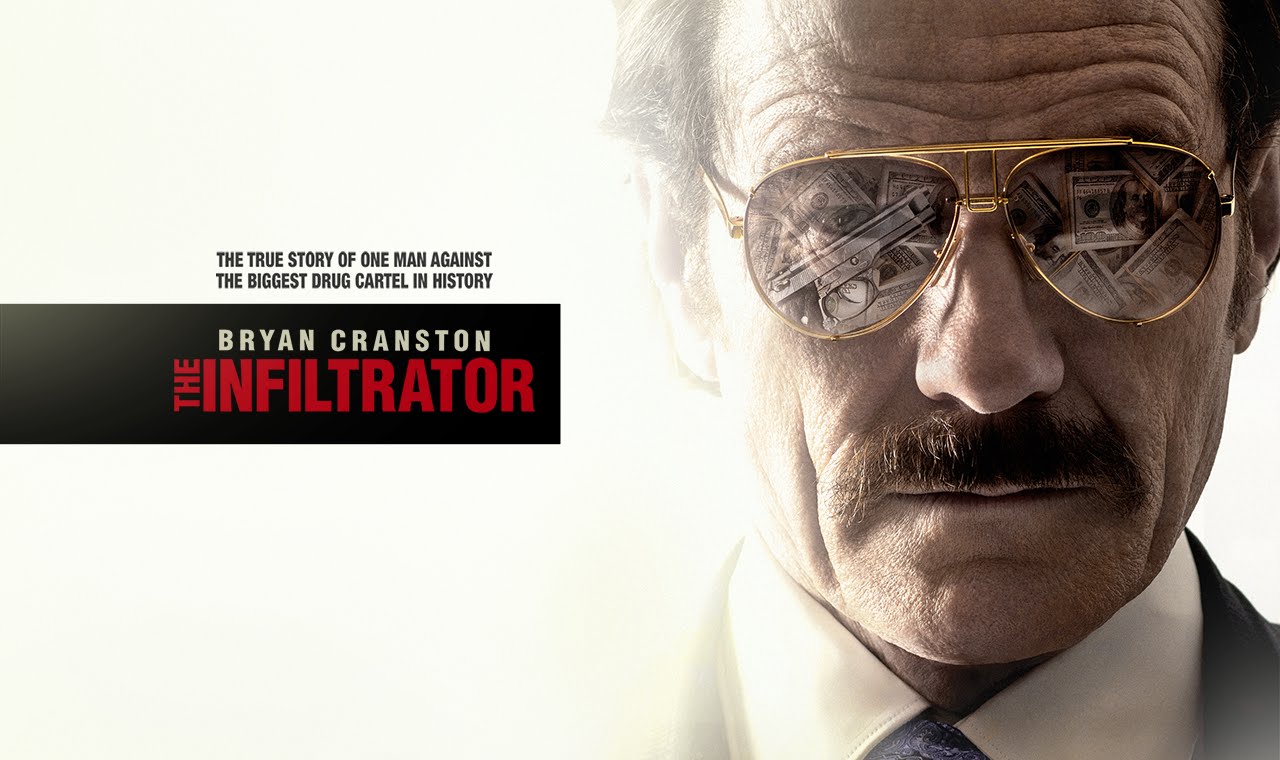
“We’ve been following the drugs to get to the bad guys. What if we follow the money?” That simple suggestion from FBI undercover agent Bob Mazur (Bryan Cranston) led to an unprecedented massive series of arrests that brought down key members of Pablo Escobar’s cocaine operations — and the world’s 11th biggest bank. Based on Bob Mazur’s book, and with Mazur as a producer, it is set in 1980’s Florida, where Excobar was smuggling in literally tons of cocaine. Getting it into the country was easy. Selling it was easy. Paying off, threatening, and torturing anyone who tried to stop them was easy. The biggest challenge they faced was moving the money between countries.
Mazur, trained as an accountant, went undercover and offered money laundering services to Escobar’s lieutenants, funnelling their stacks of cash through “legitimate” companies and criminal-friendly jurisdictions like Panama, then led by Manuel Noriega. He was able to gain the trust of the drug dealers. It was even easier to get the cooperation of bankers, including the prestigious international financial institution BCCI.
This movie, directed by “The Lincoln Lawyer’s” Brad Furman is sincere, diligent, a little corny, and for better and worse exactly what you expect from a fact-based story of an FBI undercover operative. There is the anxious and at times impatient wife. “Promise me this is the last one.” “I’m just wondering where my little Bobby the accountant went?” She has the thankless task of sighing, getting upset when their anniversary celebration is ruined when he has to go into character because they run into one of his criminal buddies, being jealous of his relationship with a beautiful female agent posing as his fiancee (Diane Kruger) and telling him he should have taken the chance for early retirement.
For a tense crime drama, it is surprisingly inert. We learn very little about what is involved in laundering money to prove himself to the bad guys or how the investigation proceeded or what goes into a long-term undercover operation. Mazur shows up in a Rolls Royce and has access to a mansion. Both were confiscated from drug dealers, but we do not learn that from the movie. What we do see is Mazur going home at night to his modest suburban house and his wife and children and jogging through his neighborhood. Presumably Escobar, one of the most ruthless criminals in history, would not turn over hundreds of millions of dollars to someone without making sure he was who he said he was. Mazur comes across as near-saintly, so even Cranston cannot give the character much by way of depth. The conflicts he feels about betraying a man who trusts him are confusing. Even when he is played by the elegant Benjamin Bratt, he is still a barbaric thug. The “Red Wedding”-style climax is synthetic, which, come to think of it, is the problem throughout. This is a movie about a faker that never feels real.
Parents should know that this film has very intense peril and violence, very disturbing and graphic images, guns, car crash, mob executions, characters injured and killed, very strong and crude language throughout with some homophobic slurs, some nudity, sexual references, drinking, smoking, and drugs and drug dealing.
Family discussion: Do you agree with the sentences received by the people who went to jail in this film? What makes someone good at undercover work?
If you like this, try: “Donnie Brasco,” “American Hustle,” and “Kill the Messenger”
Hidden Figures Will Tell The Story of Three Black Women at NASA
Posted on July 10, 2016 at 8:00 am
Three of my favorite performers will star in a new film called “Hidden Figures,” the true story three African- American women who worked for NASA during the 1960s space race. of Janelle Monae, Octavia Spencer and Taraji P. Henson will star as Katherine Johnson, Dorothy Vaughan, and Mary Jackson, who are a crucial part of NASA’s history.
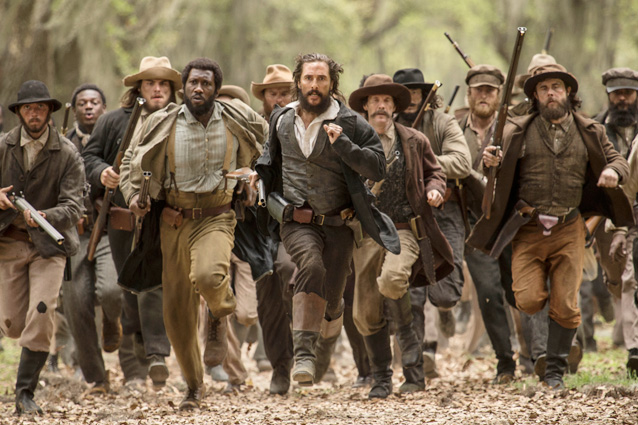
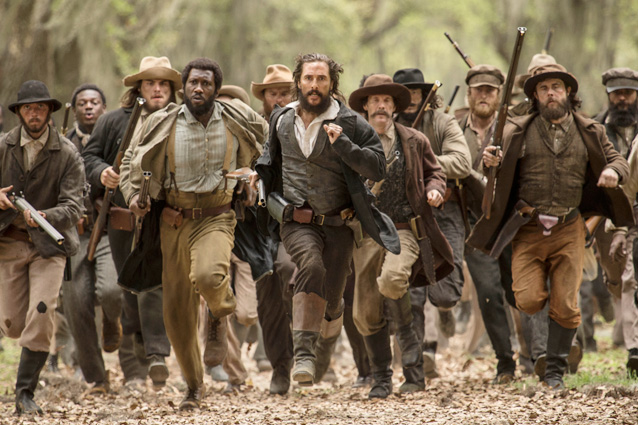
Gary Ross, best known for the first “Hunger Games” movie, spent years researching the real-life story behind his new film, “Free State of Jones,” about a group of deserters from the Confederate Army and runaway slaves who declared their independence from the legal and economic oppression of the Confederacy. You can see more about the story in the “Free State of Jones” website. His commitment to authenticity included filming in the actual locations where the events took place, including the swamp where Newt Knight (played by Matthew McConaughey) and his group hid from the Confederate soldiers. “We were in the swamp for a long time but it was worth it. We were shooting where the true story actually occurred so that was kind of inspiring.” There are several books about the historical events, but Ross reviewed the original documents. “I did a lot of primary source research. When you go to the website you will see that most of the things that we cite are not secondary historians but are primary sources. I studied for about 2 to 3 years before I ever even started writing the script….There’s a tremendous amount of original sources that survived. We use a ton of sources from what was called the OR, the Original Records of the War Between the States which is the most reliable source. And we used a lot of letters to corroborate this evidence from former Confederate soldiers they were writing about the rebellion to one another as it was going on so there’s a tremendous amount of actual primary sources that exists, I mean hundreds and you can see them on the website.”
The film is set in the Civil War era, but some scenes show us Knight’s descendent in a 1948 miscegenation trial. Ross said, “I think that we need to see some perspective. It was a way of almost trying Newt in absentia a century later. These issues that were necessarily unresolved. It also let us explore what happens to memory when you lose connection with your past. This is a century later and it is still going on. I think that the fact that there was in fact this real trial which was still bizarre was an important thing to include.”
He talked about seeing the jobs of writer and director separately. “I don’t see directing as an extension of writing. It is to certain degree because you are storytelling but it’s its own thing. But you are never afraid to keep writing when you’re a writer there so I actually have more flexibility on the set, I don’t see the script as such a lock or rigid thing. And directing informs your writing. When you’re directing you think of it the more cinematically, you think, ‘Are they going to be able to actually do it?’ There is less waste in the writing. There is more of a cognizance of the cutting pattern. There is more even awareness the things like sounds design, so yes I definitely think it informs how I write now.”
There are some common themes between this real-life story and the allegory of “Hunger Games.” “Individual and personal liberty is tremendously important to me and I think that this has been somethings that has been expressed through a lot of the work that I’ve done one way or another. Newt used Scripture to justify his actions. It began as an organic rebellion. It was anti-tax rebellion at the outset but it grew into a larger meaning of freedom and it broadened out into a bigger definition of what freedom was. Once he glimpsed what true freedom meant he couldn’t tolerate his wish for personal freedom and then accept unfreedom for other people so I think that Newt expanded and grew and in his worldview and that led him been an advocate for African-Americans in the postwar period.”
Ross wants to make sure that audiences see the oppression that continued after the end of the Civil War. “The war didn’t and in 1865. The conflicts of the war went to 1876. We can see this as a continuum in the fight for freedom. I think that the only movies that existed prior to these were the original “Birth of a Nation” and “Gone With the Wind” so the record needs to be set straight because they are very misleading about the reconstruction era. I hope people who see this can talk about interracial reliance and interracial alliance. I think that’s tremendously important. Newton Knight as an ally of African-Americans in the postwar era is a tremendously important thing to celebrate. Only when we unite in America will we ever make true progress.