Bryan Cranston plays federal agent Bob Mazur in this fact-based story. He goes deep undercover in 1986 to infiltrate Pablo Escobar’s drug trafficking operation. John Leguizamo plays his impulsive colleague and Diane Kruger plays a rookie agent posing as his fiancée. The movie will be in theaters next month.
Rated R for brutal battle scenes and disturbing graphic images
Profanity:
Some strong and racist language
Alcohol/ Drugs:
Alcohol
Violence/ Scariness:
Intense and graphic violence including battle scenes, hanging of adults and children, brutal abuse, rape, and lynching
Diversity Issues:
A theme of the movie
Date Released to Theaters:
June 24, 2016
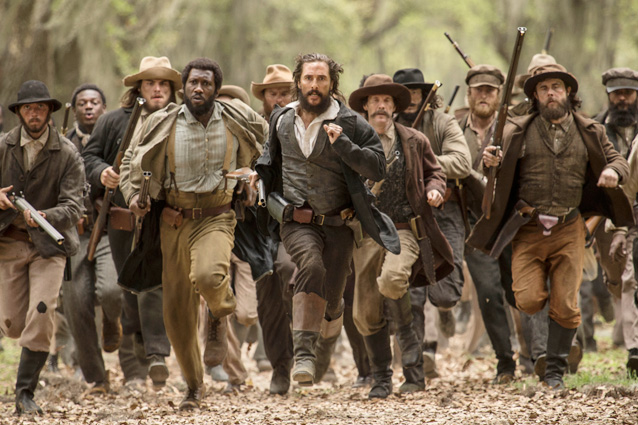
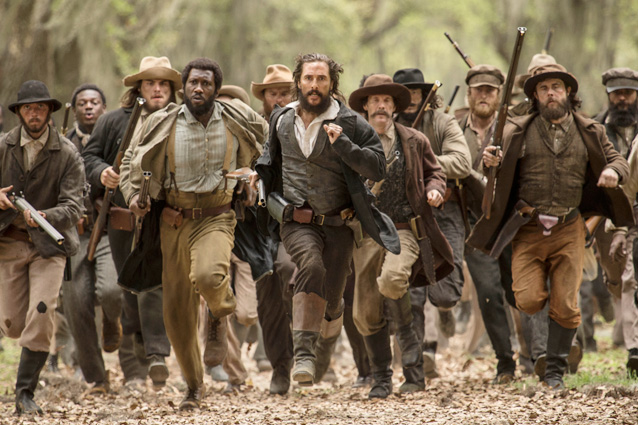
The timing is not great. “Free State of Jones” is a Civil War drama based on the true story of a community of Confederate deserters and runaway enslaved people who banded together to fight for their own vision of freedom. It was filmed once before as “Tap Roots,” with Van Heflin, Susan Hayward, and Boris Karloff (as an Indian!), but this version, from “The Hunger Games'” Gary Ross, deals forthrightly with the racial issues, or at least tries to. There is an inescapable and maybe unconquerable problem in telling a story set in Civil War era Mississippi with a glorified white man as the hero, in a time when one of the most anticipated films of the year is the Sundance Grand Jury and Audience award winner “Birth of a Nation,” a film that grabbed and repurposed its title from the blatantly racist D.W. Griffith film of the silent era.
Ross brings the same passion for tackling tyranny to this story that he did to “Hunger Games.” It’s just that we’re no longer dealing with speculation and metaphor, and that means a political overlay reflecting both historical and contemporary controversies.
Matthew McConaughey plays Newt Knight, a Mississippi farmer with a wife and young son who is serving as a nurse in the Confederate army. Early on, we see him removing the uniform from a wounded enlisted man so he can tell the doctors he is an officer and get him treated. Increasingly frustrated with the endless carnage on behalf of wealthy elites who exploit the poor, it is too much for him at last when his nephew is killed in battle and he leaves, taking the body home to be buried. There he finds the Confederate forces are taking all of the food from the local farmers, leaving them to starve. On the run from the military seeking defectors, he hides out in a swamp, where he meets up with runaway slaves. There he decides that his allegiance is not to the Confederacy, which is sending poor boys to fight to preserve what today we might call the 1 percent. “I ain’t fighting for cotton,” another solider tells him. “I’m fighting for honor.” “That’s good,” Knight responds. I’d hate to be fighting for cotton.”
Writer/director Ross, working with the locations where these events occurred and a touching score from Nicholas Britell, evocatively conveys the hardscrabble lives, the literal and spiritual grit, the desperation and conviction it inspires. Knight hands guns to three little girls and, when the Confederate officer does not take them serious, Knight tells him that guns will shoot anybody. “It don’t seem to matter where the bullet comes from.” The depth of research is evident throughout, but it is never pedantic. The storyline is grounded in historical events like the Confederacy’s requisitioning of food and supplies, and post-war exploitation and terrorism, led by former Confederate officials, that prevented former enslaved persons from basic rights and murdered those who tried to assert them. There are brief glimpses into a conflict 85 years later, as the descendent of Knight’s relationship with a former slave named Rachel (Gugu Mbatha-Raw) is criminally prosecuted for marrying a white woman in violation of the state’s laws prohibiting mixed marriages. It is there to remind us that we can never dismiss the events of the past as behind us.
Parents should know that this film has very intense and graphic violence including Civil War battles and skirmishes, hanging, rape, and lynching, adults and children injured and killed, very disturbing images, some strong language with racist epithets, some sexual references
Family discussion: What did Knight find most unjust about the Confederacy? What did we learn from the 1948 courtroom scenes?
Interview: A. Scott Berg on “Genius,” the Story of Editor Maxwell Perkins
Posted on June 13, 2016 at 1:13 pm
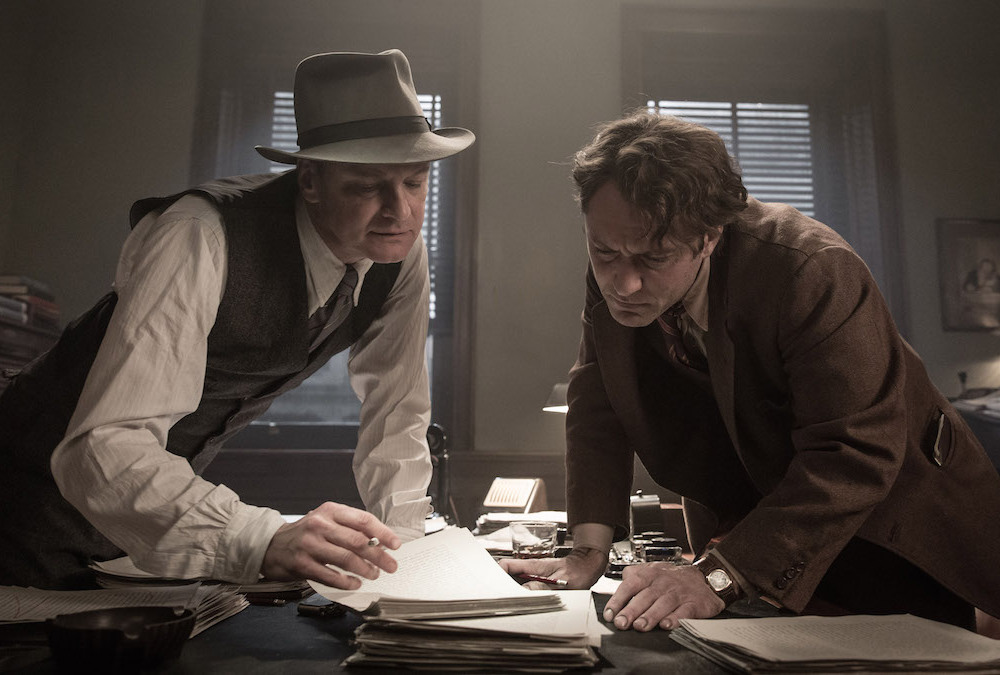
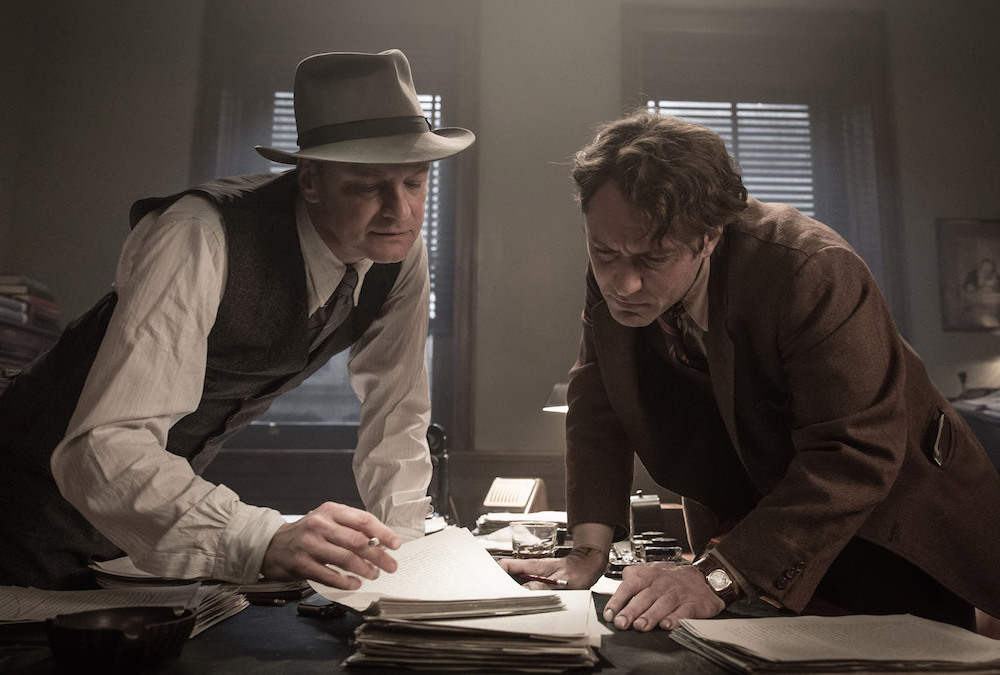
Copyright Lionsgate 2016It was a very great pleasure to talk to A. Scott Berg, whose college paper about editor Maxwell Perkins became the first of his many distinguished biographies of 20th century Americans. Berg was the first to read the just-donated collection of papers from the publisher of books by Hemingway, F. Scott Fitzgerald, Thomas Wolfe, and many others, discovering correspondence that showed the influence Perkins had on some of the greatest works of American literature. The new movie, “Genius,” starring Colin Firth as Perkins and Jude Law as Wolfe, is based on Berg’s book, Max Perkins: Editor of Genius. In an interview, he talked about how the digital world is making it hard for biographers and why Perkins wore his hat indoors.
Throughout the film, Colin Firth as Maxwell Perkins leaves his hat on, even in the office or at dinner with his family, though in that era it was considered disrespectful. Did he really do that?
He did. To be perfectly honest, it was partly a Yankee eccentricity. There is one element that we didn’t get into in the movie which is Perkins was partly deaf and so there was a longtime theory that he used to wear the hat and pushed it down to push his ears forward so it created a better acoustical situation for him. And then a lot of people thought he wore the hat indoors just so that if people walked in for a meeting and they saw him wearing his hat they thought he was on his way out so they better speed it up. But the truth of the matter is he did wear it at home. When Wolfe made a fictional character out of Perkins which he did in You Can’t Go Home Again, a character named Foxhall Edwards, he claimed that the character in the book goes to bed wearing a hat. That part is fictitious. Sometimes his wife would make him take it off in the dining room but for the most part, yes, he wore his hat indoors.
Is it fair to say that he was not a co-author but a collaborator in Wolfe’s work?
He would never say he was a collaborator. I think in retrospect if you start to examine all the work he did, especially with Wolfe, I think it dips into collaboration. I think it’s fair to say that those books first of all would not have been published without Max Perkins and they certainly would not look like the way they look, they wouldn’t read as they do were it not for Perkins. But there is many a book editor today who does as much with some writers. You would never know but some writers get completely rewritten. Perkins never changed the words; he really was there to provide structure. So it’s a fine line. How do you define collaboration? It depends on your definition, I suppose. But it’s fair to say though that that was collaboration certainly for Of Time and the River.
Are there Wolfe purists who prefer his unexpurgated versions?
Yeah, there are a few Wolf purists and in fact some years ago not all that many, they did publish the original version of Look Homeward, Angel called O Lost. And there are number of essays that came out at the time that say this is the way it should have been published and this was the pure version and some people said Max Perkins really did more harm than good. I am not of that school, I am obviously team Perkins and I say this: Thomas Wolfe never did anything against his will. It’s not as if Max Perkins put a gun to his head or said, “Tom, if you don’t change this we are never going to publish it.” These were editorial suggestions. They were strong suggestions and he had the power behind him of having brought Fitzgerald and Hemingway into print so Wolfe was inclined to listen to him but as you see in the movie they argue back and forth but basically Perkins just keeps putting stuff out there until Wolfe gets it the way Perkins sees it. But on any given moment if Wolfe had said, “You know, I am not taking this out” that’s that. It’s Wolfe’s book. As Perkins always said, the book belongs to the author and he believed that.
There are so many strong and vivid characters in this story it seems almost a mini-biography of each of them as well.
Definitely, definitely. This was my first book so I didn’t know what I was walking into but it’s definitely a group biography in some ways. I try to write it in such a way that if you went to the index and just followed all the citations of Fitzgerald or all the citations of Hemingway you could read their life story consecutively. So you do get mini-biographies of virtually every Perkins author in there. Some people like Ring Lardner you may only get a few paragraphs out of his life story but the big three certainly you can follow the arc of their lives, the parts of their careers definitely. But at the end of the day though they are ornaments on my big tree and Perkins is my tree, he’s the thing that pulls them all together.
Biographers often say that the hardest part is knowing what to leave out.
That is so very true. Ultimately that is the single hardest thing about it. For me I finally have to say, “Okay, what is my through line of this book?” What is the arc of his life? When I get to each paragraph, each anecdote, each big story I say to myself: “Does this either deepen the character or does it lengthen the story? Does it move the story forward in some way?” And if it doesn’t then I cut it out and so as a result of that and this ties into your really good prior question about many biographies of everybody else, I found that I had to trim those as closely as I could because I wasn’t at the end of the day writing a biography on Fitzgerald, Hemingway or Wolfe; I was writing a biography of Perkins and I needed to give just enough information about all the other characters to illuminate Perkins’s life. So that’s the general rule.
Scott: Well there is. What happened is, all of Fitzgerald stuff is there, that’s actually one of the reasons I went to Princeton as a teenager. Most of the Scribner family has gone to Princeton since the mid-1800’s and in the late 1960s and into 71 when I graduated the Scribner’s had donated all their company archives to Firestone Library so that meant sitting in the library arriving just as I arrived, were every letter that had ever come into Scribner’s from Fitzgerald, Hemingway, Wolfe, Henry James, Edith Wharton, Galsworthy, Ring Lardner, you name it. So they were all there with a carbon copy of every letter of Max Perkins sent out. And again because Perkins was hard of hearing he did virtually no business on the telephone and so every thought he had he wrote down and mailed it and had a carbon copy waiting for me to discover in 1967-8-9 and that’s what I did. So yeah, there is a huge archive, tens of thousands of letters sitting there and I was basically the first person to mine that entire collection when I a sophomore in college. It was very exciting. It was just a gold mine!
So how do you as a biographer feel about the fact that correspondence doesn’t really exist anymore?
Don’t think that this doesn’t keep me awake at night! I mean I tell people: print it out, print it out! I want a hard copy! You sent a tweet, I want a hard copy of it. I am going to need that! It’s something actually biographers fret about and Perkins was a dream subject because he did write everything down and because he was so articulate. Lord, it’s really going to be a problem! I mean are we going to write books based on Donald Trump’s tweets?
The movie shows us that one reason for the strong connection was that Wolfe was looking for a father and Perkins was looking for a son.
I think it’s fundamental to the lives of each man. Wolfe himself talked about it, he wrote about it, he had conflicted feelings about his own father and he believed most of life was man’s journey in search of a father. And Perkins did want a son as Louise says in the movie; “My husband always wanted to have a son as he proved having five children.” I mean there were almost 2 halves of the Jell-O box coming together. They really needed each other personally on that level and Perkins really did become a great father figure and Hemingway Fitzgerald and Wolf all became surrogate sons for Perkins in so many ways; not just with the work they did but emotionally. The way you see Perkins interacting, giving them money, nurturing them, giving marriage counseling, giving psychiatric advice, I mean he was just always there for all of them.
It seems to me that being a biographer is a little bit like the role that Max Perkins played in that you both standing in the wings in service to what’s going on stage.
Nobody’s ever observed that to me before but I think that’s exactly right. This is my take on biography; a lot of people go into a biography with an agenda of their own and then look for the facts that support the agenda. I am of the objective school of biography; I walk in tabula rasa, I collect as many facts as I can, as many dabs of paint and see what portrait emerges from that. So where that is very much like Perkins is I don’t want my subjects to be what they want the subject to be; I want the subject to be who the subject is and Perkins was that way with Thomas Wolfe, he wasn’t trying to turn Thomas Wolfe into somebody else, he wanted to capture as much pure Wolfe as he could.
Love Under New Management: The Miki Howard Story Starring Teyonah Parris — on TV One
Posted on June 11, 2016 at 12:29 pm
My favorite performance of 2015 was Teyonah Parris in “Chi-Raq” and so I am very excited to see her latest starring role in “Love Under New Management: The Miki Howard Story,” premiering June 12, 2016 on TV One.
This is the first film adaptation of TV One’s “Unsung” series about the lives of performers. R&B singer Miki Howard’s life has had struggle and heartbreak but also resilience and triumph. The cast includes Gary Jourdan as Augie Johnson, Daruis McCrary as Gerald Levert, Lisa Raye as Sylvia Rhone and Indira Khan as her mother Chaka Khan.