Suffragette

Suffragette

Posted on October 29, 2015 at 5:30 pm

B
Lowest Recommended Age: Middle School
MPAA Rating: Rated PG-13 for some intense violence, thematic elements, brief strong language and partial nudity
Profanity: Brief strong language
Alcohol/ Drugs: Drinking, smoking
Violence/ Scariness: Some intense violence including bombs, police brutality, domestic violence, and sexual abuse, characters injured and killed
Diversity Issues: A theme of the movie
Date Released to Theaters: October 30, 2015
Date Released to DVD: February 1, 2016
Amazon.com ASIN: B017Y01GOM
Copyright 2015 Focus Features

How do you persuade politicians to give you the vote when you do not have the capacity to vote them out if they deny it? That was the problem faced by women in later 19th and early 20th century Great Britain and the US. While Abigail Adams urged her husband to “remember the ladies” in setting up the US government, the Constitution did not give them the right to vote. Nor did the 15th amendment to the Constitution adopted after the Civil War to give the vote to all men, regardless of race. Efforts to give “universal suffrage” in the UK led to reforms over the 19th century, but none of them granted any voting rights to women.

As this film begins, women in the UK had been fighting for the right to vote for 30 years. They concluded that they had exhausted all peaceful means of sending their message and were resorting to what today we might consider terrorism, throwing rocks at store windows and planting bombs in mailboxes. They were careful to destroy property only. No one was hurt through their protests, except for the protesters themselves, who were subjected to extreme brutality from the police, including torturous forced feeding for those who participated in hunger strikes when they were imprisoned.

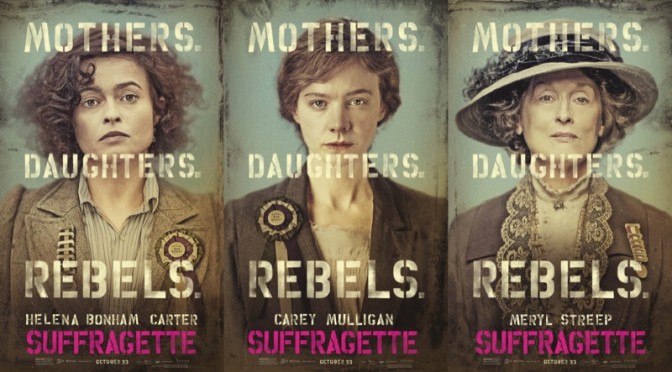
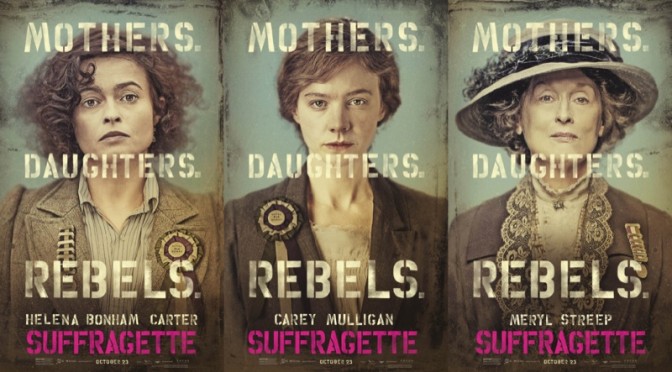
Those who have studied the history of women’s suffrage may be familiar with the names of the leaders, like Emmeline Pankhurst (played in this film by Meryl Streep). But as so often happens with history, the stories of the everyday women who played a vital role in the movement are not well known, and this film wisely focuses on them. Pankhurst is on screen for less than ten minutes. The movie’s main character is a composite who is representative of the working women who became a part of the cause. Maud (Carey Mulligan) works in a laundry as does her husband (Ben Wishaw) and as did her mother, until she was killed in an industrial accident. She began working there as a child and will work there as long as she can, though she knows that the likelihood of injury or illness caused by the working conditions is very high. That is not the only problem. As her friend’s young daughter comes to work in the laundry, we can see from Maud’s reaction to the sexual assaults by a predatory boss are something she recognizes from her own experience.

Maud is in the wrong place at the wrong time and is assumed to be working with the protesters. Instead of denying it or, when she has the opportunity to help her situation by spying on them and reporting what she learns back to the police, she begins to think for the first time that there could be a chance to create a better life for herself and for the next generation, and she becomes involved, though she risks losing her job, her husband, and her child.

The movie, written by Abi Morgan and directed by Sarah Gavron, is somber in tone but it is effective at showing the harsh conditions of Maud’s life and the always-watchable Mulligan gives her character a developing ferocity that is more of a surprise to her than it is to us. It also is effective at showing us the class divisions and how women across class lines worked together. But 21st century audiences well-versed in the narratives of later protests like the civil rights, women’s equality, environmental and and anti-war movements may find it difficult to sympathize with the literally incendiary tactics of these women. There are so many characters in a very limited time period with very little progress that its good intentions are not enough to make it a strong narrative.

Text at the end of the film provides sobering statistics about how long it has taken — and is still taking — for women to get the right to vote. Here’s hoping it will not take explosives for these women to have a say in the laws that govern them.

Parents should know that this film features protest violence including destruction of property and explosives by activists and police brutality by law enforcement. Characters are injured and killed and there is domestic violence, sexual abuse, a parent permanently separated from a child, brief strong language, and non-sexual nudity.

Family discussion: If you were advising the activists on behalf of women’s right to vote, what would you suggest? How did later political movements learn from their example?

If you like this, try: the documentaries “One Woman, One Vote” and “Not For Ourselves Alone

Related Tags:


Based on a true story Drama DVD/Blu-Ray Pick of the Week Epic/Historical Politics
Truth

Truth

Posted on October 22, 2015 at 5:03 pm

Copyright 2015 Sony Pictures

Often a movie “based on a true story” confirms and extends our understanding of what happened. This film, based on the “true story” that led to the departure of one of the most respected newsmen of all time, Dan Rather, from CBS, asserts its ambitions with its title and goes on to explore the very nature of truth and our willingness or ability to uncover and recognize it. I did not have strong views about what happened in 2004, just a recollection of the incident as a turning point, with the most respected broadcast journalist in the country being brought down by bloggers, who were able to determine that documents relied on in a story about President George W. Bush were forgeries. In my mind, the story was about the shift from old to new media, where the Davids of the blogosphere could challenge the powerful Goliaths of CBS News.

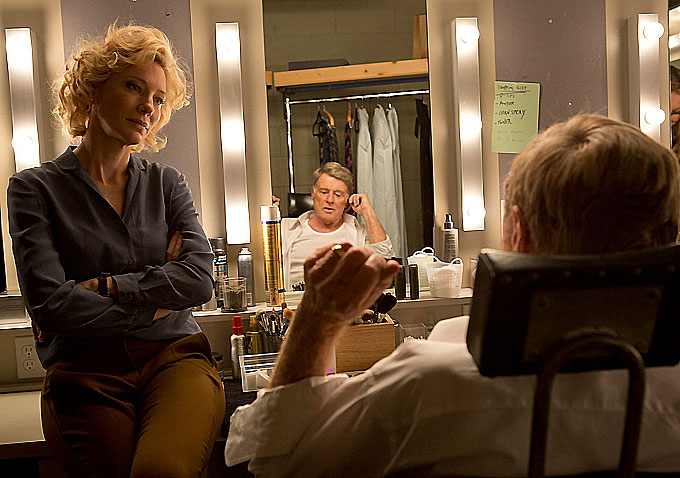
But in this movie, based on the book by Rather’s producer, Mary Mapes (Cate Blanchett, blazingly intelligent and forceful), we see another side of the story, written by James Vanderbilt. This is her version (if there is such a thing as versions) of the truth.

No matter which version of the story you believe, lesson number one of this movie is that you are at your most vulnerable when you feel most powerful. Mapes has just come off the greatest triumph of her career, the Peabody award-winning story about the horrific abuse of prisoners by the US military at Abu Ghraib. She is looking for another great scoop, and as the Presidential election approaches, it looks like she has one. Rumors about special treatment for George W. Bush, both in being allowed to serve in the National Guard and during his time there, have circulated for years, and now there seems to be substantiation, including on-the-record statements by the former Lieutenant Governor and some memos from the younger Bush’s commanding officer. Four document experts were called in by Mapes to authenticate the documents and, with the proviso that as photocopies there was no way to test the ink or paper of the originals to verify them completely, the experts signed off. The other steps taken by Mapes and the staff of reporters, including research expert Mike Smith (Topher Grace, who should be in more movies) and former military officer Dennis Quaid (ditto), are impressive. But it is possible that their supervisors did not ask enough questions and it is certain that moving up the broadcast date at the last minute cut off their ability to lock down all of the story.

And then it all fell apart. Bloggers identified problems with the memos’ fonts that indicated they were created on a computer, not a typewriter, and thus could not have been written in the 1970’s. CBS convened a commission led by a former (Republican) Attorney General to review the story. Their focus was not as much on whether the story was true or not (the memos were just one small part of the story) but whether the reporters had a political agenda.

A lot of people got fired. Smith makes a speech on the way out the door that identifies a culprit more insidious than partisan politics — corporate conflicts of interest. There are times when protection of shareholder value is not consistent with getting the story. The most important question this movie asks is what that means for democracy and for, well, truth.

Parents should know that this movie has very strong language and brief nudity in a photograph. Characters drink and take medicine to deal with stress. There are references to torture and child abuse and there are tense confrontations.

Family discussion: What should Mary have done differently? How did her childhood experiences affect her relationship with Rather and her response to her father? Should she have followed her lawyer’s advice?

If you like this, try two other fact-based films about journalists fighting to expose the truth about powerful people: “All the President’s Men” and “Spotlight

Related Tags:


Based on a true story Drama Journalism
Bridge of Spies

Bridge of Spies

Posted on October 15, 2015 at 5:58 pm

Following World War II, Lord de l’Isle and Dudley was harshly criticized when he organized a legal defense fund for a Nazi general. He responded, “Had I met General Manstein during the war I would have shot him on sight. I am not concerned with whether von Manstein is guilty or not…I want Britain’s reputation upheld.”

Copyright Touchstone 2015

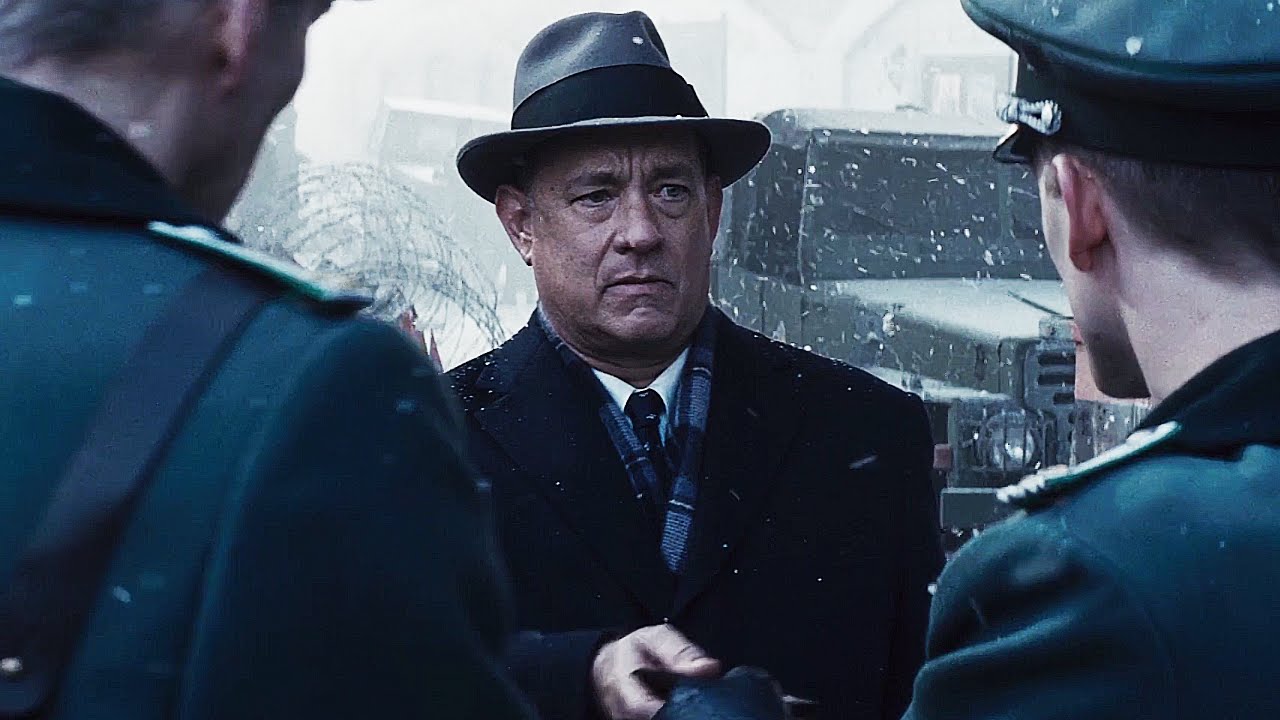
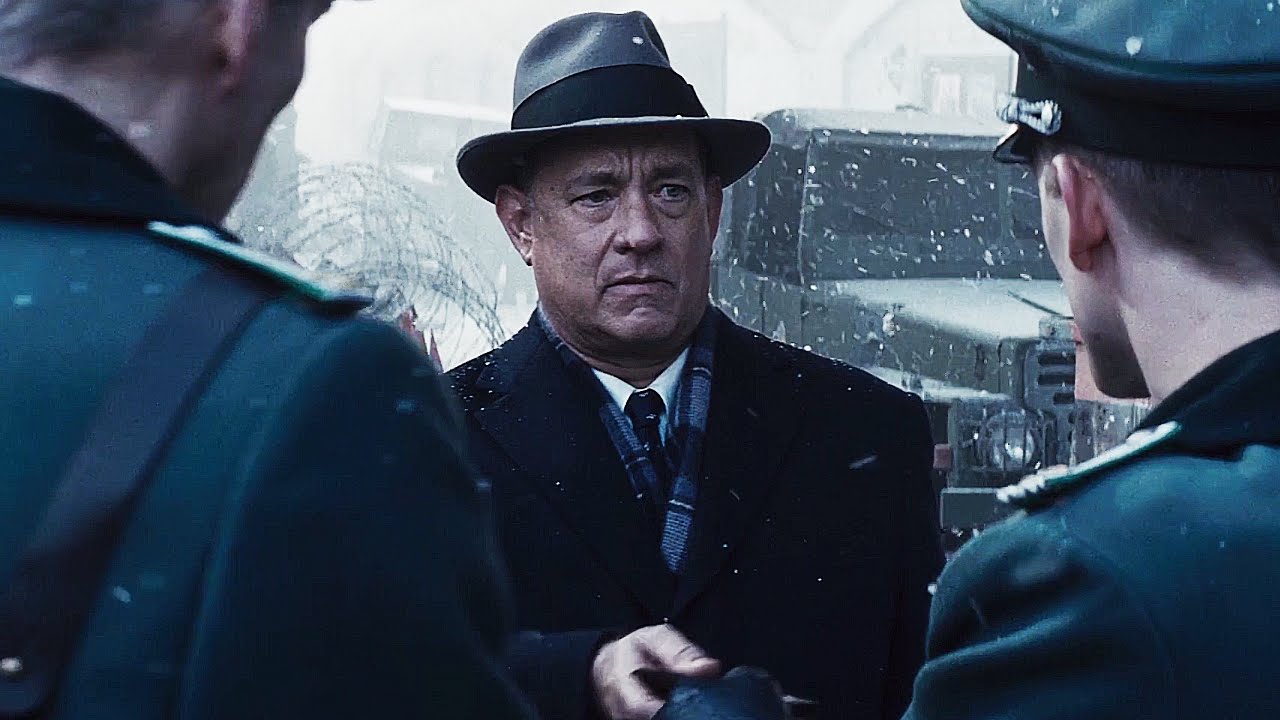
Like the nobleman, American insurance lawyer Jim Donovan (Tom Hanks) understood that it means nothing to win a war against tyranny if we then become tyrants ourselves. Donovan, an assistant to future Supreme Court Justice Robert Jackson at the Nuremberg Nazi war criminals trials who had been litigating insurance claims, was asked to defend an artist accused of spying for the Soviet Union. No one would have complained if he provided a less than vigorous defense. His wife (Amy Ryan) worries about the impact that his defense of an enemy spy will have on their family.

But Donovan had two fundamental principles. First, he recognized that the spy was doing for his country what others were doing for the US and he deserved to be treated as we would want our spies to be treated when they got captured. Second, he understood that if even one small rule was bent or one small step was skipped, it could do more damage to the essential principles of justice that define us than the theft of nuclear secrets.

Those secrets were hidden in a hollowed-out nickel. And the man who had them was a British artist named Rudolf Abel, superbly played by Broadway star Mark Rylance with wry resolve. There is a running joke in the film as he is repeatedly told he does not seem nervous or scared and he replies, “Would it help?” Donovan does his best to defend Abel, taking the case all the way to the Supreme Court to argue that the evidence against Abel was taken in violation of the 4th Amendment protection against unreasonable search and seizure. He is unsuccessful in the appeal but does manage to persuade the judge (in a dramatic but highly unlikely and completely illegal ex parte visit to the judge’s home) not to impose the death penalty.

That comes in handy a few years later when American pilot Francis Gary Powers (Austin Stowell) is shot down over the Soviet Union in what the United States calls a mistaken detour by a “weather plane.” But he was flying a spy plane outfitted with special cameras for the CIA. The US wants him back. So they call on Donovan.

Meanwhile, as the Berlin Wall is being constructed, an American PhD candidate named Pryor (Will Rogers) found himself on the wrong side and was captured and accused of spying by the East Germans. Donovan’s government contacts tell him not to worry about Pryor, but Donovan is determined to get both young men home.

Spielberg and Hanks are an unbeatable combination, and their work here, with an unironic and sincerely gripping screenplay by Matt Charman and the Coen brothers, is as good as it gets. Donovan’s time in Berlin, crossing back and forth over the dividing line as the wall is being built — and as people trying to escape are being shot — is so evocatively cold, physically and emotionally, you will want to button your coat and you will feel for Donovan, who loses his to thugs on the East German side. The nuclear age minuet of politics, statecraft, diplomacy, and ego is tense and compelling. As Donovan warns, any mistake they make could be the last one. Spielberg’s signature touches include scenes of American schoolchildren watching real-life “safety” movies telling them to duck and cover and a quick glimpse of a wrenching parallel as Donovan sees children at recess, climbing in a way that echoes the desperate escape attempts he had just seen. It is too bad to see Ryan underused in a “honey, I’m worried — maybe you better not go” role, with a superfluous coda scene at the end. But the movie is still one of the best of the year, with a stunning sequence when Powers is shot down and sheer masterful storytelling.

Parents should know that this is a cold war story of spies with threat of atomic bombs, shooting down a spy plane, and extensive tension and peril including guns and abuse of prisoners, drinking, smoking, and brief strong language.

Family discussion: What do we learn about Donovan from his negotiation over the insurance payout? Why did he insist on including Prior?

If you like this, try: “13 Days” and Donovan’s book about the negotiation, Strangers on a Bridge: The Case of Colonel Abel and Francis Gary Powers

Related Tags:


Based on a true story Drama Spies

Trailer: the Jesse Owens Story, “Race”

Posted on October 13, 2015 at 2:31 pm

Stephan James, Jason Sudeikis, Jeremy Irons, Carice van Houten, Shanice Banton, and William Hurt star in this film about Jesse Owens, who defied Hitler’s claims about Aryan supremacy to win four gold medals at the 1936 Olympics in Berlin.

Here is the real Owens. I was privileged to meet him when I was a teenager and will never forget it.

Related Tags:


Based on a true story Race and Diversity Sports Trailers, Previews, and Clips
Freeheld

Freeheld

Posted on October 8, 2015 at 5:50 pm

Copyright Lionsgate 2015

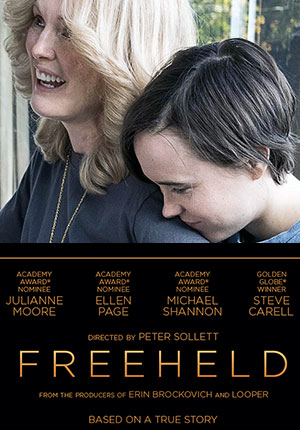
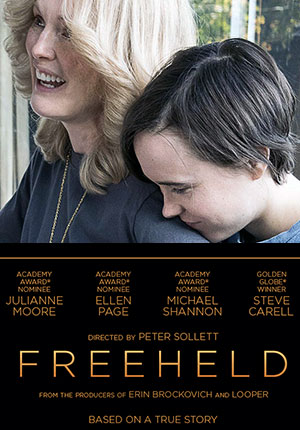
Laurel Hester (Julianne Moore), a 23-year veteran of the police force, learns that she has terminal cancer. And then she learns something even more devastating — that her registered domestic partner, Stacie Andree (Ellen Page) is not eligible for the pension benefits that she would be entitled to if they had been a heterosexual married couple.

It is hard to believe that was only ten years ago. But in 2006, marriage equality seemed very far in the future. And that was not Laurel Hester’s concern. As shown in the Oscar-winning documentary short, also called “Freeheld,” she did not want her fight for death benefits to be used to promote marriage equality. Hester was a very private person who did not even tell her longtime detective partner (Michael Shannon) that she was gay. She just wanted what she believed she had earned, and she wanted the woman she loved to be able to stay in the home they created together.

The term “Freehold,” by the way, is unique to New Jersey, and it goes back to the state’s earliest history. New Jersey’s first constitution, written in 1776, declared a county representative must be worth “fifty pounds proclamation money, clear estate in the same and have resided in the county in which they claim a vote for twelve months immediately preceding the election.” “Clear estate” means owning a property outright, and is also called a “freehold,” so only those who owned land could vote or be elected to office. While that restriction no longer applies, the position most localities call “representative,” “supervisor,” or “councilman” is referred to in New Jersey as “Freehold.” In the case of this movie, “freeheld” refers to the property shared by Hester and Andree and their love for each other as well.

There are really two stories here, both familiar to moviegoers, but not combined in this way. There is the story of the fight for justice against the barriers of bureaucracy, bigotry, and bullies. And there is the story of a reserved loner opening up to love. The combination is at times uneasy. The love story is the stronger part of the film, but gets less attention. Moore is superb as Hester, with her Farrah Fawcett hair wings, utter dedication to her job, and resolve built up into isolation after more than two decades of mostly good-natured but sexist and homophobic humor from her fellow cops. She crosses state lines to play in on a lesbian volleyball team in Pennsylvania so no one in New Jersey will see her.

And then she meets Stacie, tiny, much younger, but confident in who she is and who she loves. The scene where Andree proves herself to the manager of a car repair shop is a highlight. And so is their date, where we see Hester’s conflicting feelings. She is very attracted to Andree, she cannot quite believe Andree is attracted to her, she wants love in her life, she does not want to be exposed or vulnerable. When the two of them walk away from the bar to talk quietly, they are approached by thugs, and Hester pulls out her gun and identifies herself as a police officer. It is, in a way, a supremely romantic gesture. Later, she introduces Andree as her “roommate” and barks at her for answering the phone. But when she gets sick, she understands quickly what her priorities need to be.

She remains clear, even after Steven Goldstein (Steve Carell), a flamboyant activist for gay rights, shows up. Hester reluctantly allows him to create some political theater to support her cause. There is a loophole in the law. Domestic partners of state employees are covered, but local Freeholders decide whether city and county-level employees will qualify. Hester’s Freeholders have already turned her down and she does not have much time.

As often happens in re-telling a recent true story, the movie trips over the proportions in trying to get the facts straight. The interactions between the various Freeholders, including Josh Charles as the most inclined to support Hester’s rights, are no more interesting than municipal-level politics usually are. But the deep love between Hester and Andree and their quiet insistence on simple justice give the story sincerity, sweetness, and conviction.

Parents should know that this film includes very sad scenes of a terminal cancer patient, and death, themes of LGBTQ rights including homophobic and bigoted characters, some sexual references and situations, some strong language, smoking, drinking, and some law enforcement-related violence.

Family discussion: Why did Laurel insist that she was not an advocate of marriage equality? Should she have told her partner the truth?

If you like this, try: the Oscar-winning documentary that inspired the film

Related Tags:


Based on a true story GLBTQ and Diversity
THE MOVIE MOM® is a registered trademark of Nell Minow. Use of the mark without express consent from Nell Minow constitutes trademark infringement and unfair competition in violation of federal and state laws. All material © Nell Minow 1995-2026, all rights reserved, and no use or republication is permitted without explicit permission. This site hosts Nell Minow’s Movie Mom® archive, with material that originally appeared on Yahoo! Movies, Beliefnet, and other sources. Much of her new material can be found at Rogerebert.com, Huffington Post, and WheretoWatch. Her books include The Movie Mom’s Guide to Family Movies and 101 Must-See Movie Moments, and she can be heard each week on radio stations across the country.

Website Designed by Max LaZebnik