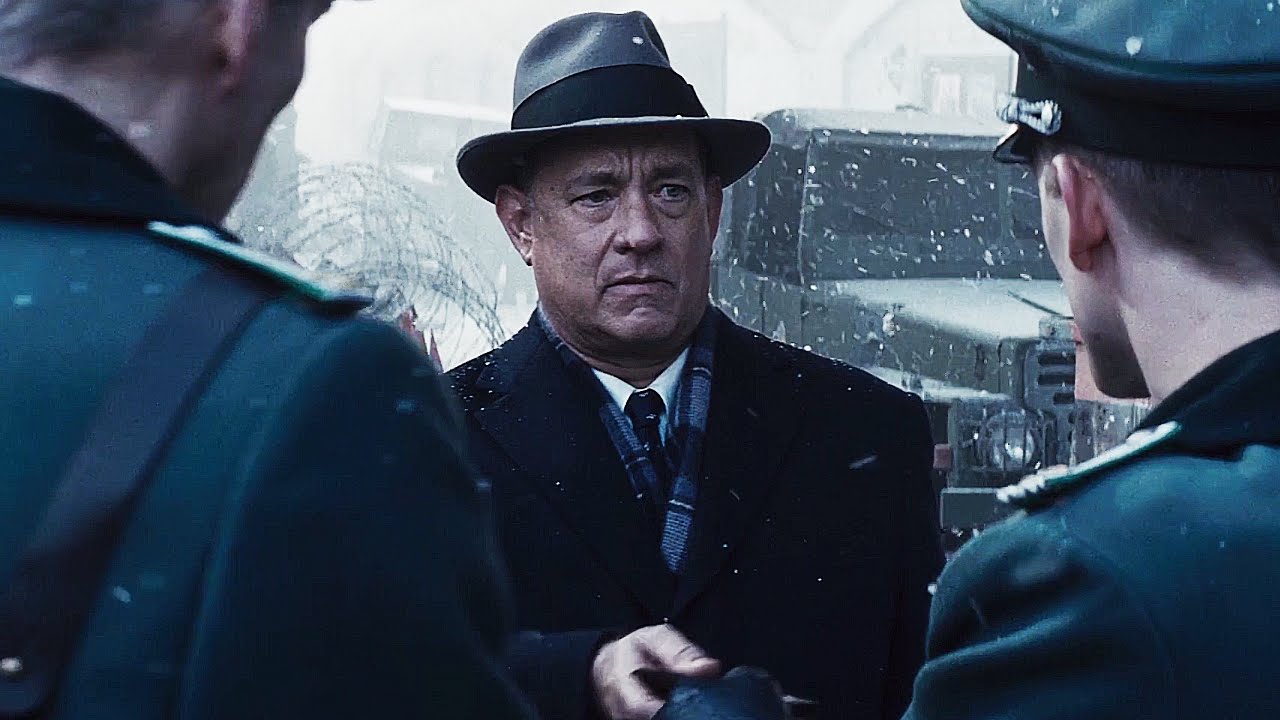
Stephan James, Jason Sudeikis, Jeremy Irons, Carice van Houten, Shanice Banton, and William Hurt star in this film about Jesse Owens, who defied Hitler’s claims about Aryan supremacy to win four gold medals at the 1936 Olympics in Berlin.
Here is the real Owens. I was privileged to meet him when I was a teenager and will never forget it.
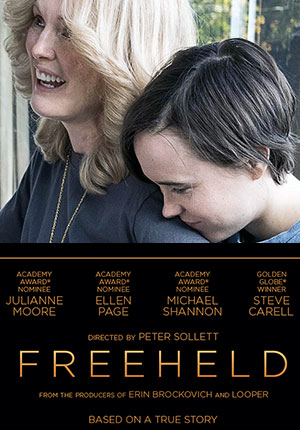
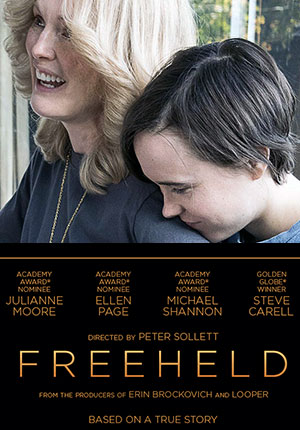
Laurel Hester (Julianne Moore), a 23-year veteran of the police force, learns that she has terminal cancer. And then she learns something even more devastating — that her registered domestic partner, Stacie Andree (Ellen Page) is not eligible for the pension benefits that she would be entitled to if they had been a heterosexual married couple.
It is hard to believe that was only ten years ago. But in 2006, marriage equality seemed very far in the future. And that was not Laurel Hester’s concern. As shown in the Oscar-winning documentary short, also called “Freeheld,” she did not want her fight for death benefits to be used to promote marriage equality. Hester was a very private person who did not even tell her longtime detective partner (Michael Shannon) that she was gay. She just wanted what she believed she had earned, and she wanted the woman she loved to be able to stay in the home they created together.
The term “Freehold,” by the way, is unique to New Jersey, and it goes back to the state’s earliest history. New Jersey’s first constitution, written in 1776, declared a county representative must be worth “fifty pounds proclamation money, clear estate in the same and have resided in the county in which they claim a vote for twelve months immediately preceding the election.” “Clear estate” means owning a property outright, and is also called a “freehold,” so only those who owned land could vote or be elected to office. While that restriction no longer applies, the position most localities call “representative,” “supervisor,” or “councilman” is referred to in New Jersey as “Freehold.” In the case of this movie, “freeheld” refers to the property shared by Hester and Andree and their love for each other as well.
There are really two stories here, both familiar to moviegoers, but not combined in this way. There is the story of the fight for justice against the barriers of bureaucracy, bigotry, and bullies. And there is the story of a reserved loner opening up to love. The combination is at times uneasy. The love story is the stronger part of the film, but gets less attention. Moore is superb as Hester, with her Farrah Fawcett hair wings, utter dedication to her job, and resolve built up into isolation after more than two decades of mostly good-natured but sexist and homophobic humor from her fellow cops. She crosses state lines to play in on a lesbian volleyball team in Pennsylvania so no one in New Jersey will see her.
And then she meets Stacie, tiny, much younger, but confident in who she is and who she loves. The scene where Andree proves herself to the manager of a car repair shop is a highlight. And so is their date, where we see Hester’s conflicting feelings. She is very attracted to Andree, she cannot quite believe Andree is attracted to her, she wants love in her life, she does not want to be exposed or vulnerable. When the two of them walk away from the bar to talk quietly, they are approached by thugs, and Hester pulls out her gun and identifies herself as a police officer. It is, in a way, a supremely romantic gesture. Later, she introduces Andree as her “roommate” and barks at her for answering the phone. But when she gets sick, she understands quickly what her priorities need to be.
She remains clear, even after Steven Goldstein (Steve Carell), a flamboyant activist for gay rights, shows up. Hester reluctantly allows him to create some political theater to support her cause. There is a loophole in the law. Domestic partners of state employees are covered, but local Freeholders decide whether city and county-level employees will qualify. Hester’s Freeholders have already turned her down and she does not have much time.
As often happens in re-telling a recent true story, the movie trips over the proportions in trying to get the facts straight. The interactions between the various Freeholders, including Josh Charles as the most inclined to support Hester’s rights, are no more interesting than municipal-level politics usually are. But the deep love between Hester and Andree and their quiet insistence on simple justice give the story sincerity, sweetness, and conviction.
Parents should know that this film includes very sad scenes of a terminal cancer patient, and death, themes of LGBTQ rights including homophobic and bigoted characters, some sexual references and situations, some strong language, smoking, drinking, and some law enforcement-related violence.
Family discussion: Why did Laurel insist that she was not an advocate of marriage equality? Should she have told her partner the truth?
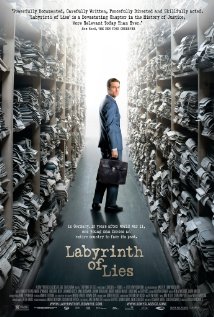
Interview: Giulio Ricciarelli of Holocaust Drama “Labyrinth of Lies”
Posted on October 1, 2015 at 3:43 pm
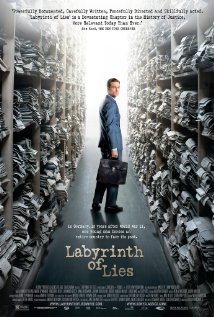
Giulio Ricciarelli co-wrote and directed the German film “Labyrinth of Lies,” based on the real-life story of the courageous post-WWII German prosecutors who insisted on investigating the atrocities of the concentration camps and prosecuting those responsible. Surrounded by former Axis and Allies officials who wanted to put the past behind them and move on to fighting the communists. He talked to me about the inspiration for the film, what really happens to the movie’s couple after the ambiguous ending, and why the owners of the vintage cars used in the film drove him crazy.
The movie’s opening takes us into a world almost impossible to imagine, where concentration camp survivors are living with the people who imprisoned and abused them and the world has almost no information about what would later come to be called the Holocaust. An artist is offered a light by a teacher watching some children in a school playground. When he bends over to reach the flame, he sees the teacher’s hand and recognizes him as a former Nazi. “That symbolized the theme of the movie, the tormented meeting the tormenter. And the second thing that was important that I wanted it to be a teacher because if you imagine him teaching children that is so horrible and that’s something that actually happened a lot. And so we had these two elements and I knew that as a filmmaker I needed a point of seeming harmony in perfect world, an innocent world. A school is like that. So it was important, the tree and the school and the children playing. And then the movie starts and you realize there is something very wrong there and so it was important to have this. There is a German word that means like a mix of sane and beautiful. It’s like an untouched world.”
The “big complex task” of the film was making what is very familiar to us unfamiliar, so we could feel the shock and horror of the young Germans who came of age after the war and did not know about the “Final Solution.” The movie’s main character is fictional, a young lawyer working as a prosecutor, though some of the other characters are based on historical figures. “That‘s why we choose this young naïve main character, hoping that we enter his world, we start looking through his eyes and the reaction I get is great. It seems to be working with go back in time and go with it. The other thing is esthetically of course; first of all you got to plot what you just mentioned.” The very pervasiveness of the portrayal of the Holocaust created a separate challenge as well. It is so well known that it is impossible to replicate in a persuasive way. The audience at some level always knows it is a re-creation. “The audience can almost hear the director say, ‘Okay lunch.’ And you see actors who are well fed. So I said, ‘Okay, we will not have any of that. We’ll not even have testimony like an actor acting as if he was in a camp and we will trust that these iconic images will come when we give them room to come and the audience.” And so, when the scene comes where a survivor provides testimony for the first time to the lawyers, we do not see or hear him. We just see the reaction of the woman taking dictation, and we feel we know what she heard and saw.Copyright 2015 Universal Pictures
One reason for the film was to recognize the courage of the lawyers who insisted on the truth. But just as important was showing that the only way to move forward after unthinkable inhumanity is to completely honest about it. “In Germany, anything we do politically or culturally is seen through that lens, that’s the reality and if you are talking about refugees if you are talking about Greece, if we talking about anything it’s all we see in the frame of this. The country who did that now does this. The thing is, you cannot deny it, that’s not the way, and you can’t leave it behind.” One way to do that is what he did here, finding a new way to tell the story by looking at a part that has not been told.
“I think what is important with our film is that it’s a not told story. I think what is most important is the movie doesn’t pull any punches when it comes to the involvement of Germany as a whole because there is sometimes a tendency to show two evil Nazis and the rest of the population is confused. That’s not historical fact but at the same time not to sit on a moral high horse. That’s why the main character says, ‘I do not know what I would done.’ And if you look at the atrocities not just in Germany but all over the world the human beings are usually not heroes but they go along and they do the easy thing and they don’t risk their own lives and there are heroes but they are few and far between.” He described the continual presence of this history in Germany as an iceberg. “Under the waterline it’s still huge and it’s still usually influential in Germany, it’s certainly the biggest influence in German politics and culture today.” Everyone in Germany was supportive of the film and cooperative in helping to get it made, including Frankfort, where they filmed on location at the places where the events actually happened. One of the most striking images is the rows and rows of documents. The real archive no longer exists in that form, but they found another storage facility with old documents and used camera angles to make it look biggers.
But one challenge they faced was the vintage cars they needed for the shoot. “First of all they are very expensive, but you know what the biggest problem is? They are owned by collectors, so in the morning you always get that spit shine car and they would say, ‘Don’t dirty it up,’ but we have to spray dust over it and sprinkle it with dust and tell them to bring it back dirty but the next day it’s clean again.”
He has been very moved by the response to the film from people who still struggle with the truth of what happened. “And how much rawness there still is. Like a woman came to me and said, ‘We have a box from our grandfather and our family and it’s closed as we are all afraid to open it, because we don’t want to know how grandpa died in the war.’ Or the man who shook my hand and said, ‘Thank you for this film,’ and then he went five steps and he came back and he looked me straight in the eyes and he said very quietly, ‘My father was a bad man.'”
The movie ends on a positive note about the prosecution of those responsible for wartime atrocities, including cooperation with the Mossad agents who tracked down Adolf Eichmann. But it is ambiguous when it comes to the future of the couple in the film. I pressed Ricciarelli to tell me what he thought would happen to them after the movie. He told me he shot two endings but went with the one he thought was more realistic. Still, he smiled and admitted “there is a ray of hope.”
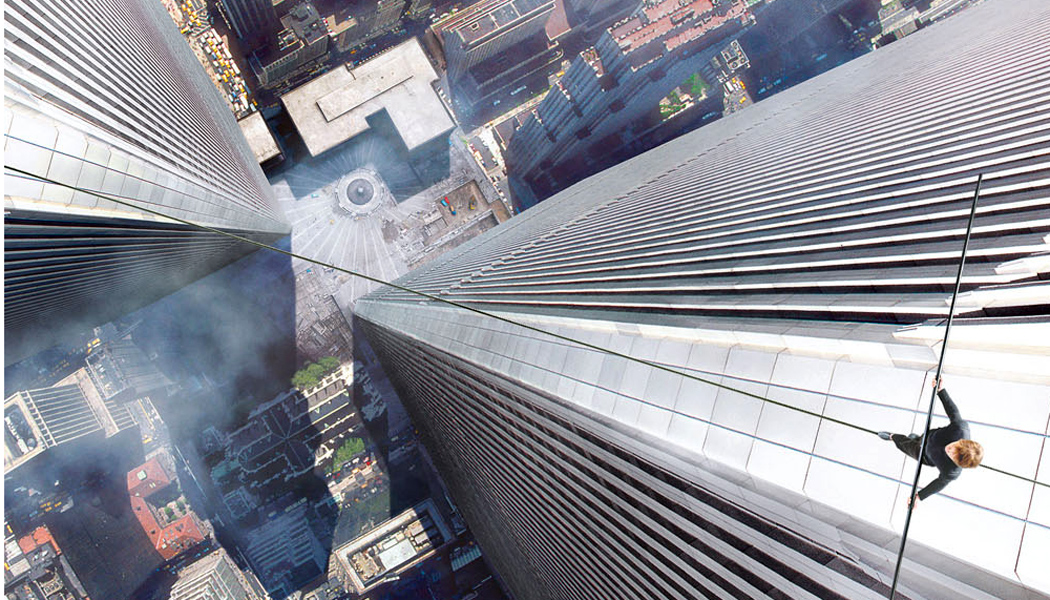
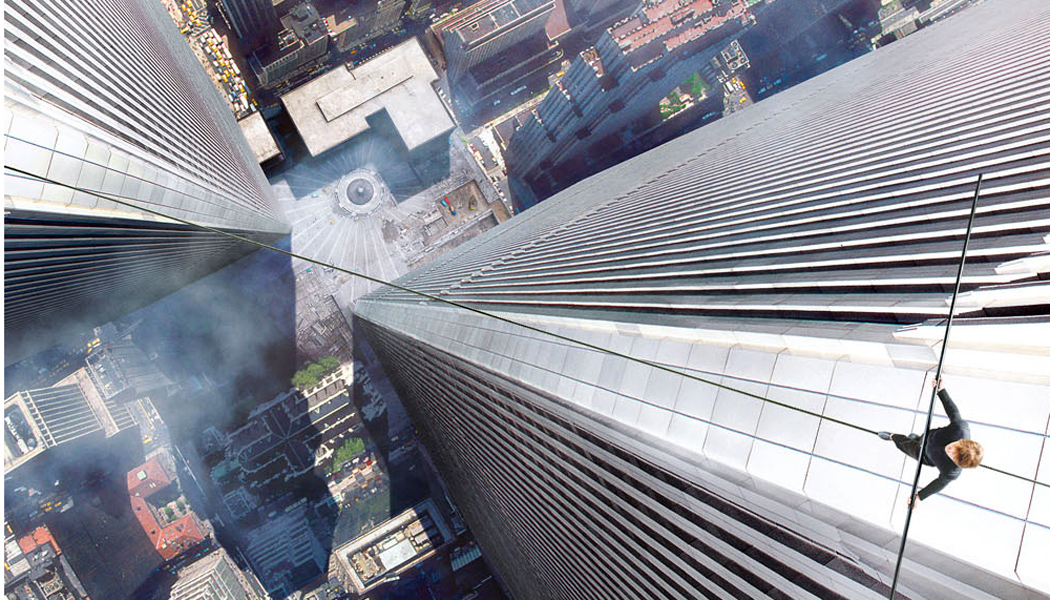
If you have vertigo or acrophobia, you will have trouble with “The Walk,” the story of Frenchman Philippe Petit’s tightrope walk between the towers of the World Trade Center. If you don’t have vertigo or acrophobia, you might have after you watch the movie, with the most stunningly realistic 3D effects ever put on screen. At least I think they’re still just on the screen. It sure feels like it goes on way, way behind it.Copyright 2015 Sony
“Man on Wire,” a documentary about Petit’s 1974 stunt, or, as he might prefer to say, coup, won an Oscar in 2008. In this film, Joseph Gordon-Levitt, with an accent that just manages to avoid Pepe LePew dimensions, plays Petit, a street performer who saw a photograph of the World Trade Center in the waiting room of his dentist and was instantly consumed with the dream of a walk in the sky, more than 1300 feet above the sidewalk, between the towers. Like Petit himself, the movie does not bother with the question of why this might be a good thing to do. If pressed, he might just say, like Mallory, “Because it’s there.” The problem is that he doesn’t have an answer but still keeps talking and talking. For no reason we keep going back to Petit narrating the story from the torch of the Statue of Liberty. It is distracting and dull.
Petit could not or would not articulate it, but I think I know why. When huge institutions get together to create a world-record setting edifice — taller than the Eiffel Tower, the Frenchman notes — there is something irresistibly enticing about coming back as a lone soul and literally topping it. Director Robert Zemeckis, who can get more excited about the technology than the story in his films, may identify with that challenge. Petit wanted to walk across the sky, with an audience to appreciate it. And Zemeckis wants to recreate that experience for us, taking us to the roof of the Towers, and inviting us to look down.
Still, while we love movies about dreamers of impossible dreams who make them come true, we do like to have a reason, and Petit edges over the line from audacious dreamer to inconsiderate narcissist, despite Gordon-Levitt’s considerable appeal. This lends a hollow quality, overcome less from the story of the film to what is in our own hearts as we watch, knowing what the tragedy that lies ahead for the World Trade Center.
What works well in the first part of the film is Petit’s tutorials with a tightrope master played by Sir Ben Kingsley and the procedural elements once Petit and his team get to New York and start preparing as though they are getting ready to rob a bank. Indeed, it becomes a heist film of a sort because they have to find different ways to sneak into a building that is still under construction and gather the information they need to figure out how to install the cable and keep it from swaying or buckling. And then to install it. There are a lot of problems along the way, including Petit stepping on a nail and injuring his foot and dropping his black turtleneck from the roof when he is trying to assume his performer persona. They omit, however, my favorite detail from the documentary: Petit explains that in America, if there’s pencil in your pocket everyone assumes you are part of the construction team and are entitled to be there. Like the loss of the buildings themselves, Petit’s ability to exploit lax security is a poignant reminder of what we no longer have.
The last half hour or so of the film is breathtaking and well worth the price of admission in IMAX 3D. You will feel that you are on the tightrope with Petit. As the crowd gathers below and the police arrive (who thought a police helicopter would be a good idea?), Petit is suspended in the clouds, mentally, emotionally, and physically. For just a moment, Zemeckis and Gordon-Levitt bring us up there with him, and his dream, however frivolous and ephemeral, becomes ours.
Parents should know that this film has very risky and dangerous behavior, vertiginous 3D effects, brief nudity, some strong language, and smoking and drinking.
Family discussion: What big dream would you like to make come true? Who would you want to be your team?
If you like this, try: the documentary “Man on Wire”
FREE Tickets to TONIGHT’s showing of “Just Let Go”
Posted on September 28, 2015 at 1:08 pm
I have FREE tickets for tonight’s 8:00 pm showing of “Just Let Go” at both the AMC Hoffman Theater in Alexandria, Virginia and the AMC Tyson’s Corner, also in Virginia. To get your free tickets, send me an email ASAP at moviemom@moviemom.com with your “Forgive” in the subject line and your full name. We’ll email you the tickets.
On a cold February night in 2007, a devoted father of four and a seventeen-year-old drunk driver both receive life sentences. In one violent, devastating instant, each faces a drastically different and uncertain future. But as Chris Williams sits in his demolished vehicle staring at the car that had just caused the death of his wife, his unborn baby, and his nine- year-old daughter and his eleven-year-old son, he commits to doing something extraordinary: to forgive. Chris’ story is the cinematic tale of how a person can forgive despite the retaliatory tendencies that surface within the darks corners of the human heart showing the world that hope, love and forgiveness can overcome all when you make the decision to just let it go.