Dolores Huerta and Peter Bratt on the New Documentary “Dolores”

Dolores Huerta and Peter Bratt on the New Documentary “Dolores”

Posted on September 12, 2017 at 8:00 am

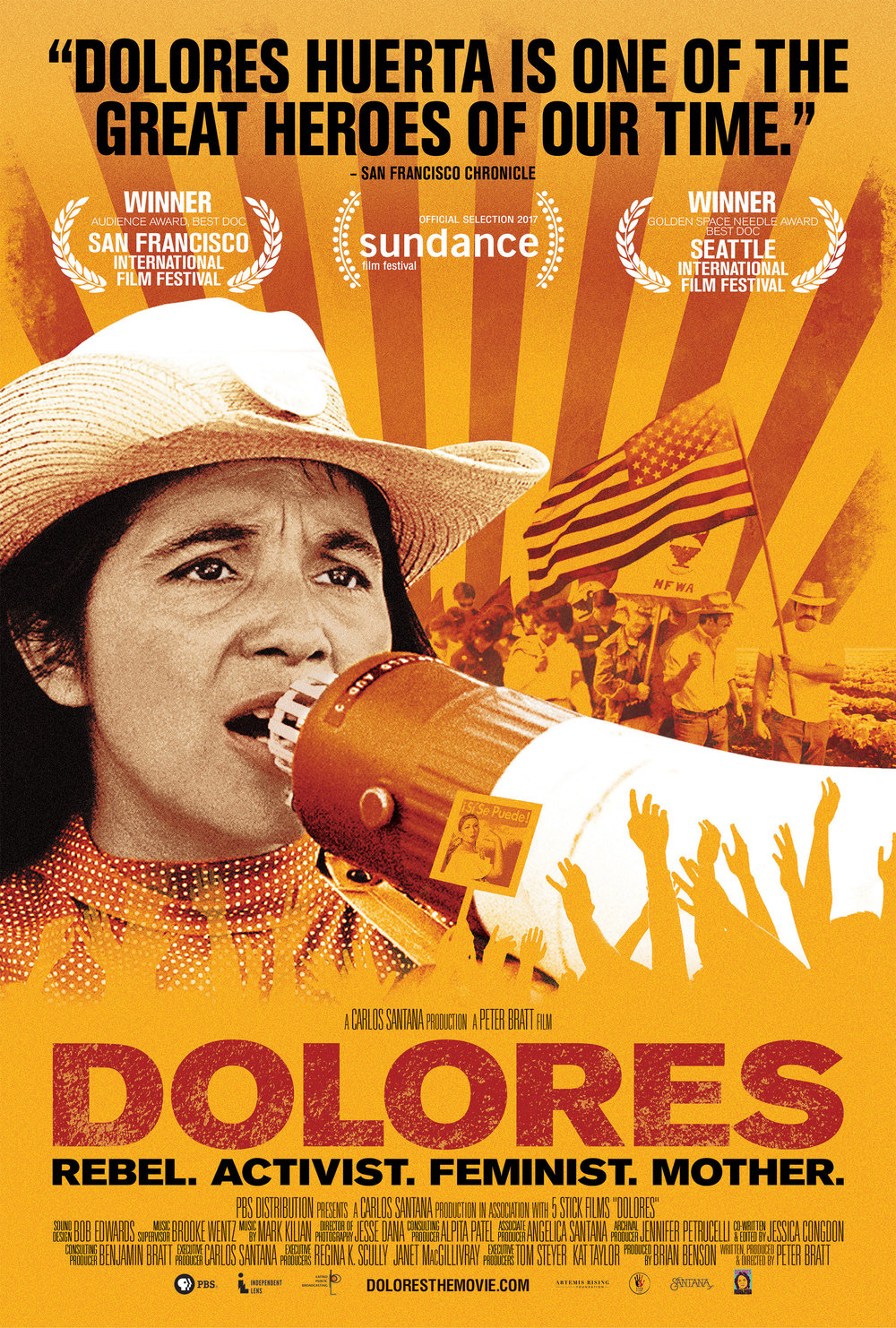
Dolores” is a new documentary that tells the story of activist icon Dolores C. Huerta, president and founder of the Dolores Huerta Foundation, co-founder of the United Farm Workers of America. If Ginger Rogers is known for matching Fred Astaire’s steps backwards and in high heels, Huerta was as responsible as the better-recognized Cesar Chavez for bringing the attention of the world to the rights of immigrants, women, and farm workers while raising eleven children as a single mother and constantly being marginalized and underrated because of her race and gender. I spoke to Huerta, who was awarded the nation’s highest civilian honor by President Barack Obama, along with the director of the documentary, Peter Bratt.

In the film, we see you begin by sitting down in living rooms or talking to farm workers in the fields to encourage them to insist on fair treatment. What did you say to them?

Dolores Huerta: When you are organizing a group of people, the first thing that we do is we talk about the history of what other people have been able to accomplish; people that look like them, workers like them, ordinary people, working people, and we give them the list. These are people like yourself, this is what they were able to do in their community. And then we talked about the issues that they’re facing in their own community and then we would say to them, “Well, just like these other people did, they were able to accomplish all these great things. You can do the same thing. But the thing is that you got to do it because if you don’t nobody else is going to do it for you; nobody else is going to come into your community and solve your problems. So you have to take on the issues yourself. You’re the ones who have to volunteer to make the work happen.”

So we do a whole series of these little house meetings and you probably get a hundred and fifty people together and out of that group then you have a cadre of them that will come up and they’ll volunteer to do the work that needs to be done and that’s how the leaders are developed. When you go into a community you’ll never know ahead of time who the leaders are going to be. The leaders come up from the volunteers that do the work and it’s amazing because then they do these incredible things in their community that they never thought they had the power to make that happen. Basically, the message is: you have power, the power is in your person and you can make this happen but you can’t do it alone; you’ve got to work with other people to make it happen, you have to make a plan and you have to volunteer. And it works; it’s like magic.

You go out there and you find those people that have this burning passion that they want to change things and you basically are just giving them the tools. This is the way that you do it: you come together with a group of people, you pass petitions, you go to the city council, you go to the board of supervisors and you can make it happen.

Peter Bratt: She actually was telling me a story that she hopped on a Greyhound to northern central California, throughout the bus ride was expecting sixty to seventy people at a house meeting which had only one person, and she said she gave it her all because one person can be the most incredible leader that can change thousands of lives. That was a great lesson.

Why was it important to you to tell this story?

Peter Bratt: Dolores in my view challenges the three pillars of society. She’s challenging patriarchy and yes, that’s part of gender discrimination but it’s also racial. She’s also a Chicana; she’s a woman of color. The third one is as a labor activist she’s challenging the institution of capitalism, and I think those are the three great threats and that made her dangerous. I think those complexities combined to keep her in the margins.

The people who appear in the film are very candid and sometimes very emotional. How do you as a filmmaker develop a sense of trust so that they will share those memories and feelings?

Peter Bratt: I have some history with Dolores. I’ve known her for a little while and I think there was initially a great amount of trust between her and myself and Carlos Santana whose idea this was, and I also knew a few of her daughters from years back. So I think initially there was trust but you still have to prove yourself and earn even more trust. The most important thing as a director is you have to create a safe environment where you make the person feel safe enough to open their heart and reveal the soul; that’s ultimately where you’re trying to get. We interviewed probably about fifty people and the ones that we selected for the film were the ones who we felt truly opened their hearts and spoke their truth.

What has surprised you in terms of how far we’ve come and what has been the most persistently frustrating?

Dolores Huerta: Women are now 50 percent of the law schools and medical schools, so we can look at all the progress that we’ve made, but we can see all the progress that we still need to make and now with the voter suppression going on and with the racism rearing its ugly head we know that we’ve got to really step up our game on the progressive side and get people to vote because a lot of people aren’t voting. They’ve taken civics out of our high schools. People were asleep but I think they’re waking up now. Trump has given everybody a good kick and people are waking up and realizing they’ve got to get involved. That’s the message that we want to send with the film; for people to get involved at the local level, at the community level, at the state level and international level because we can’t afford to let the right wing take over our country. My son Emilio is running for Congress to continue the fight for social justice.

Peter Bratt: Sometimes I just want to put the covers over my head and stay in bed and I feel like no matter what I do it’s ineffectual and I get depressed. So for me having spent these last few years with Dolores, to see her not just doing the work but impassioned about doing the work and getting out there at the grassroots level and she still goes out into the fields in 100 degrees to organize this farm operation, she’s still doing it in the school boards, on water boards, she’s been getting people involved and to see her so engaged and relentless. The fortitude is awe inspiring and yet there is this joy and this passion while continuing to do the work, It encourages me to like quit feeling sorry for myself and get back out there. To me as a filmmaker that’s the biggest reward, to see people lift themselves up and recommit themselves.

A briefer version of this interview originally appeared on the Huffington Post.
Related Tags:


Biography Directors Directors Documentary Gender and Diversity Race and Diversity
California Typewriter

California Typewriter

Posted on August 14, 2017 at 6:29 pm

B +
Lowest Recommended Age: Middle School
MPAA Rating: Not rated, no adult content
Profanity: None
Alcohol/ Drugs: None
Violence/ Scariness: None
Diversity Issues: None
Date Released to Theaters: August 18, 2017
Copyright 2017 American Buffalo Pictures

A couple of years ago, I stayed at a hotel that had a vintage manual typewriter in the lobby, with a pristine stack of paper placed neatly beside it.  I could not resist.  I rolled in a piece of paper and began to hit the keys, enjoying what pianists call the action of the machine and the memories it brought back.

Then I got to the end of the line and waited.  Although I learned to type the summer before my freshman year in high school and typed my school papers through high school, college, and law school and then used increasingly sophisticated typewriters in offices for the next five years, I had completely forgotten that it was up to me to hit the carriage return.  I reached up and swung the lever, and very much enjoyed reviving the memory of that feeling of satisfaction, accompanied by the little bell.  A computer will wait, sometimes impatiently, for you to continue.  A typewriter will congratulate you for what you have accomplished.

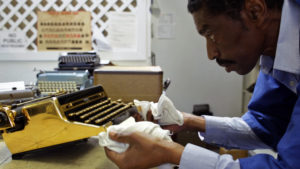
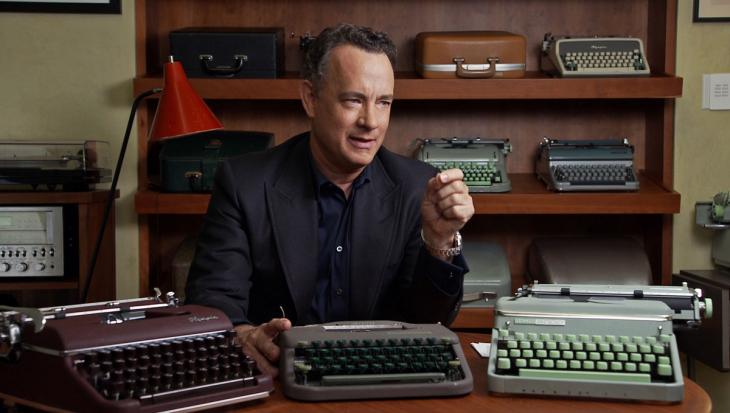
This captivating documentary pays tributes to typewriters and the small but passionate group who still love and repair them.  It is filled with delightful characters, and if they sometimes edge into Christopher Guest territory with their rhapsodies about the percussion and the ink flying onto the paper (the late Sam Shepard, adding an extra sense of loss to the film), or how typewritten words are “almost what thoughts look like” (John Mayer), they are still endearing and insightful.  And, as ever the voice of decency and civilization, Tom Hanks shows up because he is a serious collector of vintage typewriters and he likes to give them to friends and urge them to use them.

Indeed, I am now guessing that the Greg Kinnear character in “You’ve Got Mail” who loves his analog typewriters so much may in fact be based on the real-life passions of the man who gets the girl in the film, played by Tom Hanks.

California Typewriter is the name of the Berkeley, California typewriter repair shop that may have to close as its owner is turning 70 and business is pretty much eclipsed by computers, except for the collectors and John Henry-types.  The film alternates between the people at the store and typewriter aficionados, from a collector who literally dreams of owning one of the very first typewriters made by the man credited with inventing them to a sculptor whose medium is typewriter parts.  Ever wondered about the odd QWERTY arrangement of letters on your computer keyboard?  Did you know that typewriters created a whole new category of jobs for women, bringing them for the first time into workplaces other than schoolrooms and hospitals?  The women themselves were called “typewriters.”  There’s a music group that uses typewriters as their instruments.  And historian David McCullough, who writes his book on his old Royal typewriter, mourns the loss of typed letters, speeches, and diaries, with cross-outs and inserts. “There is value in mistakes…You see the process.”

There is a bittersweet quality to the film, which has brief glimpses of people standing in long lines in the rain to get the new iPad, and tech conference presenters chirping about algorithms.  We see the last typewriter manufacturer in the world close down, and its final 100 machines turned into a sculpture.  But the very scarcity creates bonds. “I collect typewriters,” a man with a veritable museum in his home says. “But better than that, I collect typewriter friends.”  And it is not a spoiler to note that the failing store of the title gets new access to customers from the very technology that disrupted its industry: a website.

Parents should know that this movie has some brief art images of bodies.

Family discussion: Have you ever typed on a typewriter?

If you like this, try: “The Shocking Miss Pilgrim,” with Betty Grable as a “typewriter” (secretary), and the delightful French film “Populaire,” a romantic comedy about a champion typist and her boss/coach

Related Tags:


Documentary DVD/Blu-Ray movie review Movies -- format Movies -- Reviews

New Documentary: BANG! The Bert Berns Story

Posted on April 19, 2017 at 3:23 pm

If you like behind-the-scenes-of-the-hits films like “20 Feet from Stardom,” “Muscle Shoals,” and “The Wrecking Crew,” you will enjoy “BANG! The Bert Berns Story.” Like “Wrecking Crew,” this is a love letter from a son to his father. You have not heard the name Bert Berns, but you have heard — and I am sure, you have sung — the songs he wrote or produced include “Twist and Shout,” “Brown Eyed Girl,” Janis Joplin’s “Piece of My Heart,” “Hang on Sloopy,” “I Want Candy,” “My Boyfriend’s Back,” “Under the Boardwalk,” and many, many more.

Berns had a weak heart, the result of rheumatic fever. He knew his time was limited. And so he lived hard and fast, to get everything he could in the time he had. As a young man, he fell in love with mambo and the Latin rhythms that were popular at his local dance clubs. He brought some of that sound to the early days of rock music, creating hit after hit as songwriter and producer, working with some of the biggest stars in the business, helping many of them get there.

The film has some great interviews and details, especially some unexpected anecdotes from Berns’ best pal from the mob, who stepped in “Godfather”-style to help out now and then, dragging one singer from his sister’s funeral to make sure he didn’t miss a recording date. There are stories of rising and falling, business partnerships and betrayals, and Bert’s romance with a tough cookie of a blonde go-go dancer who became his wife. Great characters, great music — and a lot of fun to watch.

Related Tags:


Documentary Movies for Grown-Ups Music

Interview: Jon Manning on the Burlesque Documentary “The Glitter Tribe”

Posted on February 28, 2017 at 7:50 am

Jon Manning is the director of Burlesque: Heart of the Glitter Tribe, an engaging and enlightening new film about modern-day burlesque performers who, as one of them says, combine “dancing, sexy, pretty, funny” in their performances. They have great passion for their work, their audience, and their fellow performers and they love what they do. Another one says in the film that when people tell her she will end up a spinster because of her burlesque lifestyle, she says, “I’m going to be a spinster that was a showgirl so I’m okay with it.” The film is in limited release March 3, 2017 and on VOD/Itunes March 7, 2017.

In an interview, Manning talked about what he saw and what he learned.

What makes someone a great burlesque performer?

You might want to ask a performer that question but here goes – a great burlesque performer is one that takes seriously their artform, their performance, their costume, their music, their family of performers, their audience – in the playful presentation of a sexy, sometimes funny 5 minutes of performance art. For, generally, almost no money.

These are the 98% of burlesque performers around the country that are bank tellers, graphic artists and chefs during the day.

This is not relative to (and this film is not about) the small handful of international performers such as Dita Von Tease that create big extravagant Las Vegas style shows, and have major international sponsors.

What goes into the song selection? What makes a song right for burlesque?

I have found that usually bsq performers select a piece of music that is very specific to the routine they are doing – either bc of it’s irony, specific singer or that they are exploring in their performance.

Our film explores “neo-burlesque” which is generally different than “classic” often in the types and styles of music the performers choose.

How does a burlesque performer develop her or his on-stage persona?

It’s usually an outgrowth from an aspect of their own personality. They then begin to see what works on-stage with the audience and slowly they begin to create their own persona that is unique and different than other performers.

Are burlesque performers competitive with each other? Do they enjoy watching each other perform?

I can’t speak to whether or not they are competitive with each other. As dancers and performers I image that they are. We looked very closely at one troupe that works intimately with each other in their chosen burlesque family.

My experience is that they love to watch other dancers/performers – especially if those other performers are at the top of their game!

Some of the performers in the film have always been outgoing and enjoyed being on stage. Others were originally shy and found the freedom to perform very liberating. How does that affect their acts and their relationship to the audience?

No doubt that their fears or assets are front and center in their comfort on-stage. Remember that these dancers are also actors for those few minutes on stage – with narrative and persona being adapted to their routine. So there may be a lot to overcome in who they actually are to what they want to be on-stage.

This is why most bsq performers find it empowering to be on-stage and getting immediate feedback from their audiences.

Who is the audience for burlesque? Is it different from the audience for strip shows?

Everyone can enjoy a burlesque show! A strip club usually has a completely different vibe and intention of from the audience. My experience of a strip club is that it is also very carnal and mostly attended by men. Bsq is kind of the opposite. The sexual aspect is usually done with a lot of fun and tease and usually only at the very end of the performance and my shows I have ever attended are at least 50% women in the audience.

In an era where everything is available online, what is it that brings the audience to a burlesque show?

People are realizing that life is bigger than their phones. There is a whole vibe and excitement at a bsq show. You have to be in the audience to feel it. You can also usually talk with the performers afterward a show.

So many of the performers have day jobs and other commitments. Why is burlesque so important to them?

Love of performance, empowerment, chosen family. Did I mention that is was a bawdy and raucus good time?!

Related Tags:


Behind the Scenes Directors Documentary Interview

Interview: Arthur Rasco on the Ebola Documentary “Facing Darkness”

Posted on February 27, 2017 at 8:00 am

Arthur Rasco  directed the extraordinary documentary “Facing Darkness,” about the efforts of the humanitarian group Samaritan’s Purse and their fight against Ebola, one that became very personal when their own doctor and nurse, Kent Brantly and Nancy Writebol, became infected. It was an honor to speak to Mr. Rasco about the film.

When did you start filming? It seems like you were there right from the beginning.

Samaritan’s Purse has been covering the Ebola epidemic since 2014. We have people on the ground in Liberia and some of those folks had cameras and were filming. The Deputy Country Director, Joni Byker, was filming, trying to get some clips and we were trying to get a video team off the ground to go but then late July happened and Dr. Kent Brantly was diagnosed with Ebola. And then so that changed things dramatically and then all of a sudden that threw all of us into a tailspin so it was all hands on deck to try and take care of Kent and Nancy Writebol. So we filmed bits and pieces along the way as we could, their arrivals at Emory, and then we did send our crews back in late October 2014. Once we re-engaged and sent supplies to the airlift with two 747s loaded with supplies, we sent a video crew. And then we were green lit to do the documentary in about April 2015, so that’s when we really begun in earnest putting together the film. The film will be in theaters on March 30, 2017.

How did you shape your production schedule and your approach as the story developed?

We had a great team that was involved in putting the film together. I’m just one piece among a great team of people here at Samaritan’s Purse and so we documented quite a bit of the stories of several people that had been involved. Some of the people like Bev and Kendell Kauffeldt and Dr. Lance Plyler we debriefed and recorded those interviews. So we had an idea of how we wanted to shape the story and then you go and you go there on the ground and then you also start meeting people like the nationals, the Liberians who had such amazing stories that we were able to work into the film.

We talked to people like Joseph Gbembo who lost 17 family members. We knew that he had lost quite a few and when we were interviewing him and then he says in the film, “When I look at the kids, the nieces and nephews, the children of those family members that passed away that gives me hope.” Okay, how many are we talking about? And then he says, “16.” And that moment was just so real and so we put that into the film just as it was because it was just such a dramatic earth shattering moment for all of us. We didn’t quite know that aspect of the story and so that was just amazing. Meeting people like Barbara Bono, who was a Liberian Ebola survivor and having her tell the story was just so powerful. Filming many interviews with everybody, I am crying and all of us are just in tears as we’re hearing the stories of what she went through and what she was afraid of during the time.

How do you maintain the distance that you need in order to make the film and yet to reach out to them as a human to get them to open up the way they do?

Well, I don’t know if I’m too good at keeping distance. I really enjoy and I want to engage with the folks, with people because their stories are just so amazing, they have been through some things that I am just trying to reflect, I’m just trying to share. I wasn’t able to be on the ground in 2014 when all of this happened and yet you know that these folks have been through something pretty earth shattering and so you want to respect that and you want to be able to let them tell their story openly and honestly. And so I laughed at when they laughed, I cried when they cried. I’m just trying to have them tell their story.

In America people went a little crazy on the subject of Ebola and didn’t listen to what the experts and the scientists had to say about the threat that it posed. How did that complicate things to bring back Kent to the US in the midst of all of that fear?

We as an organization as Samaritan Purse knew that we had to do everything, all that was possible to try and take care of Kent and Nancy. As you saw in the film it’s just a miraculous set of events that’s really unfolded. You almost can’t write this as a script. You just see God working in these ways. We took all the precautions that we could and Samaritan’s Purse put in place its own set of protocols to try and take care of our remaining staff. We were in touch with the CBC during this time, too. They gave us their instructions and we said, “Well, we’re going to step it up a notch because we want to keep our people safe and do the best that we can.”

What do you want people to learn from the film?

Our hope is that this is a story that will inspire young people, inspire a new generation of missionaries to set out in bold faith and go out to the mission field, to go out and serve, and serve in the name of Christ and putting their life on the line if that’s what they are called to because that’s where the need is. The need is out there and you can go out, you can make a difference. And that’s what the movie is about right? It’s letting compassion fuel a courage that will conquer fear and so that’s what we want to be able to do to encourage, to inspire a new generation of missionaries to head out there. I hope that people will feel challenged after watching this movie.

Related Tags:


Documentary Illness, Medicine, and Health Care Interview Spiritual films
THE MOVIE MOM® is a registered trademark of Nell Minow. Use of the mark without express consent from Nell Minow constitutes trademark infringement and unfair competition in violation of federal and state laws. All material © Nell Minow 1995-2026, all rights reserved, and no use or republication is permitted without explicit permission. This site hosts Nell Minow’s Movie Mom® archive, with material that originally appeared on Yahoo! Movies, Beliefnet, and other sources. Much of her new material can be found at Rogerebert.com, Huffington Post, and WheretoWatch. Her books include The Movie Mom’s Guide to Family Movies and 101 Must-See Movie Moments, and she can be heard each week on radio stations across the country.

Website Designed by Max LaZebnik