Cloud Atlas

Posted on October 25, 2012 at 6:00 pm
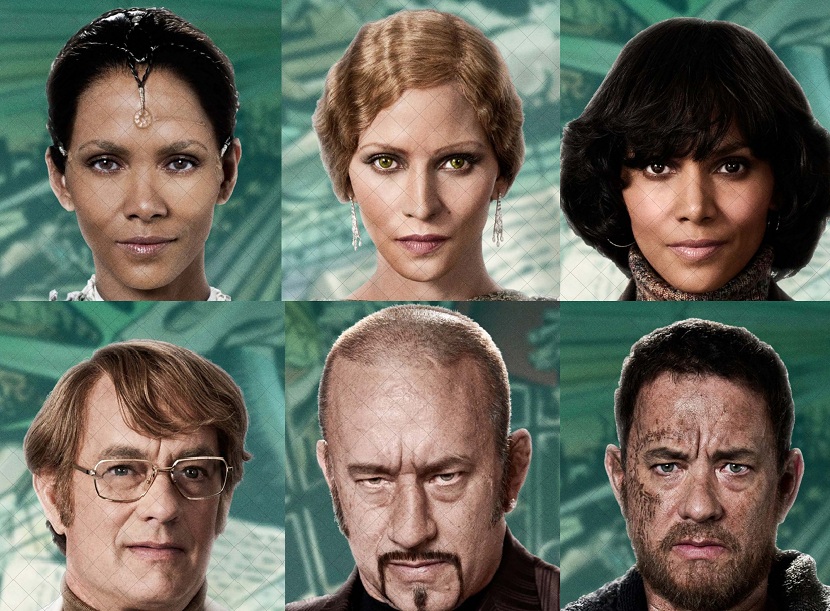
Six nested stories set in the past, present, and future entwine grand themes of the conflicts between those who would oppress and those who demand freedom, those who must create and those who want to repeat what is already there, those who love and those who are afraid to love or be loved.  Some in the audience will be enchanted by the grand scope of the story-telling and the intricate details of the mosaic that make up each of the story’s parts.  Others will be impatient with the gimmicks and distracted by the prosthetics, wigs, and make-up.  Many will grapple with the frustration of experiencing both reactions.

When they made the “Matrix” films, they were known as the Wachowski brothers, Andy and Larry.  But since then, Larry has become Lana while resisting terms like “transition” as “complicity in a binary gender narrative.”  That clearly fueled the commitment to age, race, and gender fluidity throughout the film. Even the most sharp-eyed cataloger of prosthetic noses and teeth will be surprised as the credits reveal the multiple roles taken by Tom Hanks, Halle Berry, Hugo Weaving (Mr. Smith in the “Matrix” films), Hugh Grant, Jim Sturgess, James Broadbent, Ben Wishaw, Keith David, Doona Bae, and others.

The oldest story, set in the early 19th century and told in the  traditional style of ahistorical drama, has Sturgess as a man disturbed by the abuse of slaves in the Pacific who is being poisoned by a doctor (Hanks) he thinks is curing him.  His journals become a book on a shelf in the next story, set in the 1930’s, with a musician (Wishaw) writing to the man he loves about assisting a venerated composer and working on his own composition, called “Cloud Atlas.”  In the 1970’s, styled to remind us of that era’s “paranoid cinema” films like “The Parallax View” and “The China Syndrome,”  an investigative reporter (Berry) gets stuck in an elevator with an elderly scientist who gives her some important information about a nuclear facility.  She discovers his 40-years-old correspondence with the musician in his papers.  In the present day, we see something of a shaggy dog story as a British publisher (Broadbent) goes on the run from hooligans and ends up having to escape from a “One Flew Over the Cuckoo’s Nest”-style facility.

Two stories are set in the future.  The first, in what is now Korea, has a “Blade Runner-“ish society made up of consumers and “fabricants.”  One of them sees a movie based on the story of the publisher’s escape (starring Hanks), which helps her understand that she must rebel against the abuses of her society.  Her story becomes part of the origin myths of a post-apocalyptic society hundreds of years even farther into the future, where much of humanity has returned to an almost bronze-age level of technology and everyone speaks in a Jar-Jar Binks form of pidgin English that may have worked better on the printed page but on screen is intrusive and overdone.

As the the “Matrix” films, the more specific and concrete it gets, the less resonance it has.  Its greatest message about human aspiration and inspiration and connection is in the message as medium.  The scope and audacity of this undertaking, the biggest budget independent film in history, with the Wachowskis putting up their own homes to make the final budget numbers, outshines the details that never quite reach the clouds.

Parents should know that this film includes some graphic violence including murders, rape, shoot-outs, knives, arrows, suicide, brutal whipping, poison, car crashes, and a character being thrown off a balcony.  Characters are in peril, injured and killed.  There are dead bodies with disturbing images, some strong words including f-word and n-word, gay and heterosexual sexual references and explicit situations as well as nudity, crude sexual humor, portrayal of slavery and totalitarianism, smoking, and drug use.

Family discussion: Which of the stories was the most compelling and why?  Who was the bravest character?  Who learned the most?

If you like this, try: the book by David Mitchell and the “Matrix” movies

 

Related Tags:


Action/Adventure Based on a book Drama Epic/Historical Fantasy Romance Science-Fiction

Gabe the Cupid Dog

Posted on October 23, 2012 at 11:11 pm

A dog named Gabe plays Cupid for his newly single master in this sweet family-friendly story.  Gabe belongs to Eric (Brian Krause of “Charmed”) a journalist planning a move to the UK.  But animals have to be quarantined for six months before they can enter the country and Gabe really doesn’t want that.  So he has to figure out a reason for Eric to stay home, and decides his best bet is to find him a new girlfriend.  A pretty neighbor named Sarah (Boti Bliss of “CSI: Miami”) seems like a good candidate.  There are complications along the way but Gabe is on hand to make sure that it all ends happily ever after.

Related Tags:


Fantasy For the Whole Family Romance Talking animals

Secret of the Wings

Posted on October 19, 2012 at 9:32 am

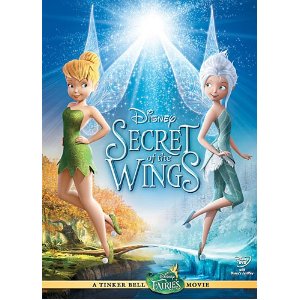
Where do fairies come from?  When a baby laughs, a fairy is born.  And Tinker Bell (Mae Whitman) learns in this sweet animated tale that the baby’s laugh that gave her life must have been extra merry because two fairies appeared.  The Secret of the Wings is that Tink has a sister she never knew she had in a place she has never been.

Tinker Bell is a summer fairy who lives happily with her friends.  But she is curious about the adjoining land of the winter fairies.  Summer fairies send baskets of food across the bridge where the frost fairies live in a land covered with ice and snow.  Animals can cross over, too, but fairies are forbidden from entering each other’s lands by order of Lord Milori (Timothy Dalton), who is the ruler of the winter fairies.  Tinkerbell disobeys the rules and discovers a fairy named Periwinkle (Lucy Hale), who turns out to be her twin.  They instantly bond and are delighted to get to know one another.  “You collect lost things, too?”  “I call them found things!”

But summer fairies can be injured by the cold temperatures.  And when Periwinkle comes to visit Tinker Bell, even Tink’s clever contraption for keeping Peri cool is not enough to protect her from the damage caused by the warm climate.

The Disney artists have created two enchanting lands with pause-button-worthy details and swooping 3D effects.  The sweet story is unfortunately marred by brief boy-girl silliness, but Tink herself is an independent, resourceful, and loyal heroine.  She is respectful but willing to question authority, she is curious — I liked seeing her go to the library to do research — and she is skilled with tools and good at solving problems.  The sparkly twins will delight children and the grown-up voice talent like Dalton and Angelica Houston and imaginative visuals will give parents something to enjoy as well.


Related Tags:


3D Animation Fantasy Series/Sequel

Frankenweenie

Posted on October 4, 2012 at 6:00 pm

B+
Lowest Recommended Age: 4th - 6th Grades
MPAA Rating: Rated PG for thematic elements, scary images, and action
Profanity: Schoolyard language
Alcohol/ Drugs: None
Violence/ Scariness: Ghoulish horror images and some peril
Diversity Issues: Diverse characters
Date Released to Theaters: October 5, 2012
Date Released to DVD: January 6, 2013
Amazon.com ASIN: B005LAIIA8

Mary Shelley’s Victor Frankenstein was a scientist who wanted to create life.  Tim Burton’s Victor Frankenstein is a kid who just wants his dog back.

Writer/director and master of the macabre Burton first developed this idea in a 1984 live action short film that got him fired by Disney because it was too scary for children.  Times have changed, and Disney came to Burton to ask him to develop a feature length remake in 3D stop-motion — and in black and white.  Burton, who had worked in black and white (“Ed Wood”) and stop-motion animation (“The Corpse Bride,” “The Nightmare Before Christmas”) tells a deliciously ghoulish story with visual wit, panache and a lot of heart.

It is, after all, the story of a boy and his dog.  Victor (Charlie Tahan) is a bit of a loner and his dog Sparky is his best friend.  When Sparky is killed by a car, Victor decides to harness the power of lightning to try to bring him back to life.  At first, it does not seem to work, but then Sparky’s tail starts wagging.  And then it wags itself off.  “I can fix that!” the happy Victor reassures his re-animated pet.  It’s just a matter of a few quick stitches.

One of Victor’s classmates is Edgar “E” Gore (“The Middle’s” Atticus Shaffer), a mishappen but cheerful kid fascinated with creepy things.  (His name is “E” Gore, get it?)  He pressures Victor to tell him what happened and soon all the kids are trying their own experiments.  And then, perhaps because their hearts are not as pure as Victor’s (they want to win the science fair), because they are not as careful and knowledgeable, or just old-fashioned hubris, that is when things begin to go terribly wrong.

This first-ever black and white stop-action animated film is a visual treat with dozens of witty details.  I loved it when Sparky’s poodle doggie crush next door (they have a Pyramus and Thisbe-style fence between them) gets enough of an electronic jolt to give her fur white streaks in tribute to Elsa Lanchester’s iconic Bride of Frankenstein.  Martin Landau, who won an Oscar in Burton’s “Ed Wood,” gives a delicious performance as Victor’s teacher.  Burton’s own pleasure in the twisted and demented is evident in the comic grotesquery of the characters.  One creepy little girl insists on seeing omens in her cat’s poop, and when Victor’s classmates try to appropriate his methods, things go bizarrely off-kilter.  It does not reach the poetry of “A Nightmare Before Christmas,” but there are plenty of tricks and treats.

Parents should know that this film has ghoulish and macabre themes inspired by classic monster stories, children and adult characters in peril, a sad death of beloved pet, some potty humor, some violence and disturbing graphic images, and some schoolyard language.

Family discussion:  How is this story most like the original “Frankenstein?”  How is it most different?  Which monster is the scariest and why?  Why was it hard for Victor to make friends?

If you like this, try: “ParaNorman,” “Monster House,” “Beetlejuice,” and “The Nightmare Before Christmas”


Related Tags:


3D Animation DVD/Blu-Ray Pick of the Week Fantasy Horror Remake Stories About Kids

Disney’s Cinderella — New Diamond Edition

Posted on October 3, 2012 at 3:57 pm

This week, Disney’s animated classic Cinderella is being released with a glorious new Three-Disc Diamond Edition: Blu-ray/DVD + Digital Copy, and that glass slipper really sparkles!

The classic fairy tale by Charles Perrault is lovingly and imaginatively brought to life in this animated Disney version, also a classic. Cinderella, a sweet, docile, and beautiful girl forced to act as a servant for her mean stepmother and stepsisters, goes to the ball with the help of her fairy godmother. But her godmother warns that the beautiful coach and gown will only last until midnight. Cinderella meets the Prince at the ball, and they share a romantic dance. But when the clock begins to strike midnight, she runs away, leaving behind one of her glass slippers. The Prince declares he will marry the girl whose foot fits that slipper. He finds her, and they live happily ever after.

Disney expanded the simple story with vivid and endearing characters and memorable songs. The animation is gorgeously detailed and inventive. In one musical number, as the stepsisters squawk their way through their singing lesson in another room, Cinderella sings sweetly as she scrubs the floor, reflected in dozens of soap bubbles.

When Cinderella asks if she can go to the ball, her stepmother tells her she can, if she can make an appropriate dress. She then keeps Cinderella much too busy to have time to make the dress. But Cinderella’s friends, the mice and birds, make one for her in another delightful musical number. As the fairy godmother sings “Bibbidi Bobbidi Boo,” she transforms a pumpkin into a coach, the mice into horses, the horse into a coachman, and finally, Cinderella’s rags into a magnificent ball gown. The scene when the Duke comes looking for the girl whose foot will fit the glass slipper is very suspenseful and highly satisfying.

While the story has enduring appeal, many people are troubled by the passive heroine, who meekly accepts her abusive situation and waits to be rescued, first by her godmother and then by the Prince. It is worth discussing, with both boys and girls, what some of her alternatives could have been (“If you were Cinderella, would you do what that mean lady told you?”), and making sure that they have some exposure to stories with heroines who save themselves. A Ella Enchanted, based on the book by Gail Carson Levine, and Ever After, starring Drew Barrymore, have ingenious explanations for the heroine’s obedience and spirited heroines who can rescue themselves.

In today’s world of blended families, it might also be worth discussing that not all step-parents and siblings are mean. Even children who are living with intact families of origin may need to hear this so that they will not worry about their friends.

Families who see this movie should talk about these questions: Why does Cinderella do what her stepmother says? What could she have done instead? Why is the King so worried about whether the Prince will get married? If you had a fairy godmother, what would you like her to do for you? Or would you like to be a fairy godmother? Whose wish would you grant?

This story has been told many times, and families might enjoy seeing some of the other versions, including Cinderfella, with Jerry Lewis as the title character and Ed Wynn as his fairy godfather. The made-for- television musical version Rodgers & Hammerstein’s Cinderella, starring Leslie Ann Warren and the remake with Brandi and Whitney Houston are well worth watching.

Children might be amused to hear the rumor that Cinderella’s most famous accessory is the result of a mistake. It is often reported that in the original French story, her slipper was made of fur. But a mistranslation in the first English version described it as glass, and it has stayed that way ever since. But in reality, while there have been many versions of the story over the years, the best-known early written version, by Charles Perrault, did describe her slippers as glass. Other versions have her wearing gold slippers or a ring that fits only the true Cinderella.

Related Tags:


Animation Based on a book Classic Date movie Family Issues Fantasy For the Whole Family Musical Remake
THE MOVIE MOM® is a registered trademark of Nell Minow. Use of the mark without express consent from Nell Minow constitutes trademark infringement and unfair competition in violation of federal and state laws. All material © Nell Minow 1995-2026, all rights reserved, and no use or republication is permitted without explicit permission. This site hosts Nell Minow’s Movie Mom® archive, with material that originally appeared on Yahoo! Movies, Beliefnet, and other sources. Much of her new material can be found at Rogerebert.com, Huffington Post, and WheretoWatch. Her books include The Movie Mom’s Guide to Family Movies and 101 Must-See Movie Moments, and she can be heard each week on radio stations across the country.

Website Designed by Max LaZebnik