Interview: Joel Edgerton on “Loving”

Interview: Joel Edgerton on “Loving”

Posted on October 30, 2016 at 10:27 am

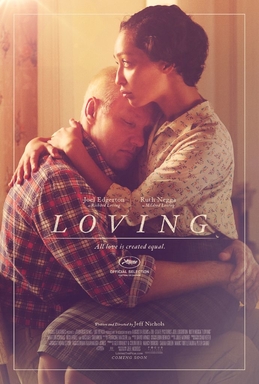
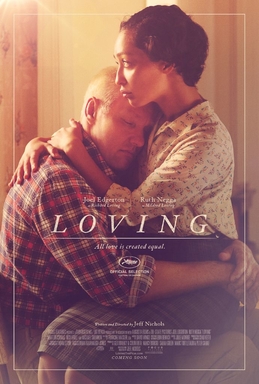
Joel Edgerton stars in “Loving,” the true story of the couple whose 1967 Supreme Court case successfully challenged laws prohibiting marriage between people of different races. In an interview, the Australian actor spoke about playing the quiet man from a small town in Virginia who just wanted the Court to know, “I love my wife.”
Copyright 2016  Focus
Copyright 2016 Focus

He said, “I kept seeing the words Loving v. Virginia. I saw those words together and I thought it was a very powerful obviously, the couple felt so fated to be because of their name but it felt like humanity versus the system which is really what the movie is about. I just kept thinking about a human quality, a human desire that we all share versus the system that’s all about everything else.”

The movie’s script, by director Jeff Nichols, includes some of the moments in the powerful documentary, “The Loving Story.” Edgerton said one of his favorite lines was when Ruth Negga as Mildred Loving said, “We might lose the small battles but win the big war.” And a woman who saw an early screening told him that her favorite line was when Richard Loving asked his wife, “What can I do?” “She said every man needs to know that.” Edgerson said, “That says a lot about the relationship, the support, of not presuming to create somebody’s happiness but to see what you can do to contribute to somebody’s happiness by listening to what their needs rather than to presume what their needs are.”

I asked whether it was especially difficult to play a character who does not speak very much. He answered, “I actually thought that it might be the opposite and not because I thought I could be lazy or no homework or anything but I know all too well that film is a visual medium and the camera often gets very close. The camera doesn’t lie and therefore it’s important that we as actors don’t lie and if we are doing it we hide it very well. And so I thought this might be somewhat not easy but a simpler task than I realized it was. And I realized that it taught me a lot. When you have large speeches you kind of choose the surface layer or the subtext and do a dive into that and it kind of gives the audience a guide to what you’re supposed to be thinking as a character. When the audience doesn’t have that guide, that verbal guide then it’s up to you to be very specific about the silence, the reasons for it. That became the real task and I don’t think I’ve ever had to think so specifically about silence. The pause is as much line of dialogue is a line of dialogue is. So Jeff and I would have conversations about the frustrations or the awkwardness or the shyness or looking for an aspect of Richard in those silences and try to be as specific as possible so that they became words we just couldn’t hear or screams that we were unable to express. Just because you’re not speaking doesn’t mean you’re not communicating.”
Related Tags:


Actors Based on a true story Interview
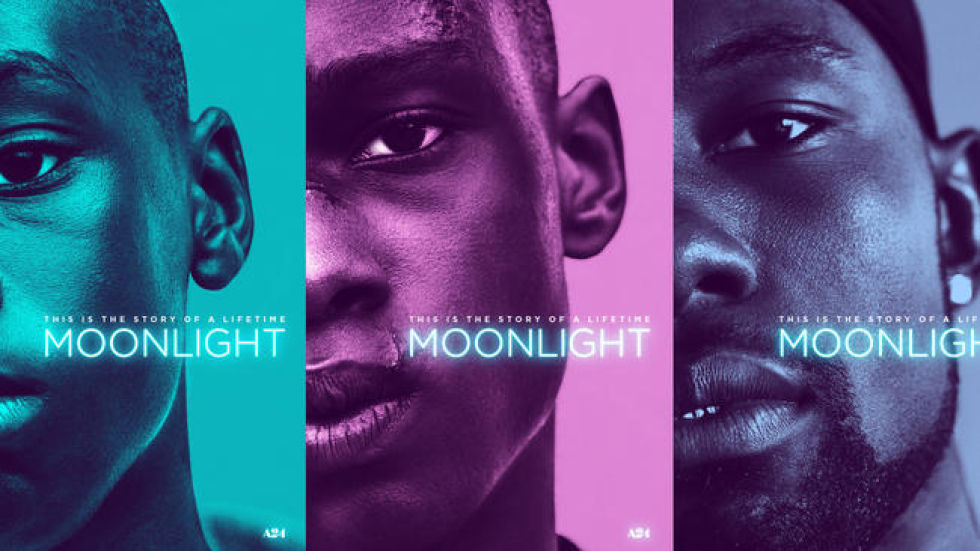
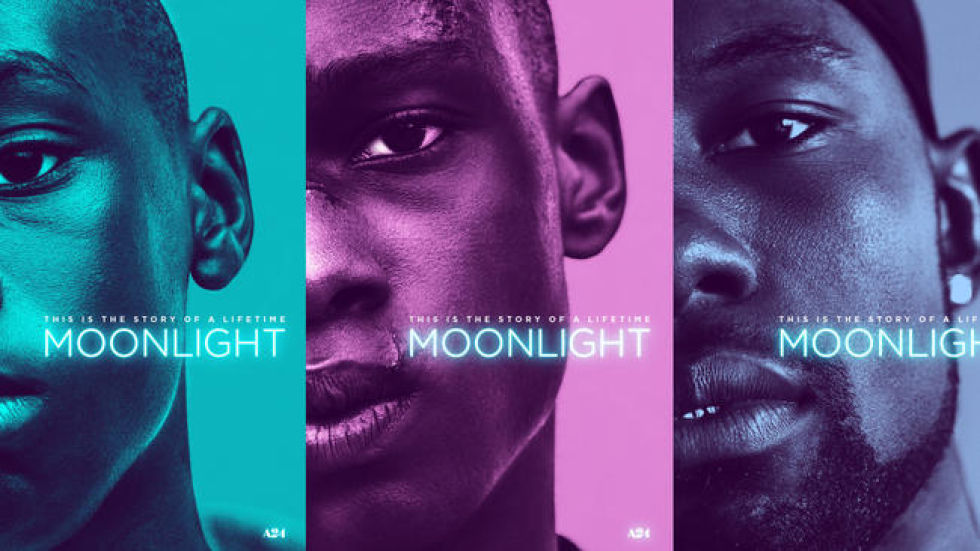
Moonlight

Moonlight

Posted on October 27, 2016 at 5:33 pm

A-
Lowest Recommended Age: Mature High Schooler
MPAA Rating: NR (some sexuality, drug use, brief violence, and language throughout)
Profanity: Very strong language
Alcohol/ Drugs: Drugs and drug dealing, alcohol, smoking
Violence/ Scariness: Bullies, beating, disturbing images, sad offscreen death
Diversity Issues: A theme of the movie, homophobia
Date Released to Theaters: October 28, 2016
Date Released to DVD: February 27, 2017
Amazon.com ASIN: B01LTHZVM4
Copyright 2016 Plan B Entertainment

In the 2017 Oscar winner for Best Picture, a man tells a young boy a story, and, as with many stories adults tell children, especially in movies, it is a story with a purpose. Juan (Mahershala Ali) tells the boy derisively known as “Little” (Alex Hibbert) that when he was young, a woman saw him at night and told him that the silvery moonlight made his dark skin looked blue. She said he should be called Blue from then on. But, he tells Little, he wasn’t. “At some point you gotta decide for yourself who you gonna be. Can’t let nobody make that decision for you.”

In “Moonlight,” a film of a delicate, shimmering beauty that measures up to the title, the boy will struggle to make that decision for himself. Three chapters, as a child, a teenager and a young man, played by three different actors, are labeled with three different names that he is called: the taunting nickname Little, his birth certificate name Chiron (played by Ashton Sanders), and the nickname given to him by someone who had a profound impact on him, Black (played by Trevante Rhodes). Who will he decide to be?

The story begins in the Liberty City neighborhood of Miami. Little runs from bullies and hides out in a crack house, where he is discovered by Juan, a kind-hearted drug dealer. Little won’t talk, so Juan takes him home, where his warmhearted significant other, Teresa (singer Janelle Monae) gives little some food and lets him stay the night. The next day, Juan brings Little back to his mother, Paula (Naomie Harris), a nurse who loves Little but leaves him alone much of the time. “He can take care of hisself. He good like that.”

In the second section, he is a skinny teenager all but abandoned by his mother, who has become addicted to drugs, and bullied at school. He still does not talk much, but he has one friend, Kevin (Jharrel Jerome), who calls him Black. Chiron cannot even acknowledge to himself that he wants more from Kevin, but one night on the beach, they share a piercingly sweet moment of tenderness that will indirectly lead to an act of violence.

When we see him again, he is a man, with an armor of muscle and gold teeth grillz, still almost silent, still almost isolated. But a call from Kevin inspires a journey.

The film is based on a play called “In Moonlight Black Boys Look Blue” by McArthur awardee Tarell Alvin McCraney, who worked with director Barry Jenkins (the lovely romance “Medicine for Melancholy”) on adapting it for the screen. Both McCraney and Jenkins, like Little, had mothers who struggled with addiction, and Jenkins grew up on the Liberty City setting of the film.

The small miracle of the movie is the way it subverts the expectations the audience has based on news reports and many, many other movies. Every character is authentically complex. The graceful, poetic score by composer Nicholas Britell gives the story epic scope and heartbreaking intimacy.

We see Juan’s kindness and wisdom as he holds Little gently in the ocean, teaching him to swim and, more important, giving him an idea of what a man can be. We hear his thoughtful answer when Little asks him what “faggot” means. And yet, when Paula wants drugs, Juan supplies them, even knowing what it will do to Little. The confident, capable Kevin casually mentions time in prison as though it was an inevitable rite of passage. Little/Chiron/Black is physically transformed from chapter to chapter. We are continually challenged and confounded, yet held close to the heart of the story by its romantic lyricism and, most of all, the spacious humanity of its love for its characters.

Parents should know that this film includes very mature material: bullying, brutality, drug dealing and drug abuse, very strong language including homophobic slurs, sexual references and explicit sexual situations.

Family discussion: Why does the main character have a different name in each chapter? What do you think happened to Juan?

If you like this, try: “Medicine for Melancholy”

Related Tags:


Based on a play Drama DVD/Blu-Ray Pick of the Week GLBTQ and Diversity Race and Diversity
Inferno

Inferno

Posted on October 27, 2016 at 5:10 pm

Copyright Sony 2016
Copyright Sony 2016

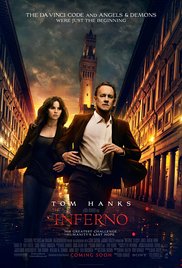
Dashing, globe-trotting symbology professor Robert Langdon (Tom Hanks) doesn’t work any harder at trying to prevent a global pandemic than Hanks and director Ron Howard work at trying to make the Dan Brown book into a movie. You can guess how Langdon’s effort works out. I’m here to tell you that the movie does not. Not even close.

Langdon wakes up, disoriented and with a gash on his head. As far as he remembers, he is still at Harvard but somehow he sees Florence out the window. He has no recollection of the past few days and the doctor (Felicity Jones) explains that he has temporary retrograde amnesia. Her name is Sienna.  Conveniently, she speaks English — she is English — and several other languages, and even more conveniently she is a fan of his work because she “likes puzzles.”  She attended one of his lectures when she was nine years old and has read all of his books with such devotion that she even mentions there is one she didn’t like much.

When an assassin dressed as a police officer starts shooting at them, Sienna grabs Robert and brings him, still in his hospital gown, to her apartment. Pretty soon, they are both on the trail of a puzzle that leads to an impending release of a virus that while wipe out 80 percent of humanity, put in place by a crazed zillionaire who had some very strong feelings about the problems of over-population, and who fell to his death in the prologue, but not before warning darkly that “Humanity is the disease; Inferno is the cure.”

Robert, still groggy, has to figure out how to stop release of the virus. But the clues are simply that that puzzling or interesting.  Unlike The Da Vinci Code, where Brown put together a clever and intricate series of clues based on authentic history and art, this one is little more than chase scenes in iconic locations, alternating with yawn-inducing scenes people barking kill orders into headsets and staring intently into monitors.

We also get drearily Delphic pronouncements like “the truth can be glimpsed only through the eyes of death” and somber almost-adages like “the greatest sins in human history have been committed in the name of love,” squinting at Renaissance frescos, a mysterious group with the PAC-like name The Command Risk Consortium (“We are not the government; we get things done”), a stolen death mask of “Inferno” poet Dante Alighieri, and an absurd pause for a chat about missed chances and regret. Irrfan Khan provides an all-too-brief bright spot, and I would happily see an entire movie about his crisp and unflappable character. As for the rest, one action scene is underwater, but the rest of it drags so much it feels like it might be, too.

Parents should know that this film includes fantasy/action style violence with grotesque and disturbing images, theme of global pandemic, chases and extended peril with characters injured and killed, suicide, betrayal, some strong and crude language, and a sexual situation.

Family discussion: Who is doing the most to address the problems of over-population? Why is Dante especially appropriate for this story?

If you like this, try: “The Da Vinci Code”

Related Tags:


Action/Adventure Based on a book Series/Sequel

Favorite Movie Witches

Posted on October 27, 2016 at 3:48 pm

For Halloween, some of my favorite movie witches:

Kim Novak is a sexy witch who will lose her powers if she falls in love in “Bell Book and Candle.” The outstanding cast includes Jimmy Stewart, Jack Lemmon, and Elsa Lanchester.

Angelica Huston is a very scary witch who can turn humans into mice in Roald Dahl’s “The Witches.”

Meryl Streep was a singing witch in Stephen Sondheim’s “Into the Woods.”

Animated Disney witches include Ursula the Sea Witch in “The Little Mermaid,” Julie Walters in “Brave,” and Martha Wentworth as Madame Mim in “The Sword in the Stone.”

Bette Milder, Sarah Jessica Parker, and Kathy Najimy are Colonial era witches who appear in modern times in the family favorite “Hocus Pocus.”

Veronica Lake is a witch who marries the descendent of the family she cursed in “I Married a Witch.”

Related Tags:


Fantasy Film History For Your Netflix Queue Great Characters Holidays Movie History Movie Mom’s Top Picks for Families
American Pastoral

American Pastoral

Posted on October 20, 2016 at 5:47 pm

C
Lowest Recommended Age: Mature High Schooler
MPAA Rating: Rated R for some strong sexual material, language and brief violent images
Profanity: Very explicit and strong language
Alcohol/ Drugs: Alcohol, drugs
Violence/ Scariness: Mostly offscreen violence including riots, domestic terrorism, characters injured and killed
Diversity Issues: Reflects the biases of its era
Date Released to Theaters: October 21, 2016

Copyright 2016 Lakeshore
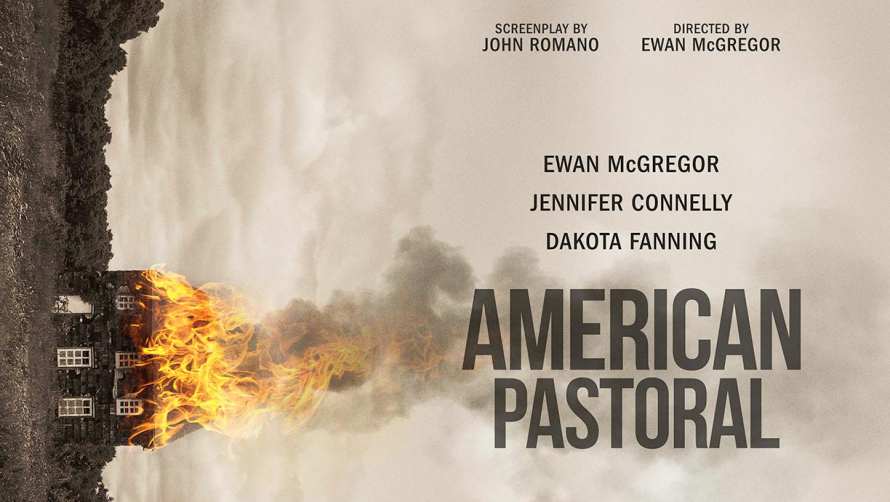
Ewan McGregor’s first film as a director is “American Pastoral,” based on Philip Roth’s Pulitzer Prize-winning novel about a man whose good and lucky life is torn apart by the upheavals of the 1960’s. It is a thoughtful and diligent effort, but the film cannot overcome two insurmountable problems of adaptation.

The first is the timing. The book was published in 1997, the first of Roth’s American trilogy, and it described the contemporary experience of people who had raised children in post WWII era of peace and prosperity, believing that they had given their children everything they were denied growing up during the Depression and war years, only to find that they raised a generation of angry teenagers who rejected the gifts they had been so proud to present. The dismay they felt is presented in the book as evidence of nobility of spirit; today, in the midst of another era of political polarization and resentment of the first generation as powerful a demographic as the baby boomers, it is difficult to see it as anything other than representing white male privilege.

The second is the inherent challenge of any adaptation of a work of fiction. It is impossible to replicate the experience of a novel, and this one, which depends so entirely on its voice, loses a great deal of its power in the translation to a visual medium. The framing story, with Roth representative Nathan Zuckerman (David Strathairn) attending a reunion and hearing the story that will become the movie from an old friend, is entirely superfluous, missing the essential focus of the book on the limits to our ability to understand the lives of others, even those we think we understand. Zuckerman helpfully sums it up for us: “It’s getting them wrong that is living, getting them wrong and wrong and wrong and then, on careful consideration, getting them wrong again. That’s how we know we’re alive: we’re wrong.”

Zuckerman hears the story of “Swede” Luvov, the kind of golden boy that every high school has to have, the one who is effortlessly good at everything and so nice that you can’t even hate him for it. Swede was a superb athlete and young enough that he was drafted into the army near the end of WWII and just missed action. He returned to a hero’s welcome and married a beauty queen named Dawn (Jennifer Connelly), with the grudging approval of his parents because she was not Jewish.

And then he has the perfect life that his personal grace and talent and respect should earn. He and Dawn move to a house in the country and have cows. He takes over his father’s business, a glove factory, where they produce fine leather goods and treat their workers — mostly African Americans — well. He and Dawn have a beautiful blonde daughter named Merry and she loves them and their bucolic, pastoral life. Everything makes sense.

And then nothing makes sense. Merry (now played by Dakota Fanning) becomes an angry teenager and is enthralled by the protesters against the Vietnam War (and the patriarchy, and pretty much everything else her parents represent). She bitterly accuses: “You’re just contented middle class people.” He helplessly replies, “Some people would be happy to have contented middle class parents.”

She disappears after a post office is bombed. Swede and Dawn are devastated. He cannot stop looking for her. Dawn has a breakdown.

They all try their best, but the result is static and off-key. We are supposed to admire Swede’s decency, but the movie is slanted so precipitously in his favor that even McGregor’s palpable sincerity cannot obscure the film’s smug misogyny. The men are decent, sympathetic, patient, and virtuous. Most of the women are needy, unstable, and sexually provocative. As a child Merry asks for a kiss on the lips and then confesses that she always goes too far. These women should be happy with whatever the men want to give them. They mostly exist merely to disappoint or betray the men in their lives, and sometimes the other women, too.

Or, they are one-dimensional saints. Samantha Mathis (good to see her as always) has a brief scene as a member of the community who is philosophical after a devastating loss. Vicky (“Orange is the New Black’s” Uzo Aduba) is Swede’s top manager in the glove factory. Though Aduba is excellent, the role is limited to a bland loyal subordinate.

When there are riots outside the factory following the murder of Martin Luther King, Vicky helps Swede hang a banner out of the window that reads: Negroes Work Here. Instead of Zuckerman’s meditation on how the people who spend so much of your life envying end up having less enviable lives than your superficial, incurious assessment contemplated, it would have been much more telling to explore the world of a man who thinks that employing African Americans in a glove factory should protect him from the consequences of the system that has for so long tilted in his favor.

Parents should know that this movie includes very explicit sexual references and situations, very strong language, domestic terrorism and murder, riots, alcohol, and drugs.

Family discussion: What do we learn from the framing story at the reunion? What should Merry’s parents have done differently, either before or after the bombing?

If you like this, try: “Goodbye Columbus,” “The Human Stain,” and “Indignation,” also based on books by Philip Roth

Related Tags:


Based on a book Drama Movies -- format
THE MOVIE MOM® is a registered trademark of Nell Minow. Use of the mark without express consent from Nell Minow constitutes trademark infringement and unfair competition in violation of federal and state laws. All material © Nell Minow 1995-2026, all rights reserved, and no use or republication is permitted without explicit permission. This site hosts Nell Minow’s Movie Mom® archive, with material that originally appeared on Yahoo! Movies, Beliefnet, and other sources. Much of her new material can be found at Rogerebert.com, Huffington Post, and WheretoWatch. Her books include The Movie Mom’s Guide to Family Movies and 101 Must-See Movie Moments, and she can be heard each week on radio stations across the country.

Website Designed by Max LaZebnik