Of the Three Movies Released This Week, the One With the Most Racial and Gender Awareness is….Zootopia

Of the Three Movies Released This Week, the One With the Most Racial and Gender Awareness is….Zootopia

Posted on March 5, 2016 at 12:27 pm

The two live-action releases this week, “Whiskey Tango Foxtrot” and “London Has Fallen,” featured stereotyping and white actors playing characters of color. So it was especially refreshing to watch “Zootopia,” a Disney animated movie with talking animals, and discover some genuinely thoughtful and sensitive portrayal of race and gender. It is dispiriting to see that in 2016 movies like “Gods of Egypt” and “Whisky Tango Foxtrot” are using American, Australian, and European actors to play Middle Eastern characters. As Ann Hornaday points out in a very perceptive essay for the Washington Post,

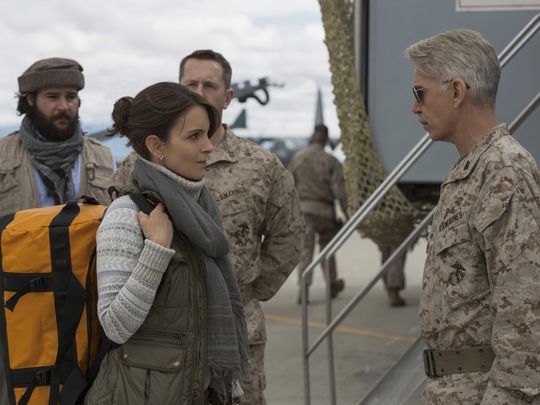
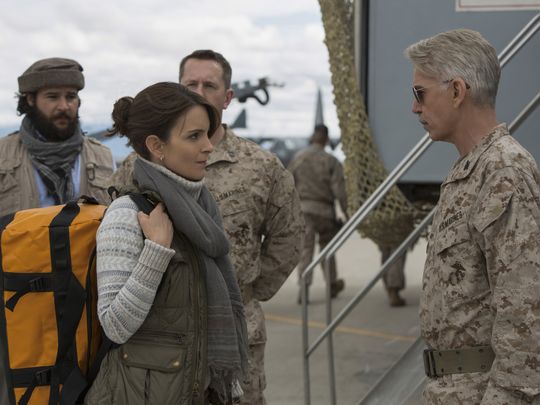
, starring Tina Fey as an intrepid, amusingly clumsy television reporter assigned to cover the war in Afghanistan, takes full advantage of its lead actress’s unforced warmth, in the service of a film that balances drama, romance and comedy with admirable skill. But in the midst of what could have been a thoroughly delightful mid-winter diversion, viewers are presented with the off-putting spectacle of two white actors — Christopher Abbott and Alfred Molina — portraying key Afghan figures in the story, one wearing layers of bronzing powder and a native pakol, the other leering from behind a bushy beard.

The problem goes behind misrepresentation, authenticity, and making it tougher for non-white performers to get jobs and tell their own stories. “It’s a matter of aesthetics,” she notes. “Rather than getting lost in the story up on the screen, viewers find themselves distracted by a bad makeup job or too-obvious prosthetics. Rather than becoming wrapped up in the emotional truth a performer is trying to convey, they remain at arm’s length from a character that can never be fully, seamlessly realized.” It sends messages that audiences of all races cannot help but absorb about standards of beauty and appropriation.
Copyright Disney 2016

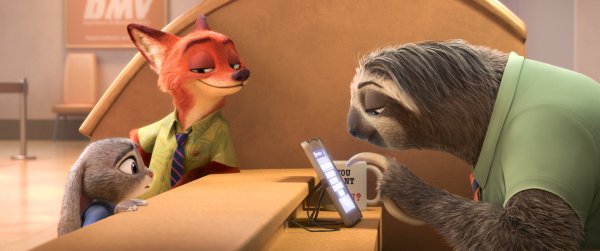
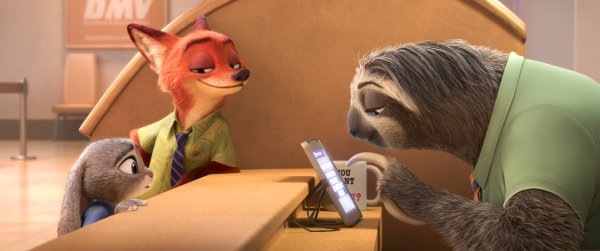
But “Zootopia,” an animated family movies, has a remarkably sophisticated and thoughtful understanding of race and gender, perhaps because the characters are all animals, so the message is metaphorical. As Slate’s Dan Kois writes in a piece called “Disney’s Zootopia is a Delightful Kids’ Movie that is Also Totally About Racial Profiling,”

The movie gets laughs from some surprisingly touchy racial material: “A bunny can call another bunny cute, but you can’t,” Hopps scolds Wilde. Later, another character gets reprimanded for an impropriety that, famously, black men and women have to deal with all the time: “You can’t just touch a sheep’s wool!”

But as broad as the movie sometimes plays, it delivers a clear message that when individuals prejudge others based on their heritage—or when a police force cracks down on a certain kind of person based only on their own bias and fear—people get hurt and treated unfairly.

The lead character is a small female bunny who responds tartly to being called “cute” by explaining that bunnies can use that term about each other, but it is inappropriate from another species. And the focus on the story is on her challenges in overcoming stereotypes — and realizing that she has some of her own to overcome, too. This is a lesson the makers of films like “Gods of Egypt” and “Whiskey Tango Foxtrot” should learn as well.
Related Tags:


Commentary Gender and Diversity Race and Diversity
London Has Fallen

London Has Fallen

Posted on March 3, 2016 at 5:22 pm

Copyright Gramercy 2016

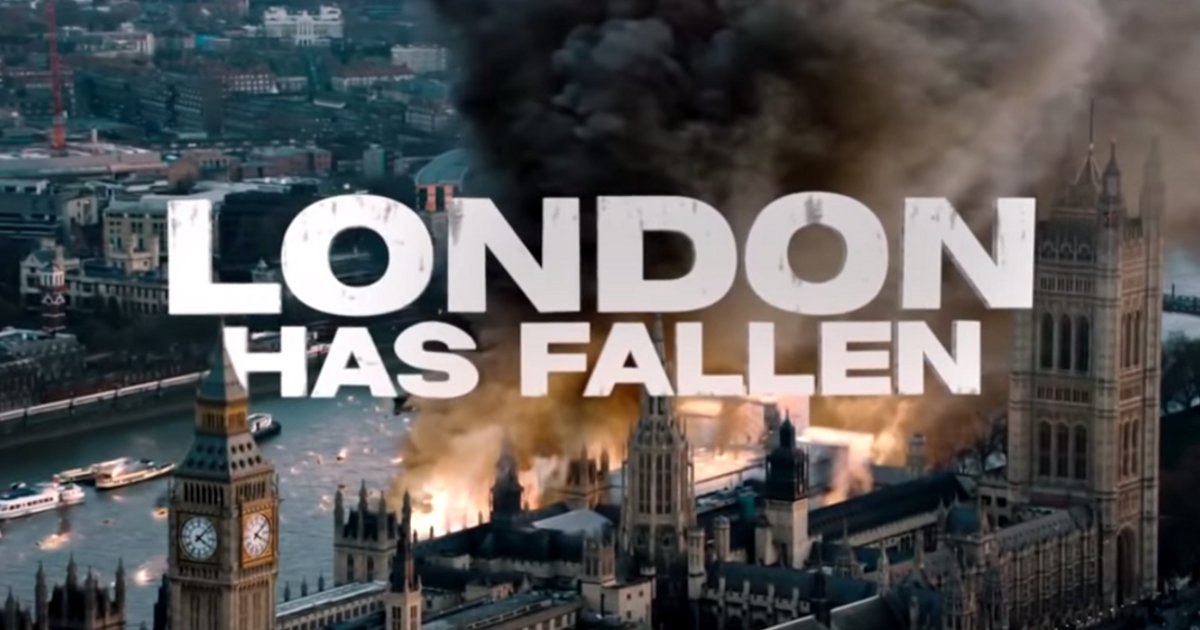
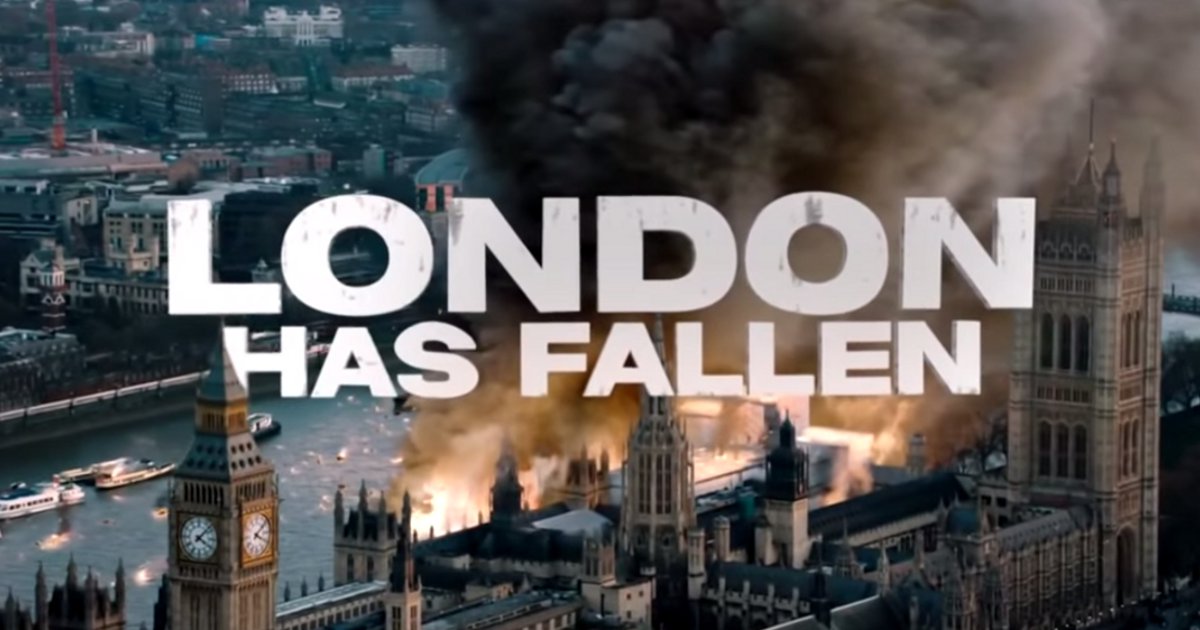
“London Has Fallen” is a love letter from producer-star Gerard Butler to himself and every bit as dumb and dreary as that sounds. This sequel to the more violent of the two attack on the White House movies of 2013 follows an opening scene of a drone attack on a terrorist group, establishing the revenge motive, with a re-introduction to our hero, manly showboat Secret Service hero Mike Banning (Butler), out jogging with (and out-jogging) President Benjamin Asher. “What are you made of?” the President asks with the same air of astonished admiration producer/star Butler clearly expects from the audience. “Bourbon and bad choices,” says Mike, letting us know that he is harder than nails and tougher than hell. All right, then!

Bad news from London. The Prime Minister has died. So that means all the world leaders will attend the funeral, creating a security problem of unprecedented proportions and a heck of a traffic jam, too. Meanwhile, just to amp up the emotion in the laziest possible way, manly Mike and his adoring wife Leah (Radha Mitchell) are expecting a child. Mike stops home to chat with her about paint samples for the new nursery (and whether six security cameras trained on the crib is overdoing it, “and a Kevlar mattress,” ha ha). He also composes a draft letter of resignation but has to leave when the President needs him for the trip to London.

The rest of the movie is just a lot of shooting and explosions as most of the world leaders are wiped out and Mike has to keep the President safe and get him back to Washington. Plus some totally predictable (especially if you saw the last one) scenes of officials back home in the situation room watching intently on screens and saying things like “I think you’d better see this,” and at least one highly predictable death of a major character and at least one “surprise” about a traitor who turns out to be someone previously trusted.

I’d say it was more FPS game than movie, but at least in a game there is some excitement in the challenge of skill and timing. This is just passively watching things and people getting blown up and blown away, with many squishy sounds to remind us that blood is spurting. It is porn-y and fetishistic in the loving depiction of so much carnage, with iconic locations destroyed and many characters killed.

Just as distasteful is the portrayal of producer/star Butler as super-smart, always right, always picking the right target to hit and the right corner to turn, and able to take out dozens of bad guys all by himself, every single time. Excesses of self-regard and self-promotion are dwarfed by a complete failure of self-awareness. Mike blows away yet another swarthy generic bad guy and someone says, “Was that necessary?” “No,” Mike answers casually and moves on to the next one.

Those bad guys are tough. Not only do they blow up the city and murder world leaders, they “are all over social media.” Try burning that down, Mike Banning!

Gerard, was this movie necessary?

No.

Parents should know that this movie has extensive, intense and graphic peril and violence with guns, explosions, terrorism, and many characters injured and killed, disturbing images, world leaders assassinated, massive destruction, and constant strong language.

Family discussion: How do Mike and the President see things differently? If you were running the Secret Service, what would you do to protect the President?

If you like this, try: “Olympus Has Fallen” and “G.I. Joe”

Related Tags:


Action/Adventure Series/Sequel
Whiskey Tango Foxtrot

Whiskey Tango Foxtrot

Posted on March 3, 2016 at 5:20 pm

Copyright 2016 Paramount

When Michiko Kakutani of the New York Times reviewed the book that inspired “Whiskey Tango Foxtrot,” the memoir of journalist Kim Barker about her days covering US military operations in Afghanistan and Pakistan, she wrote:

What’s remarkable about “The Taliban Shuffle” is that its author, Kim Barker — a reporter at ProPublica and the South Asia bureau chief for The Chicago Tribune from 2004 to 2009 — has written an account of her experiences covering Afghanistan and Pakistan that manages to be hilarious and harrowing, witty and illuminating, all at the same time.

It’s not just that Ms. Barker is adept at dramatizing her own adventures as a reporter — though she develops the chops of a veteran foreign correspondent, she depicts herself as a sort of Tina Fey character, who unexpectedly finds herself addicted to the adrenaline rush of war.

And now that book is a movie, and the role of Ms. Barker is being played by non-other than Tina Fey, who also co-produced. As always, her work is whip-smart and original. This is not Liz Lemon goes to war, it is an impressively sensitive dramatic performance.

But Barker’s story has been movie-ized, giving it the “inspired by” rather than “based on” designation, and removing the “r” from the character’s name to create some space. The real Barker was a print journalist, but making her a television correspondent to make it more cinematic. And the various love interests are fictional. It is disappointing that the movie makes the impetus for the assignment a combination of professional and romantic ennui. Barker was a dedicated journalist looking for a big story.

But much of the essence of it is the real deal, starting with Barker/Baker’s plan to spend three months in Afghanistan that turned into three years, and the ramped-up intensity of spending days embedded with the military, frantically editing the story, and then trying to obliterate memory and consciousness with some hard-core partying, only to start over again. Baker is inexperienced but dedicated and smart. She quickly impresses the cynical General (Billy Bob Thornton) who sees embedded journalists as a bother and a risk. And she quickly bonds with the other woman reporter (Margot Robbie), who shows her the ropes and asks very politely if she can sleep with Baker’s hunky security guy.

Alfred Molina is excellent, as always, as an Afghani official, though we should be past the time when European actors are cast as Middle Eastern characters. And maybe we do not need any more stories of Western characters discovering the mysteries of the other side of the world, with illuminating life lessons from exotic people. We don’t want this to be “Under the Tuscan Sun” but with war instead of sun-ripened Italian tomatoes, and it gets uncomfortably close at times. But the thoughtful script from longtime Fey collaborator Robert Carlock keeps the film from making war be just a growth experience for a reporter looking to shake up her life a bit, and the contrast between what the war does to the people trying to tell the story, knowing that the people back home just change the channel anyway give the story a sobering weight.

Parents should know that this movie has constant very strong, crude, and colorful language, drinking, drugs, smoking, wartime violence with some graphic images, characters injured and killed, sexual references and situations, and nudity.

Family discussion: What was the most important story Kim Baker reported? What did she mean when she said it “started to feel normal?”

If you like this, try: The book that inspired this film, The Taliban Shuffle, and the film “The Year of Living Dangerously”

Related Tags:


Drama Inspired by a true story Journalism War

Trapped

Posted on March 3, 2016 at 5:19 pm

B+
Lowest Recommended Age: High School
MPAA Rating: Not rated
Profanity: None
Alcohol/ Drugs: None
Violence/ Scariness: References to violence against abortion providers
Diversity Issues: A theme of the movie
Date Released to Theaters: March 4, 2016

TRAP stands for Targeted Regulation of Abortion Providers. “Trapped” is a powerful new documentary that focuses on efforts to cut off women’s access to abortion by imposing requirements and restrictions on clinics that have no relationship to health or safety.

It could not be more timely, released the same week that the most significant challenge to Roe v. Wade was argued in the Supreme Court, just after the death of Justice Scalia makes a 4-4 split decision a possibility.

Lawyer-turned-documentarian Dawn Porter lets the people affected by these laws speak, interviewing the doctors and staff of abortion clinics to show the absurdity of the claim that the TRAP laws are based on concerns for women’s health and safety. A clinic staffer points to a requirement that “emergency lighting shall be provided in accordance with Sec. 7.9.” But there is no Sec. 7.9. Another says that they are required to spend $1100 a month on medication that has never been used but must be replaced every 30 days because it expires. Meanwhile, a protester stands outside a clinic screaming that women should be adored and cared for by men, while women who come to the clinic are berated.

We see the impact of the disinformation campaigns perpetrated by the anti-abortion forces, with clinic workers forced to provide misleading booklets and a young woman in the clinic worried that the abortion will make her sterile. It may sound reasonable to legislators who are not medical professionals to require abortion providers to have admitting privileges in the nearest hospital, but they do not understand the Catch-22: abortion is so safe that not enough patients are admitted to the hospital to retain those privileges.

And we see Alabama Supreme Court Chief Justice Roy Moore speaking at an anti-abortion event. (He has also opposed the Supreme Court’s ruling on marriage equality.)

We see a clinic staff member pray with a patient — and another one decide that “the grass is dry” and so she had better use her remote control to turn on the sprinkler that happens to be near a protester. Another staffer presents a doctor with a defiant bumper sticker: “May the fetus you save turn out to be a gay abortion provider.” We hear about 13-year-old rape victims who may be forced to bear the child of their rapists. What comes through most powerfully is their belief in supporting women in the decisions they have a right to make about what is best for them.

Related Tags:


Documentary Gender and Diversity Illness, Medicine, and Health Care Movies -- format Politics
THE MOVIE MOM® is a registered trademark of Nell Minow. Use of the mark without express consent from Nell Minow constitutes trademark infringement and unfair competition in violation of federal and state laws. All material © Nell Minow 1995-2026, all rights reserved, and no use or republication is permitted without explicit permission. This site hosts Nell Minow’s Movie Mom® archive, with material that originally appeared on Yahoo! Movies, Beliefnet, and other sources. Much of her new material can be found at Rogerebert.com, Huffington Post, and WheretoWatch. Her books include The Movie Mom’s Guide to Family Movies and 101 Must-See Movie Moments, and she can be heard each week on radio stations across the country.

Website Designed by Max LaZebnik